Live Auction
The Florian Schneider Collection
Live Auction
13007 S. Western Avenue, Gardena, California 90249
Phone 310-836-1818 | Fax 310-742-0155
Auction to be held at:
Musicians Hall of Fame and Museum
401 Gay Street
Nashville, TN 37219
It is impossible to tell the story of electronic music without examining the pioneering beats, grooves, and performance aesthetics of Dusseldorf’s Kraftwerk and its founding member, Florian Schneider. Formed in 1970, the band brought an experimental approach to pop music, resulting in some of the most innovative and commercially successful electronic albums of the mid-1970s into the 1980s: Autobahn, Trans-Europe Express, The Man-Machine, and Computer World.
The Florian Schneider Collection is the first auction to feature a comprehensive collection of items from Florian’s personal life and career, providing a tantalizing glimpse at his and Kraftwerk’s often-enigmatic musical processes. The sale features over 450 lots of stage- and studio-played instruments and gear, clothing, artwork and furniture from Florian’s home and studios (as well as from Kraftwerk’s Kling Klang Studio), bicycles, Kraftwerk memorabilia, and Florian’s extensive collection of historic woodwind and brass instruments (flutes, clarinets, oboes, saxophones, horns, tubas, and one-of-a-kind oddities).
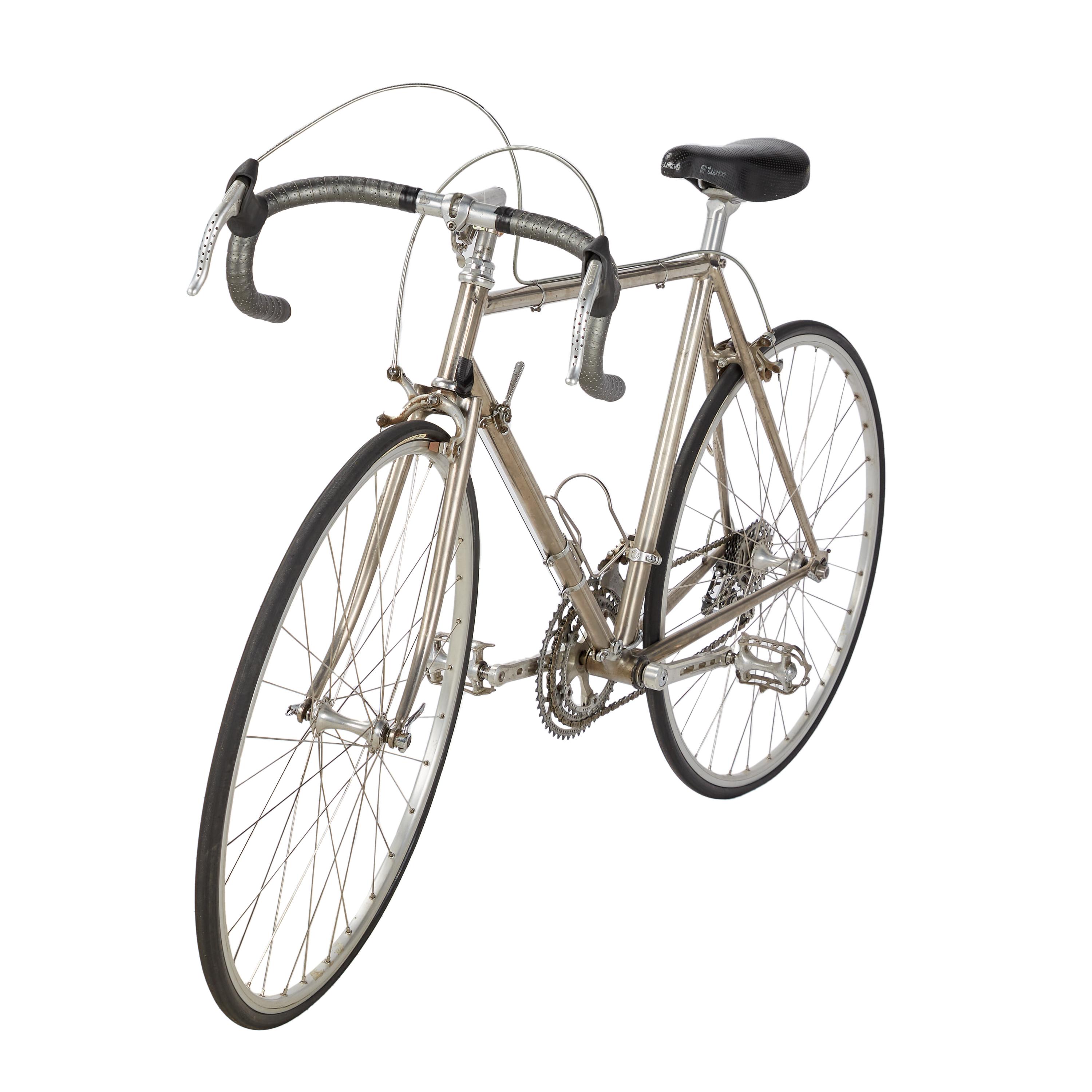
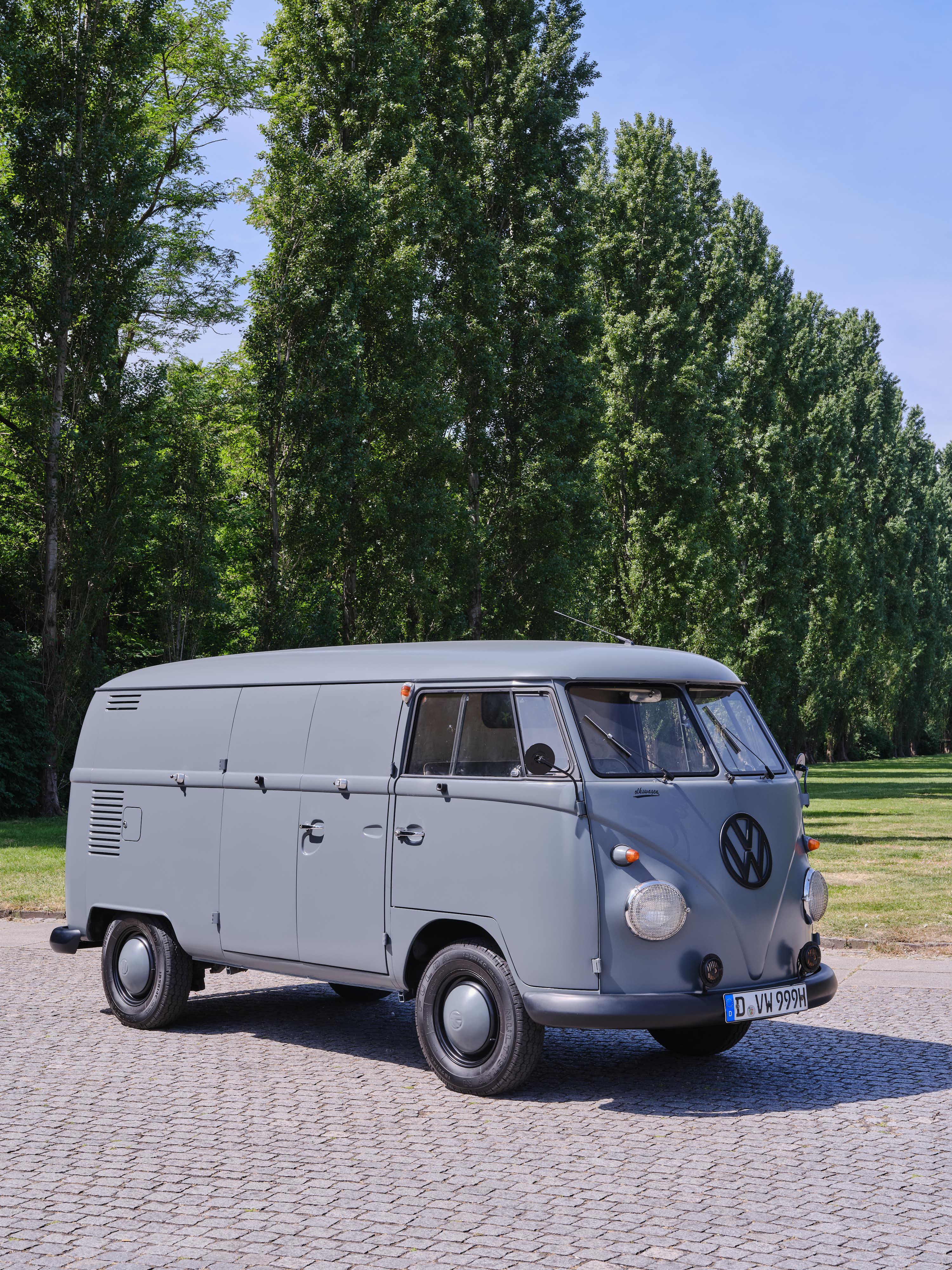
Bid on instruments and gear from all periods of Florian’s groundbreaking career with Kraftwerk, including flutes from the formative early albums and performances (such as Florian’s iconic 1960s Orsi alto flute) and a treasure trove of synths, drum machines, and vocoders (including an EMS Synthi AKS synthesizer, a Robovox and Votrax rack case, and a Roland M-160 line mixer). Also featured is a 1964 Volkswagen Type 2/T1 Kastenwagen (panel van), personally owned and driven by Florian, including in the 2007 German biographical film, Eight Miles High, and the Panasonic road bike ridden by Florian in the music video for Kraftwerk’s crossover single, “Tour De France.”
Related Articles
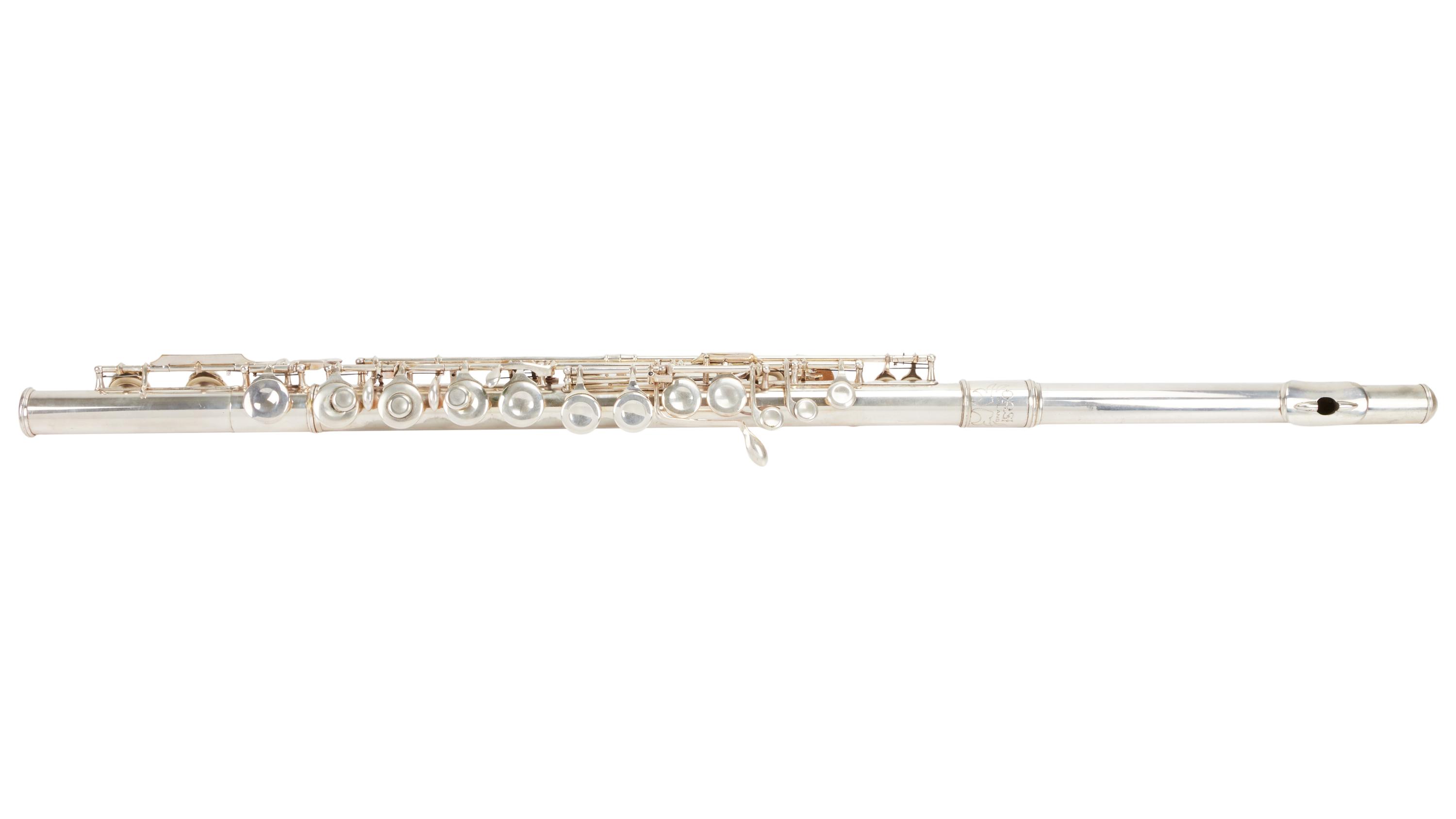
A c. 1960s Romeo Orsi alto flute in G (serial number: 2097), from the wind and brass collection of Kraftwerk multi-instrumentalist, Florian Schneider, and played by him both in studio and on stage c. 1969-1974 with the pre-Kraftwerk band The Organisation, as well as with Kraftwerk during the production and touring of their early albums: Kraftwerk (1970), Kraftwerk 2 (1972), and Ralf und Florian (1973). Accompanied by the April 1997 issue of Mojo: The Music Magazine, which features a photo of Florian playing the flute and a copy of the first album (which also features a photo of the instrument).
Florian met Kraftwerk co-founder Ralf Hutter while studying music in their industrial hometown of Dusseldorf. He was, at the time, a classically trained flautist becoming increasingly immersed in post-war Germany's booming experimental electro-acoustic music scene. The pair first joined up as members of OrganisationzurVerwirklichunggemeinsamerMusikkonzepte ("Organisation for the Realisation of Shared Music Concepts"), AKA TheOrganisation: an experimental rock band that propelled them to the stage and studio. Florian wielded a number of instruments (flute, percussion, violin), while Ralf manned the organ. On the band's one album release, Tone Float (1970), they began their exploration of the electronic processing of acoustic sound, before splitting off to form Kraftwerk that same year.
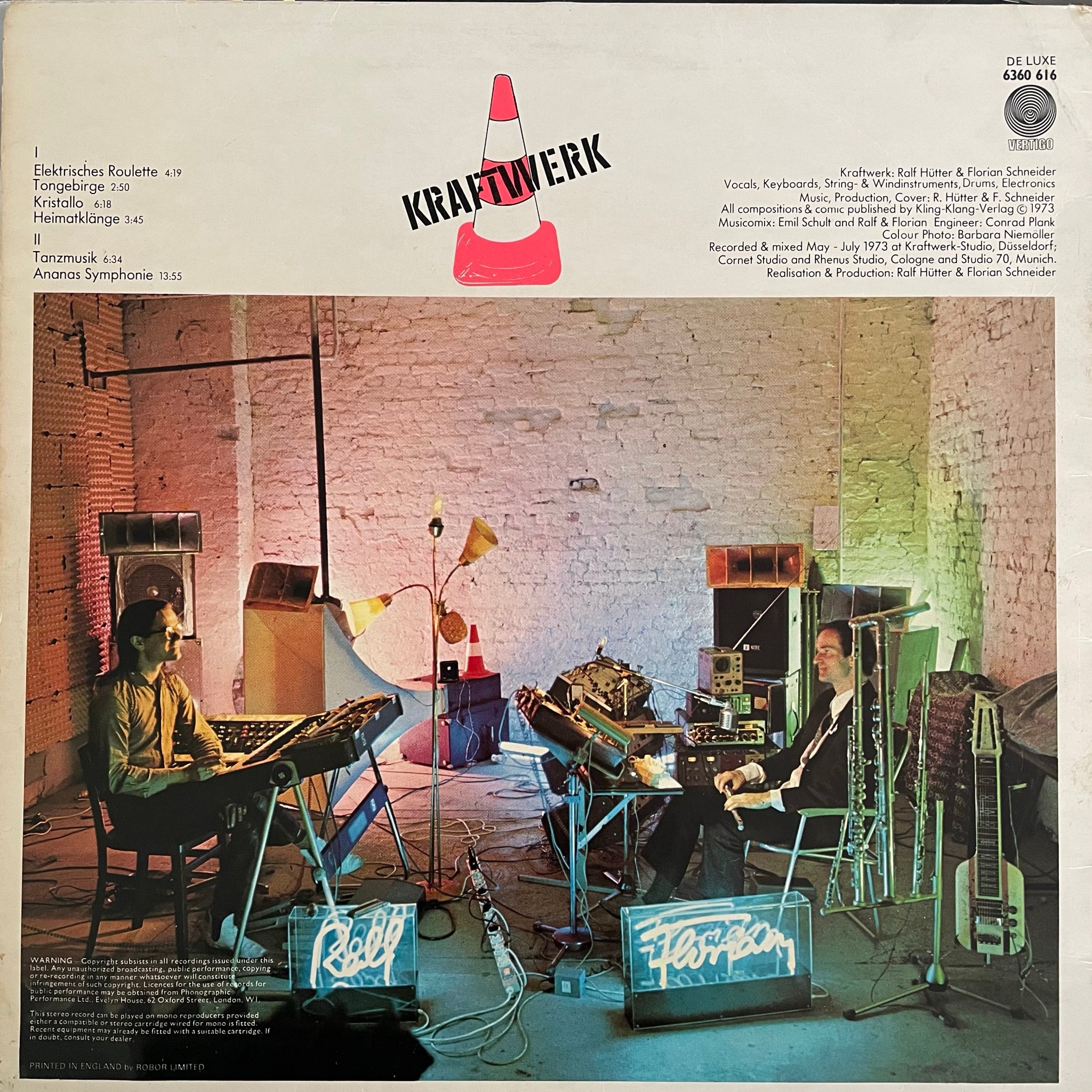
The Orsi alto flute is one of several flutes featured on Kraftwerk's first three albums (click here to see it on his instrument rack on the back cover of Kraftwerk), and can be seen being played by him on the song "Ruckzuck" ("In a Flash") during early live performances for German television with both The Organisation after the 2nd Essener Pop and Blues Festival (click here) and Kraftwerk (click here) in 1970. Florian's rhythmic, miked riffs are subjected to echo effects in these early performances and tracks, while he plays live along with them on the alto flute, a preview of what was to come when he shifted to electronic instruments entirely for the later albums.
He said of the shift: “I studied seriously up to a certain level, then I found it boring. I looked for other things,I found that the flute was too limiting… Soon I bought a microphone, then loudspeakers, then an echo, then a synthesizer. Much later I threw the flute away, it was a sort of process” (Mick Fish and Pascal Bussy, Kraftwerk: Man, Machine and Music, 1993).
While the early albums are a far cry from the sounds for which Kraftwerk would come to be known, they represent an important stage in their musical development. The alto flute can be seen additionally alongside his Johannes Hammig flute and Orsi bass flute during a performance in Koln, 1971.
Made by Orsi in Milan. Three sections, plateau keys, G-foot, saddle lip plate with Schwendler embouchure. Barrel stamped "Orsi / Milano" with the serial number stamped to the bottom of the head joint. Housed in a black hard case with soft cloth carrying case. Includes a cleaning rod and joint covers.
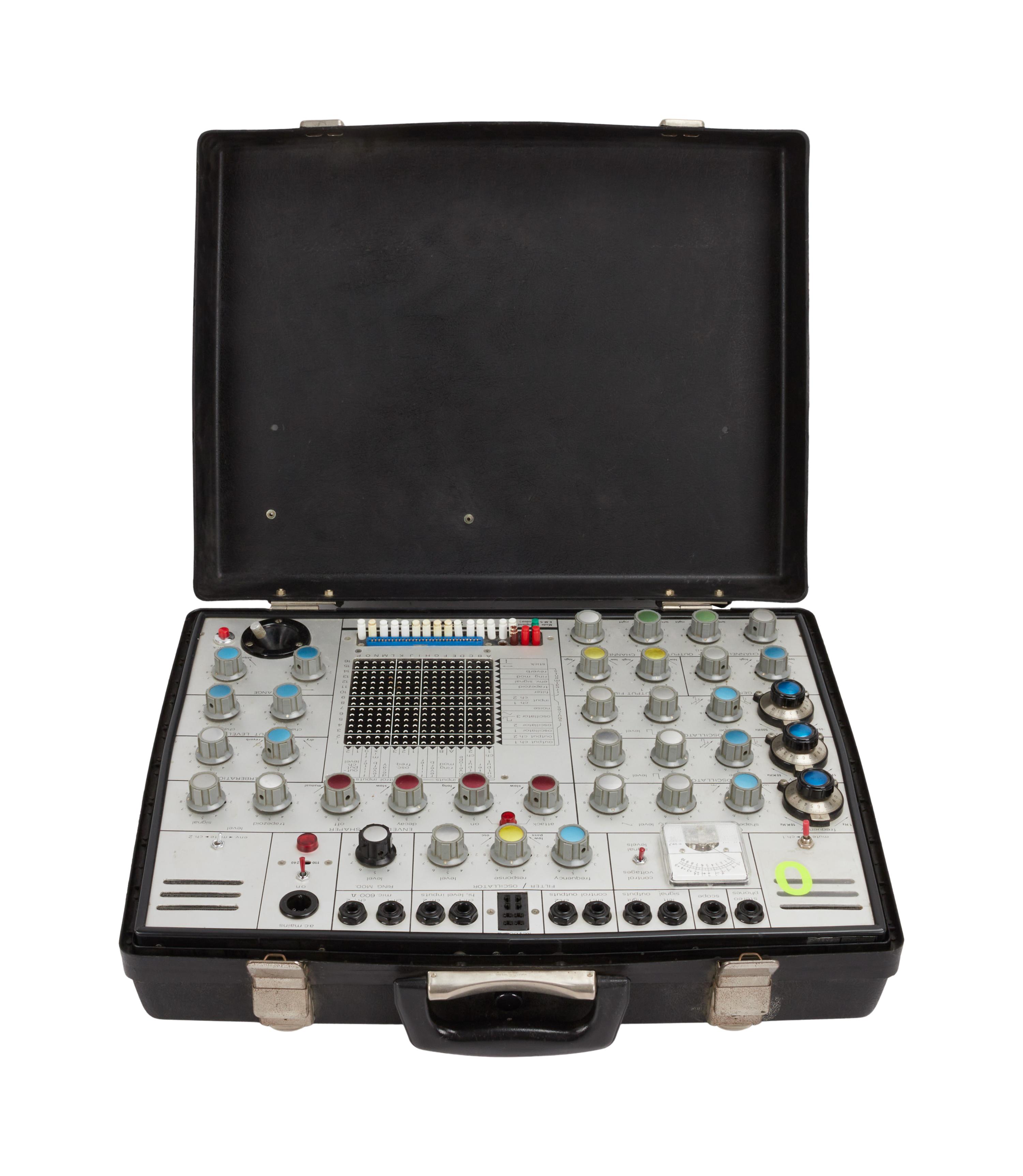
A c. early 1970s EMS Synthi AKS suitcase synthesizer, serial #45086 KS, in a black attaché with silver face plate. This EMS Synthi comes from the collection and personal studio of Florian Schneider of Kraftwerk, who was known for processing his flute through one such unit during Kraftwerk’s early period. According to notes from the Florian Schneider Estate, this was the first synth acquired by Kraftwerk in around 1972 and is the only EMS Synthi that Florian owned, and was used at Kraftwerk's Kling Klang studio. See a 1973 performance by Kraftwerk viewed here. Kraftwerk also used an EMS Synthi on their 1974 album “Autobahn.” Features include three oscillators, a 16x16 pin matrix, 20 pins, ring modulator, envelope filter, reverberation, and more. The unit has a green 0 sticker on the upper left hand corner. Includes suitcase with working latches. Power cable not included.
In his memoir Florian Schneider recalls the original acquisition of the Synthi: "A certain Konrad Schnitzler from Berlin brings the first portable synthesizer from London, 007 sends his regards, in a briefcase, designed by the English company EMS, smuggled past customs for a whopping DM 4,500, which was a lot of money back then. A highly interesting device, actually a mobile miniature electronic studio, including built-in speakers and reverb coil."
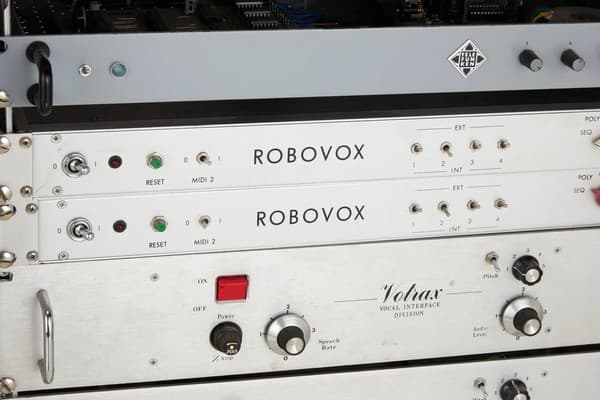
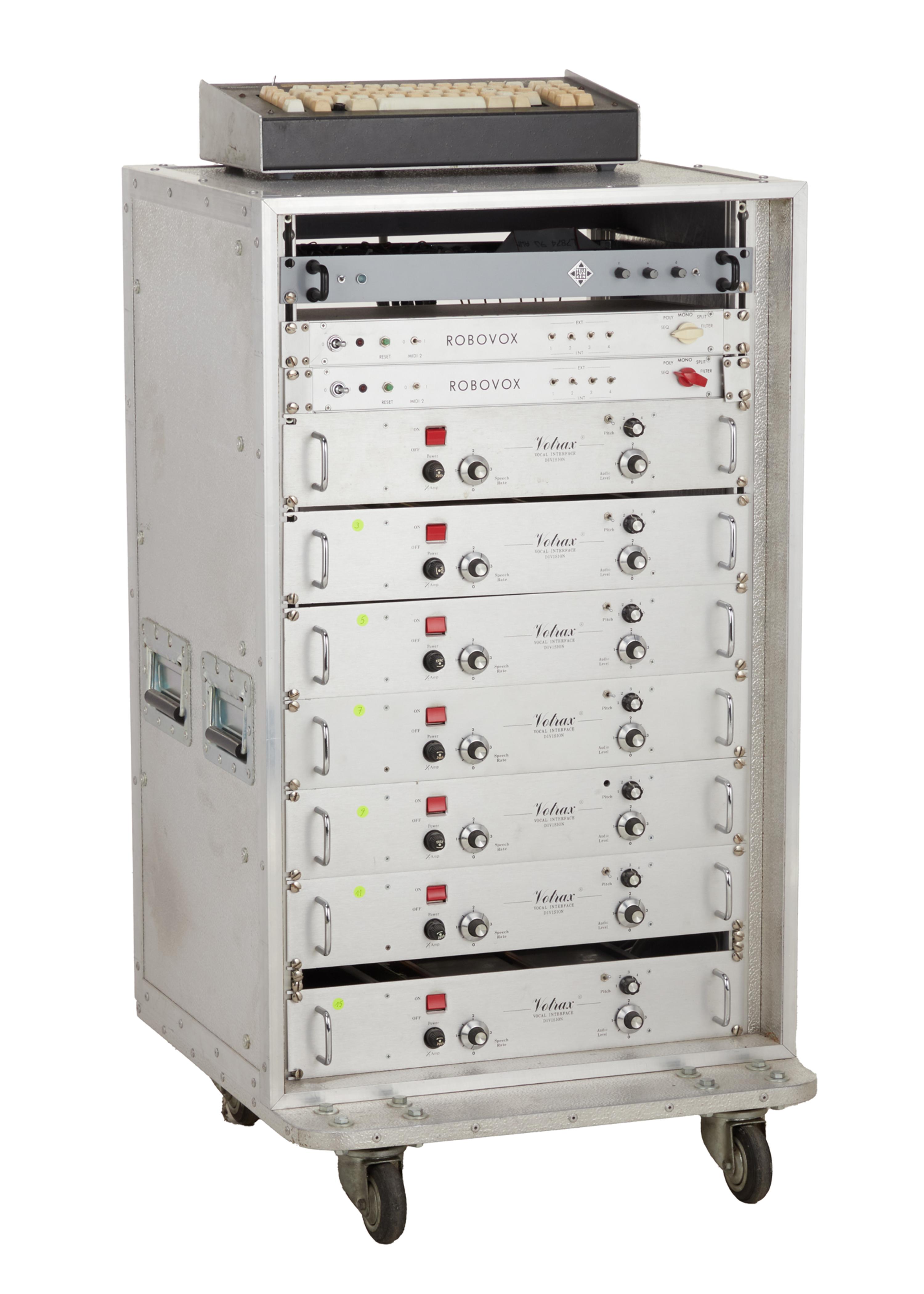
A rack case covered in textured metal which contains a Telefunken rack unit, two Robovox Sculpture MIDI rack devices, and seven Votrax VS-6 speech synthesizer rack units, all from the collection and home studio of Florian Schneider of Kraftwerk fame (see image). According to the consignor, this rack of Votrax units were in use at Kling Klang Studio and used to create the iconic robotic speech sounds which opened each Kraftwerk concert from 1981-2002. The Telefunken rack unit has front-mounted controls labeled f, s, and d, while the Robovox units (speech synthesizers originally developed and patented by Florian himself) have on/off switches, a reset button, MIDI 2 selector, four external/internal mini toggle switches, and rotary selectors for SEQ, POLY, MONO, SPLIT, and FILTER modes. The seven Votrax speech synthesizers have on/off rocker switches, a fuse holder, controls for Speech Rate, Audio Level, and Pitch. Aside from the top two Votrax units, everything is wired together using multi-pin connectors and individual power cables. There is a mass of wires in the back including eight orange wires from the Telefunken unit, all of which are not connected. Includes a Votrax Phoneme keyboard which ismissing two buttons.
A Panasonic road bicycle, ridden by Florian Schneider in the music video for Kraftwerk's 1984 remix of their single, "Tour de France" (1983) and depicted on the album artwork for the single. Accompanied by three Polaroid photos of Florian on the bike.
Originally, "Tour de France" was recorded for inclusion on Techno Pop, meant to be Kraftwerk's ninth studio album and follow-up to Computer World (1981). However, the project was abandoned and eventually reconceptualized as Electric Cafe (1986), no longer including the song, which the band decided to release as a stand-alone single in 1983. The song utilizes an approach to blending drum machine patterns with sampled sounds that can be compared to the approach utilized in previous songs (e.g. "Metal on Metal" or "Numbers"), but "Tour de France" focuses less on technological or industrial sounds and more on physical and mechanical sounds: human breath and sounds associated with cycling. The entire band was interested in and inspired by cycling, with Ralf Hutter in particular asa big fan of the sport. The music video accompanying the single featured black-and-white footage of the eponymous race.
In 1984, "Tour de France" was re-released in two new remix versions: one by French DJ Francois Kevorkian (AKA "Francois K") and one by the band themselves (later known as the "Kling Klang Analog Mix"). Kraftwerk's remix also received a new music video, which featured the four band members clad in black racing attire and helmets, riding bikes around their hometown of Dusseldorf. Florian can be seen grinning while riding the bike, often to the rear of the paceline. Click here to watch the 1984 music video.
The "Kling Klang Analog Mix" was featured in the film, Breakin' (1984), during the broom dance scene in which Turbo (Michael "Boogaloo Shrimp" Chambers) pops and moonwalks to the song while sweeping up outside of the store where he works. Click here to watch the scene from Breakin' that features this version of the song. Kraftwerk's remix went on to clinch the #4 spot on the US Hot Dance Music/Club Play chart, introducing the band to new audiences, furthering their popularity within hip hop circles, and dramatically expanding their sphere of musical influence.
The road bicycle features Panaracer "Gravelking" race tires, a chrome finish, dual handbrakes, manually-operated gears located on the bike frame, and a light-weight construction. Stand included.
An original 1964 Volkswagen Type 2/T1 Kastenwagen (Panel Van) personally owned and driven by Florian Schneider of Kraftwerk, and additionally used in the German biographic film Eight Miles High (Warner Bros. Pictures, 2007).
This panel van, which has been cosmetically and mechanically restored, features a 1483 cc 4-cylinder boxer engine mated to a four-speed manual transmission, producing 41 horsepower.
The van, which received a bright color scheme for its appearance in the film Eight Miles High, was returned to a matte gray finish prior to Florian's ownership. It is noted that the Volkswagen was previously part of a Fire Department's fleet and a rear-facing vinyl seat can still be seen in the back of the van as well as a telephone mounted on the dashboard.
The van was also pictured with Florian Schneider in the January 2017 issue of The Heritage Post. A copy of this issue is included with the lot.
Included with the Volkswagen is an original registration document packet and an inspection report completed in 2023 in Germany.
Notice: The winning bidder is responsible for ensuring that proper vehicle transfer of ownership is completed in accordance with state and federal regulations. The winning bidder is additionally responsible for coordinating vehicle shipment and delivery. The vehicle is currently located in Düsseldorf, Germany. Julien's will not be held liable for any money owed on a vehicle or fees associated with the vehicle's ownership. Pre-sale condition reports are available upon request in writing via e-mail only.