Music
Florian Schneider: A Tribute by New Order’s Stephen Morris
Florian Schneider’s unique blend of experimentalism and formality, urbanity and mystery was at the core of Kraftwerk’s bleeping heart. And for countless musicians around the world, his approach inspired their own syntheses of sounds in thrilling ways – including Stephen Morris of British techno-rock pioneers, New Order.
Share



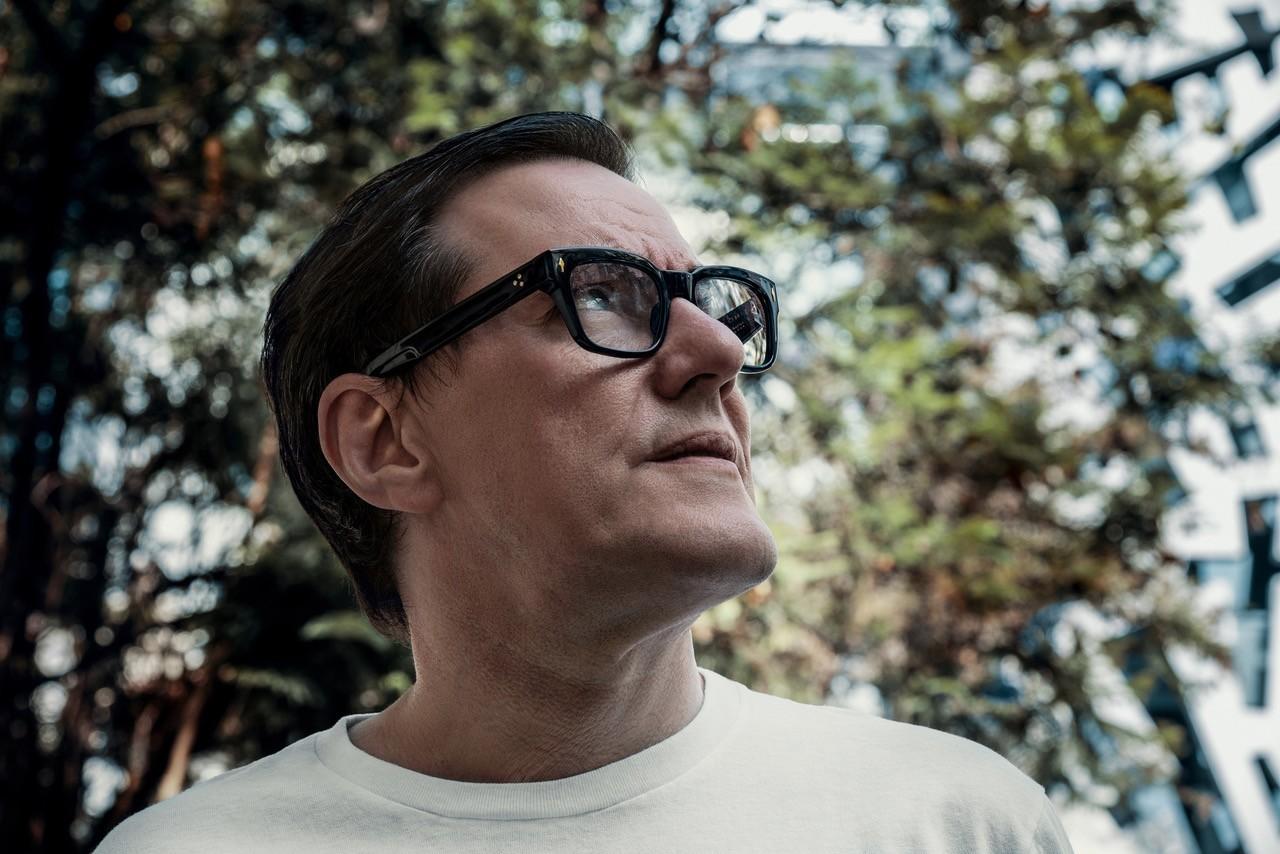
In his own words, New Order’s Stephen Morris reflects on the legacy of Florian Schneider of Kraftwerk. Photo by Warren Jackson
A Julien's exclusive interview by Arsalan Mohammad
Florian Schneider’s impact on pop music was seismic. Having co-founded Kraftwerk in 1970, his sonic adventuring shaped some of the most influential albums in contemporary music such as ‘Autobahn’, ‘Radioactivity’ and ‘Trans Europe Express’. These and numerous other Kraftwerk releases highlighted Schneider’s fascination with building and using technology in entirely new ways. Considering himself more as a ‘sound designer’ than conventional musician, Schneider brought melodious, minimalist epics, as well as synthesisers, vocal processors and drum machines into the mainstream.
And it wasn’t just about the sound – Florian’s insistence on Kraftwerk presenting themselves as robotic avatars emphatically rejected the conventional tropes of rock music, creating an aesthetic that owed more to Warhol than The Who. All of this reshaped how pop music could look and sound, presenting a novel blueprint for a new generation of musicians,
One of these young musicians entranced by Schneider’s originality was New Order drummer Stephen Morris. With his bandmates in Joy Division in late 1970s Manchester, he would take the stage to a recording of ‘Trans Europe Express’. When that band imploded following singer (and Kraftwerk obsessive) Ian Curtis’s death in 1980, Schneider’s towering influence went on to fundamentally shape the sound of Morris’ next project, New Order, a band that have gone on to be one of the biggest British groups of the past 40 years.
Ahead of the sale of The Florian Schneider Collection, Stephen Morris reflects on his enduring love of Kraftwerk, their inspirational role in New Order’s evolution (including a cheeky sample in 1983’s global smash hit ‘Blue Monday’) and of course, a few eye-catching lots featured in the forthcoming auction…
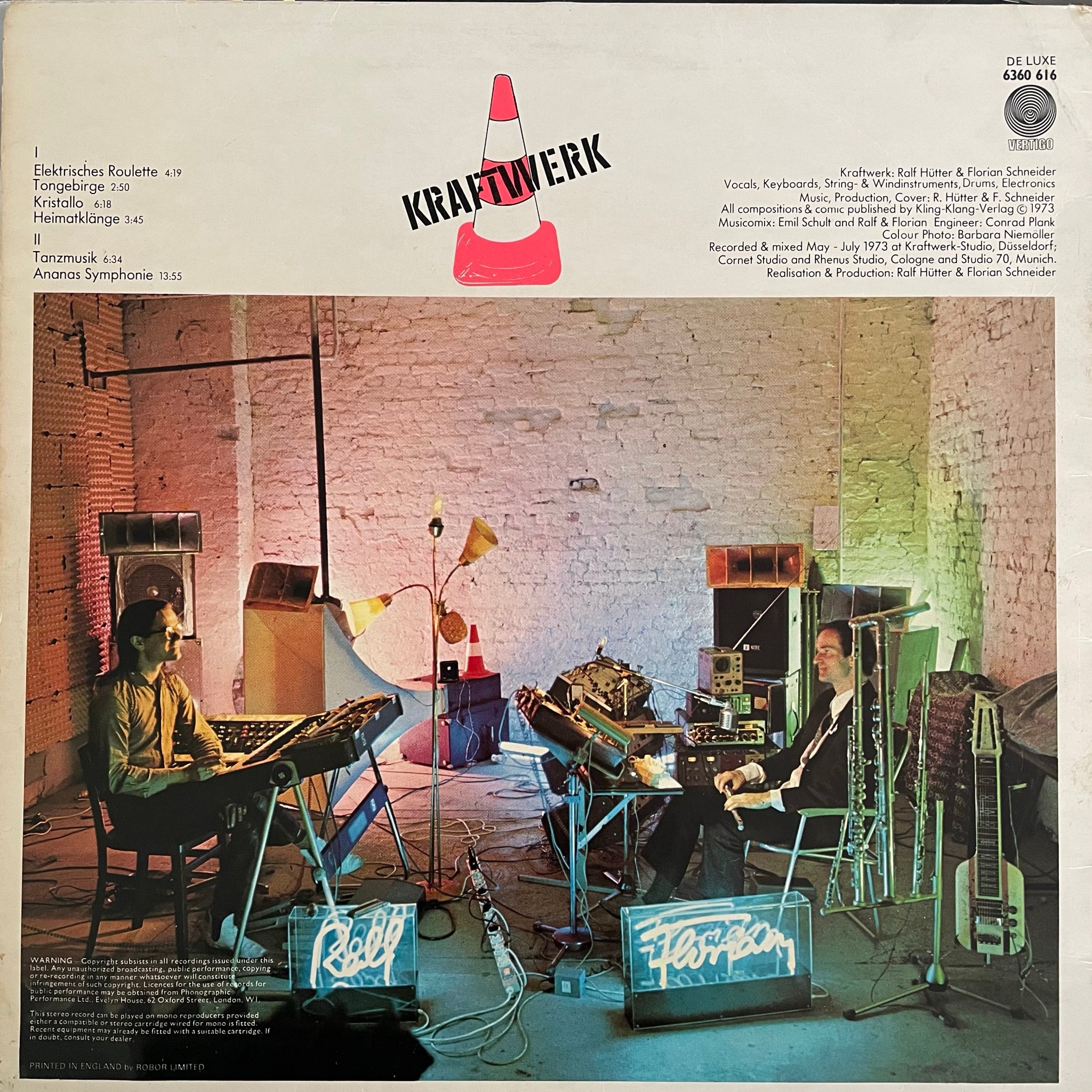
“From well before I was in Joy Division, I loved Kraftwerk. I’d heard the early albums, ‘Kraftwerk 1’ and ‘Kraftwerk 2’, those ones with traffic cones on the covers, but it was when ‘Autobahn’ (1974) came out that we sort of sat up and said ‘What is this?!’ It was a bit like the Beach Boys, but then nothing like the Beach Boys!
‘Krautrock’ is such a horrible term that lumped a lot of things together that didn’t really have that much to do with each other. Kraftwerk weren’t really like Amon Düül or Can. And they weren’t really like Neu!, even though there was a common lineage there. They were doing something else. I liked how they used technology, how they used synthesizers, in interesting ways. Each album had a concept but not like prog-rock concept albums. They were a bit wacky, in a very stylish way. I remember when they appeared on the BBC in 1975 making those fantastic sounds, while wearing keyboard ties. It really wasn’t how I thought Germans looked!
To me, Kraftwerk were a kind of rock’n’roll that isn’t rock’n’roll. Their music had beats, melody, lyrics – and they did songs in different languages which I thought was great at the time. Now, you forget there was a time when Europe represented a place of optimism. No, it really did! They seemed to represent a bright future!
It took me a while to appreciate ‘Radioactivity’ (1975). I remember the coldness of it. It was how you’d imagine radiation to feel, very clinical and very cold. On this album, I really liked the choral effects they created, with Vocoders and Orchestrons – we nicked a choral effect, a sample from the track ‘Uranium’ for ‘Blue Monday’ (New Order, 1983) – that captures that intriguing balance of human and robotic. When they did ‘The Man Machine’ (1978), that developed this whole concept further. There is a very human feel to it, you can tell people are making this robotic, automaton sound, there’s a classicism to it. And there’s also, I think a certain sense of naivety to Kraftwerk’s sound too – or a playful experimentation – the way they messed about with these synths and drum machines. I loved the drum machines even though I did think in my darkest moments, well, there goes my job.
Sampling is like being a magician. Kraftwerk were like magicians to us. We’d listen to Kraftwerk and think – “How have they done that? And then – ‘How can we do that!” That was their appeal - and their mystique. One of the things that attracted me to them was that they were consciously rejecting something. They weren’t going to do what everyone else was doing, they were going to do something entirely different instead. A lot of New Order stuff was like that – we’re not going to do something that’d been done before, we’re going to do what we want. There was an idealism behind it.
You couldn’t say Kraftwerk were celebrities. Or even a band, as such. They didn’t tick many boxes on the being-a-band-front. I did read interviews with them which were quite few and far between and I agreed with what they would say in their interviews, I thought they were very intelligent people, as you can tell by the music.
My one connection with them was back in 1983 when they wanted to find out how we’d got that bass drum sound on ‘Blue Monday’. We got a call from someone at Factory (New Order’s record label) saying “Someone from Kraftwerk’s called up! They want to know how you got that bass drum sound!” We told them that we’d recorded it at Britannia Row studios (Pink Floyd’s recording studios in North London) and Kraftwerk sent someone to go and check out the studios. But it wasn’t right for them, nothing ever came of it. When we recently came to remix Blue Monday for Dolby Atmos, I realised how they must have felt – I was sitting there going “Uh… how did we get that bass drum sound!”
STEPHEN’S TOP SELECTIONS
1960s Stage and Studio-Played Orsi Albisiphon Bass Flute
I used to have one of those Descant recorders, it’s such an organic thing to have. You can imagine the young Florian playing his recorder. Reminds me of my own forays into recorders (laughs). The thing with Florian is that he was playing the flute on those early records, which was quite a proggy thing to do. But he didn’t play it in a jazzy way, he got a very pure sound out of it. It was still a flute – but not really how someone like Ian Anderson (Jethro Tull) would have played it, not a grunty flute. I like how he attempted to improve the [1960s Stage and Studio-Played Orsi Albisiphon Bass Flute] by putting a u-bend in it! He was obviously a very, very inventive person.
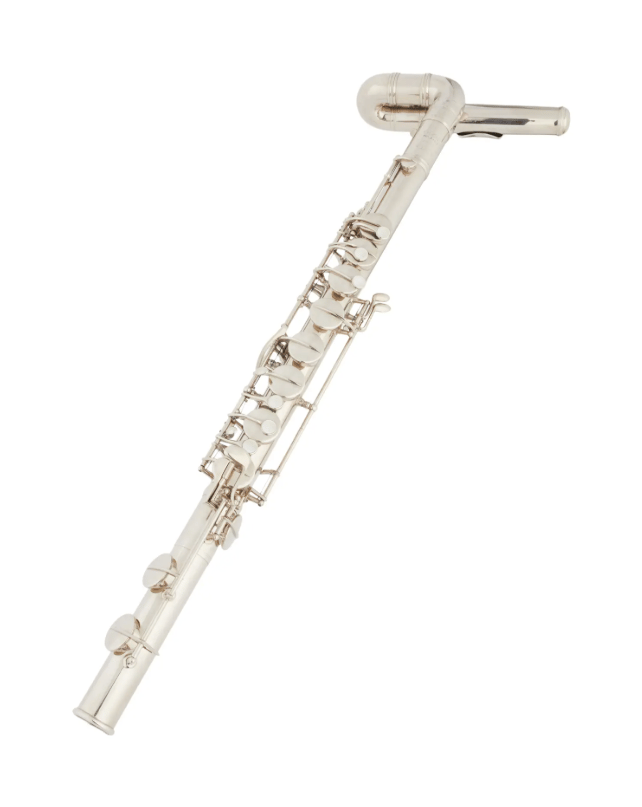
Florian Schneider | 1960s Stage and Studio-Played Orsi Albisiphon Bass Flute
An Orsi albisiphon bass flute in C (serial number: 2098), from the wind and brass collection of Kraftwerk multi-instrumentalist, Florian Schneider, and played by him both in studio and on stage c. 1969-1974 with the pre-Kraftwerk band The Organisation, as well as with Kraftwerk during the production and touring of their early albums: Krafterk (1970), Kraftwerk 2 (1972), and Ralf und Florian (1973). Together with a German-language article on the albisiphon.
Florian met Kraftwerk co-founder Ralf Hutter while studying music in their industrial hometown of Dusseldorf. He was, at the time, a classically trained flautist becoming increasingly immersed in post-war Germany's experimental electro-acoustic music scene. The pair first joined up as members of Organisation zur Verwirklichung gemeinsamer Musikkonzepte ("Organisation for the Realisation of Shared Music Concepts"), AKA The Organisation: an experimental rock band that propelled them to the stage and studio. Florian wielded a number of instruments (flute, percussion, violin), while Ralf manned the organ. On the band's one album release, Tone Float (1970), they began their exploration of the electronic processing of acoustic sound, before splitting off to form Kraftwerk in 1970.
The Orsi albisiphon bass flute is one of several flutes featured on Kraftwerk's first three albums (click here for an image of the flute on Florian's instrument rack on the back cover of Ralf und Florian) and can be seen alongside his Johannes Hammig flute and his Orsi alto flute in photos from an early performance in Koln, 1971. During these early performances, Florian would regularly unscrew the end of his flute head joints to wire the instruments for electronic manipulation.
He said of his evolution with the flute and electronics: “I studied seriously up to a certain level, then I found it boring. I looked for other things, I found that the flute was too limiting… Soon I bought a microphone, then loudspeakers, then an echo, then a synthesizer. Much later I threw the flute away, it was a sort of process” (Mick Fish and Pascal Bussy, Kraftwerk: Man, Machine and Music, 1993).
While the early albums are a far cry from the sounds for which Kraftwerk would come to be known, they represent an important stage in their musical development.
Five sections (including alternate mouthpiece and T-shaped albisiphon mouthpiece), plateau keys with mother of pearl caps, saddle lip plate with Schwendler embouchure, curved headjoints. The barrel is engraved "Orsi / Milano" with the serial number stamped to the body and foot joints. Housed in a black hard case with exterior soft carrying case. Includes cleaning cloth and joint covers.
The Robovox
The holy grail of this sale is the Robovox (speech synthesizers originally developed and patented by Florian himself). It looks fantastic. It looks like it’s walked off the set of Dr Who. It looks brilliant, in fact so much of his stuff here looks pristine. You look at some of our stuff, and it’s battered to fuck! Covered in gaffer tape!
He did file a patent for it, in I think, the early 1990s.Because the thing about devices like this, is that it takes fucking ages to work with them, as I found out myself when I was programming ‘Blue Monday’ and even then, it still sounded shit!
That was the thing with Kraftwerk – the human element. Florian would use an Orchestron to produce the choir sounds on ‘Uranium’ or Vocoders to create robot voices. It was something I tried to do on ‘Blue Monday’. We couldn’t afford any of the sort of stuff they were using at the time – so we had a little circuit board that you plugged into a computer. I spent ages trying to make it sound like Kraftwerk’s [big robotic growl] ‘MAN MACHIIIINE!” but when I did it, it’d come out like [helium pitched squeak] “ding ding ding”. It sounded like a bloody squirrel. When you heard Kraftwerk do it live, on a sound system, it was earth-shattering, with those harmonics in their robot voices. It was absolutely fantastic.
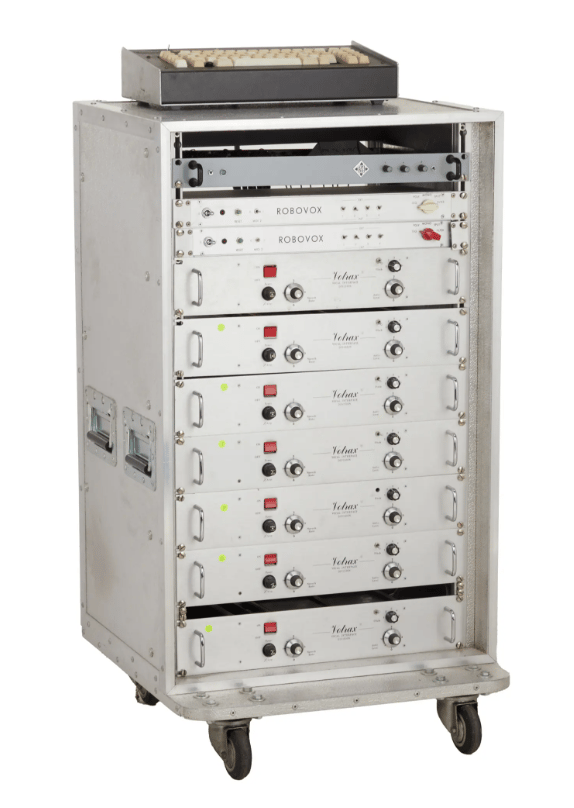
Florian Schneider | Robovox and Votrax Silver Rack Case with Votrax Phoneme Keyboard
A rack case covered in textured metal which contains a Telefunken rack unit, two Robovox Sculpture MIDI rack devices, and seven Votrax VS-6 speech synthesizer rack units, all from the collection and home studio of Florian Schneider of Kraftwerk fame (see image). According to the consignor, this rack of Votrax units were in use at Kling Klang Studio and used, among other things, to create the iconic robotic speech sounds which opened each Kraftwerk concert from 1981-2002. The Telefunken rack unit has front-mounted controls labeled f, s, and d, while the Robovox units (speech synthesizers originally developed and patented by Florian himself) have on/off switches, a reset button, MIDI 2 selector, four external/internal mini toggle switches, and rotary selectors for SEQ, POLY, MONO, SPLIT, and FILTER modes. The seven Votrax speech synthesizers have on/off rocker switches, a fuse holder, controls for Speech Rate, Audio Level, and Pitch. Aside from the top two Votrax units, everything is wired together using multi-pin connectors and individual power cables. There is a mass of wires in the back including eight orange wires from the Telefunken unit, all of which are not connected. Includes a Votrax Phoneme keyboard which is missing two buttons.
SYNTHI AKS
When they were doing their ‘Berlin’ albums, Bowie and Eno would have been using a VCS-3 similar to this. And I remember seeing Hawkwind live, where they used one too. This particular one though, you can see it on couple of early Kraftwerk videos and yet Florian’s still looks absolutely pristine! Usually, when you see the ones like this, people have modded them, put their own little switches on, all sorts of things. But this one looks just like it’s come out of the showroom!I do have one myself, and while they’re not particularly good as synthesisers, as they’re inherently unstable, they are great for making otherworldly sounds with. You put pins in, and because the patch bays are unbuffered, the order you put the pins in, has an effect on the sound. And it’ll sound different each time you do it. But yes, it’s not the sort of thing you’d compose a symphony on.
It’s interesting seeing this, as its obviously one of the earliest synths Florian would have used, and I’m surprised to see it’s not more battered!
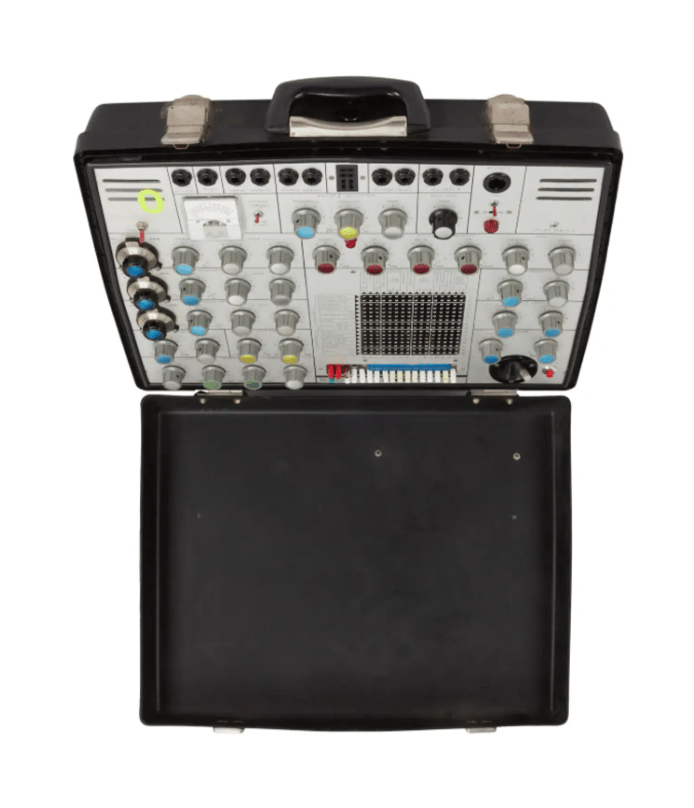
Florian Schneider | Stage Played EMS Synthi A Suitcase Synthesizer
A c. early 1970s EMS Synthi A suitcase synthesizer, serial #45086 KS, in a black attaché with silver face plate. This EMS Synthi comes from the collection and personal studio of Florian Schneider of Kraftwerk, who was known for processing his flute through one such unit during Kraftwerk’s early period. According to notes from the Florian Schneider Estate, this was the first synth acquired by Kraftwerk in around 1972 and is the only EMS Synthi that Florian owned, and was used at Kraftwerk's Kling Klang studio. See a 1973 performance by Kraftwerk below. Kraftwerk also used an EMS Synthi on their 1974 album “Autobahn.” Features include three oscillators, a 16x16 pin matrix, 20 pins, ring modulator, envelope filter, reverberation, and more. The unit has a green 0 sticker on the upper left hand corner. Includes suitcase with working latches. Power cable not included.
In his memoir Florian Schneider recalls the original acquisition of the Synthi: "A certain Konrad Schnitzler from Berlin brings the first portable synthesizer from London, 007 sends his regards, in a briefcase, designed by the English company EMS, smuggled past customs for a whopping DM 4,500, which was a lot of money back then. A highly interesting device, actually a mobile miniature electronic studio, including built-in speakers and reverb coil".
ROLAND 606 DRUM MACHINE
Wow! Florian also had a Roland 606? Wow, it’s the old bloody house music, electro thing. [trills] ACIEEEEED! Now, I can’t say I can recall ever hearing one of those on a Kraftwerk record. I mean, Florian had so many other things, I’m surprised he had this 606 – I mean, they had those [electro-percussive] knitting needles! You wouldn’t need one of these!
Back in the day the 606 and the 303 went together, they look exactly the same. We didn’t really use them, although I did have the Roland 909. We did use a 606 once at a gig when everything else had broken down but it was just a bit too – Roland-y, a bit too plinky-plonky. Which is just not a sound that I’d associate with Kraftwerk, it’s a very clean, slightly tinny sound. Not much bollocks to it. And the Kraftwerk drum sound is not really tinny. I used a Roland electronic kit live for quite a bit in the early 2000s, always thinking it was going to get better sounding. But it never did.
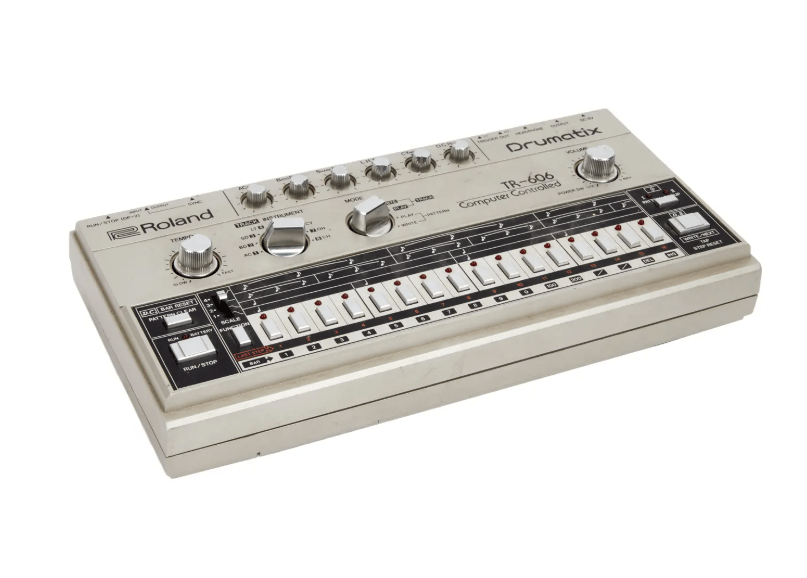
Florian Schneider | Roland Drumatix TR-606 Drum Machine
A 1980s Roland Dramatix drum machine with an added MIDI jack and switch on the back panel from the collection and personal studio of Florian Schneider of Kraftwerk fame and formerly in use at Kling Klang, Kraftwerk's personal studio. This analog drum synthesizer allows the user to program rhythms with its sequencer, with built-in memory for 32 patterns. Includes controls for Temp, Track/Instrument, Mode, Volume, and individual volumes for each part of the drum kit. Power adapter not included.
Electronic MIDI Accordion in Metal Engine Turned Enclosure with Shoulder Straps
Now, I do like an accordion. When we worked with [producer] Stephen Hague, he used to serenade Gillian [New Order keyboardist and Stephen’s partner] with one. It was very romantic! But although Florian’s one doesn’t look romantic, it’s amazing! It’s very oompah. I bet James Last never had one of those. I’m sure that’ll fetch a very high price indeed!
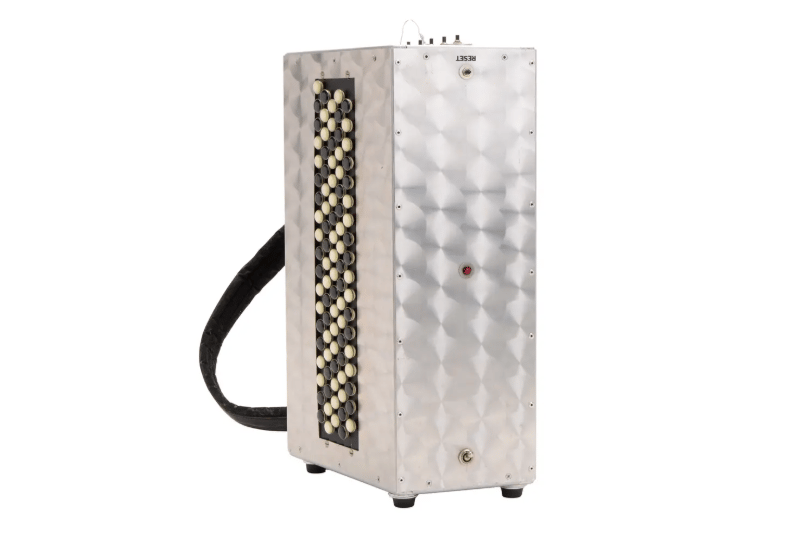
Florian Schneider | Electronic MIDI Accordion in Metal Engine Turned Enclosure with Shoulder Straps
An electronic accordion in a trapezoidal engine turned metal enclosure built and played by Florian Schneider, founding member and band leader of Kraftwerk. This instrument appears to use buttons from chromatic button-only accordions while omitting the bellows, with both power and MIDI jacks on the bottom as well as a fuse holder, a power on/off switch on the front panel with a light above plus a reset button on the top middle of the panel. On the top, controls for EQ. It is equipped with two leather shoulder straps. On the bottom there is a yellow high voltage warning sticker.