Live Auction
The David Lynch Collection
Live Auction
13007 S. Western Avenue, Gardena, California 90249
Phone 310-836-1818 | Fax 310-742-0155
Almost 450 items from the personal archive of one of the masters of cinema, this special auction offers fans and collectors alike an intimate portal into the life and world of the man who brought us a vast body of work including: Twin Peaks, Mulholland Drive, Blue Velvet, Eraserhead, Lost Highway, Inland Empire, Wild at Heart, The Straight Story, The Elephant Man, Dune, and more.
This collection includes artifacts from all aspects of Lynch’s personal creative life, including the art supplies and tools from his home art studio and wood shop, a vast array of furniture that includes many pieces designed and built by Lynch himself, unique instruments and equipment from his home audio recording studio, memorabilia and ephemera relating to many of his filmed projects, and several coffee machines and mugs because he could never be more than 15 steps away from a damn good cup of coffee.
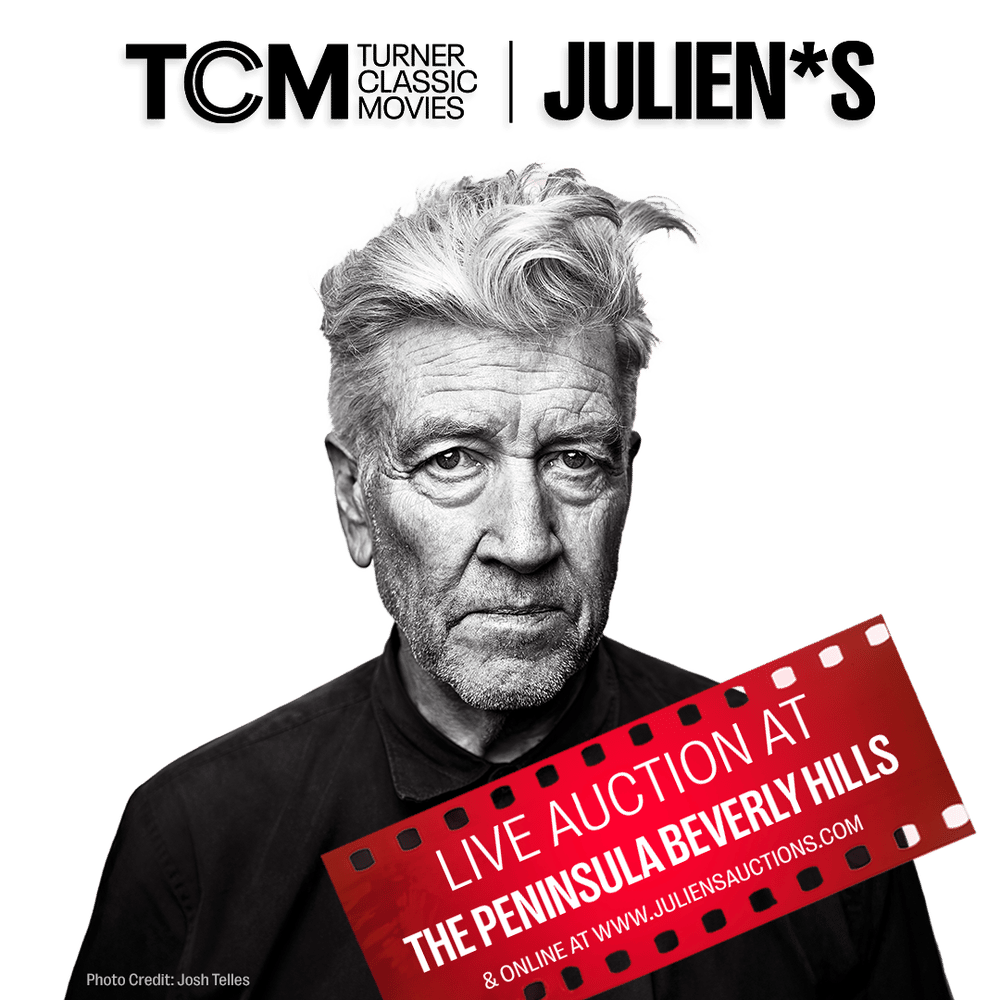
The live auction for 'The David Lynch Collection' by Turner Classic Movies and Julien's Auctions has been relocated to The Peninsula Beverly Hills on June 18, 2025, with online bidding available.
For Inquiries
Please ContactIn cooperation withTurner Classic Movies
Related Articles
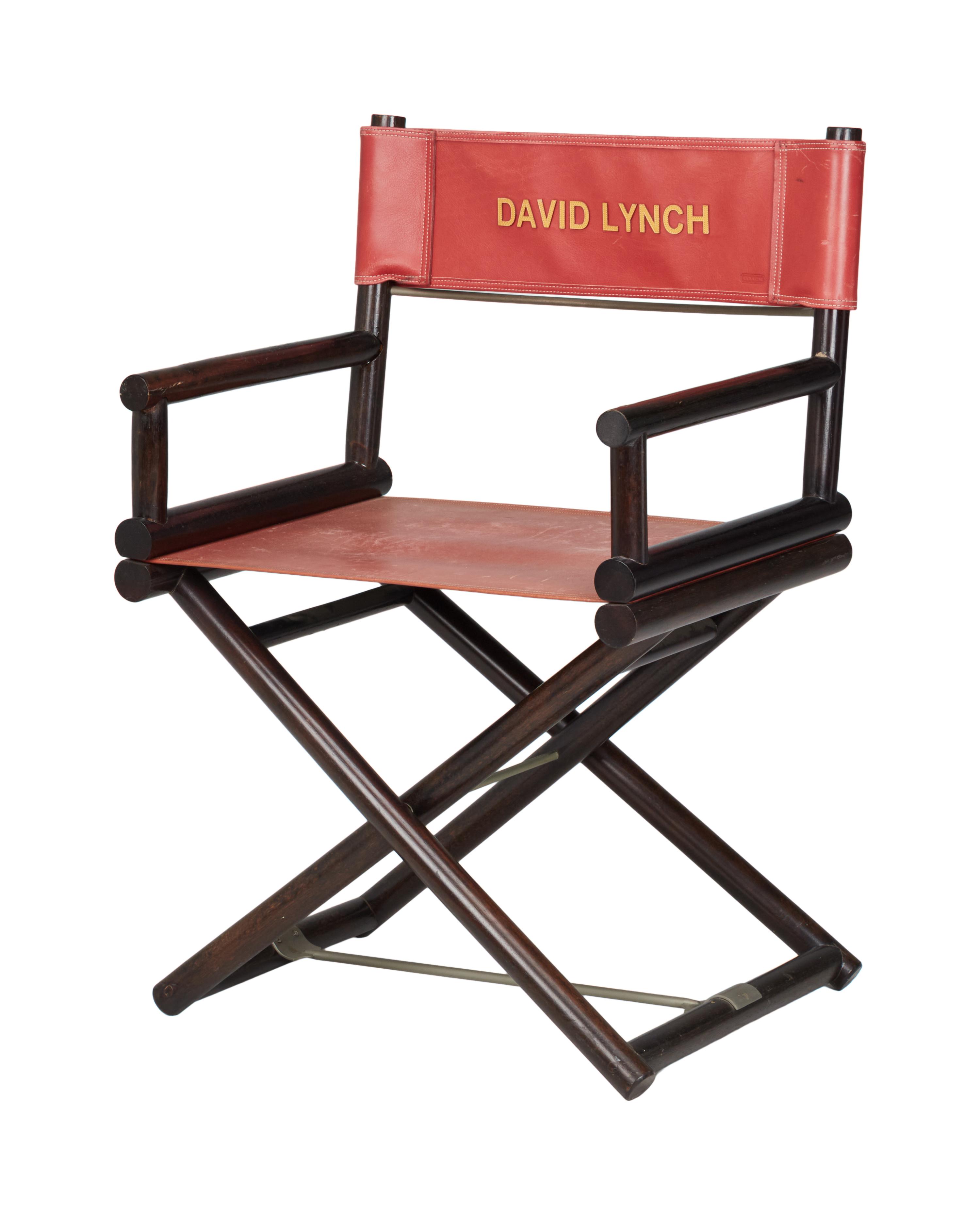
A director's chair personalized for filmmaker David Lynch. Comprised of a varnished wooden frame with red leather seat and chairback. The chairback is emblazoned with the name of the filmmaker in raised yellow lettering on the verso. Curved metal rod present underneath the chairback.
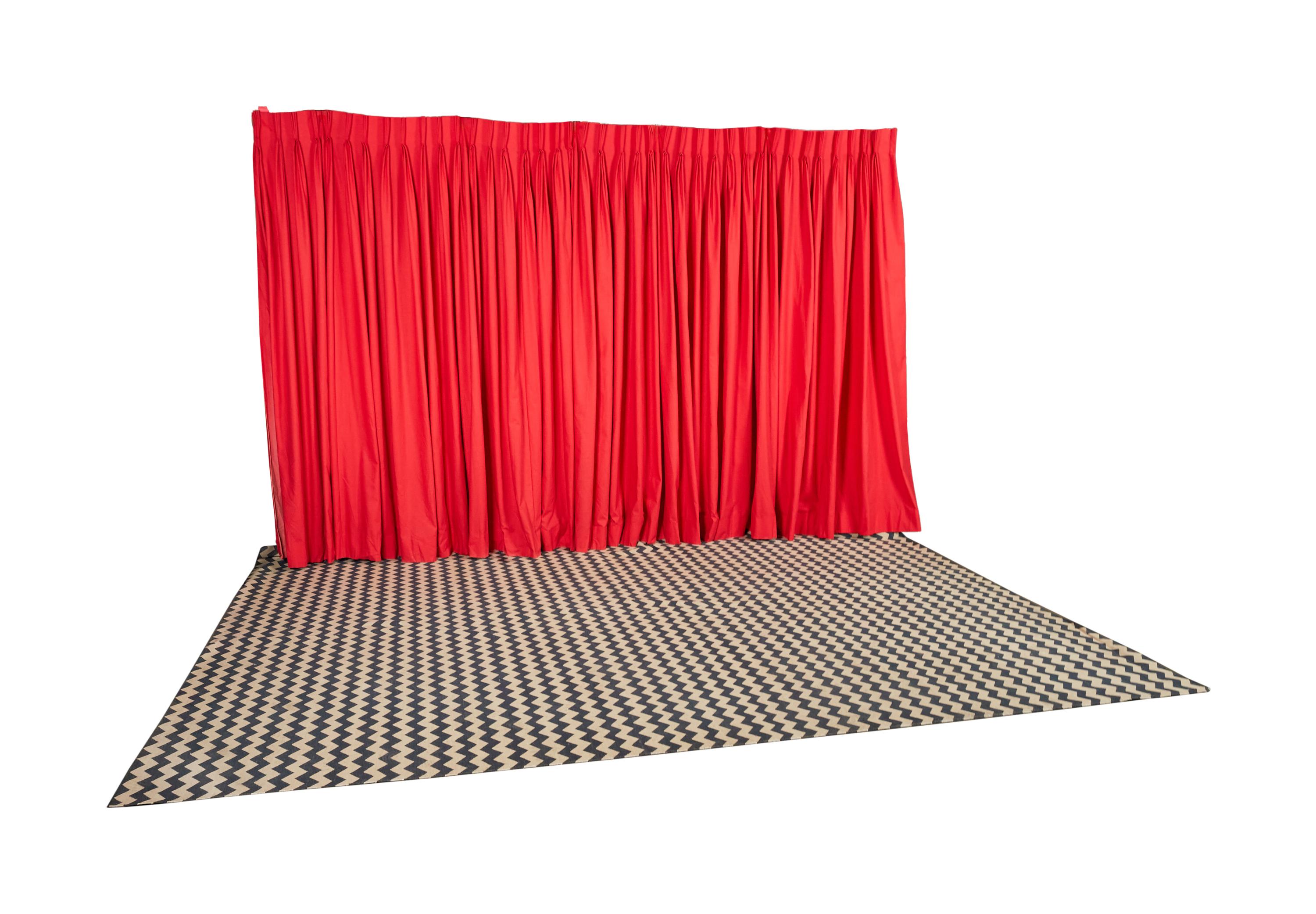
David Lynch's personally owned red curtain and black and white zig-zag rug, in the style of the Black Lodge from Twin Peaks (ABC, 1990 - 1991).
The curtain is cotton featuring drapery pleating at the top, which contains curved metal hooks on the verso for hanging purposes; the rug is wool. Both pieces feature wear including staining and discoloration in spots, due to age and usage.
Instantly recognizable as part of his signature style as well as the design of the haunting otherworldly location in Twin Peaks, Lynch frequently utilized red curtains in his work as well as for personal appearances that he filmed from his home. Usages for this specific curtain and rug are unknown, but Lynch also had pieces such as this for decorative purposes around his house, including in his personal music sound recording studio.
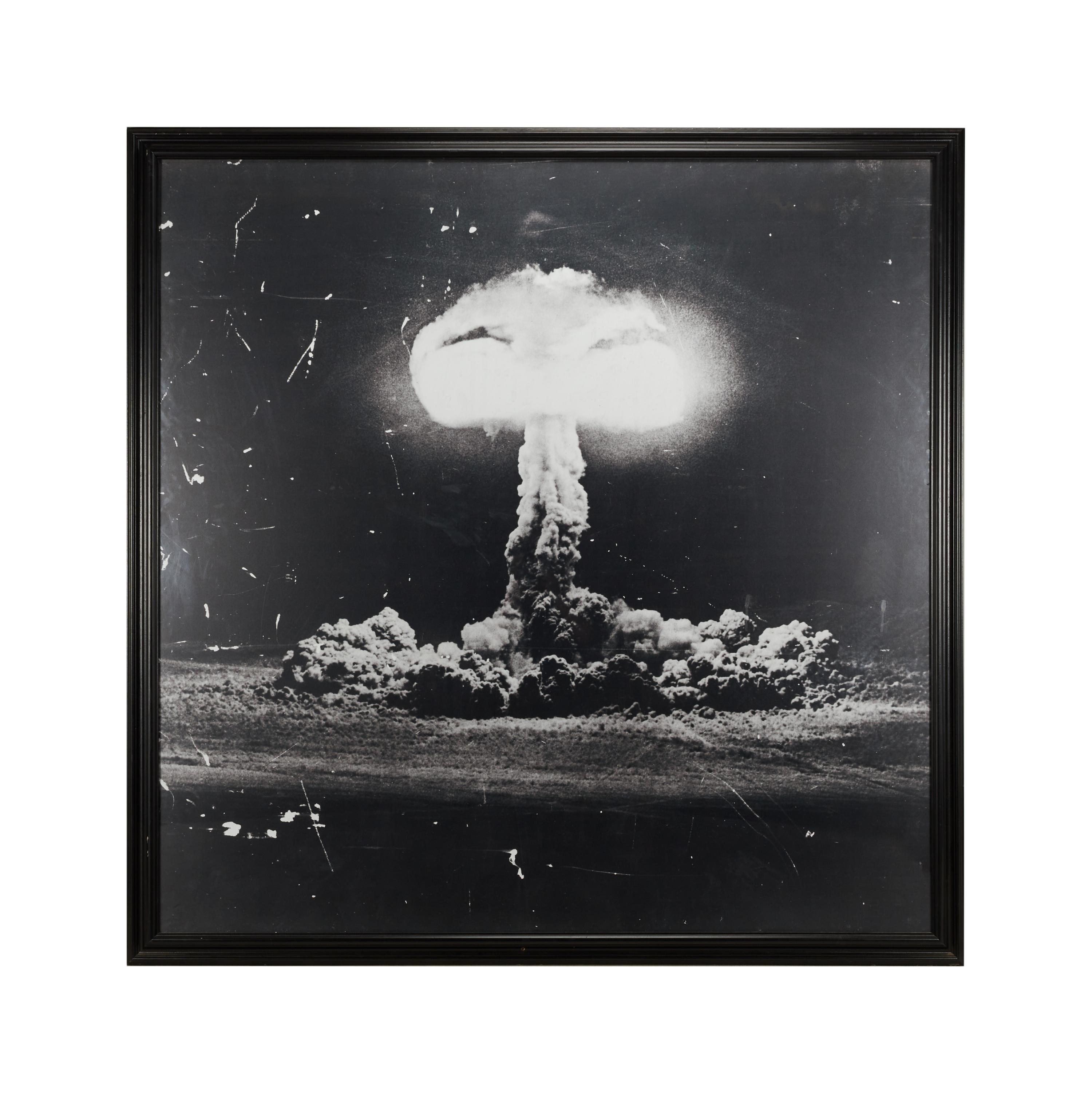
A large framed photograph of a nuclear bomb explosion, screen-matched to the seventh episode of Twin Peaks: The Return (Showtime, 2017), entitled "There's a Body All Right."
The photograph appears in the office of FBI Deputy Director, Gordon Cole (David Lynch), in a scene where Cole is whistling to himself before FBI Agent Albert Rosenfield (Miguel Ferrer) enters with news about his meeting with Diane (Laura Dern). Debate surrounds exactly which tune Lynch is whistling in this moment, with the most likely contenders being Nina Rota's theme from Federico Fellini's film Amarcord (PIC/WB, 1973) (which was one of Lynch's favorite films), or the 1997 song "Engel" by the German metal band, Rammstein.
Housed in a black frame, the black and white image depicts a mushroom cloud rising from the desert ground after the detonation of a nuclear bomb. This striking image is a bit of clever foreshadowing on Lynch's part, as the eighth episode of Twin Peaks: The Return (entitled "Gotta Light?") centers around the first nuclear bomb test that detonated in New Mexico in 1945. This explosion inadvertently set off a chain of events that led to the demonic force, Judy, to create the evil spirit, Bob (Frank Silva); which forces The Fireman (Carel Struycken) and Senorita Dido (Joy Nash) to create Laura Palmer (Sheryl Lee) and send her to Earth. The eighth episode is widely considered the pinnacle installment of Twin Peaks: The Return, as well as being one of the most acclaimed pieces of work in Lynch's entire oeuvre.
The shot of Lynch whistling in front of this framed photograph of the nuclear explosion is one of the most recognizable stills of the entire series as it encompasses the high point of the show and its legendary creator in one single image.
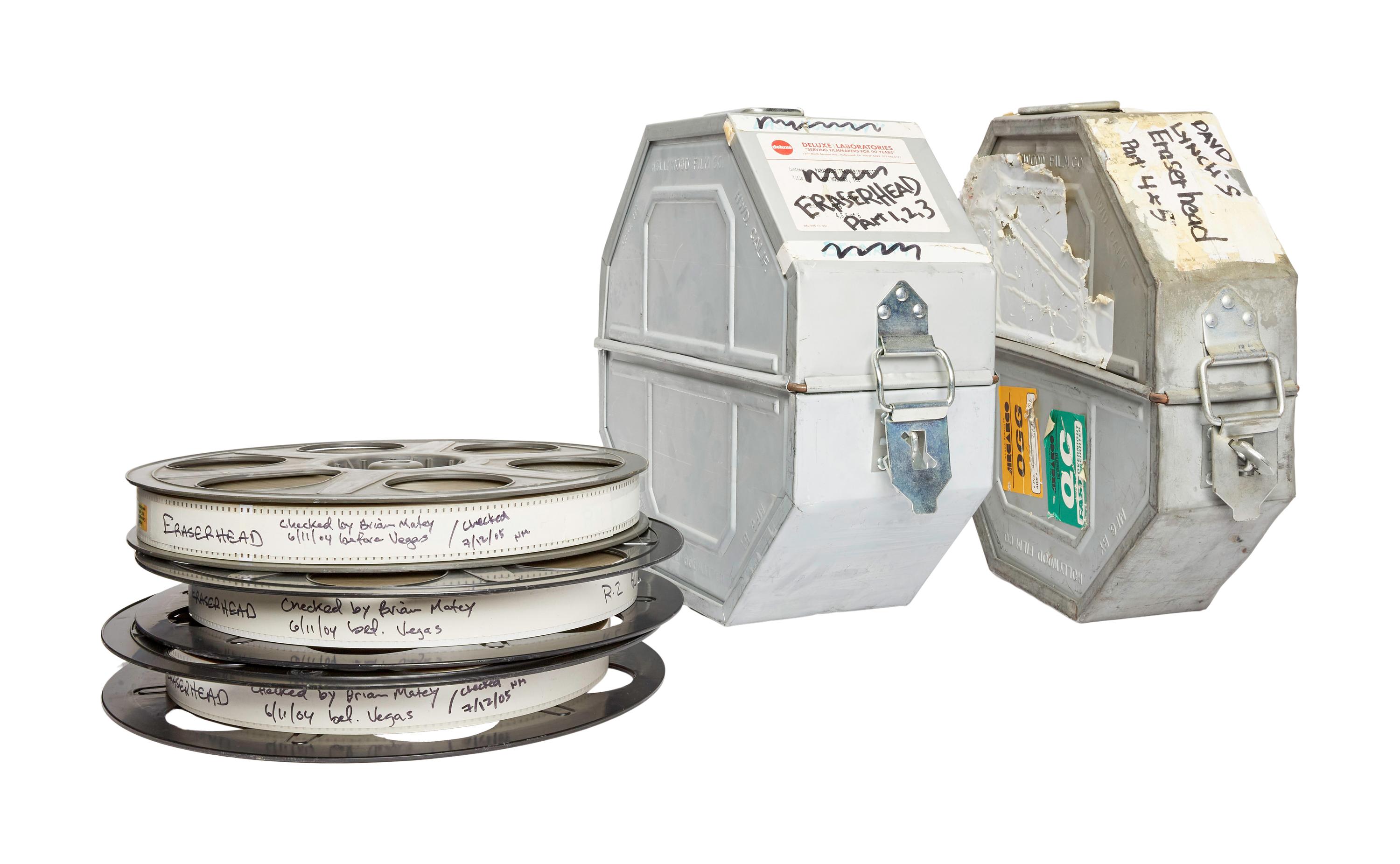
David Lynch's personal 35mm print of his groundbreaking debut feature film Eraserhead (Libra Films, 1977).
The print is comprised of five 14.5 inch reels of 35mm Eastman Kodak film stock with variable area optical soundtrack and 1996 date codes, housed in two film reel cases (one that houses three reels and one that houses two reels). Handwriting is present on each of the cases that identify them, in part, as "Davd [sic] Lynch's Eraserhead," as well as the accompanying reel numbers in each. Labels are present on the cases from other films they've housed before, including one from Paramount Pictures.
This specific print was screened as part of the CineVegas Film Festival in 2004, where Lynch was one of three honorees to receive the CineVegas Film Festival Vanguard Director Award. The outer layer of each reel contains tape with handwriting in black marker that stipulates that they were checked by a member of the film festival staff in June 2004. There is also handwriting that indicates that the print was checked again in 2005.
Eraserhead was filmed on and off over a five year period in the early 1970s. Produced with the assistance of the American Film Institute (AFI) where Lynch was a student, and funded primarily by donations from friends such as Sissy Spacek and Catherine Coulson, Lynch's black and white debut feature was an immediate cult sensation when it was finally released in 1977. It played as a midnight movie at the Cinema Village in New York City and at the Roxie Theater in San Francisco for a year straight, it played 99 straight weeks at New York's Waverly Cinema, and played for three years straight at the Nuart Theatre in Los Angeles. A triumph of nightmarish visual imagery and featuring some of the greatest sound design in the history of the medium (credited to Lynch himself and Alan Splet), David Lynch's breakout debut film, Eraserhead, still stands the test of time by terrifying, baffling, and entrancing audiences almost 50 years later.
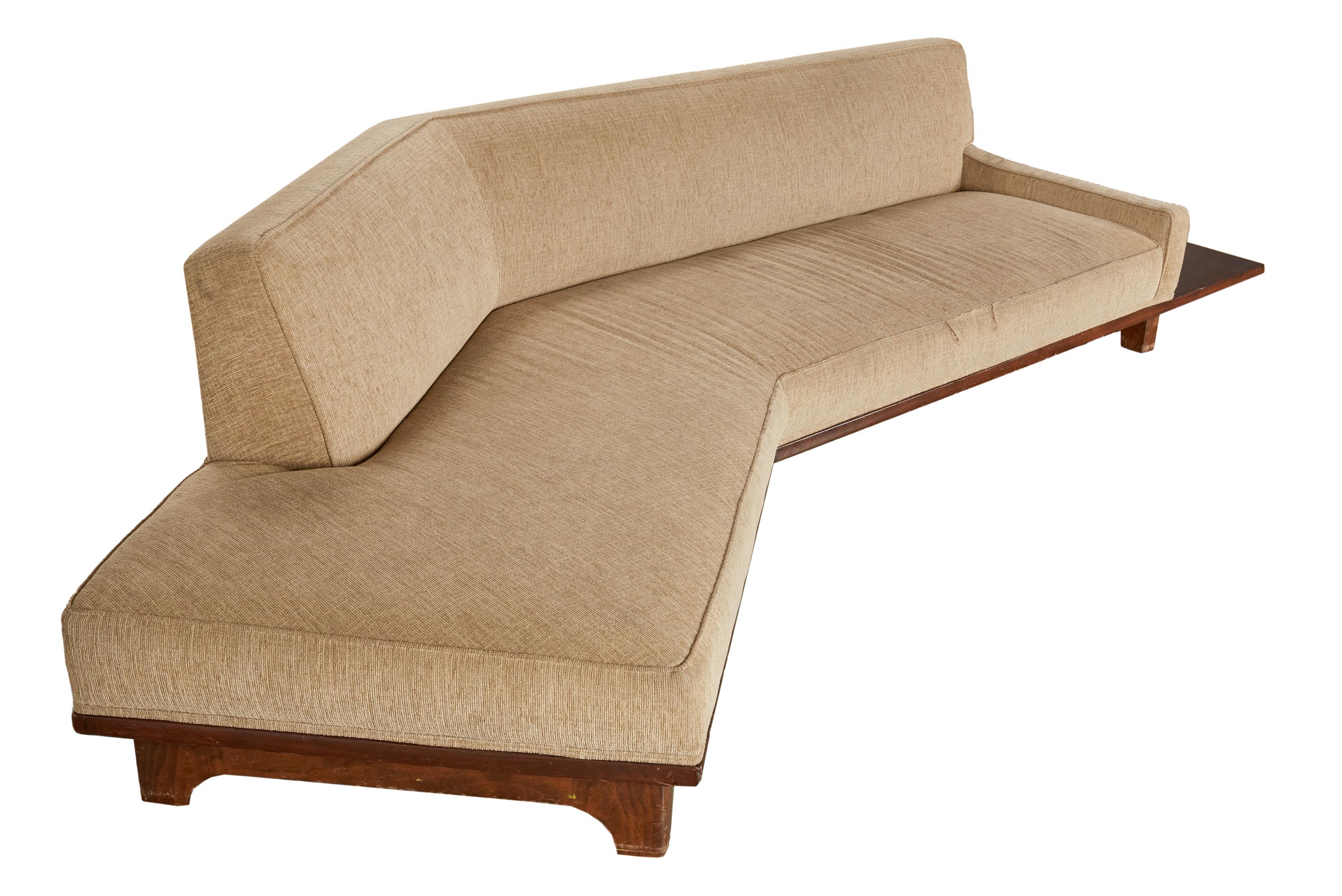
A vintage tan chenille upholstered Boomerang sofa with wood legs and attached end table.
This is the same model of couch used in David Lynch's 1997 film Lost Highway (Asymmetrical Productions). Portions of that film were shot in Lynch's own house, and the paintings shown above the couch were created by his ex-wife, Mary Sweeney. This could be the same couch used in the production, though it would have since been refinished and reupholstered.
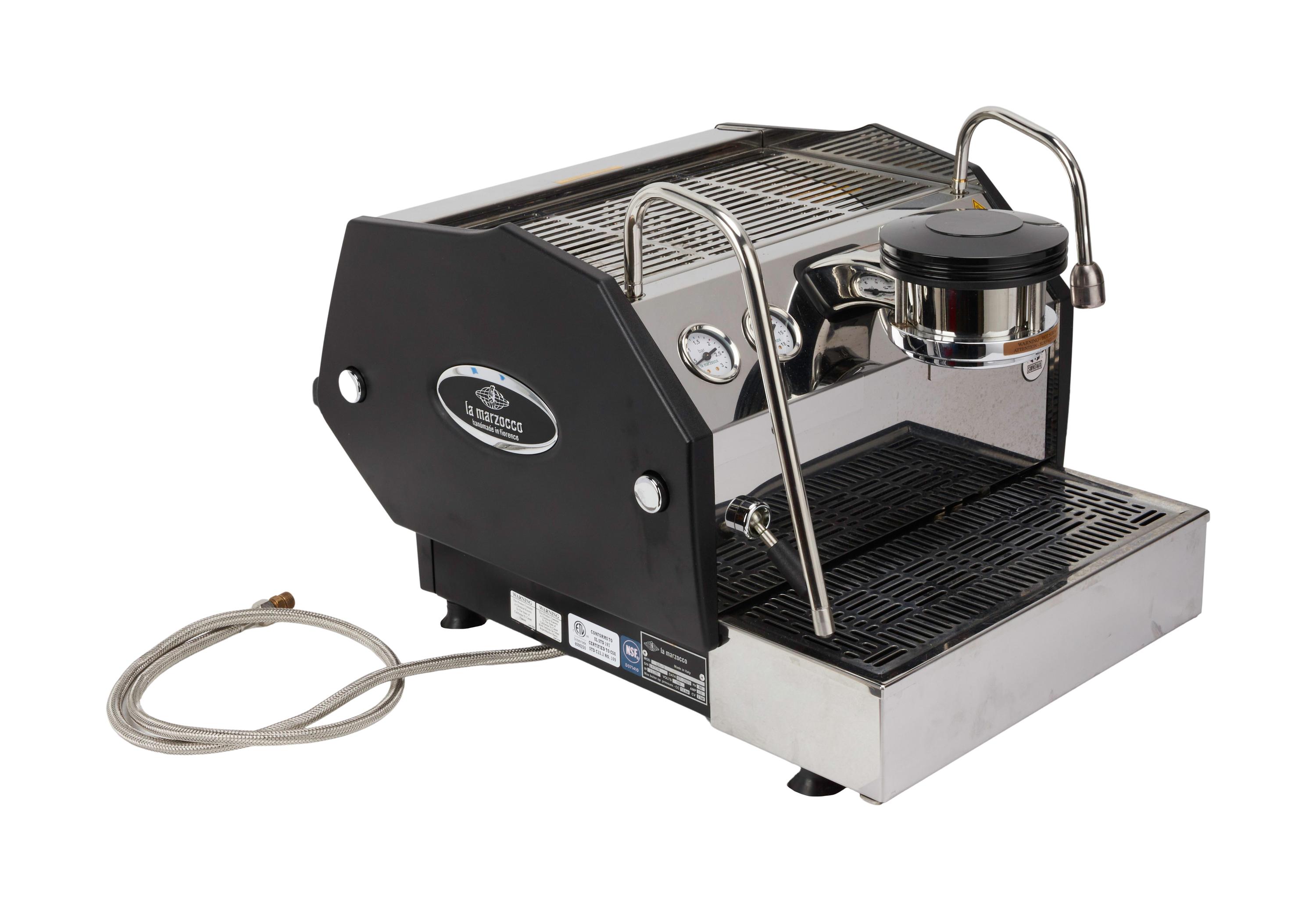
A large, top-of-the-line home espresso machine; made in Italy, with added accoutrements including portafillers, filter baskets, a tamper, a cleaning brush, machine cleaner, a red coffee knock box, and a manual; used by Lynch on a daily basis as he truly loved his coffee! New, these machines retail for $7,500+!
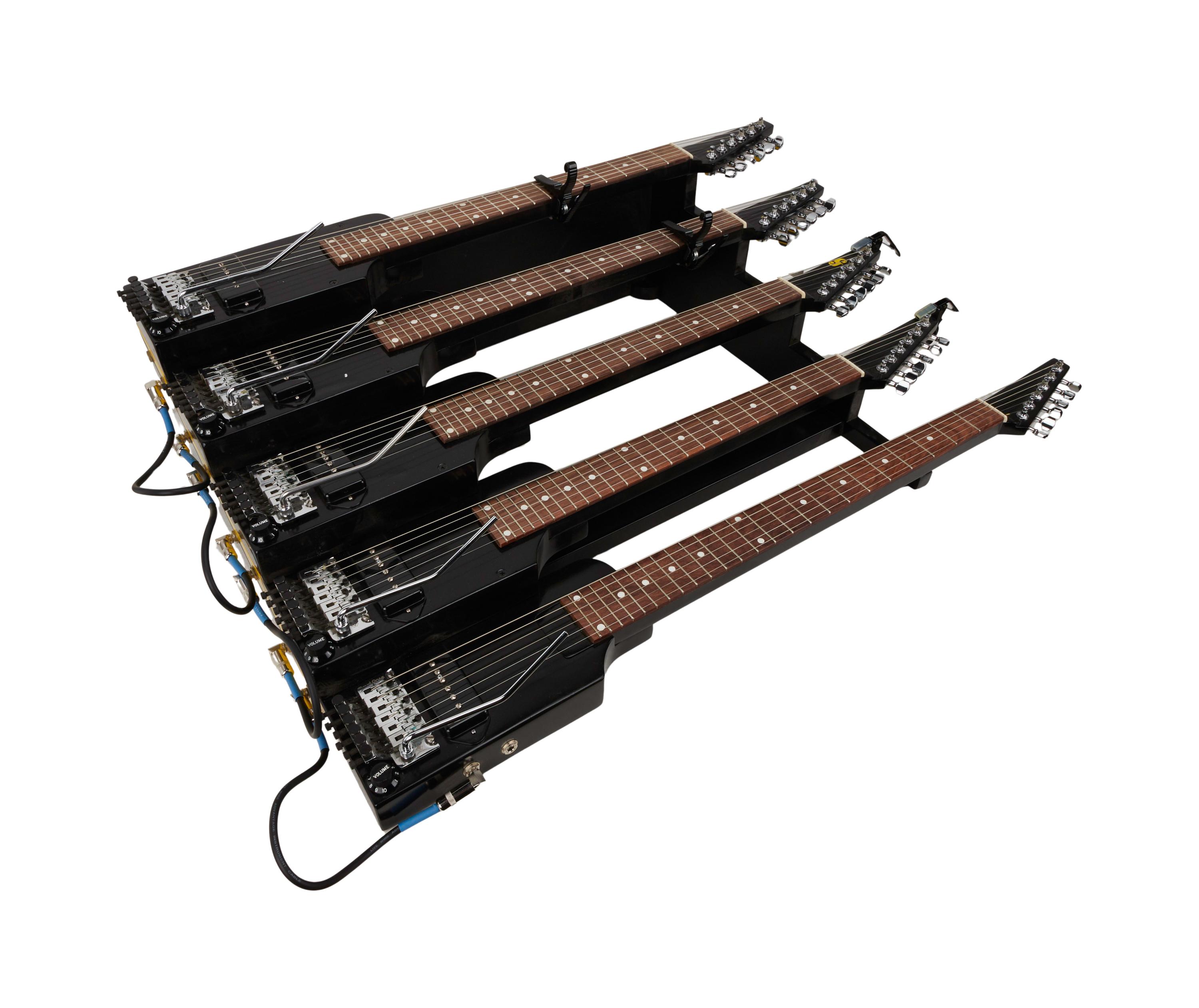
A 2012 Danny Ferrington Custom Console Steel style instrument with five fretted necks, designed and played by David Lynch in his home studio.
Although David was an acclaimed director, he was also passionate about music. He released numerous collaborative and soundtrack albums, and released his solo debut album Crazy Clown Time in 2011 as well as its follow-up The Big Dream in 2013. David played guitar on a number of tracks, often approaching the instrument in a non-orthodox manner.
“I taught myself and I play upside down and backwards, like a lap guitar,” David told Sam Molineaux in a 2001 interview with Boss Users Group Magazine. “I’m interested in making the guitar talk. It’s somewhat musical, but then again, it’s not.”
Perched on his lap with his left hand on the bridge, Lynch would wring chords from the guitar and tap the back of the neck while manipulating the vibrato arm, coaxing dreary soundscapes from them that seem wholly alien when layered against more traditional guitar stylings. This instrument was part of David’s studio, and while studio footage of David is scarce, it’s conceivable that he played this five-necked Ferrington in a similar manner.
Danny Ferrington was a respected luthier who made exceptional guitars for Kurt Cobain, Chrissie Hynde, Ry Cooder, Elvis Costello, and others. He made this guitar based on David Lynch’s own unique console steel style design. This custom instrument features four 24.5” scale length necks and a fifth 29.5” scale baritone neck. Each neck has a square profile, a rosewood fretboard, 24 frets, white dot inlays, six chrome Gotoh tuners on each headstock, and only the center neck has a gold Ferrington logo. Each neck and body are painted black and screwed into a black and yellow stair step console and is equipped with a single dogear P90 pickup, a chrome Floyd Rose vibrato bridge, and a single volume control. The volume controls allow any combination of necks to be used at the same time. Each neck has its own output and input jacks, run together to a single output using four patch cables. Four of the necks have capos attached at the headstock or on the neck itself, and four of the five necks are tuned to either a major or minor open tuning; the fourth is garbled.
The instrument includes a copy of the book Ferrington Guitars signed by Danny to David in 2009 along with an inscription reading “For David / We’ll be buddy’s forever / Love, Danny Ferrington.”
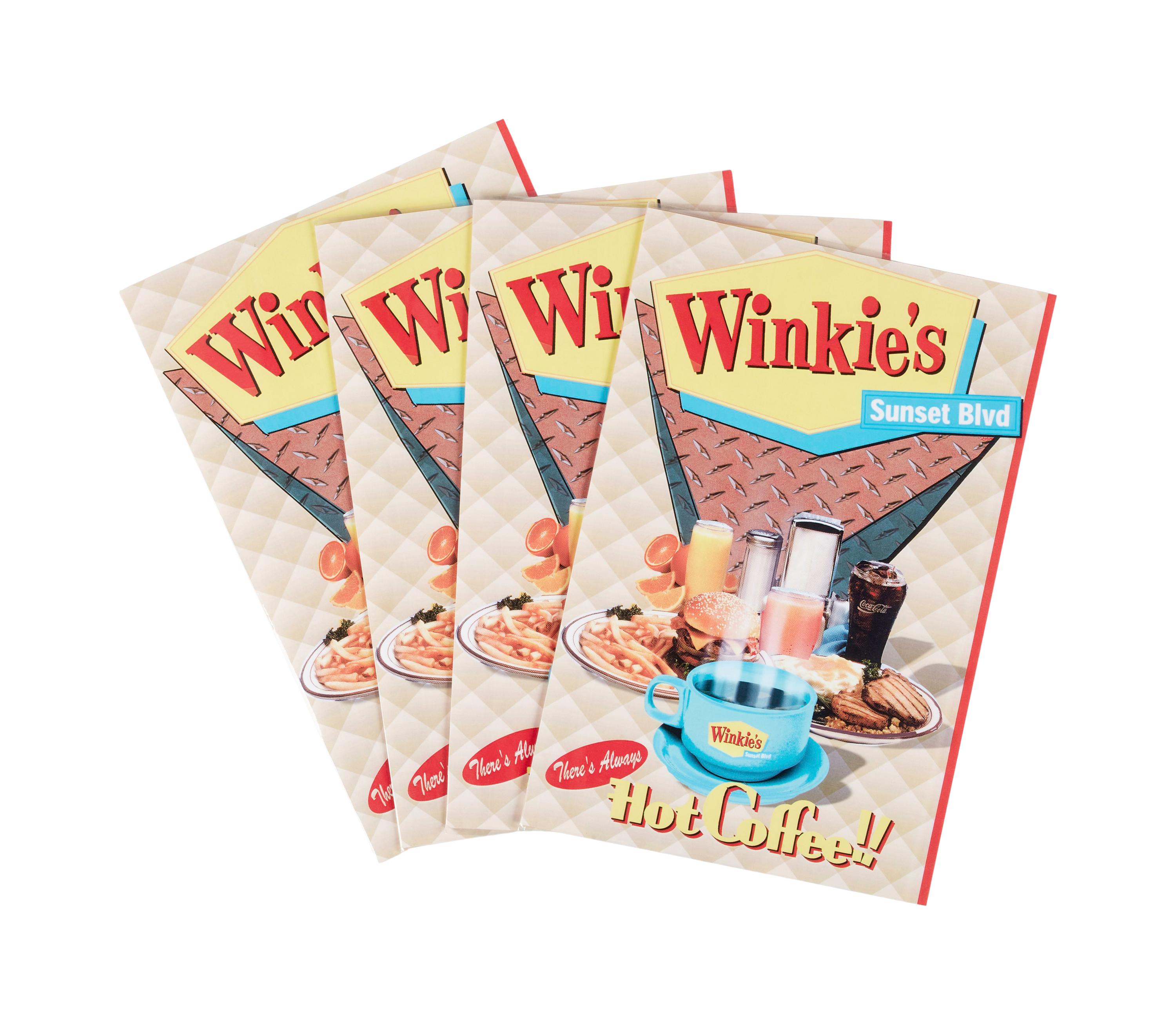
A group of four colorful prop menus for Winkie's Sunset Blvd., the diner where several important scenes take place in the film Mulholland Drive (Universal, 2001). Winkie's is one of the most recognizable locations in one of Lynch's most popular and iconic films, in which Los Angeles is one of the main characters. The front of the menu promises "There's Always Hot Coffee!!"
In one of the film's most famous scenes, two men meet at the diner because one of them has been having a recurring nightmare which takes place there. In the nightmare, he knows that there's a threatening man behind the diner because he can see him through the wall. The acquaintances go to the dumpsters behind the diner to investigate. In an article about the scene in Medium, Ryan H. Walsh says:
"As all readers likely already know, what the two characters find in the back of the diner is one of the most frightening things Lynch has ever conjured. The creature behind the dumpster’s reveal is a jump scare that breaks all the normal rules of jump scares and apparently causes the dreamer character to faint, have a heart attack, or perhaps even die right there on the spot."
This scene has been extensively analyzed, with several critics noting that its intended to emphasize the thin line between dreams and reality. Walsh theorizes that Lynch's inspiration for the scene might have come from his well-known relationship with Bob's Big Boy in Burbank, California where Lynch went every day at 2:30 for a milkshake, coffee, and inspiration, beginning in the late 1970s. Lynch made a video where he confessed that Bob's Big Boy milkshakes were, to him, "granulated happiness," until one day he went behind the diner and looked in a dumpster, and felt that they may be endangering his life. He said:
“The reason I stopped is because I went into a dumpster behind Bob’s. It was one of these giant dumpsters; you gotta go up a ladder to get into it. I went in and found the empty cartons and I read the ingredients on them….every word in the ingredients ended with ‘ate’ or ‘zene.’ There was not a natural thing in it. And I thought, ‘You know, Dave, I don’t know if you should be having those every day.’ So I weaned myself off of those.”
When Lynch died, Bob's Big Boy built a memorial shrine to him, where fans came to pay tribute. The New York Times also wrote an article about his love for the restaurant.
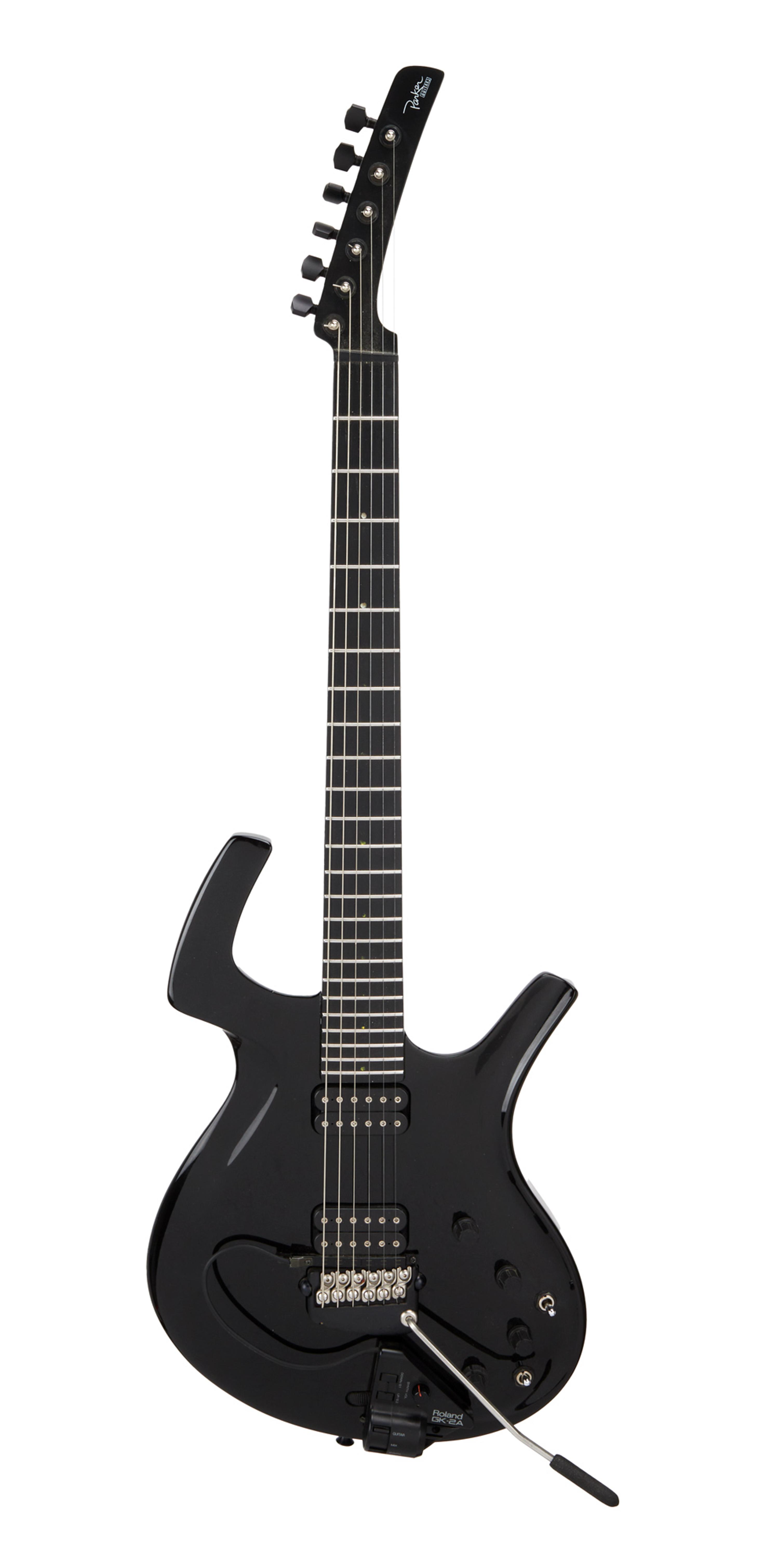
A guitar rig owned and played by David Lynch in his home recording studio known as Asymmetrical Studio. This lot includes a 1997 Parker Fly electric guitar, serial #231017BP, in metallic black finish with a Parker soft case plus a Roland VG-8EX Guitar synthesizer system, serial #ZM42688, with original manual, 13 pin cable, and expression pedal.
Both pieces were owned and heavily played by David Lynch in his home studio while producing numerous musical projects including his solo debut album Crazy Clown Time (2011) as well as its follow-up The Big Dream (2013). David can be seen strumming the guitar and manipulating its vibrato arm and changing settings on the VG-8 in numerous videos documenting the recording of his two solo albums Crazy Clown Time and The Big Dream and jamming with Moby, linked below.
In Lynch’s 2013 documentary on the making of The Big Dream, Lynch seems electrified as he describes his love of the guitar: “I started playing guitar only because one was there, and I wanted to see what sound effects I could make on it. But in making sound effects with the guitar, a deep thrill went into me, down into my soul. I loved working that thing.”
Lynch played guitar in a highly unconventional manner. With the guitar seated in his lap in a left-handed position and tuned to an open tuning, he would tap and swipe at the neck while actuating the vibrato arm with his left hand. When paired with the Roland GK-2 pickup installed on the Parker Fly, David used the VG-8 to change chords as he strummed the strings near the nut using his right hand. When powered on, the unit boots into a setting called DAV50, with the four numbered pedals cycling through A, F#mi, E, and D chords. Setting DAV50 is a clean guitar sound with a pulsing, Fender-like tremolo effect which is, in a word, perfectly Lynchian. The VG-8EX contains numerous other DAV50 user patches for different musical keys including F, E, D, Dmi, and Ab, and more.
In this manner he was able to coax the dreamy, atmospheric sounds heard on his albums, sounds heard throughout David’s creative universe. His unique style can be seen in the video linked below and can be seen in David’s hands in photographs posted here and here, where the guitar is easily identified by the fret position marker dots that David painted on the fretboard in white and yellow paint.
This Parker Fly features a 25” scale length scale length basswood neck with a 24 fret carbon glass epoxy fretboard with six black chrome locking Sperzel tuners on the distinctive six-in-line Parker headstock. The poplar body has carbon glass reinforcement and is finished in metallic black, with a signature Parker tremolo bridge, two DiMarzio humbucker pickups and a built-in piezo system with a volume control, blend, master tone, and a three-way toggle selector switch for the magnetic pickups, as well as a three way switch for the piezo system (off/blend/full piezo) with stacked controls for volume and tone. David has added a Roland GK-2A synthesizer pickup to the body with the pickup screwed to the body between the bridge and bridge pickup. The guitar includes a Parker soft case with two cables and the case strap inside the storage pouch.
For general use, the VG-8 guitar synthesizer system can also turn any steel string guitar into any number of instruments, from drums to chimes, horns, pianos, and even bass and 12-string pitch shifted instruments. Includes other built-in effects like reverb, flange, delay, chorus, and more. Includes manual, multi-pin cable for connecting a VG-8 to a GK-2 pickup, a Roland EV-5 Expression pedal, plus IEC power cable.
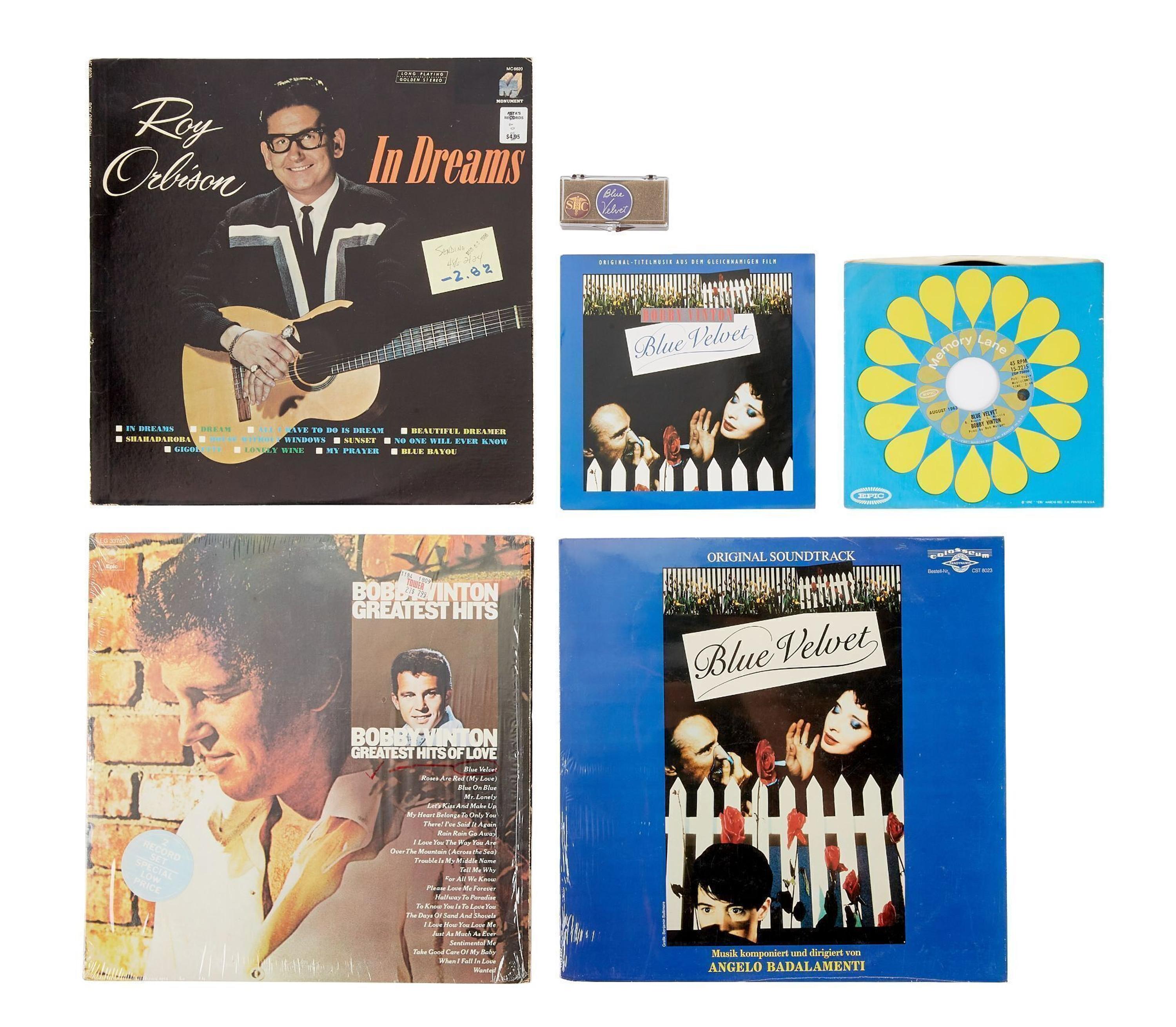
David Lynch's personal collection of vinyl records relating to his film Blue Velvet (De Laurentiis Entertainment Group, 1986). Includes:
An original, unopened copy of the German soundtrack to the film, featuring the original score by Angelo Badalamenti.
A two record set of "Bobby Vinton's Greatest Hits" and "Bobby Vinton: Greatest Hits of Love," with the song "Blue Velvet" circled and checked off with red marker handwriting on the front cover.
A copy of "In Dreams" by Roy Orbison with a sticky note on the front with handwriting and stamped with a date from March 1986.
A 1963 Memory Lane pressing 45 single of Bobby Vinton with "Blue Velvet" on one side and "Blue on Blue" on the other.
A 45 singe of the same two Bobby Vinton songs, re-packaged by Epic Records as part of the soundtrack to the film.
Together with two enamel pins, one that reads "Blue Velvet" and one that reads "SHC" with a medical eagle emblem in the center.