Live Auction
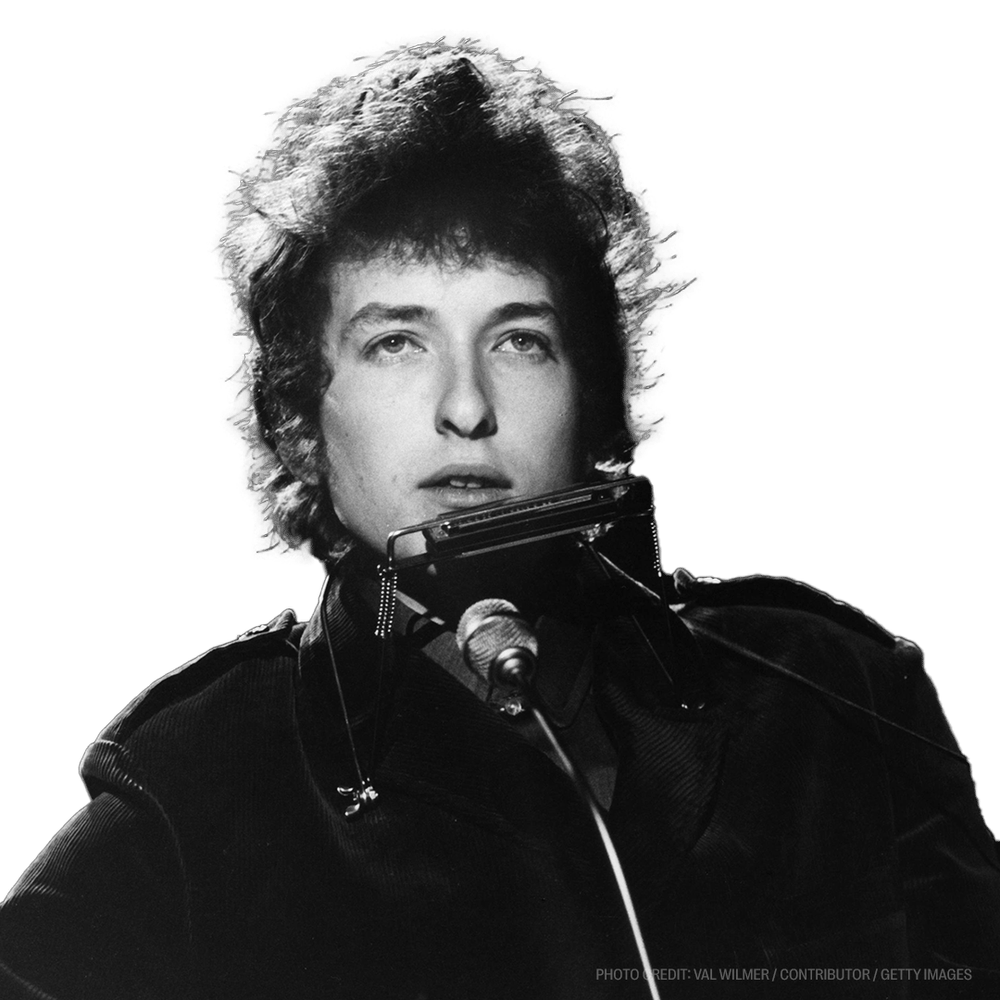
CELEBRATING BOB DYLAN: THE ARONOWITZ ARCHIVE & MORE
Live Auction
13007 S. Western Avenue, Gardena, California 90249
Phone 310-836-1818 | Fax 310-742-0155
Aronowitz didn’t simply write about the pop culture scene in his long running “Pop Scene” column in the New York Post, he was a part of the scene itself. Aronowitz became friends with many of the people he covered and he not only met and befriended these stars; in the words of his son Myles Aronowitz:
"My Father was this incredible connector. He was much more than a journalist, he understood what these artists were trying to do. He didn’t just meet these cultural icons, he brought them together. He introduced Allen Ginsberg to Bob Dylan, Bob Dylan to The Beatles. My Father was the one who turned The Beatles on for the first time. He connected Jimi Hendrix with Miles Davis, Nico with Lou Reed."
"He wasn’t just a writer with a powerbase as a New York columnist; Al had this unique kind of magic. He made these introductions that went on to shape culture itself. It was more than power or influence—there was something truly magical about what he did. The collection represents my Father’s instinctive ability to identify and connect with greatness. Each item is evidence of this, and how with his magic, he literally brought you into the room!”
Aronowitz’ proximity to and friendship with these artists resulted in some extraordinary artifacts. Chief among these are the two pages of authorial typescript lyrics to “Mr. Tambourine Man.” Bob Dylan sat at the Aronowitz family home kitchen counter in New Jersey one night, chain smoking, listening to Marvin Gaye’s “Can I Get A Witness” on repeat, while typing through the night to perfect the poetic lyrics for this song.
The collection also includes some extraordinary early large format photographs from Dylan’s first Columbia Records New York recording studio sessions in 1961 to his visit to Warhol’s Factory in 1965.
The sale includes rare early promotional poster, handbill and programs from his historic headline performance at New York’s Town Hall in April of 1965 among a number of other treasures.
Saturday, January 18, 2025
10:00 a.m. Central Time
The Musicians Hall of Fame & Museum at The Historic Municipal Auditorium
401 Gay Street
Nashville, Tennessee 37219
Wednesday, December 18, 2024 – Wednesday, January 15, 2025
Open: 10:00 a.m. – 5:00 p.m. Central Time daily
Related Articles
An untitled original oil on canvas painting by Bob Dylan, signed and dated in lower left in pen, Bob Dylan August 1st, 1968, stretched but unframed. The figural painting was executed at the very inception of Dylan's painting endeavors when he received his first set of oil paints as a twenty-seventh birthday present from his wife Sara in late May, 1968.
After receiving oil paints for his birthday, Dylan asked his neighbor, the American artist Bruce Dorfman, to show him how to use them. As chronicled in Howard Sounes 2011 book, Down the HIghway, The Life of Bob Dylan: "So when Sara bought Bob a box of oil paints for his twenty-seventh birthday, Bob asked Dorfman how to use them. The artist set up an easel in the corner of his studio and asked Bob what he wanted to paint. Bob produced an art book with a reproduction of "Girl With Flute," by Jan Vermeer. He did not want to copy the painting but simply to do something in that style. 'Sure this is where you want to start?' asked Dorfman, surprised by the audacity of Bob's ambition. 'Talk about immaculate painting!' But he humored him, demonstrating the basics of how to use oil paint. 'He was very, very attentive, really wonderfully attentive and absorbing it all very carefully.' Naturally, Bob could not paint like Vermeer. The next day he came with a book of Claude Monet reproductions. He had a series of these art books. 'Same deal. An hour, a mess.' The third day Bob had a book of Vincent van Gogh's paintings, and he had some success using a landscape as a starting point. After skipping a day, Bob appeared with a Marc Chagall book. 'This is the one that worked.' recalls Dorfman. 'It was perfect, because you had all these multilayered images - things flying, things walking, clocks flying, rabbits with green faces. It was all there. Chagall was it. He made the connection.' Bob began making a canvas that was clearly inspired by Chagall's style, but the images were from 'All Along the Watchtower.'" (153)
In June of 1968, Dylan's wife Sara was in a New York City hospital waiting to give birth to their third child. Sounes continues, "While Bob waited, he spent some time with poet Michael McClure...they visited the Guggenheim Museum to look at an exhibition of paintings by Marc Chagall and Odilon Redon. 'Bob wouldn't look at the Redons,' says McClure. 'He had eyes for nothing but the Chagall. Chagall was the meaningful world to him.' Bob would continue to paint in the style of Chagall for some time." (156)
Sounes also notes in the same chapter that Al Aronowitz came up to the house in Woodstock regularly during the summer of 1968. It is likely that he received this painting from Dylan during one of these trips.
30 x 24 inches
PROVENANCE: Property From the Al Aronowitz Archive
A vintage 1960s photograph on archival paper of Bob Dylan in Columbia Records New York studio in November of 1961 recording his first eponymous album. Pencil notations on verso of image with a series of numbers and letters likely film roll and frame numbers or notations on the print's exposure settings. The image features a 20 year old Dylan looking right at the camera allowing Huntstein to capture this natural portrait.
A vintage 1960s photograph on archival paper of Bob Dylan performing on stage, taken by an Associated Press agency photographer. Some sources indicate this image was taken during Dylan's historic first solo concert at New York's Town Hall on April 12, 1963. We have also seen a vintage Associated Press print of this image with original snipe on verso stating that this image was taken November 8, 1963 and that it was originally published with Tom Henshaw's November 17, 1963 article on folk music, though we can find no record of a Bob Dylan show that took place on November 8, 1963.
A rare copy of the four page concert program for Bob Dylan's first major solo concert headlining at New York's Town Hall, presented by Harold Leventhal. Prior to this show Dylan played small venues and clubs, nothing compared to this 900 seat venue. The program features a stock image on the cover, and an ad for the Columbia Record Club on the back, but the interior pages feature Dylan's poem "My Life In A Stolen Minute," with a notation in the hand of Al Aronowitz reading, "influences summed up / in last [paragraph]." This is the first time this poem was published.
A handbill for Bob Dylan's first major solo concert headlining at New York's Town Hall, presented by Harold Leventhal. Prior to this show Dylan played small venues and clubs, nothing compared to this 900 seat venue. The handbill features a great early photograph of Dylan in the studio, an incredibly attractive graphic presentation.
Two leaves of yellow paper containing three pages of authorial typescript lyrics comprising three progressive drafts of "Mr. Tambourine Man" with annotations in Bob Dylan's hand on the third draft of the song. Drafts one and two are on the recto and verso of the first sheet of paper, the second sheet contains draft three. The pages show substantial changes from the first draft to the third draft, which is close to the final version of the song, although it still has significant variations from the final lyrics. The song, recorded in January of 1965, appeared as the lead track on the acoustic side of Dylan's March 1965 album Bringing It All Back Home. The Byrd's version of the song, their debut single, was released one month after Dylan's own version, in April of 1965 and it reached number one on the Billboard Hot 100 and number one in the UK making it the first Dylan composition to reach number one in the United States and the UK.
A 1983 Fender Japan TL-52 electric guitar, with neck plate serial #V006978 and bridge serial #5084, in butterscotch blonde finish. Large, black “BOB DYLAN” stamps found on both the neck heel and neck pocket indicate it was made specifically for Dylan, who played instruments similar to this one from the 1970s to present day. According to the included copy of the Letter of Provenance, Dylan owned and played this guitar for many years before gifting it to famed amplifier technician and musician Cesar Diaz, who worked with Stevie Ray Vaughan, Keith Richards, Eric Clapton, Patti Smith, Neil Young, and more.
Levi's denim jacket hand embellished with velvet, lace and other textile patches worn by Bob Dylan in the feature film Hearts of Fire (Lorimar Motion Pictures, 1987). The jacket features hand embroidery throughout and it is trimmed with fringe. The jacket can be seen in pivotal scene where Dylan's character Billy Parker punches Rupert Everett's character James Holt. Levi's label present with no other markings. The costume designer on the film was Pip Newbery, who also worked in the costume department on Pink FLoyd: The Wall (MGM, 1982). Size XL


