Film & TV
Hollywood Legends: Directors Cut
From Robert Wise's flying saucer miniature to William Wyler's velvet gloves and Oliver Stone's signed screenplays, explore rare director-owned artifacts from the Hollywood Legends auctions.
Share



A director's presence is felt everywhere in a film and seen almost nowhere. Actors occupy the screen, composers fill the air, but what a director leaves behind is something harder to locate — the invisible architecture of a scene, the decision about where to place a camera, how long to hold a silence, what a moment is really about beneath its surface.
The great ones mark cinema permanently. It turns out, they also leave physical traces: a miniature spacecraft, a pair of velvet gloves, a signed script, a shelf of books. In our Hollywood Legends auctions, these objects resurface — modest in size, enormous in meaning.
Robert Wise and the Saucer That Warned the World
In 1951, Robert Wise directed what many critics consider the finest science fiction film ever made. The Day the Earth Stood Still arrived not as escapist entertainment but as a Cold War warning, delivered by an alien emissary named Klaatu who had traveled to Earth with a simple message: stop preparing for war, or face annihilation. The film's power lay in its restraint — its intelligence, its moral seriousness, its refusal to offer easy comfort. It was, and remains, one of the rare genre films that functions equally well as philosophy.
At the center of the film's visual imagination was a flying saucer, and at the center of that saucer was a team of effects artists led by the legendary L.B. Abbott. The 1/24-scale fiberglass miniature that now comes to auction is among the most historically significant props in American cinema. Abbott — who would go on to win Academy Awards for Doctor Dolittle, Tora! Tora! Tora!, The Poseidon Adventure, and Logan's Run — constructed the craft with a precision that made it credible onscreen at a time when science fiction was still struggling to be taken seriously. The model's most famous appearance comes early in the film, when the saucer descends over a Washington, D.C. baseball field, its oval of light gradually resolving into shape as it passes over the Washington Monument. It was one of the first times an optical matte process had been used to depict a miniature in flight — a technical breakthrough that changed how effects were conceived.
The model's subsequent history is nearly as remarkable as its origins. Effects master Greg Jein, one of the great preservationists in Hollywood history, rescued it from the 20th Century Fox lot and kept it for decades, eventually placing it on display at Disney-MGM Studios through the American Film Institute. That it survived at all is something of a miracle. That it now exists in the condition it does — silver-painted fiberglass, a small triangular opening cut into the dome, fully mounted for display — is a testament to Jein's care. The film celebrates its 75th anniversary this year. The miniature that helped launch modern science fiction is exactly as it appeared on screen.
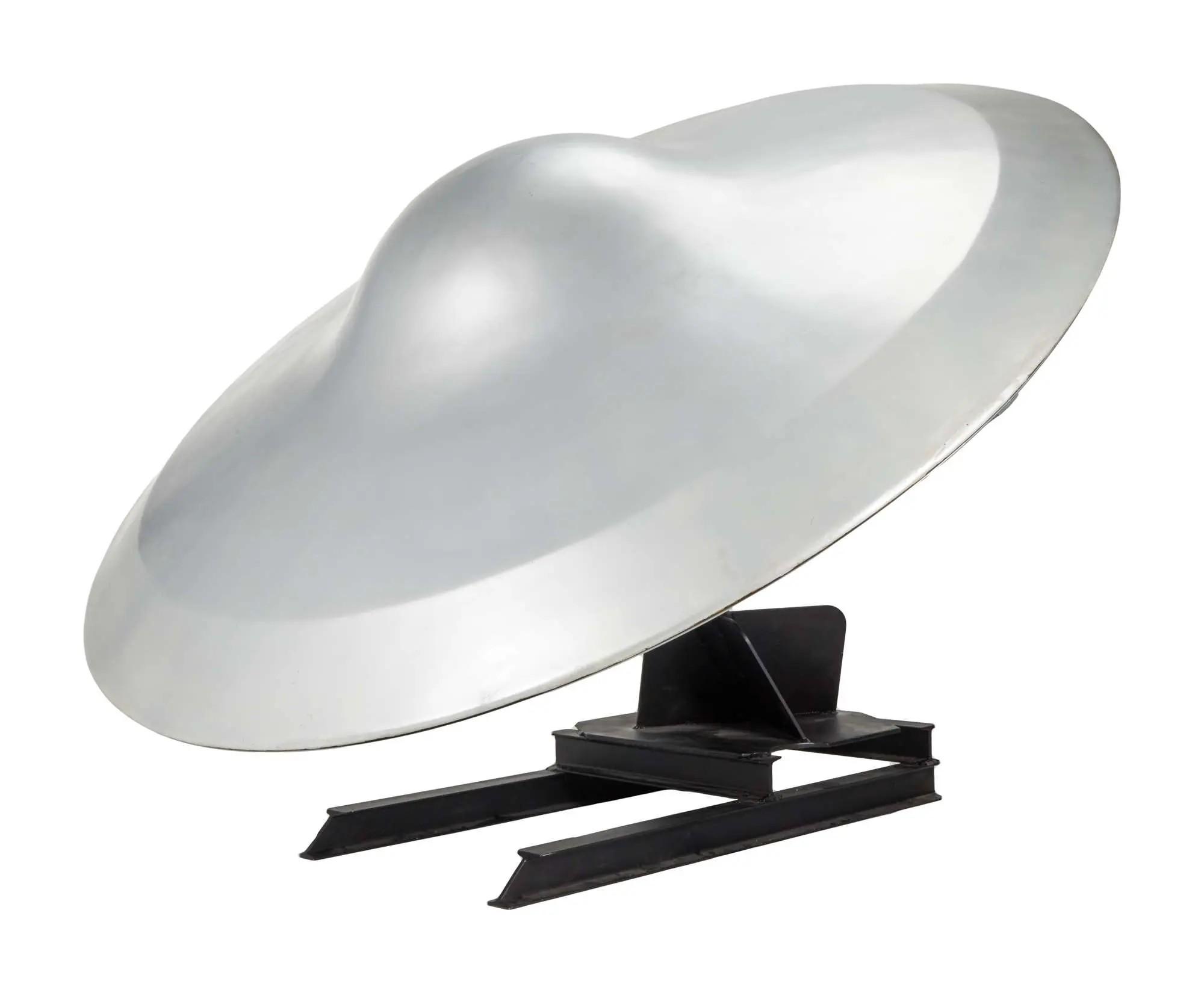
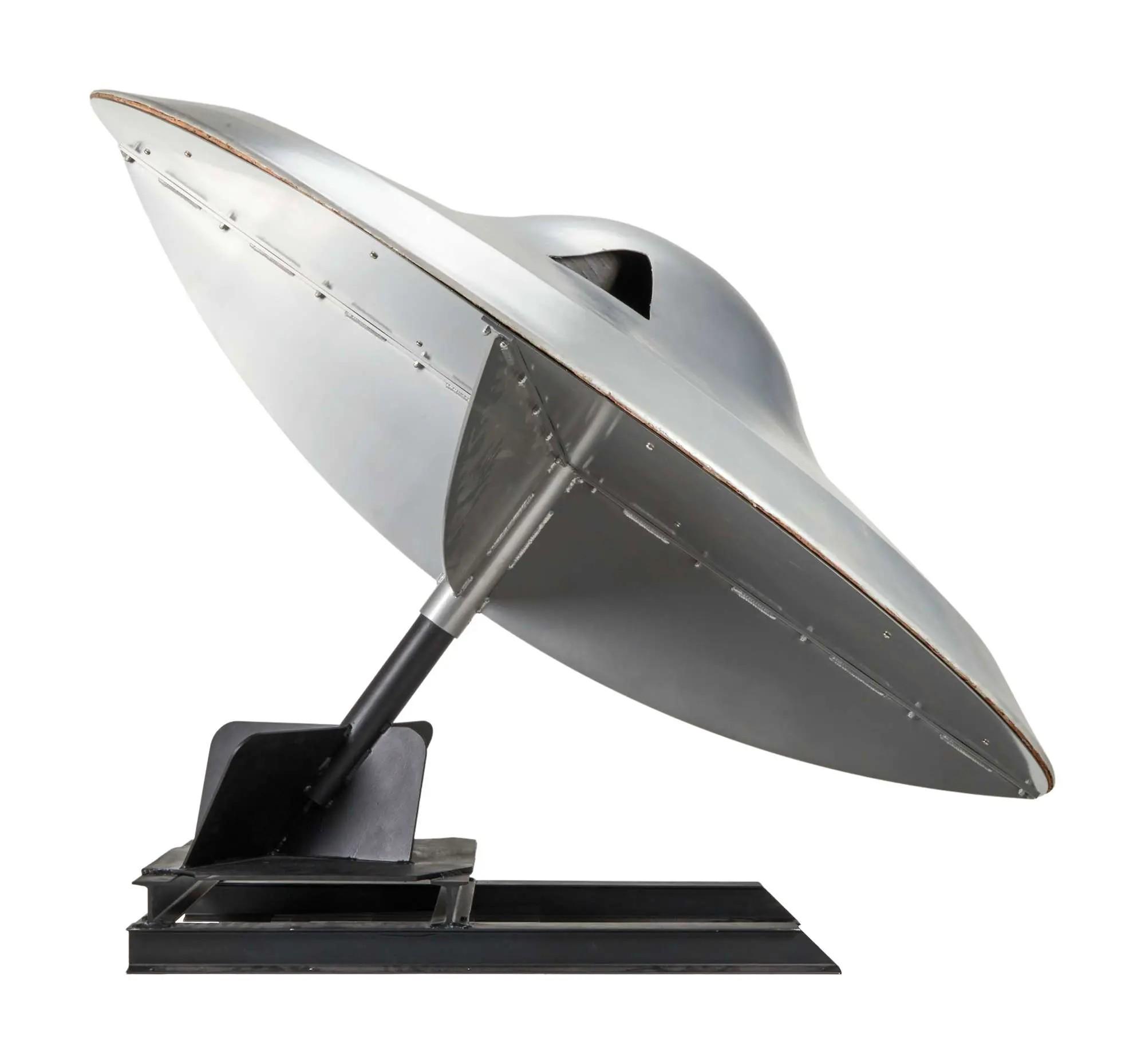
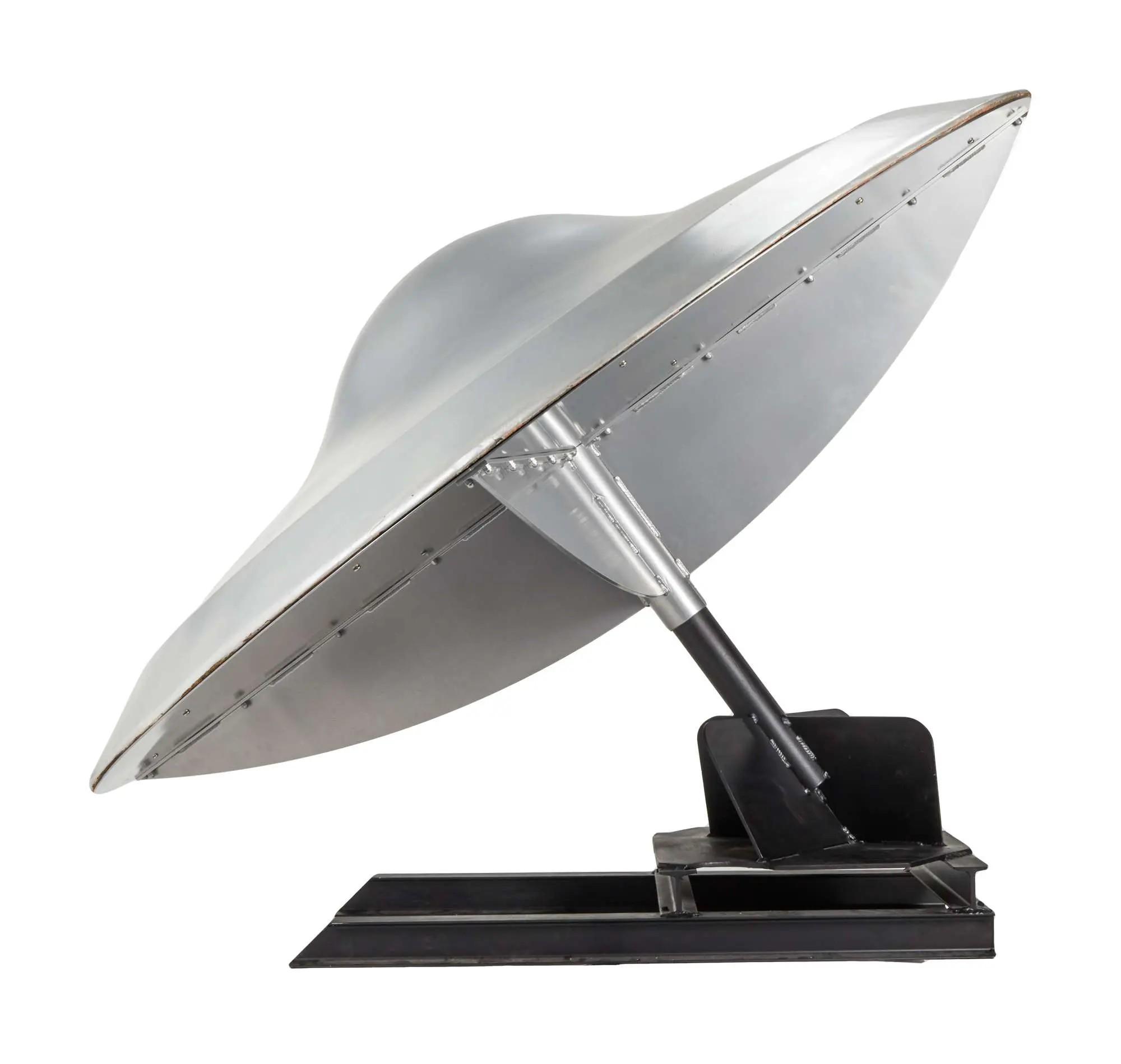
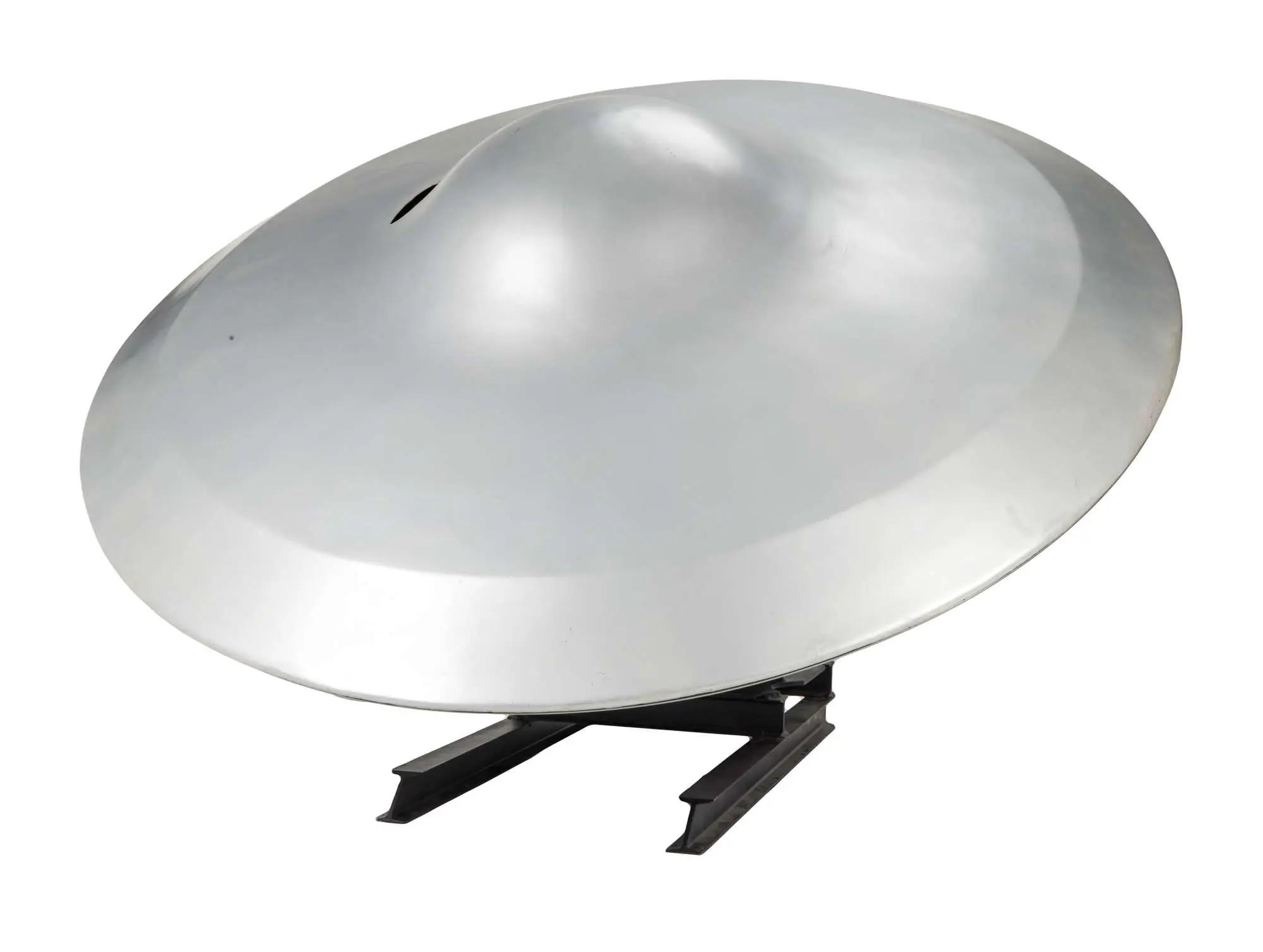
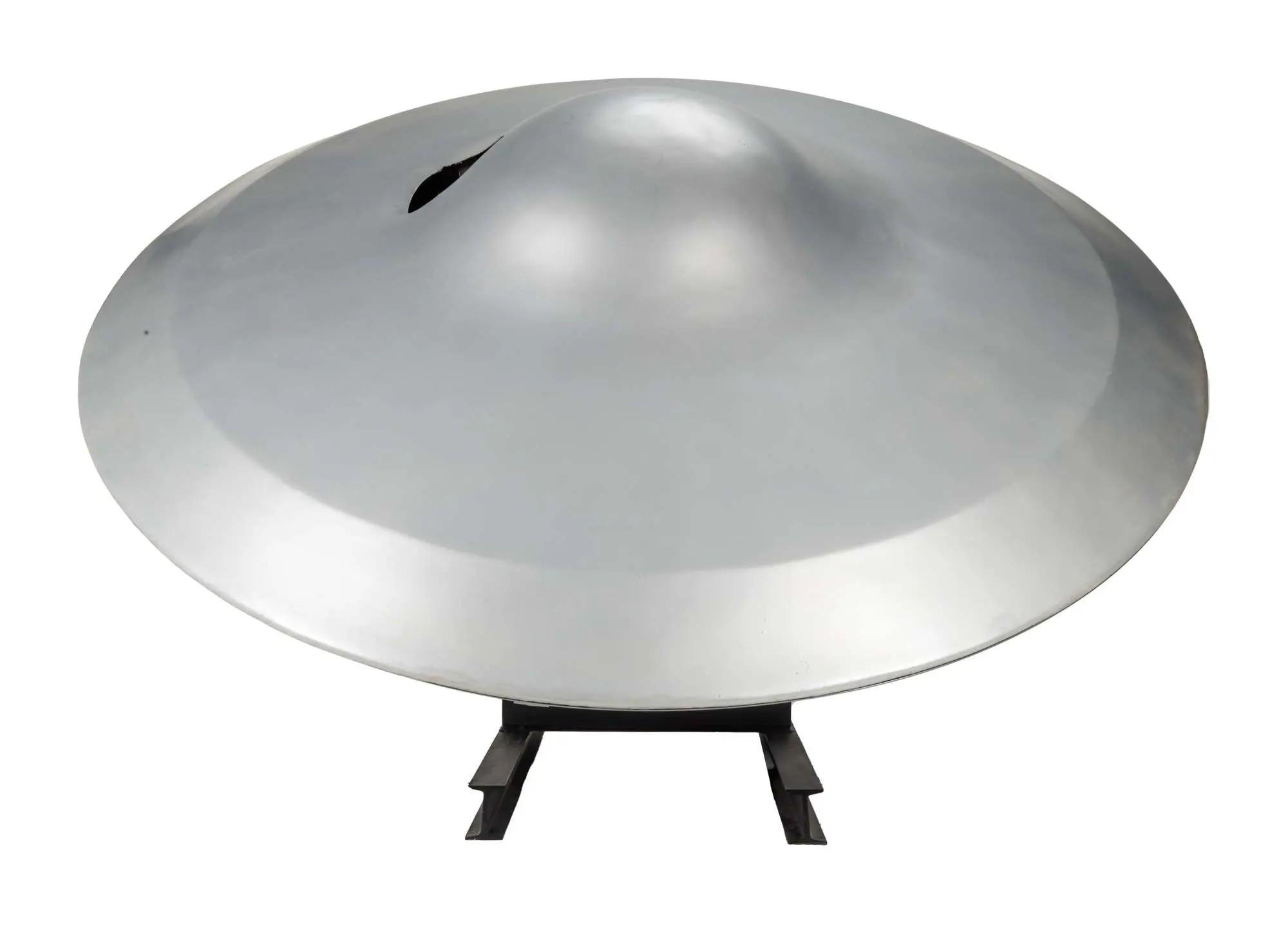
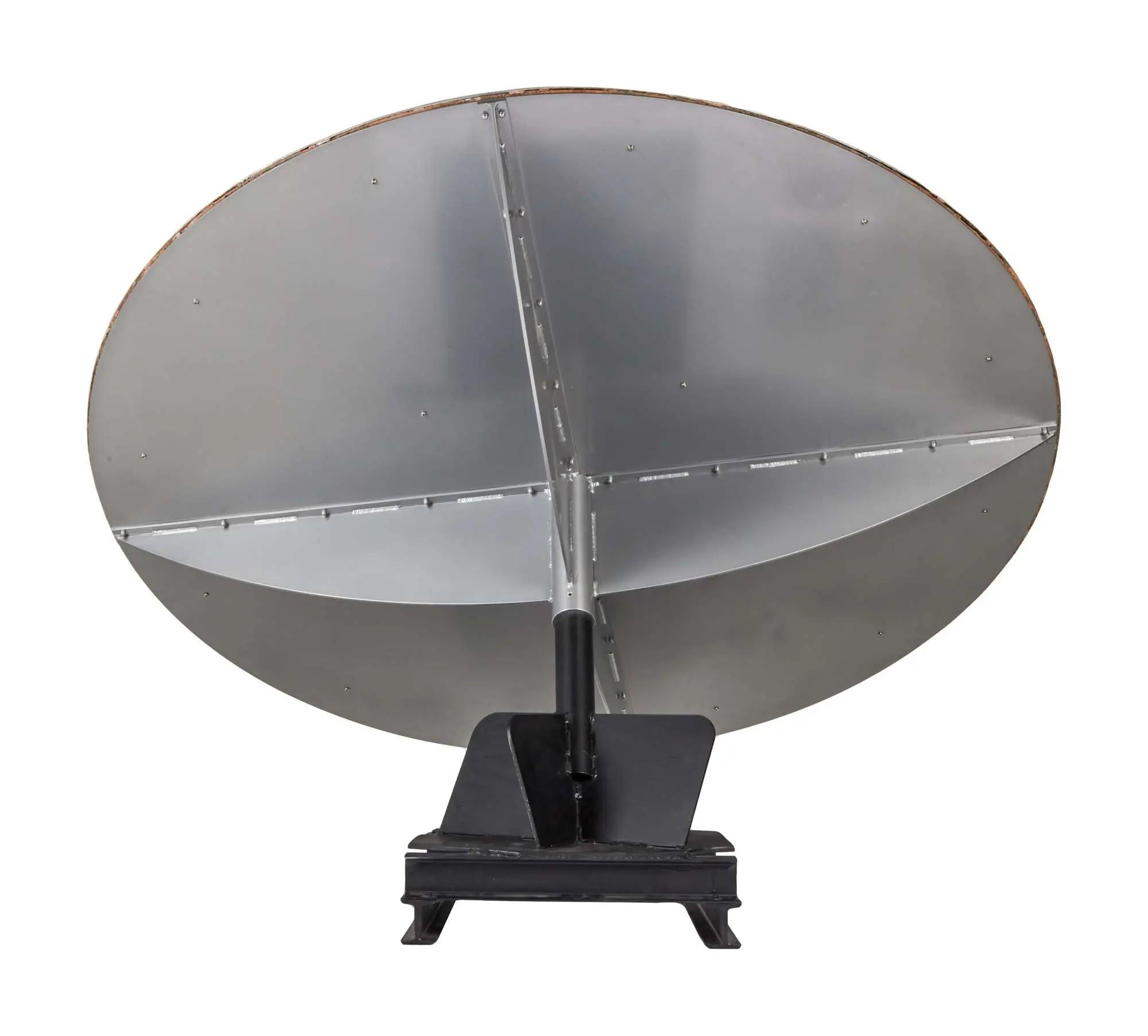
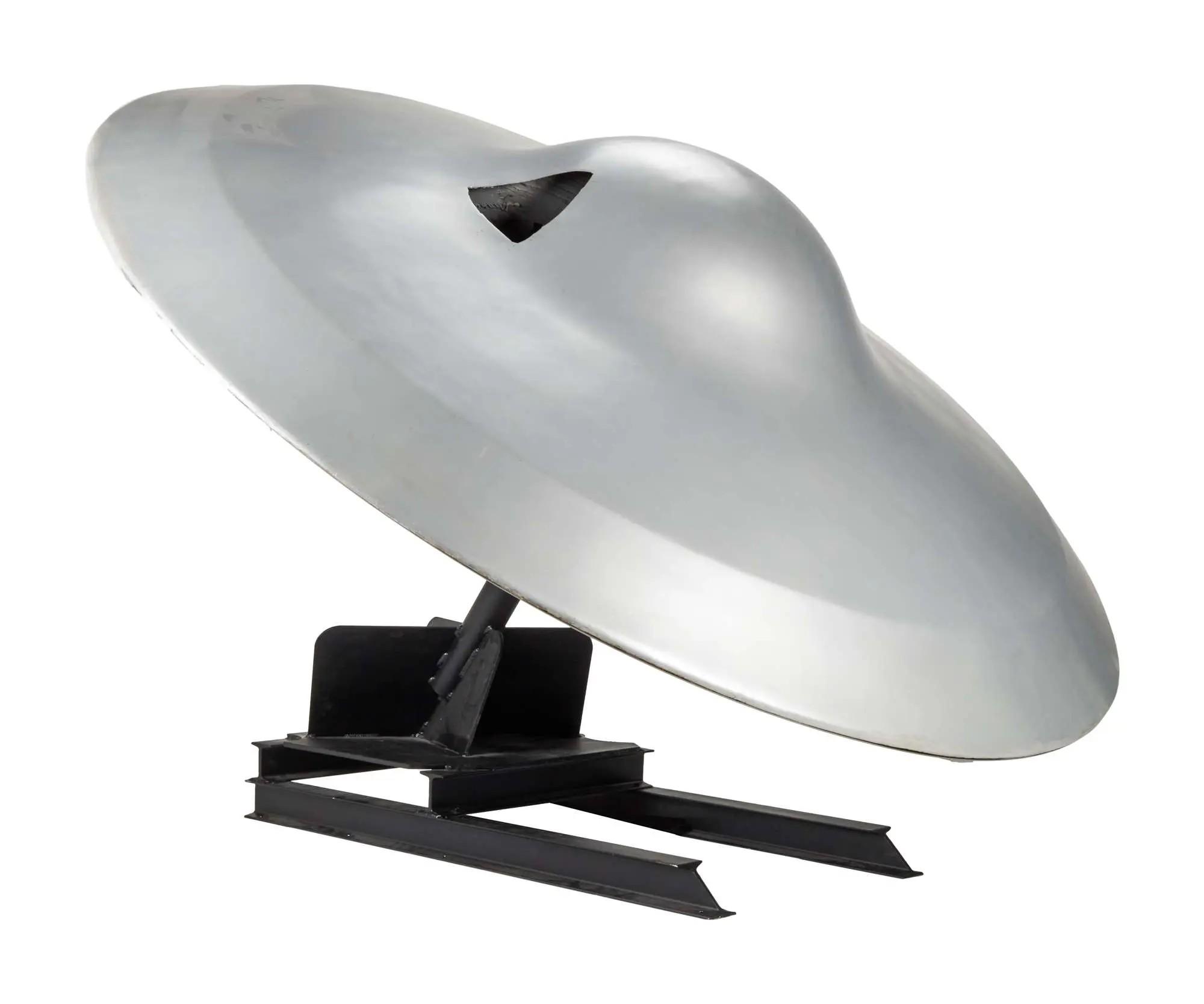
1. Lot #11. The Day the Earth Stood Still (1951) | Original Klaatu Flying Saucer Miniature,
Alfred Hitchcock: Self-Portrait on a Customs Form
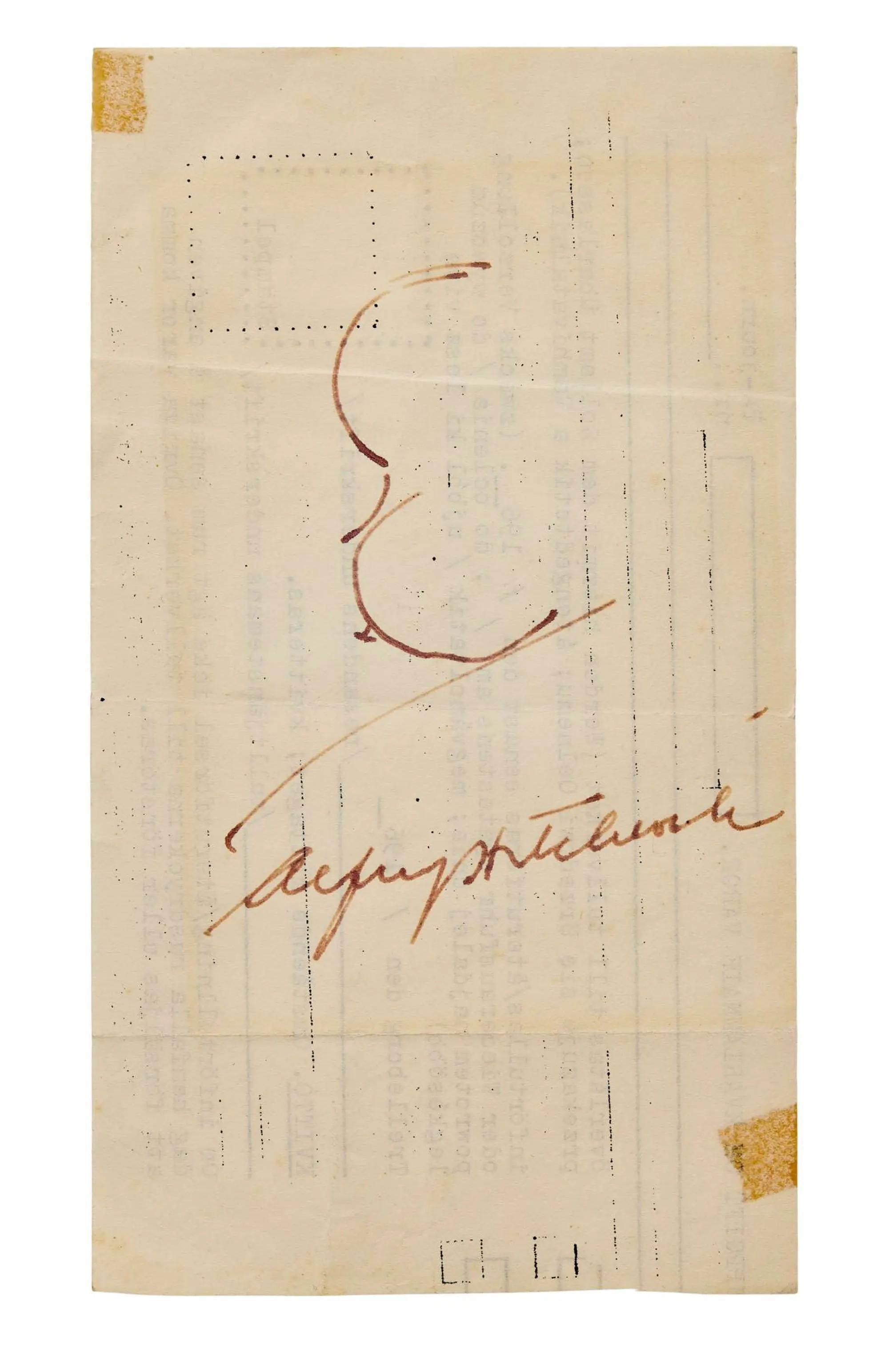
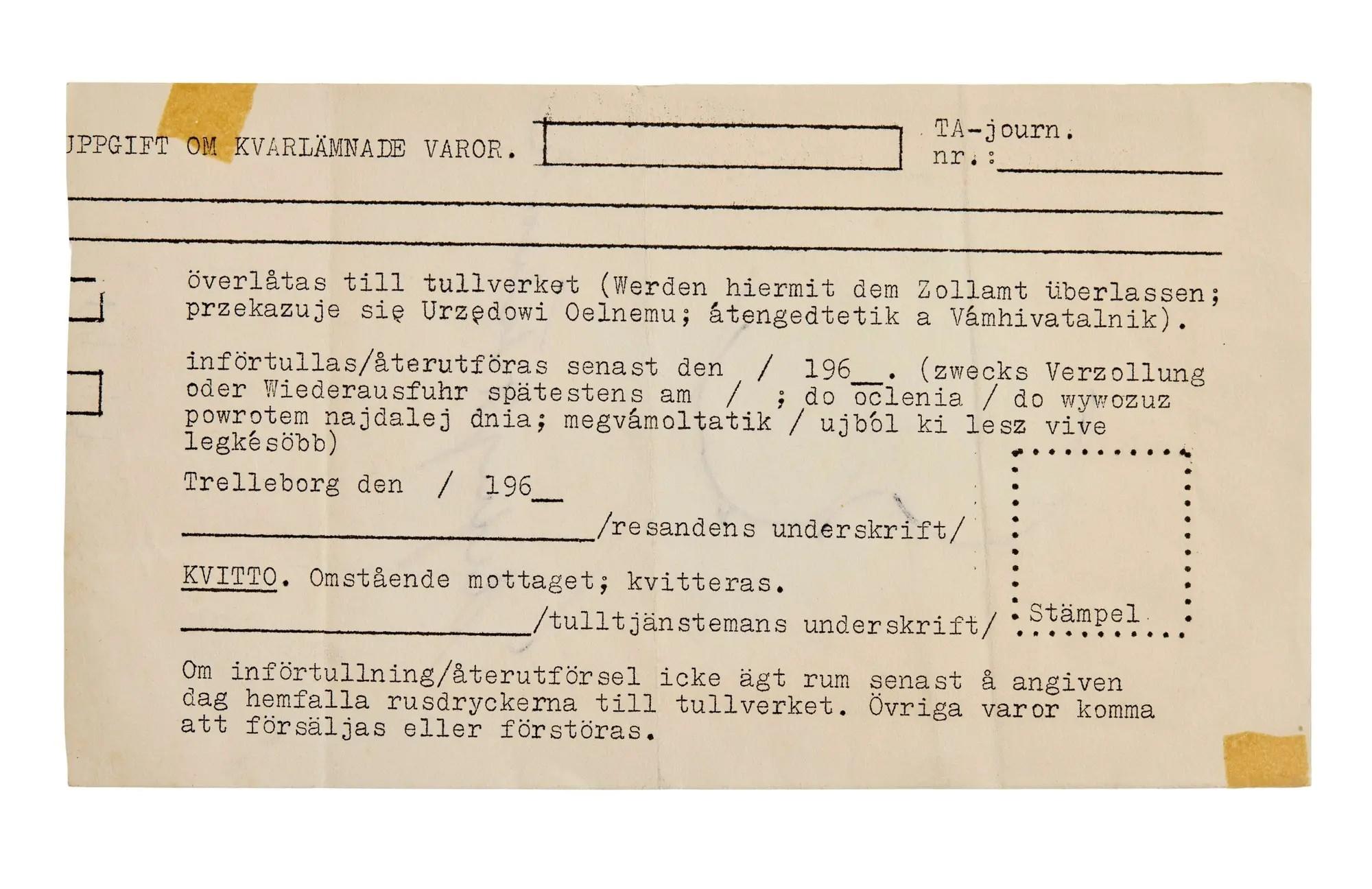
What’s perfectly Hitchcockian about this object is that on a Sunday in November 1965, Alfred Hitchcock was in Trelleborg, Sweden, scouting harbor locations for what would become Torn Curtain when a customs officer asked for his autograph. Hitchcock, apparently in good spirits — or perhaps simply amused by the symmetry of the setting — did not merely sign his name. He drew himself, in black felt-tip pen, on the back of a customs form for goods that had been held up by import restrictions. The self-portrait and signature exist, together, on a document defined by bureaucratic limitation. Hitchcock, who spent his career turning ordinary, constraining situations into vessels of dread and dark comedy, could not have chosen a more appropriate canvas.
The anecdote is independently verified by a Swedish article in the anniversary book Trelleborg 750, written by one of Hitchcock's companions on the trip, which describes the director's harbor visit and his encounter with the customs officers. The object is what it is — a spontaneous, unguarded gesture by one of the most guarded men in cinema, preserved by a customs officer who understood he was in the presence of a living legend and witnessed the acquisition of something worth keeping.
1. Lot #159. Alfred Hitchcock | 1965 Signed Self-Portrait Related to “Torn Curtain”,
William Wyler: Iron Hand in a Velvet Glove
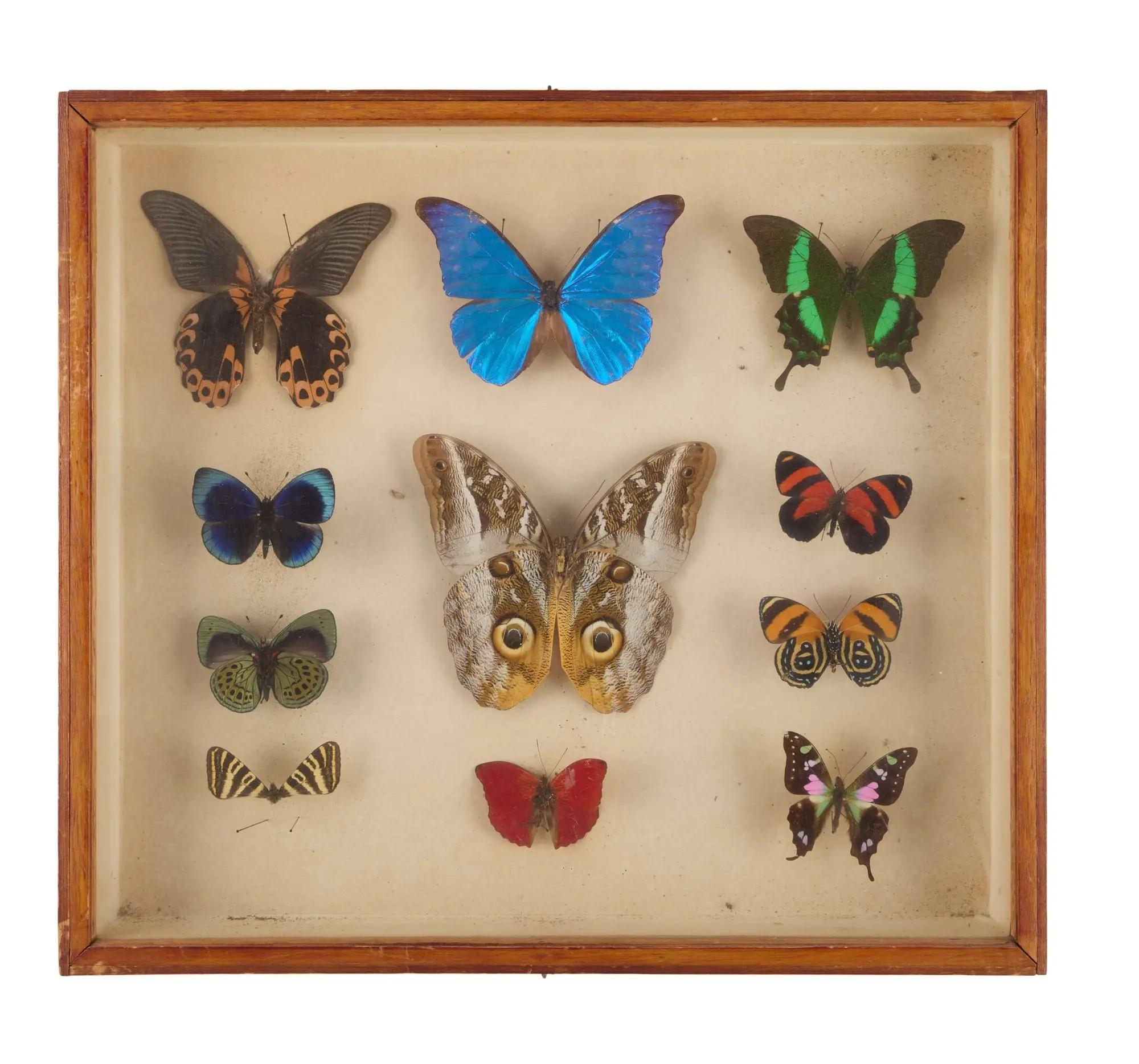
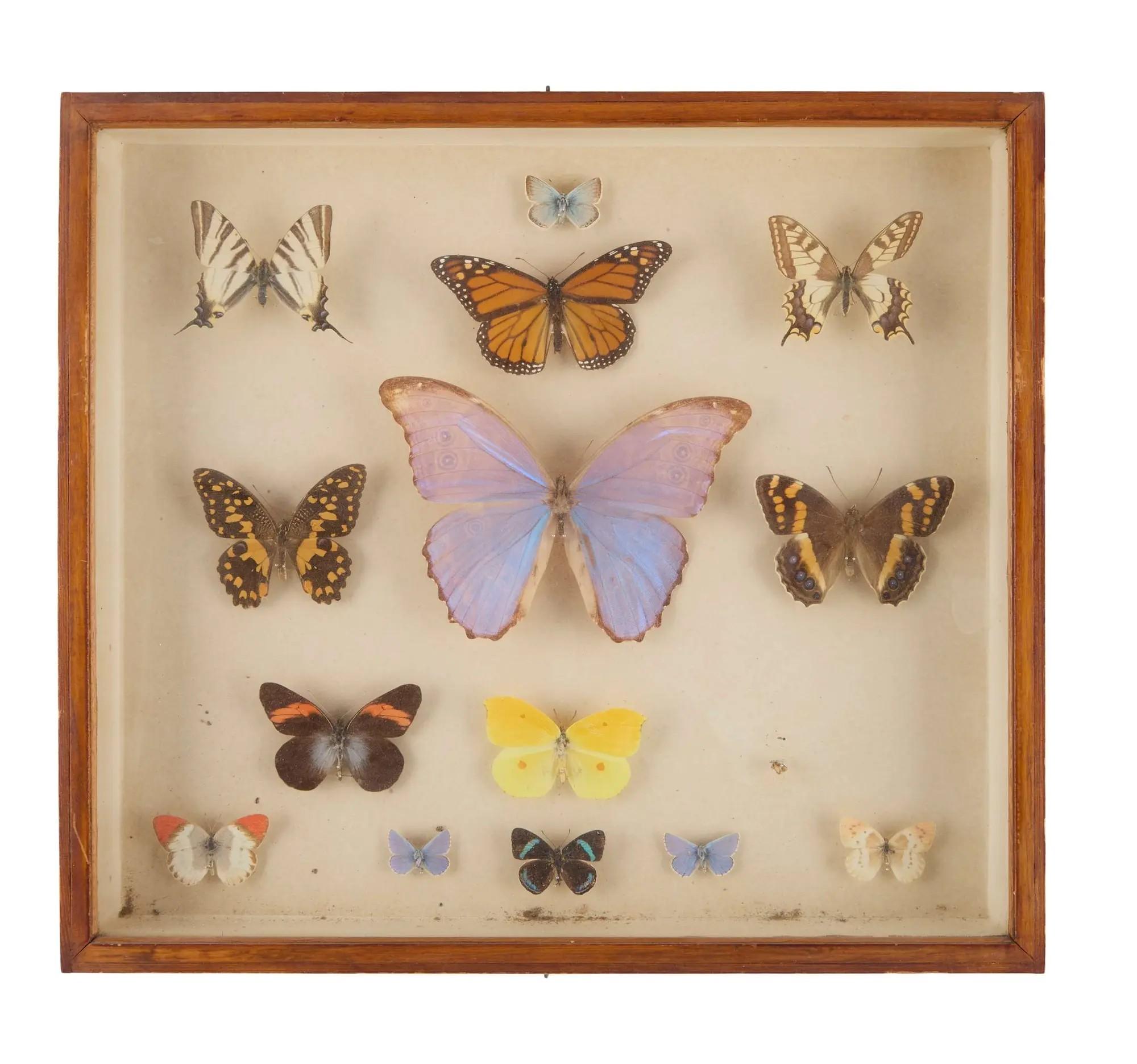
William Wyler directed fifty films and received twelve Academy Award nominations for Best Director — a record that still stands. He won three times. Mrs. Miniver, The Best Years of Our Lives, Ben-Hur: the names alone constitute a chapter of film history. He was also, by virtually every account, one of the most demanding directors who ever lived. Actors loved him and feared him, sometimes simultaneously. Bette Davis once walked off his set for a week. Olivia de Havilland nearly threw luggage at him. The umpteenth take of the same scene, over and over, until something true emerged — that was Wyler's method.
Greer Garson knew all of this when she agreed to star in Mrs. Miniver in 1942. So she went shopping. She found a pair of black velvet gloves, had brass buttons affixed to each — one reading "For the Iron Hand," the other "of William Wyler" — and sent them to him in a box with ribbons, before a single frame had been shot. On the first day of principal photography, Wyler appeared on set wearing them. "He wore them with great panache," Garson later recalled.
The joke landed. The collaboration endured. Mrs. Miniver won six Academy Awards, including Best Picture and Best Director for Wyler, and Best Actress for Garson. More significantly, it may have changed history. Winston Churchill credited the film's final speech — in which a vicar addresses his congregation in a bombed church, urging defiance against tyranny — as propaganda worth a hundred battleships. Franklin Roosevelt had it broadcast in French, German, and Italian across German-occupied Europe and airdropped in leaflets over occupied territories.
Wyler kept the gloves for the rest of his life, in a private keepsake box among his most personally treasured possessions. After his death in 1981, they passed to his son David William Wyler, who commissioned a shadow box incorporating the gloves with a period production still. The gloves have never previously been offered for sale.
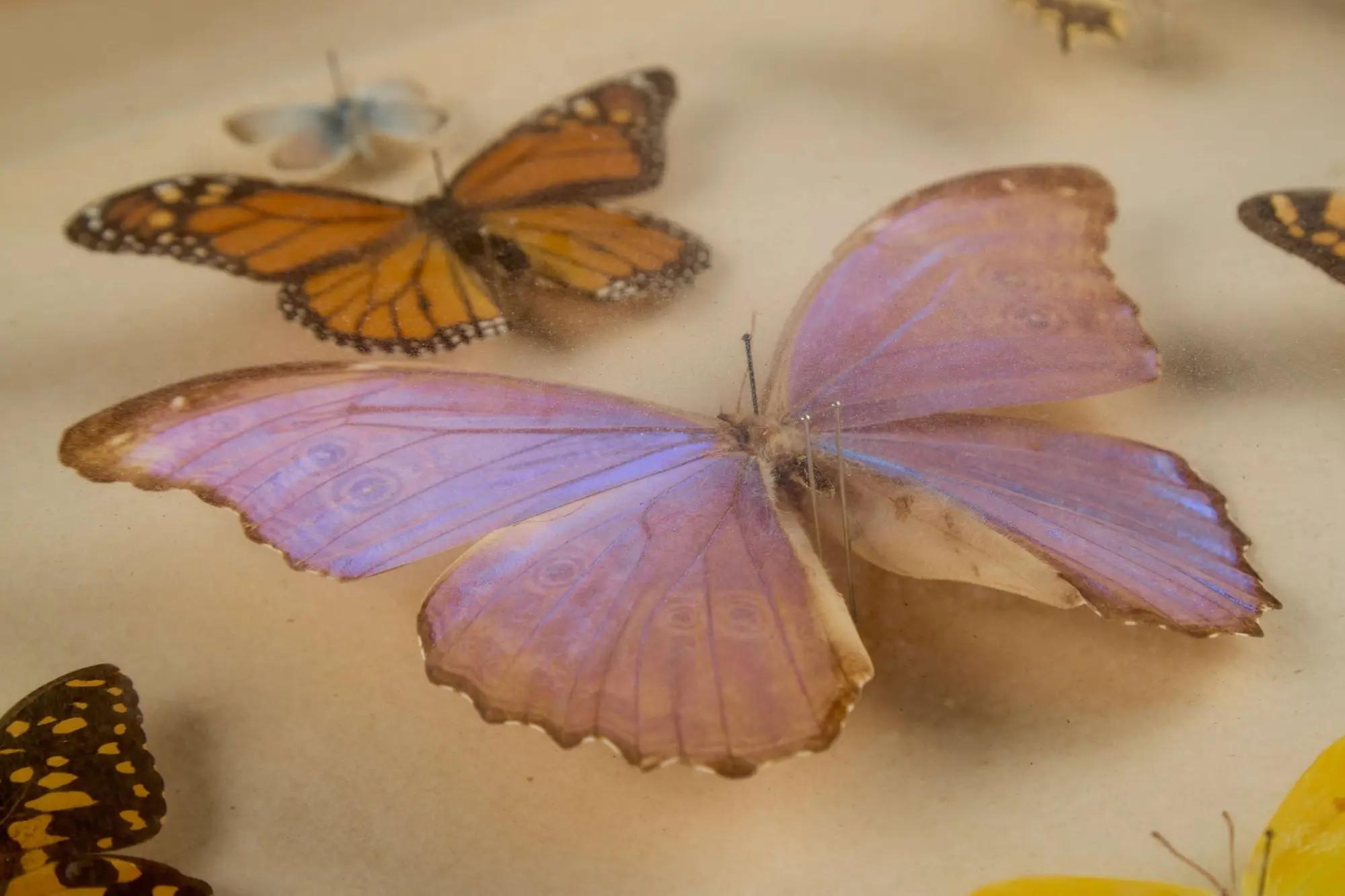
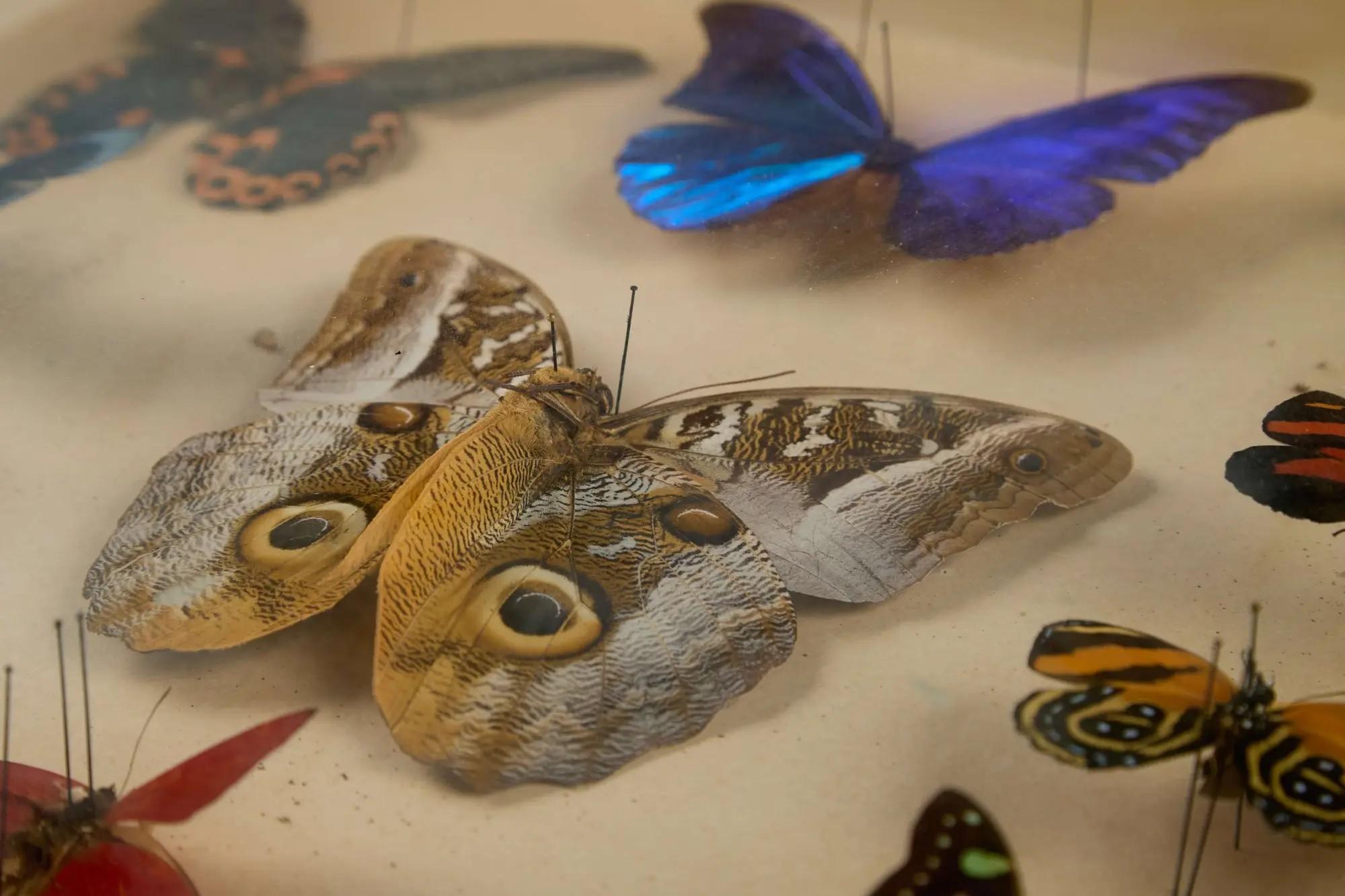
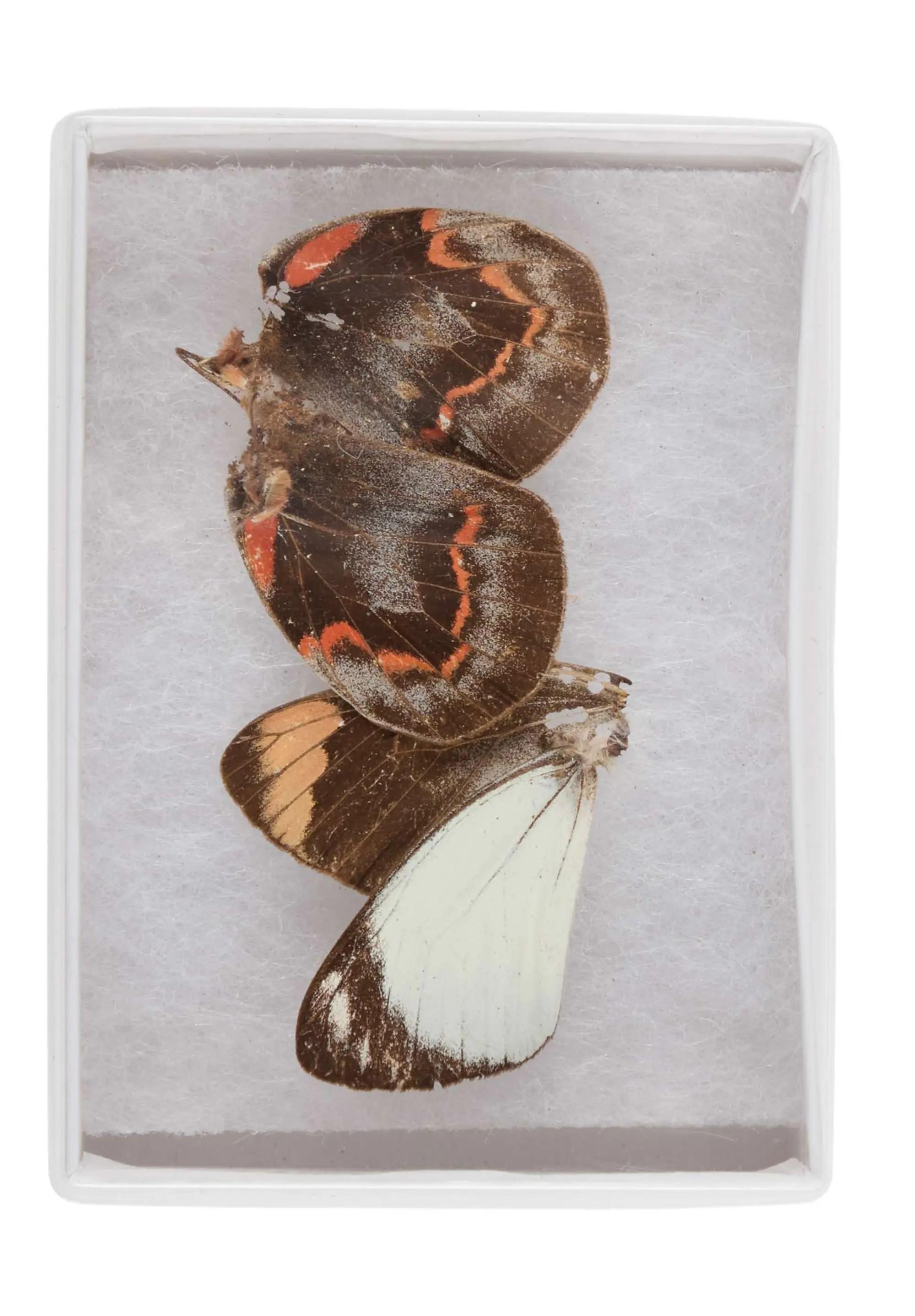
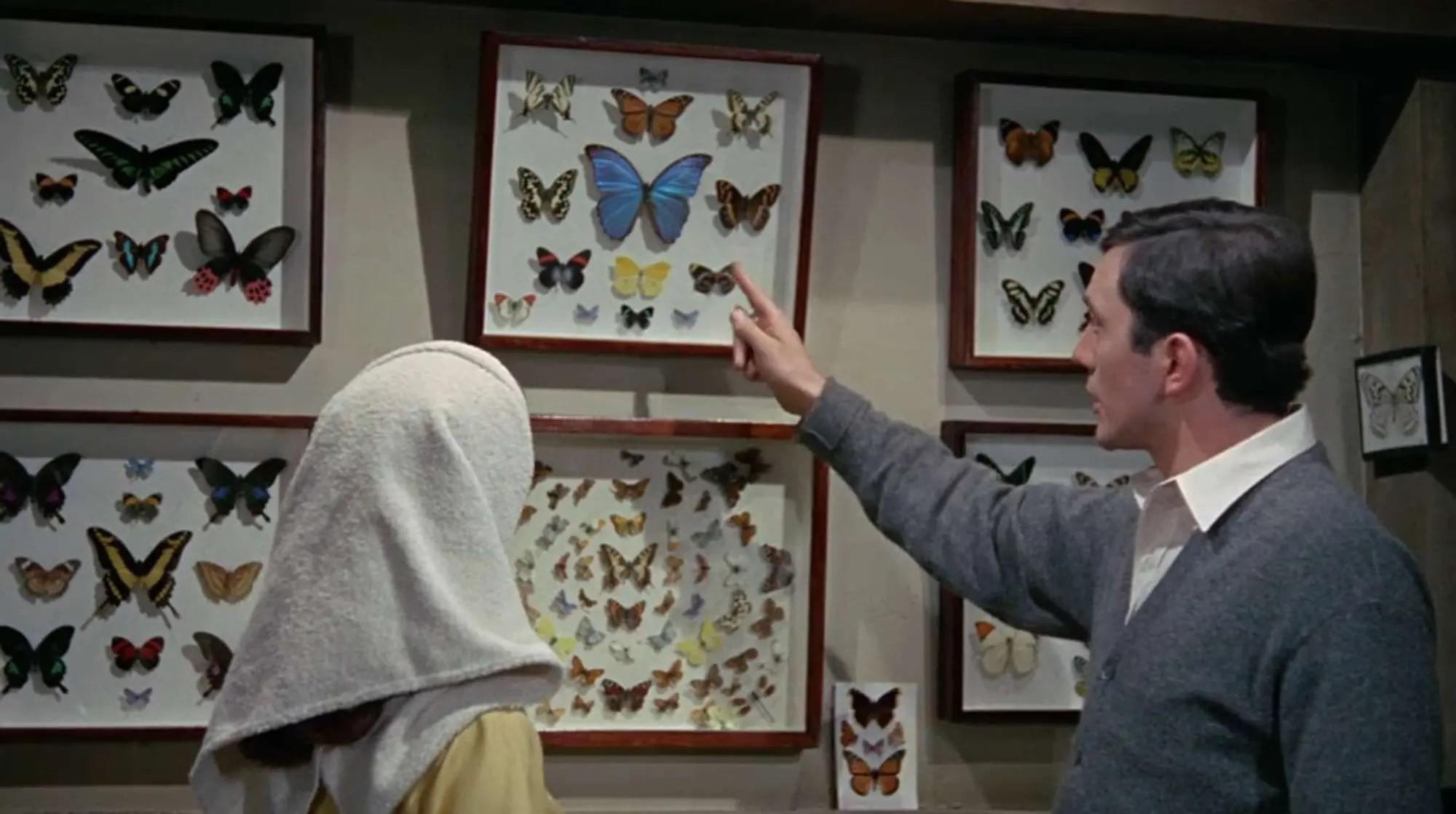
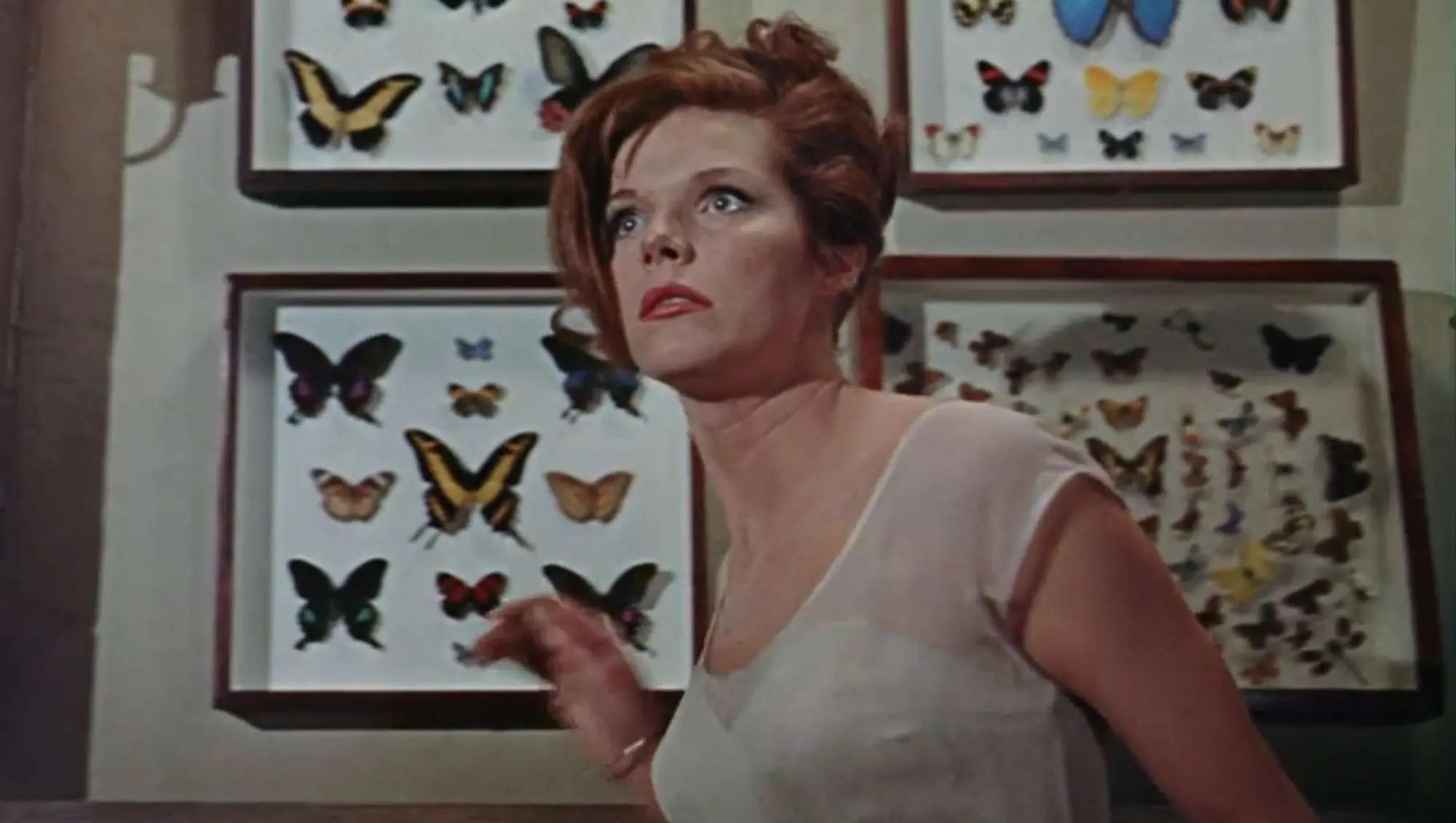
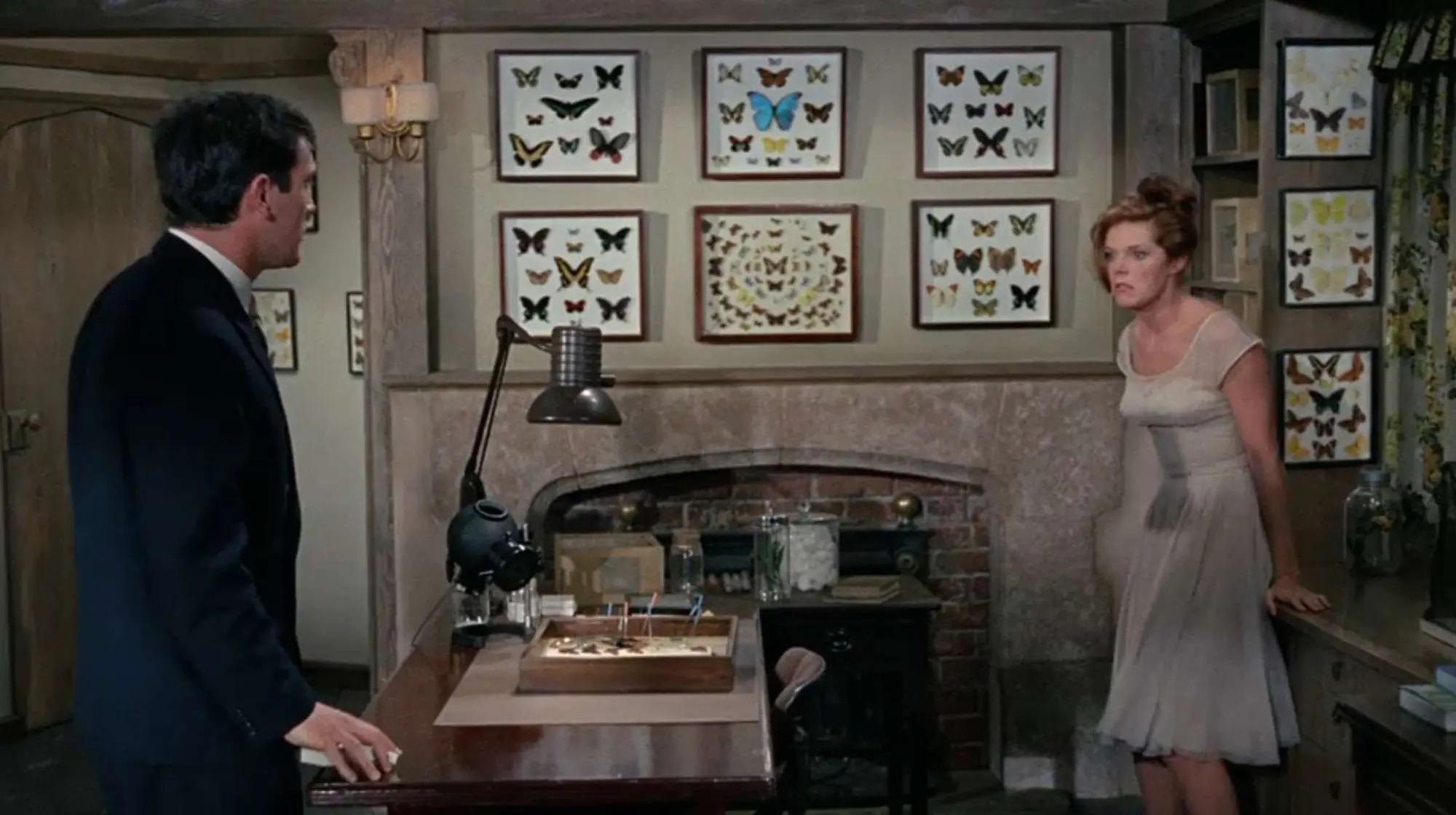
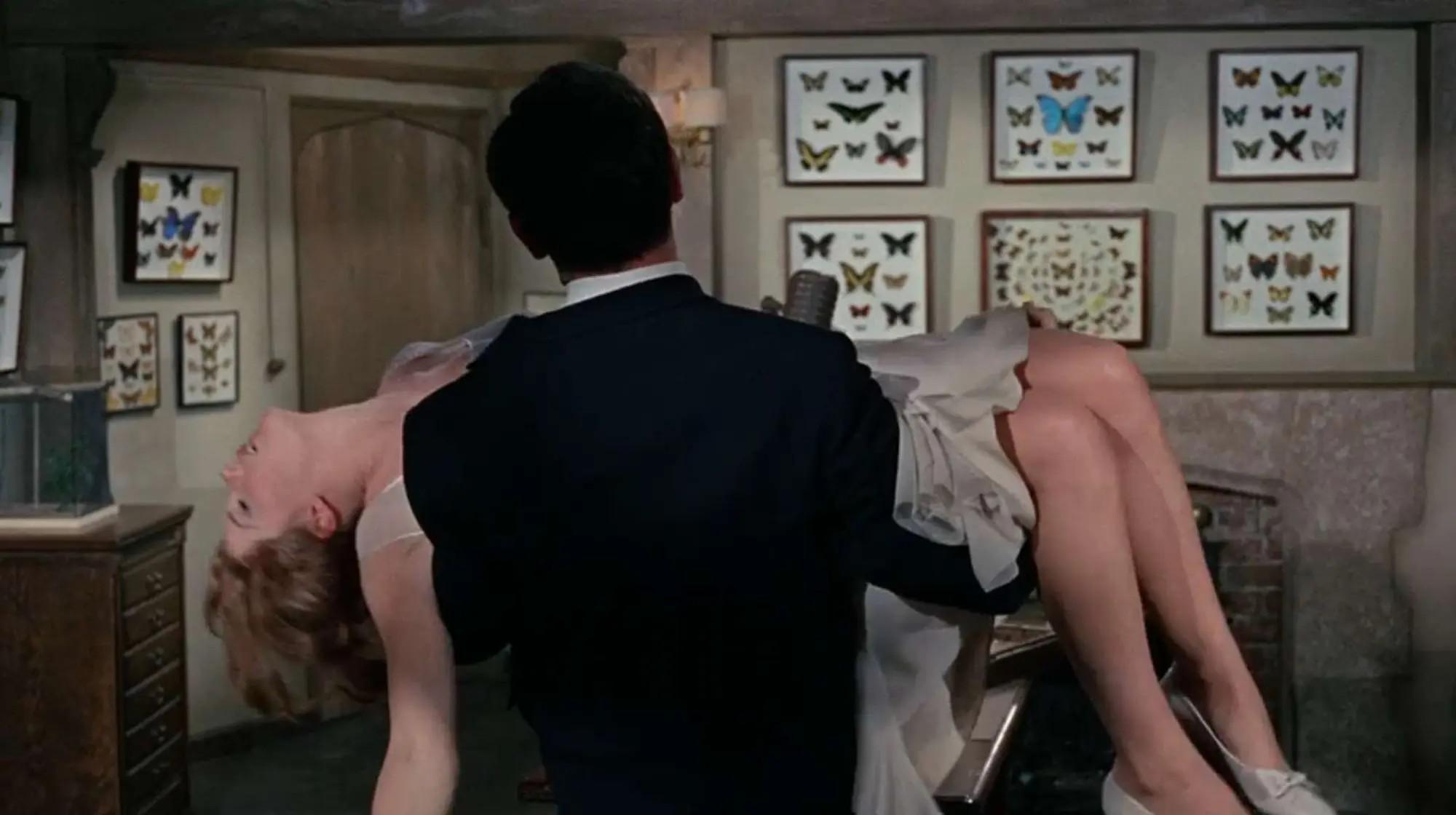
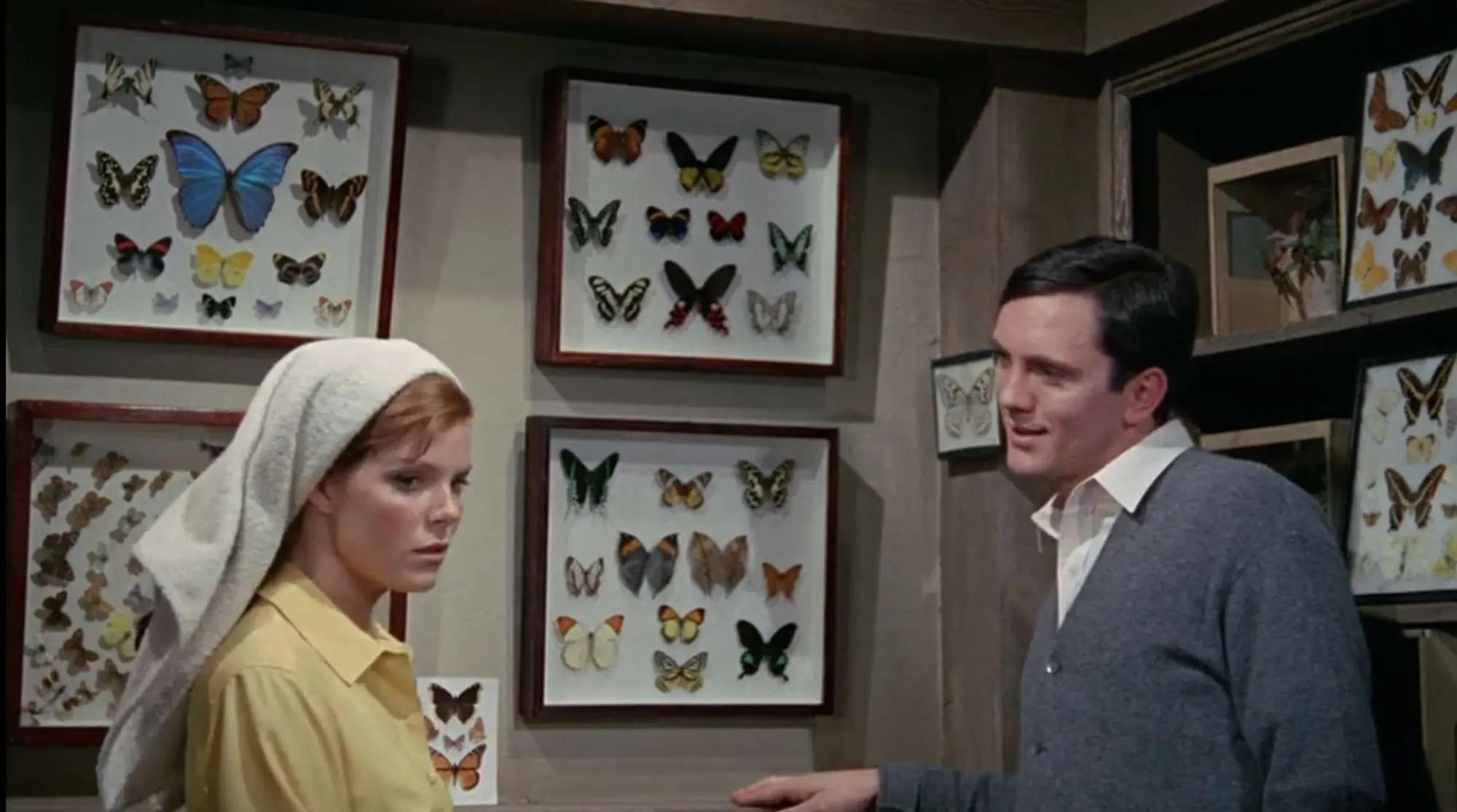
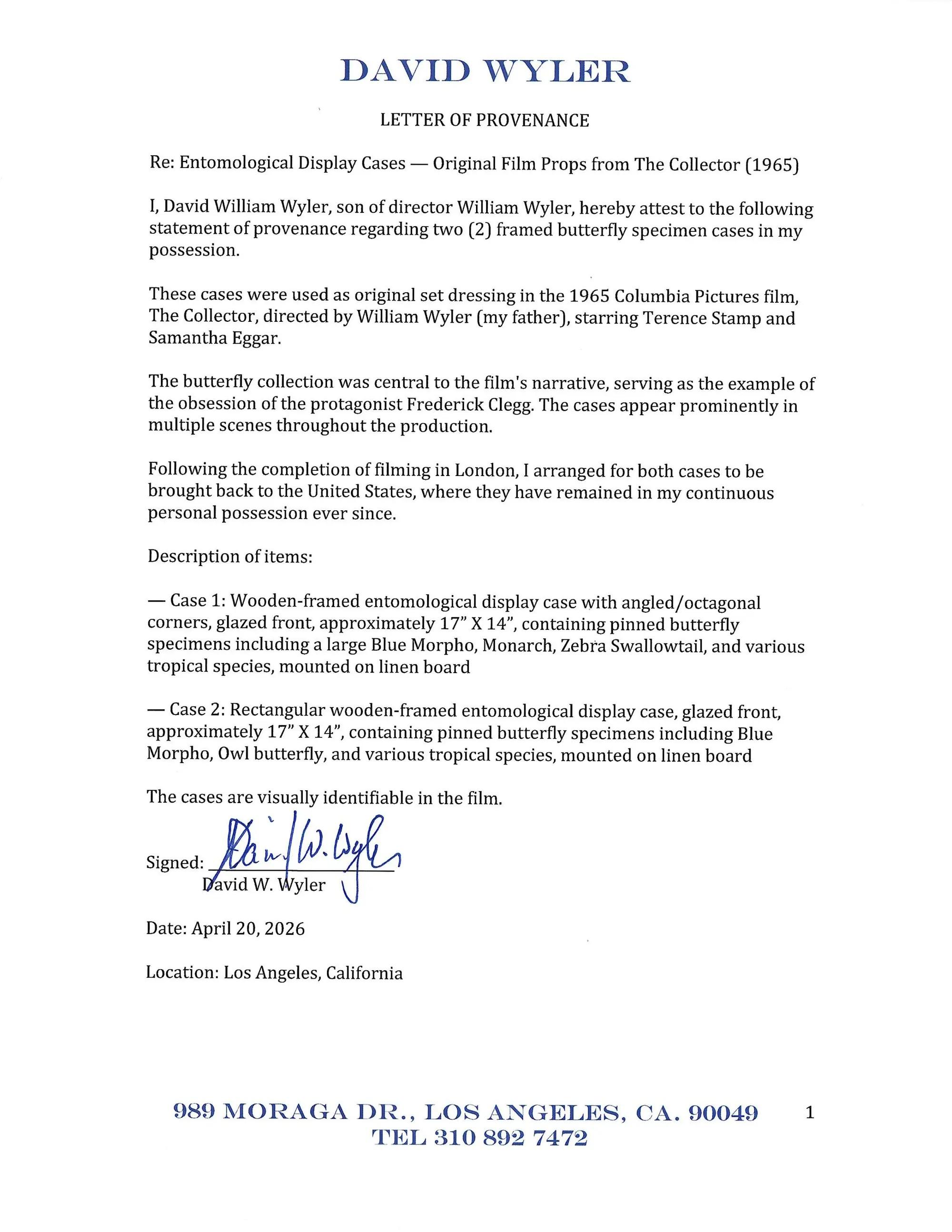
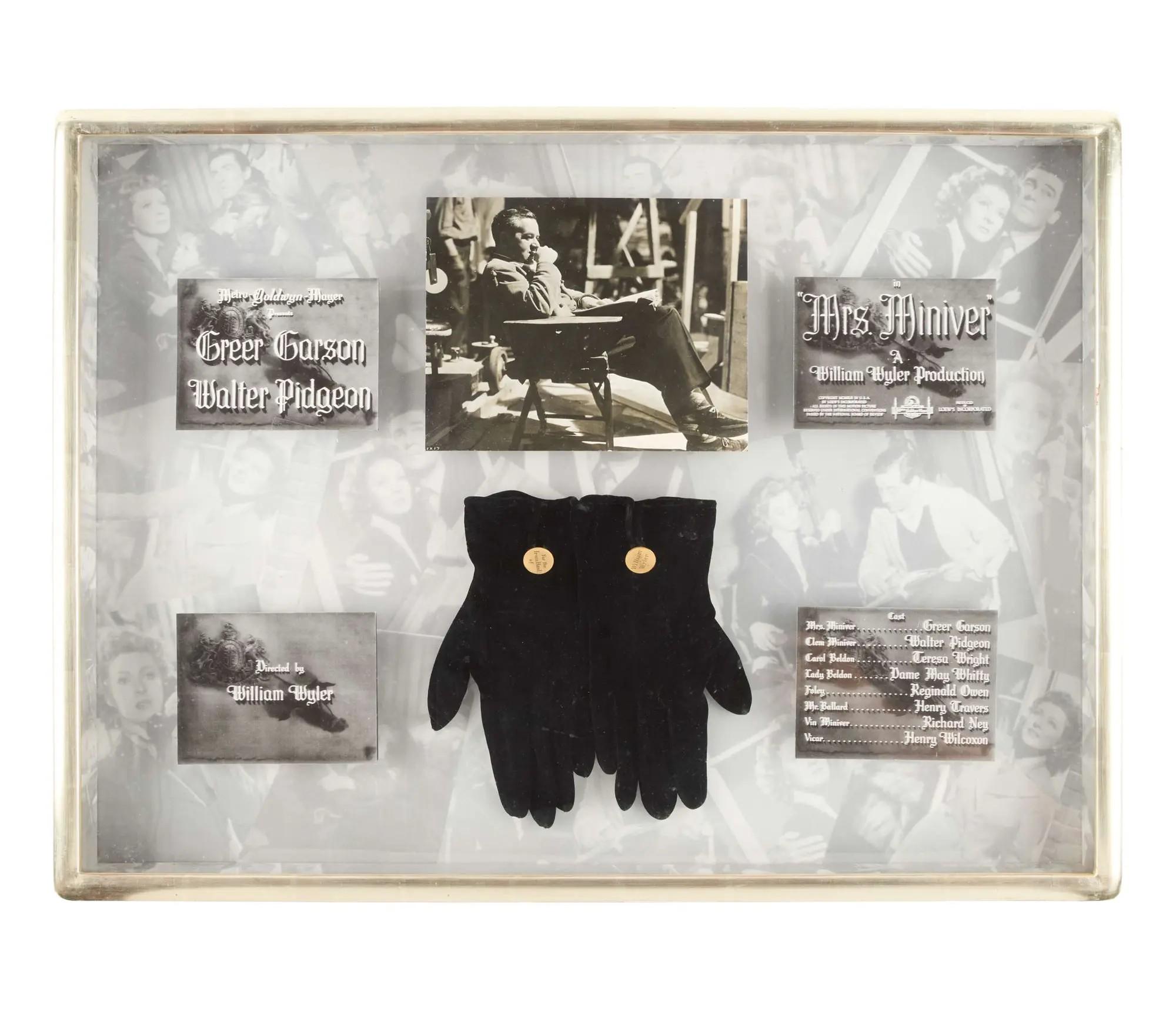
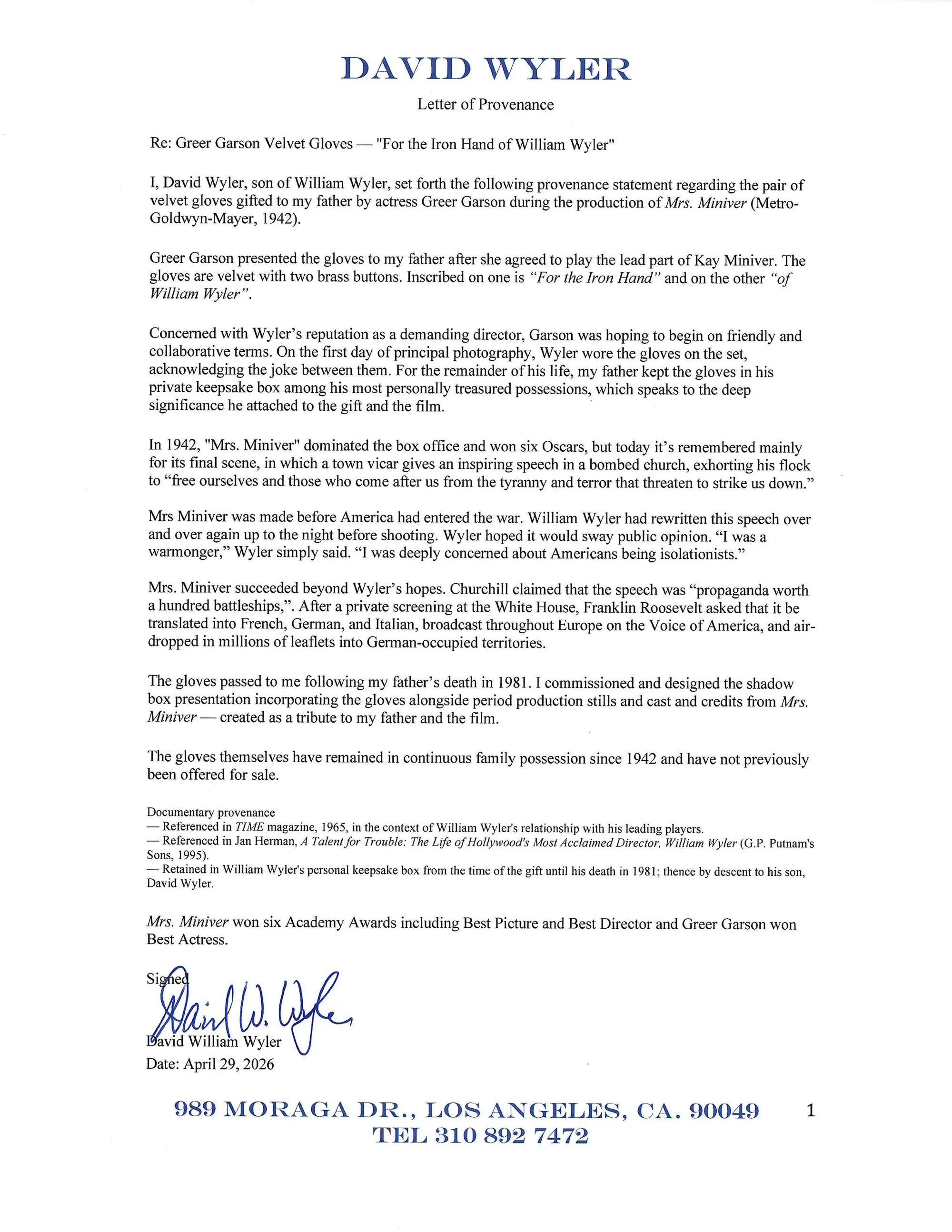
1. Lot #34. William Wyler | “The Collector” Two Butterfly Specimen Cases, One Screen-Matched, 12. Lot #147. William Wyler | 1942 “Mrs. Miniver” Greer Garson Gifted Gloves Worn by Wyler During Production,
Rob Reiner and the Body That Became Something Else
Rob Reiner has described Stand by Me as his favorite film of those he directed — the most personal, the one that came from somewhere deep. Adapted from Stephen King's novella The Body, it follows four boys on the cusp of adolescence who set out to find the corpse of a missing classmate and discover, along the way, something harder to name: the particular weight of a friendship that exists only at one moment in time and can never be recovered.
The original production script in our auction bears the film's original title — The Body — with revision dates from early 1985. It is signed by nearly the entire principal cast: Wil Wheaton, Corey Feldman, Kiefer Sutherland, Jerry O'Connell, Richard Dreyfuss, and Frances Lee McCain. Each signature comes with a flourish — Dreyfuss signing as "The Writer," O'Connell invoking Cherry PEZ, Wheaton quoting Vern's great monetary lament. They are not signatures so much as crystallized performances, brief reprisals of characters who have spent forty years lodged in the cultural memory. The film marks its fortieth anniversary this year.
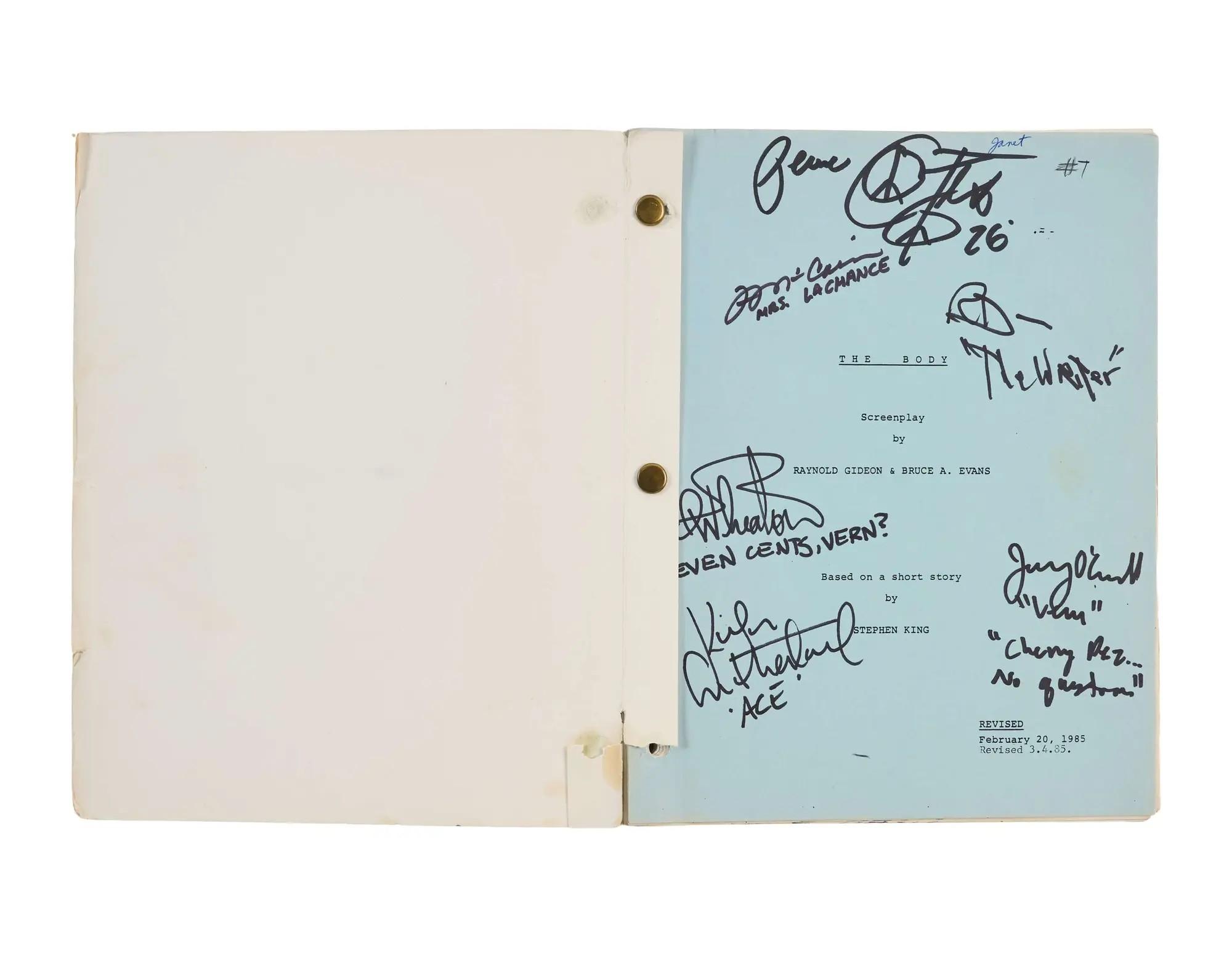
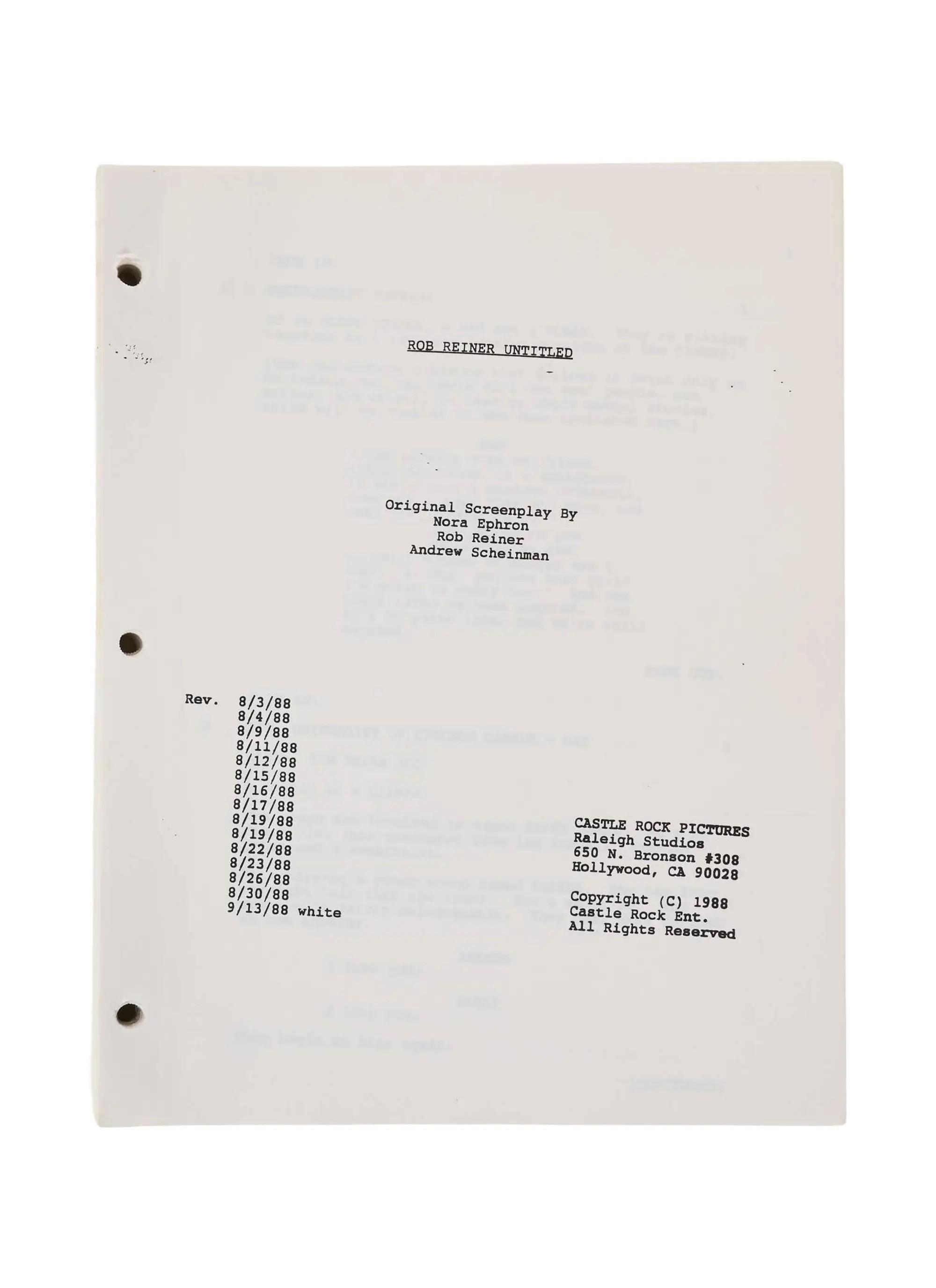
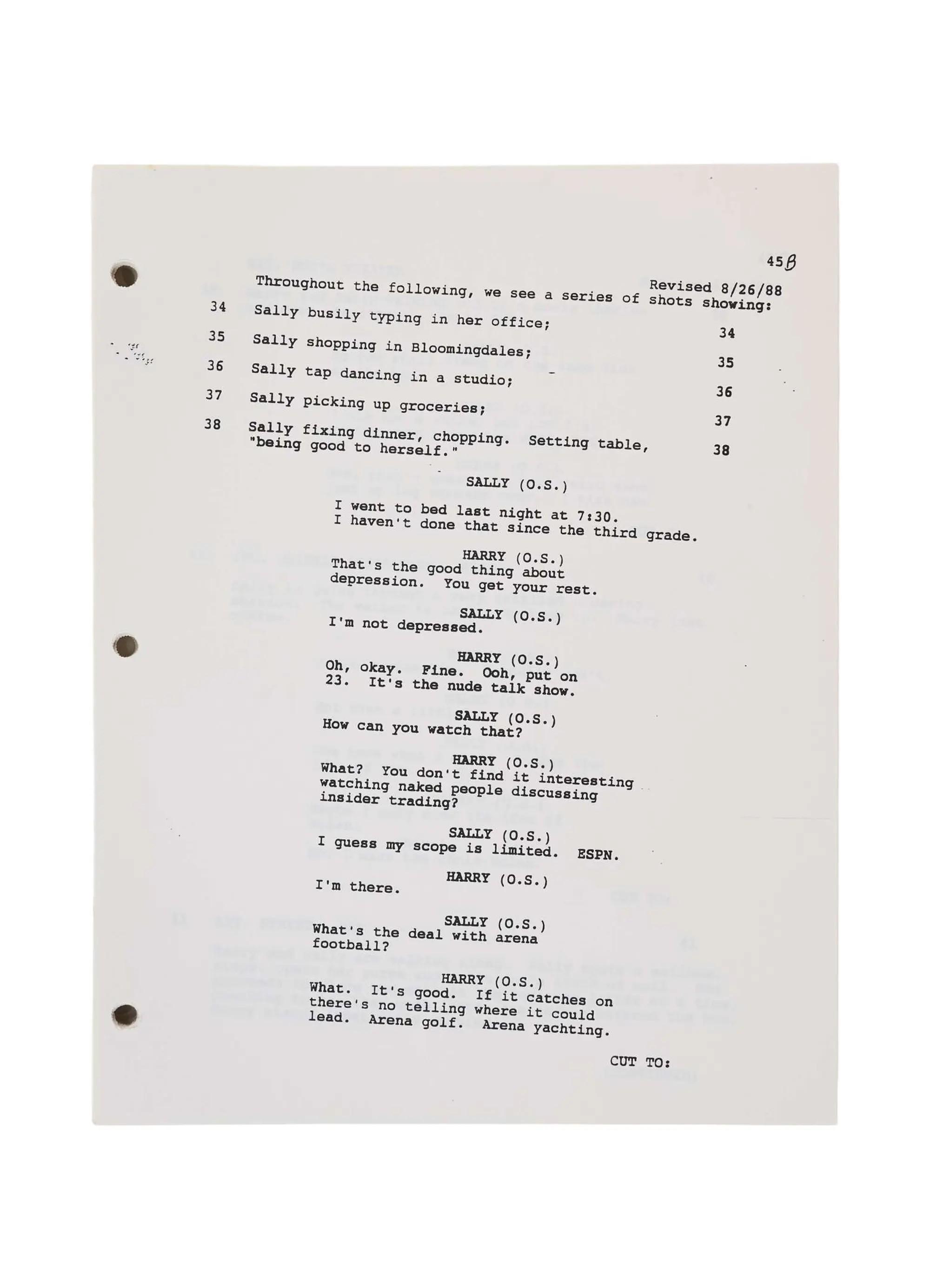
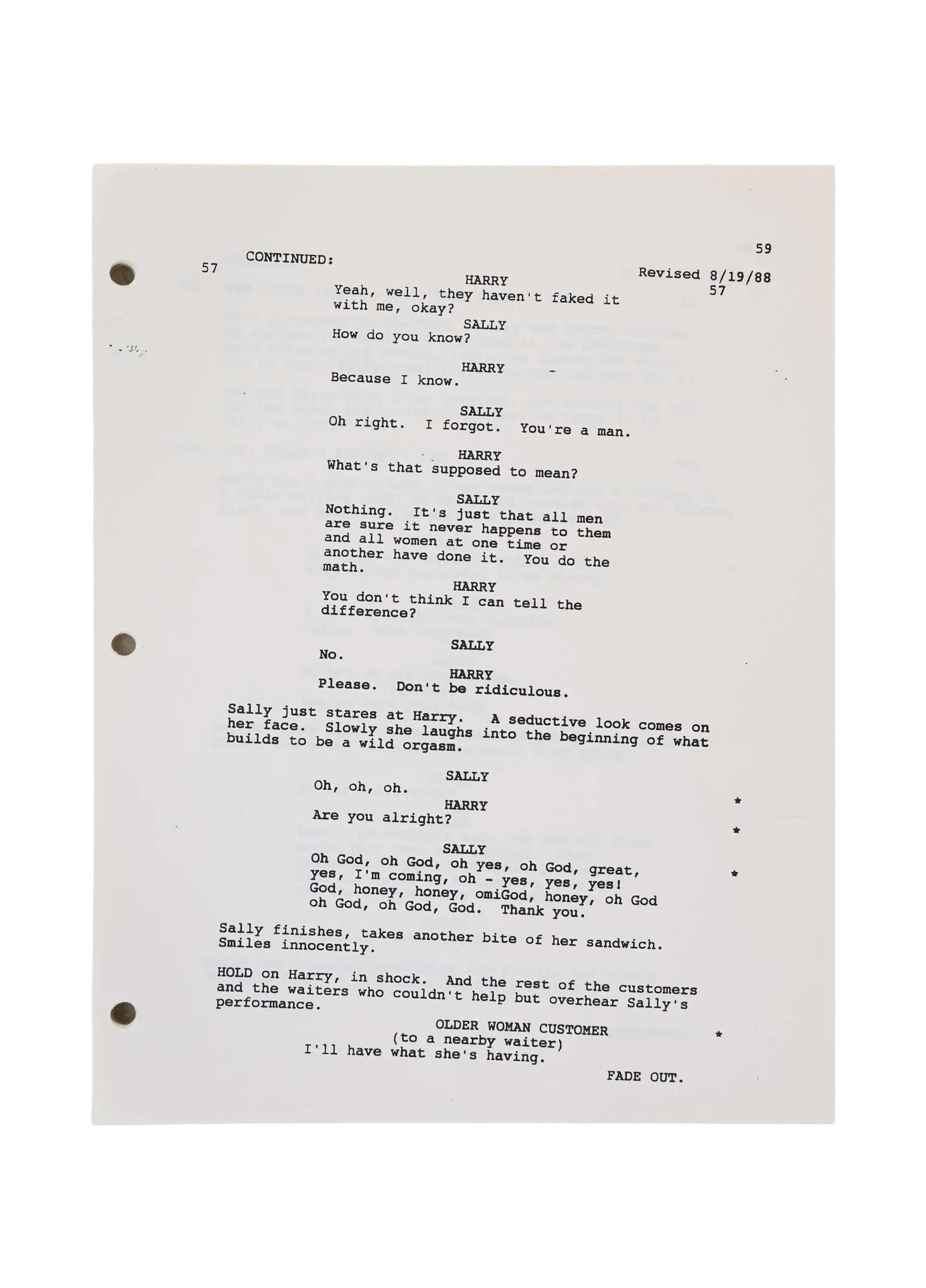
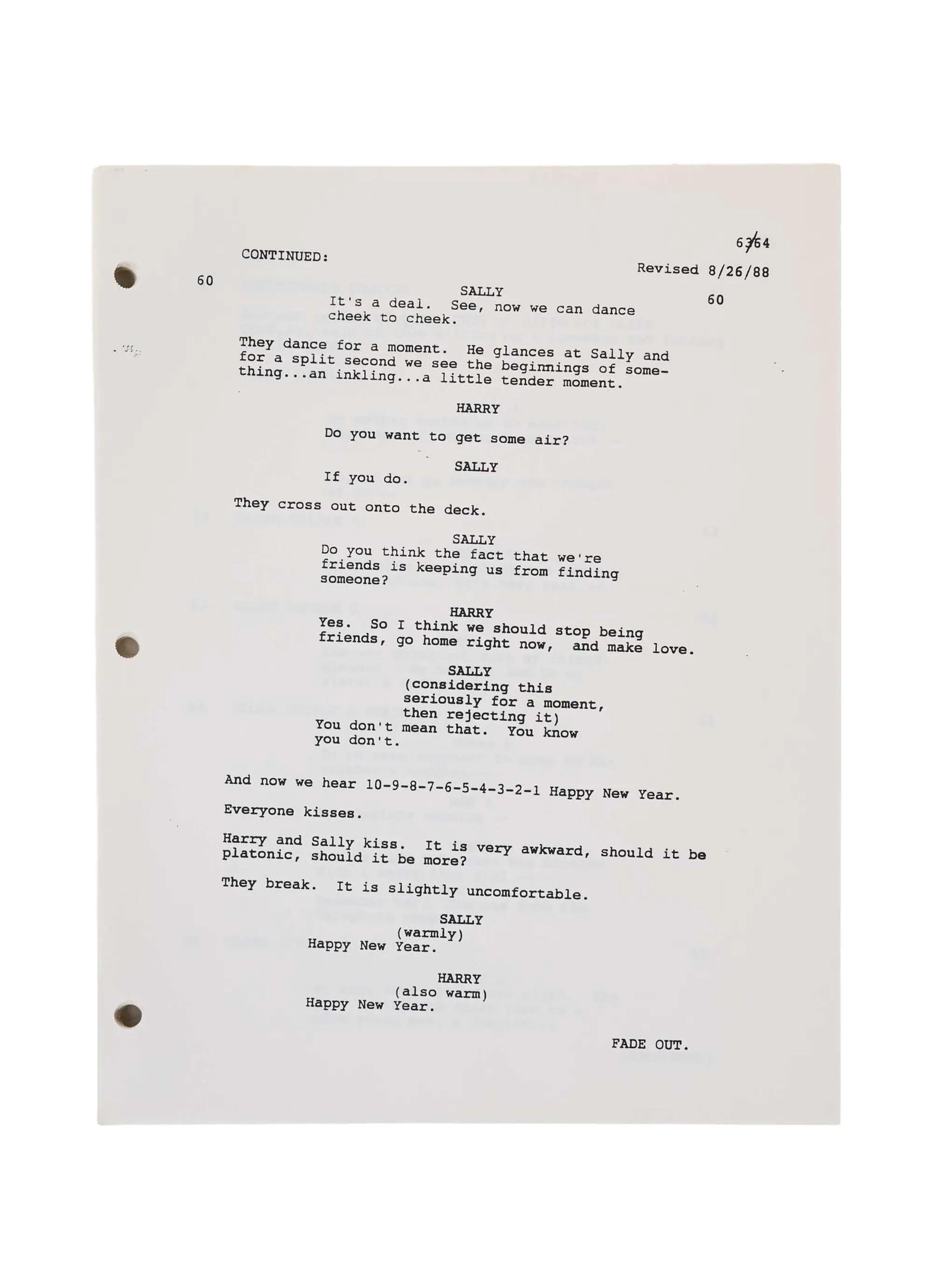
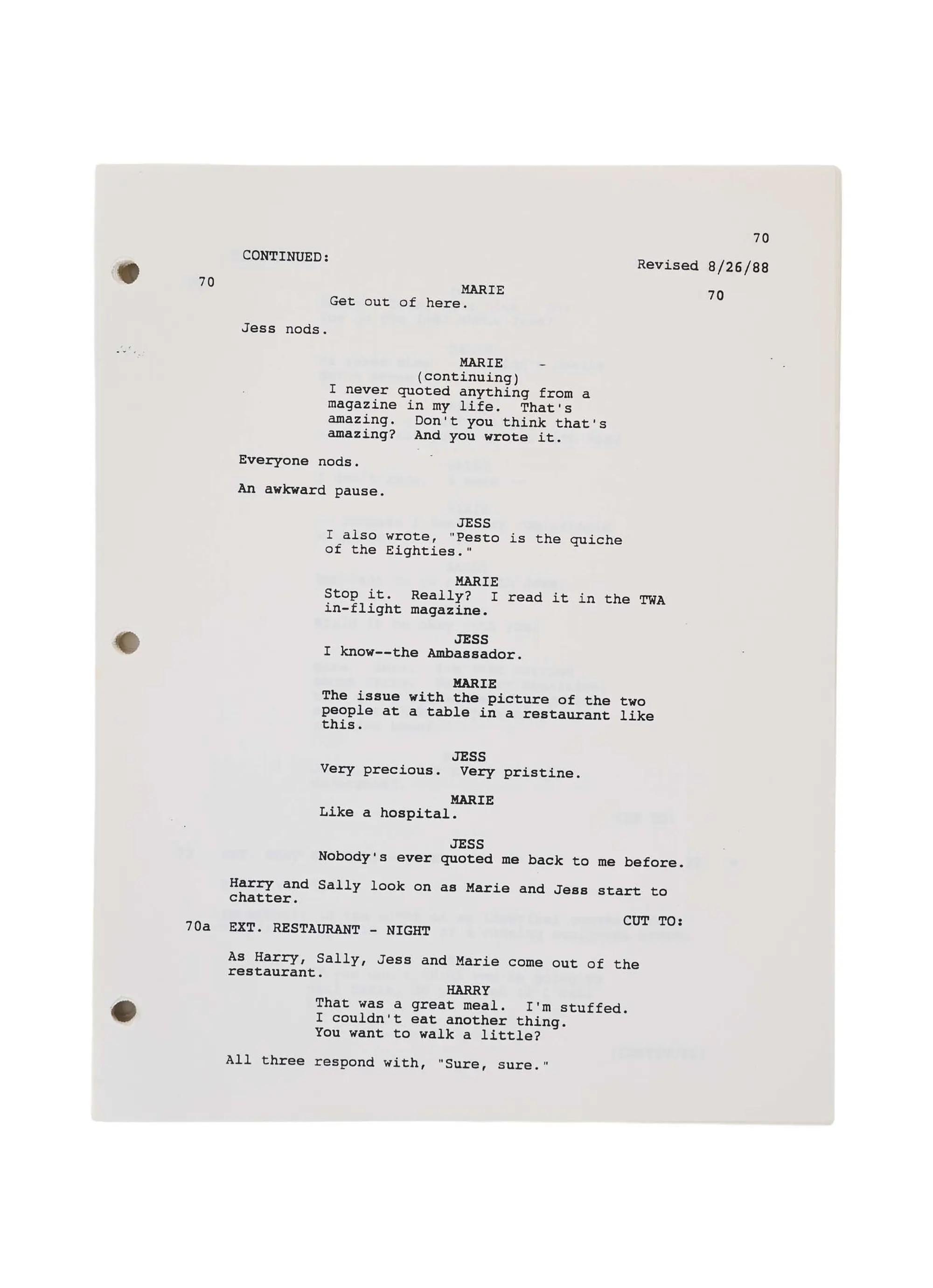
1. Lot #197. Rob Reiner | 1986 “Stand By Me” Cast-Signed Script, 2. Lot #198. Rob Reiner | 1989 “When Harry Met Sally…” Script,
Oliver Stone: The Books That Argued Back
Oliver Stone arrived in Hollywood already carrying more weight than most directors ever accumulate. A Vietnam veteran who had enlisted voluntarily, he returned with a Bronze Star for gallantry and wounds that never fully healed. He used cinema the way others use a fist or a scream — to make an argument, to force a confrontation, to refuse the comfortable version of events. Platoon, JFK, Born on the Fourth of July, Nixon: each film lands like a provocation, daring the viewer to disagree.
The five books in our auction come from the personal collection of Hollywood journalist Lawrence Grobel, who interviewed Stone over years and accumulated these volumes — screenplays, biographies, and criticism — with dedications that carry Stone's characteristic intensity. On the Platoon and Salvador screenplay collection, he inscribes: "Larry — May you have a similar entrance." On a critical study of his work: "Larry — Dream on." The collection also includes a signed first edition of the Nixon screenplay bearing an additional signature from Anthony Hopkins, who confided to Grobel that he was deeply uncertain about the role until, he said, the ghost of Nixon entered him when the cameras rolled.
These are not decorative objects. They are a working journalist's archive — evidence of a relationship between a writer and a filmmaker who both understood that cinema, at its best, is always an argument about something that matters.
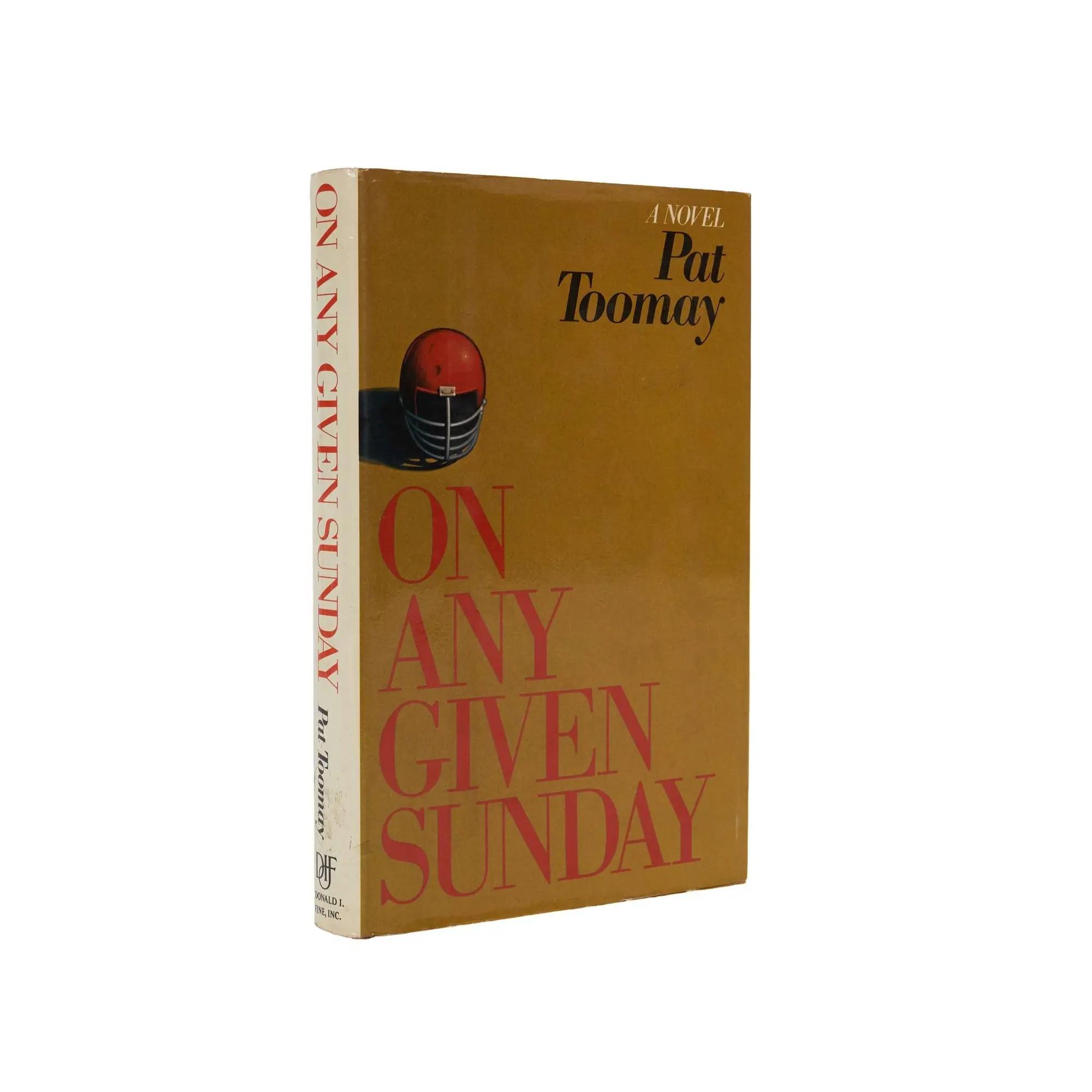
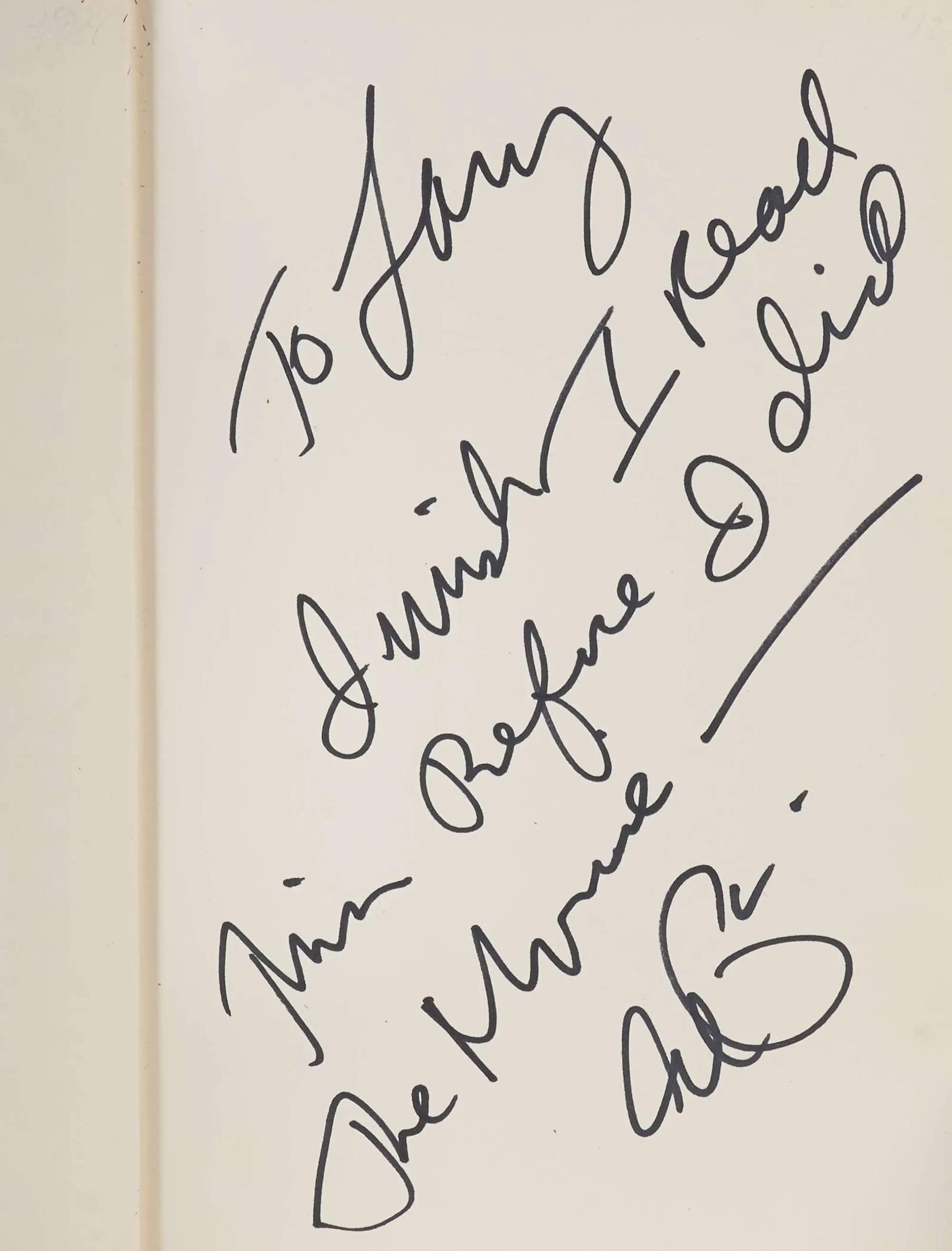
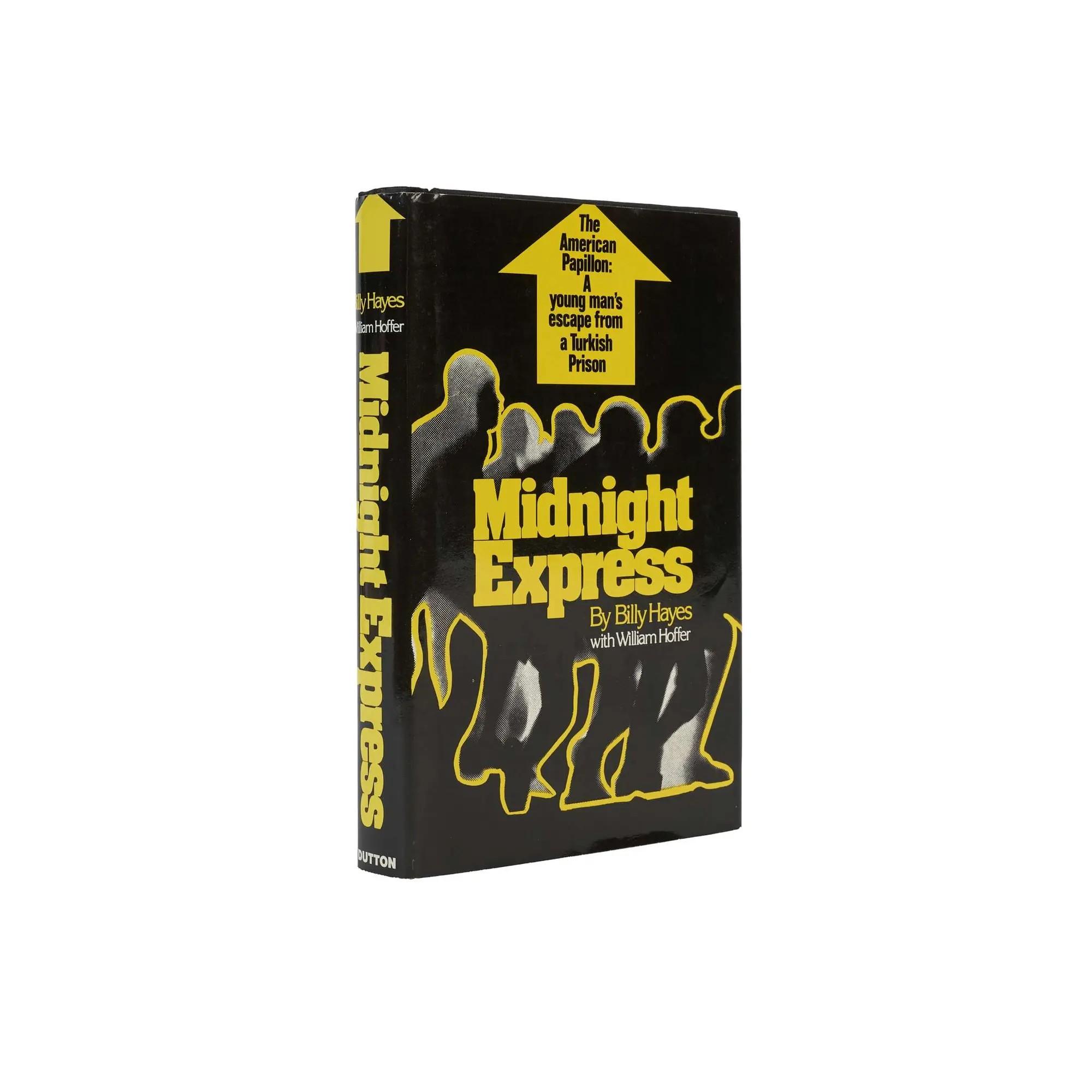
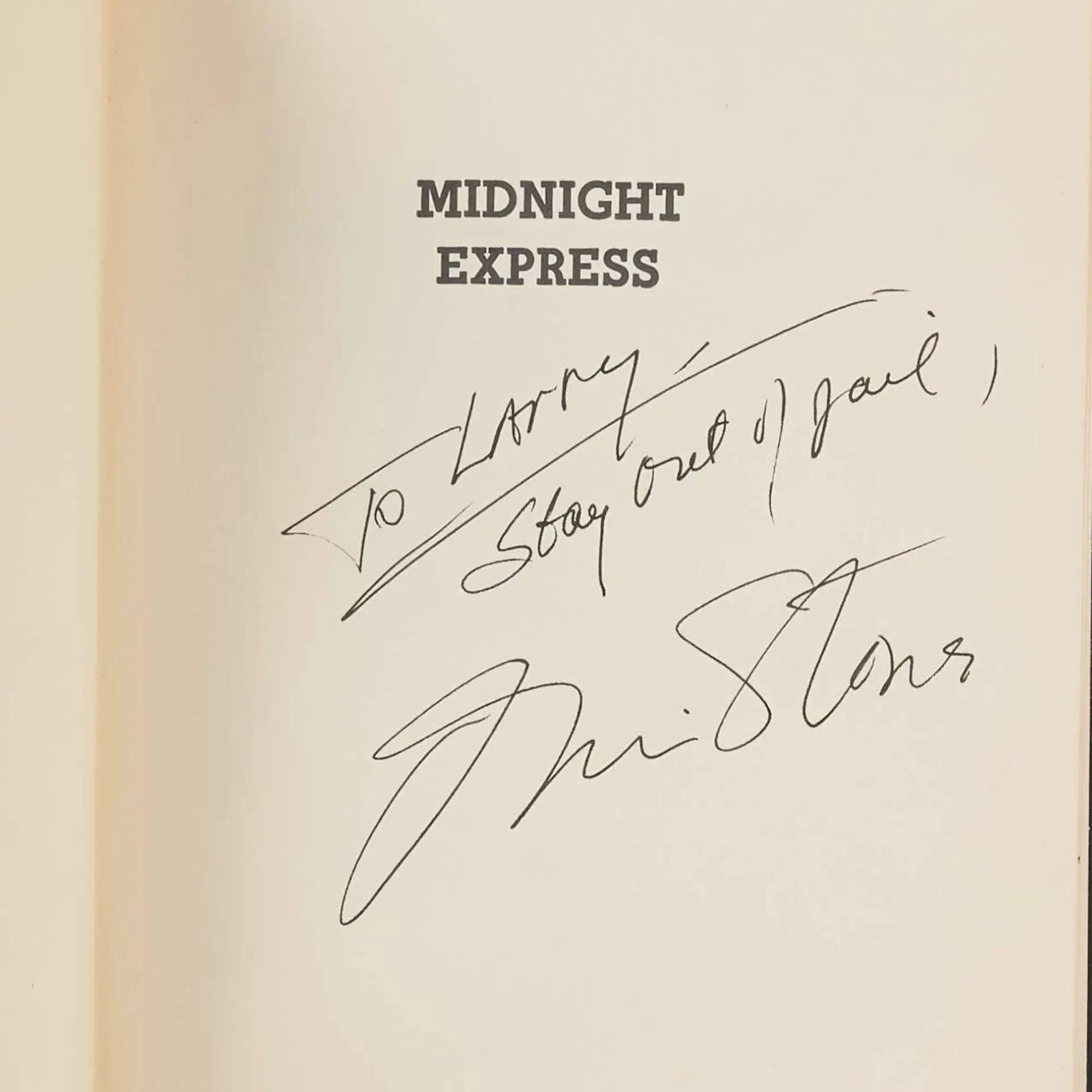
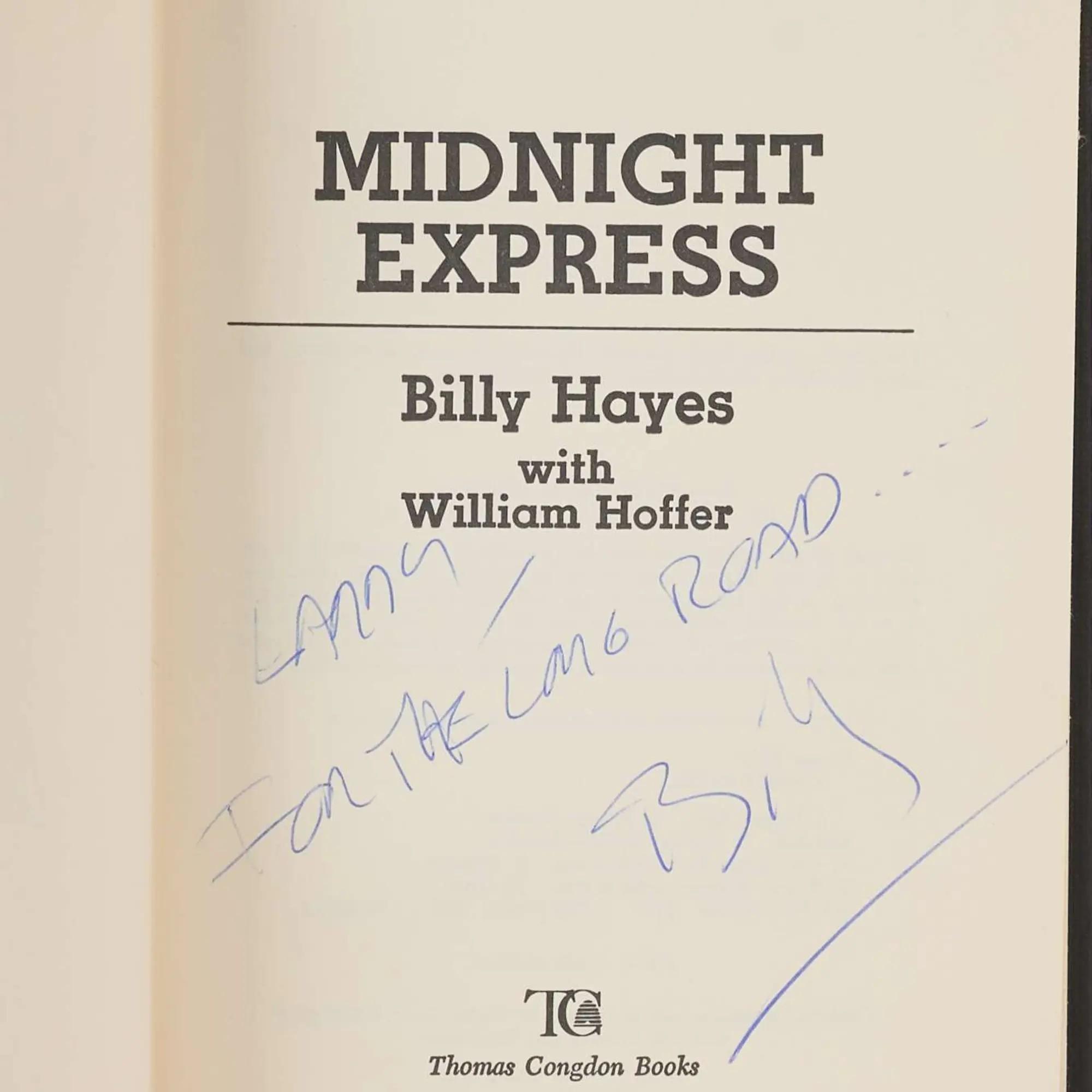
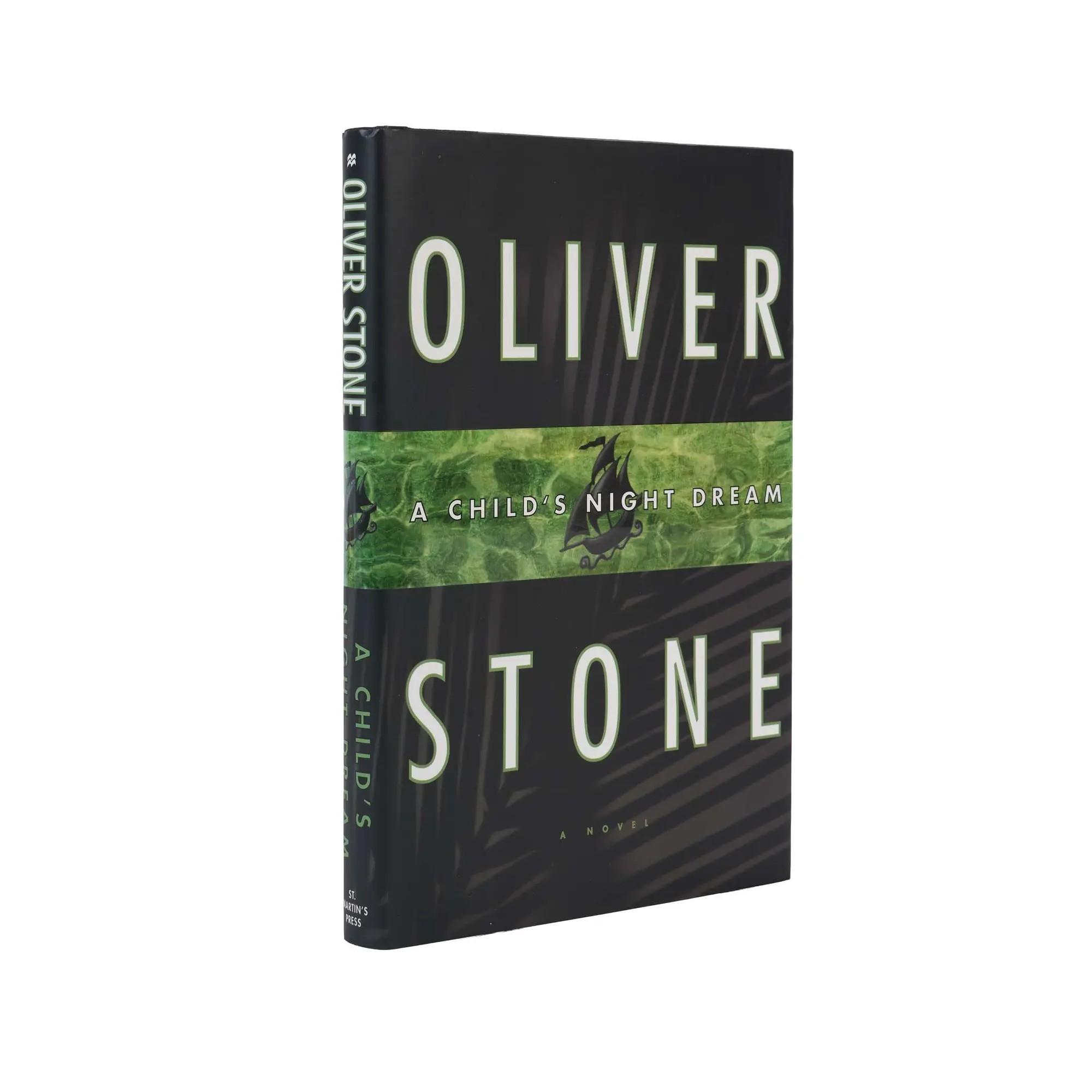
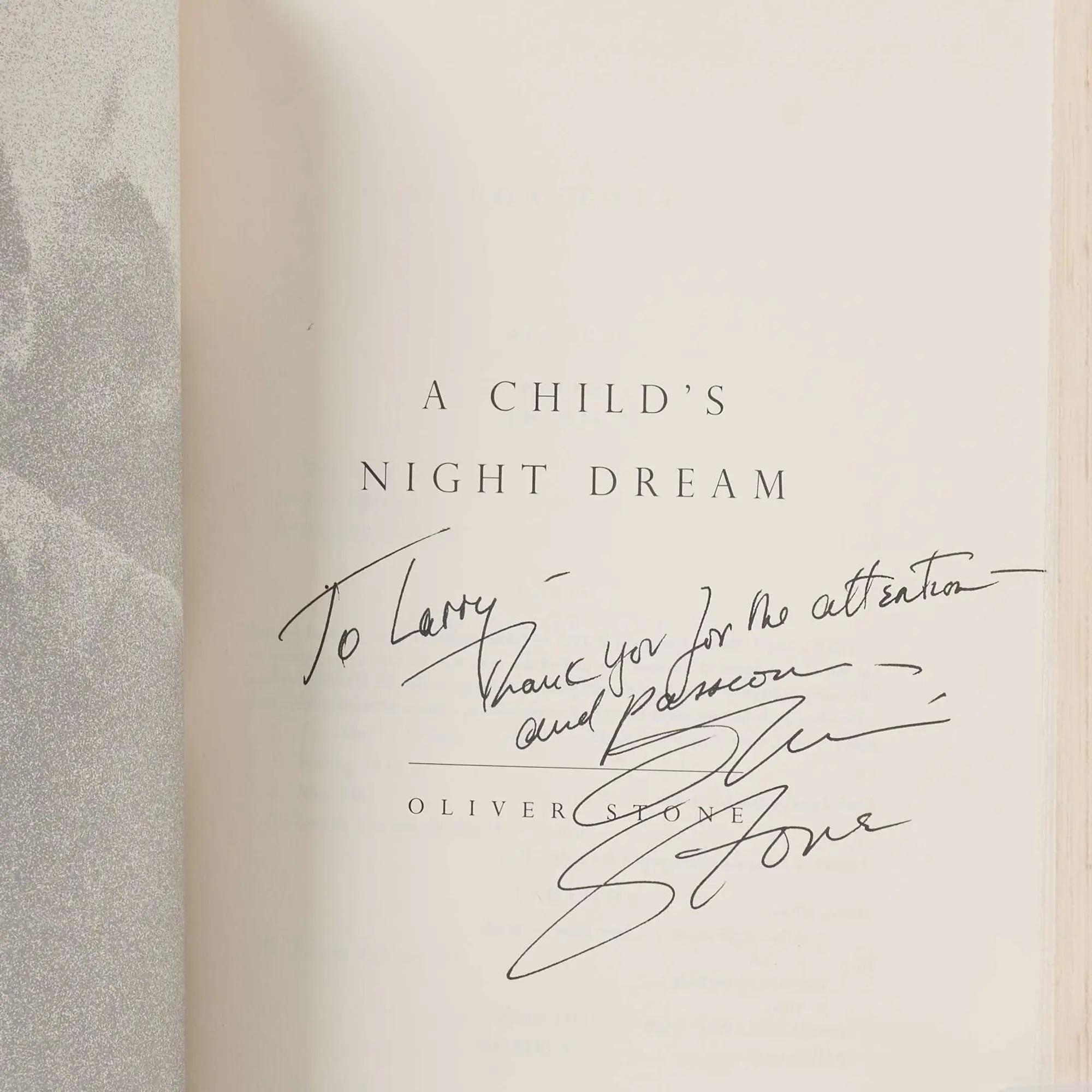
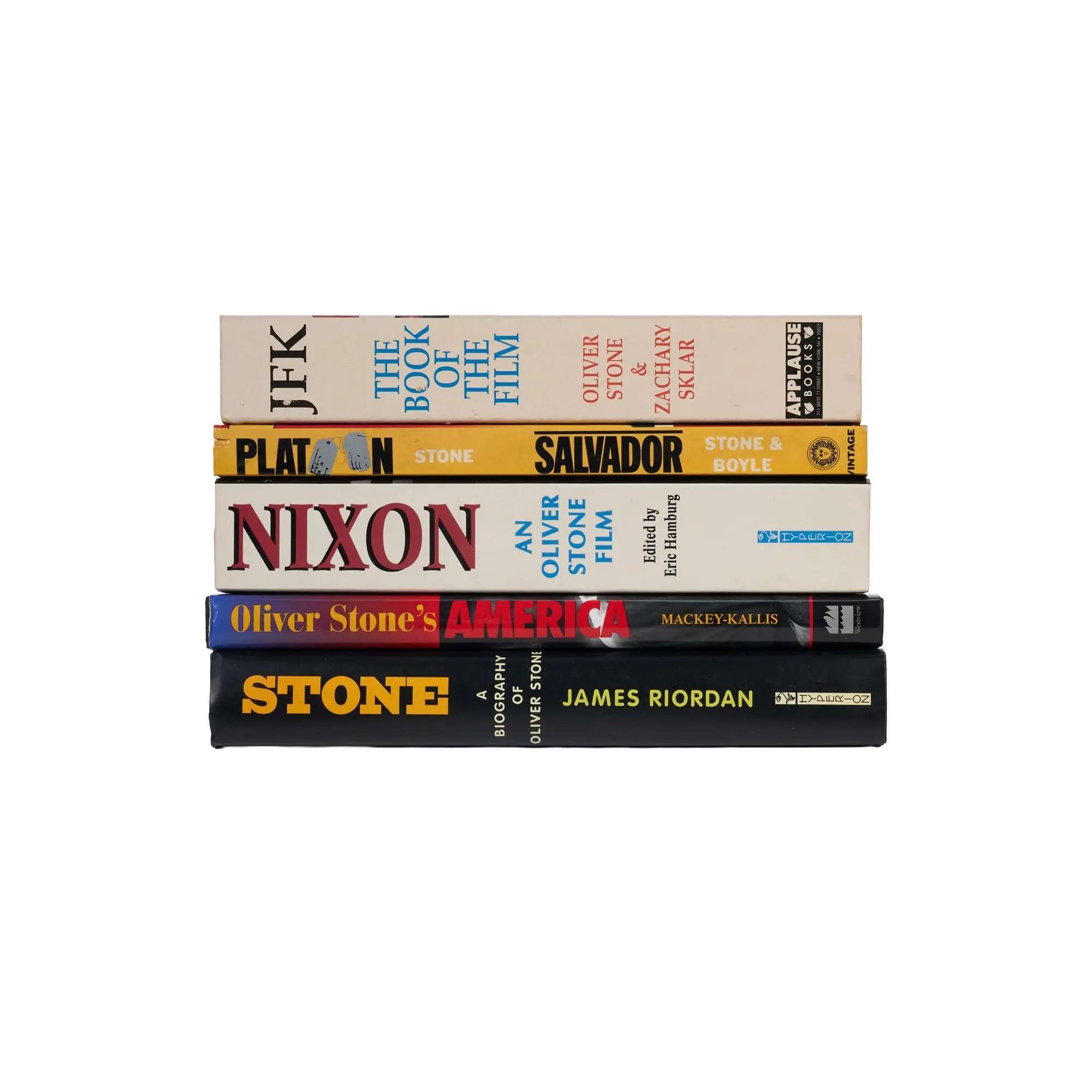
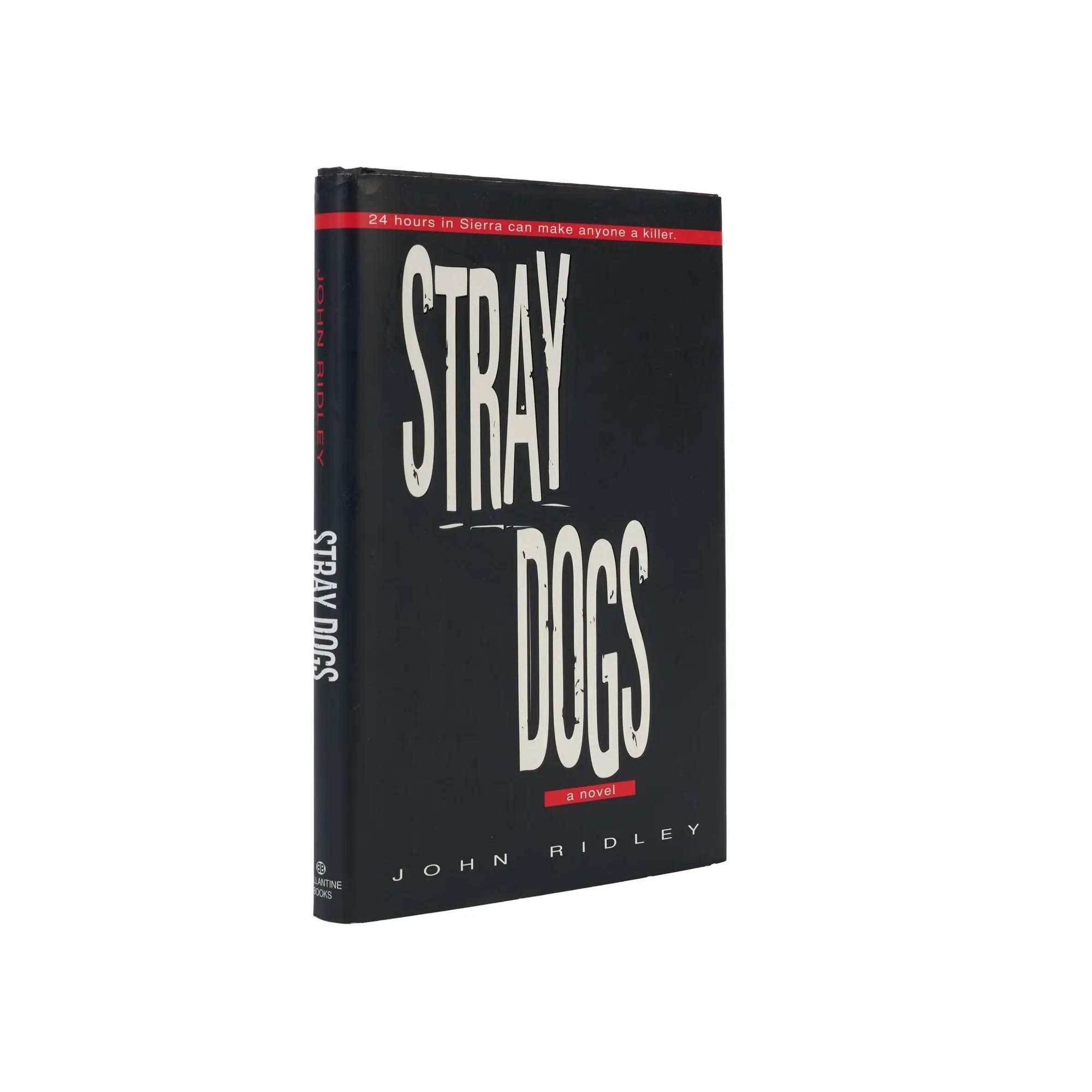
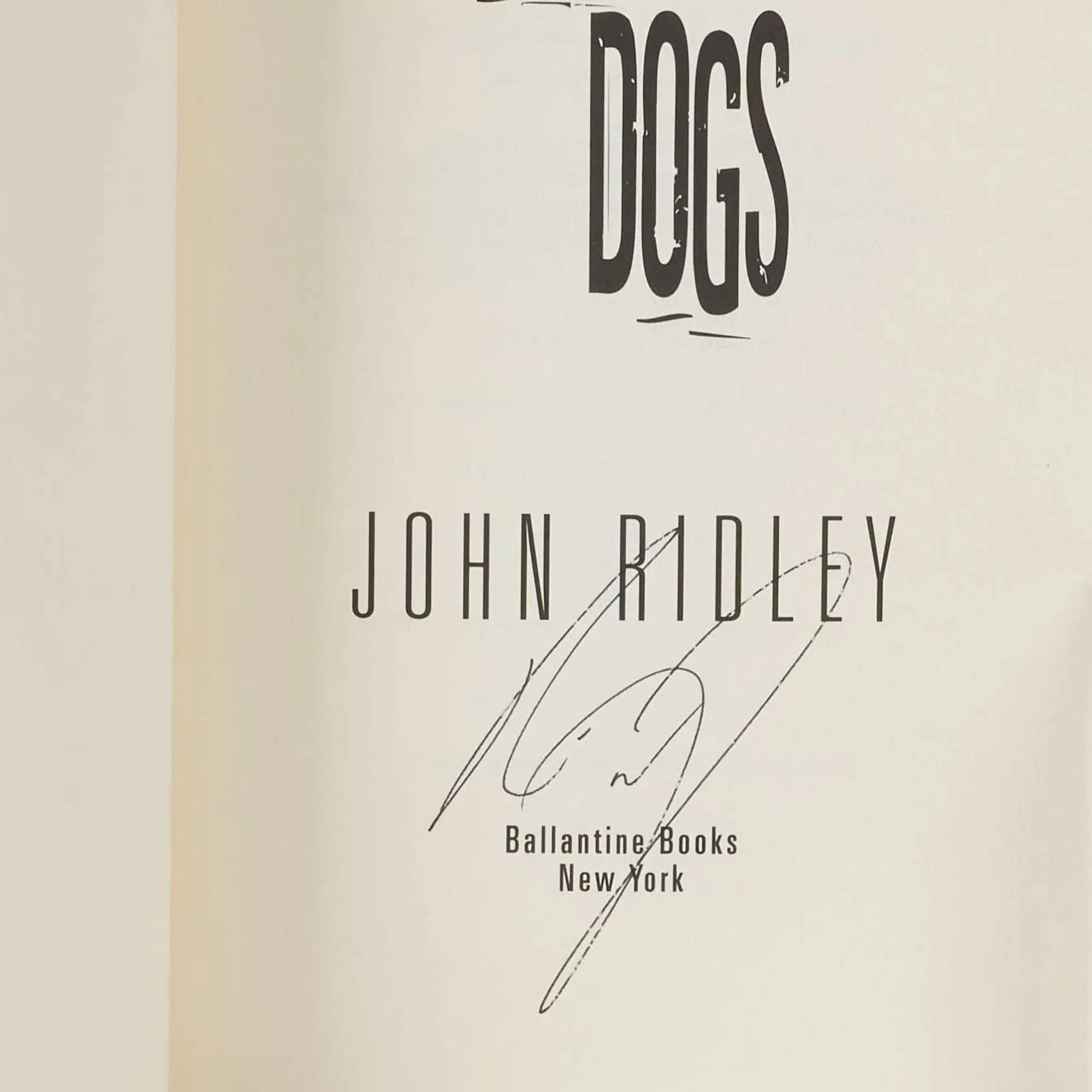
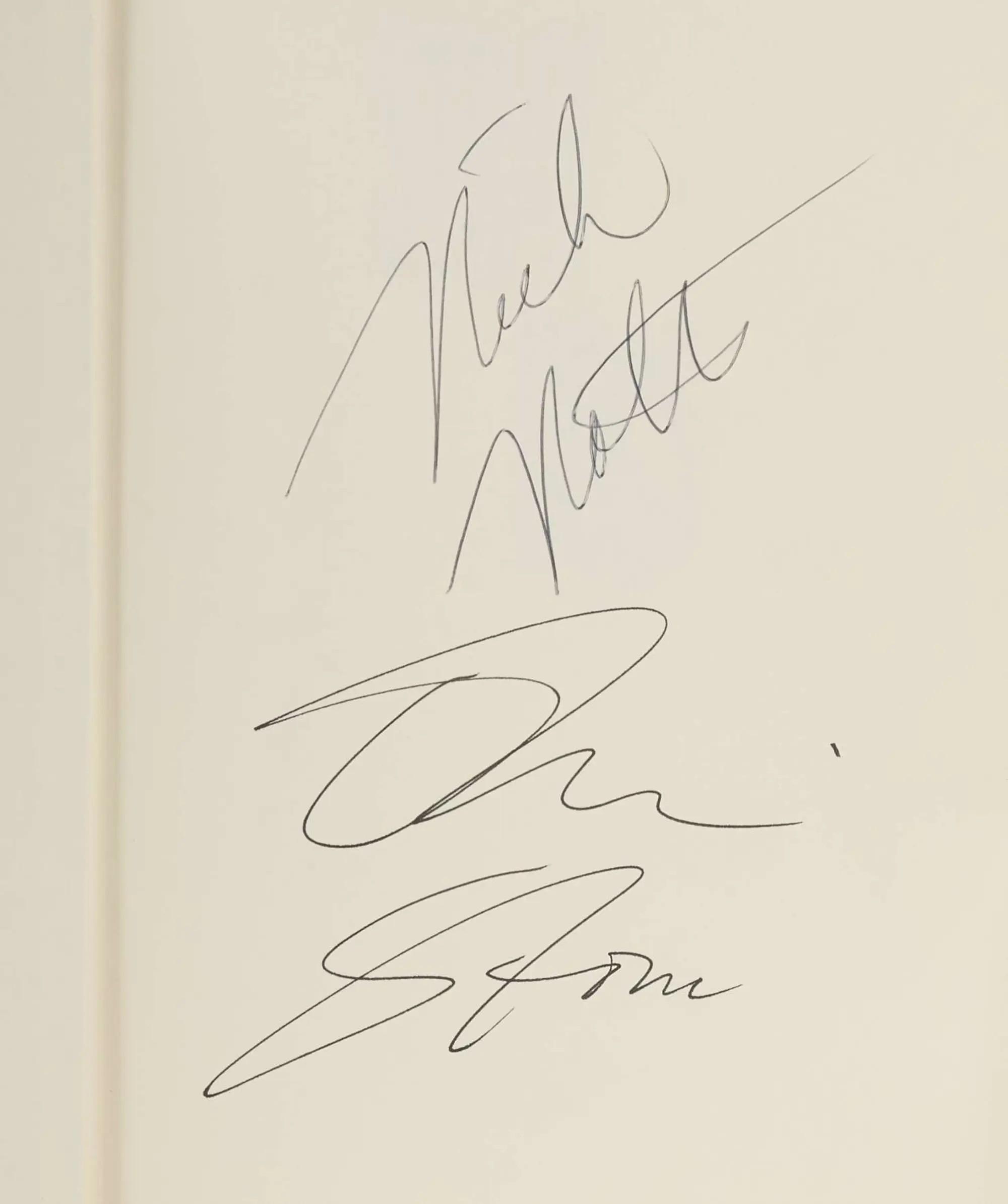
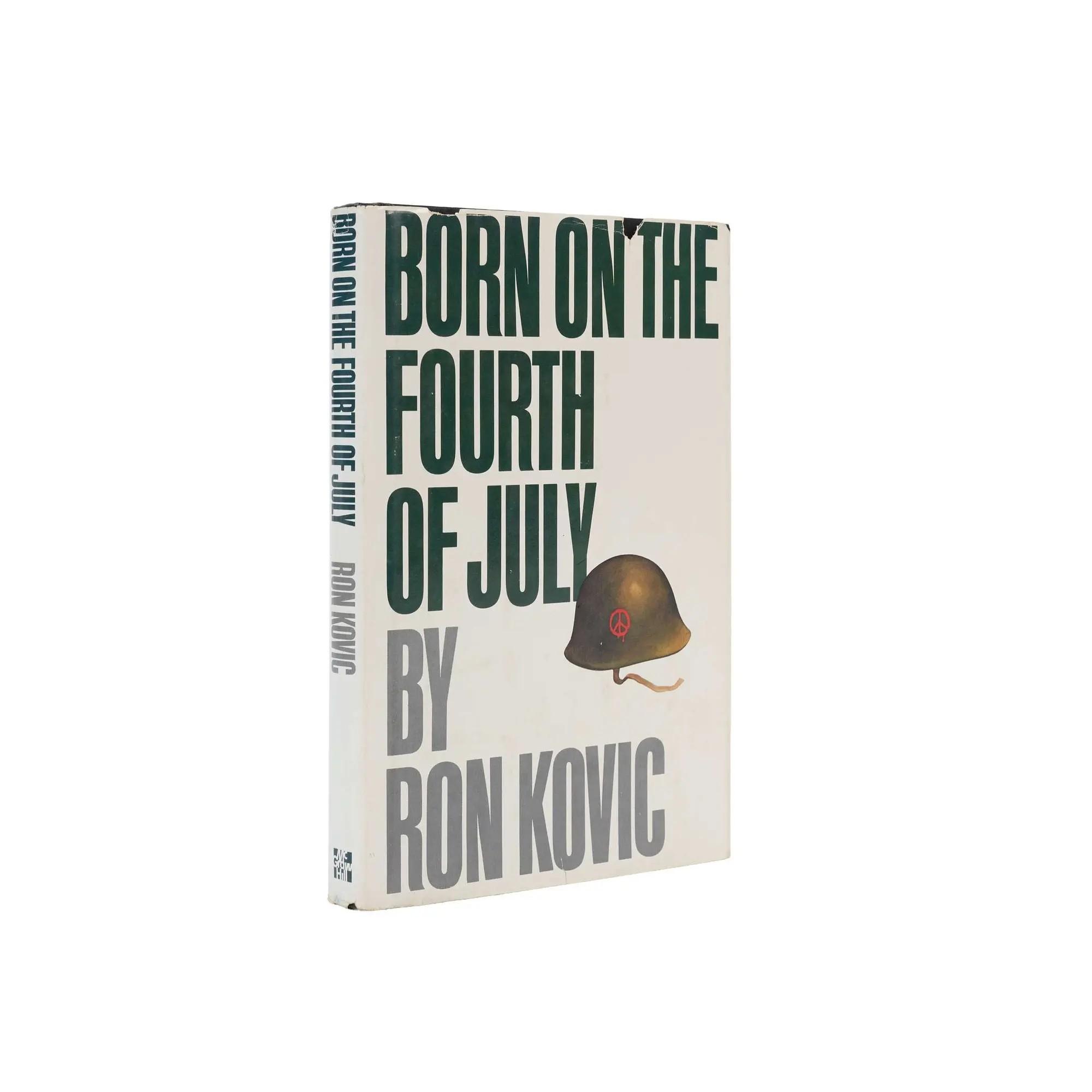
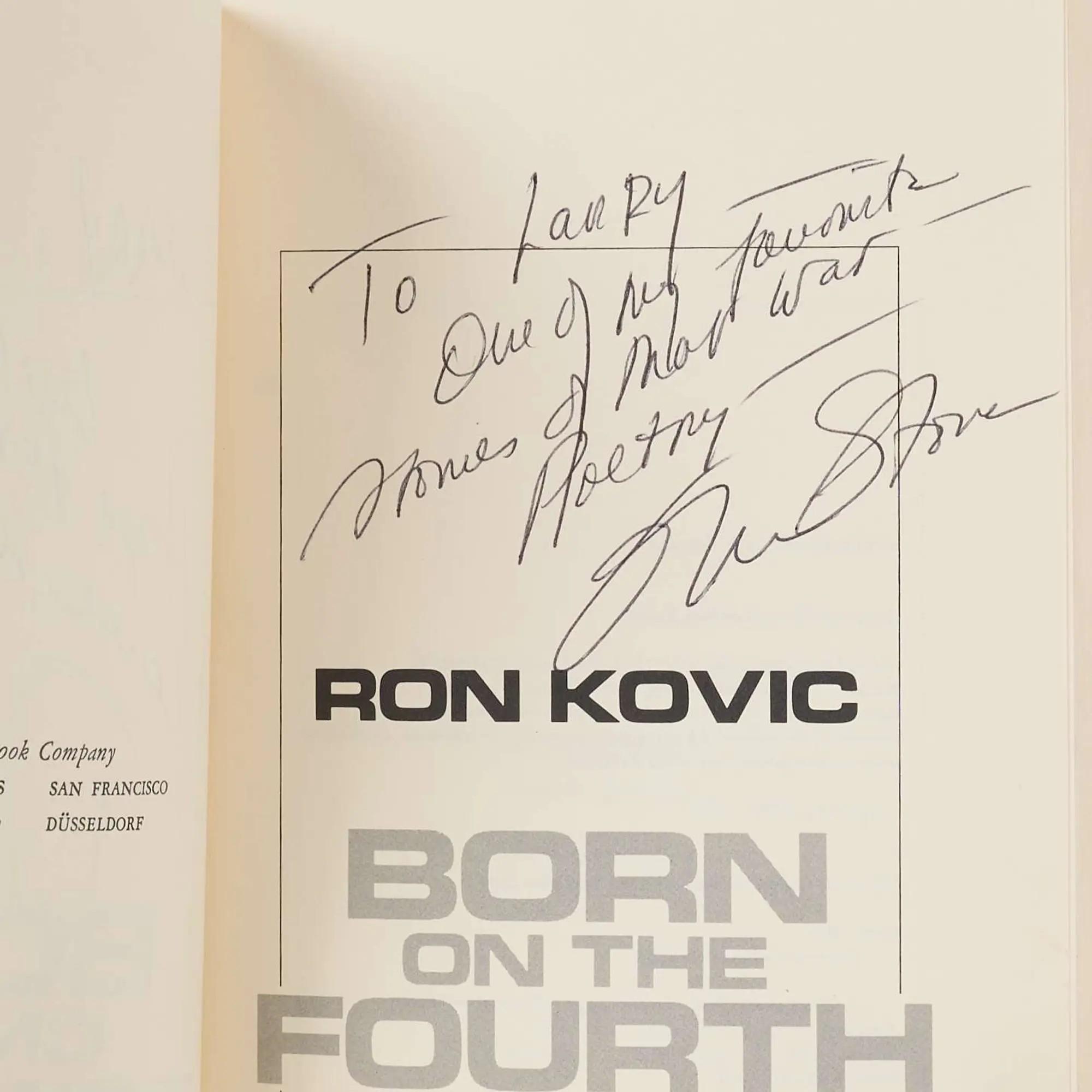
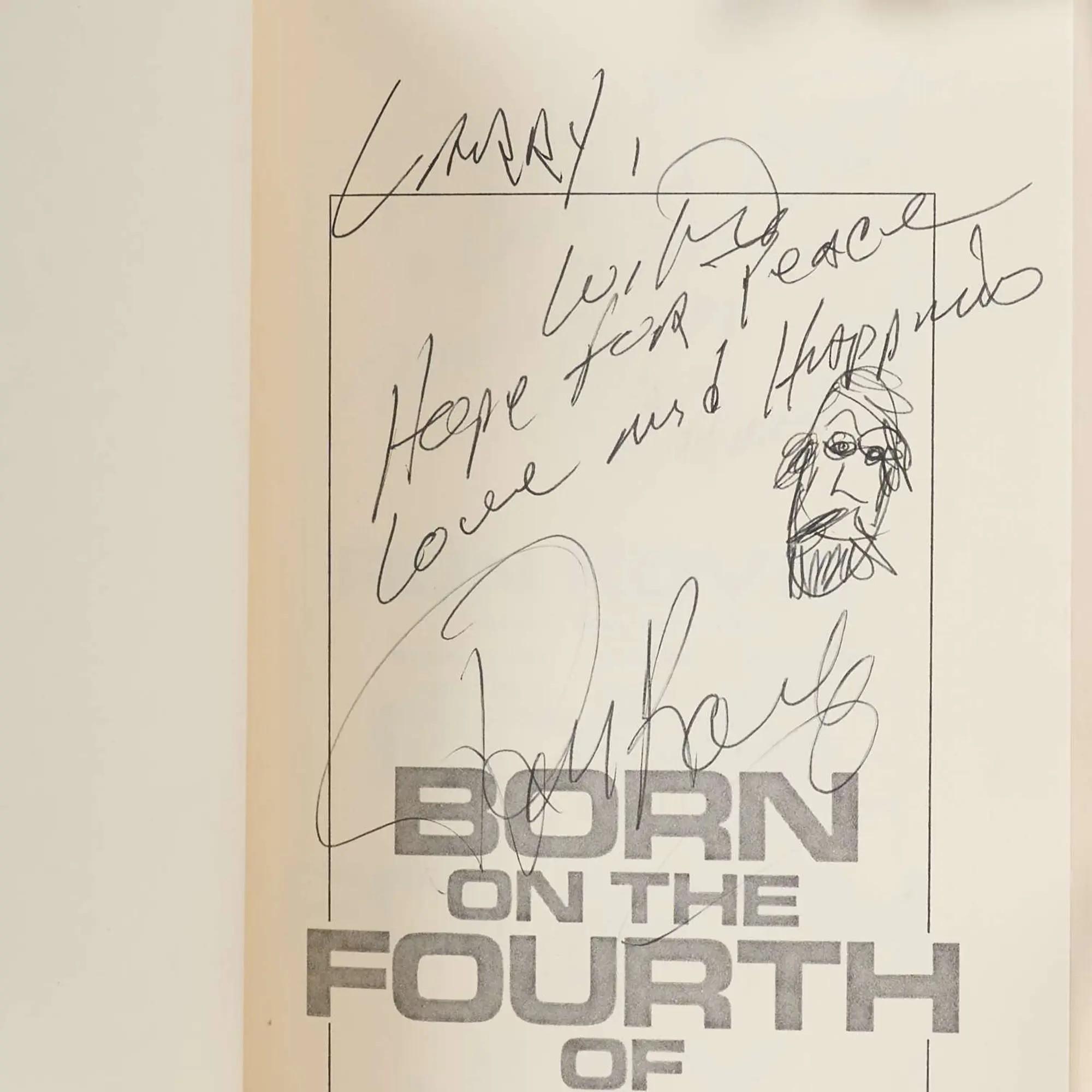
1. Lot #260. Al Pacino | Signed First Edition of On Any Given Sunday, 3. Lot #271. Midnight Express| First Edition Signed by Oliver Stone and Billy Hayes, 6. Lot #272. Oliver Stone | Signed and Inscribed First Edition of A Child's Night Dream, 8. Lot #273. Oliver Stone | Five Signed First Editions, 9. Lot #285. Stray Dogs | First Edition Signed by Nick Nolte, Oliver Stone, and John Ridley, 12. Lot #294. Born on the Fourth of July | First Edition Signed by Tom Cruise, Oliver Stone, Ron Kovic,
Buster Keaton: The Great Stone Face
Buster Keaton never explained himself. That was the whole point. While his contemporaries — Chaplin especially — telegraphed emotion, Keaton withheld it, and the withholding was the art. The face stayed still. The body moved through catastrophe with the calm of a man who had simply decided, at some fundamental level, not to be rattled by the world. The stunts were real, the gags were engineered with the precision of a watchmaker, and underneath all of it was a filmmaker of staggering intelligence who understood cinema — its grammar, its physics, its possibilities — better than almost anyone alive.
He was also, in the end, a man who sat in a chair and wore a hat. Four objects from the final chapter of Keaton's life have surfaced through a single source: Chuck McCann, the comedian and actor who met Keaton during their overlapping appearances on The Garry Moore Show in the late 1950s and early 1960s, and who understood, with the instinct of a fellow craftsman, that he was in the presence of someone worth paying attention to.
Never Camera Shy
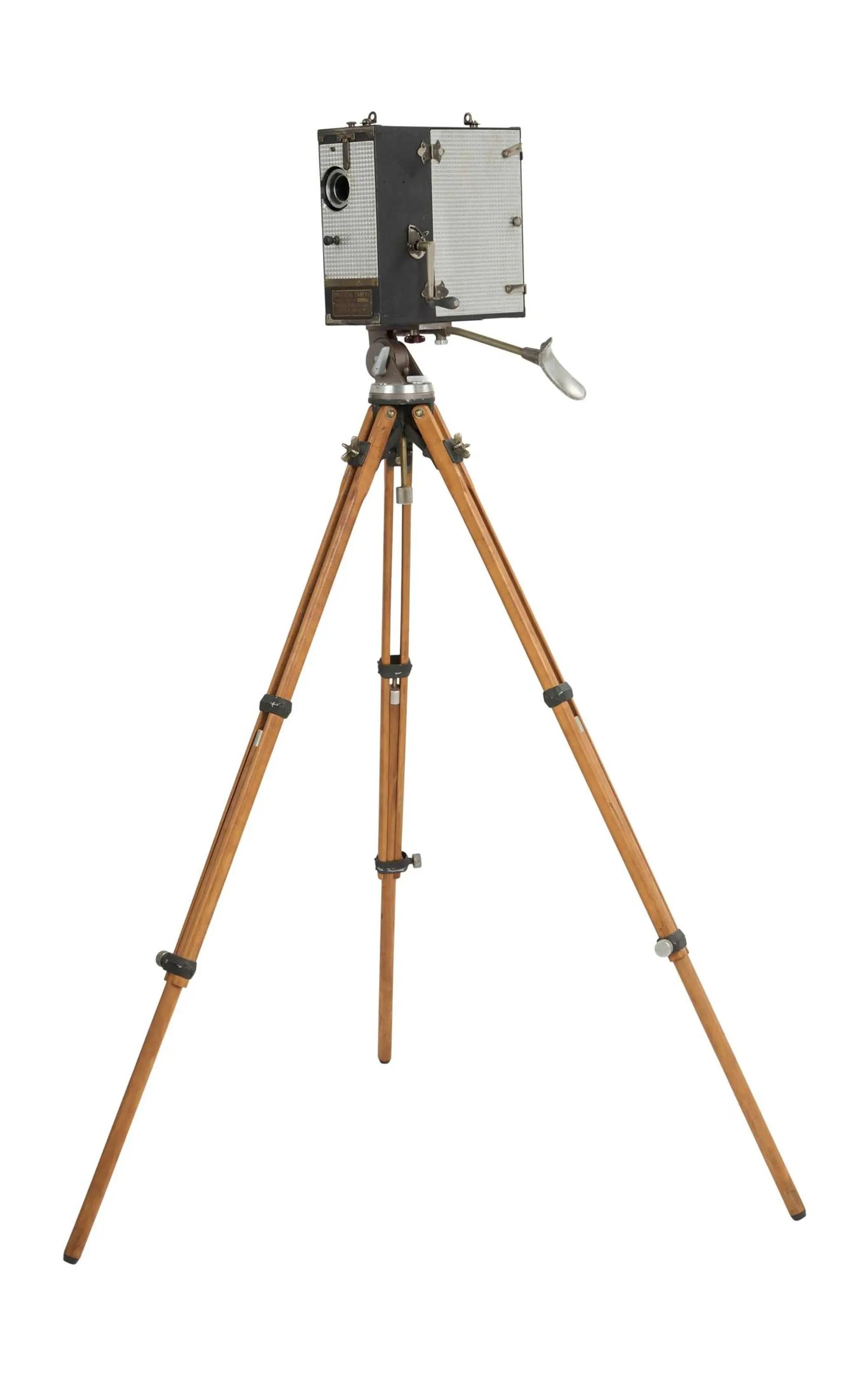
Before Keaton was a star he was a filmmaker, and before he was a filmmaker he was a student of the machine. He taught himself cinematography from the ground up, taking cameras apart and reassembling them, learning what the lens could and couldn't do, eventually becoming one of the few actors of his era with genuine technical authority over the films he made. The great silent comedies — Sherlock Jr., The General, Our Hospitality — were not just performances. They were directorial achievements, built on an understanding of spatial relationships, of how the camera's position determines what a joke means.
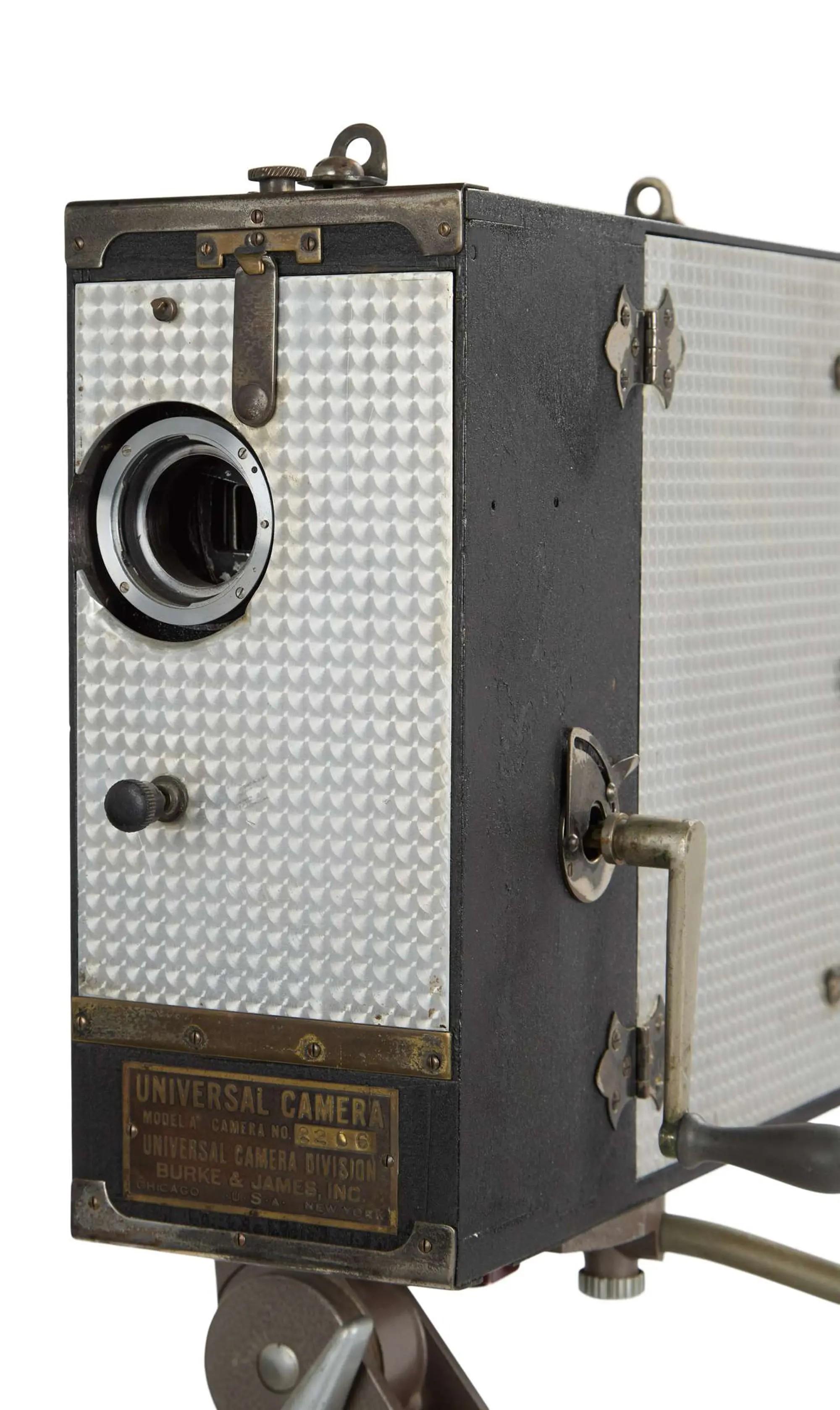
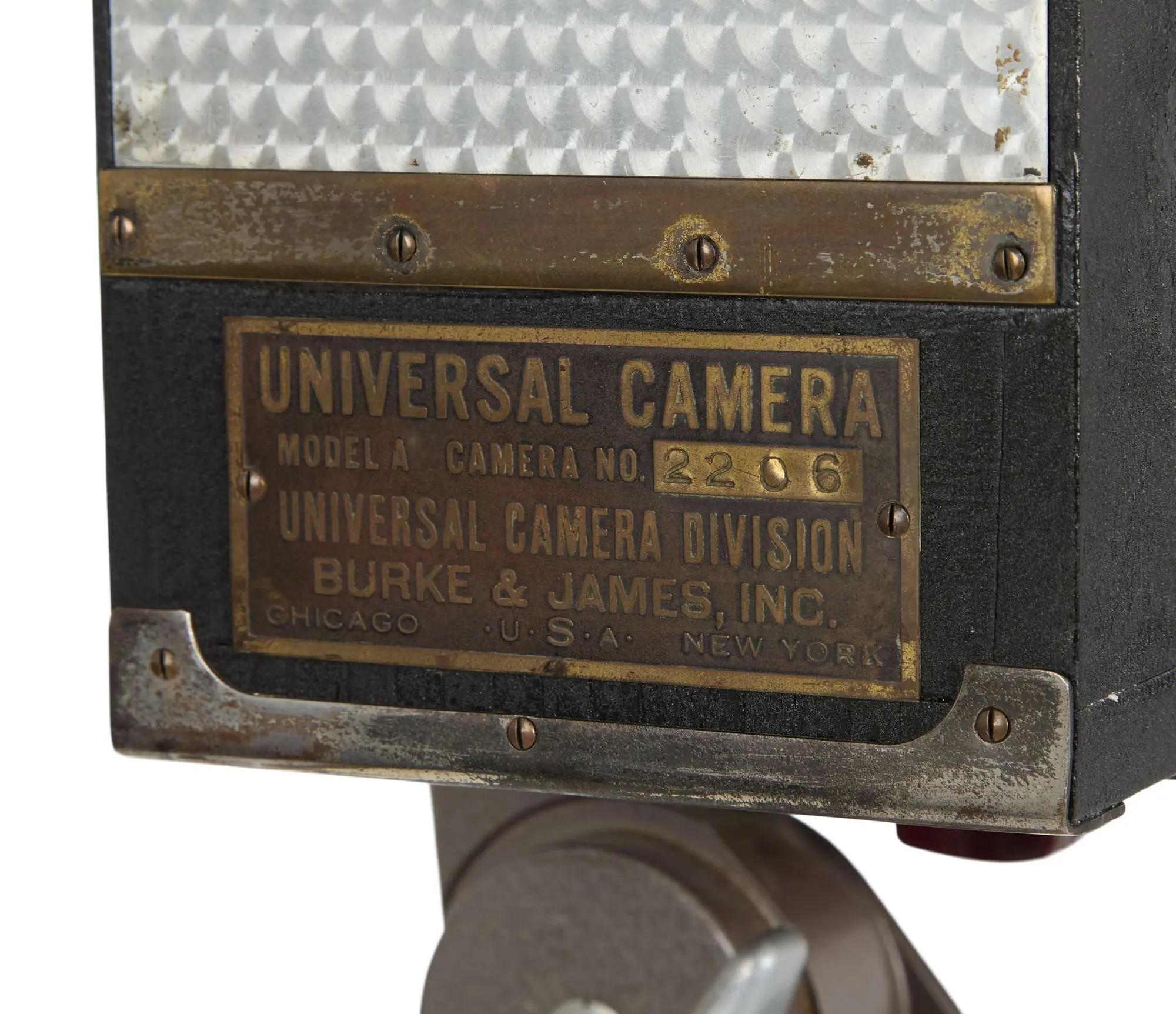
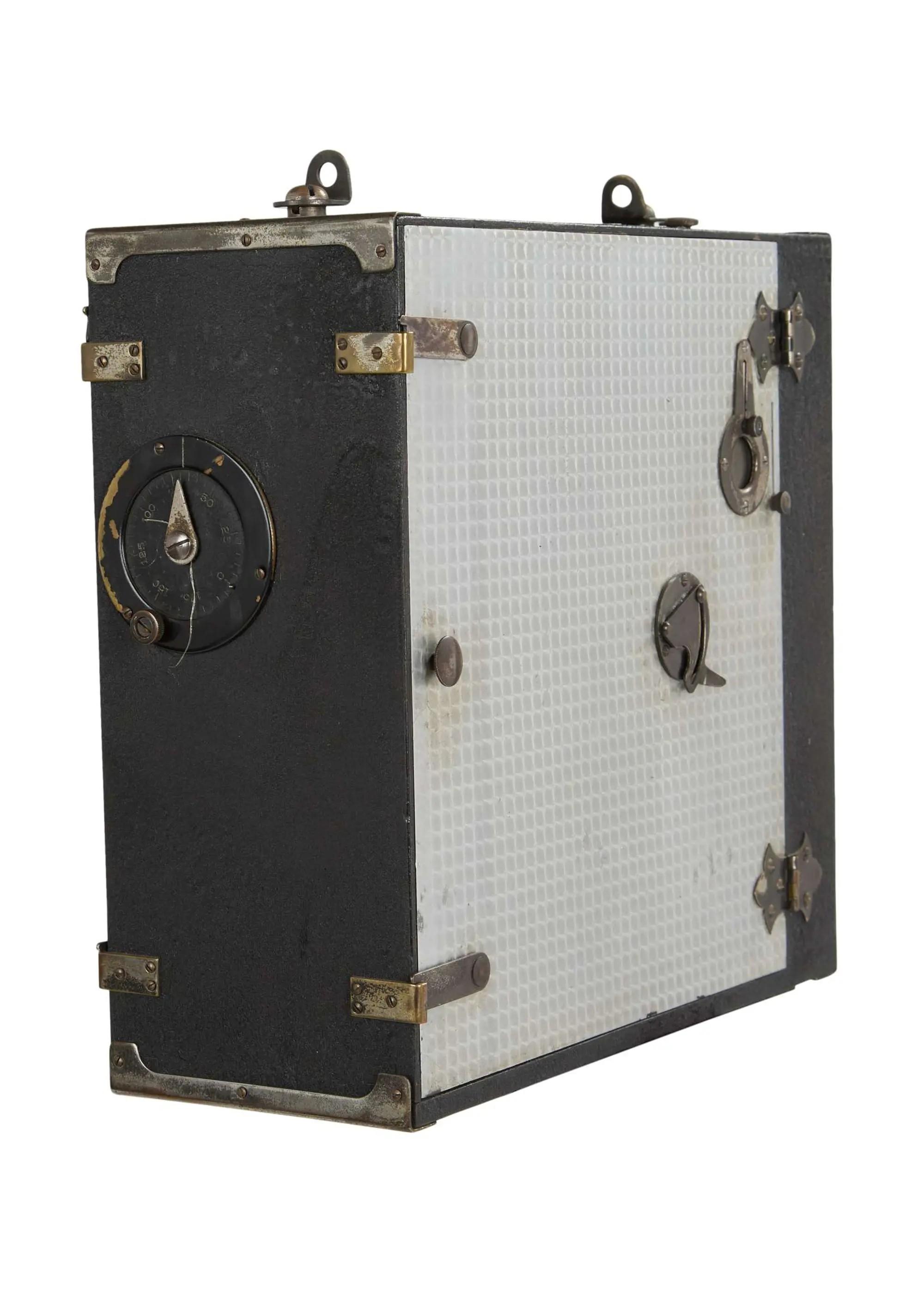
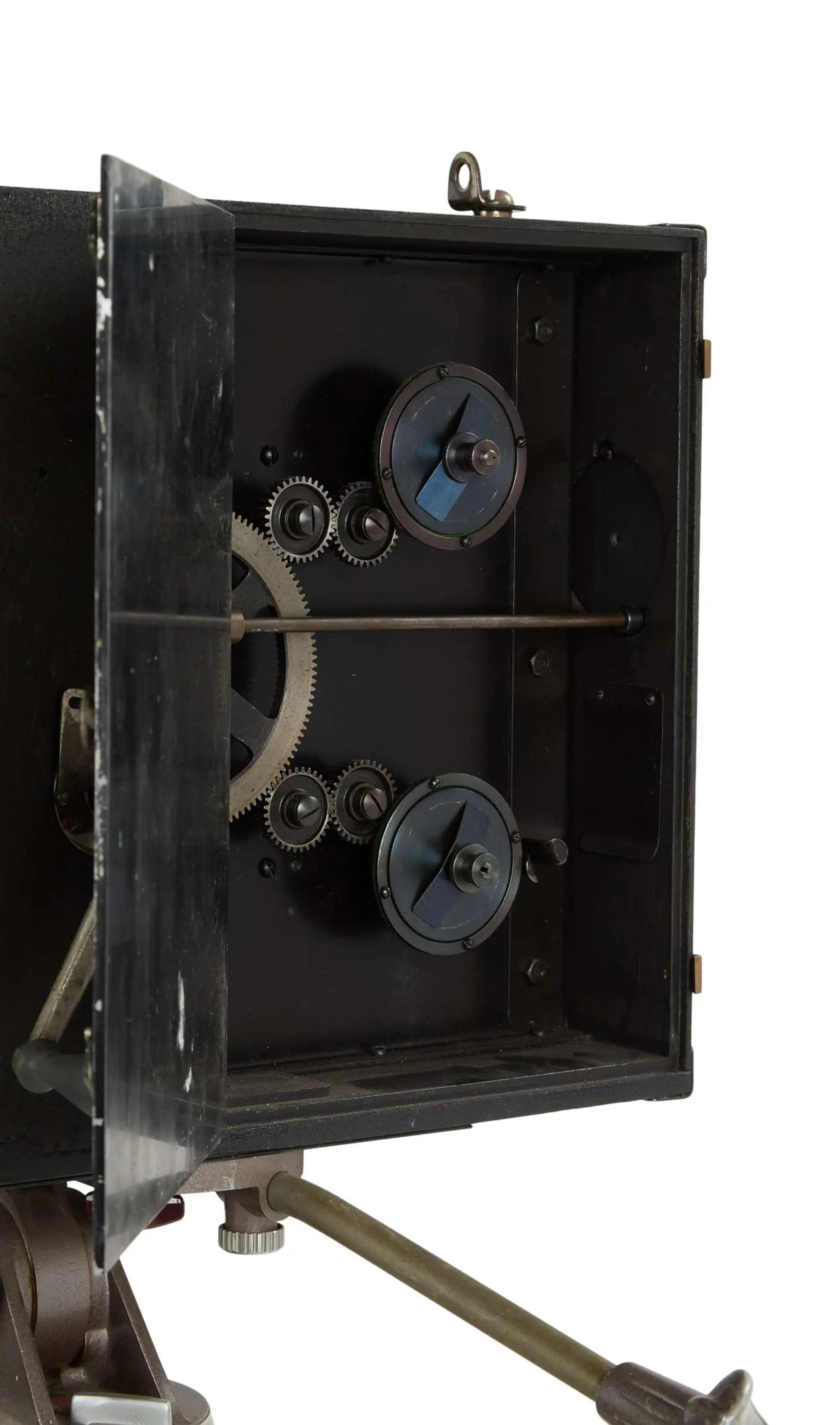
The Universal Model A hand-crank 35mm camera offered here dates to the 1920s, the decade of Keaton's peak creative output. Built by Burke & James of Chicago — the Universal Camera Division — it is a working instrument of that era: black wooden housing, heavy-gauge hinged aluminum doors with an engine-turned finish, a removable metal hand crank. Serial number 2206. It is the kind of camera that Keaton would have known intimately, the kind of machine that shaped the way he thought about what a film could be. The accompanying tripod, with its wooden legs and Munich manufacture by Schiansky, carries a U.S. distributor label from Paillard Inc. of New York and dates to the 1950s — placing it in the period when McCann and Keaton were friends. Both pieces passed to McCann following Keaton's death.
Hat & Chair
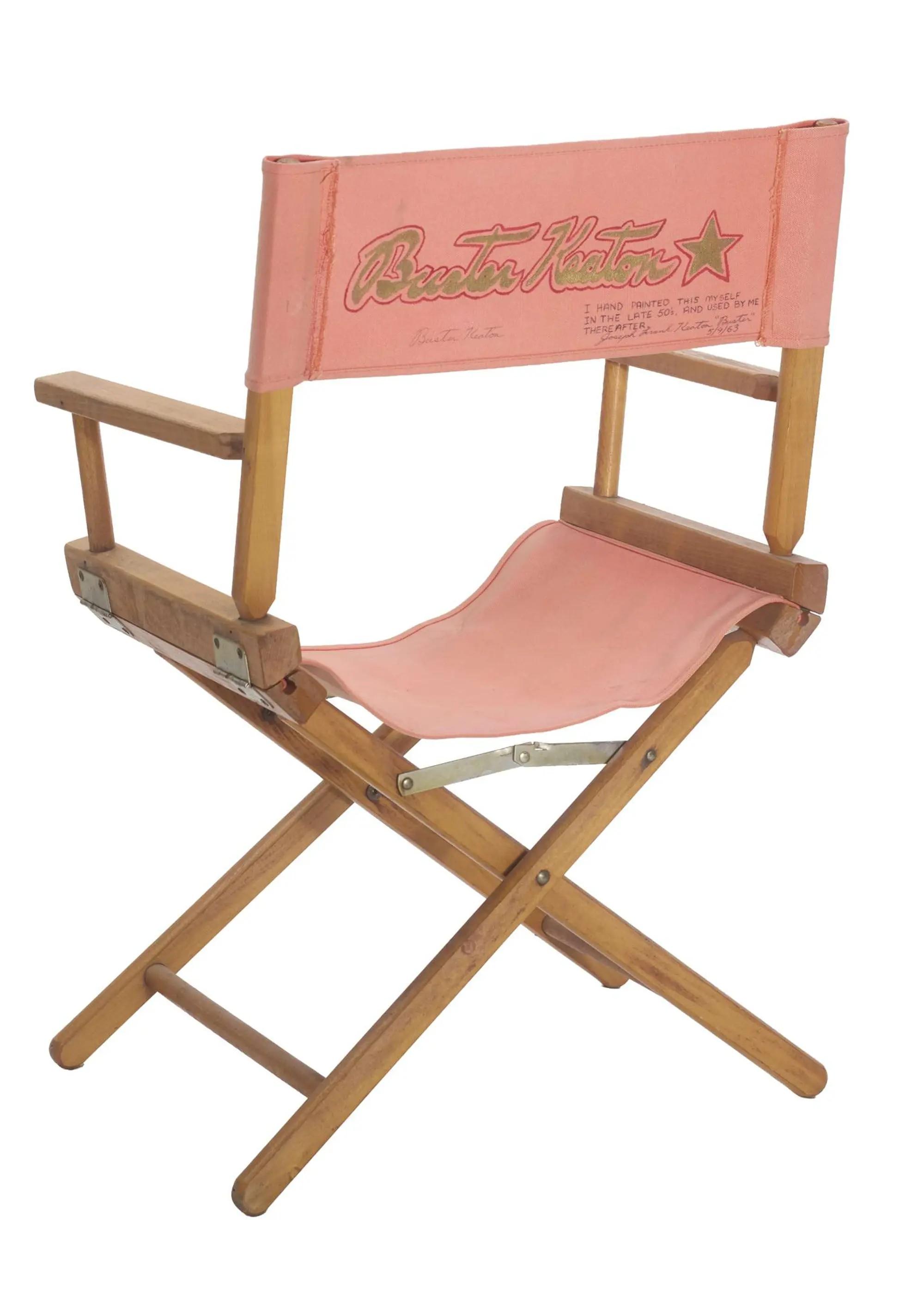
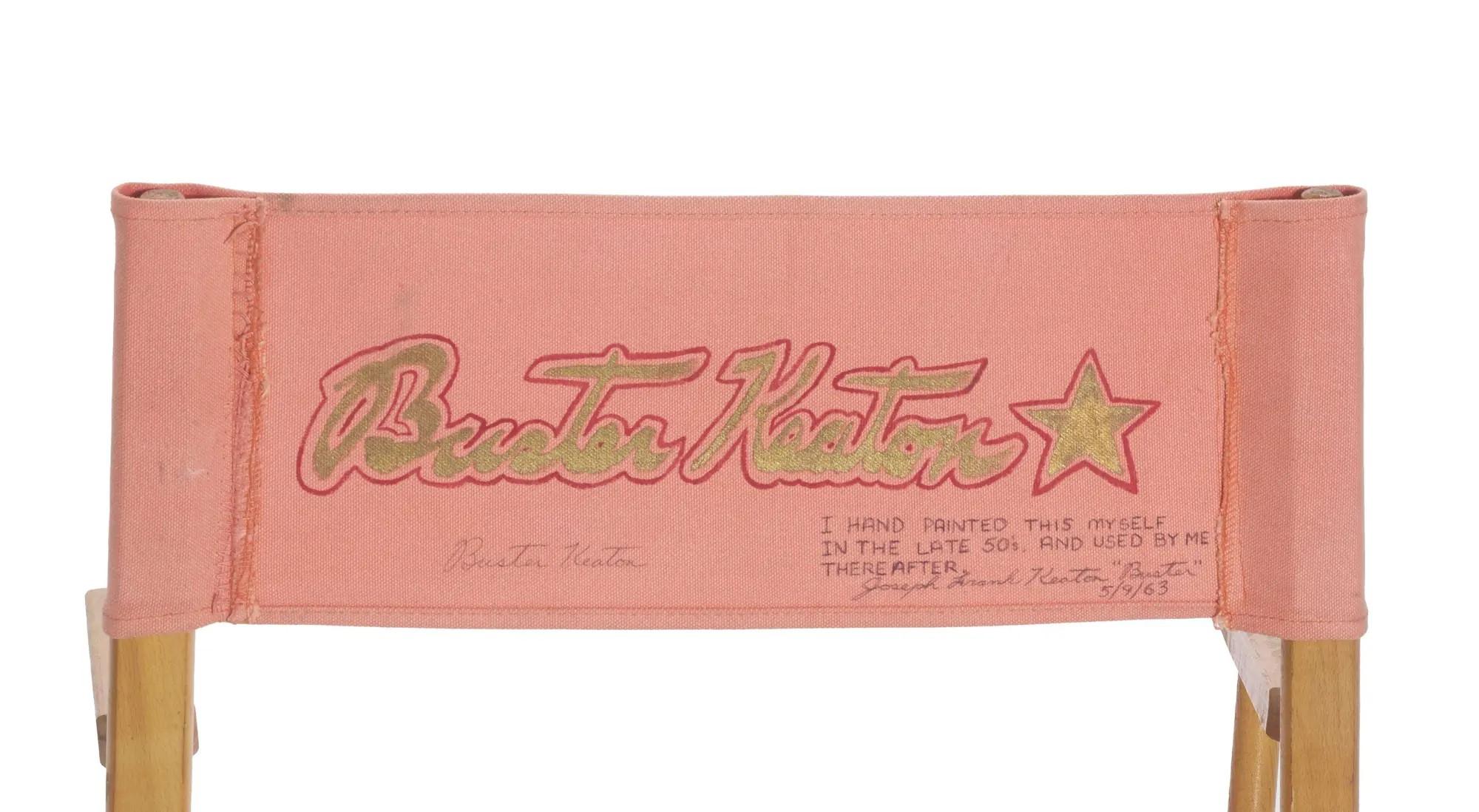
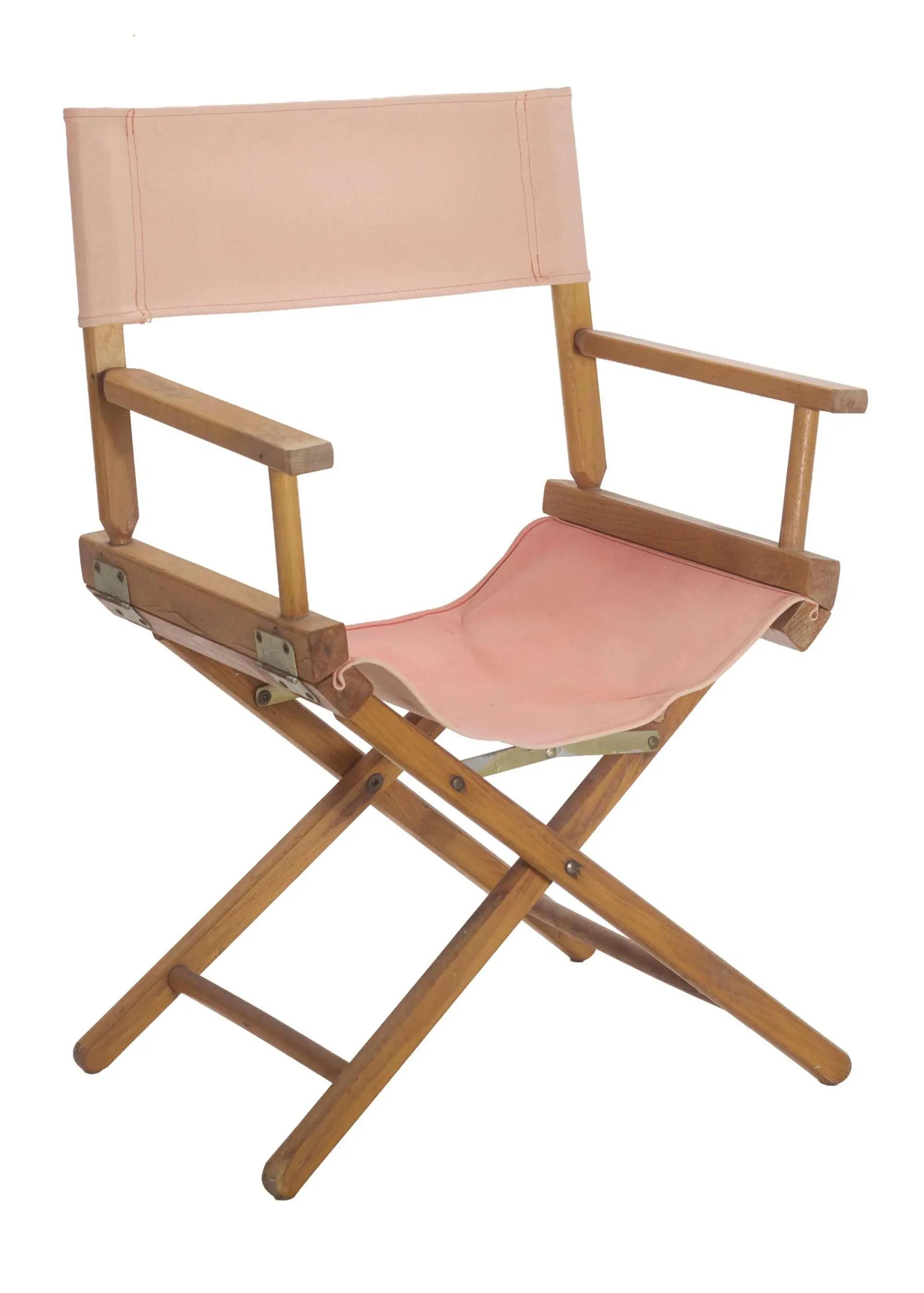
Most director's chairs are functional objects — canvas and wood, a name stenciled on the back, disposable by design. Buster Keaton turned his into something else entirely. At some point in the late 1950s, he picked up a brush and hand-painted his own chairback in gold and red: his name, a star, and then — in handwriting on the bottom right corner — an inscription that reads, in full: I HAND PAINTED THIS MYSELF / IN THE LATE 50's. AND USED BY ME THEREAFTER. He signed it twice: once with the signature "Joseph Frank Keaton 'Buster,'" dated May 9, 1963, and once on the left armrest in black pen.
The inscription is almost startlingly matter-of-fact. No flourish, no sentiment — just the information, stated plainly, the way a man might label something he wanted to make sure wasn't misunderstood. The chair shows wear from age and use, which is another way of saying it was actually sat in. Keaton used it, and the pink cloth seat absorbed the years.
Eleanor Norris married Buster Keaton in 1940 and stayed with him until his death in 1966. She also, according to Chuck McCann, made his hats. In a podcast conversation with Gilbert Gottfried released in February 2015, McCann described the process: Eleanor would take a fedora, cut it down, flatten the brim, and shape it into the porkpie that became one of the most recognizable silhouettes in cinema history. She made them by hand, for him, repeatedly.
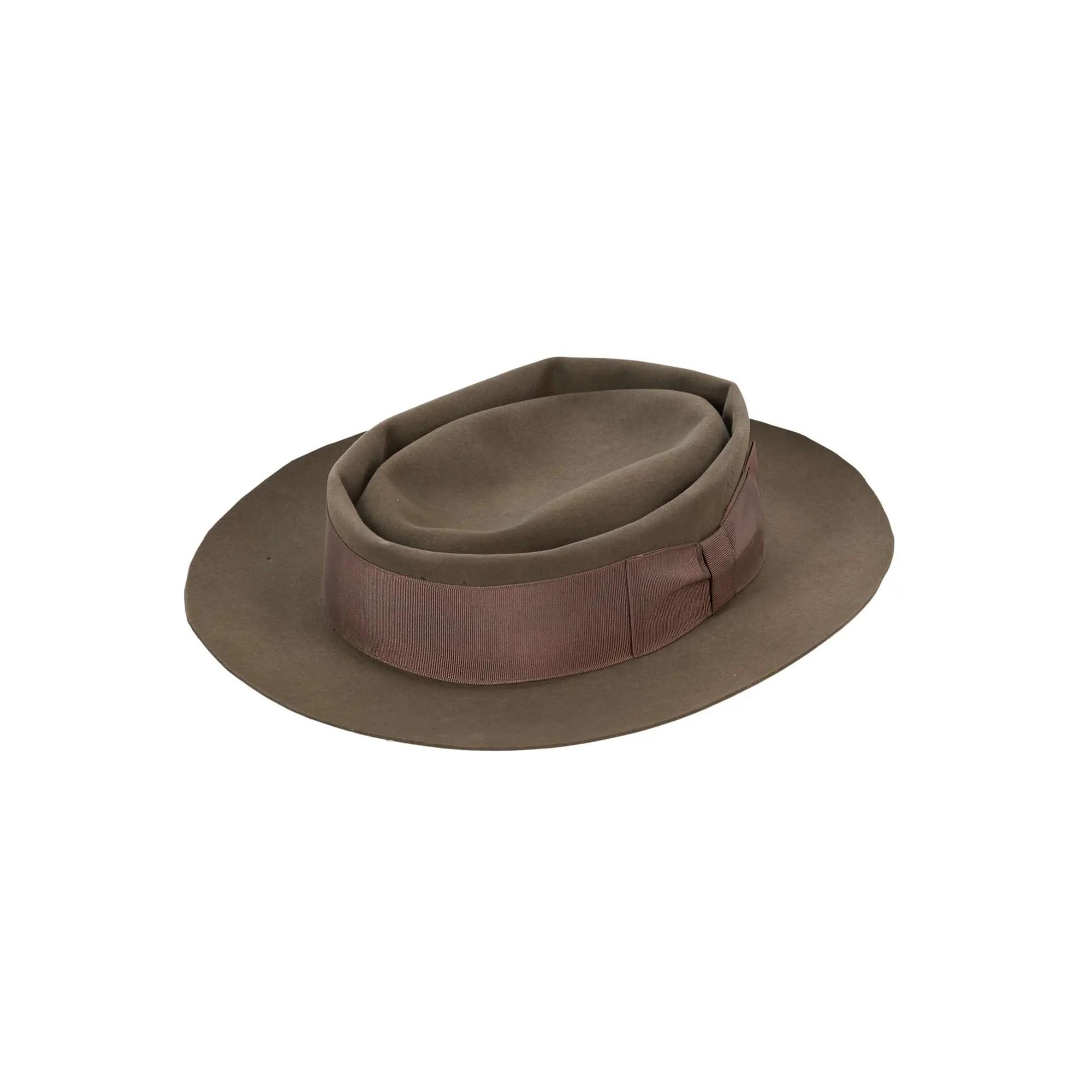
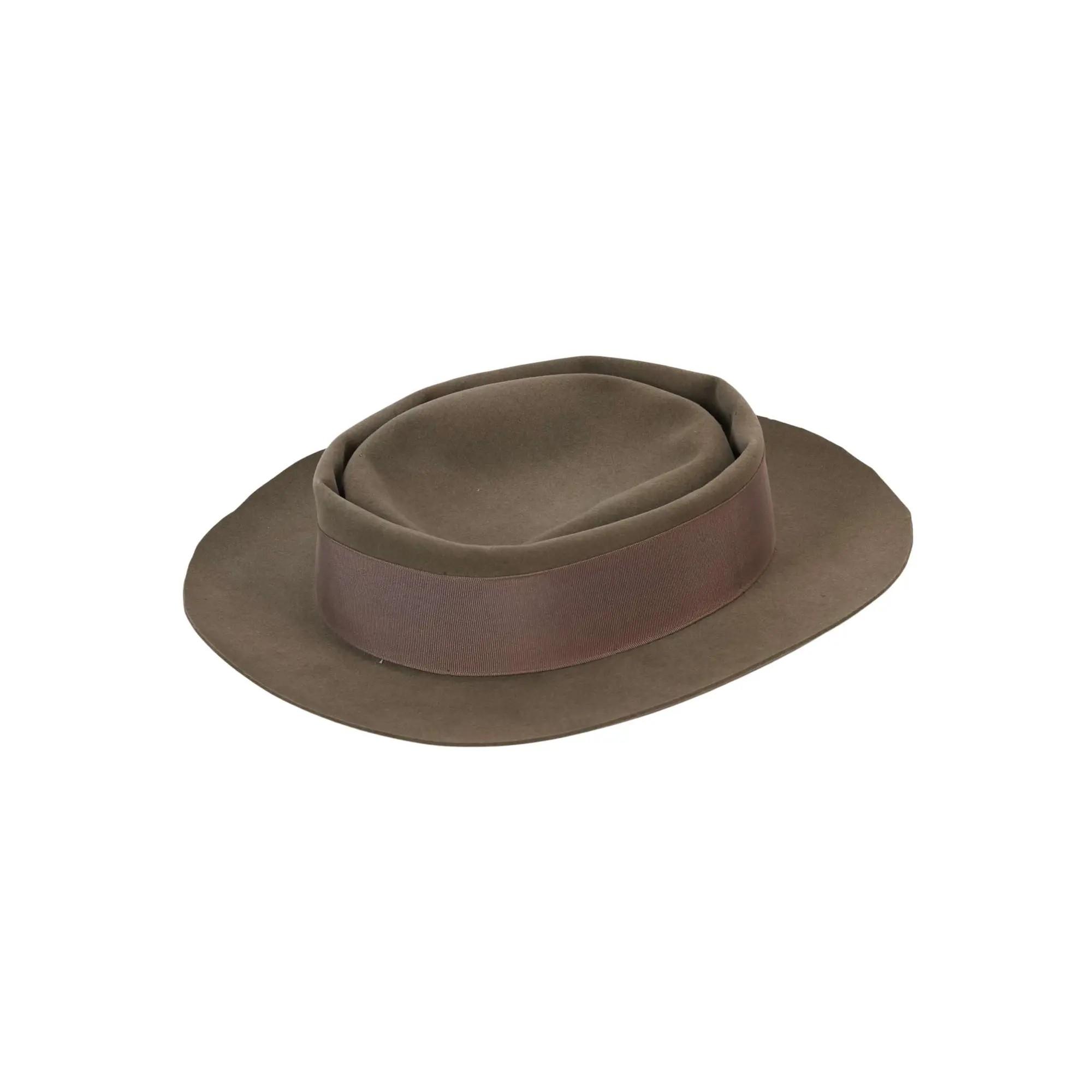
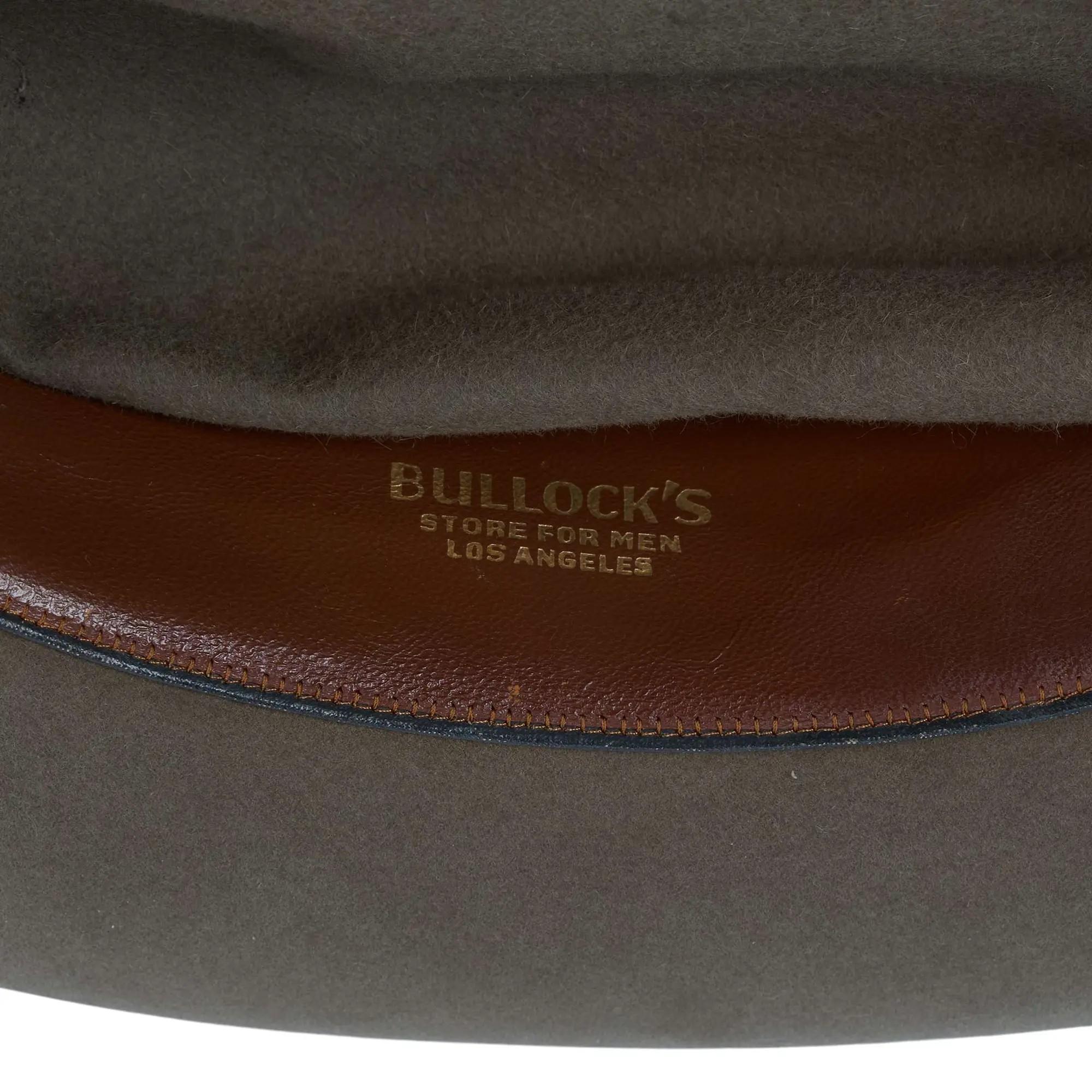
The gray porkpie hat offered here — purple hatband, inner sweatband marked Dobbs Fifteen and Bullock's Store for Men Los Angeles — was owned by Keaton and later gifted to McCann. Whether Eleanor made this one specifically, the record does not say. What the record says is that Keaton wore it, that McCann received it, and that it has been in continuous, careful possession ever since.
The flat-brimmed porkpie is the thing people remember when they remember Keaton — more than the face, sometimes, because the hat was part of the face, an extension of the persona that said: I am not going to give you what you expect. It belonged to a man who built his entire career on that proposition. It is exactly the hat you would imagine, which is to say it is the real one.
Portrait of a Man
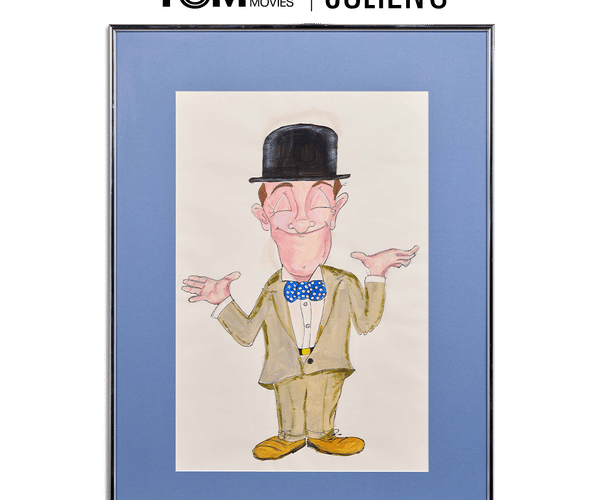
Chuck McCann was not only a performer. He was a gifted illustrator, and sometime during the years of his friendship with Keaton, he drew him: a caricatured portrait in pen and ink, Keaton holding a pie, signed by the artist and numbered as the first in an edition of two hundred. It is framed under a white outer mat and a gray inner mat, and it captures — in the vocabulary of caricature, which is the vocabulary of exaggeration — the quality that made Keaton's face so endlessly compelling to look at. You cannot caricature a blank expression. McCann found the geometry beneath the stillness, the architecture of a face that communicated by refusing to communicate.
McCann, who died in 2018, worked in comedy for six decades, from children's television to film to stand-up. He knew funny people his entire life. That he chose to draw Keaton says something about where Keaton sat in his private hierarchy.
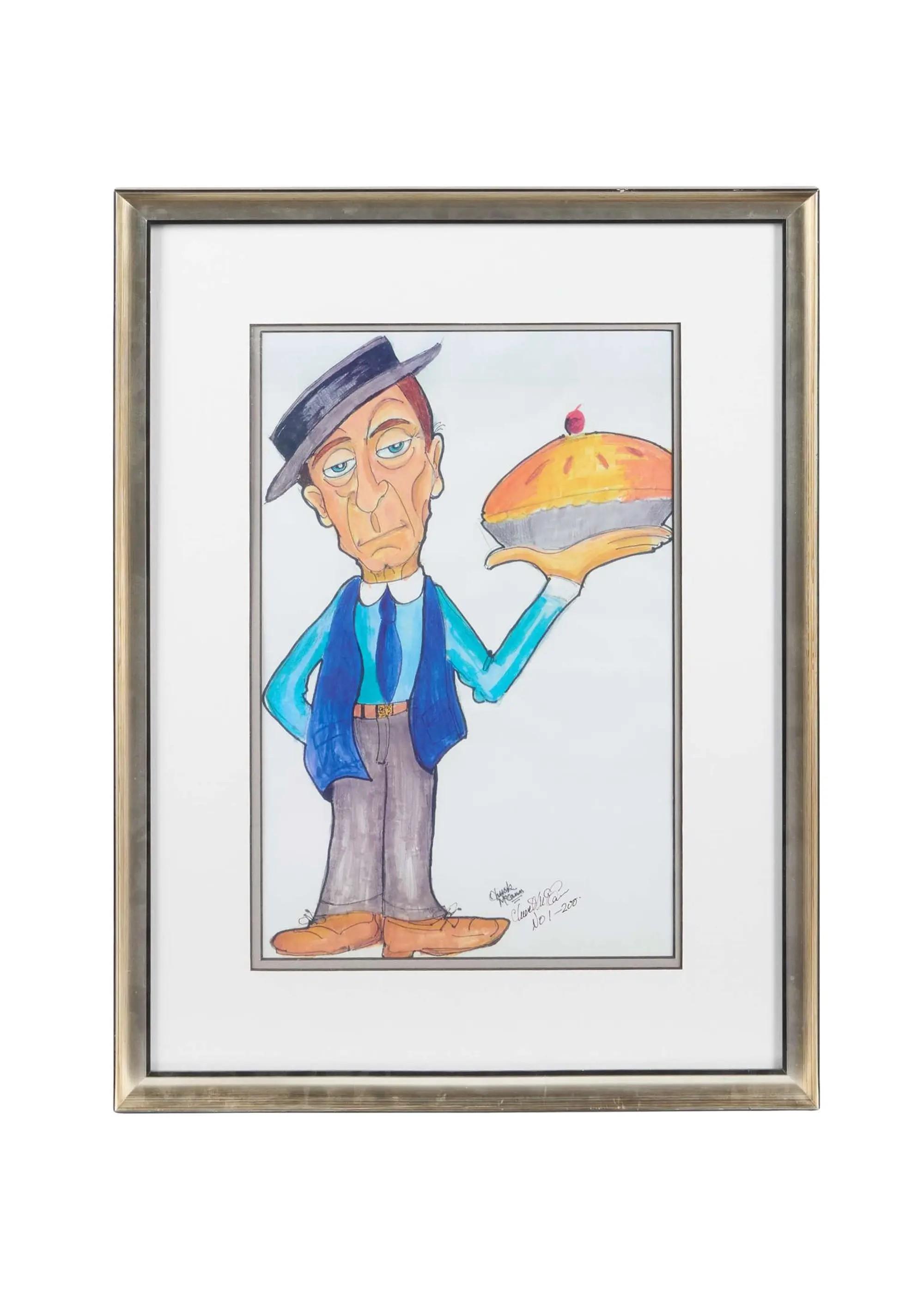
1. Lot #186. Buster Keaton | Portrait by Chuck McCann, 2. Lot #184. Buster Keaton | Camera and Tripod, 7. Lot #185. Buster Keaton | Buster Keaton Signed Director's Chair, 10. Lot #187. Buster Keaton | Buster Keaton Owned Porkpie Hat,
What connects all these objects — a flying saucer, a pair of gloves, a customs form, a script, a shelf of books — is that they were never meant to outlast the films they belong to. Props get lost. Keepsakes get discarded. Documents get thrown away. That these survived is partly luck and partly love — the love of a son for his father's most private possessions, of an effects artist for a model no one else thought worth saving, of a journalist who understood that the books on his shelf were also a record of something. They are what the work left behind.