Art
The 'Vargas Girls' of Playboy: Iconic Art & Pop Culture
Explore the iconic Vargas Girls by Alberto Vargas in Playboy's art history at Julien's Auctions.
Share



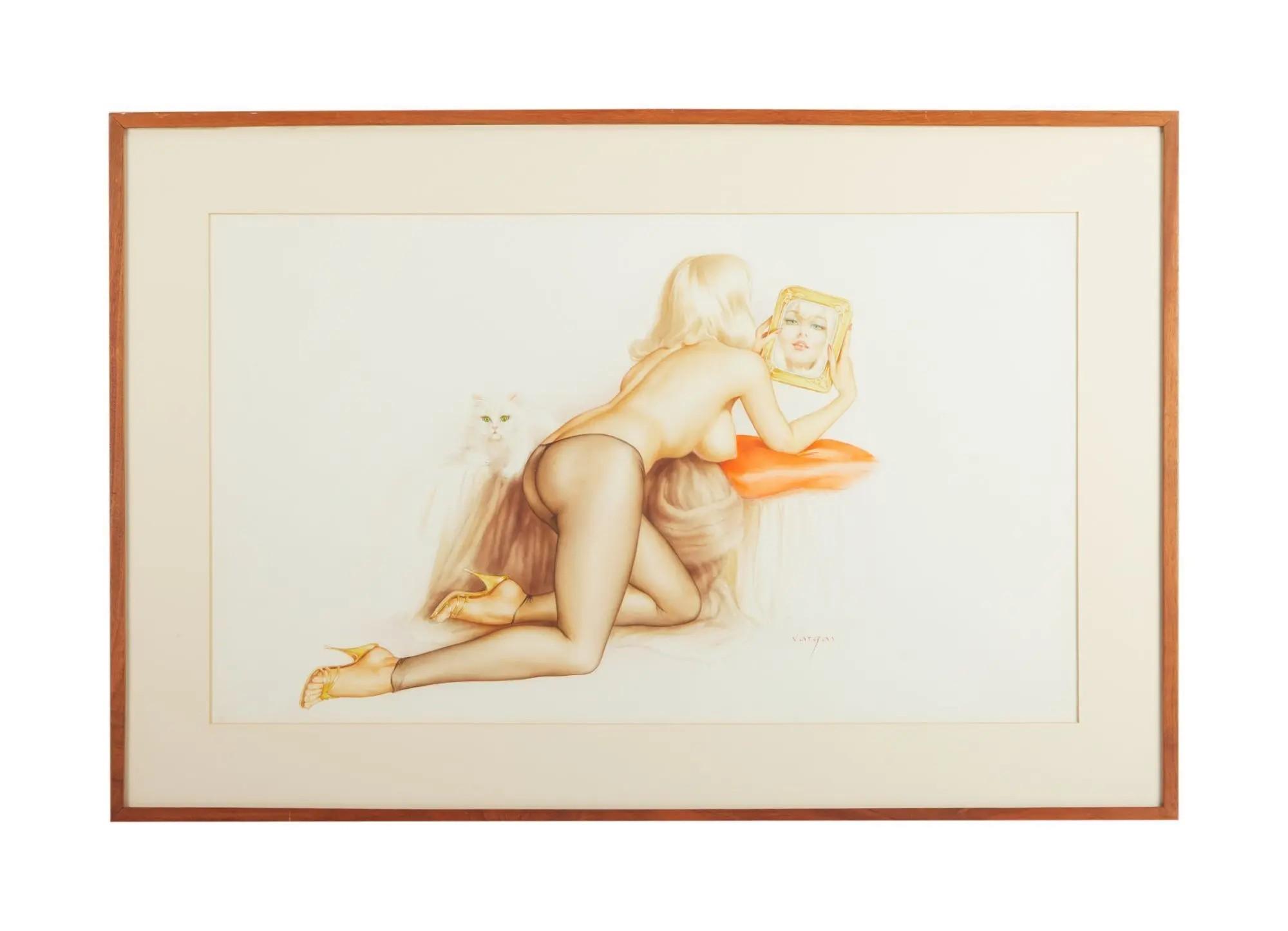
Playboy | Alberto Vargas Girl Pinup June 1964 Watercolor Drawing
Through 20 years of Julien’s Auctions’ memorable history we’ve had the immense privilege of partnering exclusively with the Playboy Estate, and with it, a select group stands out for their iconic status and undeniable charm: the original watercolor drawings by the legendary pinup artist, Alberto Vargas.
These works, sourced directly from the Playboy Archive, offer a unique window into the artistic collaboration that defined an era.
Alberto Vargas is a smooth pioneer of the pinup. Born in Arequipa, Peru, in 1896, Vargas's artistic journey began in his father's photography studio. His early exposure to the female form and the techniques of visual composition laid the groundwork for a career that would span decades and captivate generations. After a formative period in Europe, where he was heavily influenced by the Art Nouveau style, Vargas moved to the United States. He quickly found success in New York, where his glamorous, idealized depictions of women became a staple of early 20th-century American culture.
Vargas' most famous works were created for Esquire magazine during the 1940s, where he created the "Vargas Girls," a series of pinup illustrations that became immensely popular with American servicemen during World War II. After a contract dispute with Esquire, Vargas' career waned for a time, but it was a new partnership with a burgeoning media empire that would reignite his creative spark. In 1959, at the age of 63, Alberto Vargas began a new and fruitful collaboration with Hugh Hefner and Playboy magazine.
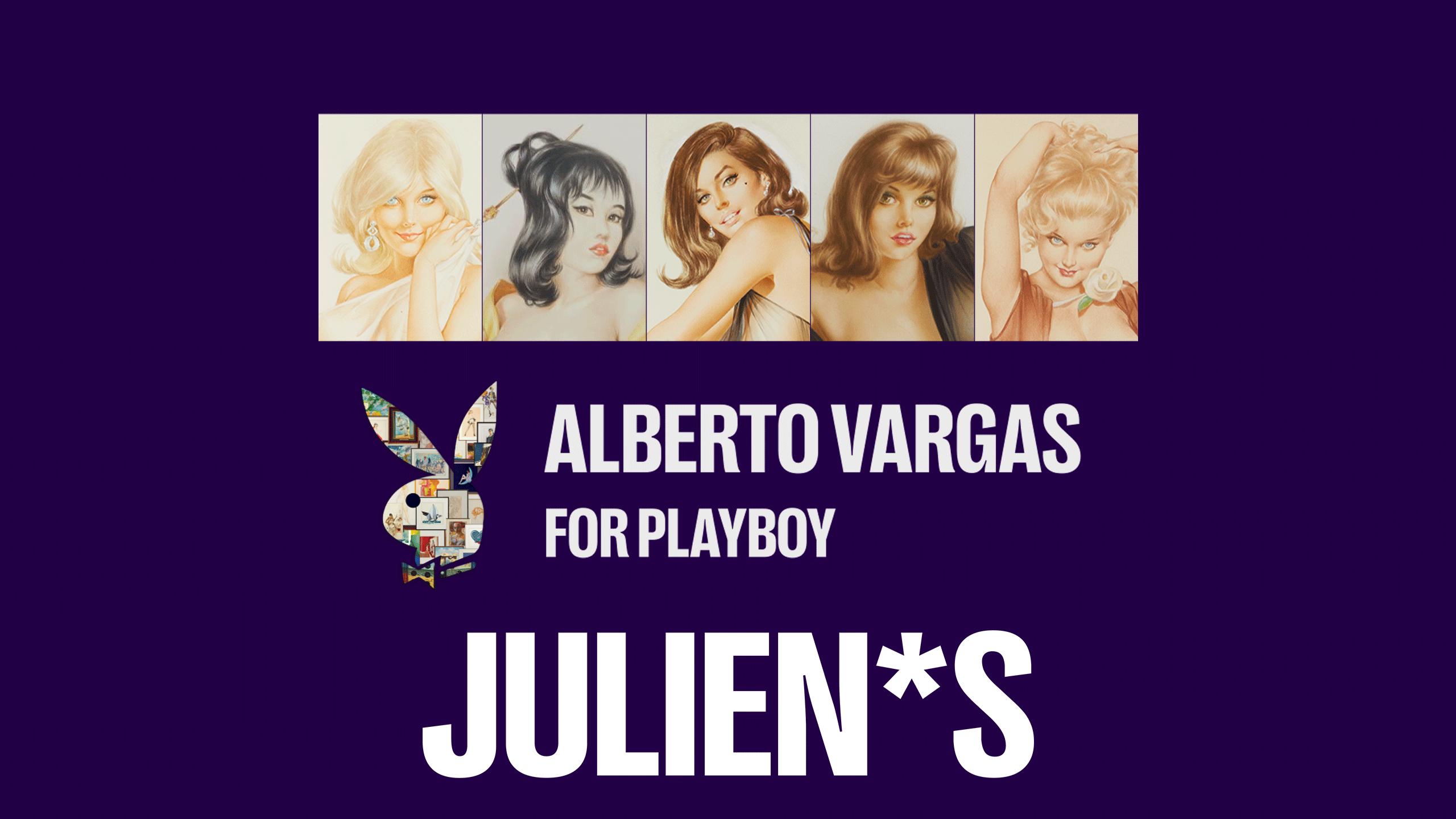
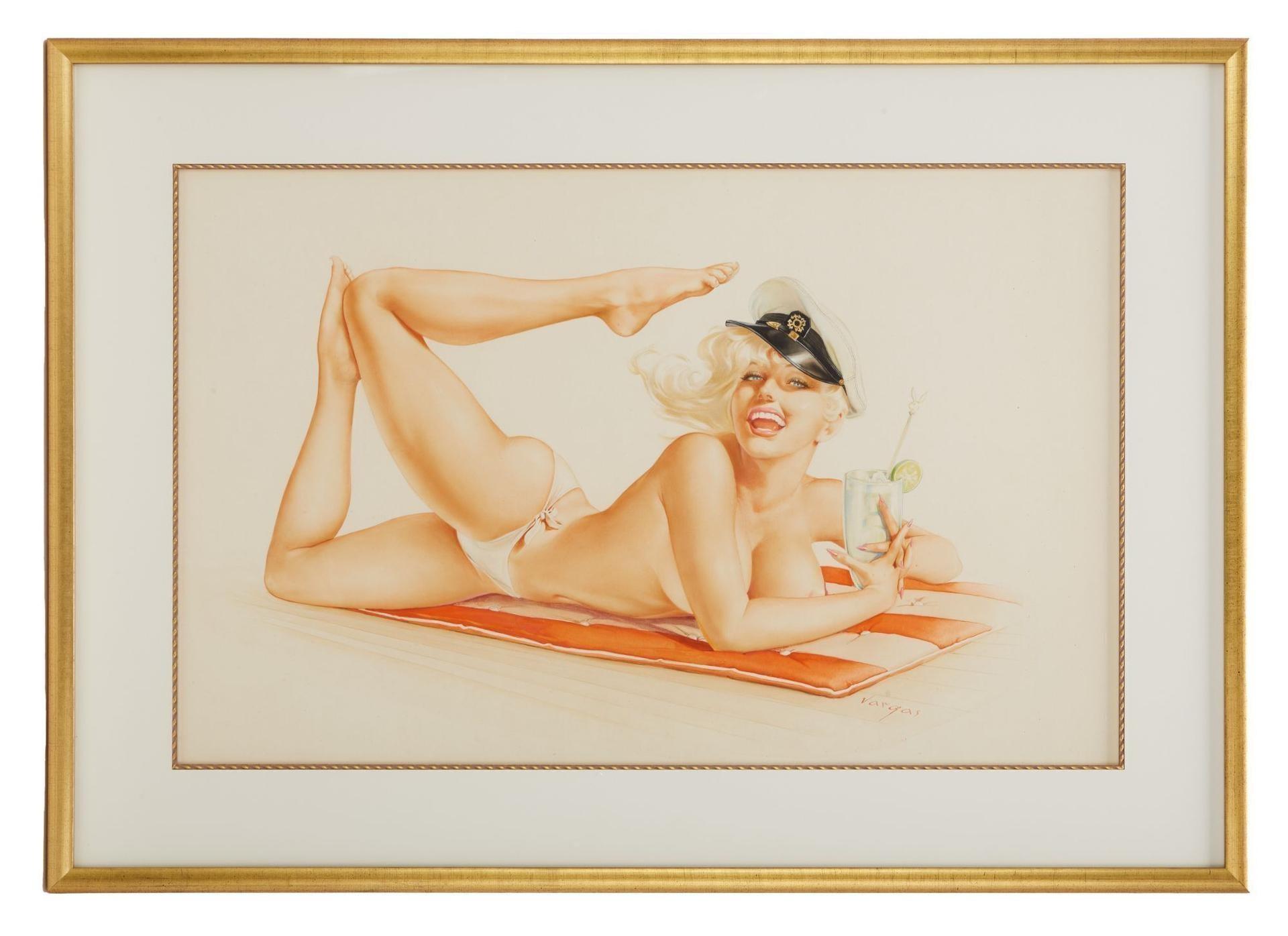
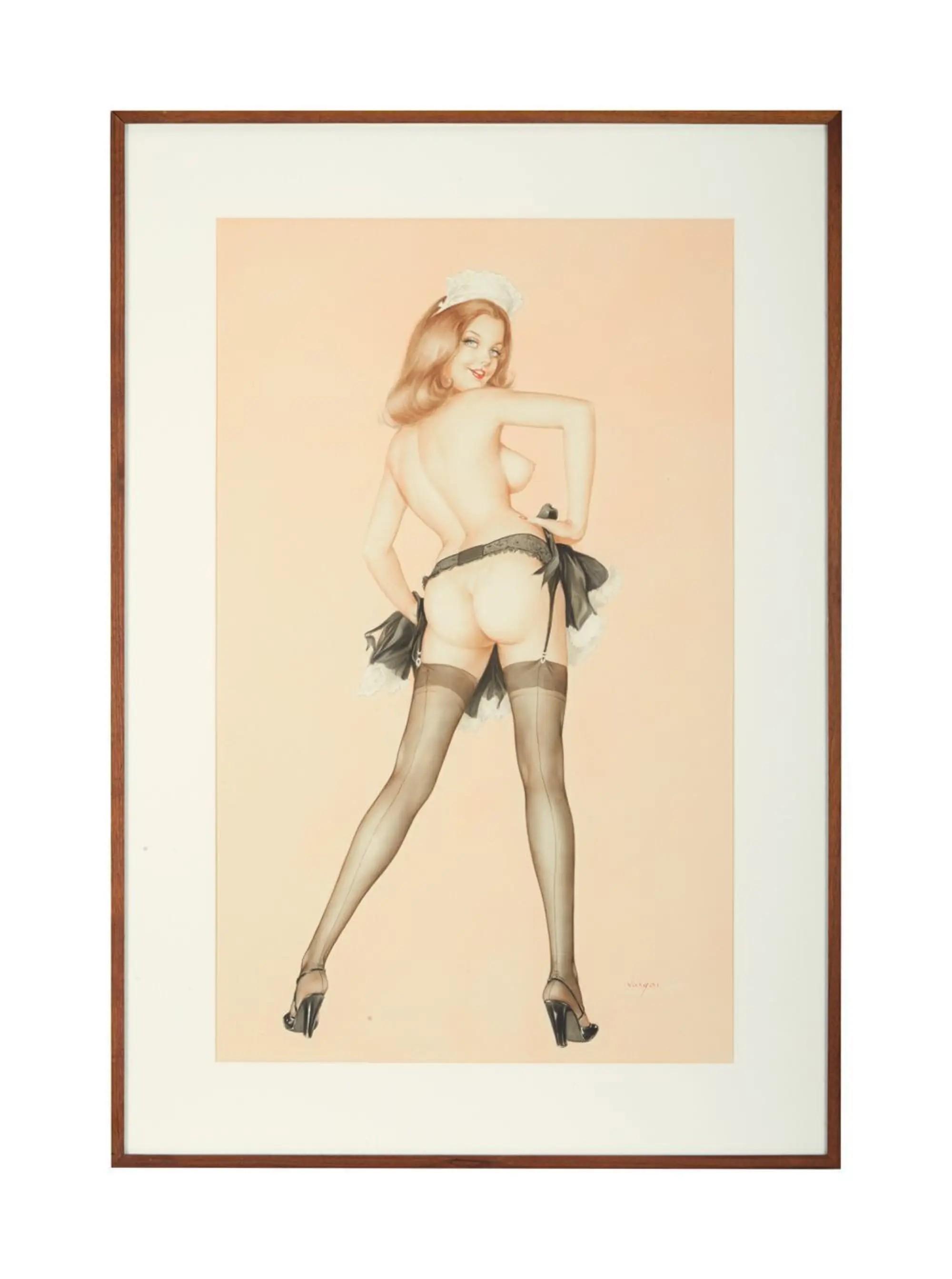
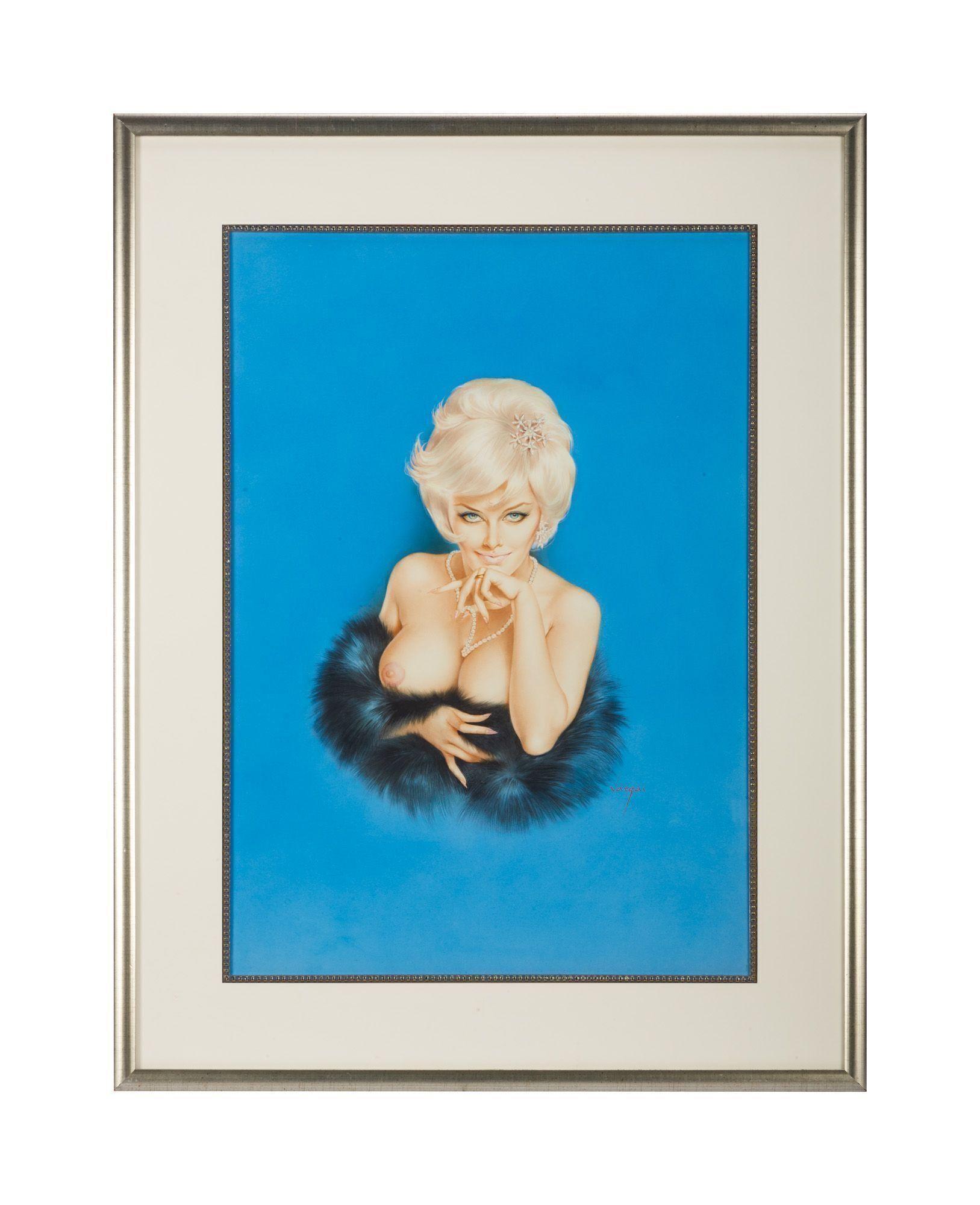
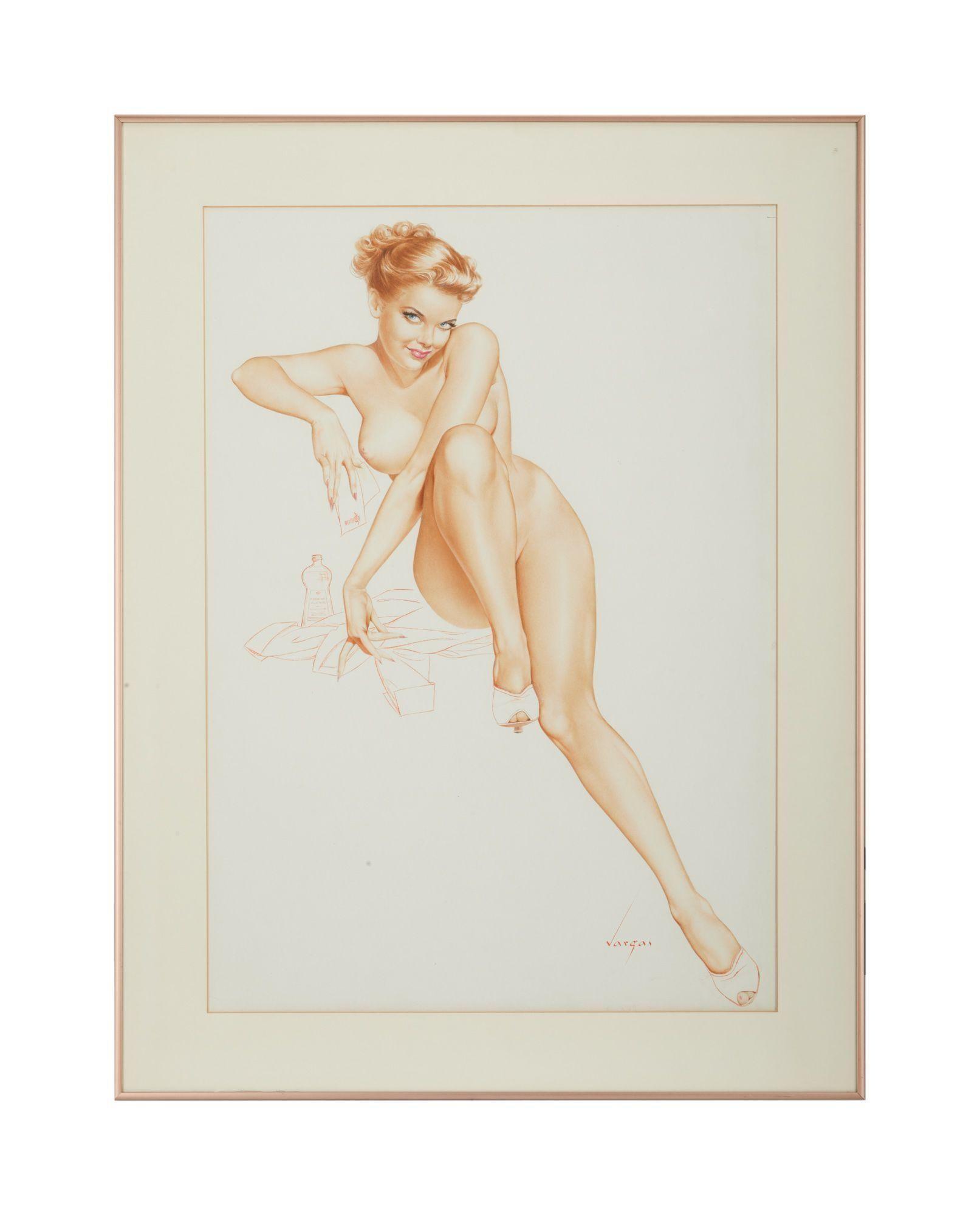
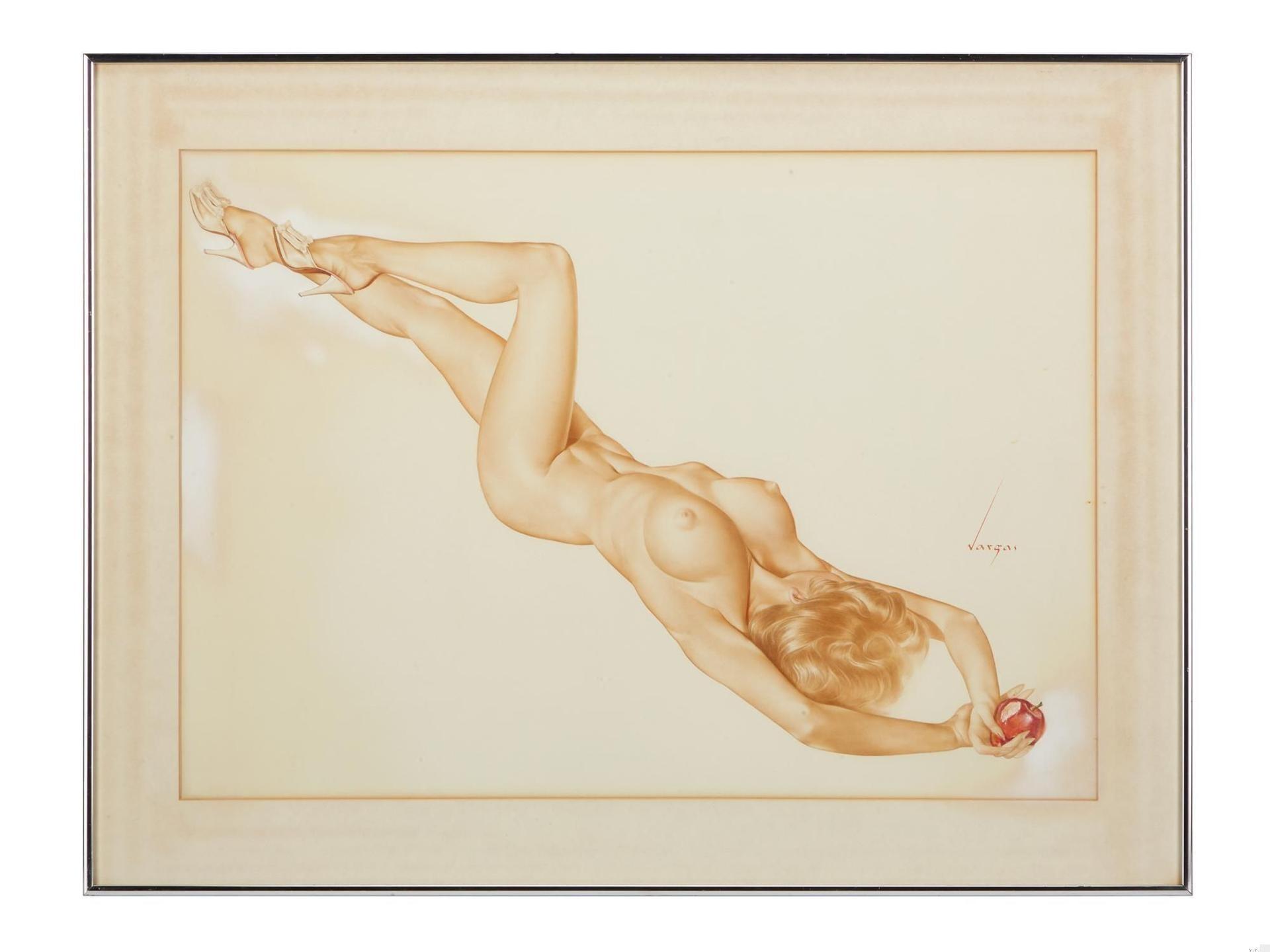
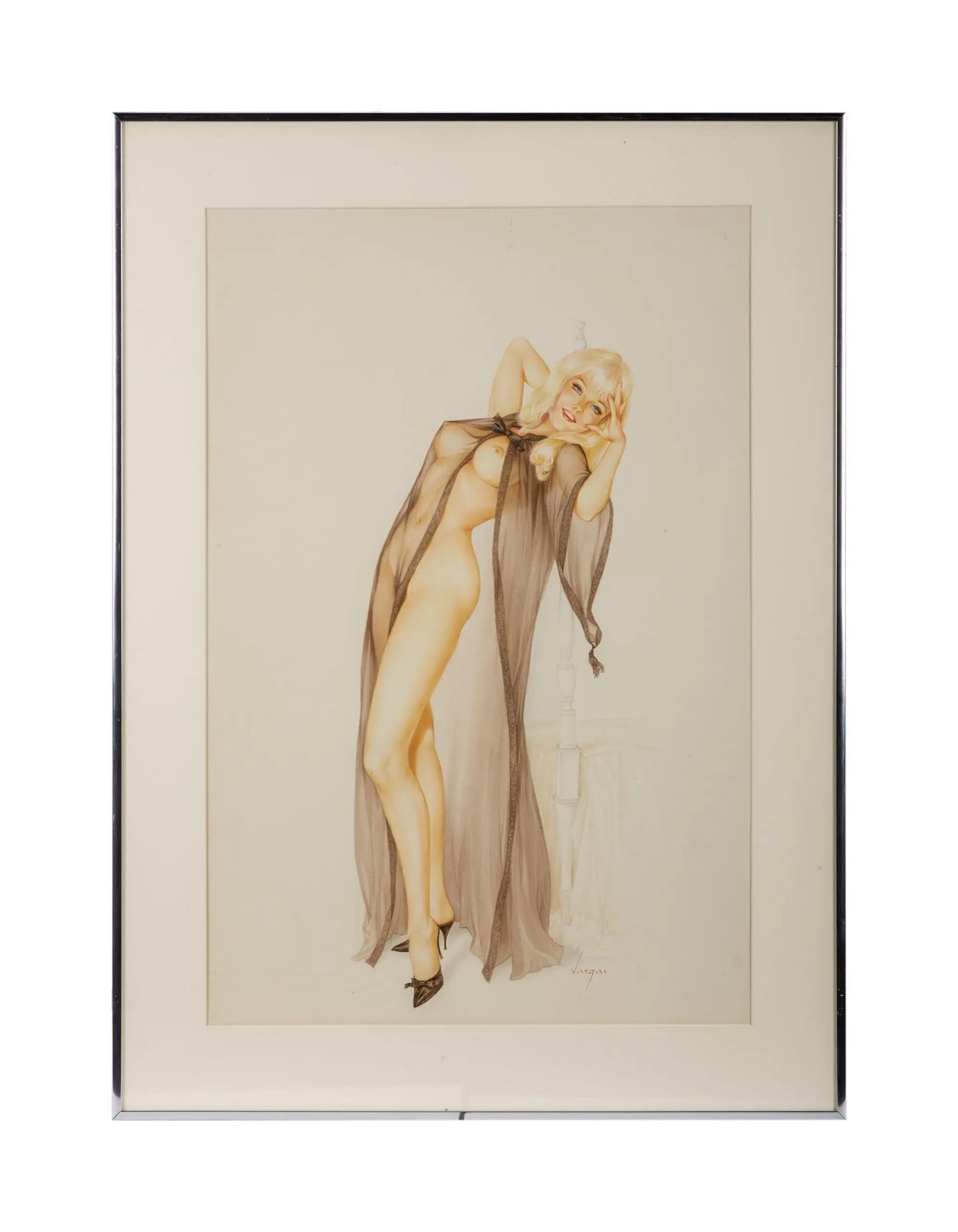
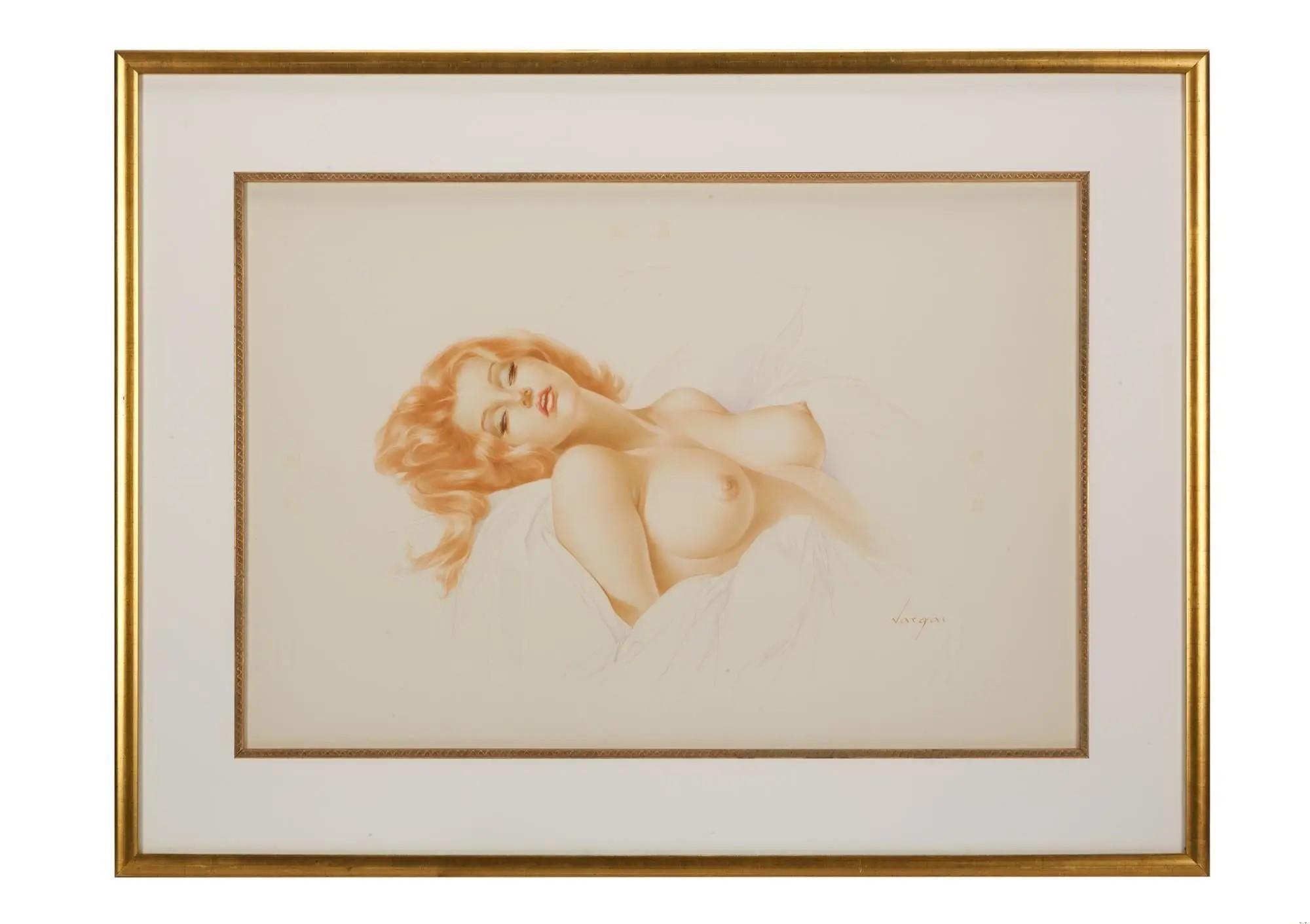
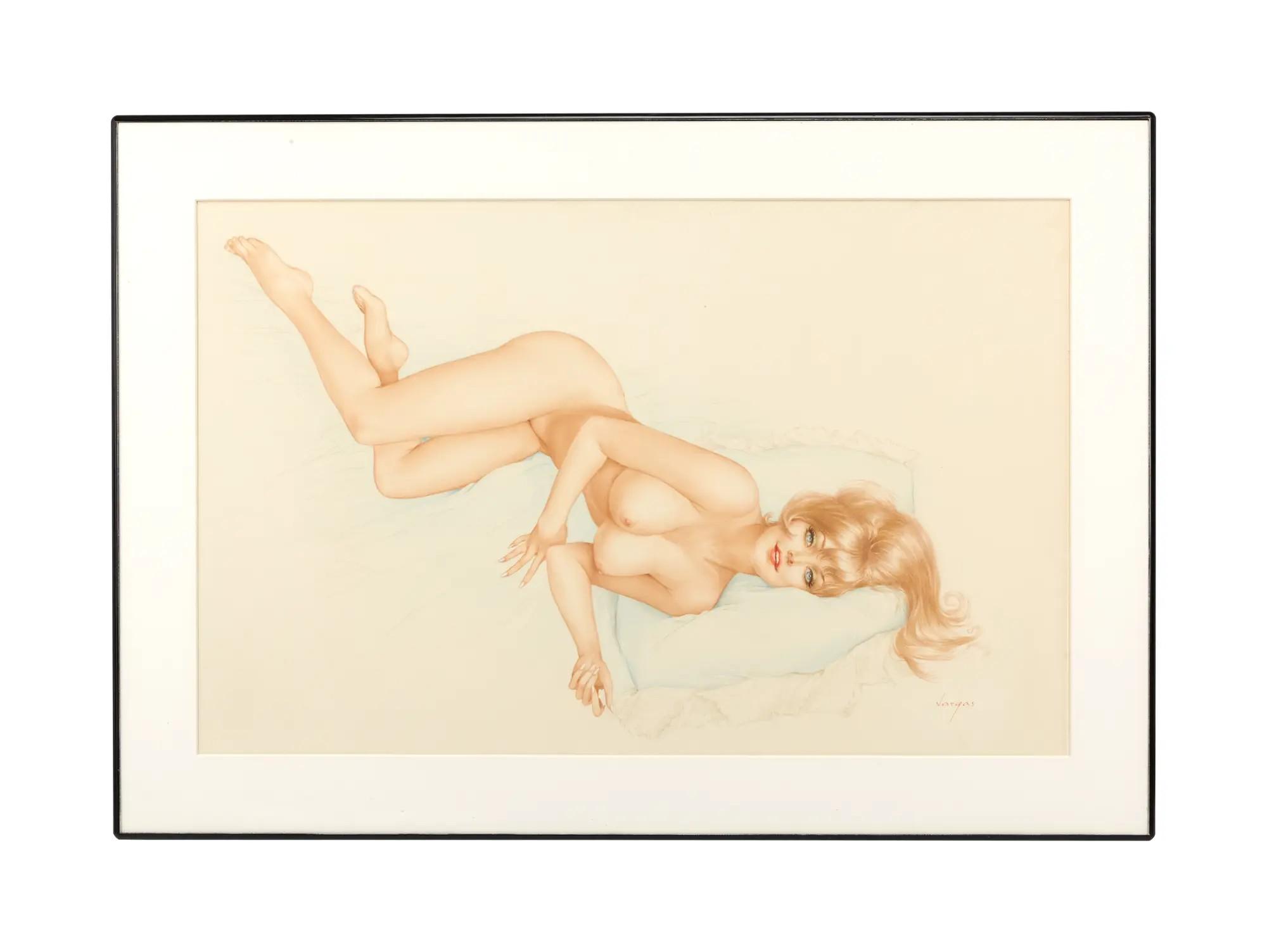
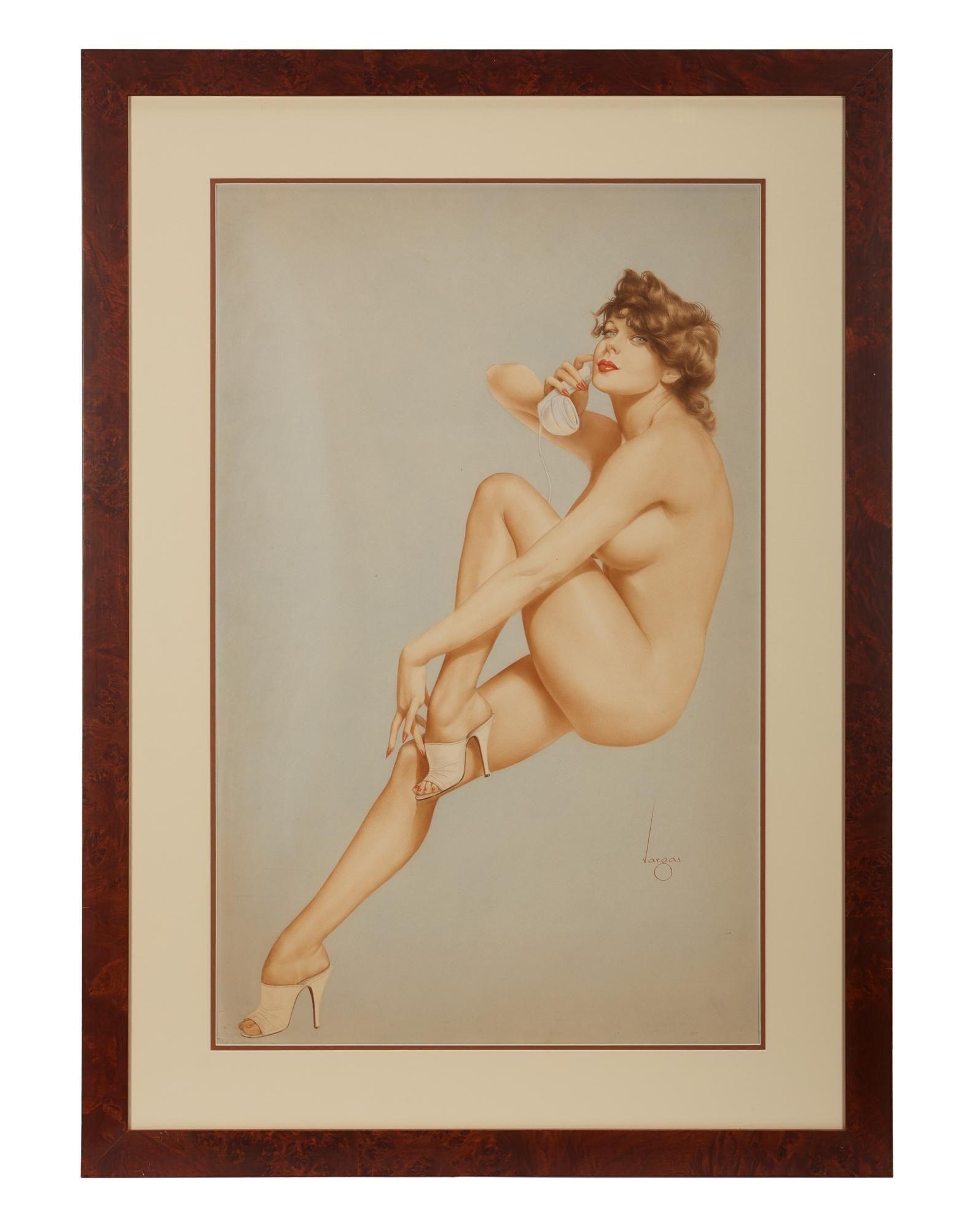
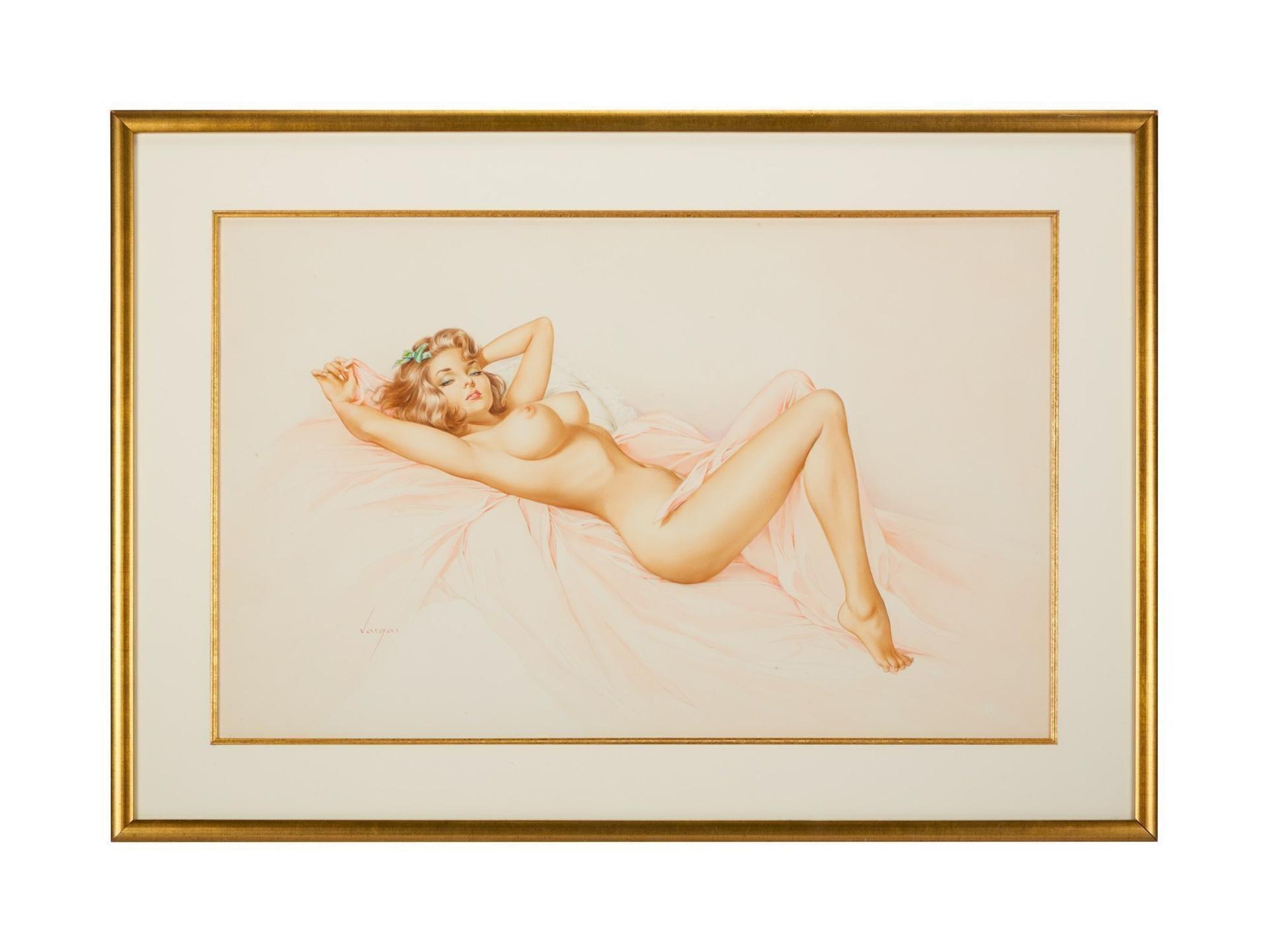
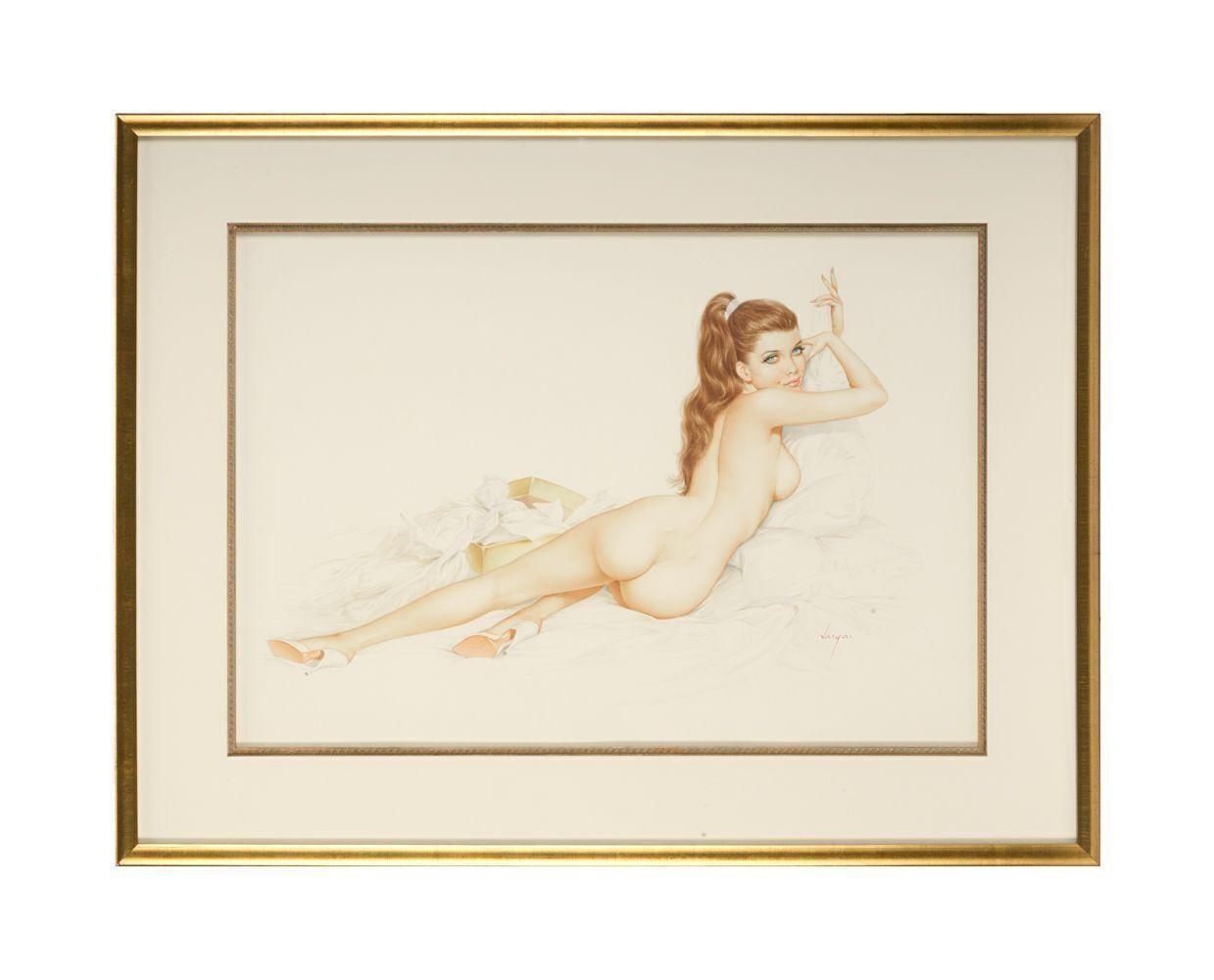
1. Playboy | Alberto Vargas Girl Pinup August 1964 Watercolor Drawing, 2. Playboy | Alberto Vargas Girl Pinup April 1974 Watercolor Drawing, 3. Playboy | Alberto Vargas Girl Pinup November 1963 Watercolor Drawing, 4. Playboy | Alberto Vargas Girl Pinup October 1960 Watercolor Drawing, 5. Playboy | Alberto Vargas Girl Pinup February 1963 Watercolor Drawing, 6. Playboy | Alberto Vargas Girl Pinup December 1961 Watercolor Drawing, 7. Playboy | Alberto Vargas Girl Pinup March 1968 Watercolor Drawing, 8. Playboy | Alberto Vargas Girl Pinup January 1969 Watercolor Drawing, 9. Playboy | Alberto Vargas Girl Pinup May 1970 Watercolor Drawing, 10. Playboy | Alberto Vargas Girl Pinup November 1960 Watercolor Drawing, 11. Playboy | Alberto Vargas Girl Pinup January 1965 Watercolor Drawing, 12. Playboy | Alberto Vargas Girl Pinup August 1965 Watercolor Drawing,
The partnership was a natural fit. Hefner, a great admirer of Vargas' work, understood the artist's unique ability to blend sensuality with sophistication. Vargas' "Vargas Girls" for Playboy were a continuation of his classic style, but with a new sense of freedom and wit. The captions that accompanied each illustration, often penned by Hefner himself, added a layer of personality and humor, transforming the pinups from mere drawings into fully realized characters.
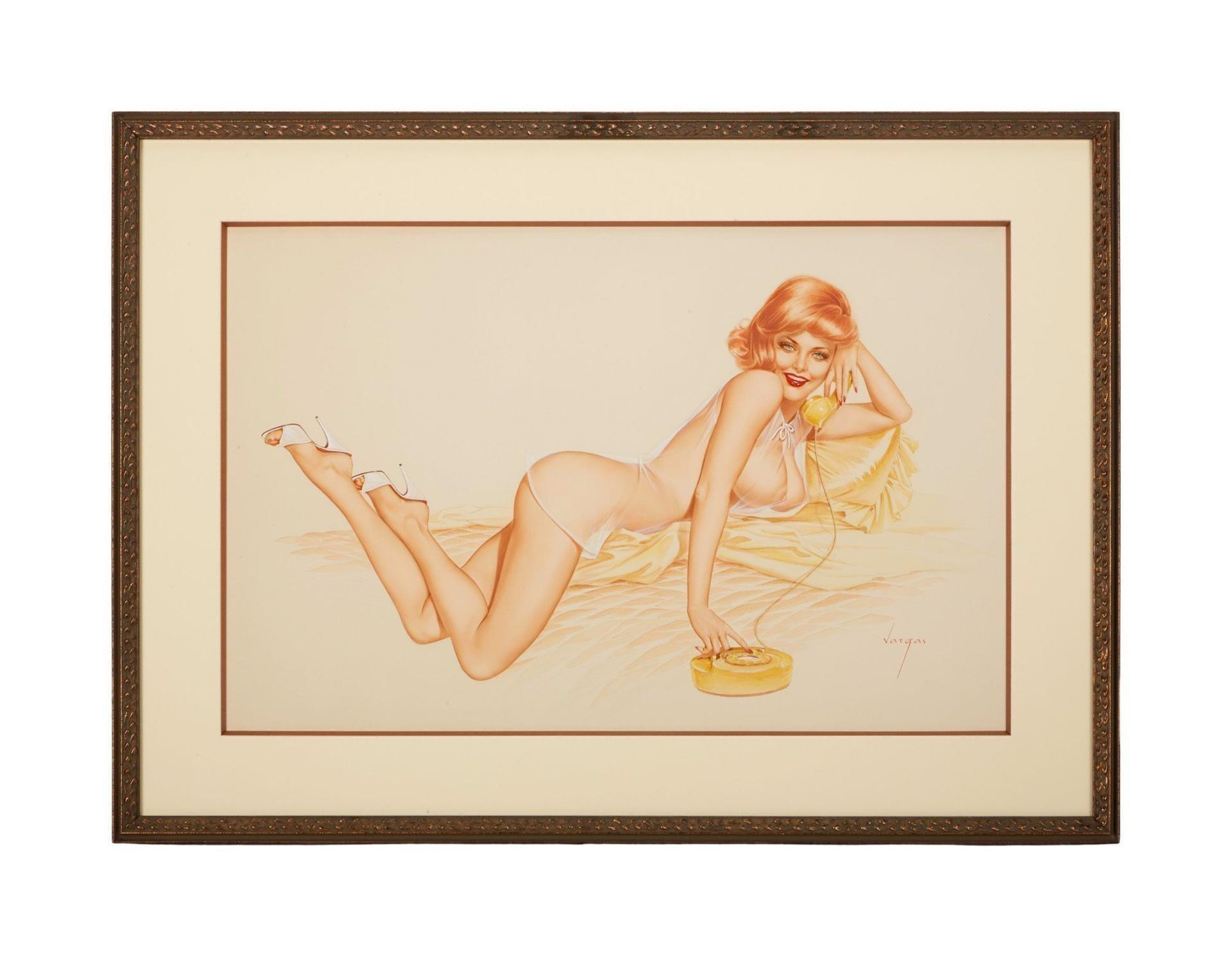
The works sold at Julien's represent a remarkable cross-section of this collaboration, spanning from 1961 to 1975. Each drawing is a true demonstration of Vargas' masterful technique—the delicate watercolor washes, the precise pencil work, and the meticulous attention to detail. Take, for instance, the "May 1961" watercolor drawing, which appeared on page 94 of that issue with the caption, "This must have set him back quite a bundle. Now I'm wondering what it's going to cost me!" It is a perfect example of the playful dialogue between art and text that defined the Vargas Girls' Playboy run.
Other notable pieces include the "September 1963" girl, with her frustrated yet elegant pose, and the "June 1964" drawing, a stunning visual of a woman contemplating her new coat in the mirror. The "March 1968" and "January 1969" works showcase the evolution of the Vargas Girl, from a glamorous companion to a confident, witty woman of the Swinging Sixties. The later works, such as the "April 1974" and "February 1975" drawings, demonstrate Vargas's enduring skill and his ability to adapt his style to the changing times.
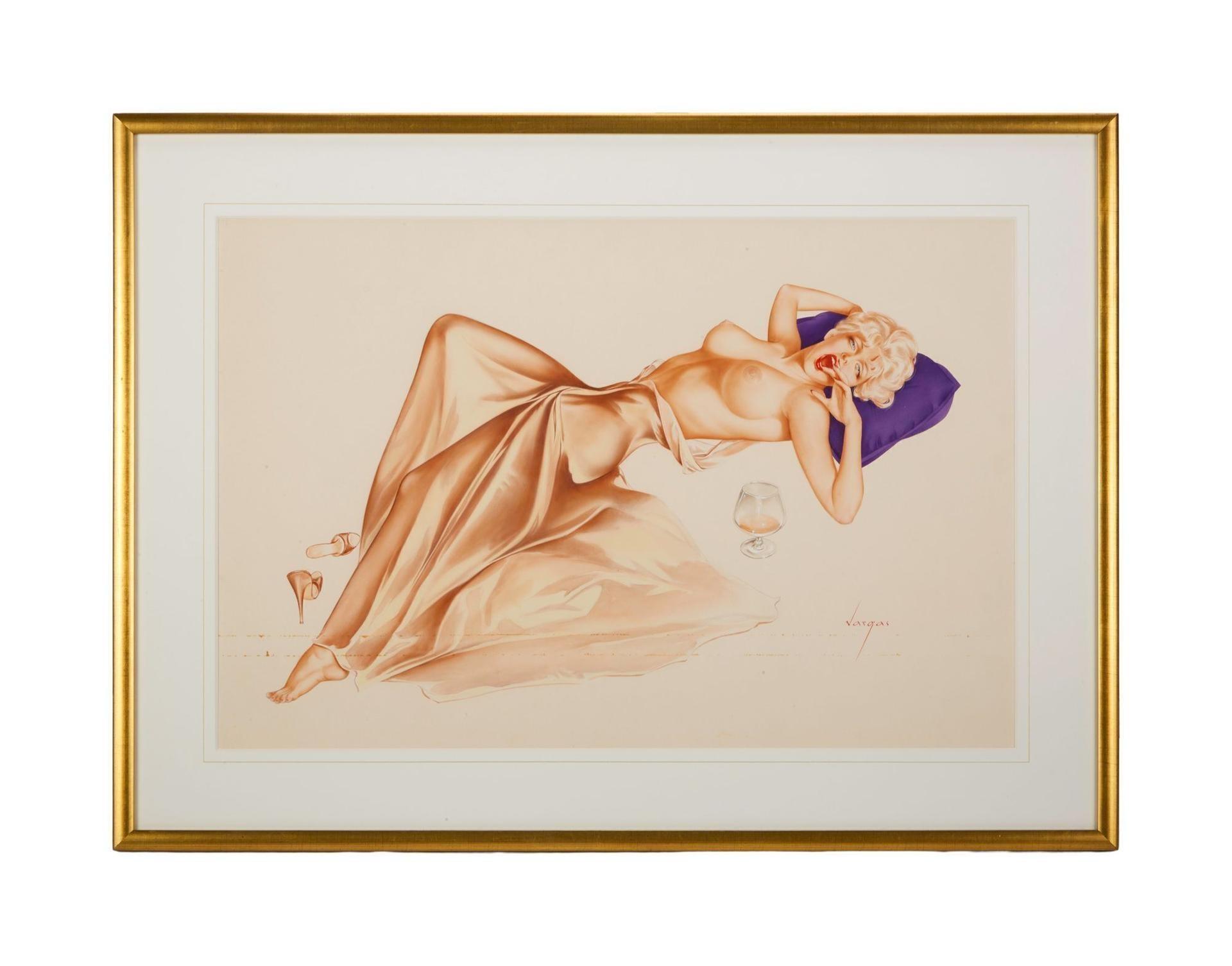
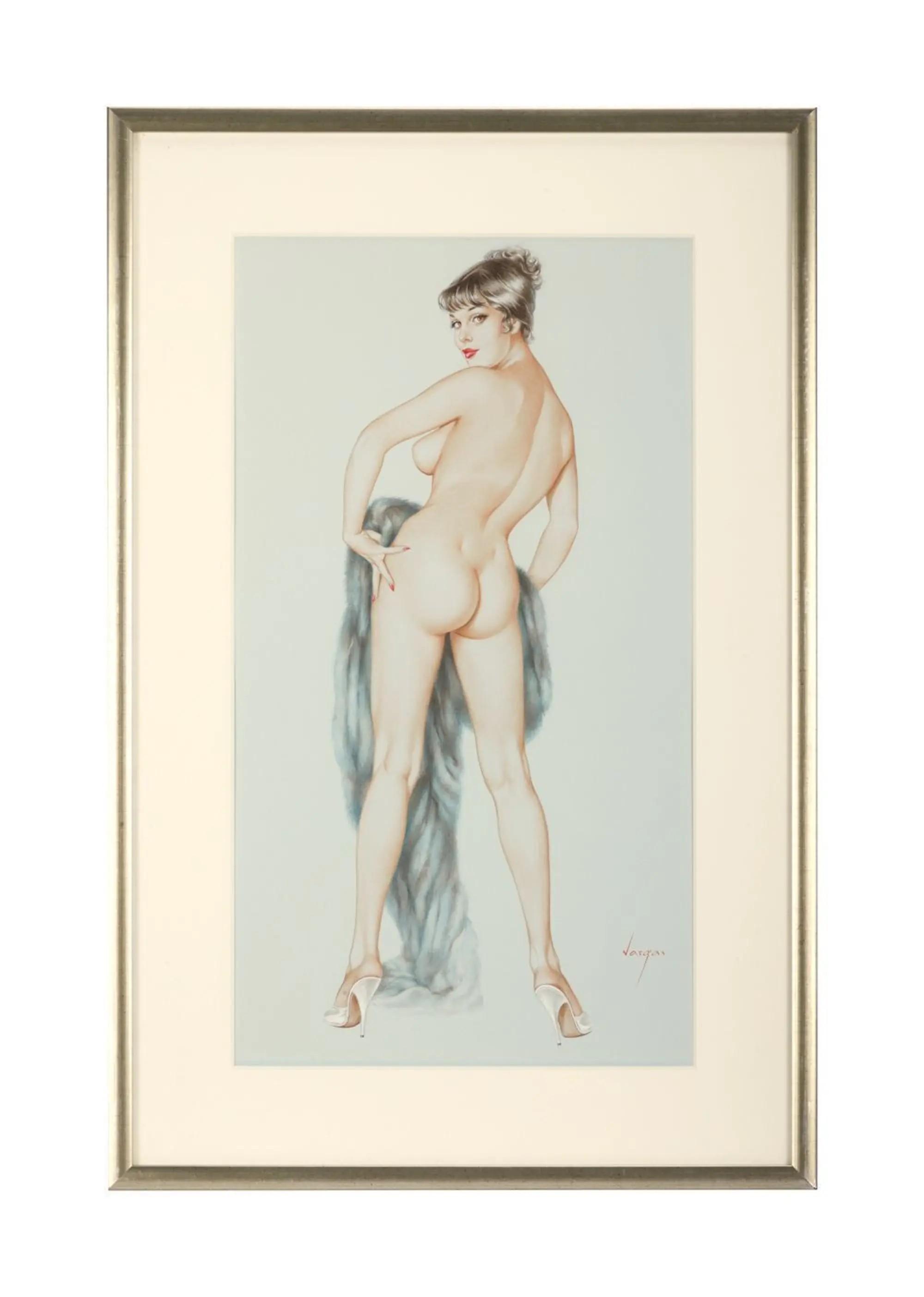
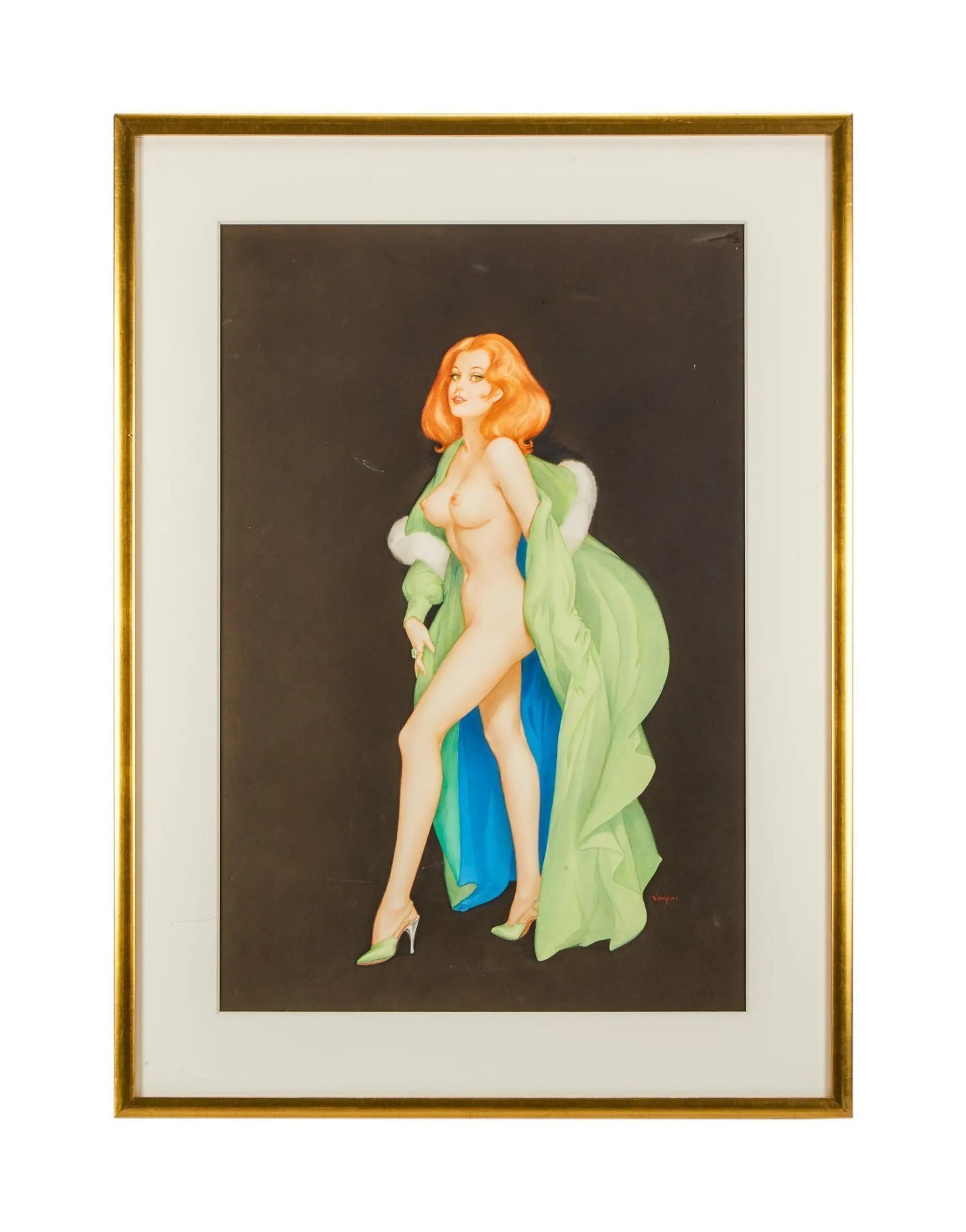
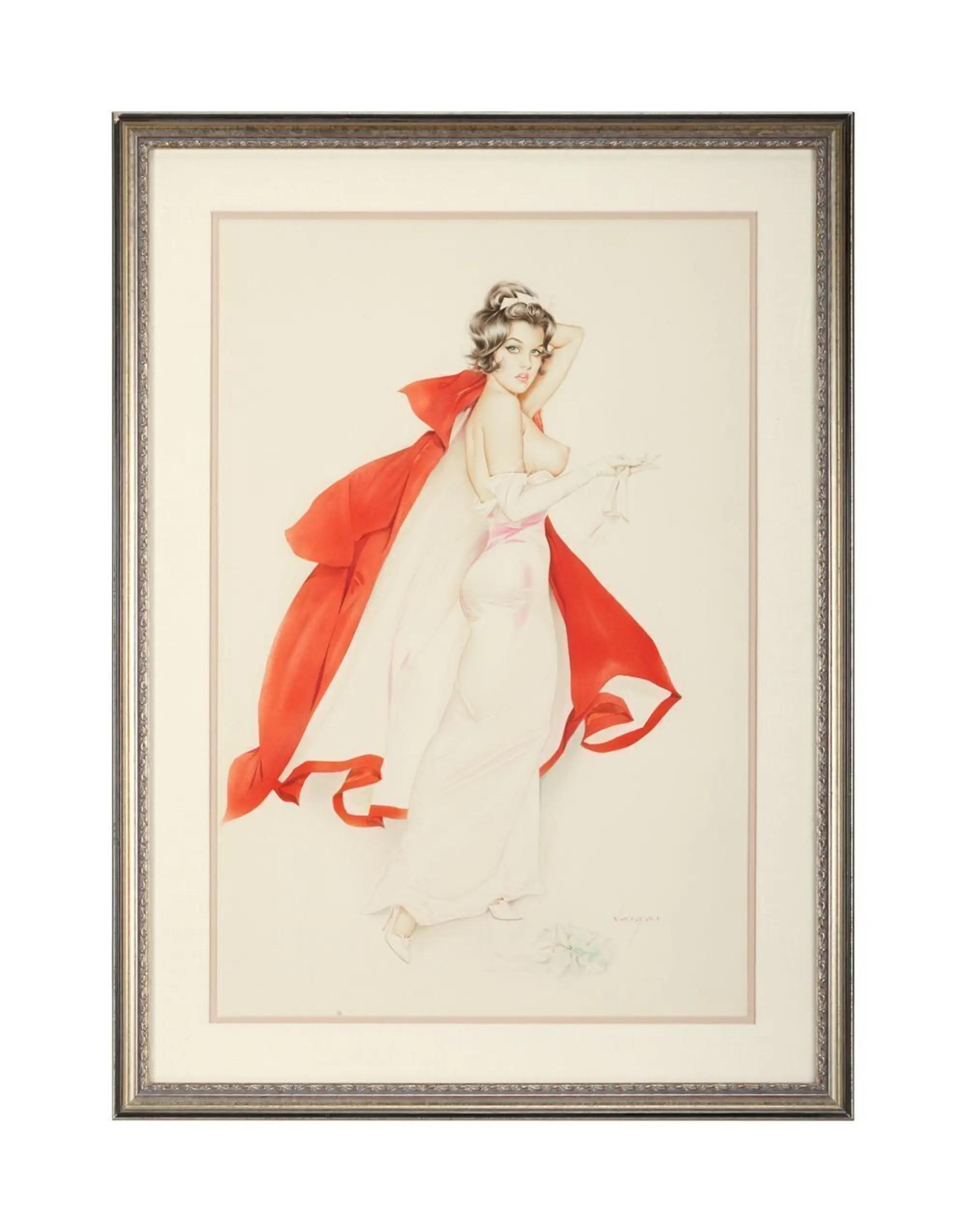
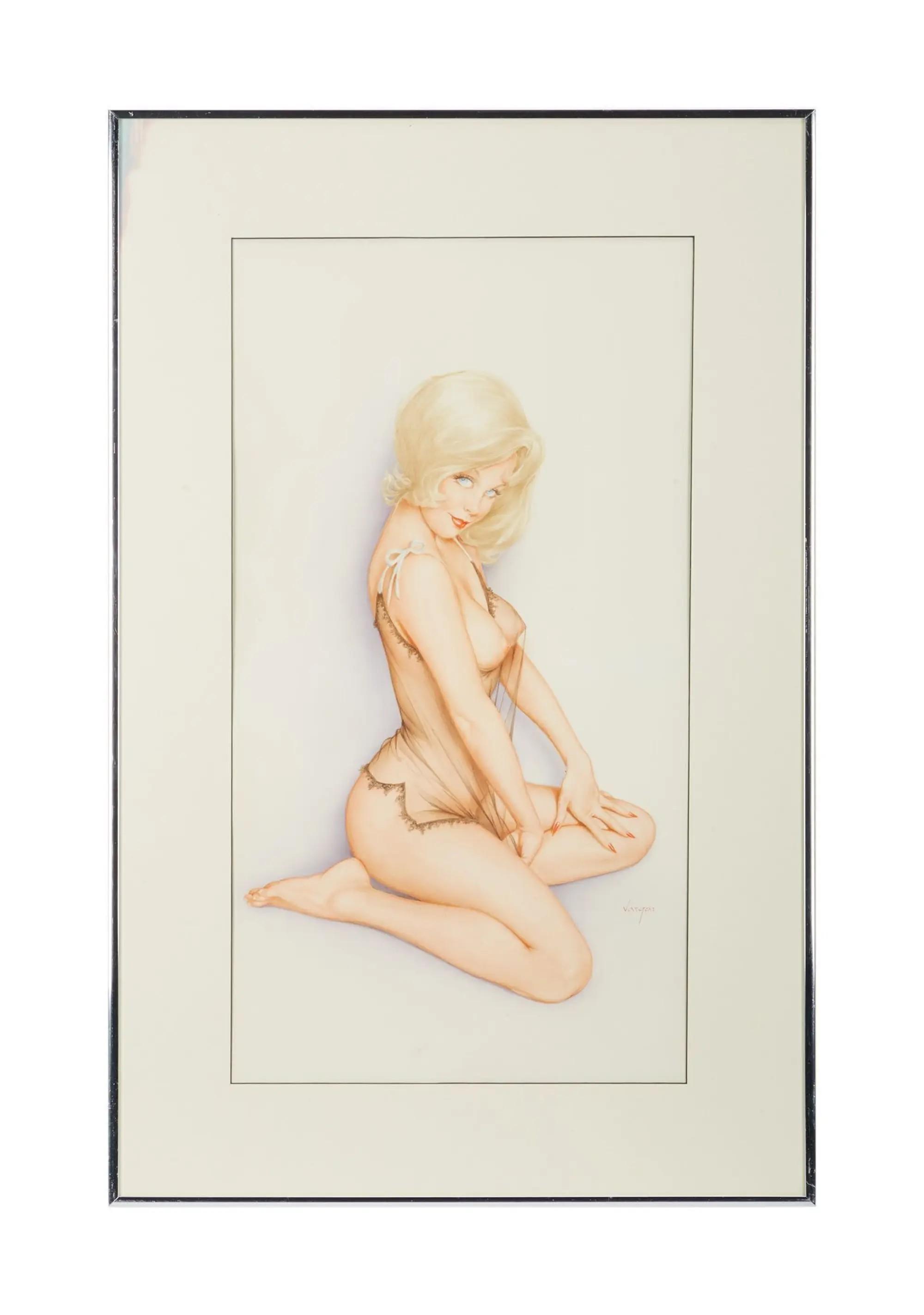
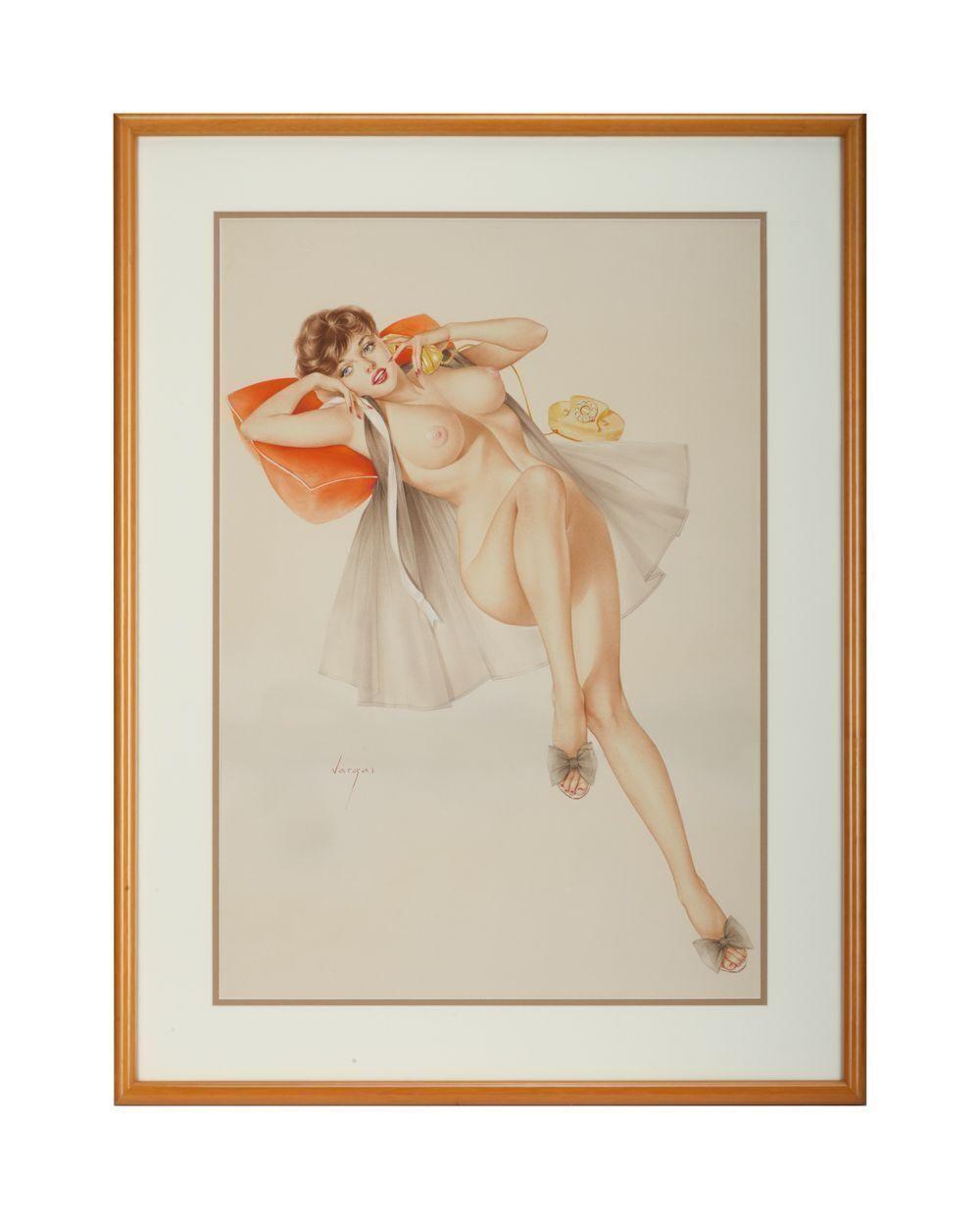
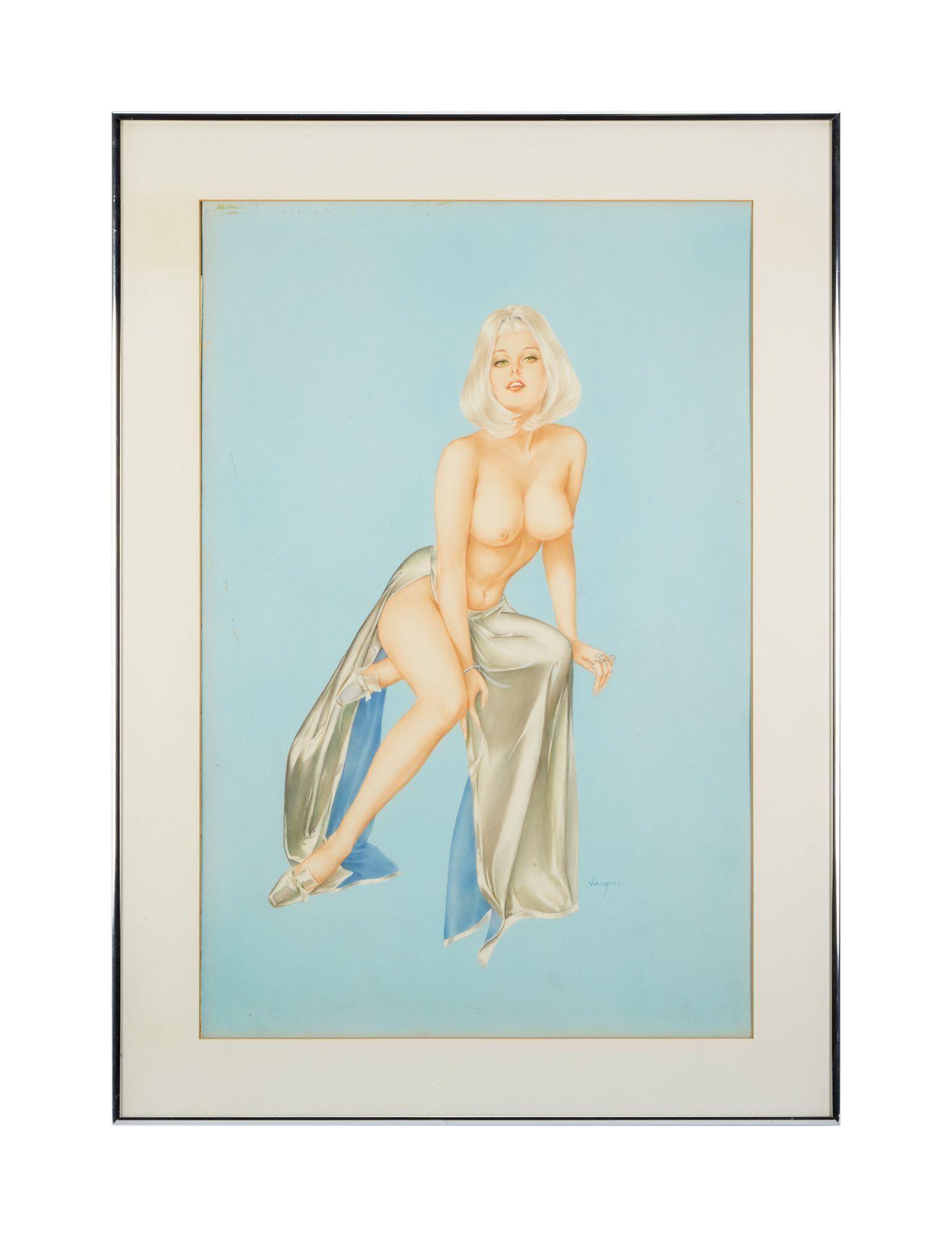
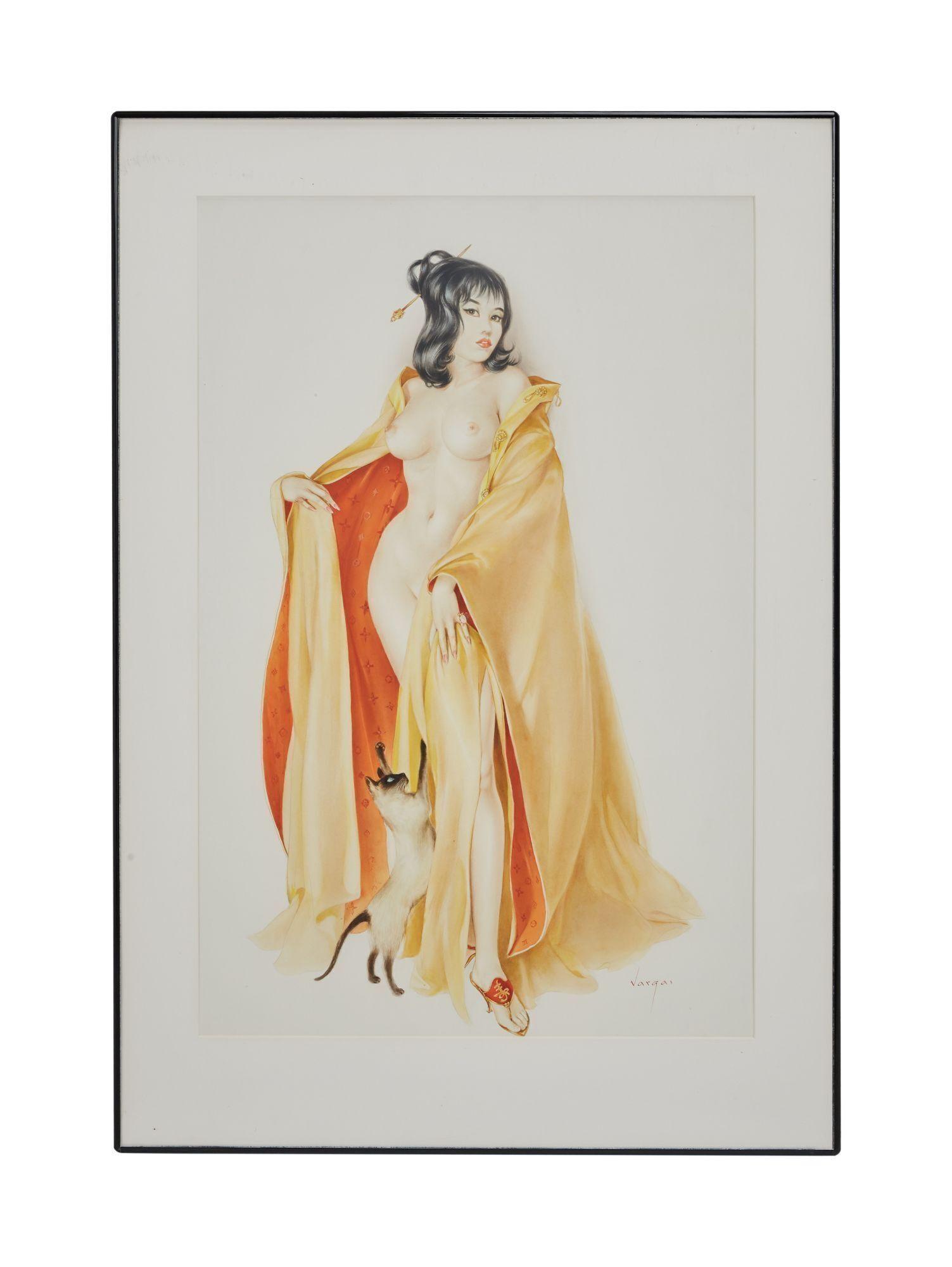
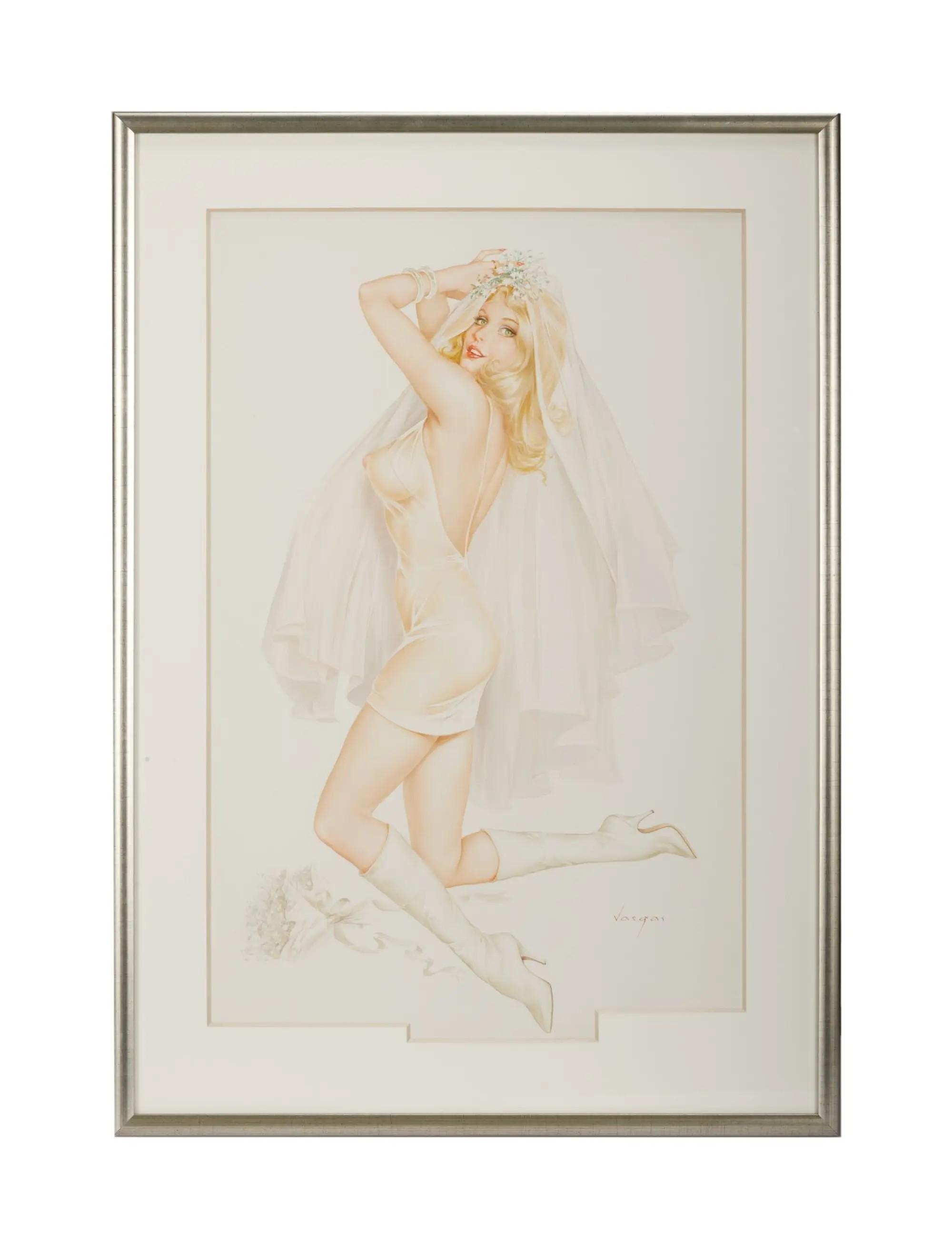
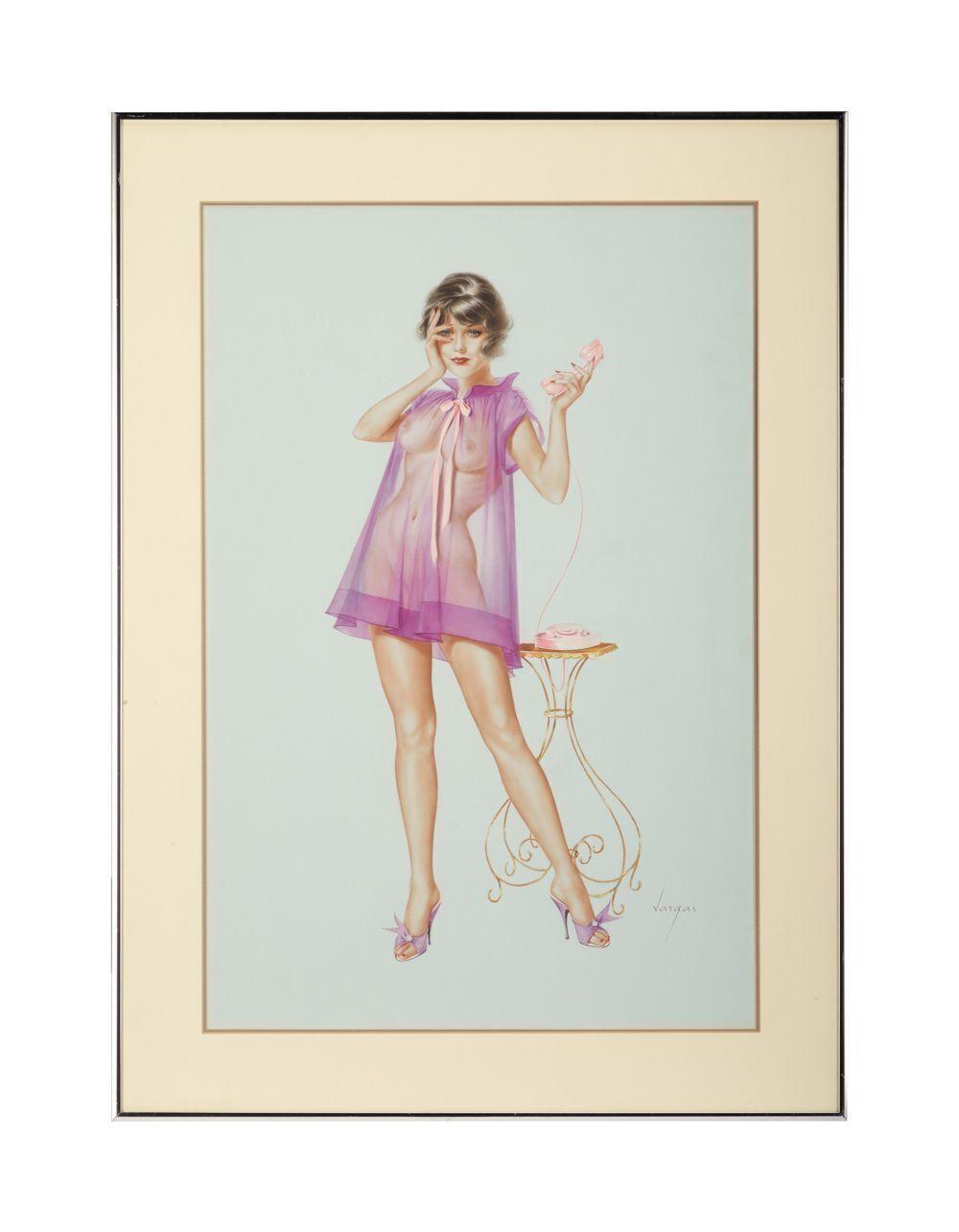
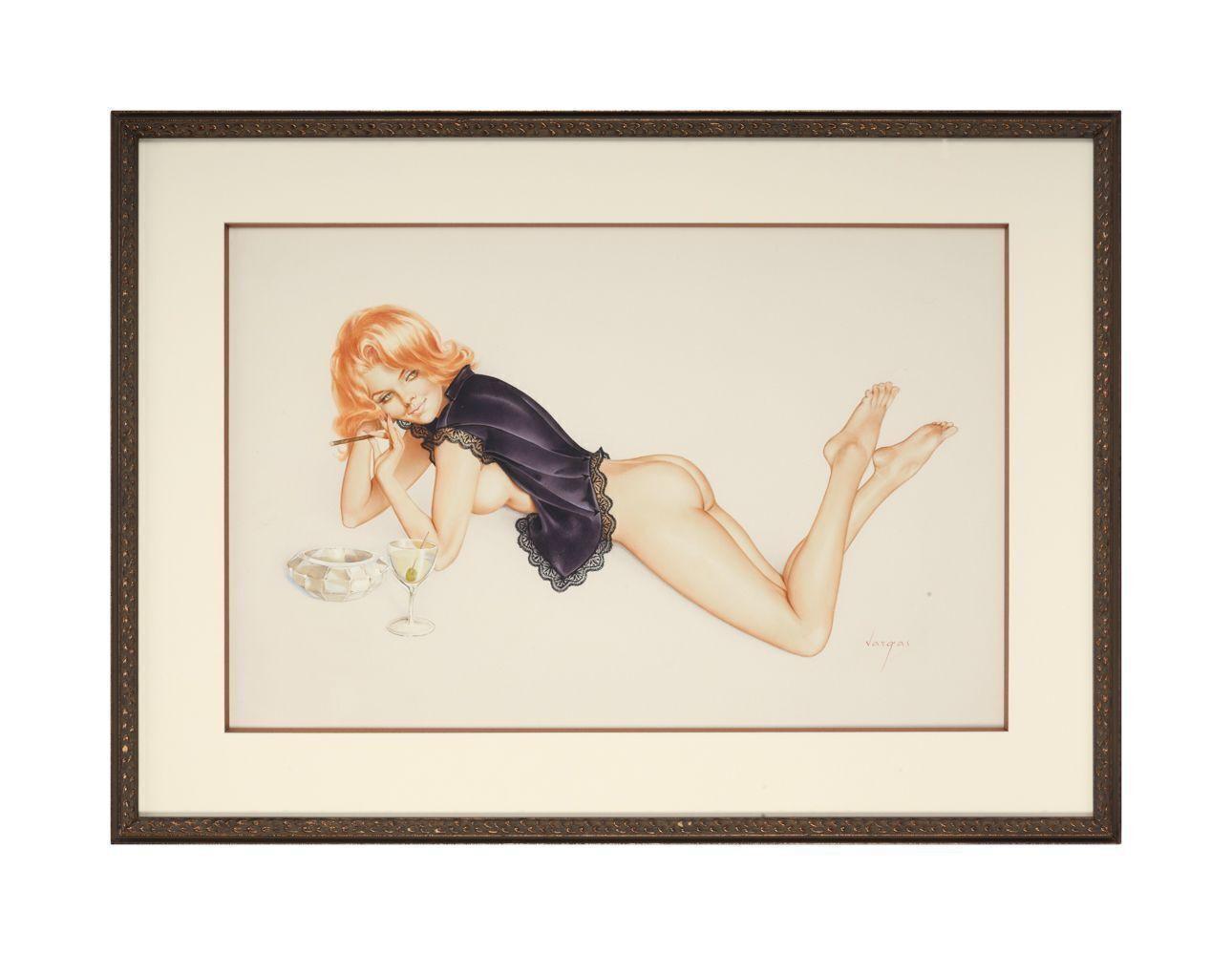
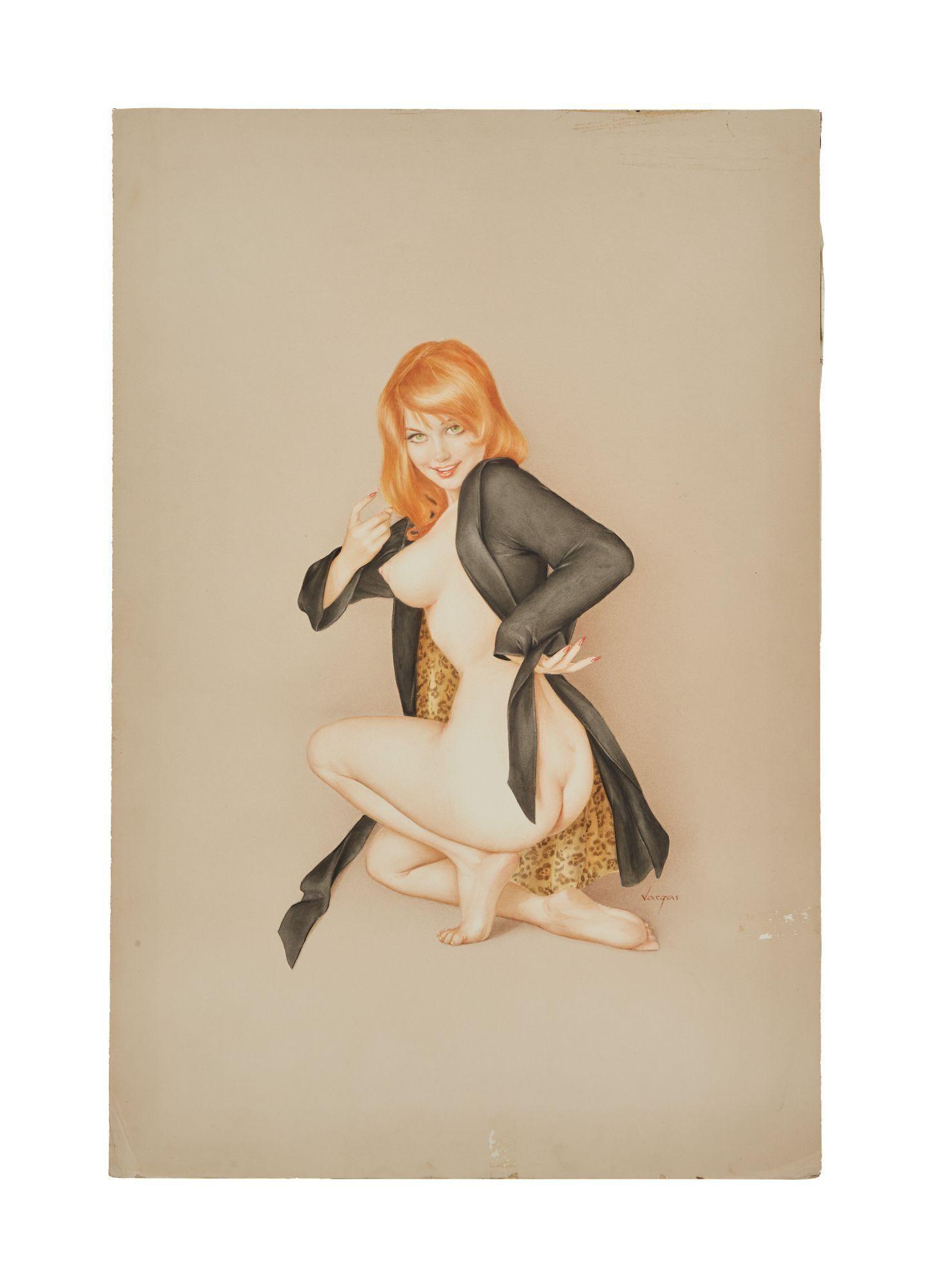
1. Playboy | Alberto Vargas Girl Pinup January 1962 Watercolor Drawing, 2. Playboy | Alberto Vargas Girl Pinup May 1961 Watercolor Drawing, 3. Playboy | Alberto Vargas Girl Pinup Feb 1971 Watercolor Drawing, 4. Playboy | Alberto Vargas Girl Pinup September 1963 Watercolor Drawing, 5. Playboy | Alberto Vargas Girl Pinup February 1975 Watercolor Drawing, 6. Playboy | Alberto Vargas Yellow Rotary Phone Pinup Watercolor Drawing, 7. Playboy | Alberto Vargas Girl Pinup April 1971 Watercolor, 8. Playboy | Alberto Vargas Girl November 1964 Pinup Drawing, 9. Playboy | Alberto Vargas Girl Pinup June 1969 Watercolor Drawing, 10. Playboy | Alberto Vargas Pinup Watercolor Drawing, 11. Playboy | Alberto Vargas Girl Pinup April 1964 Watercolor Drawing, 12. Playboy | Alberto Vargas Red Head with Cheetah,
This collection also includes a unique piece: the "July 1969" Vargas Girl, a work that was labeled for the magazine but ultimately did not appear in that issue. This offers a rare glimpse into the editorial process and the unpublished treasures hidden within the Playboy Archives.
The story of Alberto Vargas and Playboy is more than just a relationship between an artist and a magazine; it is a story of a shared vision. Hefner provided Vargas with the platform and artistic freedom he needed to create some of his most celebrated works, and in return, Vargas' art helped to define the visual identity of Playboy and its sophisticated, lighthearted approach to sensuality.
Julien’s continues to supply collectors and art enthusiasts the opportunity to own a piece of this extraordinary history. These original illustrations are cultural tangible artifacts, each one a testament to the legacy of Alberto Vargas and his iconic Vargas Girls.
Auctions Featuring Original Alberto Vargas Artworks