Film & TV
The Best of 'Dallas': Sue Ellen Kept Everything
Forty lots from Linda Gray's personal collection reopen the file on "Dallas," the primetime soap that taught television how to end a season.
Share



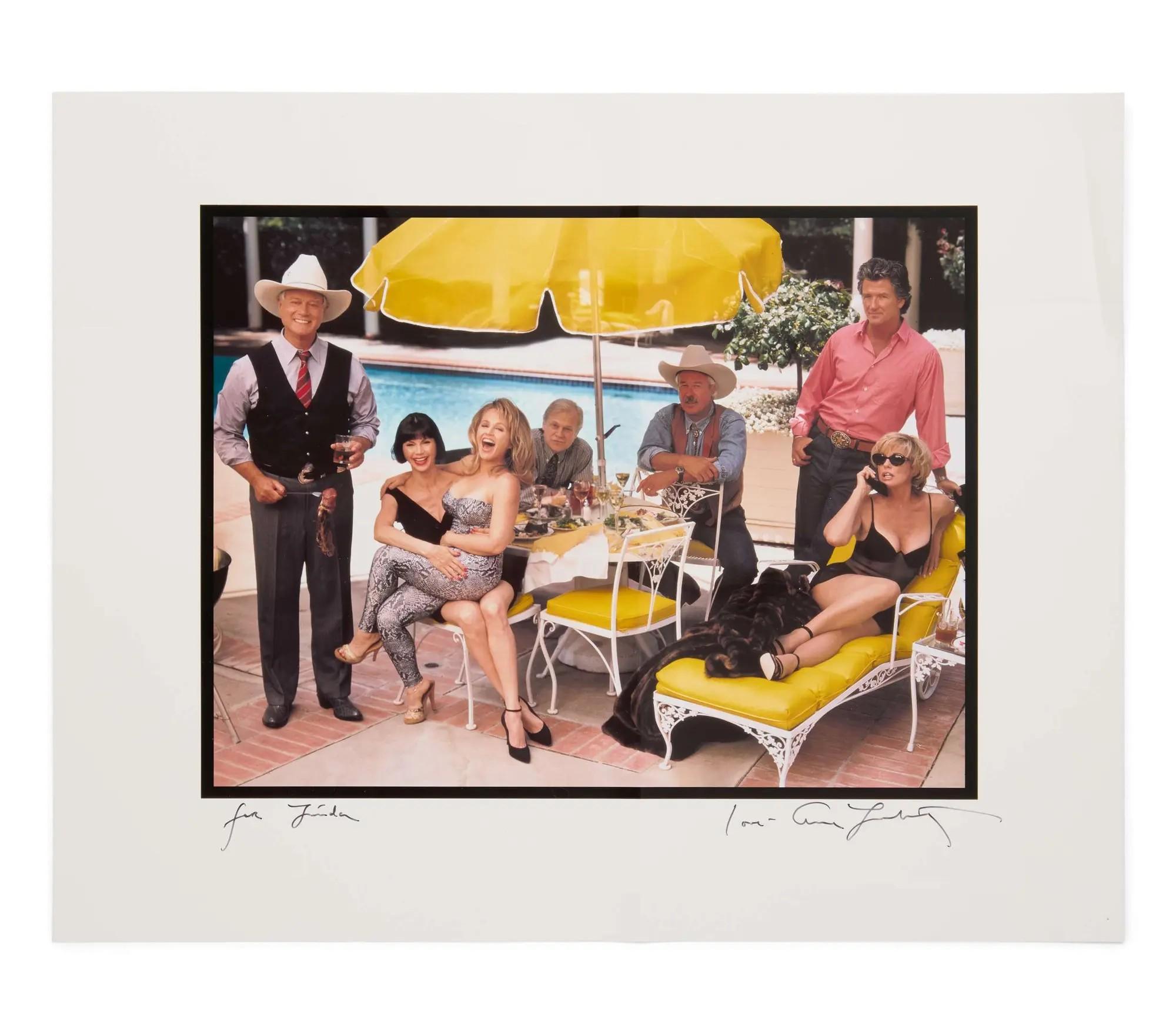
Lot #65. Linda Gray | 1995 “Dallas” Annie Leibovitz-Signed Cast Photo
Southfork was never really a ranch. It was a pressure cooker with a swimming pool, a place where families gathered at a poolside breakfast table and left it holding grudges that would run for a decade. For thirteen years on CBS, the Ewings of Braddock County conducted their business the way most American families conduct a holiday dinner, only with oil money, a private airstrip and a body count.
The show that made all of that possible began modestly. Created by David Jacobs, "Dallas" arrived on April 2, 1978 as a five-episode trial run, built on a premise as old as Verona: Bobby Ewing married Pamela Barnes, the daughter of his father's ruined former partner, and dragged two feuding dynasties into permanent proximity. CBS ordered more. The trial run turned into fourteen seasons, a global syndication footprint, a spinoff in "Knots Landing," two reunion telefilms and a network revival that ran on TNT from 2012 to 2014.
And in the middle of it, quietly building the most complicated character on the canvas, was Linda Gray.
The Beauty Queen Who Became the Show
Sue Ellen Ewing entered the series as a former Miss Texas installed at Southfork as decoration. J.R. had married a trophy. What he got, over eleven seasons, was an antagonist with better instincts than his own.
Gray played the character through a run of storylines that would exhaust a modern writers room: alcoholism treated seriously and repeatedly, an affair with her husband's sworn enemy, a stay in a sanitarium, a car crash, a difficult birth, postpartum depression, a miscarriage, a divorce, a remarriage, a lingerie company built from nothing, and eventually a departure from Texas on her own terms after she finally beat J.R. at his own game in 1989.
The performance drew a 1981 Primetime Emmy nomination for Outstanding Lead Actress in a Drama Series, two Golden Globe nominations, Germany's Bambi and Italy's Il Gato. Gray has offered a shorter summary of the character's cultural position: Sue Ellen, she has said, was the original desperate housewife.
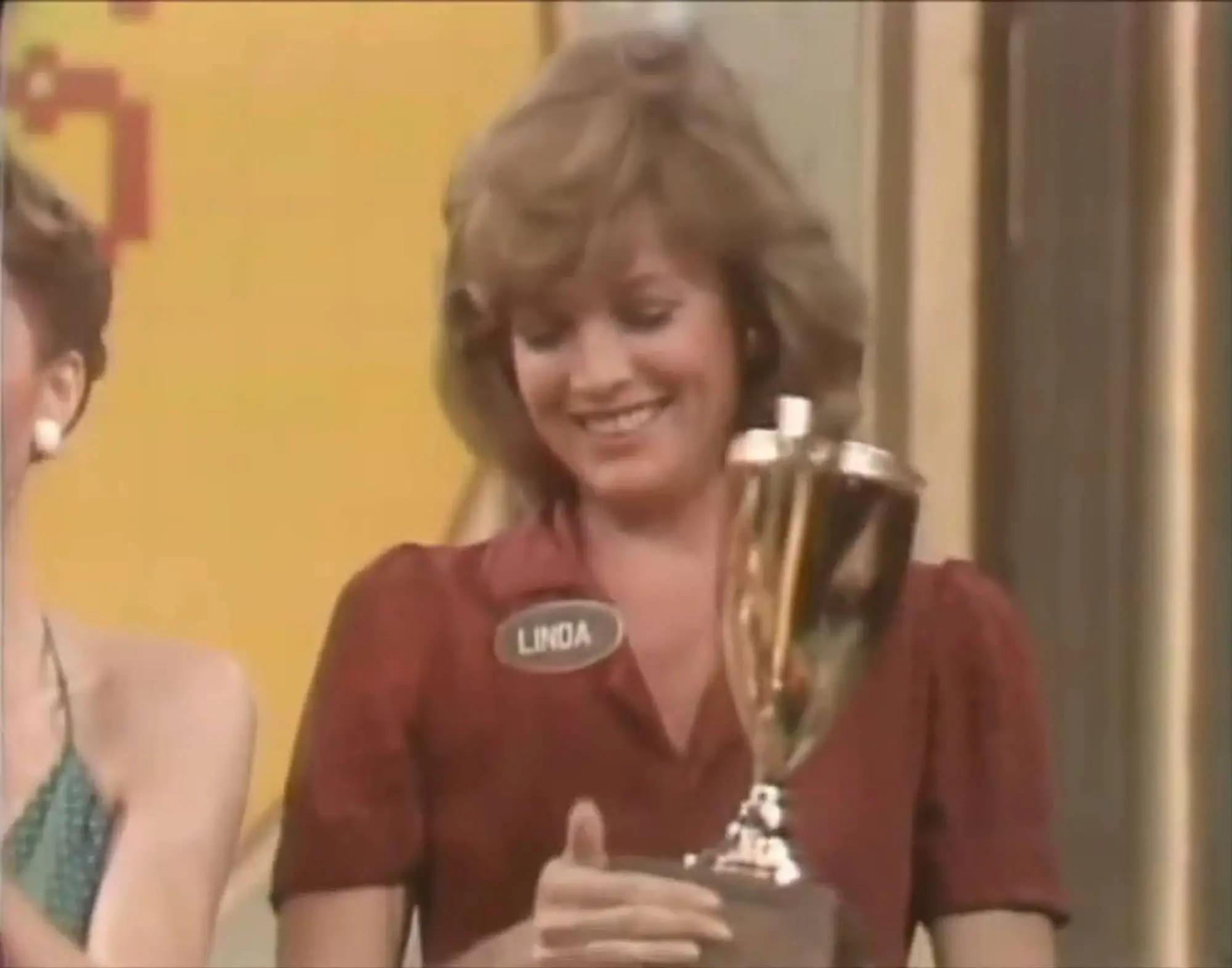
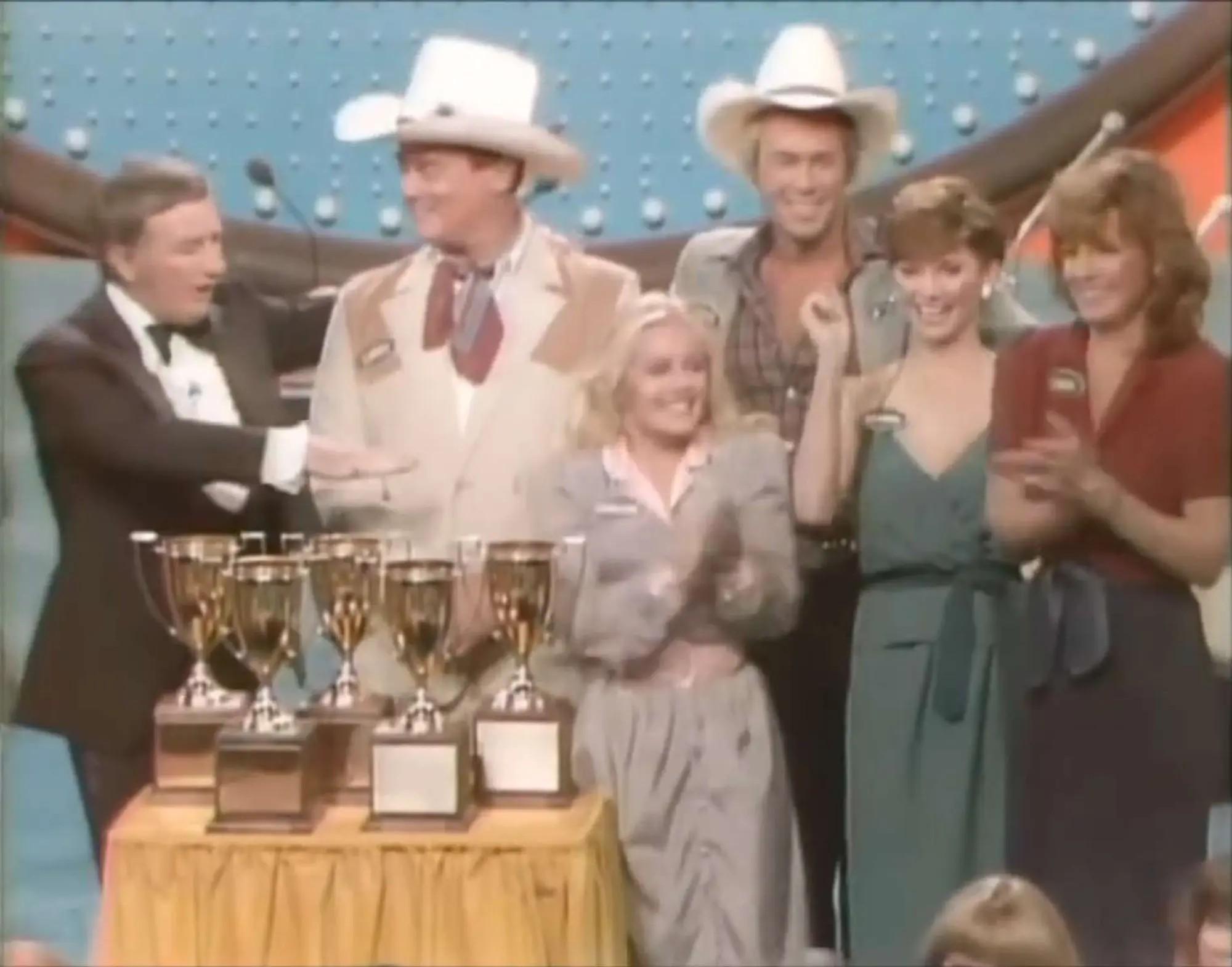
Among the material now surfacing from her collection is the 1980-81 Emmy nomination certificate itself, framed, along with a 1981 International Broadcasting Awards Woman of the Year trophy and a 1979 "All-Star Family Feud" champions cup, presented by Richard Dawson after the "Dallas" cast took the celebrity title. Read together, the three objects sketch the exact shape of eighties television fame: an industry honor, a broadcast-industry honor, and a game show trophy, all sitting on the same shelf.
Eight Months of ‘Who Shot J.R.?’
Television did not invent the cliffhanger in 1980. Television learned what a cliffhanger was worth in 1980.
On March 21, 1980, the third-season finale "A House Divided" sent J.R. Ewing to his Ewing Oil office late at night and put two bullets into him from off camera. What followed was less a plot than a weather system. Larry Hagman, by then unmistakably the show's center of gravity, was in a contract standoff with Lorimar. A Writers Guild strike pushed production later still. The country waited eight months.
The resolution aired November 21, 1980. Kristin Shepard, J.R.'s sister-in-law and former mistress, played by Mary Crosby, had pulled the trigger. Roughly 83 million Americans watched, a 53.3 Nielsen rating and a 76 percent share of every set in use that night, and an estimated 350 million viewers worldwide. It stood as the highest-rated scripted episode in American television history until the "M*A*S*H" finale in 1983. Bookmakers took action on it. Political operatives printed novelty campaign material around it. Afterward, no network executive ever again had to be persuaded that a season should end on a question.
Gray's script archive tracks that season from the inside. Fifteen signed scripts from the 1979-80 production year, in the original red and gray studio wrappers and bound with brads, run through the episodes that built the powder keg: J.R. beginning his affair with Kristin, Sue Ellen hiring a private investigator and playing the perfect wife while she prepares to divorce him, J.R. countering by convincing everyone in Braddock County that his wife is drinking again, Miss Ellie's mastectomy storyline, Jock's murder trial, Dusty Farlow's plane going down. The shooting itself is not in the group. Everything that loaded the gun is.
Later scripts document how thoroughly Lorimar learned the lesson. In the season four material, two copies of "Ewing-Gate" arrive with the finale's ending physically withheld, closing instead on a production note restricting the balance of the script to a need-to-know basis. The body in the Southfork pool stayed sealed until broadcast.
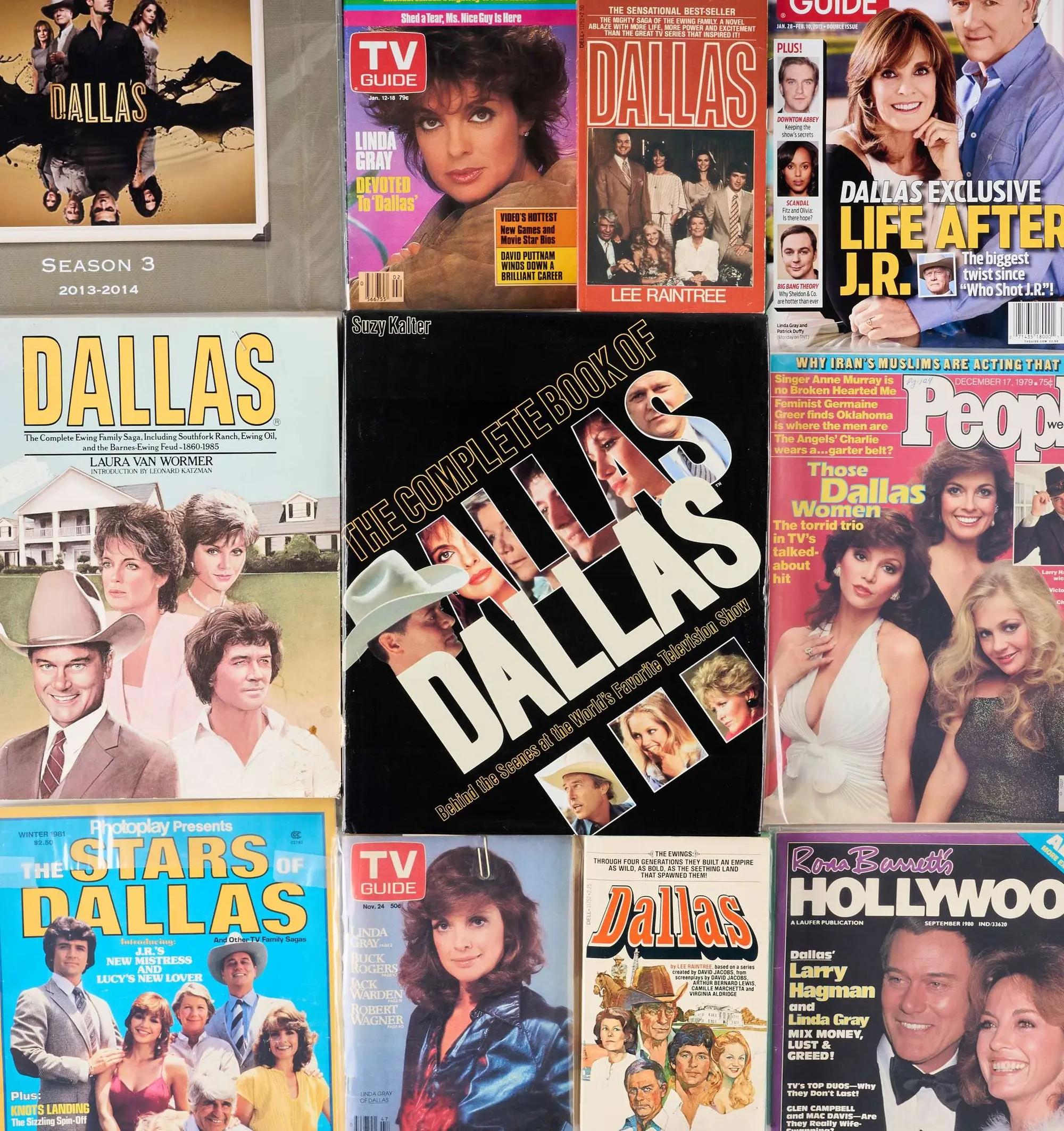
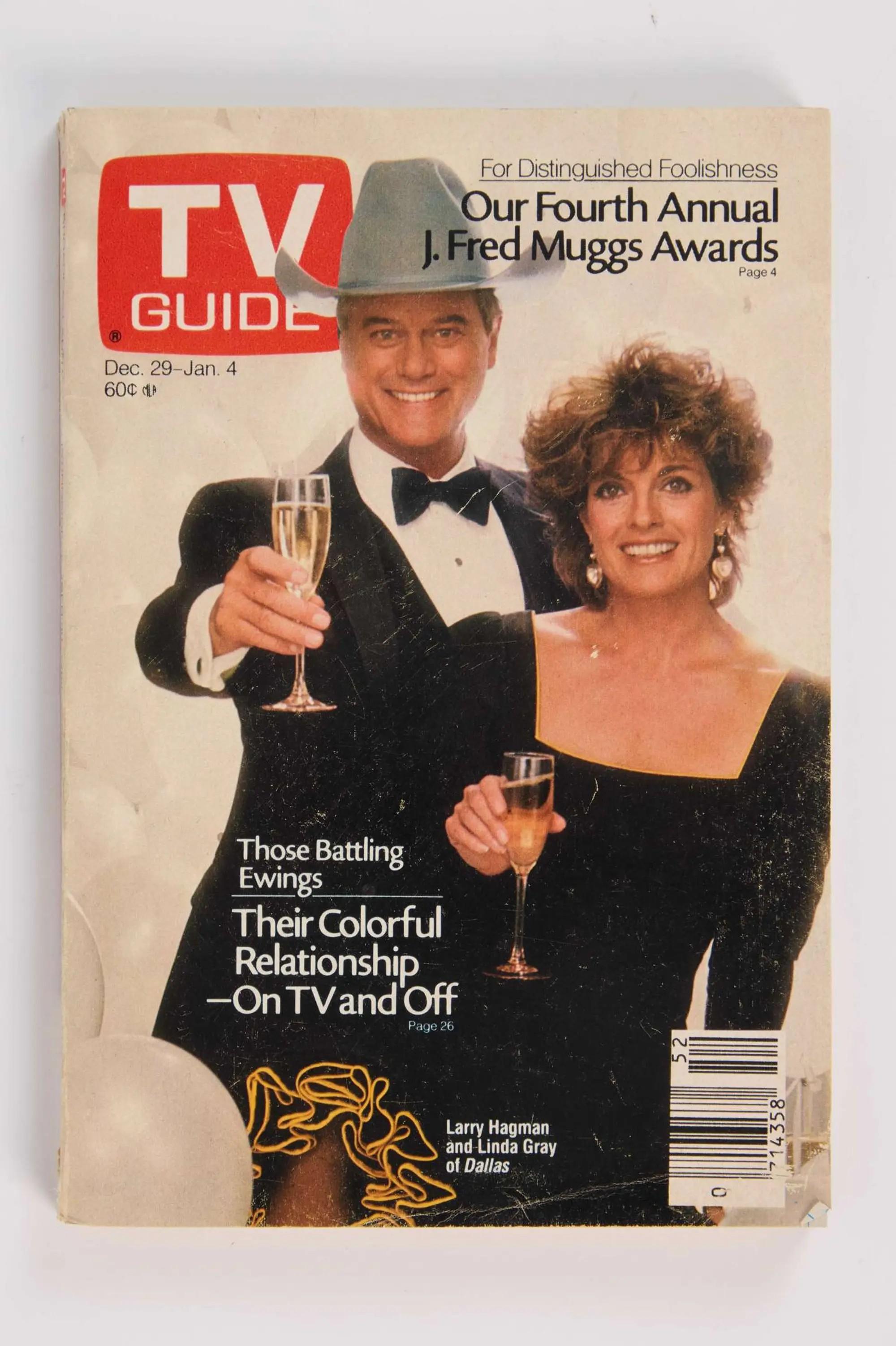
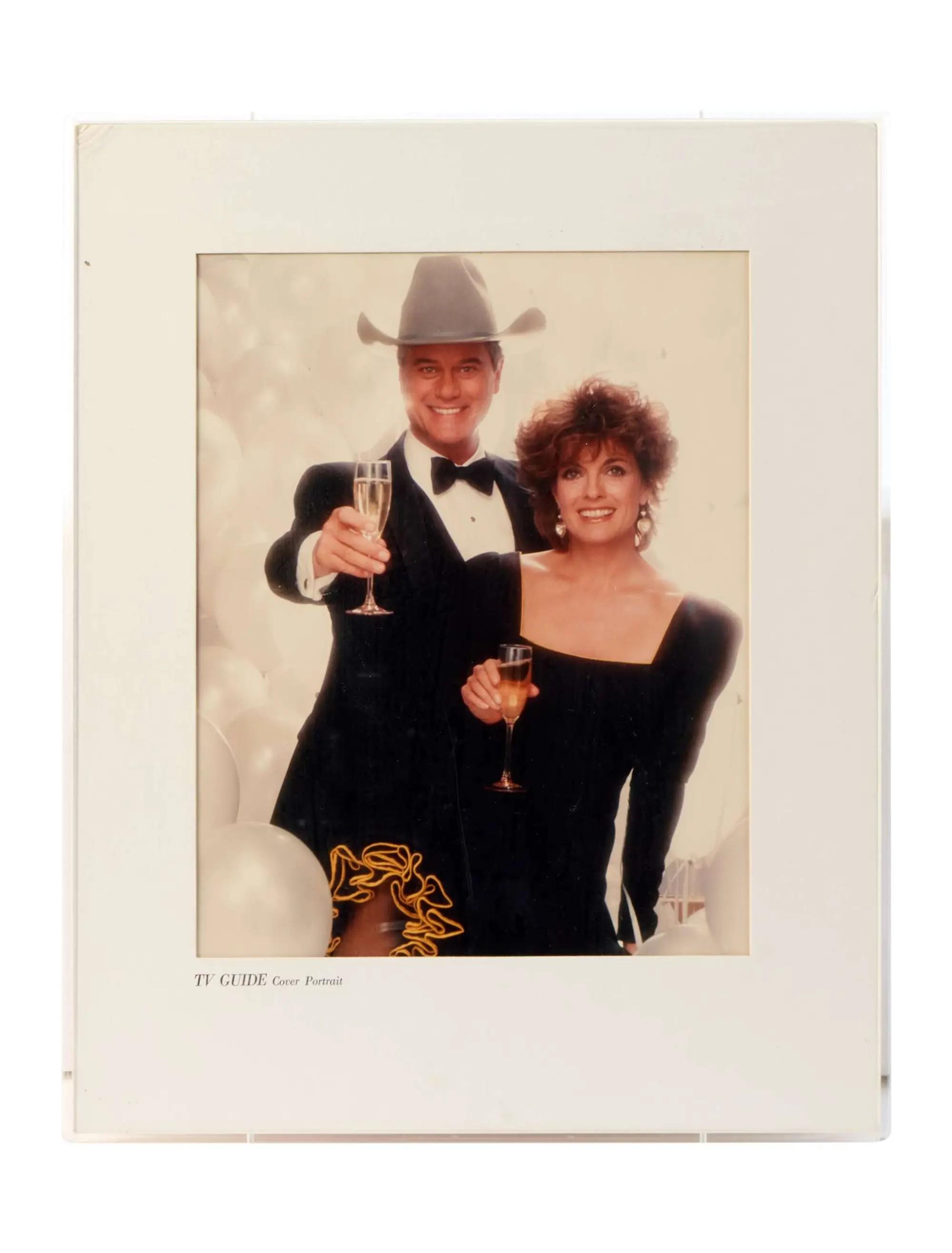
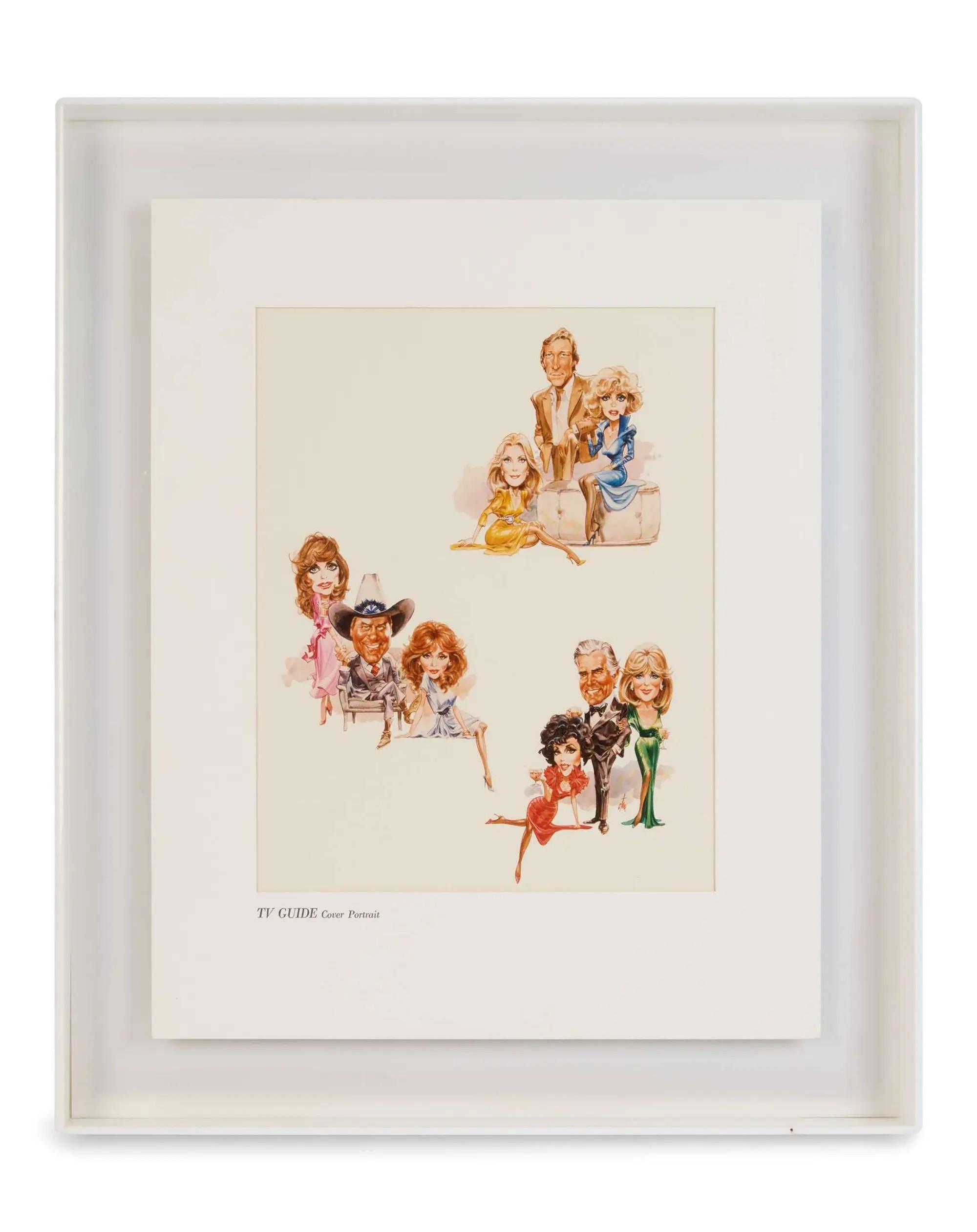
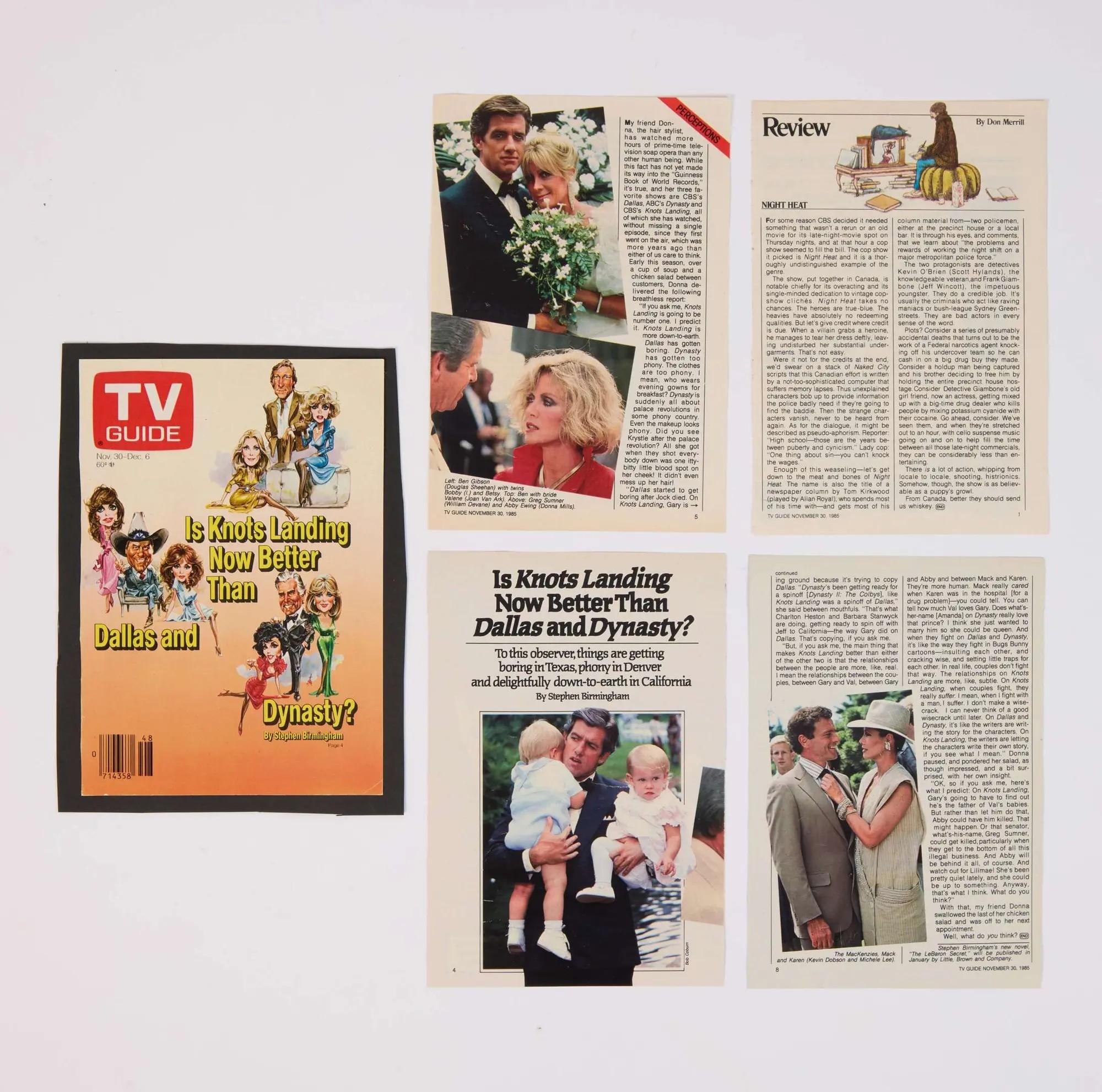
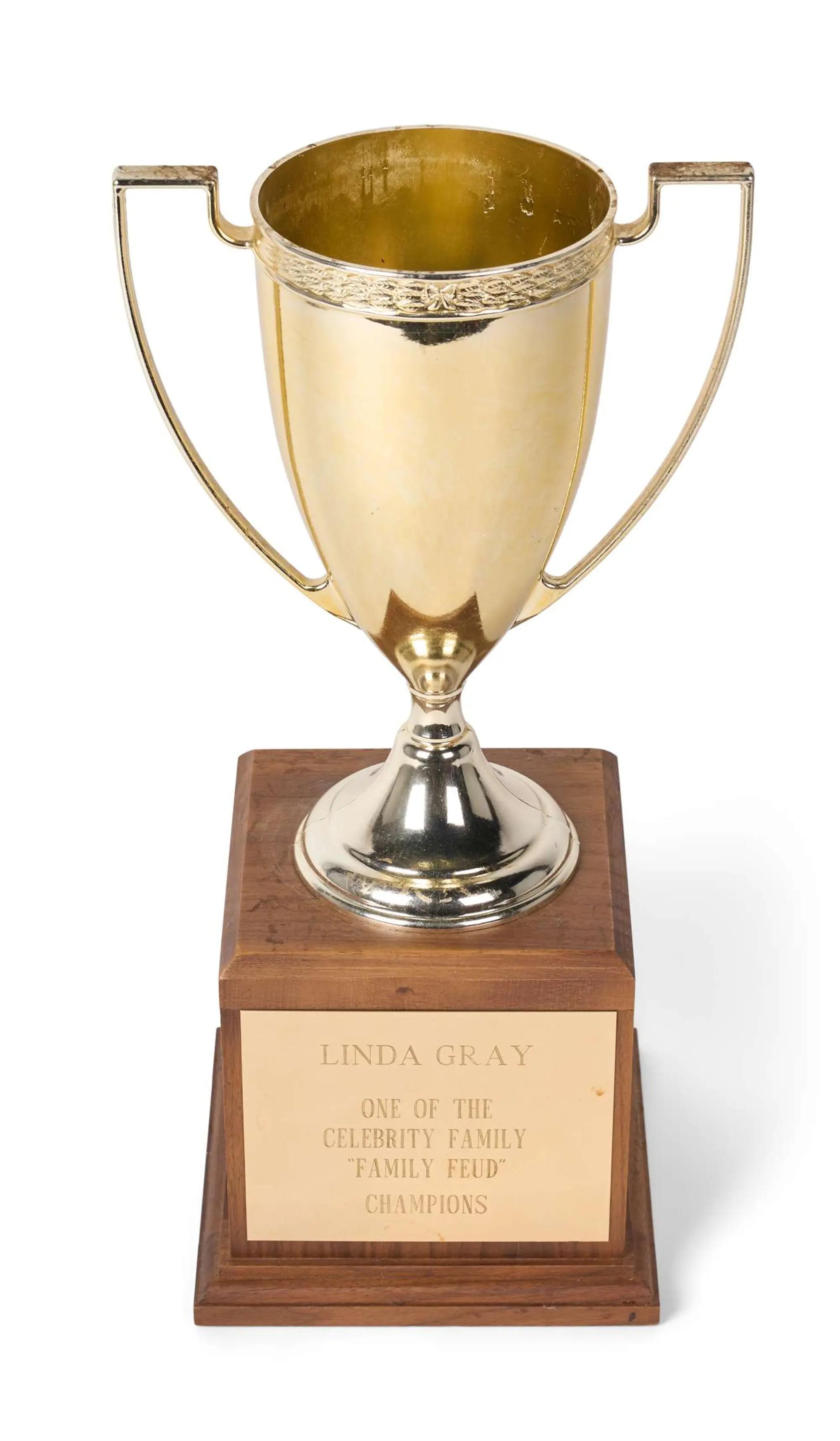
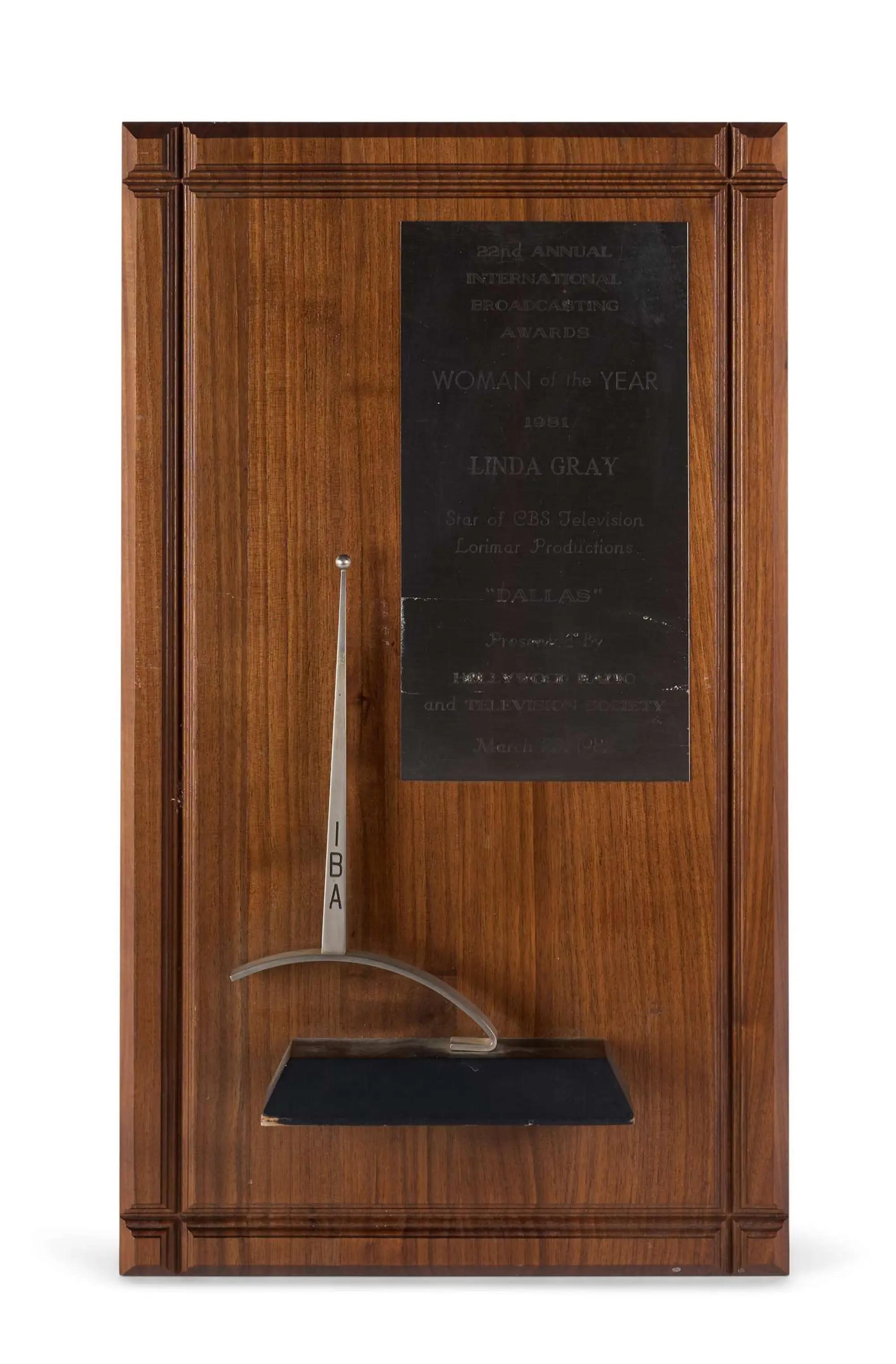
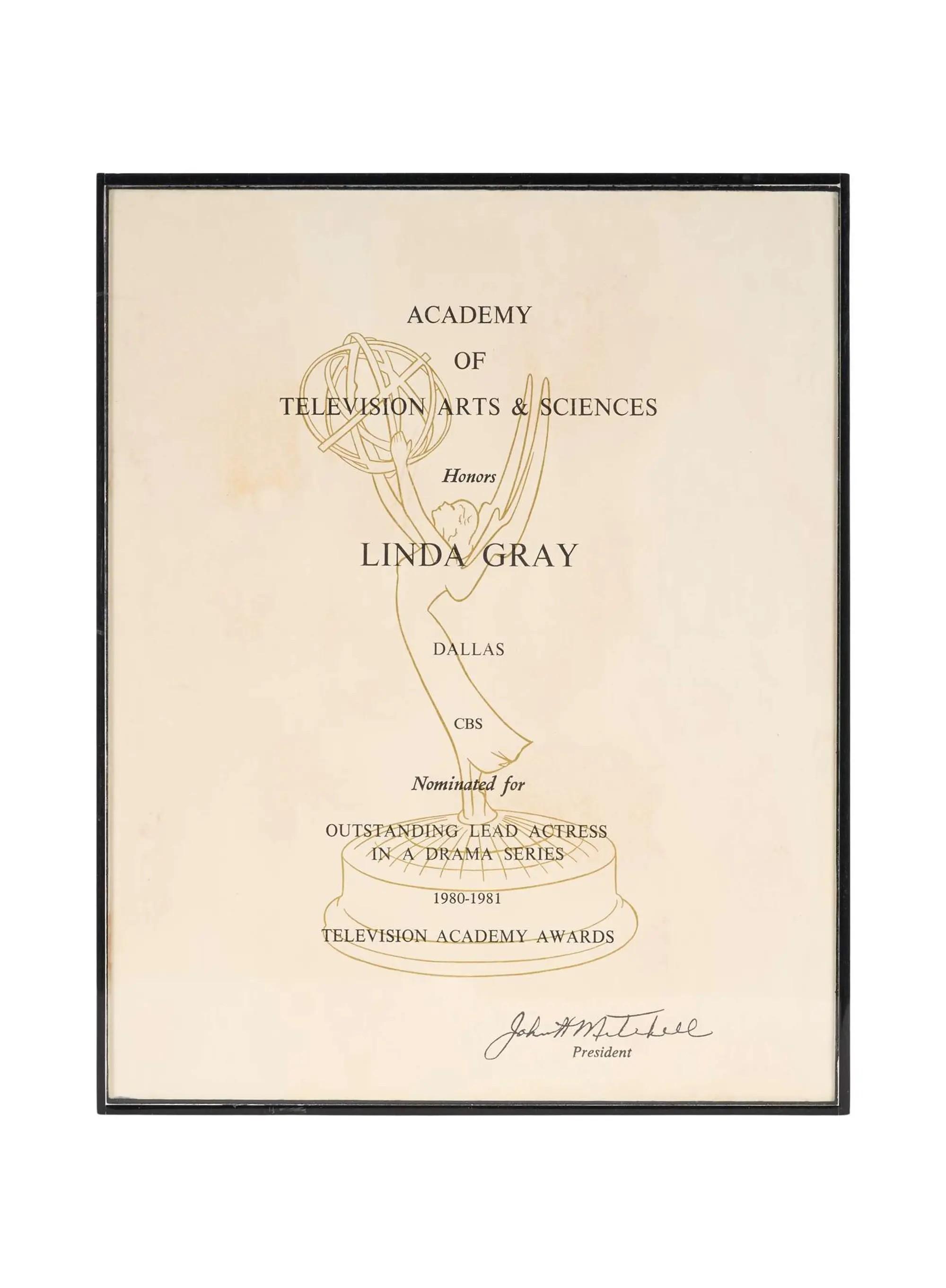
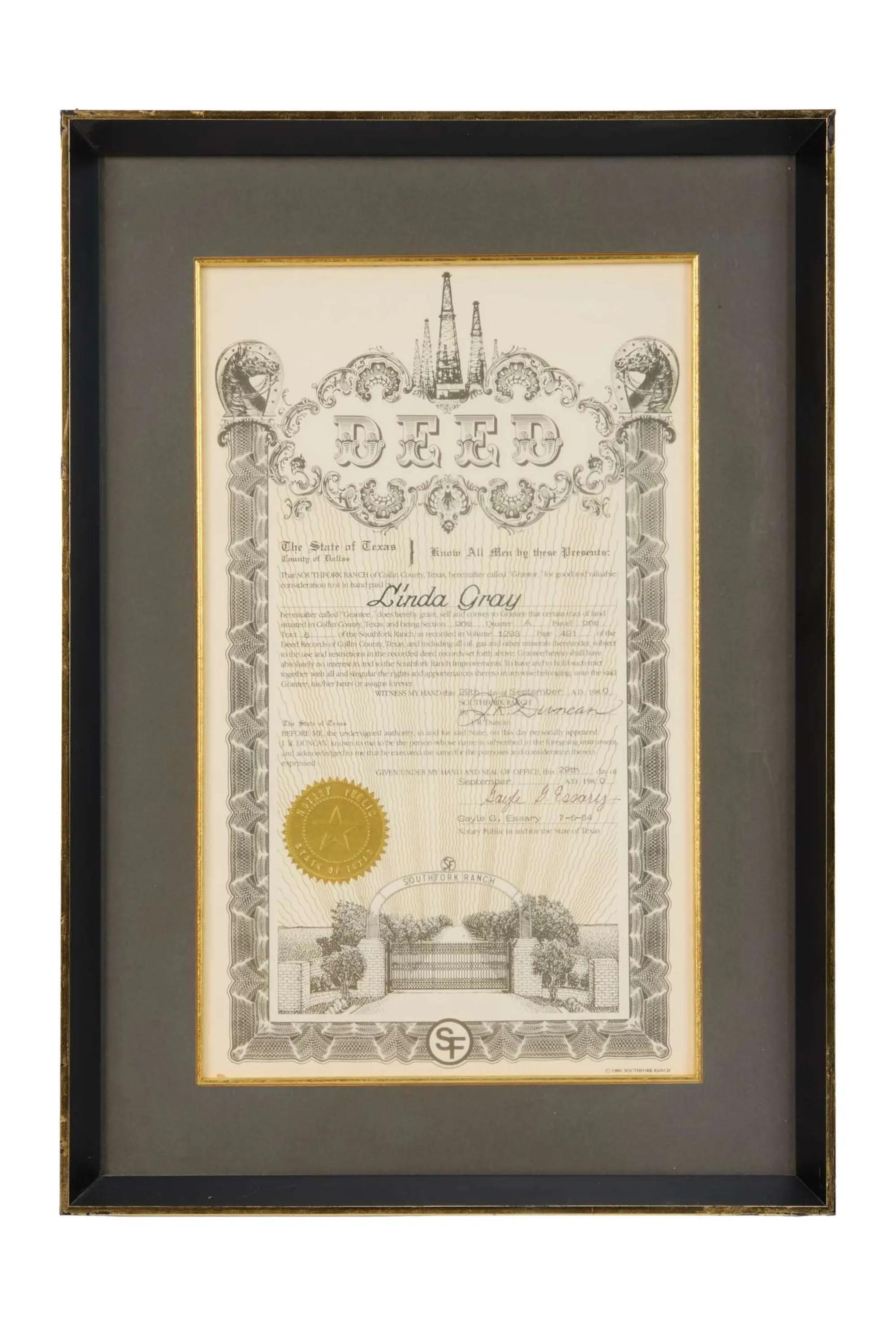
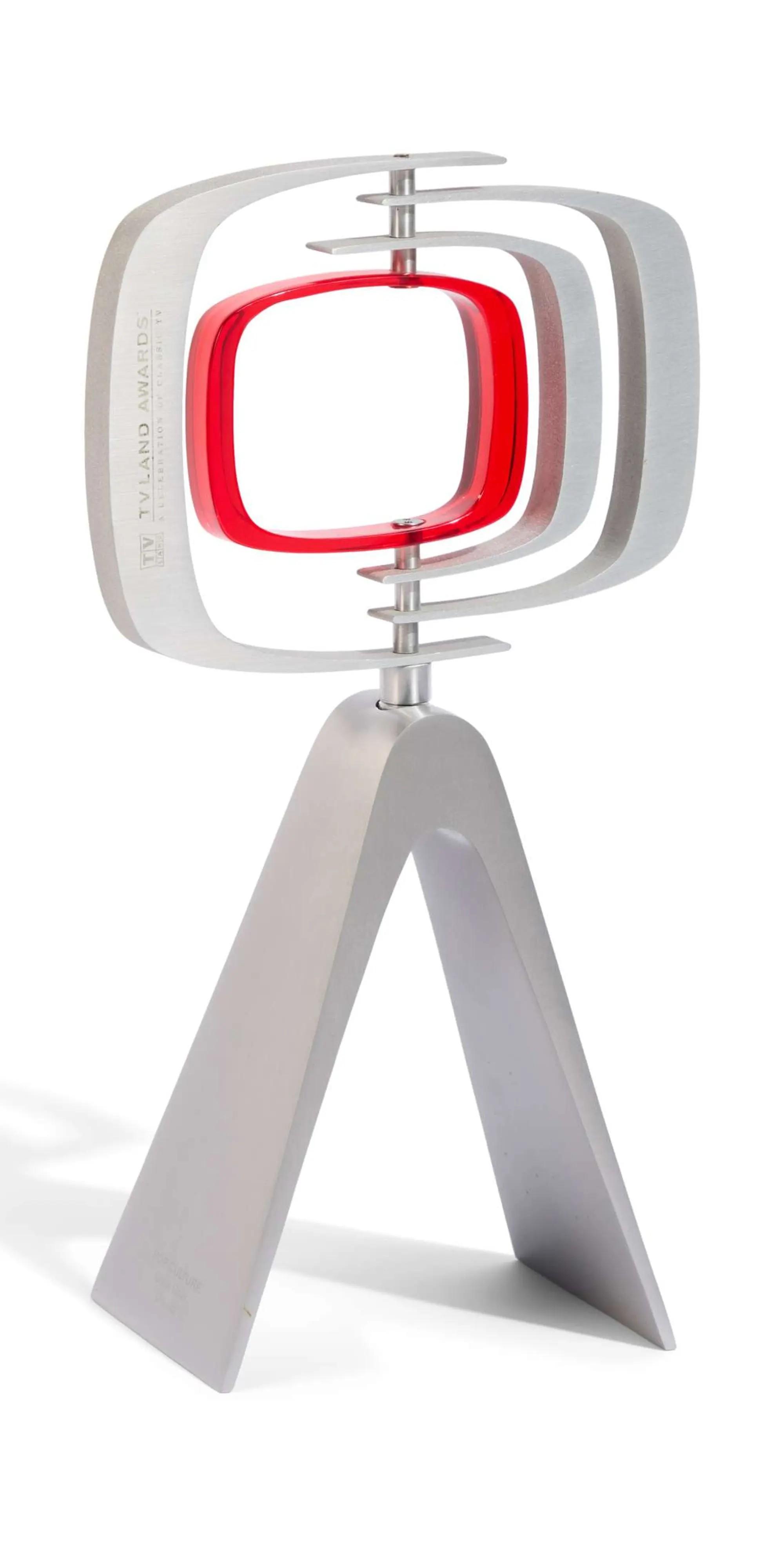
1. Lot #110. Linda Gray | 1980s “Dallas” Publications Archive, 2. Lot #84. Linda Gray | 1984 “Dallas” TV Guide Cover Photo, 4. Lot #85. Linda Gray | 1985 “Dallas,” “Dynasty,” and “Knots” TV Guide Cover Photo, 6. Lot #77. Linda Gray | 1979 “Dallas” “All-Star Family Feud” Champions Trophy, 9. Lot #79. Linda Gray | 1981 “Dallas” IBA Woman of the Year Award, 10. Lot #80. Linda Gray | 1980-81 “Dallas” Emmy Nomination Certificate, 11. Lot #82. Linda Gray | 1980 “Dallas” Deed to Southfork, 12. Lot #93. Linda Gray | 2006 “Dallas” TV Land Pop Culture Award,
The Dream, the Shower, & the Younger Man
If "Who Shot J.R.?" showed the industry what serialization could earn, the 1985-86 season showed it what serialization could cost. Patrick Duffy left, Bobby Ewing died, and when Duffy agreed to come back, the writers erased an entire season by revealing it as Pam's dream and putting Bobby in the shower. It remains the boldest retcon in network history and the least defensible.
Gray's own most controversial arc arrived a season earlier, when Sue Ellen began a relationship with John Ross's teenage swimming instructor, Peter Richards, played by Christopher Atkins. Audiences and affiliates reacted the way audiences and affiliates reacted to an older woman with a younger man in 1983. The irony was private and excellent: two decades earlier, a young model named Linda Gray had been paid roughly twenty-five dollars to stand in for Anne Bancroft's leg on the poster for "The Graduate." She would later play Mrs. Robinson herself, in the West End and then on Broadway.
"If She Goes, I Go"
The most consequential fight of Gray's tenure happened off camera.
When she decided she wanted to direct, the producers said no, and said it with an edge. Their argument, as Gray has recounted it on the "2 Bitches from Texas" podcast, was that if she directed, every other woman on the show would want to. So Gray went and asked them. She started with Barbara Bel Geddes, out of respect. Bel Geddes said no. Victoria Principal said no. Charlene Tilton said no. Gray came back with a clean sweep and the same request.
They fired her at the end of season eight. Hagman, her closest friend on the production and the only person on the call sheet with real leverage, told showrunner Leonard Katzman that if she went, he went. She was rehired. She was also handed the hardest possible assignment: a Martinique masquerade ball with a murder, police dogs and a large cast of extras, on location. As she put it, they wanted to bury her.
She went on every talk show she could book and promoted it instead. "Just Desserts" was a ratings success. She directed four more episodes.
Two objects from that period survive in the collection and belong together. The first is a Lorimar clapperboard from the shoot, slated for scene 31C, take 1, dated 2-12-86, with the director line reading LINDA GRAY. The second is an Old Hollywood-style megaphone printed "To Director / Linda Gray / With love… / from the / cast & crew / of / Dallas," dated February 4, 1986 and signed by Hagman, Principal, Bel Geddes and Howard Keel, who added "I love ya!" A gift from a crew to a first-time director is a common thing on a set. A gift from a crew to a first-time director the studio tried to fire is not.
Gray's annotated working scripts from her 1988 episode, along with her personalized leather script holder and a production binder containing set diagrams and schedules in her hand, are the closest thing to a record of how she actually worked.
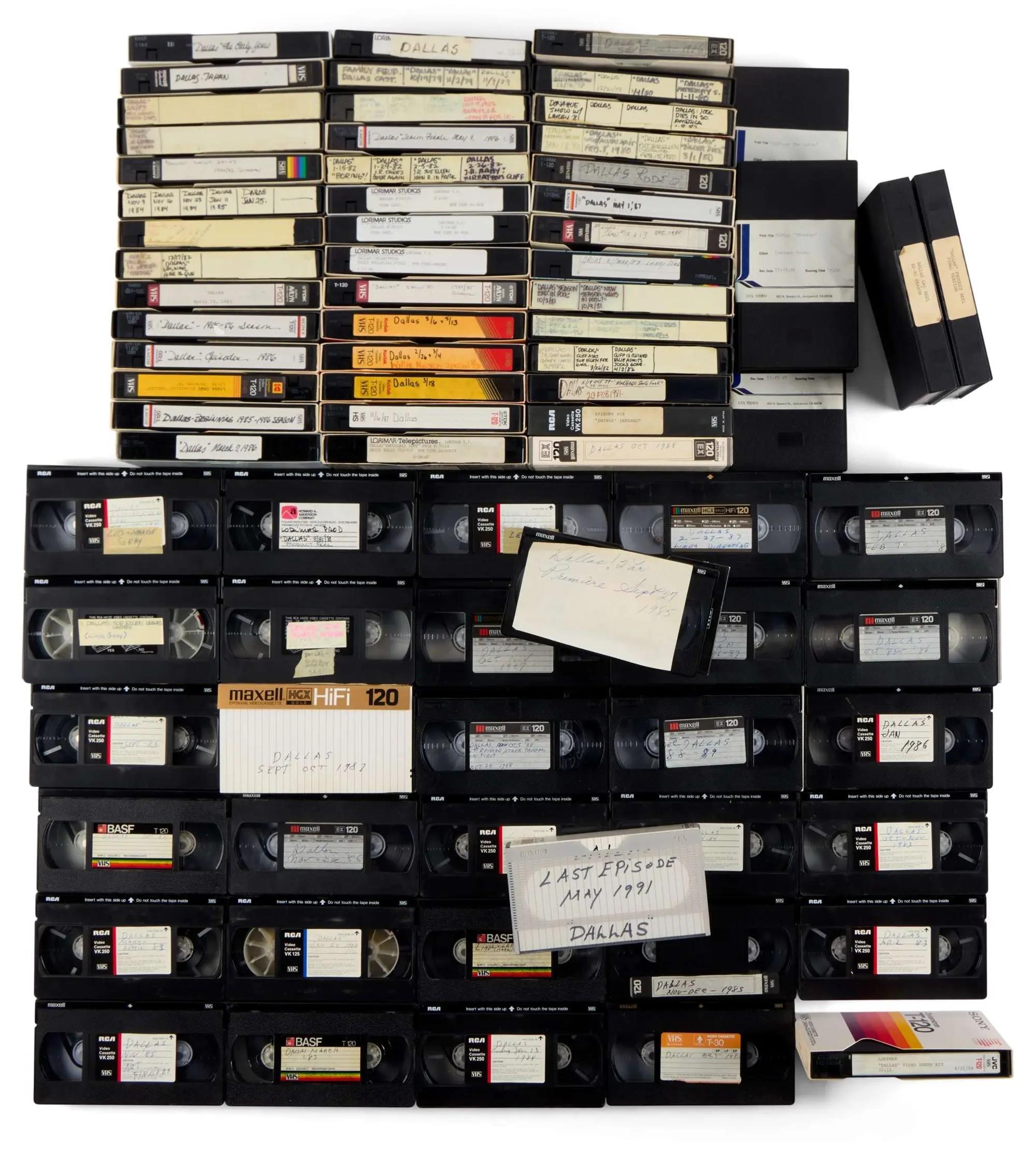

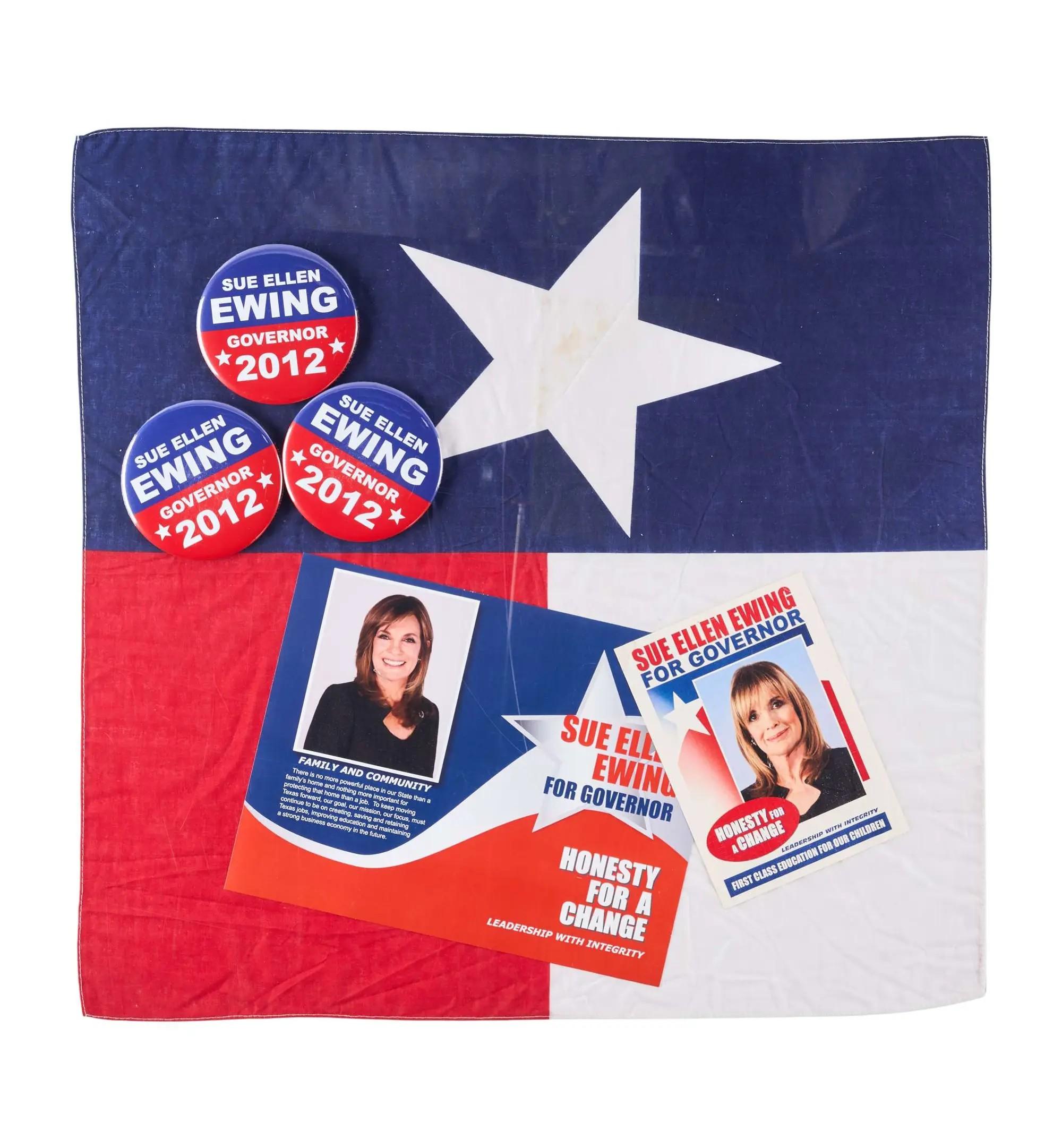
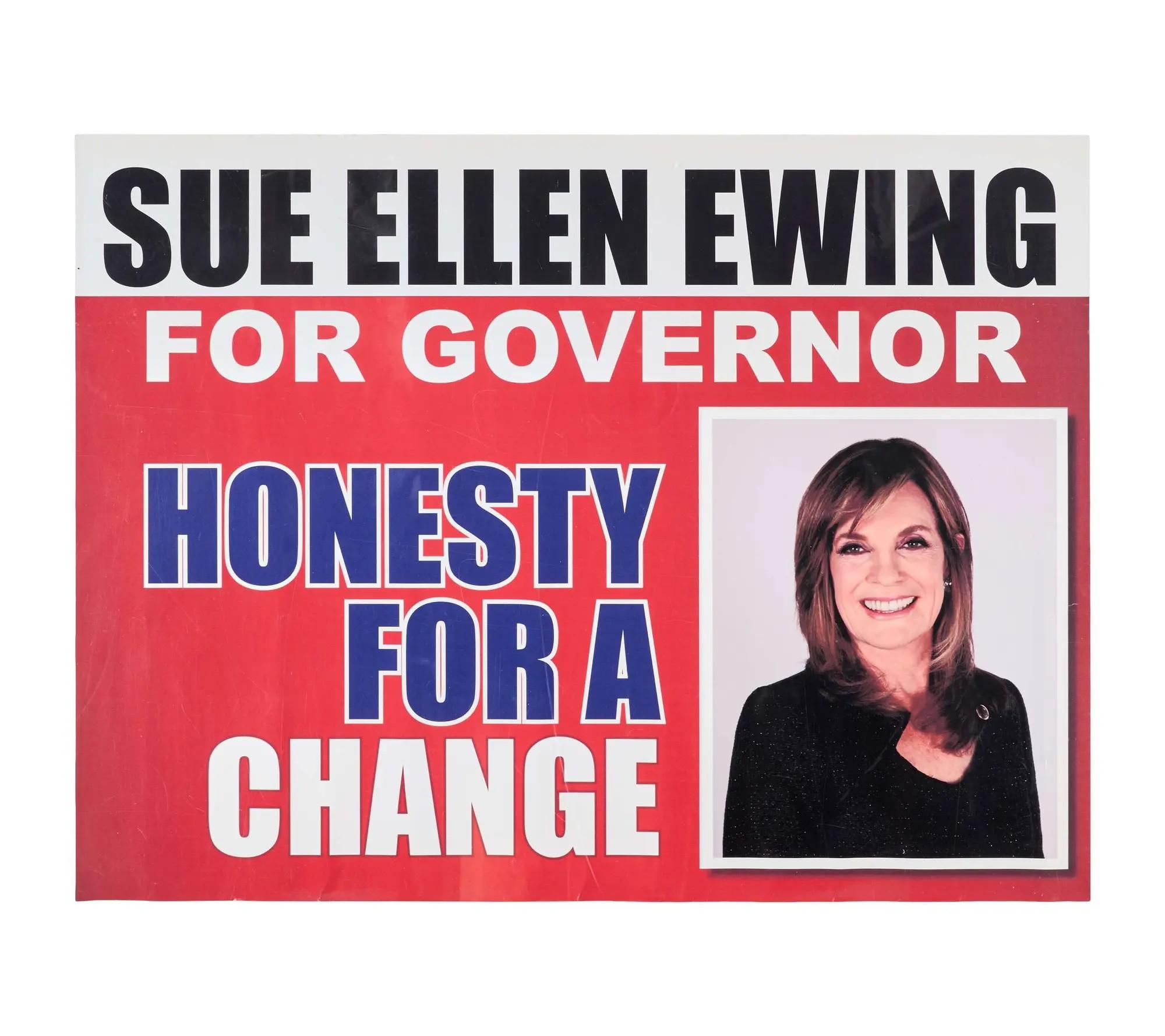
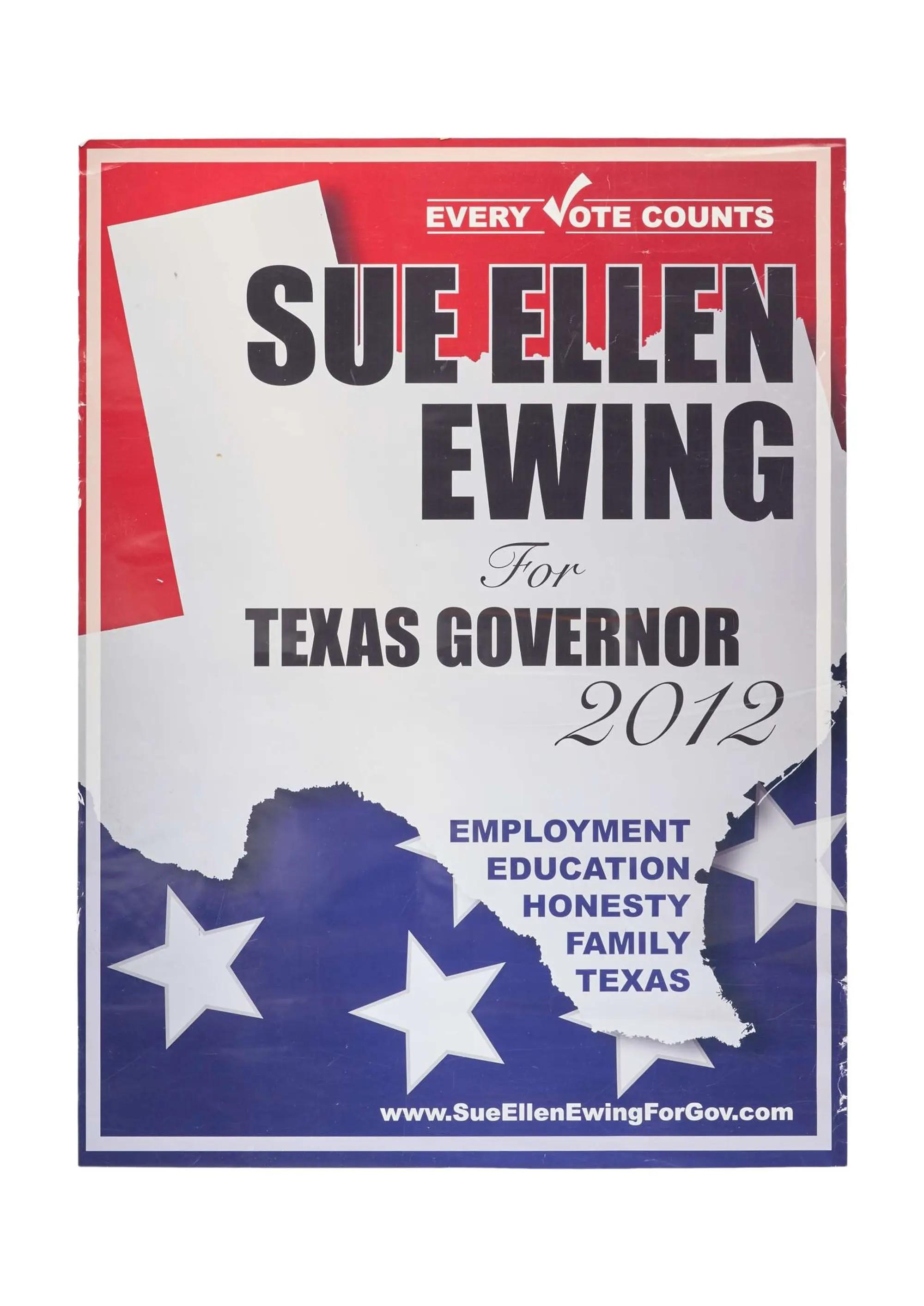
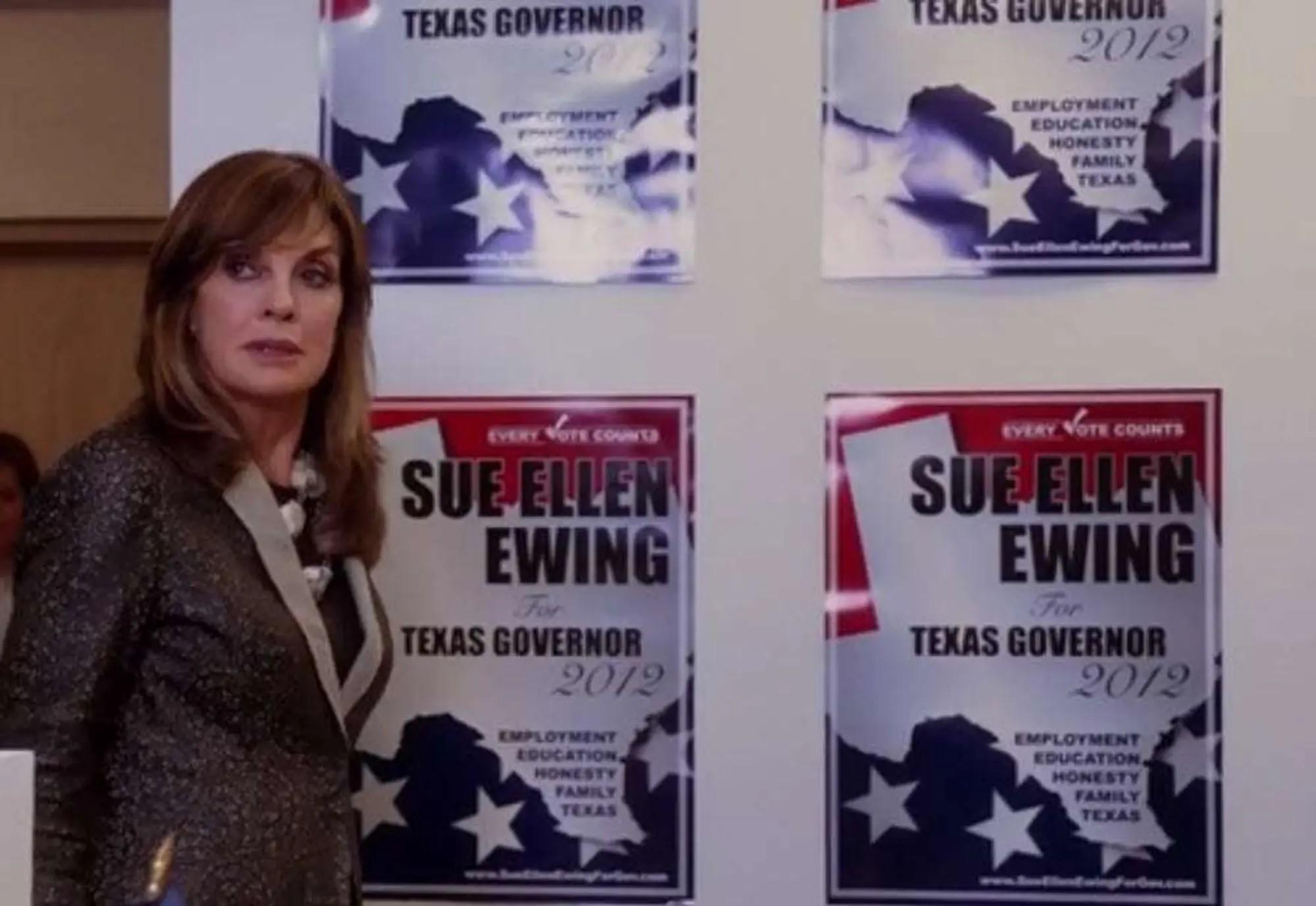
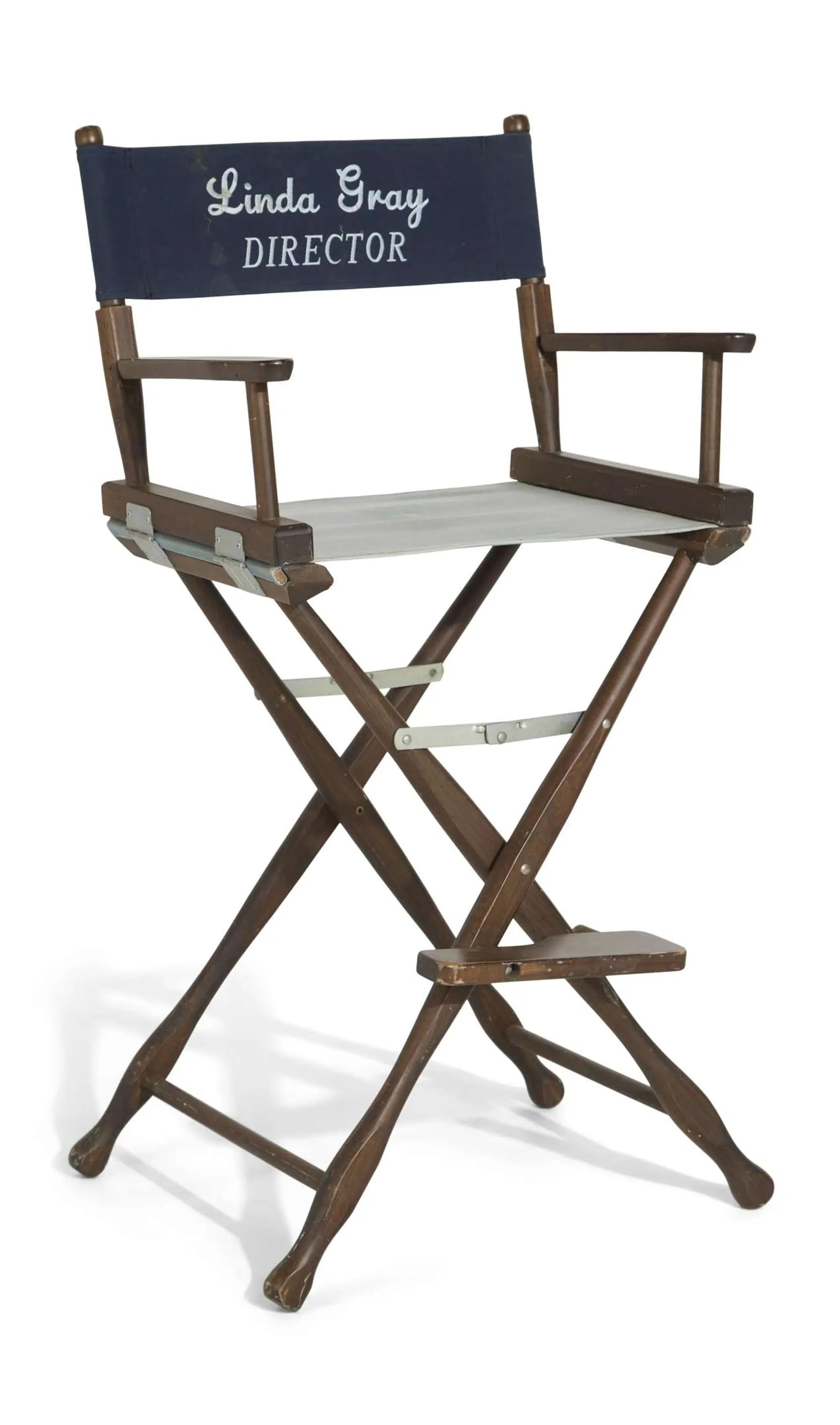
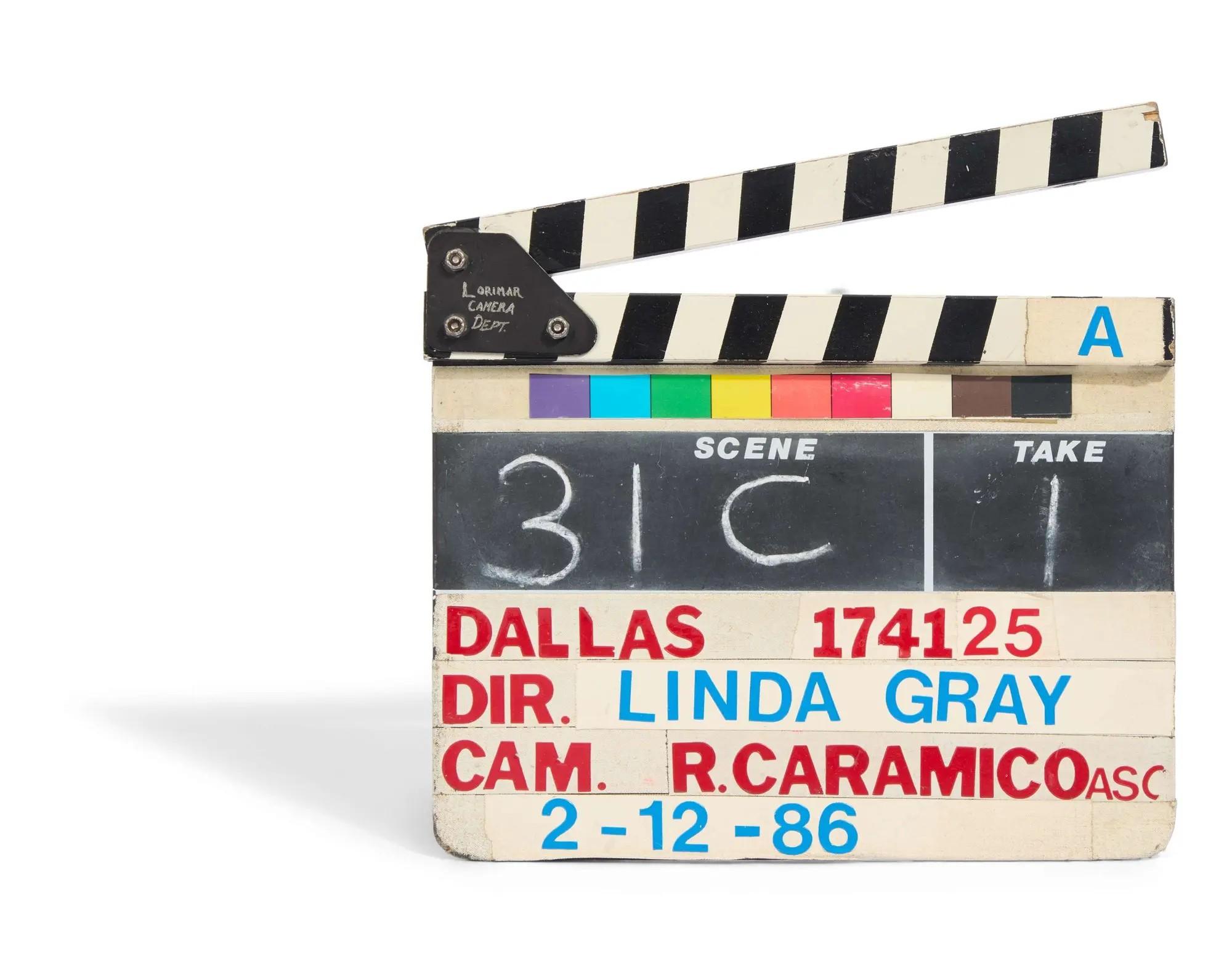
1. Lot #106. Linda Gray | 1980s “Dallas” Large VHS Collection, 2. Lot #89. Linda Gray | 2013 “Dallas” “Sue Ellen for Governor” Props with Linda Gray Signed Shirt 5, 7. Lot #67. Linda Gray | 1980s “Dallas” Director Chair from Set with Photo, 8. Lot #70. Linda Gray | 1986 “Dallas” Clapperboard for First Episode Directed by Gray,
Texas, Twice
The 2012 TNT revival gave Sue Ellen the campaign she had earned, running for governor of Texas and losing it in the most Ewing way imaginable, undone by a bribed medical examiner and a cover-up on behalf of her son. Gray's archive from that production includes her signed pilot binder and more than thirty-five scripts with revision pages in the traditional multicolored order, plus campaign flyers, signs, posters and buttons from the governor's race.
The oldest document in the group is also the funniest. In 1980 Gray was presented with a framed deed to Southfork Ranch in Collin County, signed by J.R. Duncan, whose family built the property in 1970. The Duncan family's J.R. was not the inspiration for the Ewing one. The coincidence has never stopped being perfect.
There is also the 1995 print, oversize, of Annie Leibovitz's Vanity Fair portrait of the cast reunited around the Southfork poolside table, signed in the margin "For Linda / Love - Annie Leibovitz" and accompanied by a card from Graydon Carter's office. Gray is in it with a cell phone to her ear, which in 1995 was its own kind of character note.
The Linda Gray material appears in "Ladies of the '80s: The Women Who Defined a Decade in Hollywood" at Julien's Auctions. Bidding is open through August 12.