History
Music
Where the Music Lived: A Journey Through the Venues of the Grateful Dead Era
As told through the backstage pass collection of "Big Steve" Parish
Share



There are plenty of ways to trace the history of the Grateful Dead's three decades on the road. You could follow the setlists, the studio albums, the bootleg tapes passed hand to hand in parking lots across America. But few records of that journey are as immediate — as tactile and intimate — as the backstage passes that traveled with the crew. These small laminated badges and cloth stickers, worn clipped to a shirt or dangling from a lanyard, weren't souvenirs. They were working documents, keys to the inner world of one of rock's most relentless touring operations. And nobody kept them more carefully than Steve "Big Steve" Parish.
Parish was the Grateful Dead's head of road operations for decades, the man responsible for keeping the production machinery moving from city to city, night after night. Over the years on the road with the Dead and the Jerry Garcia Band, he saved his backstage passes — as well as passes from other members of the band and crew — amassing a collection of hundreds. The 30 framed sets now being offered through Julien's Auctions represent something more than memorabilia. They are a geographic and artistic chronicle of a band that, more than almost any other in rock history, was defined by where it played.
The Oakland Auditorium: Home Base on the Bay
If the Grateful Dead had a spiritual headquarters in the late 1970s and beyond, it was the Oakland Auditorium Arena. When legendary promoter Bill Graham closed the Winterland Ballroom on New Year's Eve 1978 — with an unforgettable six-hour send-off that included the Blues Brothers, New Riders of the Purple Sage, and a Dead set that stretched toward dawn — an era ended. But another began almost immediately, anchored at a venerable East Bay hall that became the band's preferred home court for years to come.
Parish's laminated all-access passes from the December 26–31, 1980 Oakland Auditorium run (Lot #101) capture the band at a pivotal moment. These were the New Year's holiday shows, multi-night stands that the Dead had made something of a tradition in the Bay Area. The Oakland Auditorium was particularly well-suited to the Grateful Dead's needs: large enough to accommodate a serious production, intimate enough that the connection between band and audience remained real. Tape recordings from these runs consistently reveal a band playing with purpose and familiarity, the way any musician plays on a stage they know well.
By the early 1980s, the Oakland Auditorium had become a fixture on the Dead's calendar in a way that few venues outside the Bay Area ever managed. The spring, fall, and New Year's runs there weren't just concerts — they were reunions, the band returning to familiar rooms and familiar audiences after months on the road.
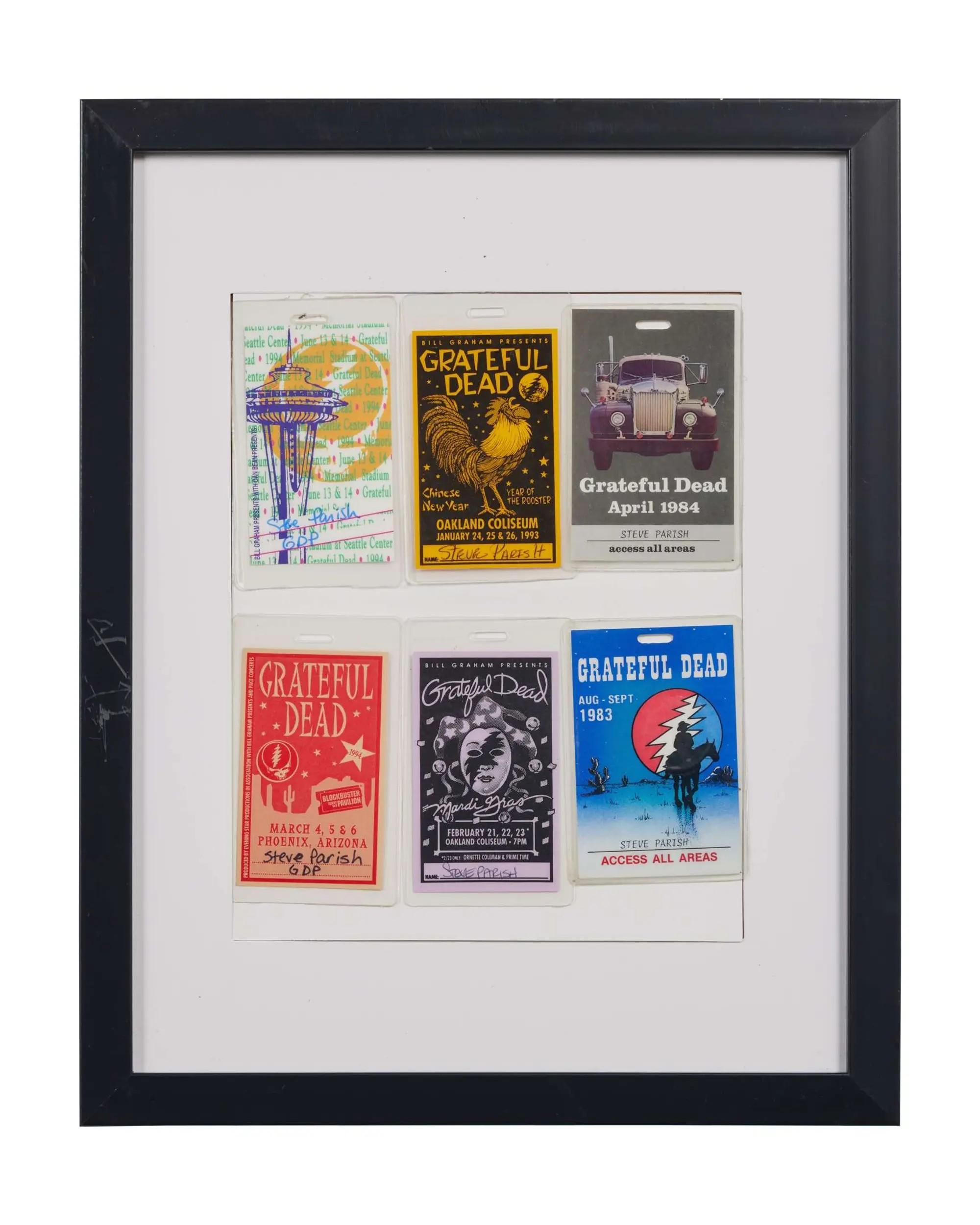
The Oakland Coliseum eventually replaced the Auditorium as the Bay Area's primary Dead venue as the band's audience swelled through the late 1980s and into the '90s. Parish's framed personal passes from the Oakland Coliseum runs of January 1993 and February 1993 (Lot #249) tell that story of growth. By then, the Dead were among the highest-grossing touring acts in the country, playing arenas and stadiums that would have been unimaginable in the ballroom days. The Coliseum December 1993 run — documented in Parish's Lot #281 laminates, each stamped "Steve Parish GDP" at the bottom — came at the very end of a year that saw the band play to hundreds of thousands of fans across the country.
Radio City Music Hall: The Show That Surprised Everyone
In the fall of 1980, the Grateful Dead did something that raised eyebrows even among their devoted following: they booked a series of shows at Radio City Music Hall in New York City. The legendary midtown Manhattan concert hall, with its Art Deco grandeur and precisely 5,933 seats, was not an obvious fit for a band whose live shows were known for sprawling improvisation and communal chaos. And yet it worked — remarkably so.
The 1980 Radio City run was part of a broader acoustic/electric showcase format the Dead were touring that fall, one that would produce the live albums Reckoning and Dead Set. The acoustic sets in particular were revelatory in a room with Radio City's acoustics and intimacy. Parish's laminate from the Radio City run (Lot #102) represents one of the most storied venue pairings in the Dead's touring history. Fans who were there have described the experience as something unexpected — the formal elegance of the hall meeting the organized spontaneity of the Dead's music in a way that genuinely elevated both. As one attendee put it years later, those shows helped revive the place. The feeling was mutual.
Vintage 1985 Team-Signed Boston Celtics Jacket with Laminated Passes
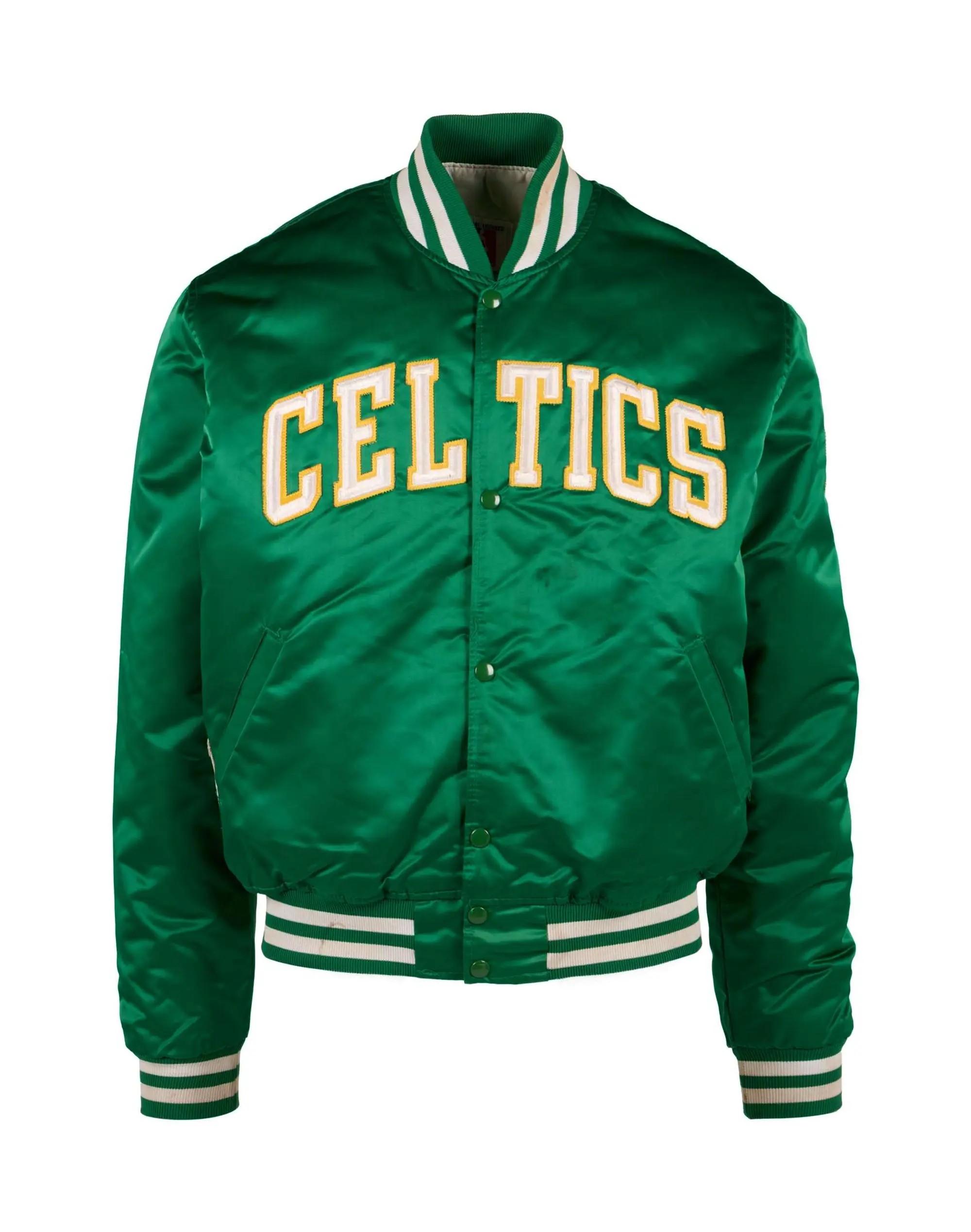
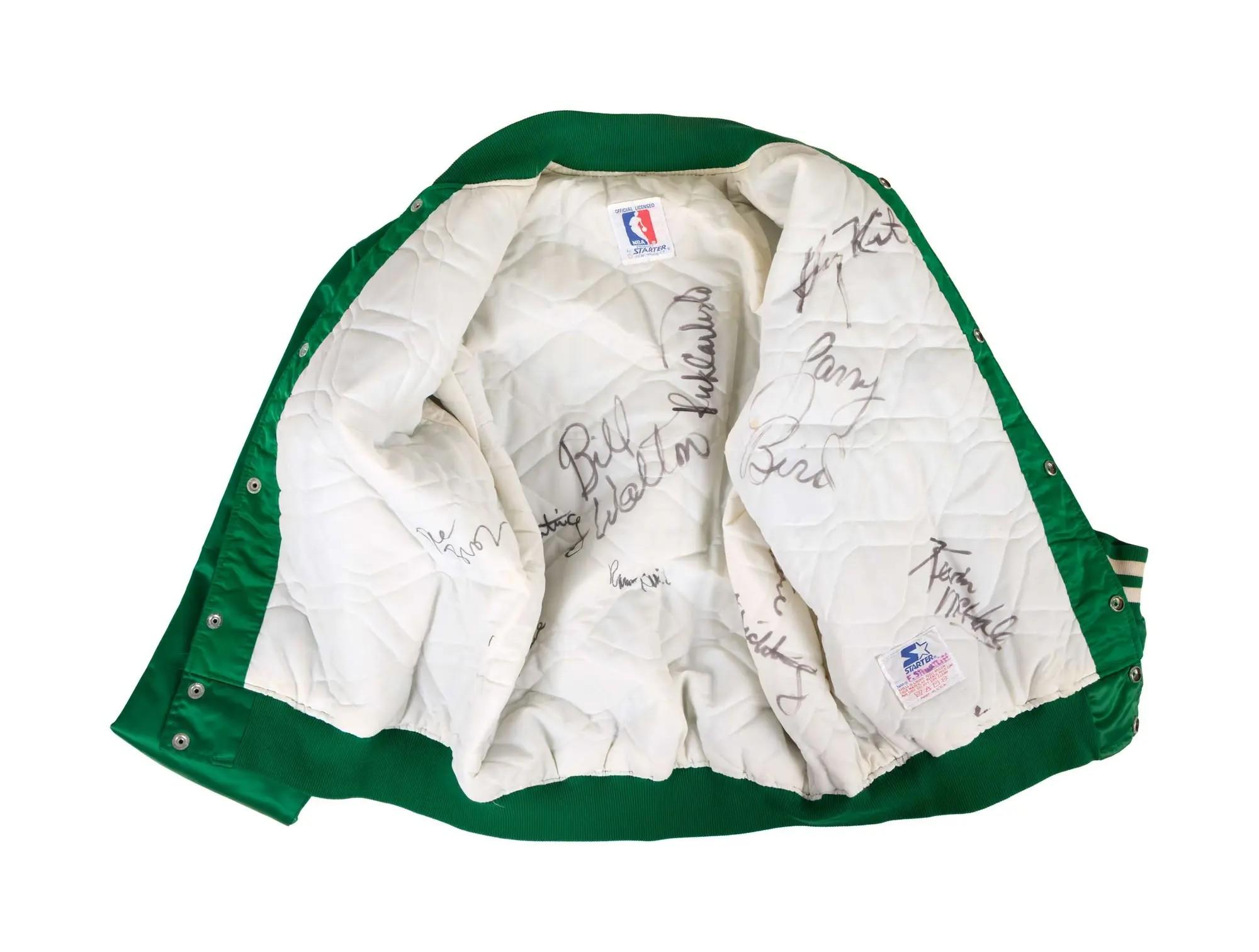
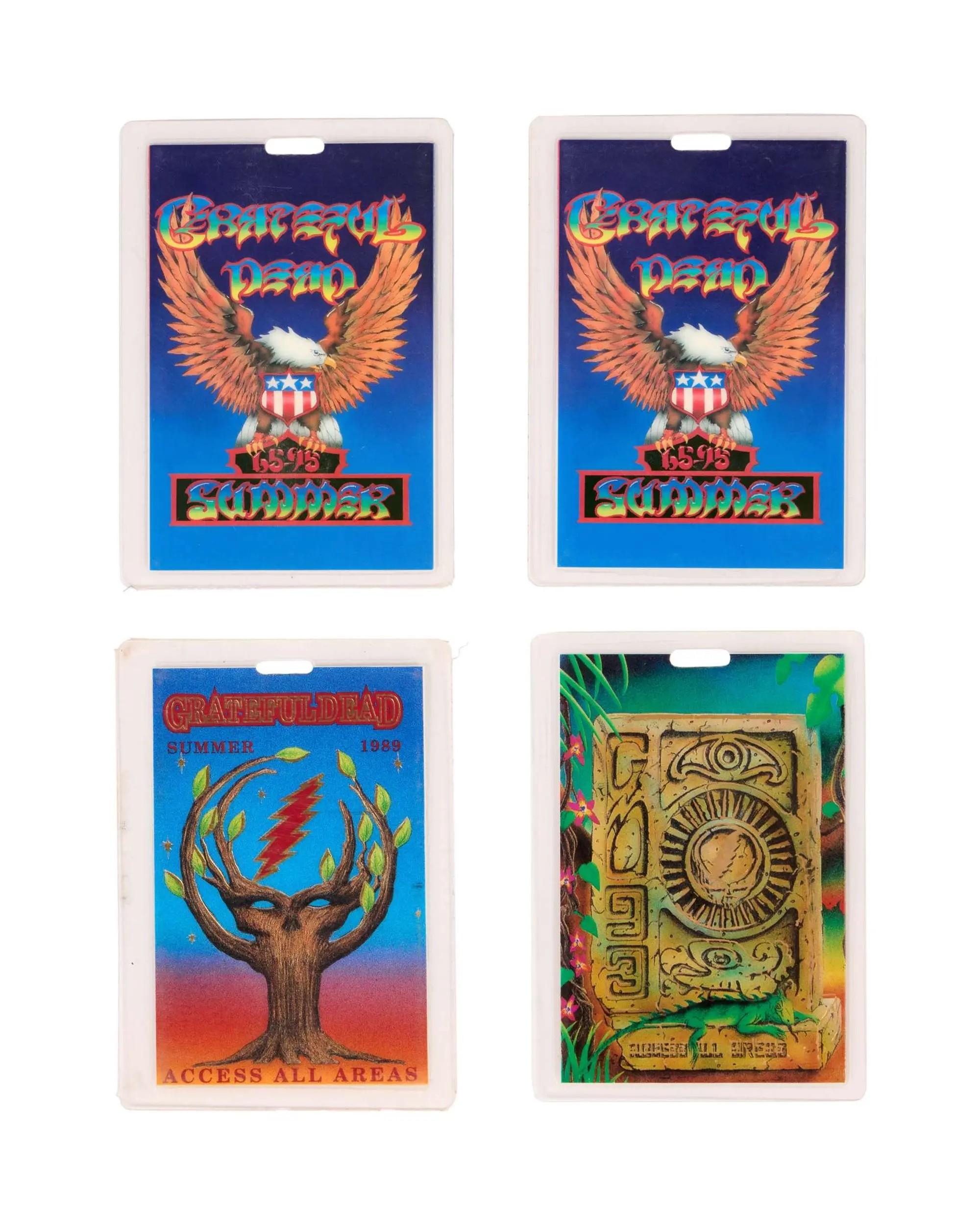
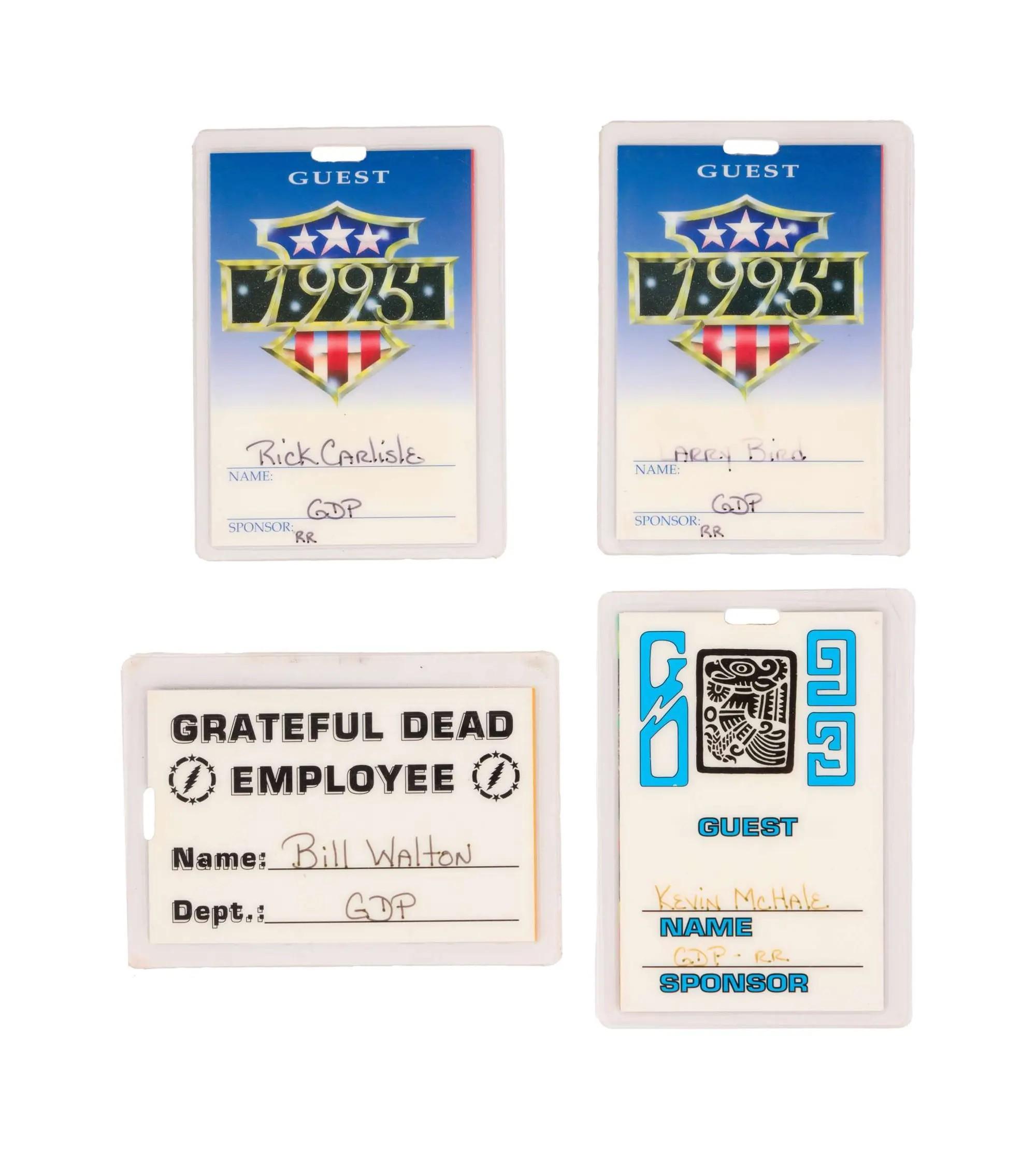
1. Lot #170. Lawrence “Ram Rod” Shurtliff | Vintage 1985 Team-Signed Boston Celtics Jacket with Laminated Passes,
A vintage Boston Celtics green bomber jacket signed by various members of the 1985-1986 team in black marker including: Bill Walton Kevin McHale Jerry Sichting Larry Bird Greg Kite Rick Carlisle Robert Parish and more. With "F. Shurtliff" (aka Lawrence "Ram Rod" Shurtliff's wife, Frances Whelan) handwritten on the interior label.
Together with four c. 1980s-1990s Grateful Dead concert backstage passes for Rick Carlisle, Kevin McHale, Bill Walton, and Larry Bird.
In early November 1985, Bill Walton convinced members of the Celtics—including Larry Bird, Kevin McHale, Robert Parish, and Rick Carlisle—to attend two Grateful Dead concerts at the Centrum in Worcester Massachusetts. Walton famously bypassed security by telling staff "I'm with the band" and "They're with me " leading his teammates to a curtained-off VIP section on the side of the stage.
Mickey Hart vs. Larry Bird: The following day drummer Mickey Hart visited a Celtics practice and challenged Larry Bird to a game of one-on-one. Hart later described the experience as "humiliating " as Bird aggressively checked him and threw "rocket" passes.
Bill Graham Presents: The Infrastructure Behind the Shows
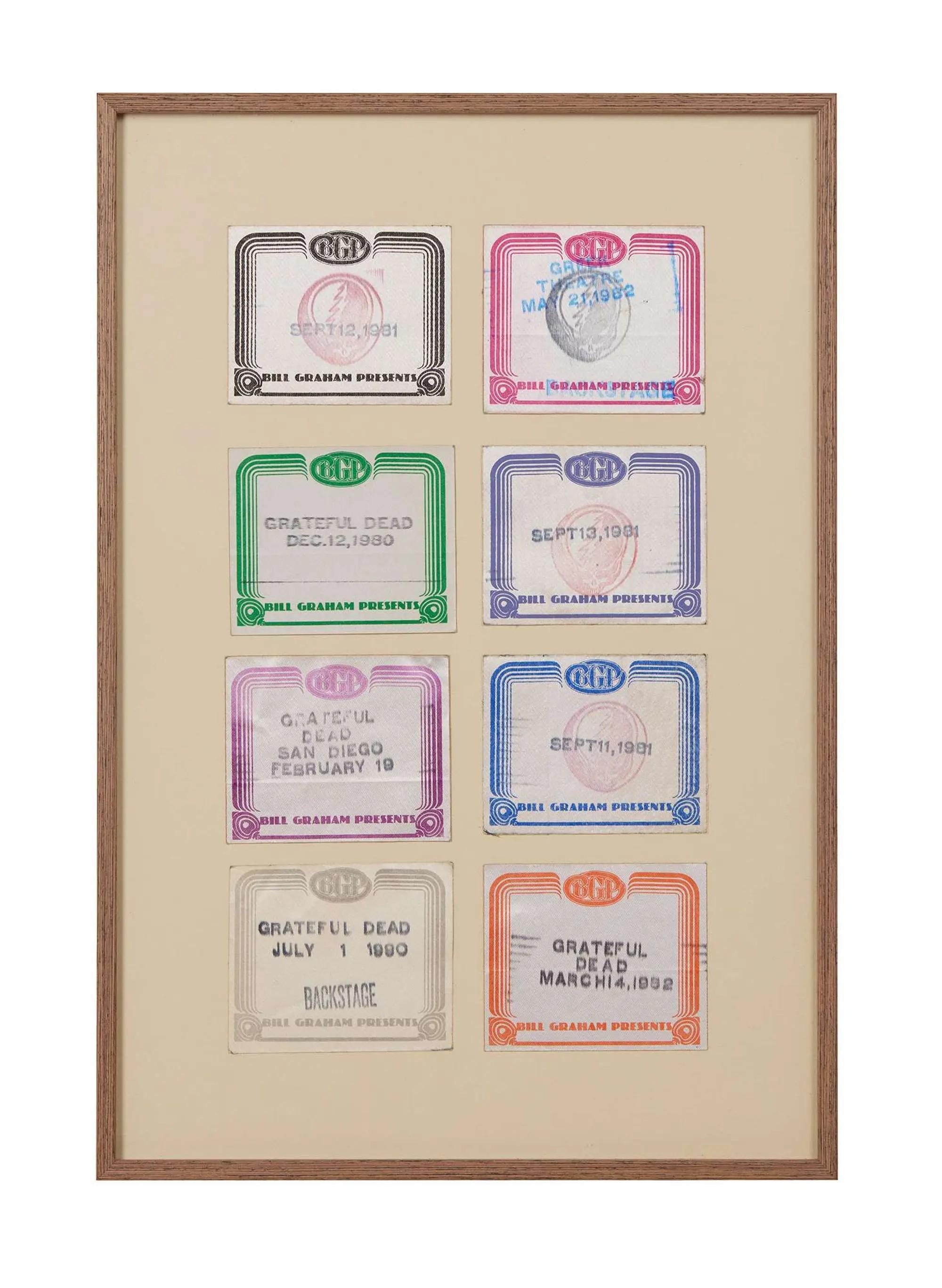
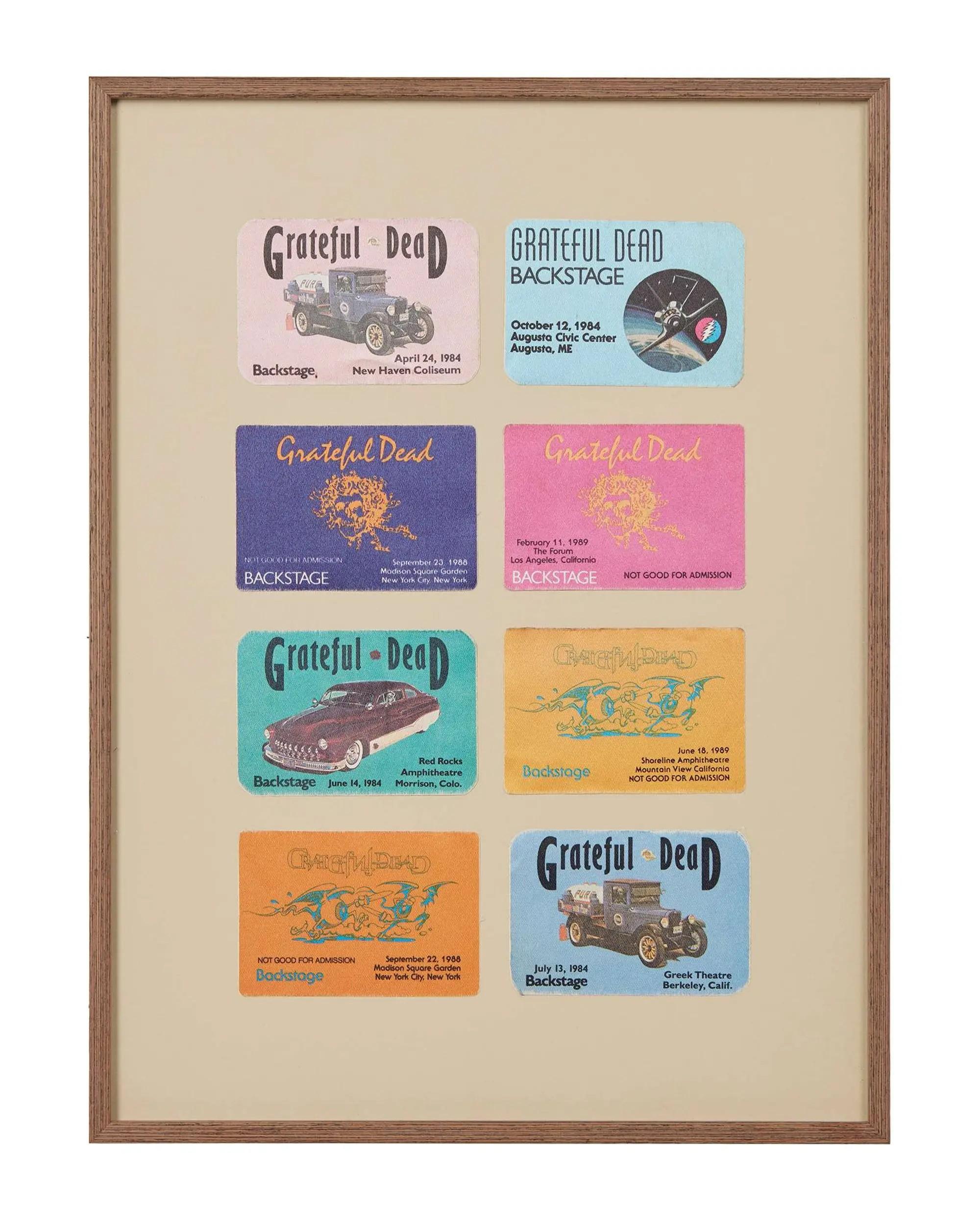
The name "Bill Graham Presents" on a backstage pass carried real weight in the world of rock promotion, and it appears prominently across some of the most striking pieces in the Parish collection. The eight colorful "Bill Graham Presents" passes from 1980s Grateful Dead concerts (Lot #112) — each a different color, four featuring the iconic Steal Your Face skull — represent the visual language of the professional concert world at its most refined.
Graham's organization was the primary production partner for many of the Dead's Bay Area and West Coast shows throughout this era, and the working relationship between Graham's BGP operation and the Dead's own road crew — with Parish at the center of it — shaped how large-scale rock concerts were produced in America. The Steal Your Face logo on those passes wasn't just branding; it was a symbol of access, instantly recognizable to any stagehand or security guard on the venue floor.
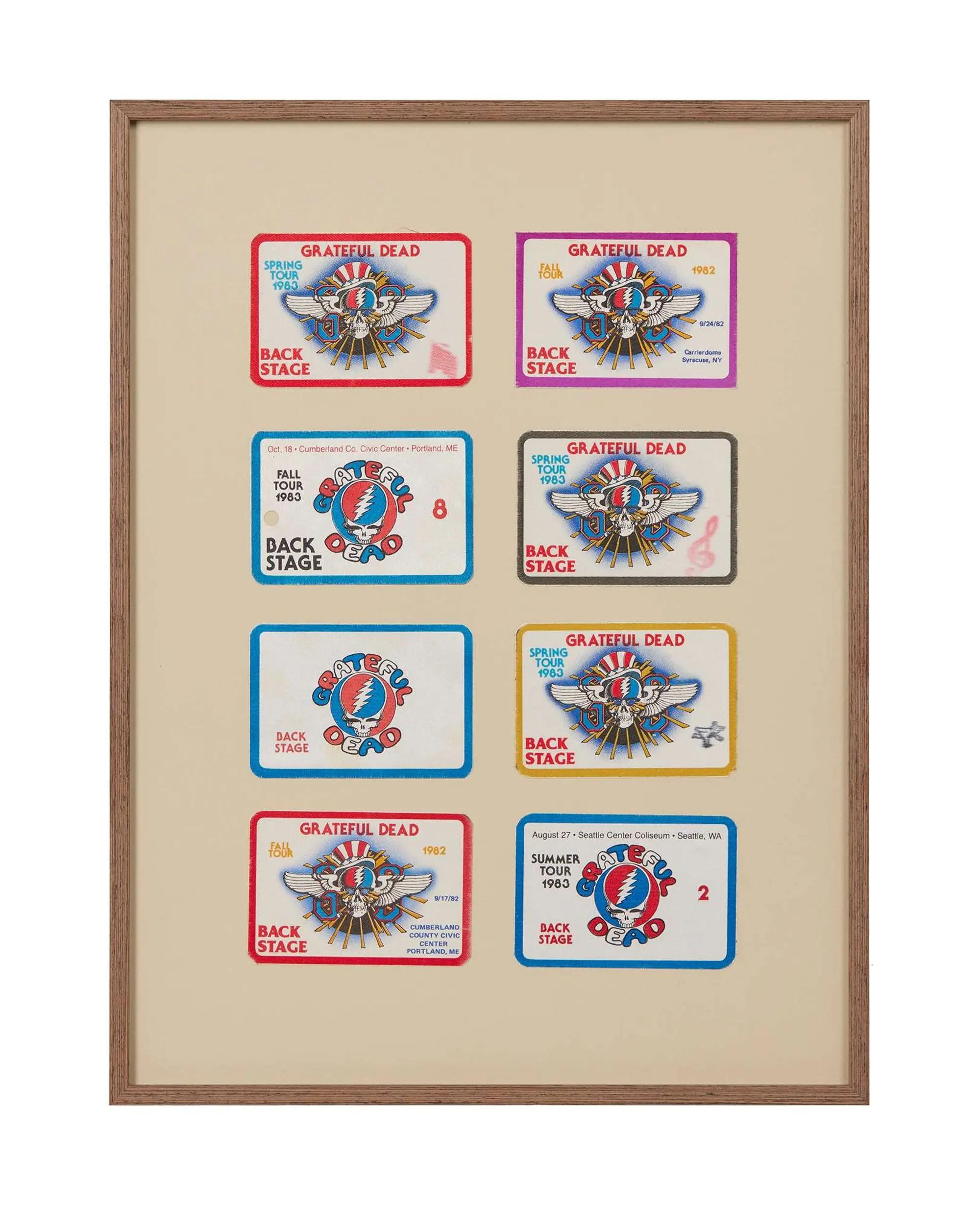
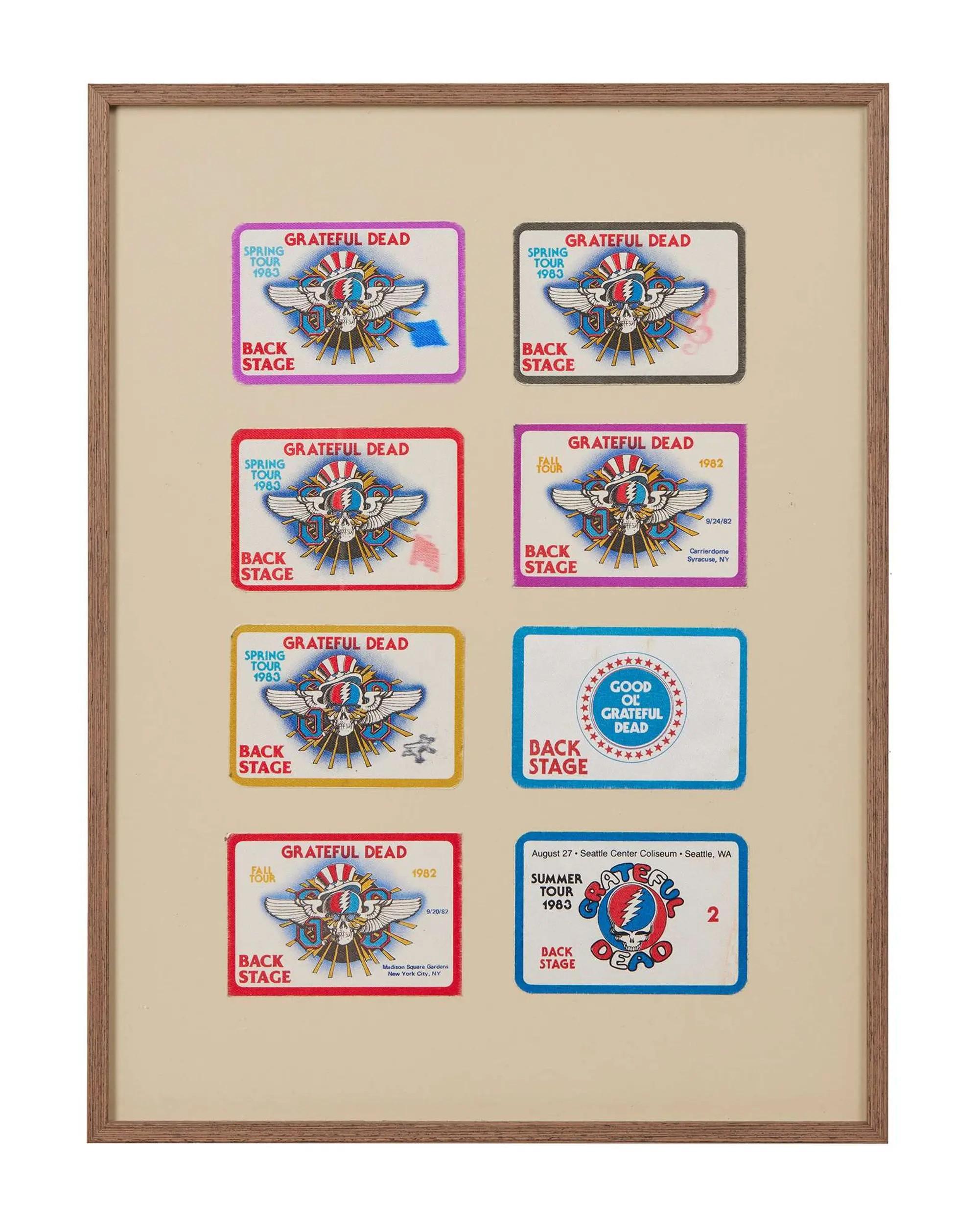
The backstage passes of the early-to-mid 1980s documented in Lots #112, #113, and #114 span the Spring 1982 and 1983 tours, the Fall 1982 tour, and the Summer 1983 tour — a period when the Dead's production operation was growing substantially in scale and complexity, even as the band retained the improvisational core that defined their performances. Each pass is its own small piece of art: as the UC Santa Cruz archive of Grateful Dead materials notes, the best passes functioned as a form of modern heraldry, documenting privilege and access while simultaneously contributing to the band's expanding visual identity.
The Shakedown Street Era: 1979 and the New Chapter
The Spring 1979 Shakedown Street tour pass in Parish's collection (Lot #101) marks a specific and important moment in Dead history. The Shakedown Street album had been released in late 1978, produced by Lowell George and recorded at the band's San Rafael studio. The 1979 tour took that material — and a newly reconstituted band, with Brent Mydland replacing Keith Godchaux on keyboards — across the country.
The laminate for that tour borrowed from the album's imagery, as was common practice: backstage passes and laminates of the era often reproduced or adapted the graphic design from concurrent album artwork or show posters, giving each tour its own distinct visual identity. A September 1979 tour pass rounds out that year's documentation in the collection, capturing a band that was actively finding its footing with a new member and a new sonic direction.
What followed was a remarkable run of productivity on the road. The Fall 1983 tour passes, Spring 1983 tour passes, and Summer 1983 passes — spread across Lots #113, #114, and #249 — show a band in full touring stride, covering the country in the kind of grinding multi-month campaign that defined their operation. The April 1984 Tour pass in Lot #249 continues the thread into the mid-decade years, a period that would culminate in the band's commercial breakthrough with In the Dark in 1987.
Click Through 30 Lots of Grateful Dead Backstage Passes
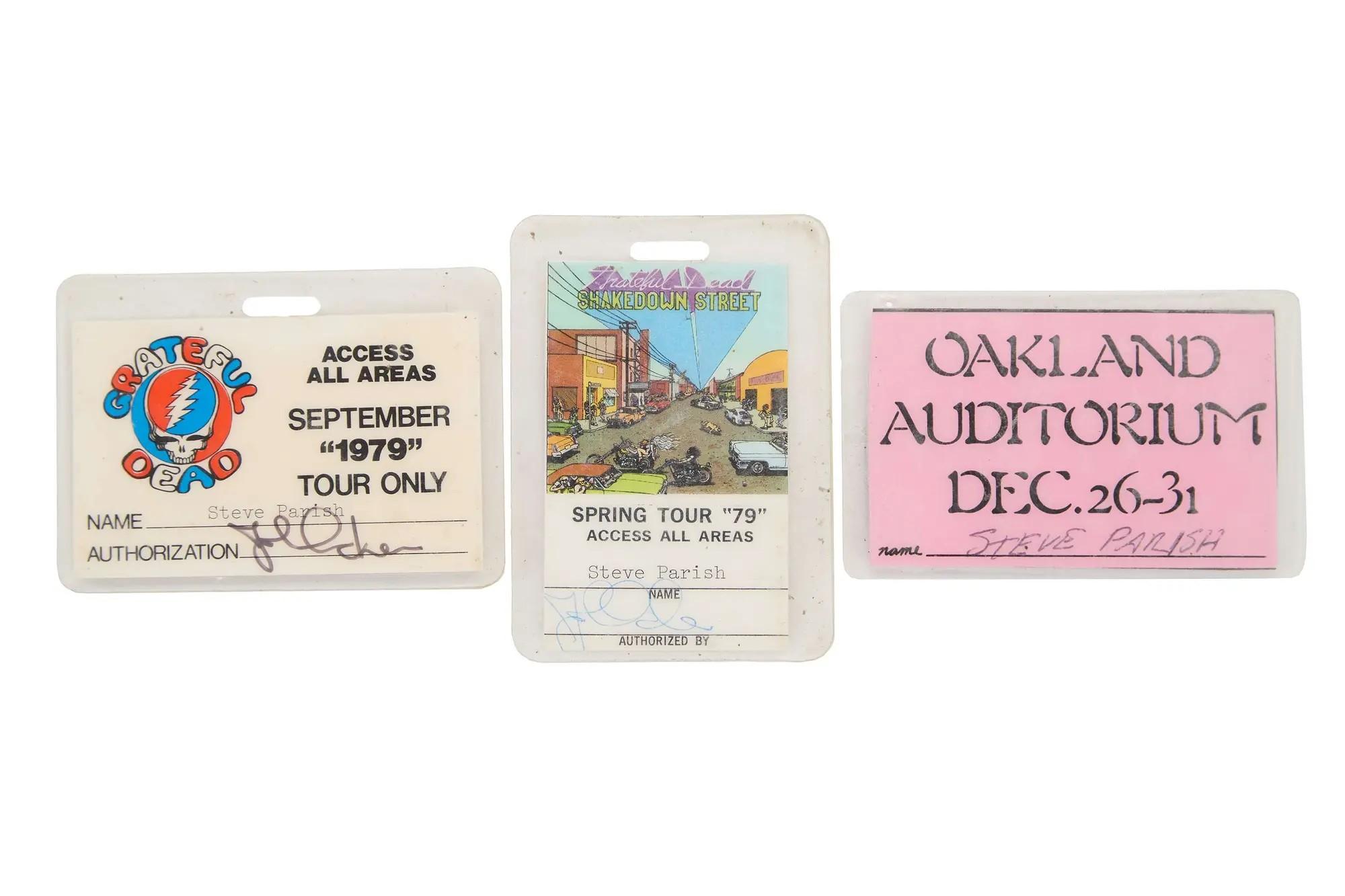
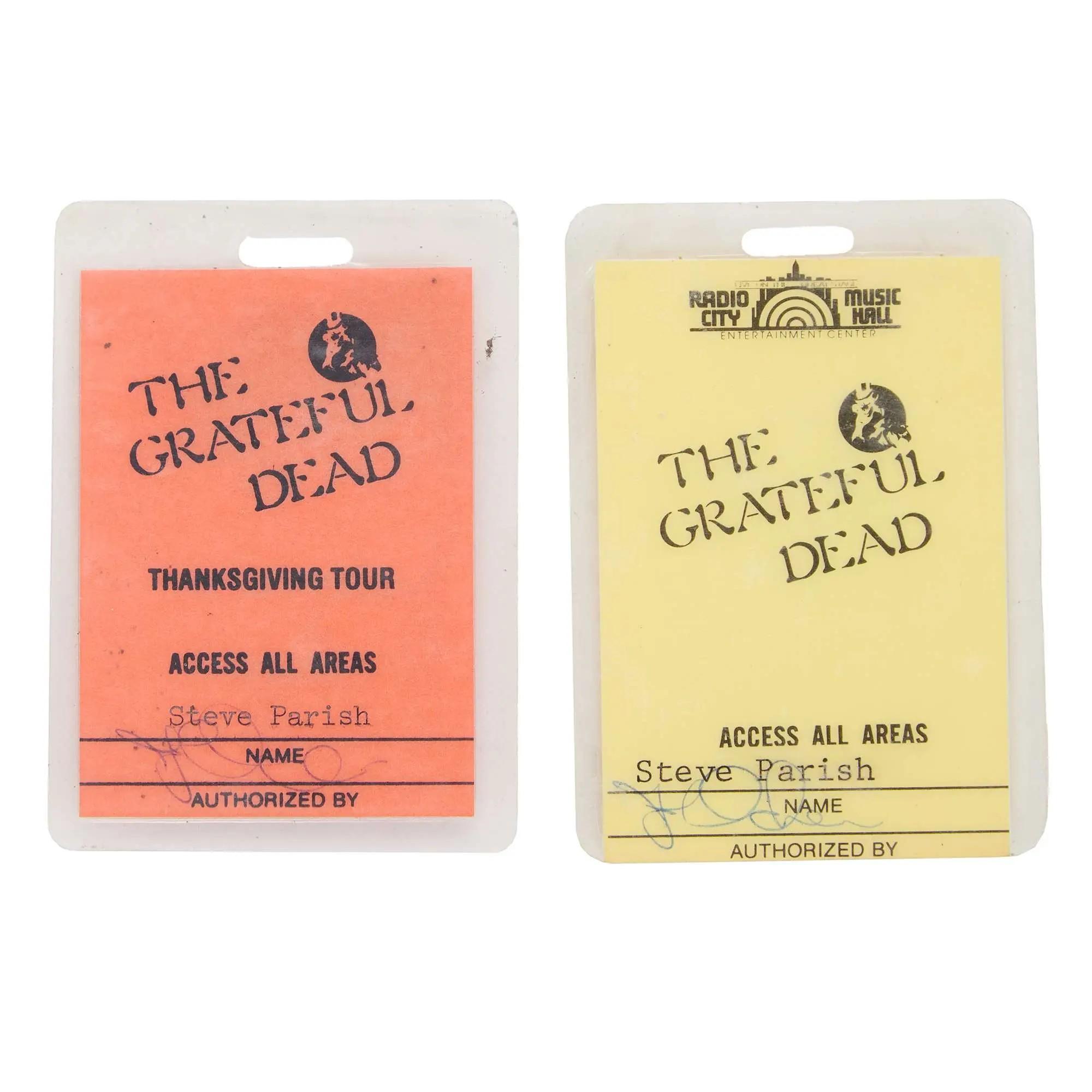
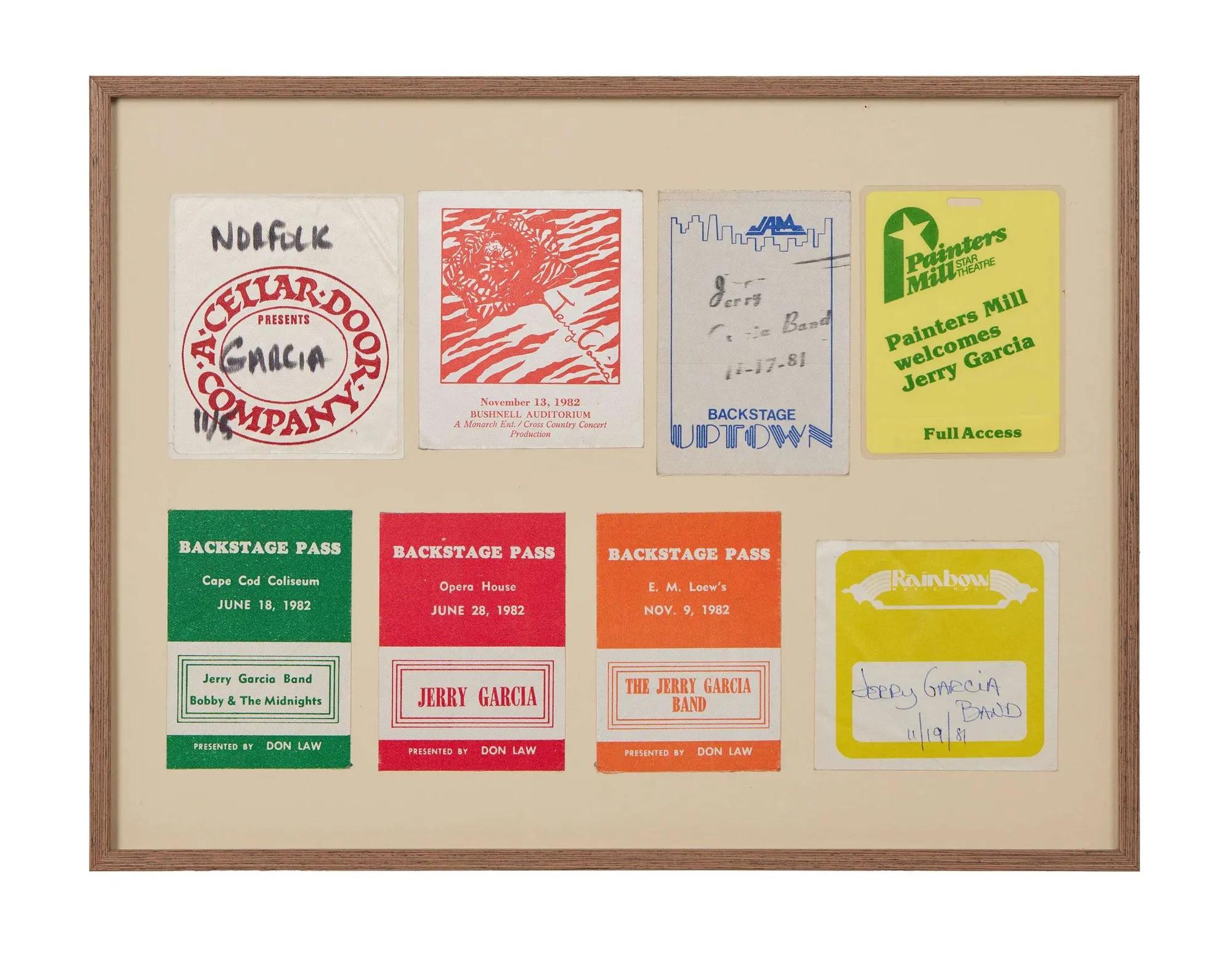
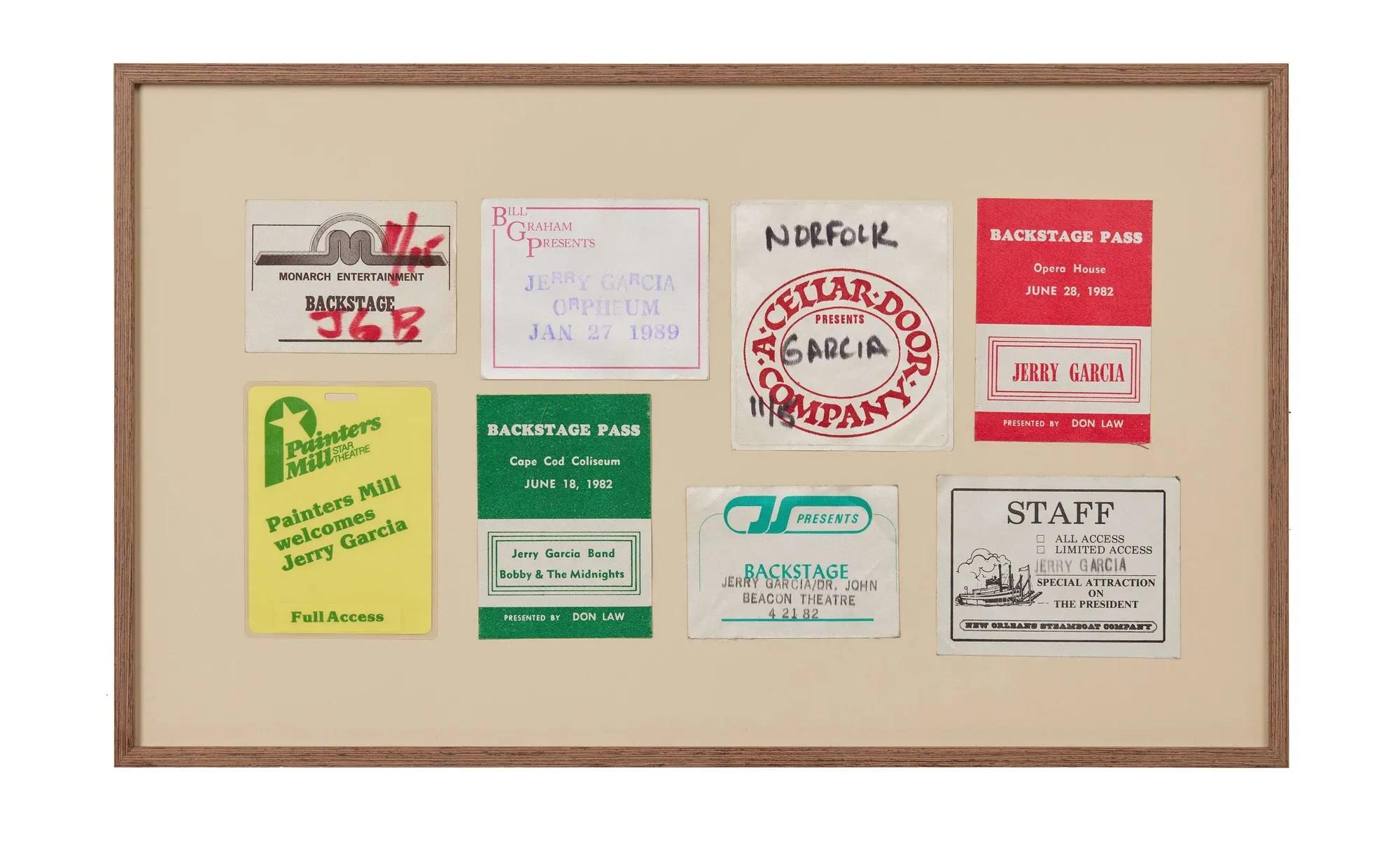
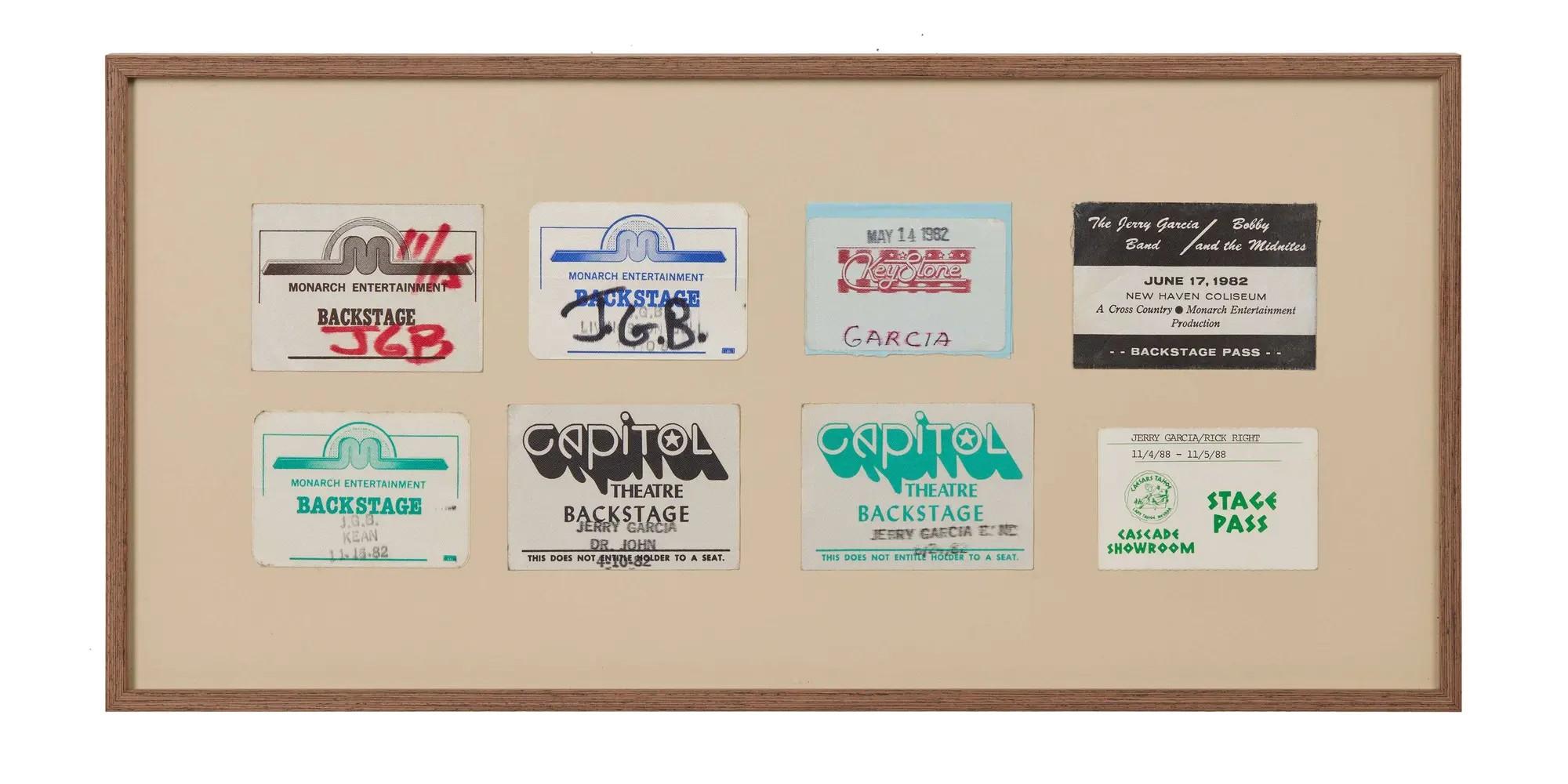
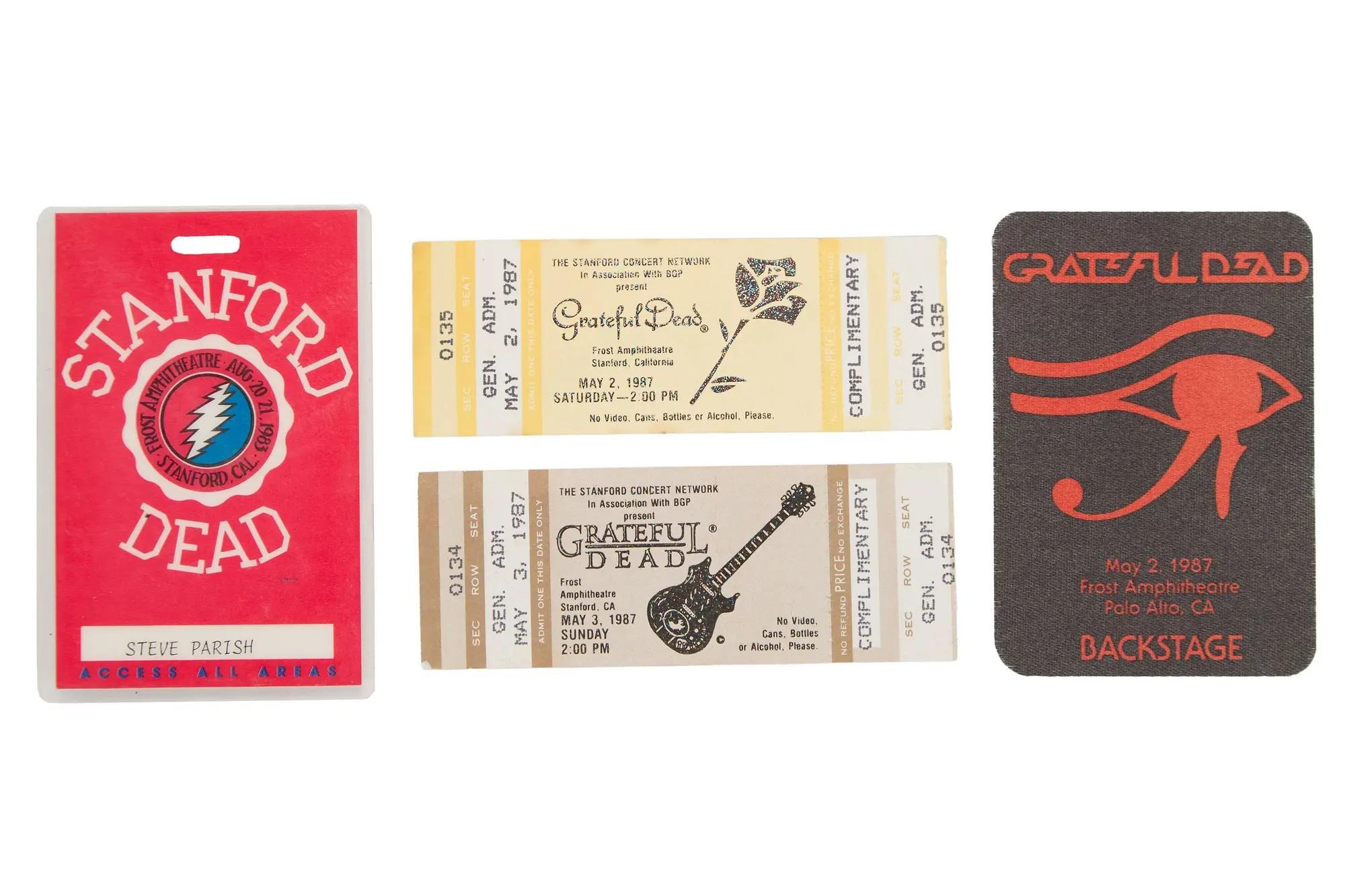
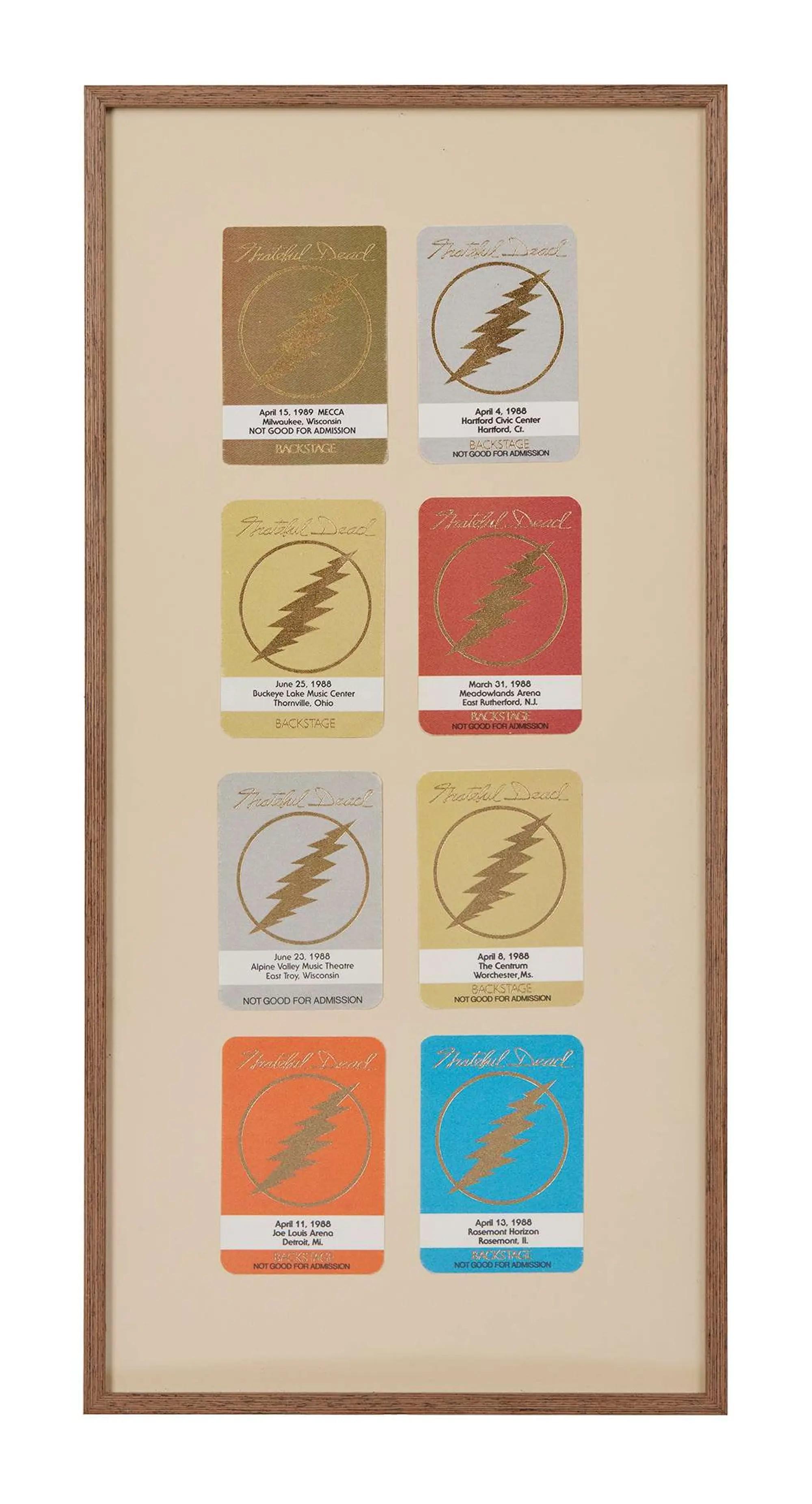
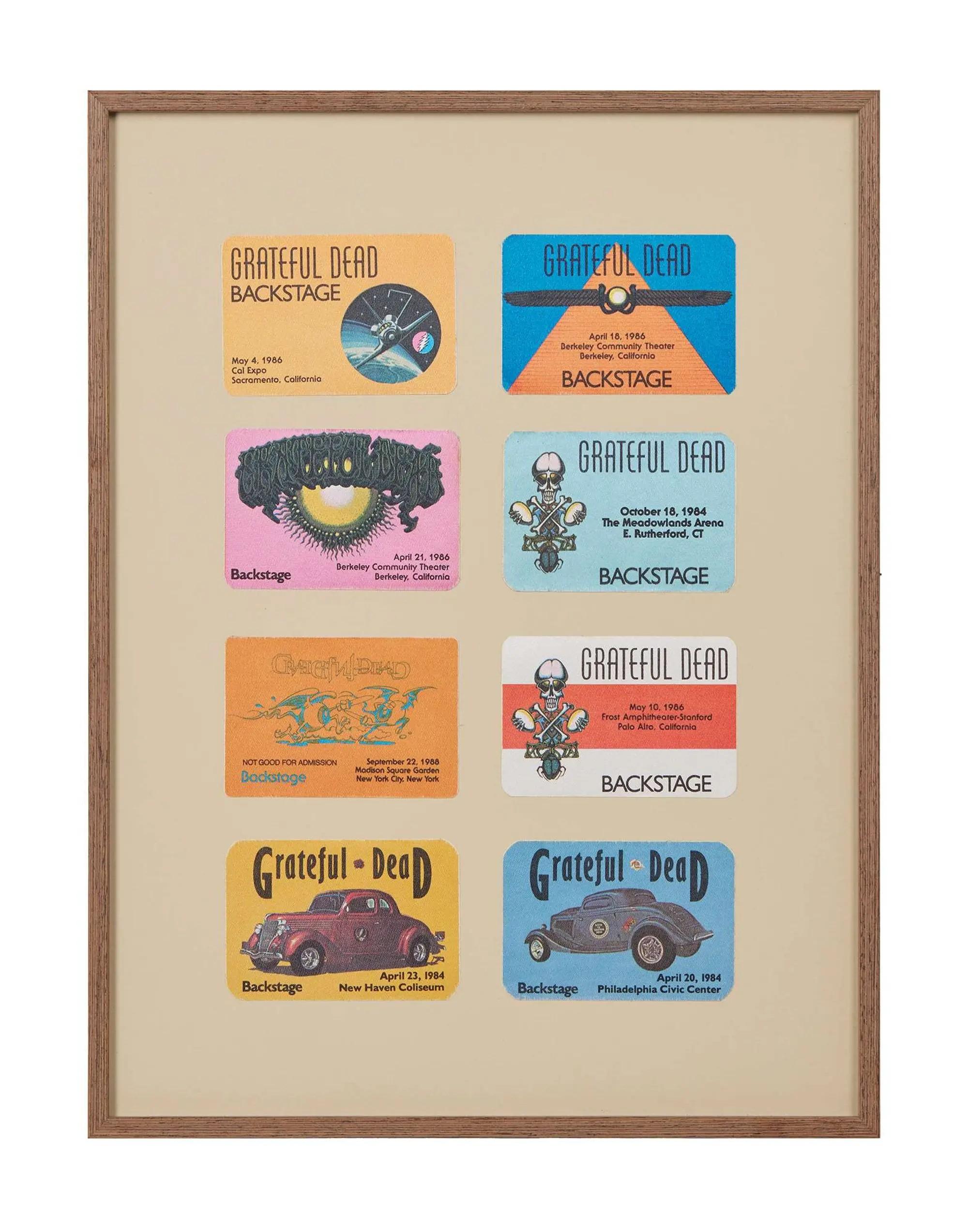
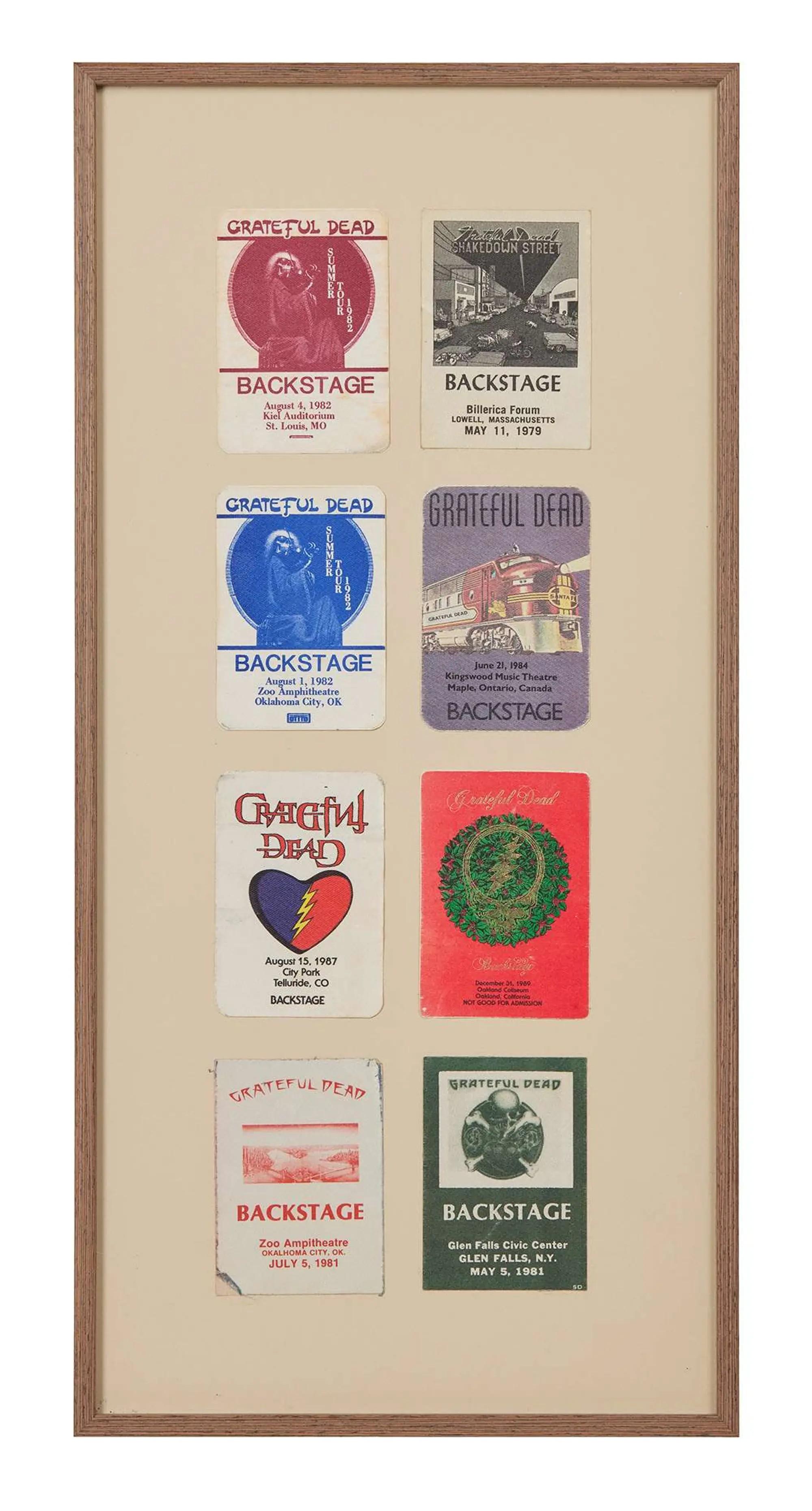
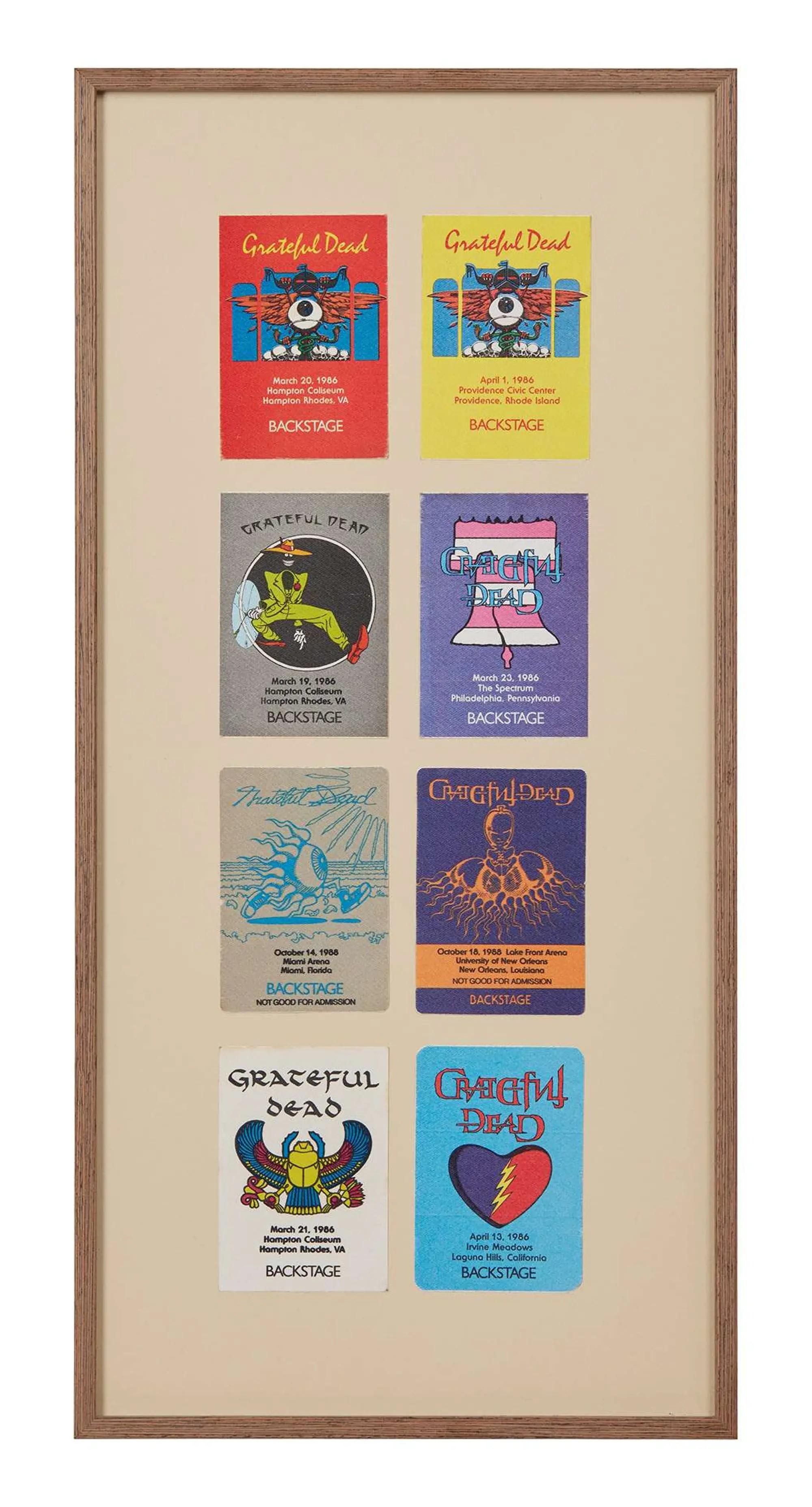
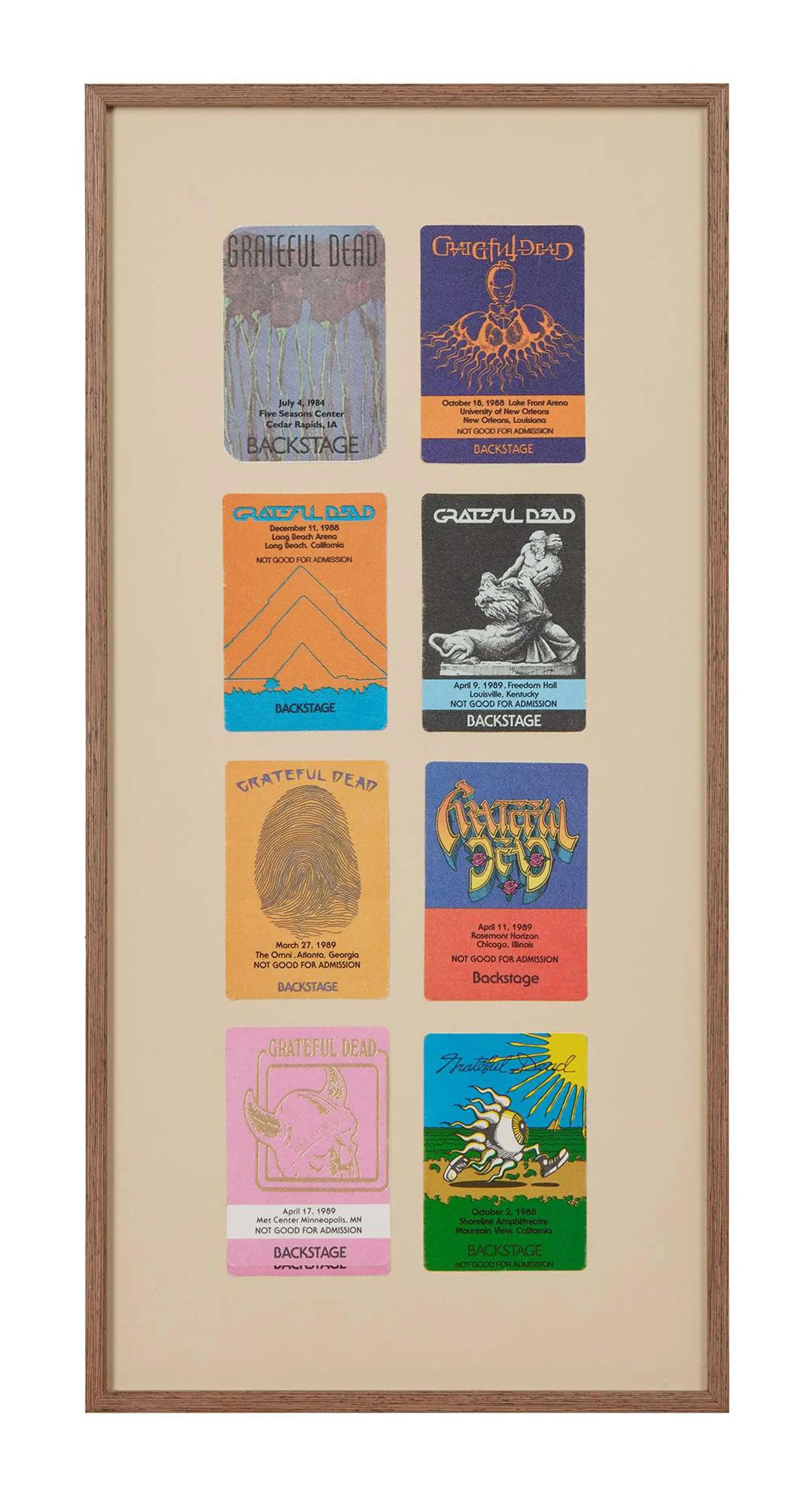
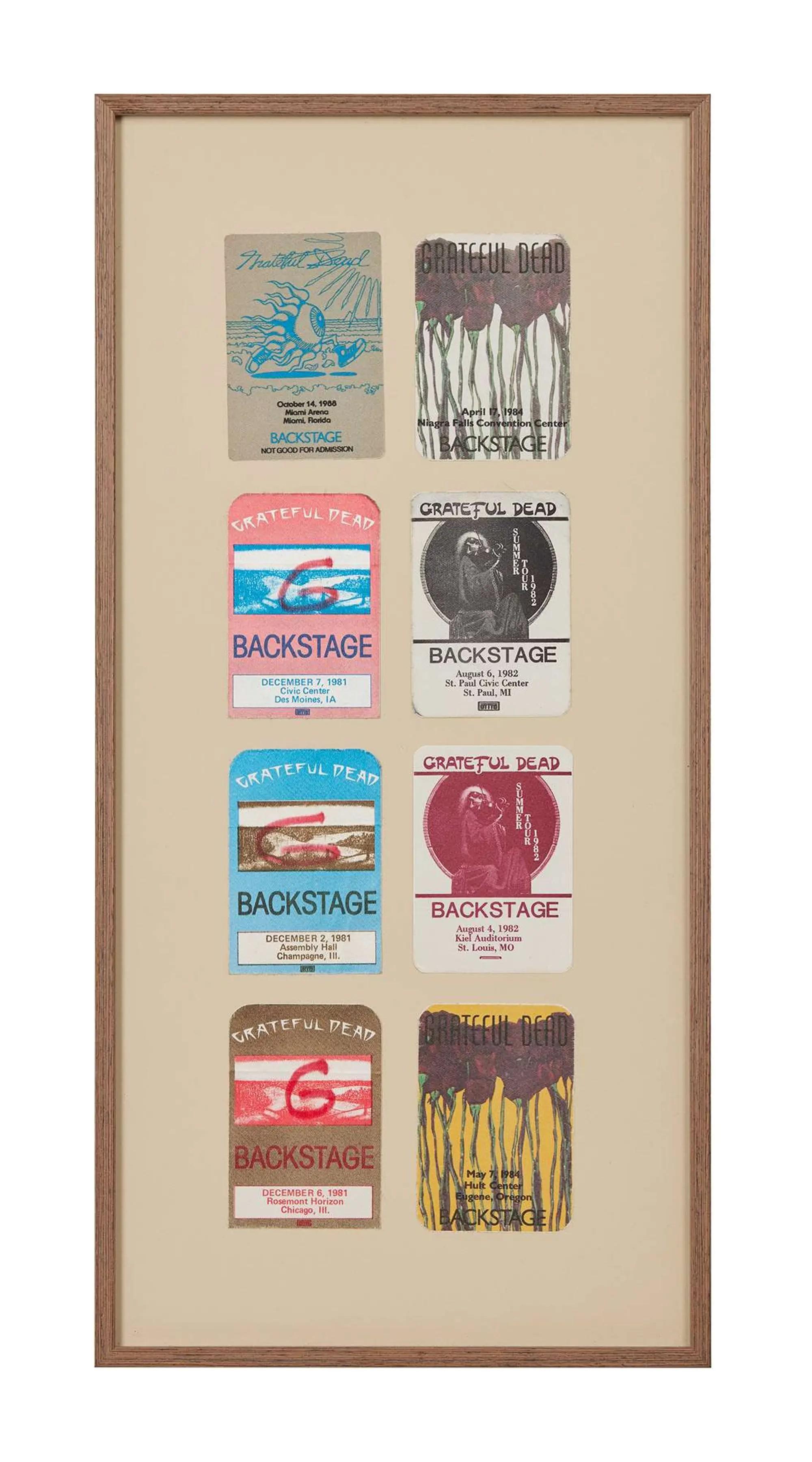
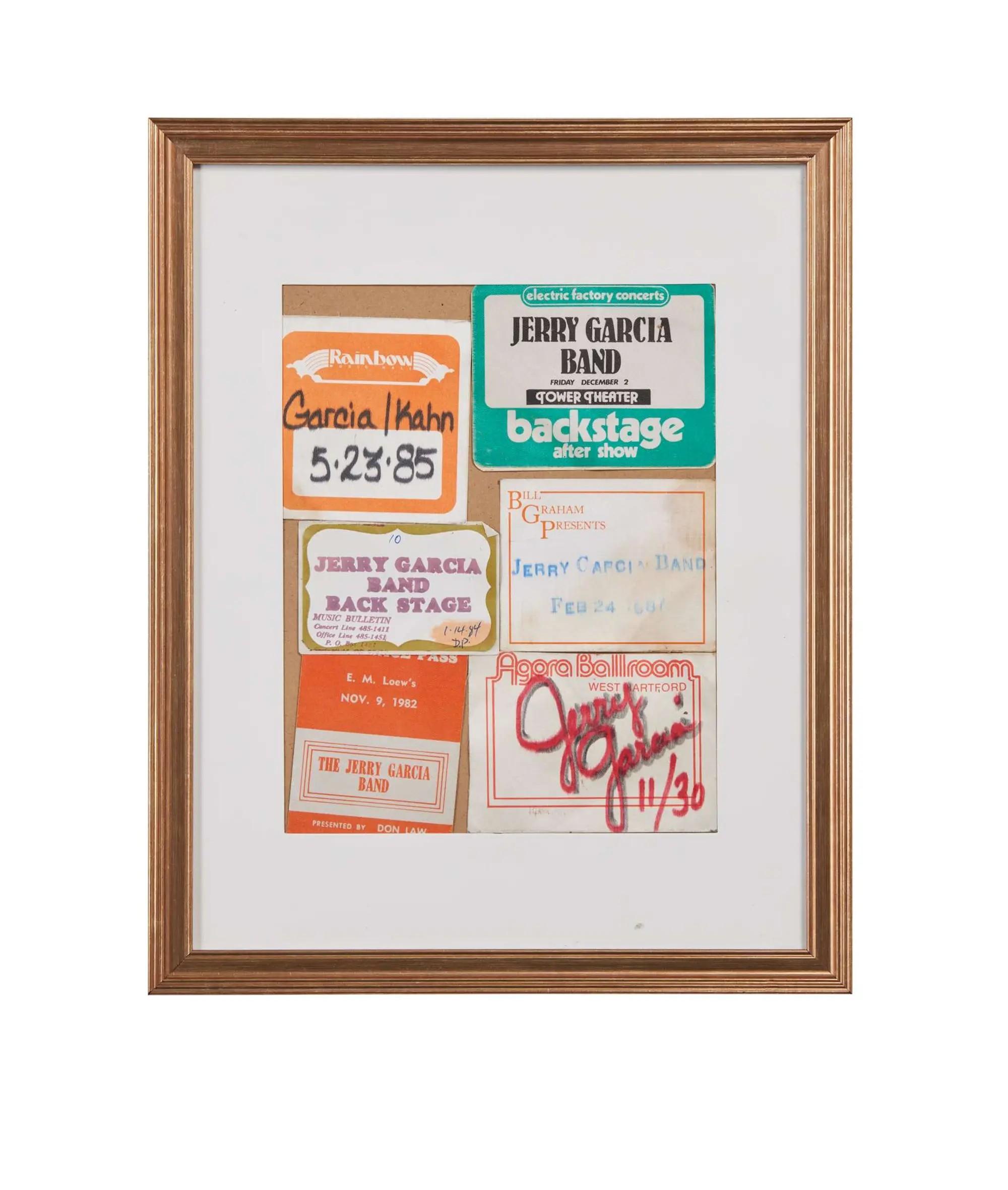
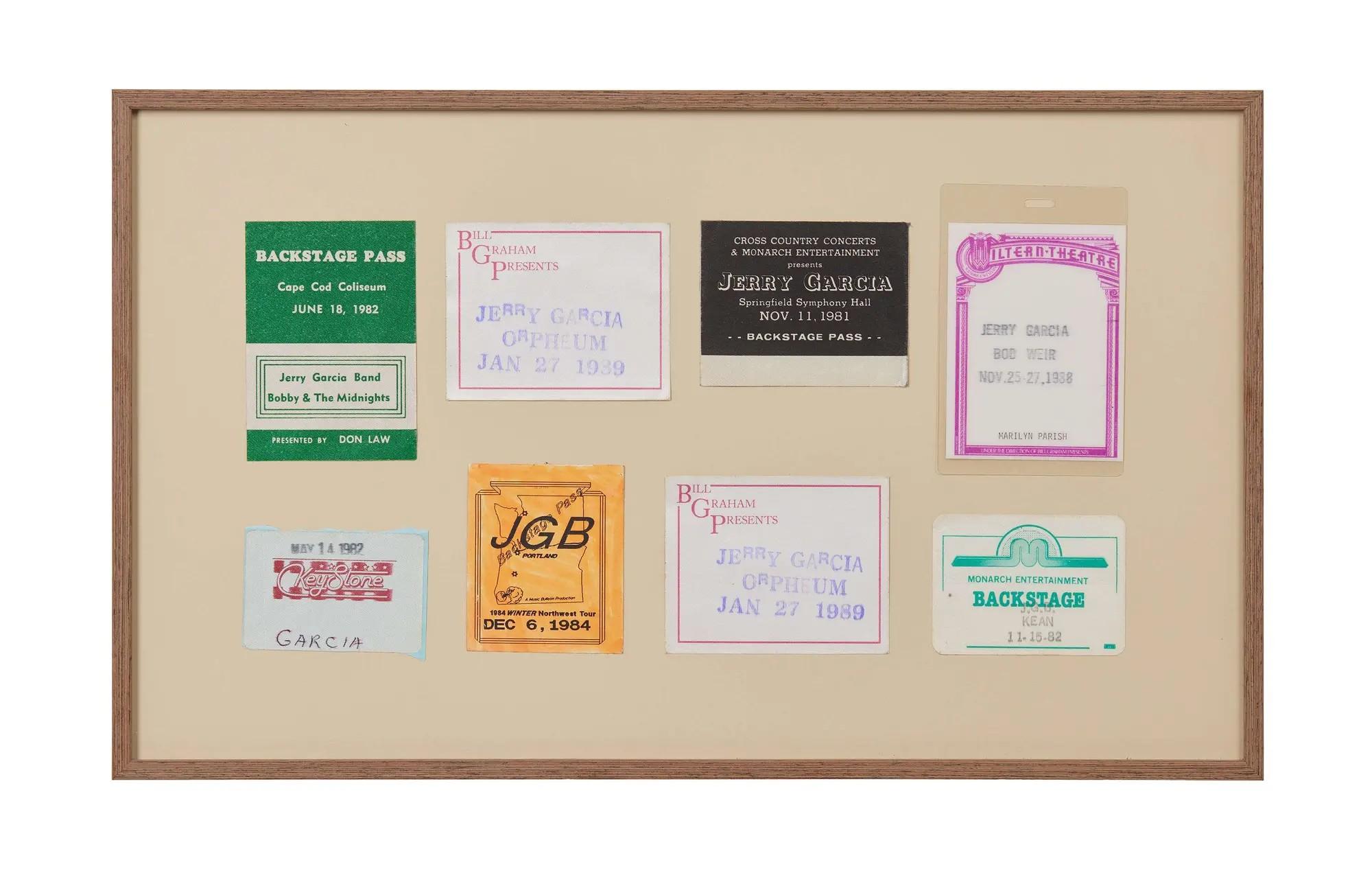
0 / 30
Desert Sky Pavilion: The Open-Air West
Parish's personal pass from the Blockbuster Desert Sky Pavilion shows of March 4–6 (Lot #249) represents a different kind of Dead venue experience: the open-air amphitheater. Located in the Phoenix, Arizona area, Desert Sky (also known at various points as Cricket Wireless Amphitheatre) was a purpose-built outdoor venue designed for exactly the kind of large-audience touring that the Dead were running in the late 1980s and early '90s.
The outdoor amphitheater circuit was a natural fit for the Dead by this point. Their audience had grown beyond what most indoor arenas could comfortably hold, and the parking lot culture — the famous "Shakedown Street" of vendors, traders, and travelers that surrounded every Dead show — thrived in the expansive settings that amphitheaters and stadiums provided. A Dead show at a venue like Desert Sky wasn't just the two sets inside the gates; it was an all-day gathering that transformed a parking lot into a temporary village.
Lot #249. Grateful Dead | Framed 1990s “Big Steve” Parish Backstage Passes
Seattle Memorial Stadium: The Pacific Northwest Returns
The Seattle Memorial Stadium passes from June 13–14, 1994 (Lot #249) tell an interesting geographic story. After playing regularly in the Pacific Northwest in the early 1980s, the Dead had largely bypassed Washington State through much of the decade — a single Tacoma Dome show in 1988 being the notable exception. By the time they returned to Seattle in June 1994, a great deal had changed, both for the band and for the city itself.
Seattle in the summer of 1994 was in the middle of its grunge moment, and the arrival of the Grateful Dead at an outdoor stadium represented a kind of generational counterpoint — the elder statesmen of improvisational rock touching down in a city that had become synonymous with a very different kind of music. The shows drew fans from across the region, many of whom had traveled significant distances for what was, for many of them, a rare chance to see the band in their own backyard. Accounts from those two nights describe an outdoor setting that, weather notwithstanding, provided a genuine festival atmosphere.
The Jerry Garcia Band: The Other Road
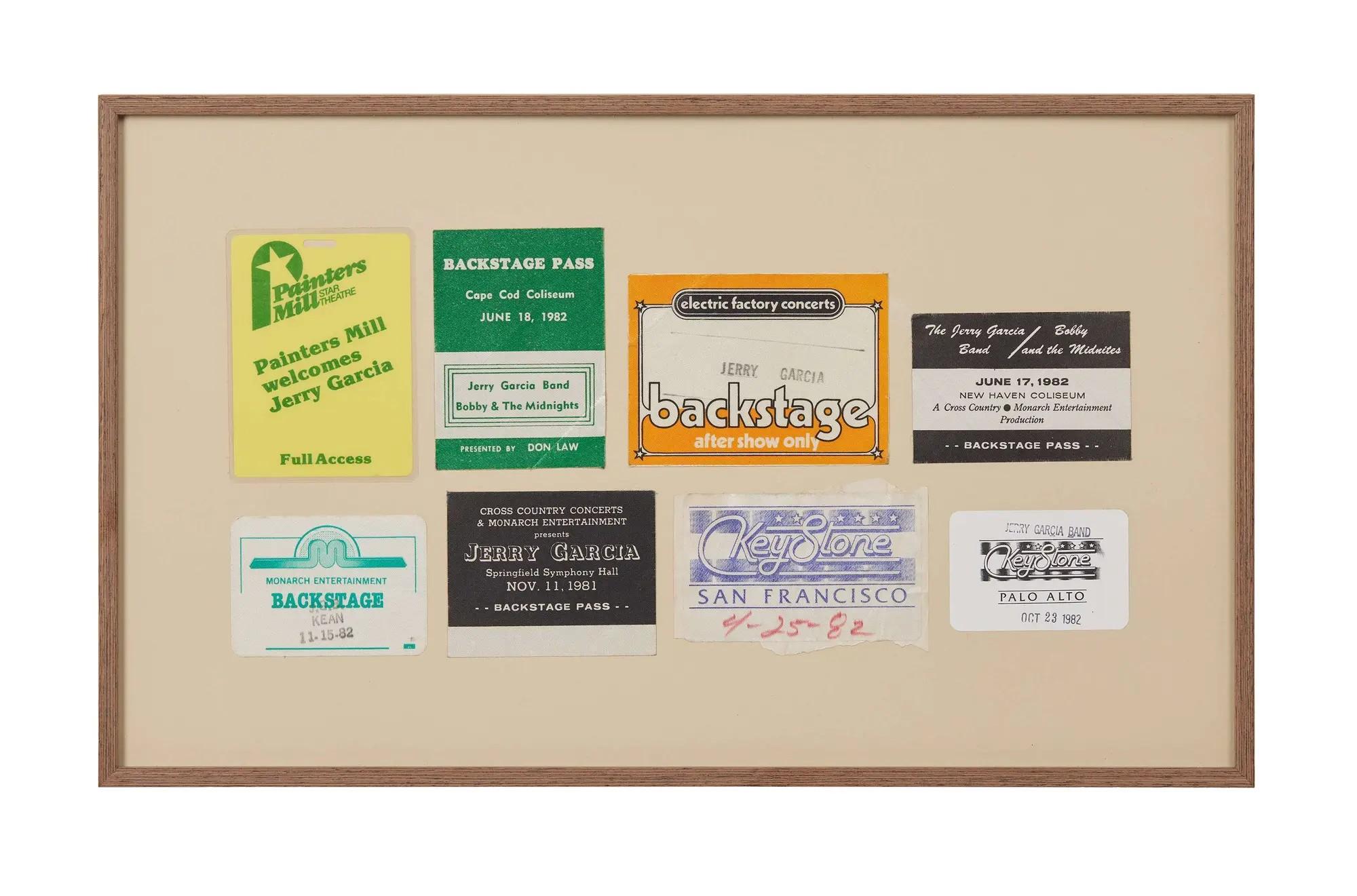
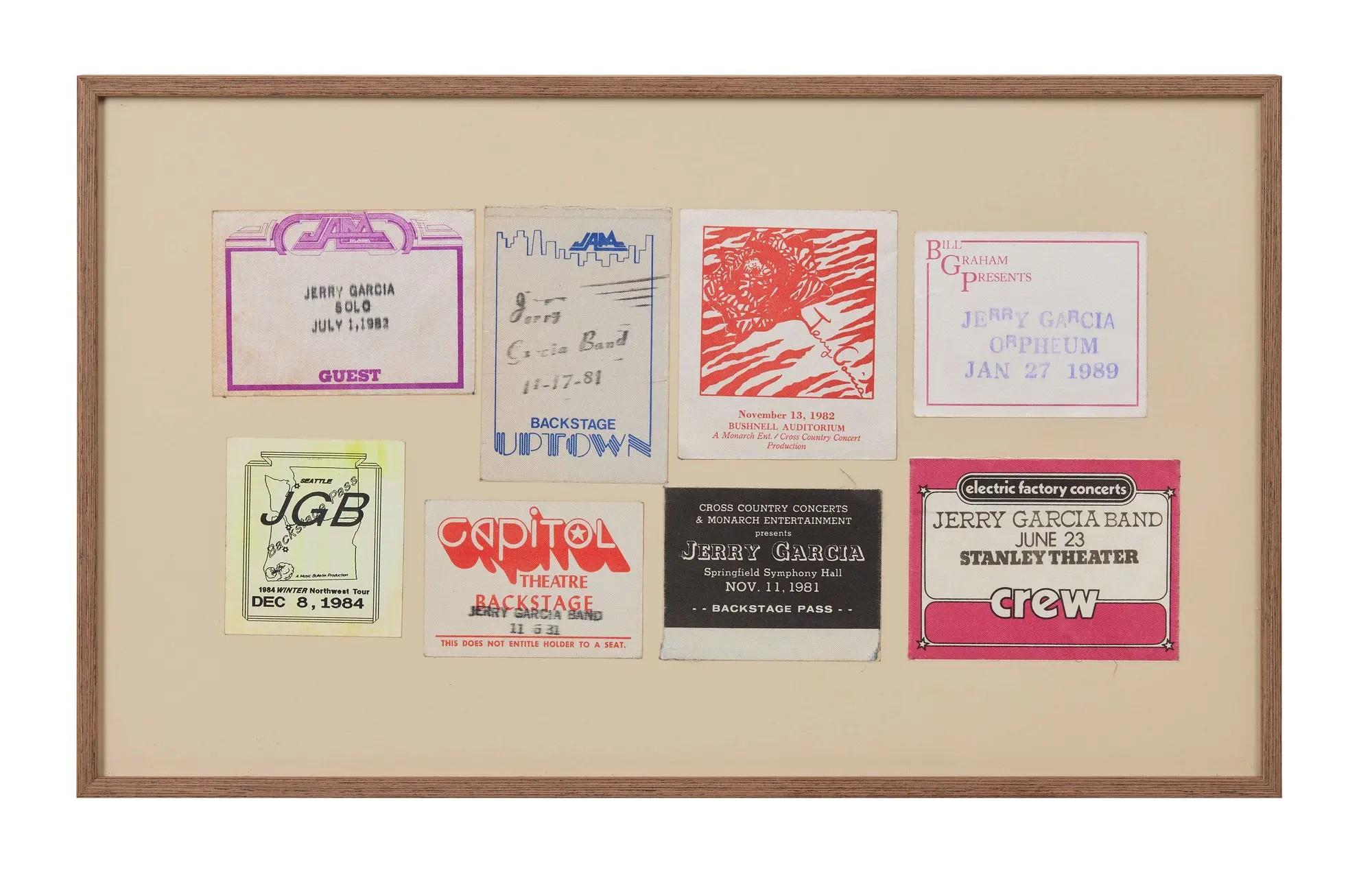
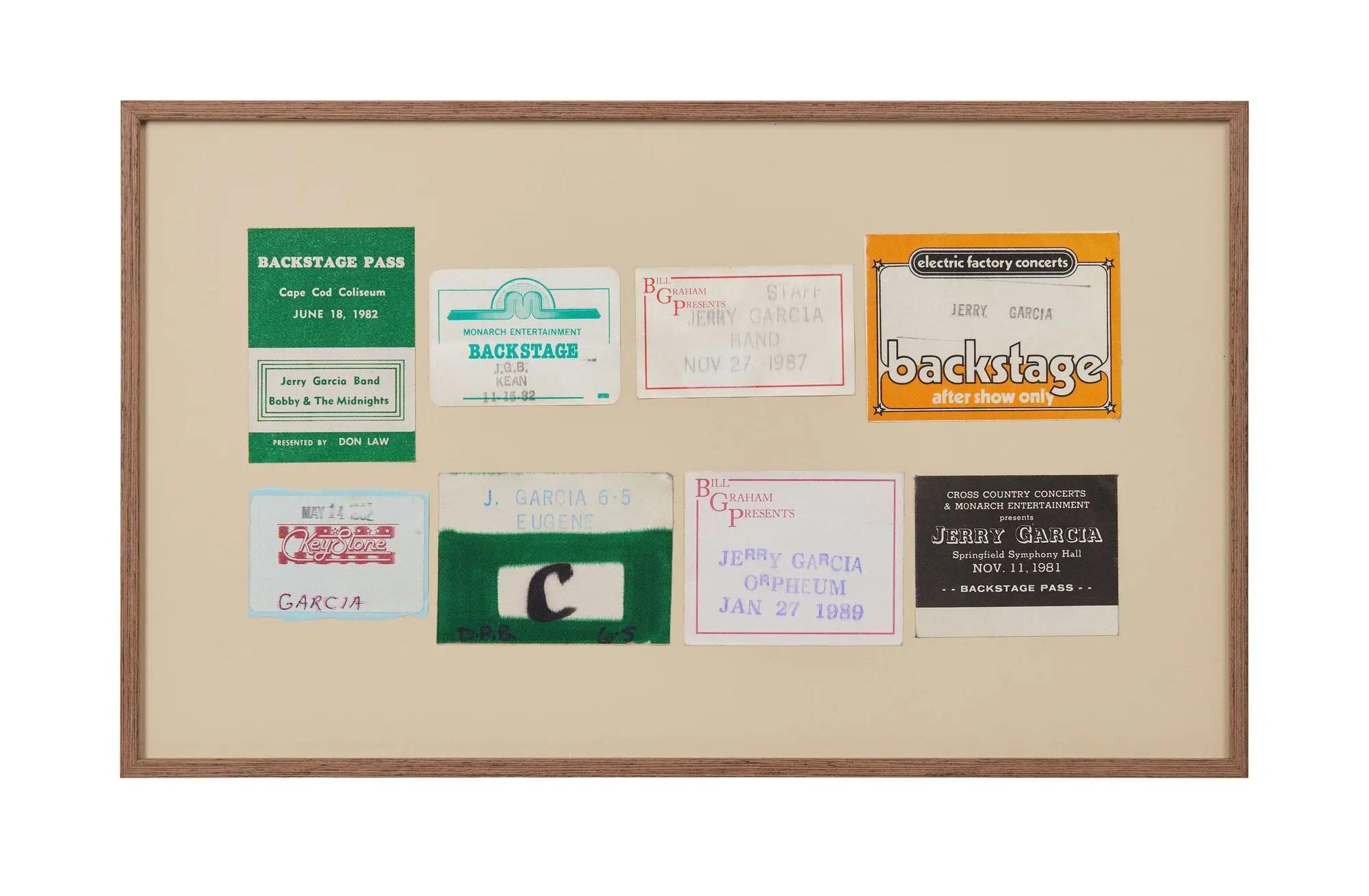
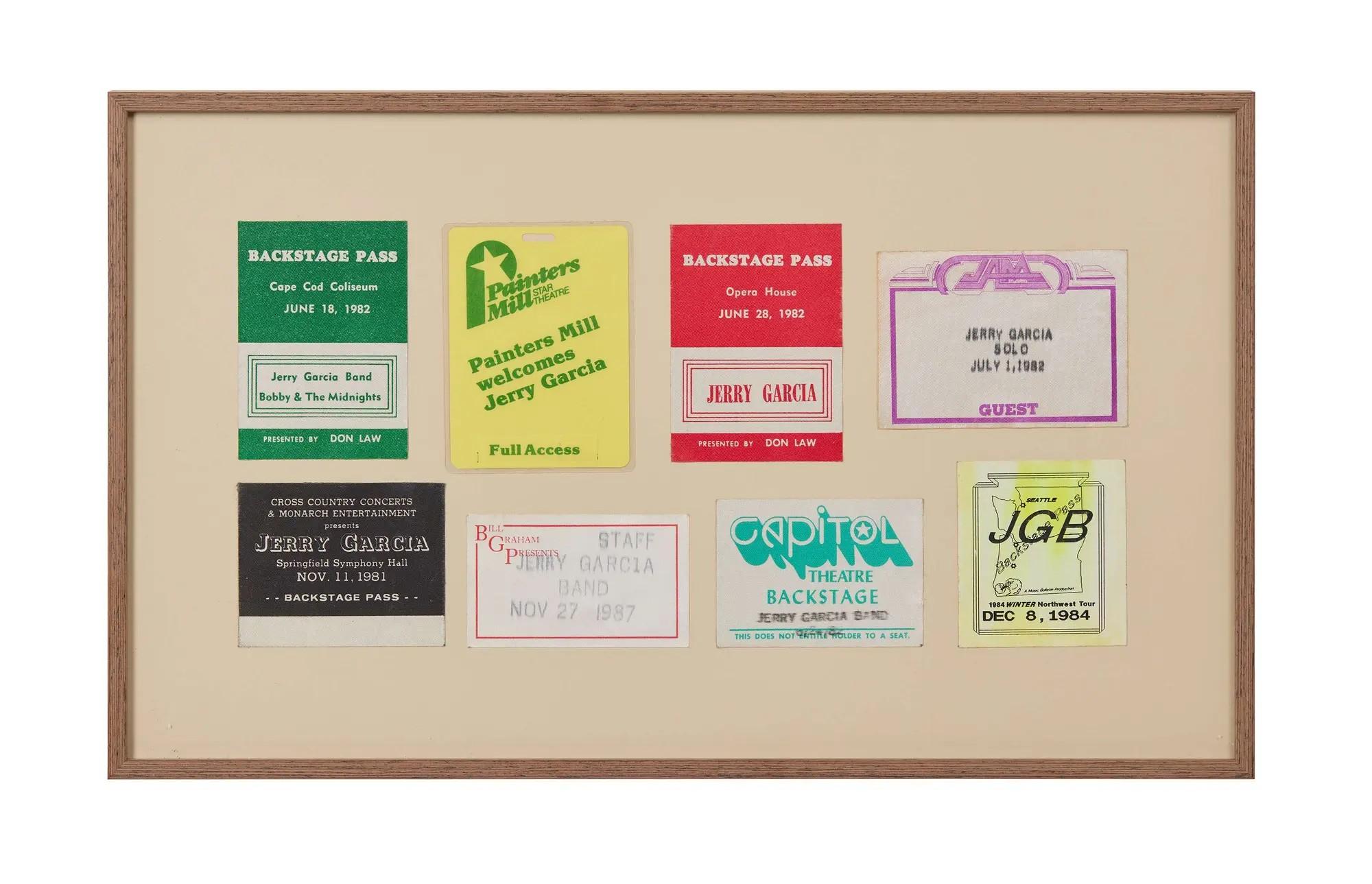
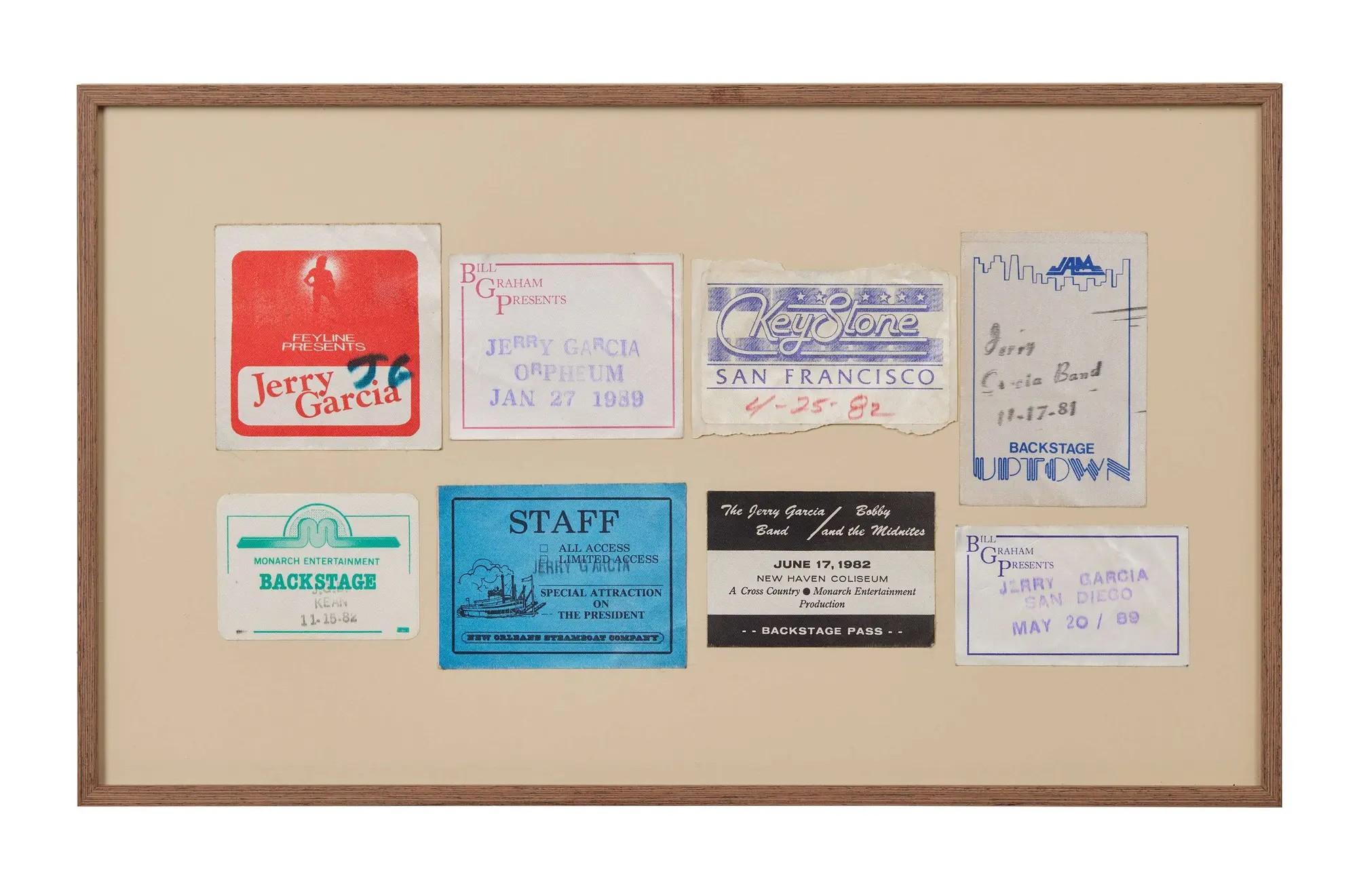
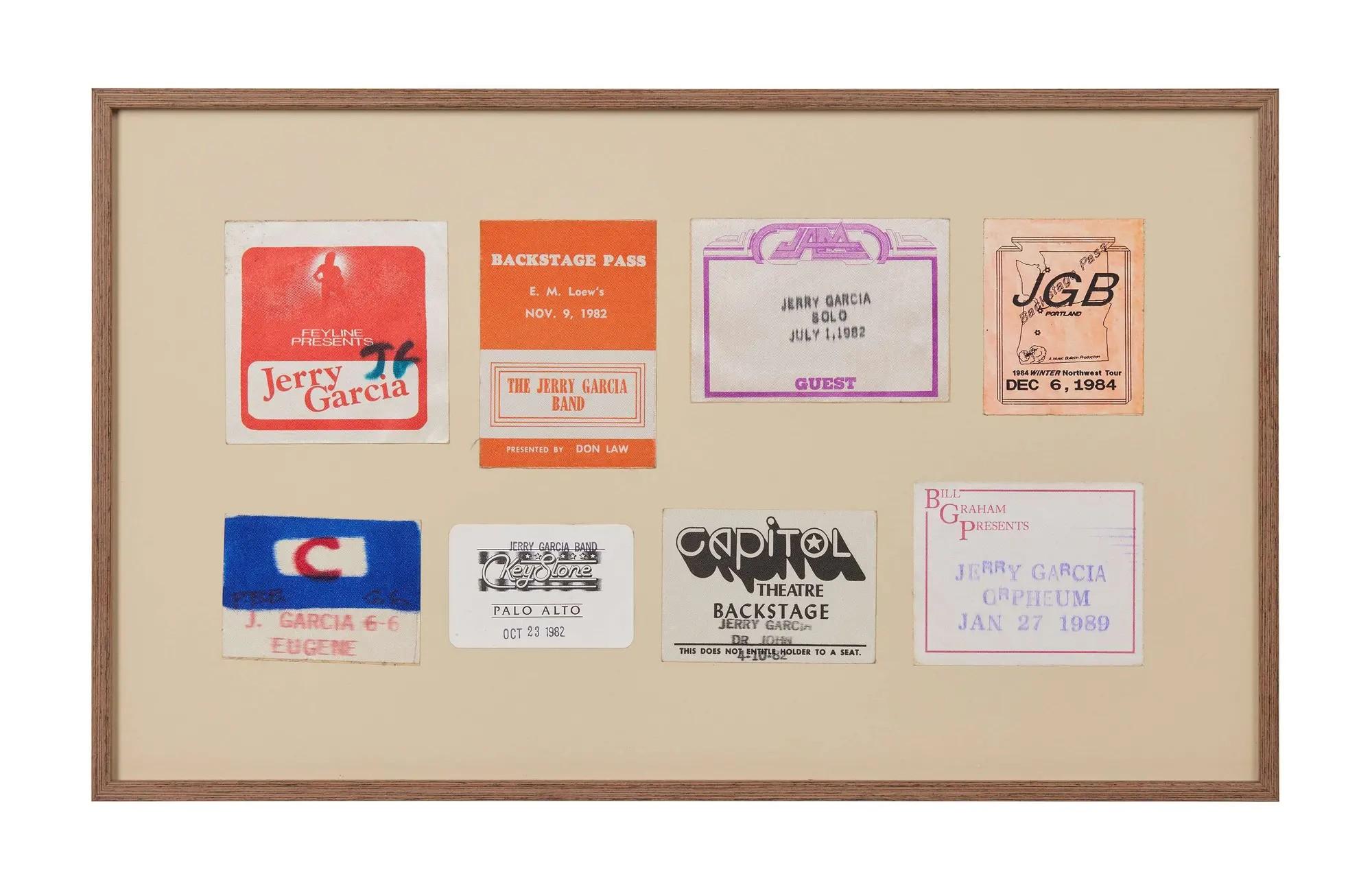
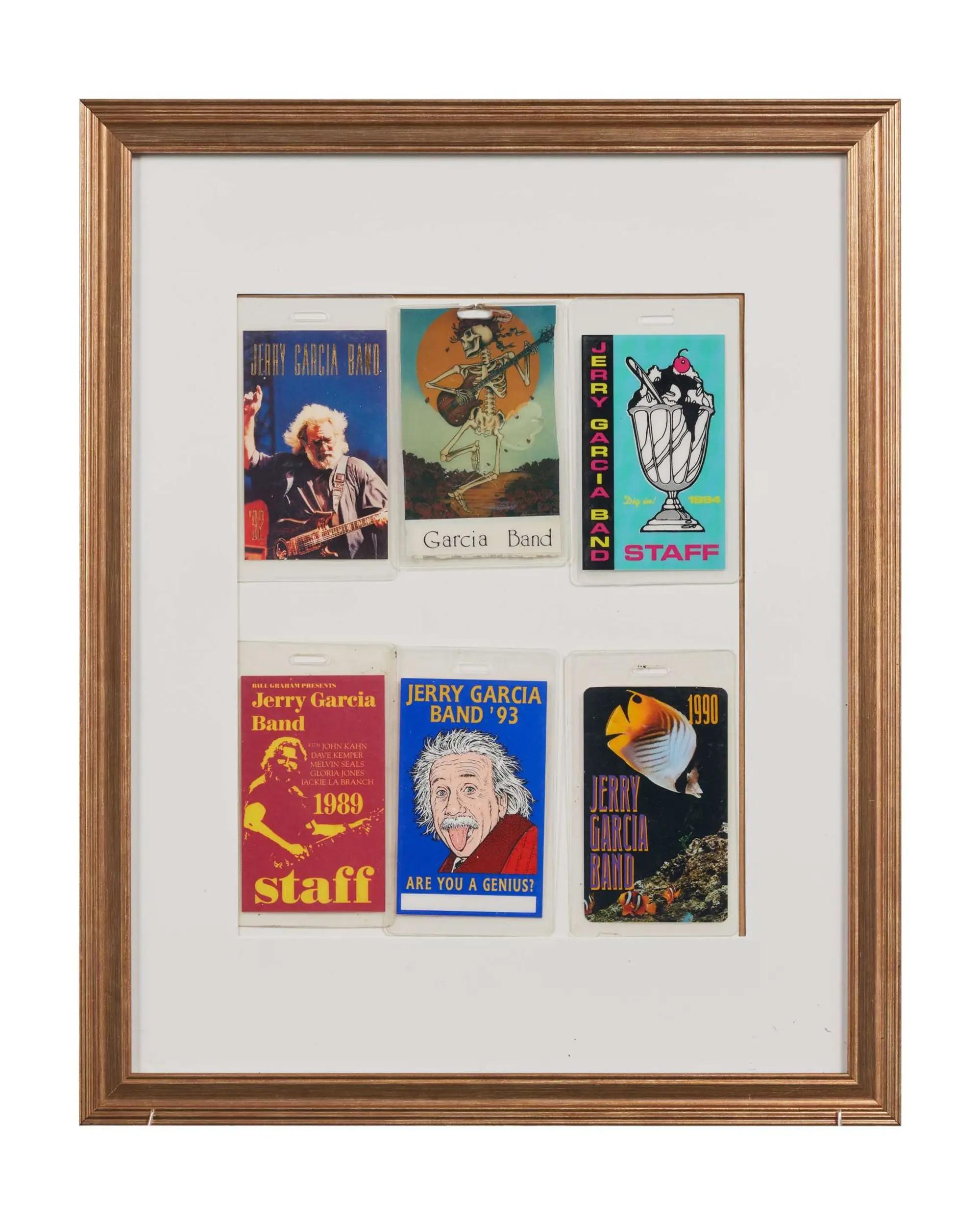
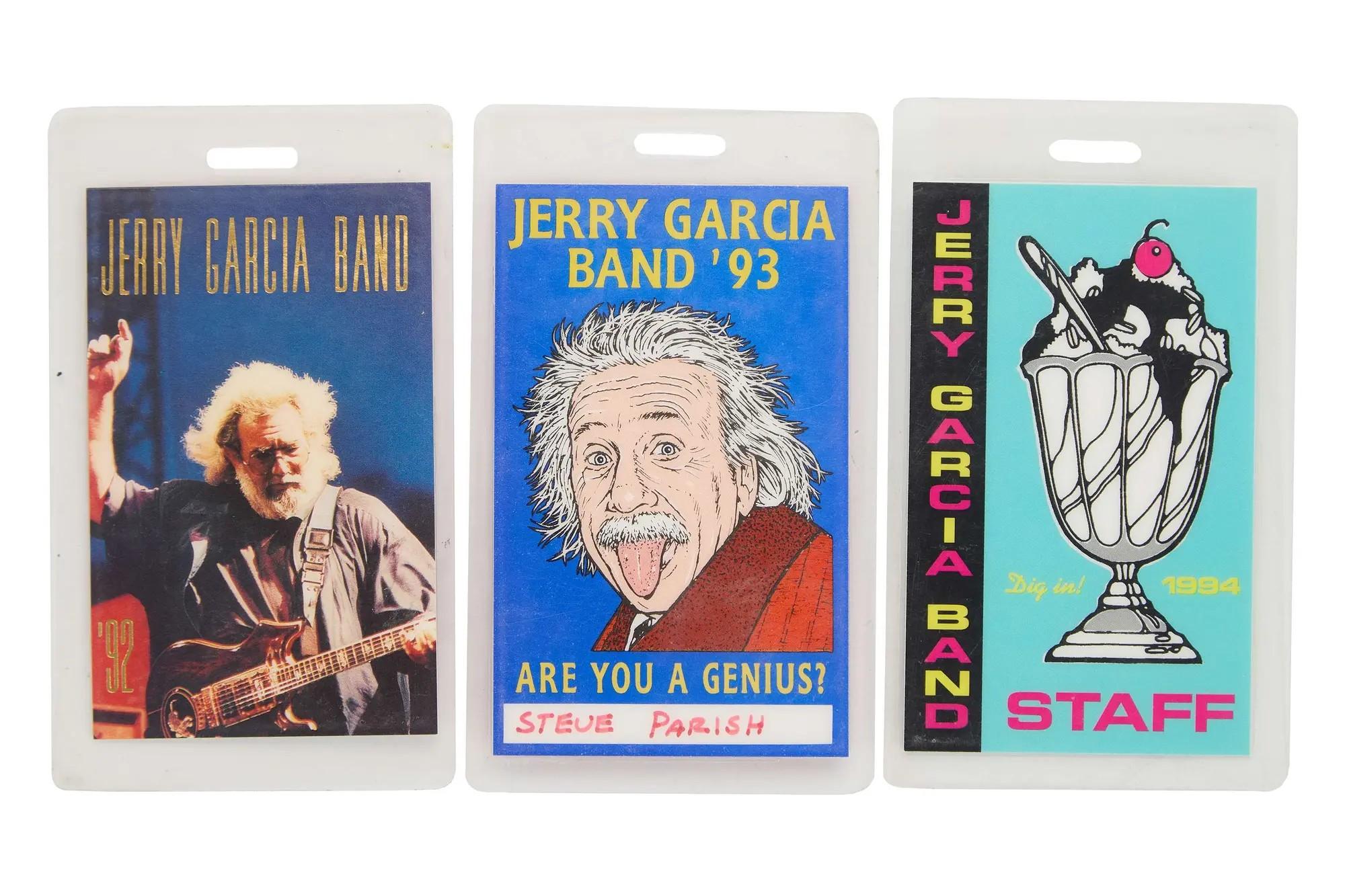
Woven throughout the Parish collection are passes from the parallel touring world of the Jerry Garcia Band — the smaller, jazzier, more intimate vehicle through which Garcia continued performing when the full Dead operation was at rest. The framed set of six laminated JGB passes from 1989–1994 (Lot #250), displaying images of Jerry, Albert Einstein, tropical fish, an ice cream sundae, and a skeleton playing electric guitar, captures the playful, eclectic visual spirit of those shows.
The JGB typically played theaters and smaller halls — a deliberately different scale from the Dead's stadium operation. For Garcia, these shows were something closer to a working musician's gig: looser, more conversational, with a repertoire that leaned heavily on R&B, soul, and the kind of extended instrumental exploration that Garcia seemed to find endlessly interesting.
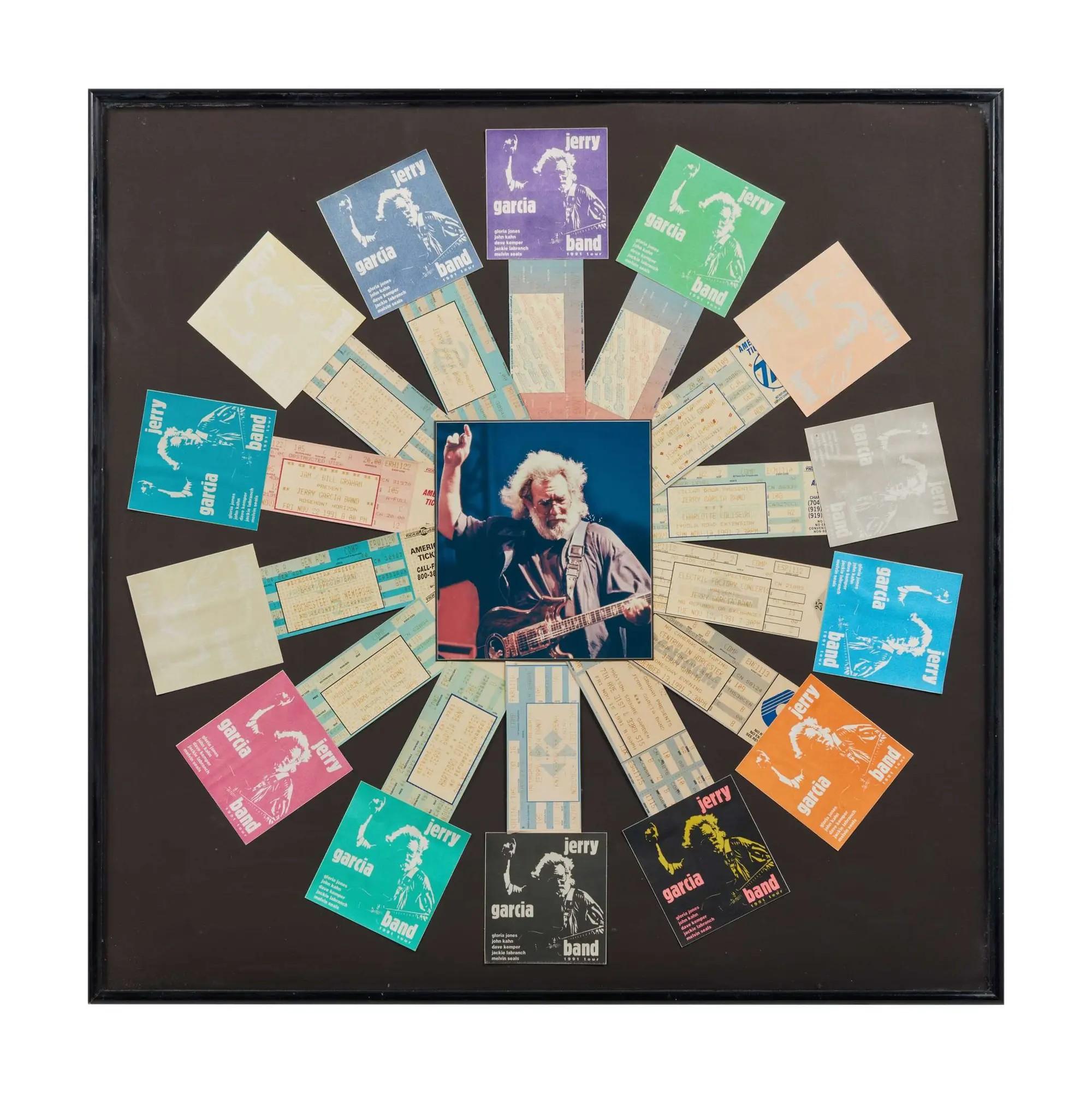
The 1991 Fall Tour display (Lot #257) — fourteen backstage passes and tickets from November 9 through November 24, arranged around a color photo of Jerry that also served as the pass design — is among the most visually cohesive pieces in the collection. It documents a tour that moved through multiple cities in the space of two weeks, a pace that was routine for Garcia even as the Dead's own touring operation had become an enormous logistical undertaking.
Parish's laminated JGB all-access passes from 1992, 1993, and 1994 (Lot #267) complete the picture: the 1992 Tour, the 1993 "Are You a Genius" November Tour, and the 1994 "Dig In" Tour. Each laminate was Parish's credential, his passport into a world that existed alongside the Grateful Dead's operation but had its own rhythms and its own itinerary.
The Final December: Los Angeles and San Diego, 1993
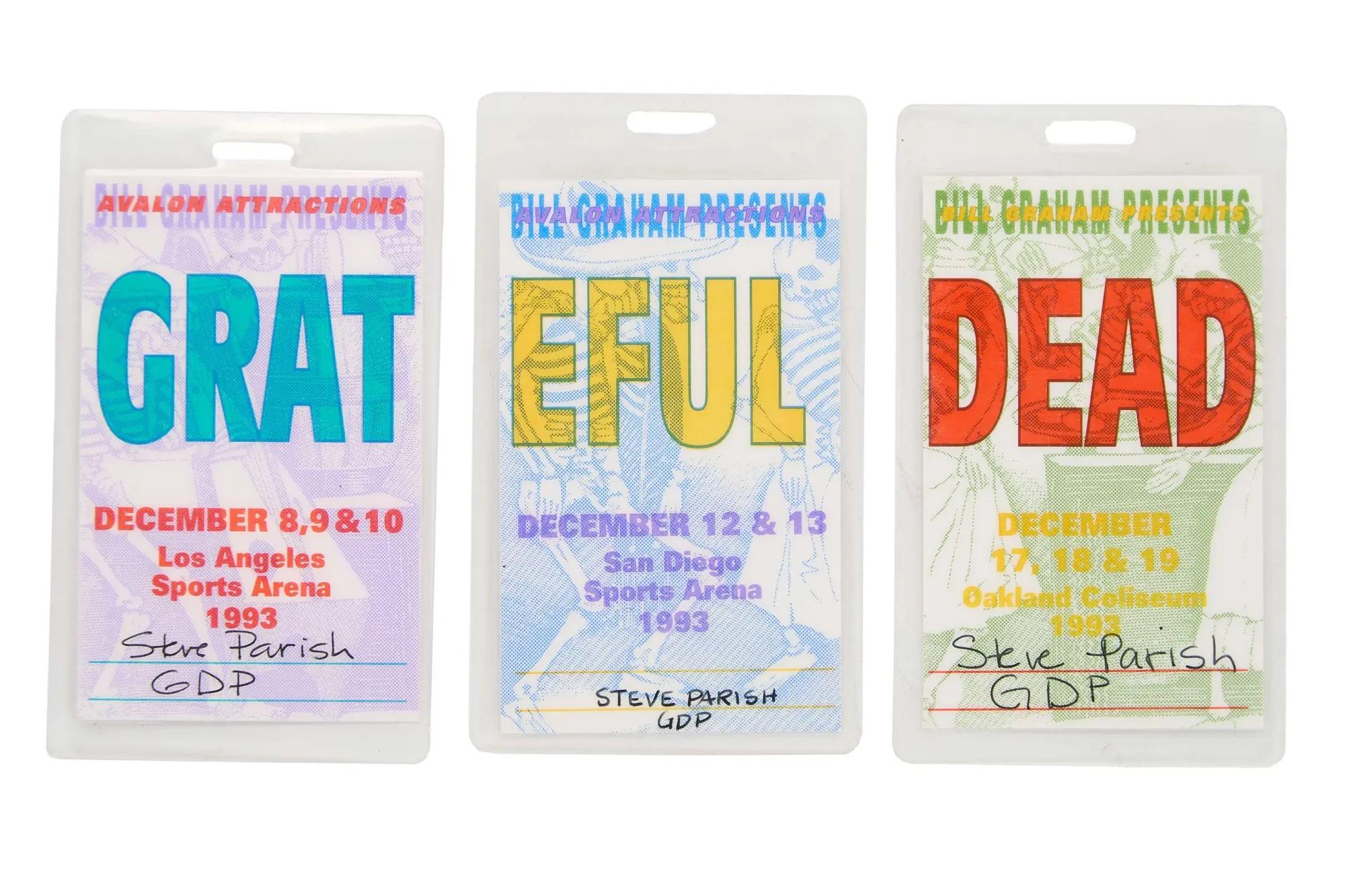
The December 1993 passes in Lot #281 — stamped "Steve Parish GDP" for Grateful Dead Productions — document what was, in retrospect, one of the last great touring cycles of the band's history. The Los Angeles Sports Arena shows on December 8, 9, and 10; the San Diego Sports Arena on December 12 and 13; and the Oakland run on December 17, 18, and 19 formed a West Coast finale to a year of relentless road work.
The Los Angeles Sports Arena and San Diego Sports Arena were in many ways the archetypal late-era Grateful Dead venues: large, functional facilities built for professional basketball and other arena events, pressed into service as temporary homes for one of America's most unusual touring ecosystems. They were not architecturally significant spaces, and they were not acoustically perfect. But they were big enough, and they were available, and by the early 1990s the Dead's sound and production crews — Parish's crew — had become expert at making any large room work for what the band needed.
That December 1993 run ended in Oakland, the Bay Area encore that closed nearly every major Dead touring year. It was the kind of homecoming that had defined the band's relationship with their region since the earliest days — the road leading back, always, to the Bay.
Lot #281. “Big Steve” Parish | 1993 Laminated All Access Passes
What the Passes Tell Us
The thirty lots of the Parish collection describe something that a simple tour chronology cannot: the lived texture of being inside the Grateful Dead's world as it moved through America across fifteen years. From the intimate theater-scale of Radio City Music Hall to the open expanse of Desert Sky Pavilion; from the Bay Area familiarity of the Oakland Auditorium to the Pacific Northwest's outdoor Memorial Stadium — each pass represents a specific room, a specific night, a specific iteration of a show that never happened the same way twice.
Parish himself framed many of these passes, arranging them in groupings that reflect how he actually experienced the shows — not as individual events but as extended campaigns, multi-night stands at the same venue, tours that had their own internal logic and momentum. That organizational sensibility is itself informative. To the head of road operations, a run of shows at the Oakland Coliseum wasn't three separate concerts; it was a single deployment, a base of operations from which the nightly performance would be launched and then struck and loaded out before the whole apparatus moved on to the next city.
The Grateful Dead performed more than 2,300 concerts in their thirty-year run. The venues in this collection account for a fraction of those rooms, but they trace the arc of the band's evolution as a touring entity — from the post-Winterland pivot to the Oakland Auditorium, through the polished theatrical experiment of Radio City, across the sprawling amphitheaters and arenas of the 1990s, and into the intimate parallel world of the Jerry Garcia Band's smaller stages. Every pass in this collection opened a door. Behind each door was the music.