Fashion
Music
Film & TV
Art
Fashion
Music
Film & TV
Art
13007 S. Western Avenue, Gardena, California 90249
Phone 310-836-1818 | Fax 310-742-0155
February 6, 2026
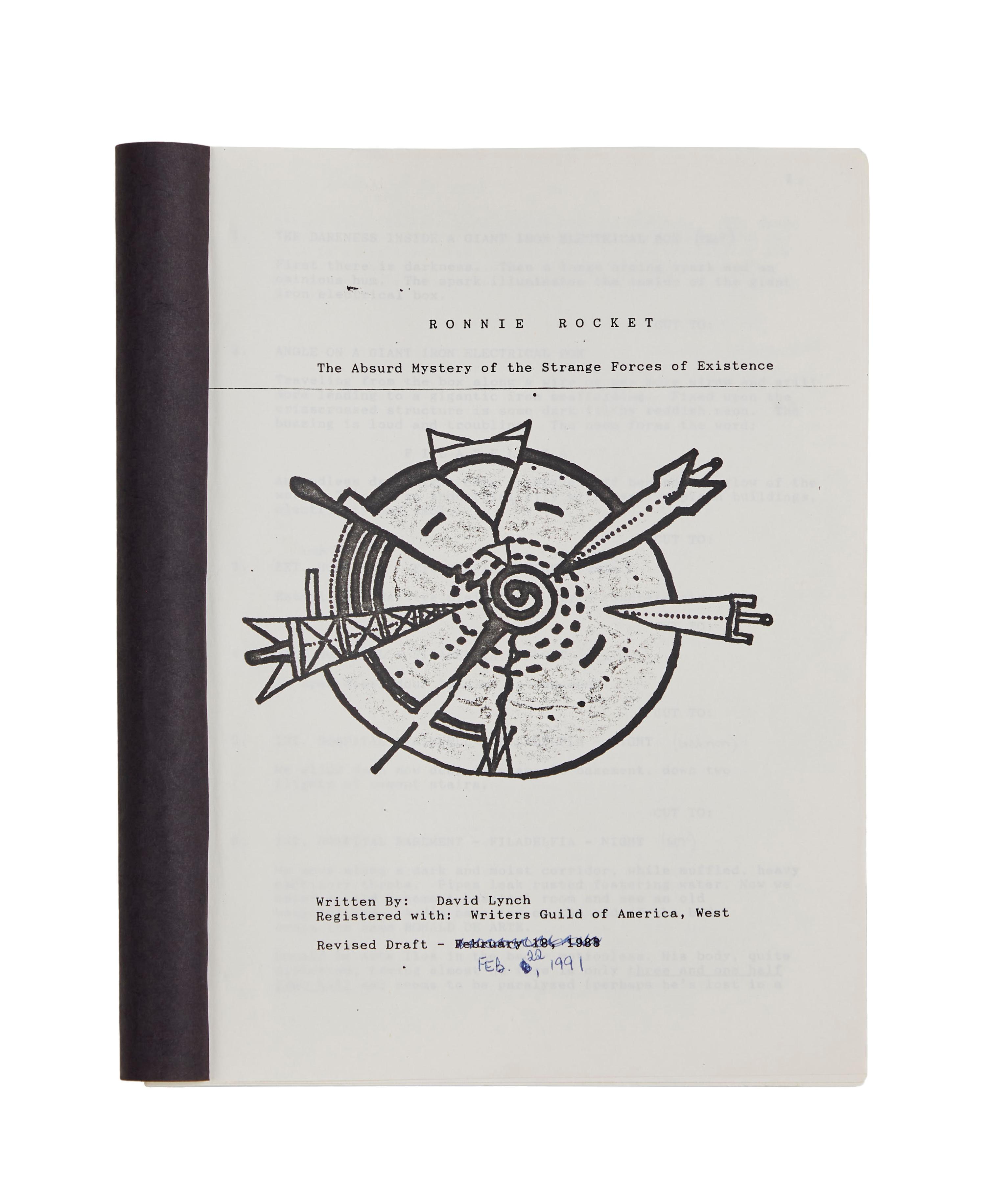
A group of 11 scripts from David Lynch's unfinished film project, Ronnie Rocket: The Absurd Mystery of the Strange Forces of Existence, one annotated.
Two of the scripts are undated, while the remainder are dated 1988, 1991, and 2012. The annotated script is fastened inside a black paper cover and dated Feb. 22, 1991 in blue ink.
Dimensions: 14 x 9 x 8 inches (overall)
Category: Scripts
Provenance: From The Estate of David Lynch
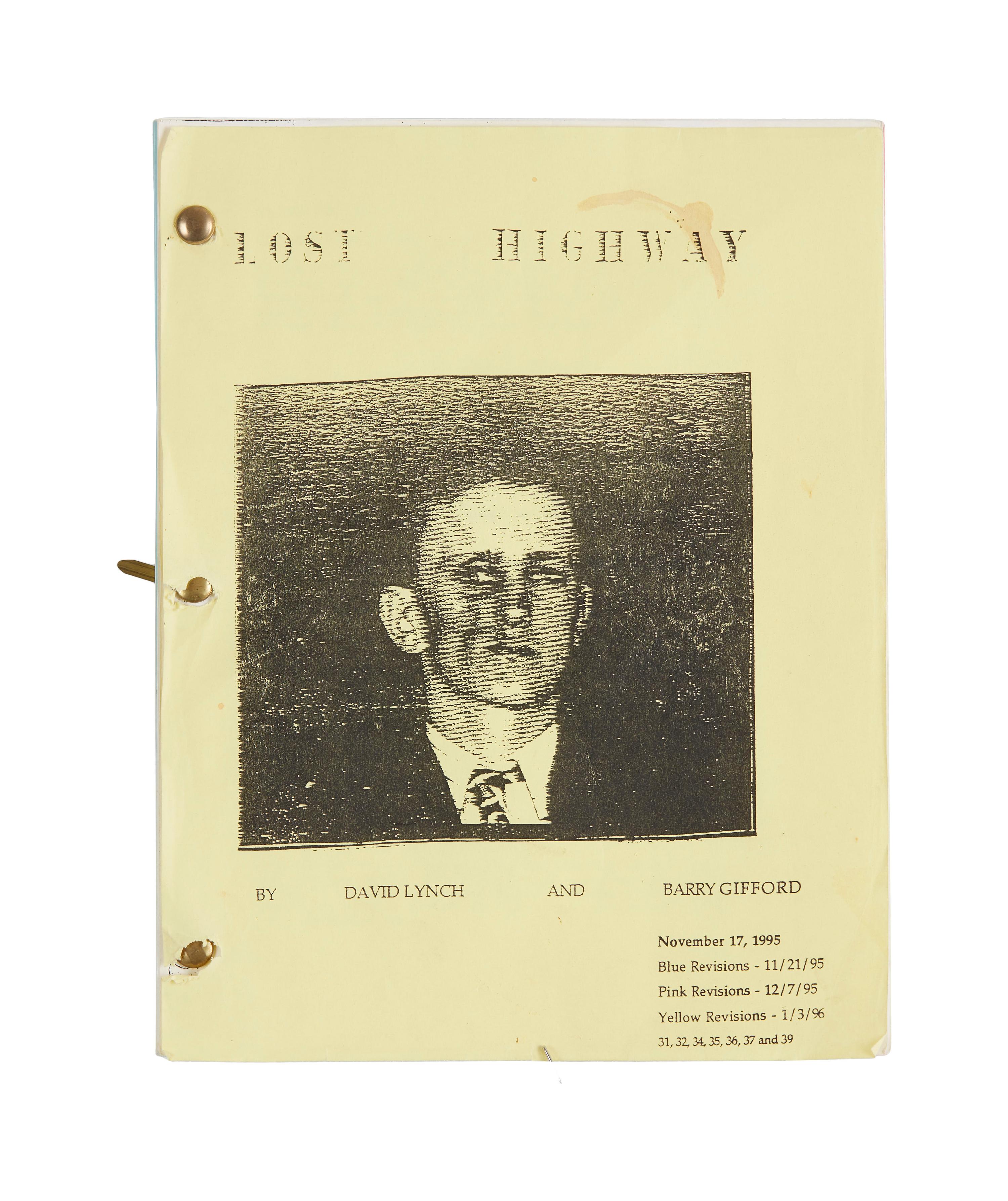
A script from the production of David Lynch's neo-noir, Lost Highway (Asymmetrical Productions, 1997).
The 115-page script is dated November 17, 1995 and includes blue, pink, and yellow revisions (dated 11/21/95, 12/7/95, and 1/3/96). There is a coffee stain on the title page and the following page features a typed statement from Lynch that reads: A 21st Century Noir Horror Film. / A graphic investigation into parallel identity crises. / A world where time is dangerously out of control. / A terrifying ride down the lost highway. / David Lynch / June 1995."
Dimensions: 11 x 8 x 0.75 inches
Category: Scripts, Lost Highway
Provenance: From The Estate of David Lynch
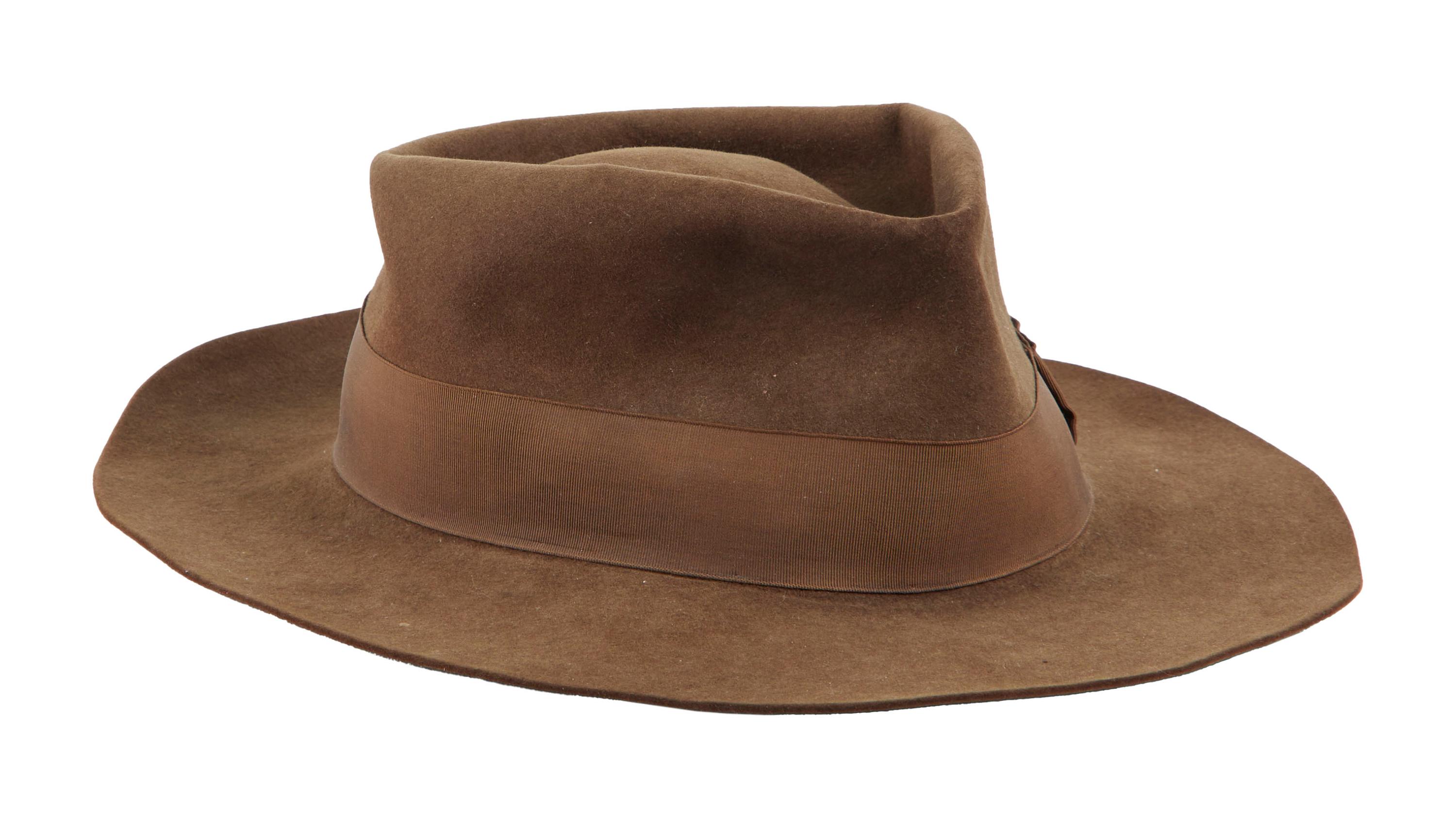
An original fedora as worn by Harrison Ford as "Indiana Jones" in the third installment of the action adventure series, Indiana Jones and the Last Crusade (Lucasfilm Ltd., 1989).
The fedora is composed of a brown felt material with a rigid brim. The interior of the fedora features a Herbert Johnson crest in blue, with the gold-tone text "By Appointment To Her Majesty The Queen Hatters" / "100% Fine Fur Felt." The lining of the hat is loose with age and shows signs of moisture damage.
Accompanied by a Letter of Provenance hand-signed by Stunt Double Jim Dowdall, which reads "This hat was specifically worn by Harrison in the water based scenes on board the boat at the start of the film. During filming it was knocked / washed off his head into the water, from where I retrieved it and retained it."
This fedora has been previously offered at auction on September 29, 2015, where it was believed that the hat's shape originates from the scene of the film when a wave rushes over Indy's head, and the hat flattens. It was at that point that it was retained by a stunt double and was left to dry in that flattened state.
Dimensions: 14 x 12.5 x 4.5 inches
Category: Props, Wardrobe
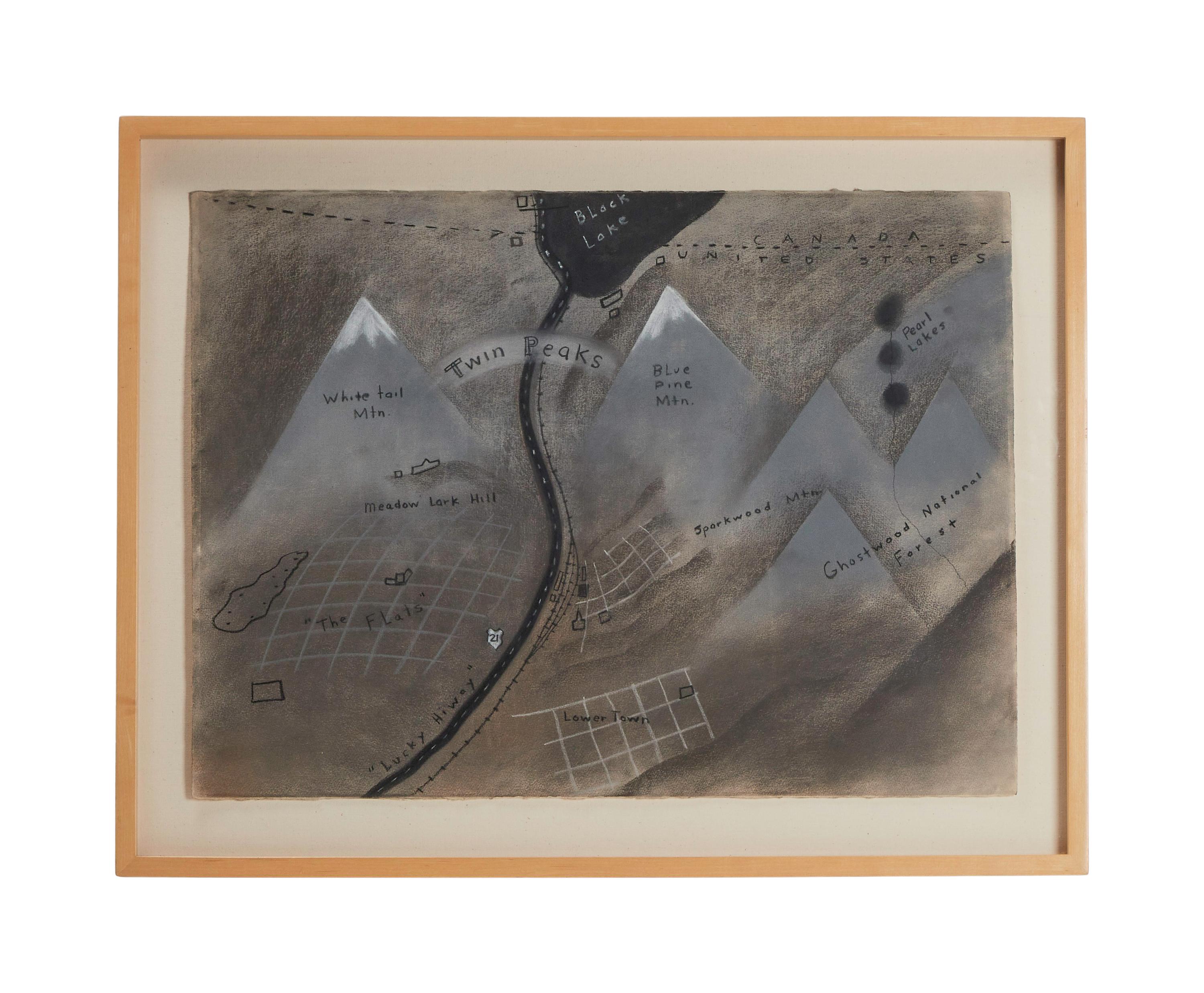
The original concept map for the town of Twin Peaks, hand-drawn and signed by series co-creator and legendary filmmaker, David Lynch. This map was used by Lynch and series co-creator, Mark Frost, to pitch their idea for the mysterious and revolutionary television show that would eventually become to be known as Twin Peaks (ABC, 1990 - 1991).
Featuring Lynch's signature artistic style, this moody original artwork illustrates the fictional surrounding area in the Pacific Northwestern part of North America where the show takes place. Lynch's unmistakable handwriting identifies the eponymous twin peaks - White Tail Mountain and Blue Pine Mountain - that the town is nestled between, as well as Meadow Lark Hill, Sparkwood Mountain, Lower Town, and "The Flats." Also identified are other significant locations to the series such as Highway 21 (labeled here as "Lucky Hiway") - which also served as the main street of the town, Ghostwood National Forest - where the entrance to the sinister and otherworldly Black Lodge resides, Pearl Lakes - where the young evil spirit of Bob first encountered a young Leland Palmer, and Black Lake - where Laura Palmer's body was found wrapped in plastic shortly after she was murdered on February 24, 1989, setting off the entire series.
The map is realized in graphite, charcoal, and watercolor on thick, textured paper with frayed edges. The piece is presented elevated against a white canvas matte and housed in a wooden frame. The verso of the frame contains an adhered label featuring Lynch's signature, handwritten date "1989 / 1990," and red fingerprint stamp.
In Nigel Holmes' 1991 book Pictorial Maps: History, Design, Ideas, Sources, he writes about this map, saying, "By creating a sense of place, Lynch made the town all the more believable. A straightforward map would have been dull by comparison and might have suggested that there was something intrinsically interesting about the geography of the place. What was much more important to convey was the mood of the story, and it's nicely captured in Lynch's quirky drawing. Not many maps... attempt to convey both a mood and data, but it can be done, and Lynch's map shows that information can be imbued with emotion and retain its factual authority."
A holy grail item that is both an incredible piece of original artwork and a behind-the-scenes look at creating one of the most groundbreaking shows in the history of television, this piece is one that will thrill and delight all Twin Peaks aficionados and any serious David Lynch collector.
Dimensions: Framed: 27.75 x 35.35 x 2 inches; Sight: 21.5 x 29.5 inches
Category: Artwork, David Lynch, Production, Twin Peaks
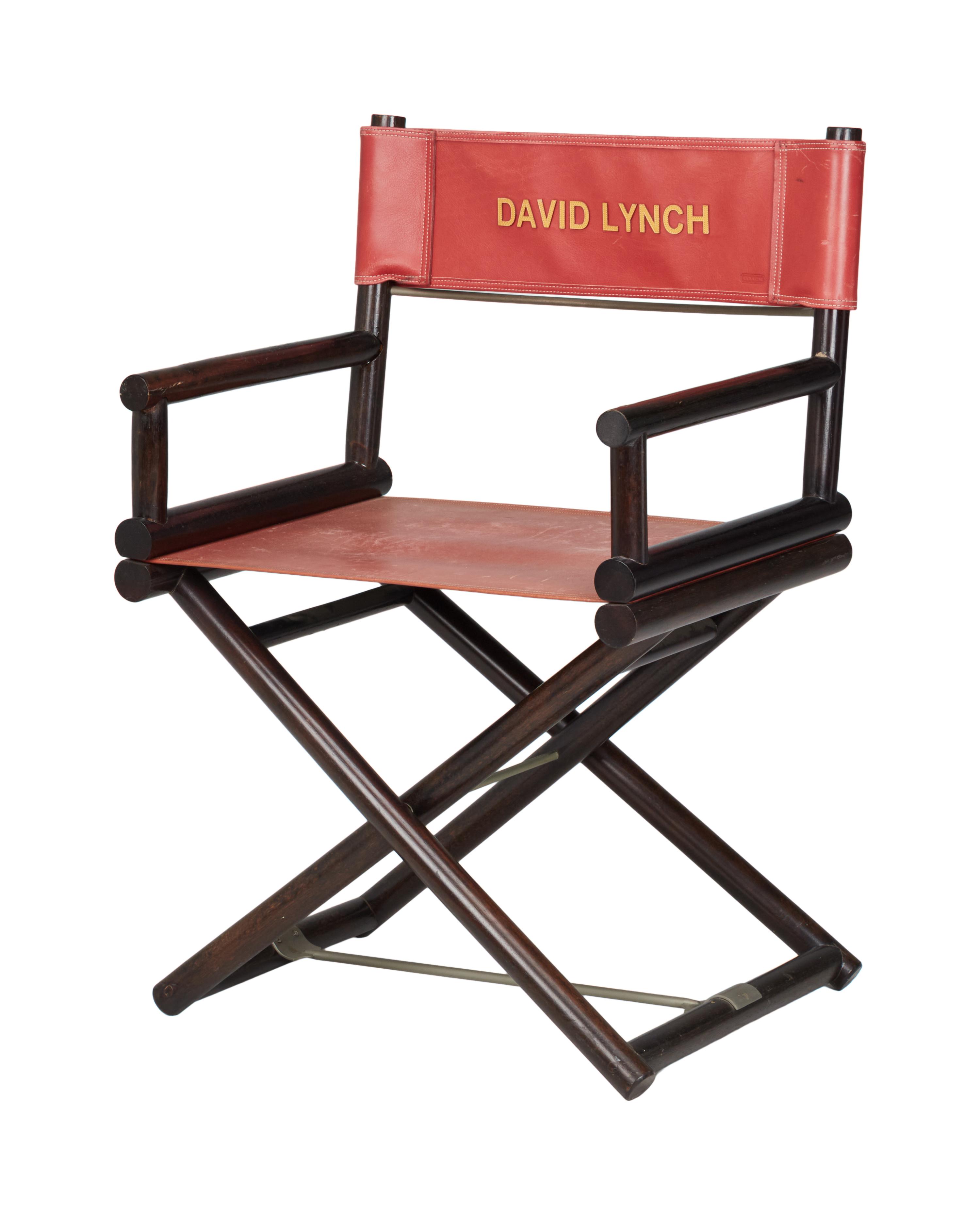
A director's chair personalized for filmmaker David Lynch. Comprised of a varnished wooden frame with red leather seat and chairback. The chairback is emblazoned with the name of the filmmaker in raised yellow lettering on the verso. Curved metal rod present underneath the chairback.
Dimensions: 34.5 x 23.25 x 20.5 inches
Category: Furniture
Provenance: From The Estate of David Lynch