Film & TV
Spider-Man: The Web Never Breaks
From Amazing Fantasy #15 to 'Brand New Day,' Spider-Man has emerged as one of the world's most collectible heroes. Julien's has been there every step of the way.
Share



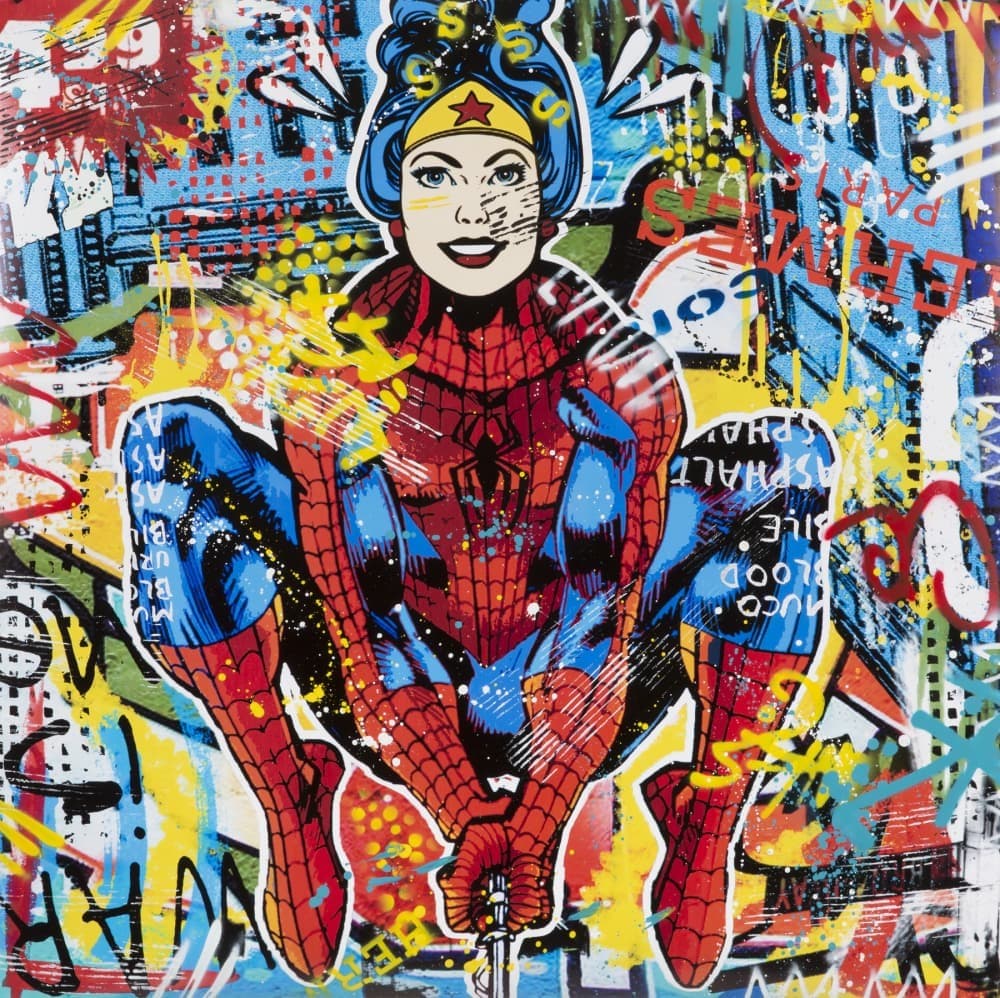
AIIROH: "WONDER WOMAN / SPIDER-MAN" ARTWORK PRINT
On July 31, Tom Holland swings back into theaters in Spider-Man: Brand New Day, directed by Destin Daniel Cretton, the fourth chapter in a franchise that began not in a movie theater, but on a newsstand in the summer of 1962. Six decades, five actors, and a multiverse later, the character Stan Lee and Steve Ditko conjured in the pages of a soon-to-be-cancelled anthology book remains the most culturally elastic superhero ever created. He has been a teenager, a widower, a clone, a corporate titan, a street-level vigilante, and a myth. He has sold billions of dollars in merchandise, anchored some of the highest-grossing films ever made, and hung from the ceiling of Madame Tussauds on three continents.
And some of the most remarkable artifacts in his history have passed through Julien's Auctions.
The Issue that Started Everything
In August 1962, Amazing Fantasy was dying. The Marvel anthology title had been quietly fading, and editor and writer Stan Lee used what he believed would be its final issue to take a swing on something new, a superhero who was also a lonely, bookish kid from Queens. The character broke every rule then in place for the genre. He was awkward, financially broke, and burdened by guilt. Readers responded in numbers that shocked the industry, and The Amazing Spider-Man launched the following year.
That first appearance, Amazing Fantasy #15, is today ranked number one on Overstreet's Top 50 Silver Age Comics, the single most coveted periodical of the Marvel era. At Julien's, a Lee-signed copy graded PGX 8.5 realized $38,400 in 2018. The signature was witnessed; the provenance clean. As a cultural document, it sits alongside the Declaration of Independence and Action Comics #1 as one of the founding texts of American popular mythology.
In the same 2018 sale, a one-of-a-kind custom bound hardcover collecting Amazing Fantasy #15, Strange Tales Annual #2, and the first ten issues of The Amazing Spider-Man believed to have previously belonged to Michael H. Price, a writer and friend of Lee's sold for $19,200. The volume, signed by Lee in 1992, represented something increasingly rare in the auction market: a singular object assembling the full opening chapter of the Spider-Man story in a single, Lee-authenticated artifact.
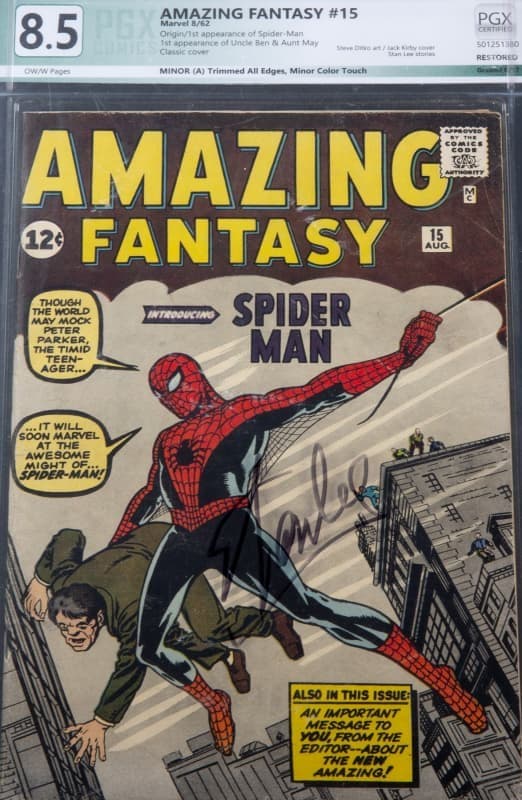
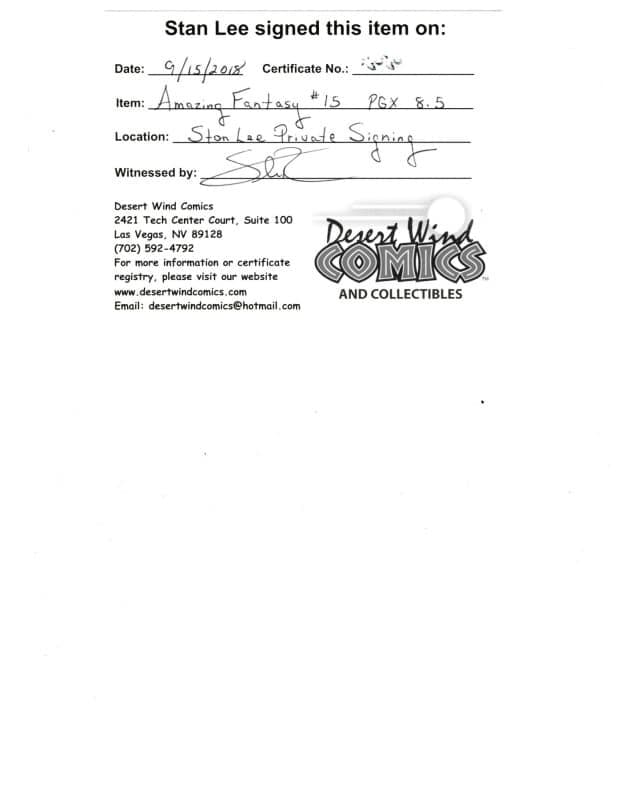
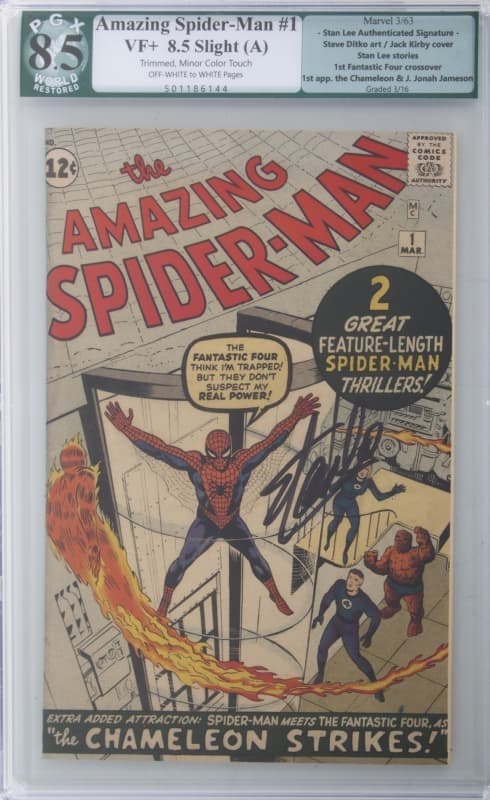

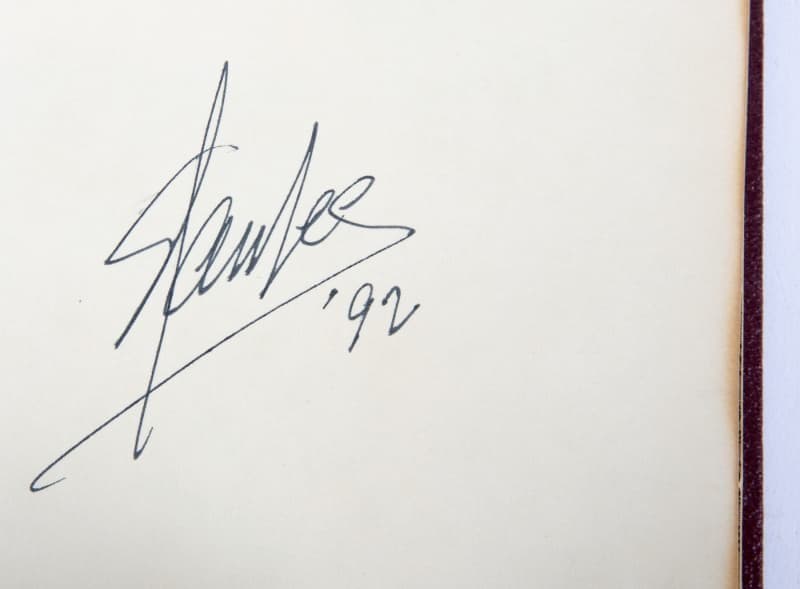
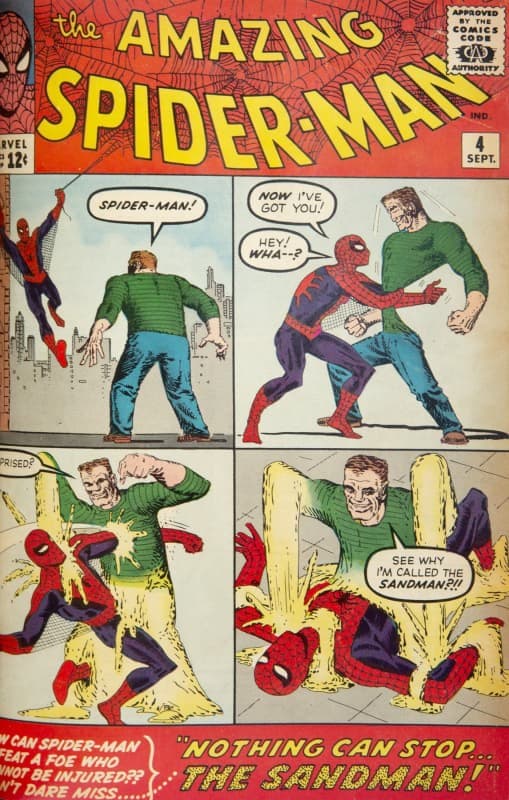
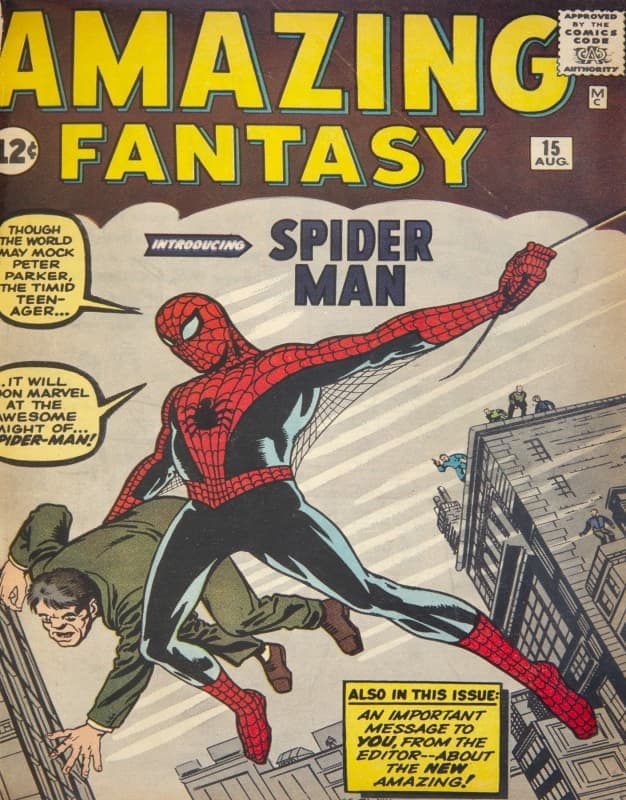
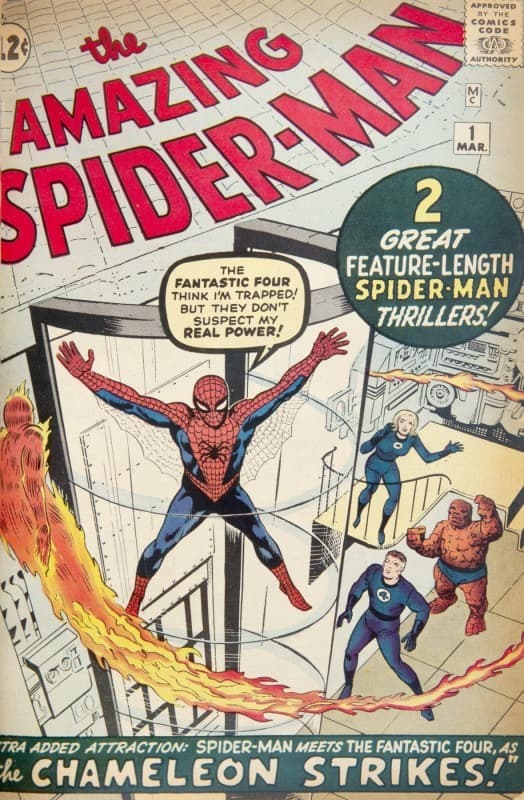
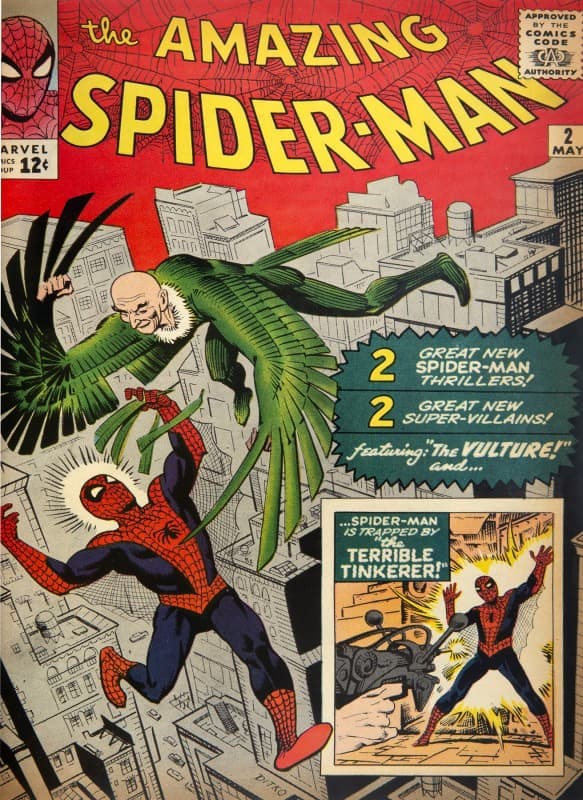
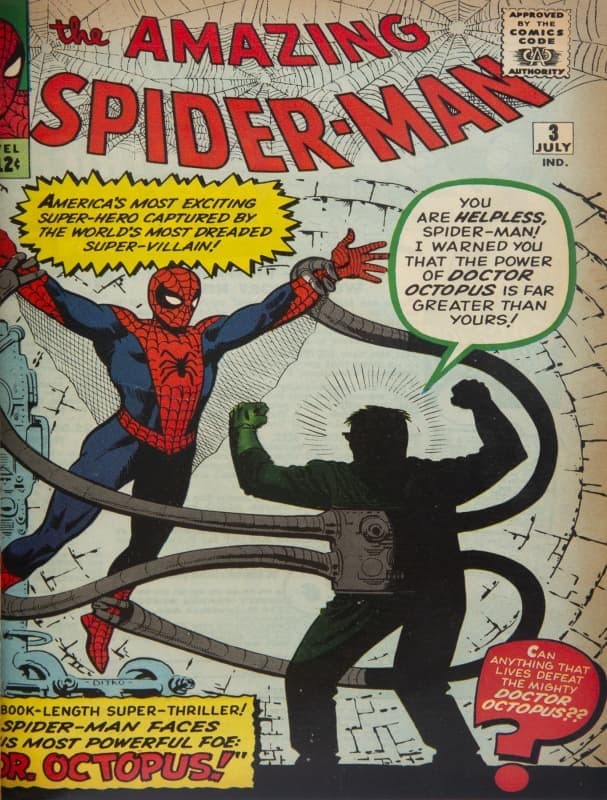
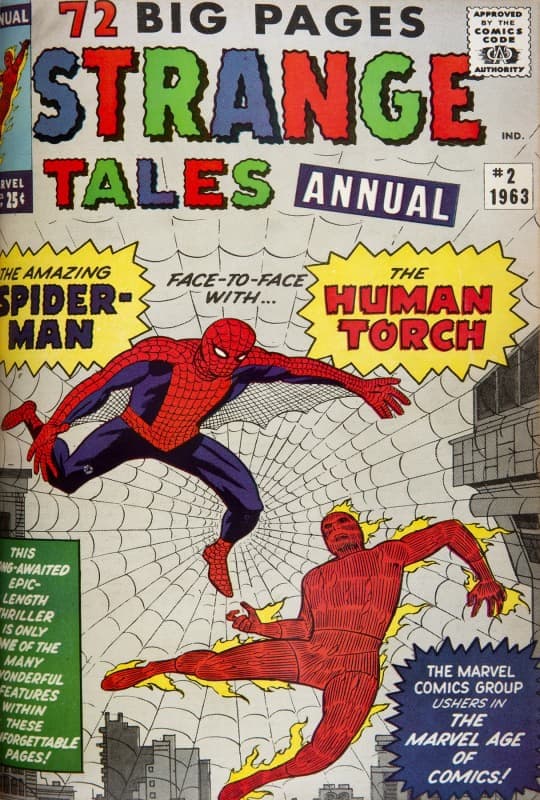
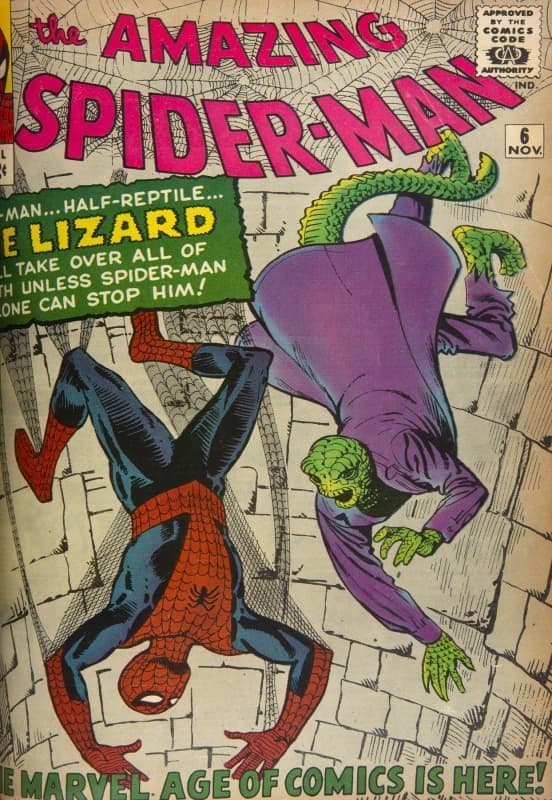
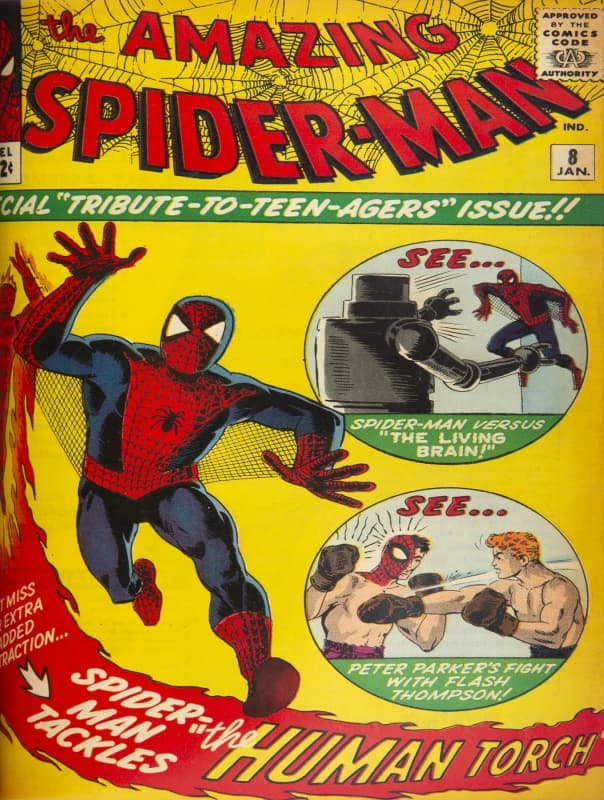
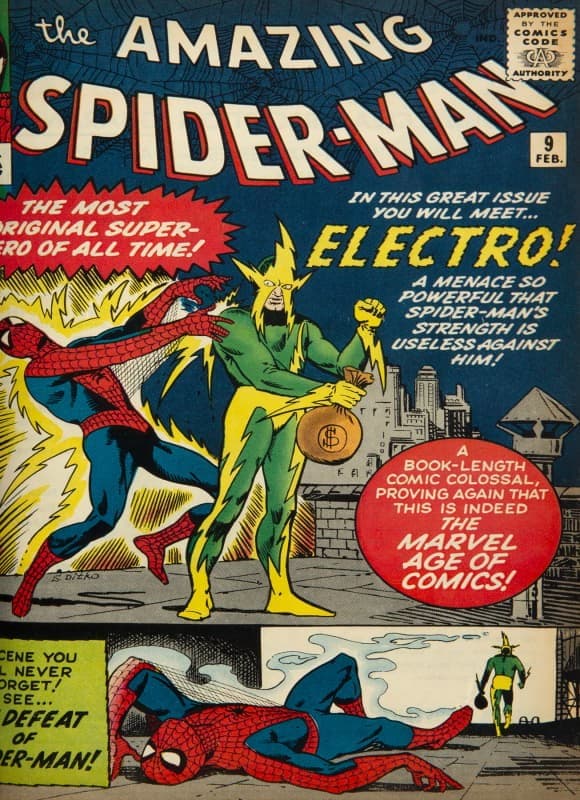
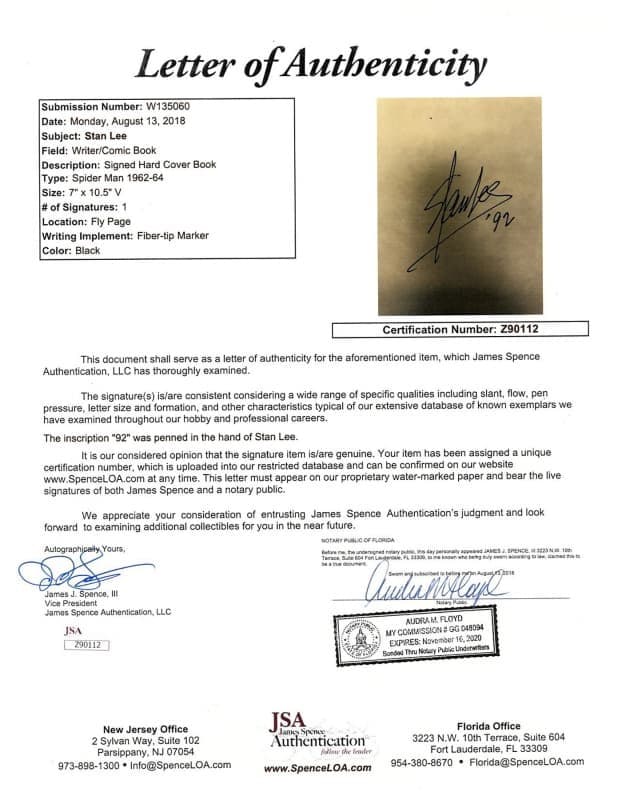
1. STAN LEE SIGNED AMAZING FANTASY #15, 3. STAN LEE SIGNED AMAZING SPIDER-MAN #1 , 4. STAN LEE SIGNED CUSTOM BOUND HARDCOVER BOOK OF THE AMAZING SPIDER-MAN AND AMAZING FANTASY #15 ,
Ditko, Kirby, Romita, & the Muppets
What makes Spider-Man different from nearly every other superhero property is the breadth of creative talent his world has attracted. Jack Kirby's iconic cover for Amazing Fantasy #15. Steve Ditko's defining interior line work, carried through to Amazing Spider-Man #1 is a signed copy of which, graded PGX 8.5, brought $7,680 at Julien's in 2019. And then John Romita Sr., who took the title in the late 1960s and reshaped it entirely, co-creating Mary Jane Watson, The Punisher, Kingpin, Wolverine, and Luke Cage in the process.
It was Romita who, in the mid-1980s, produced one of the strangest and most joyful artifacts in Julien's history: an original ink and marker piece commissioned by Marvel Comics to celebrate their 30th anniversary and presented to Jim Henson Associates. The artwork sold at Julien's in 2025 for $12,800 from the Henson Family archives features Captain America and Spider-Man alongside Kermit the Frog, Miss Piggy, and Big Bird. The inscription reads, in full Romita wit, "Now that you've reached the happy age of thirty... here are some things you can use! Just kidding of course... To your continued health! From all your friends at Marvel Comics."
It is a document of a particular moment in American entertainment history when the boundaries between Marvel's universe and Jim Henson's felt genuinely porous as Saturday morning cartoons, network television, newsstand comics, and the early stirrings of licensed merchandise were all feeding the same pop culture engine. A piece of paper that is also a diplomatic communique between two empires.
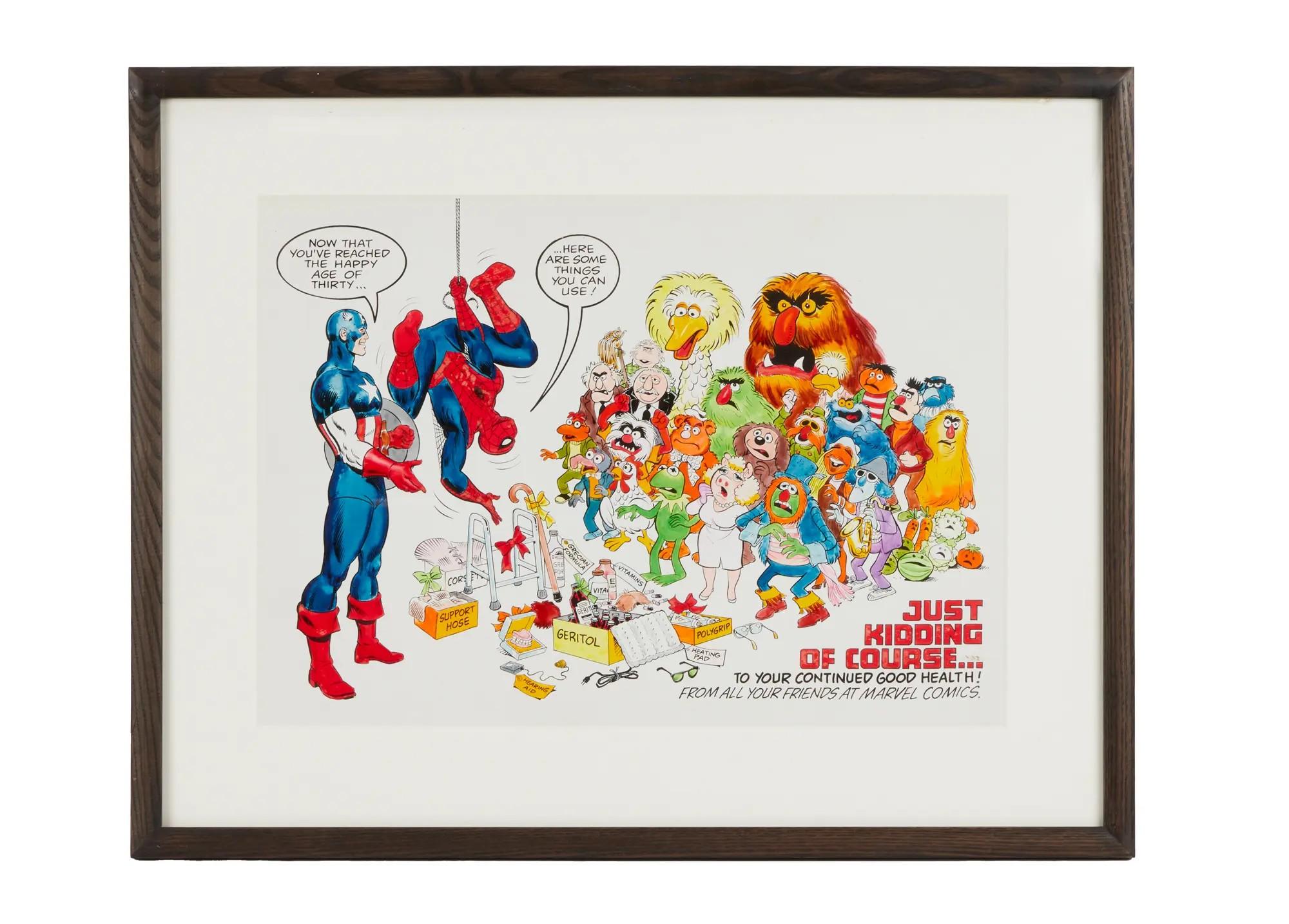
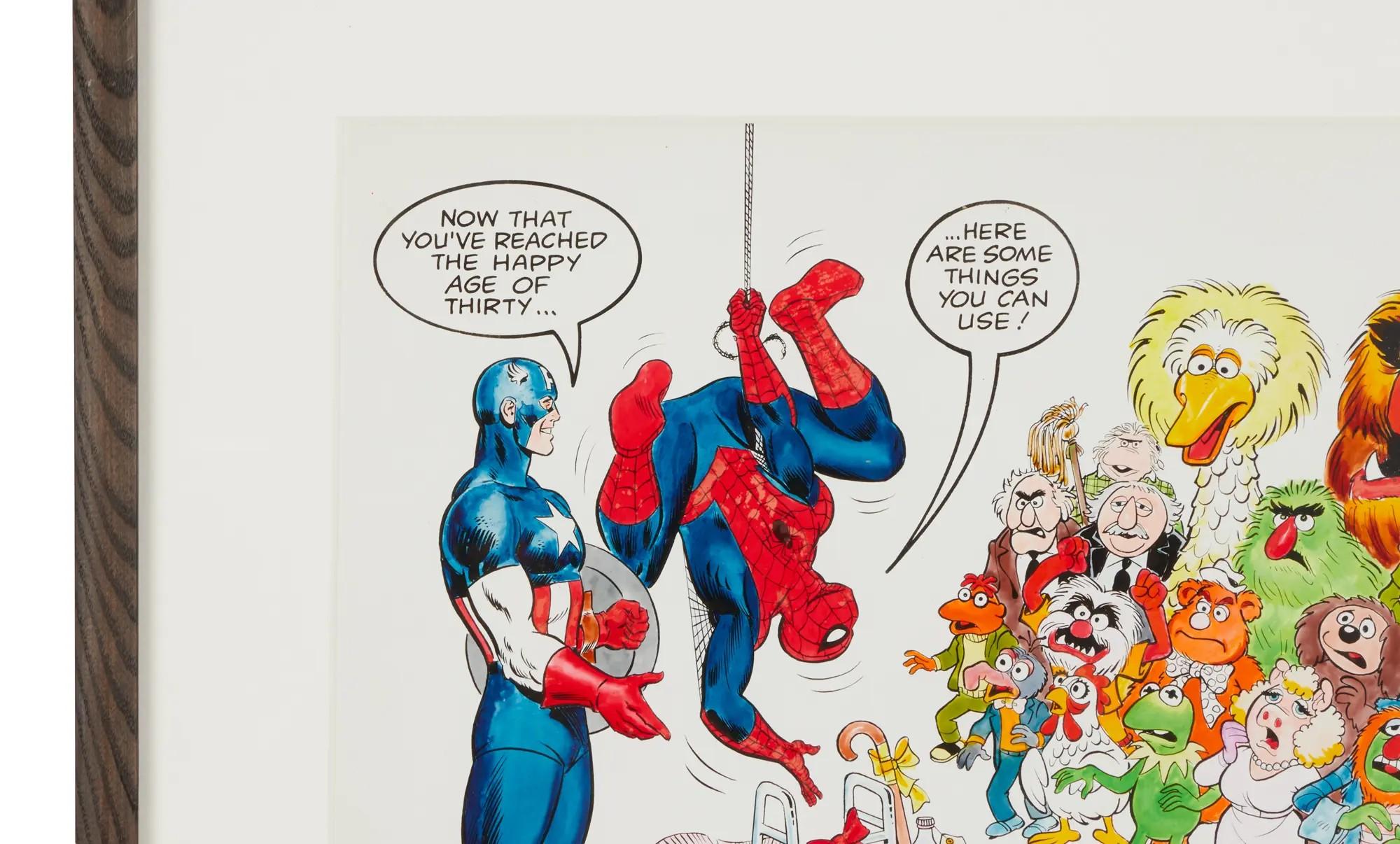
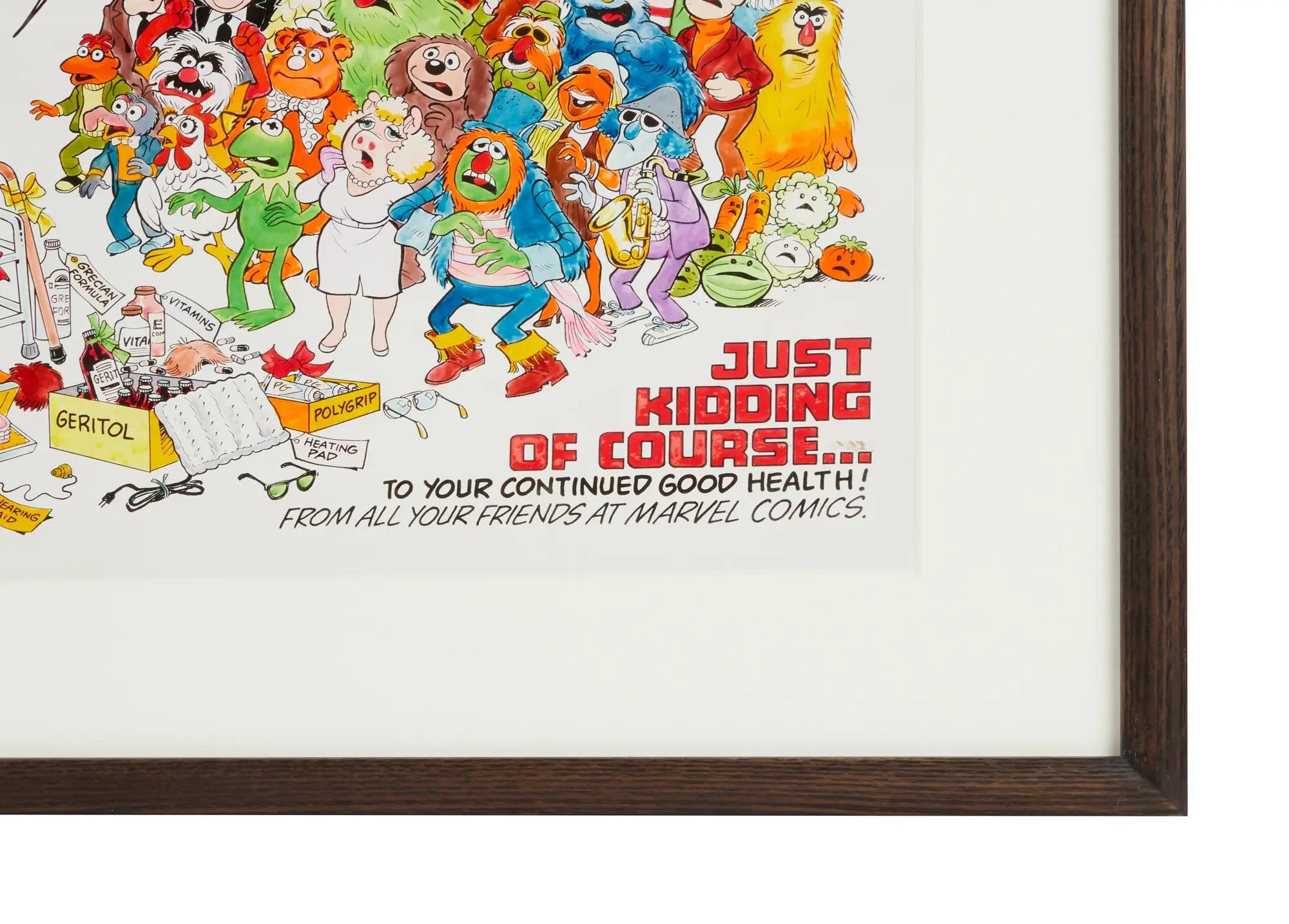
1. Jim Henson Marvel Comics "30th Anniversary" Artwork,
The Web-Slinger Meets Guitar Strings
By 1999, the cultural saturation of Spider-Man had reached a register that even Stan Lee himself might not have anticipated at the beginning. Gibson's Custom Shop produced a limited run of 150 "Web Slinger One" Les Paul Juniors with serial number WS1 046 and all the rest is finished in black with a full graphic of The Amazing Spider-Man across the body, a silver spider web inlaid across the ebony fretboard, a red spider on the headstock, and a set of Amazing Spider-Man-branded strings gauged 10-46.
Only the first 75 were signed by Lee. The instrument that passed through Julien's carried his signature in silver felt tip on the treble side cutaway, along with its original COA signed by Lee and Rick Gembar, then General Manager of the Custom Shop. It realized $5,200 in 2025. Resting at the intersection of superhero iconography and American guitar mythology in a single mahogany body, the guitar is a curious, deeply specific object, and it arrived in the room with everything: the hardshell case, the spider web strap, the picks, the strings. A complete artifact of the era when Marvel's characters stopped being comic book properties and became something closer to cultural infrastructure.
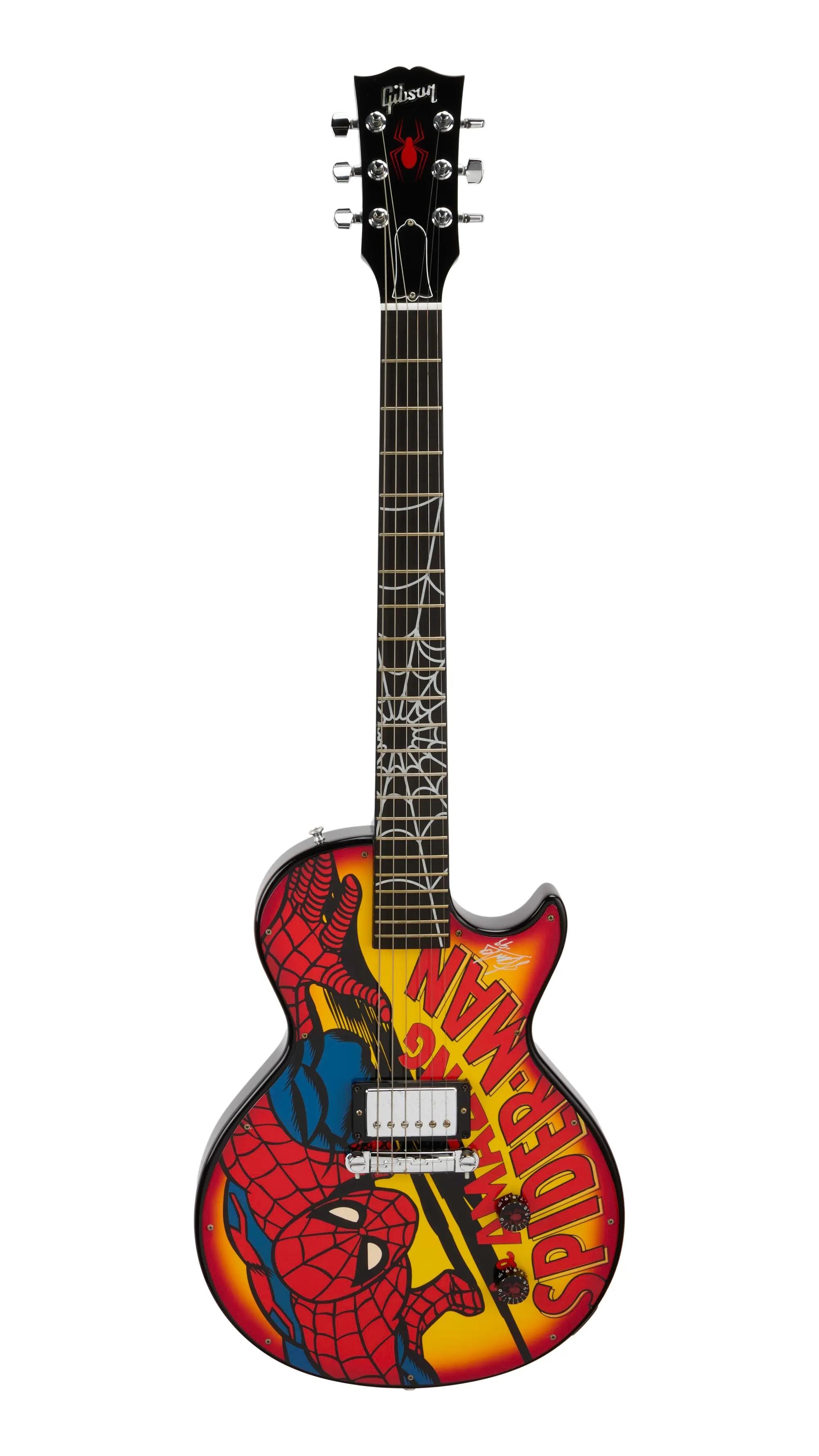
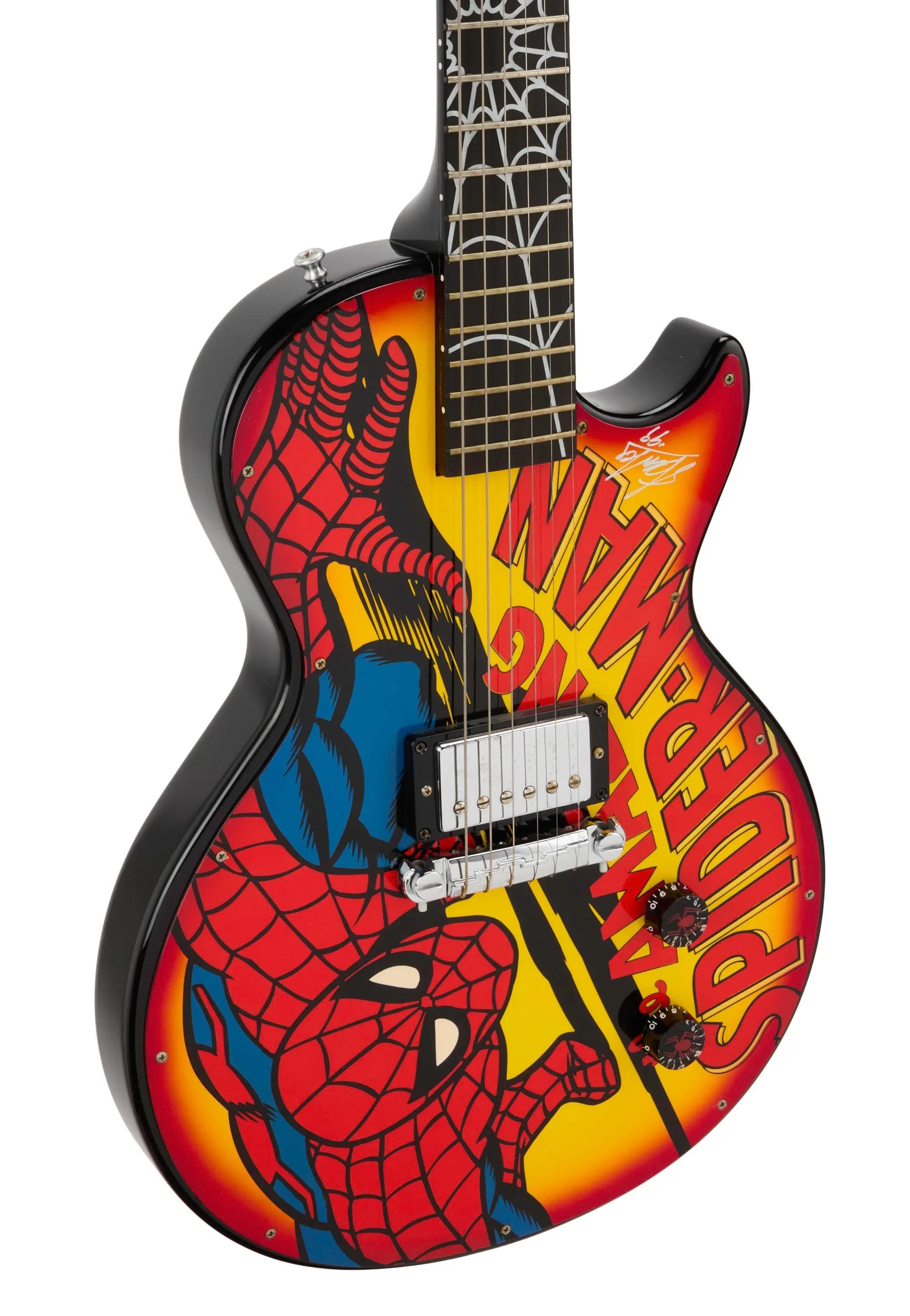
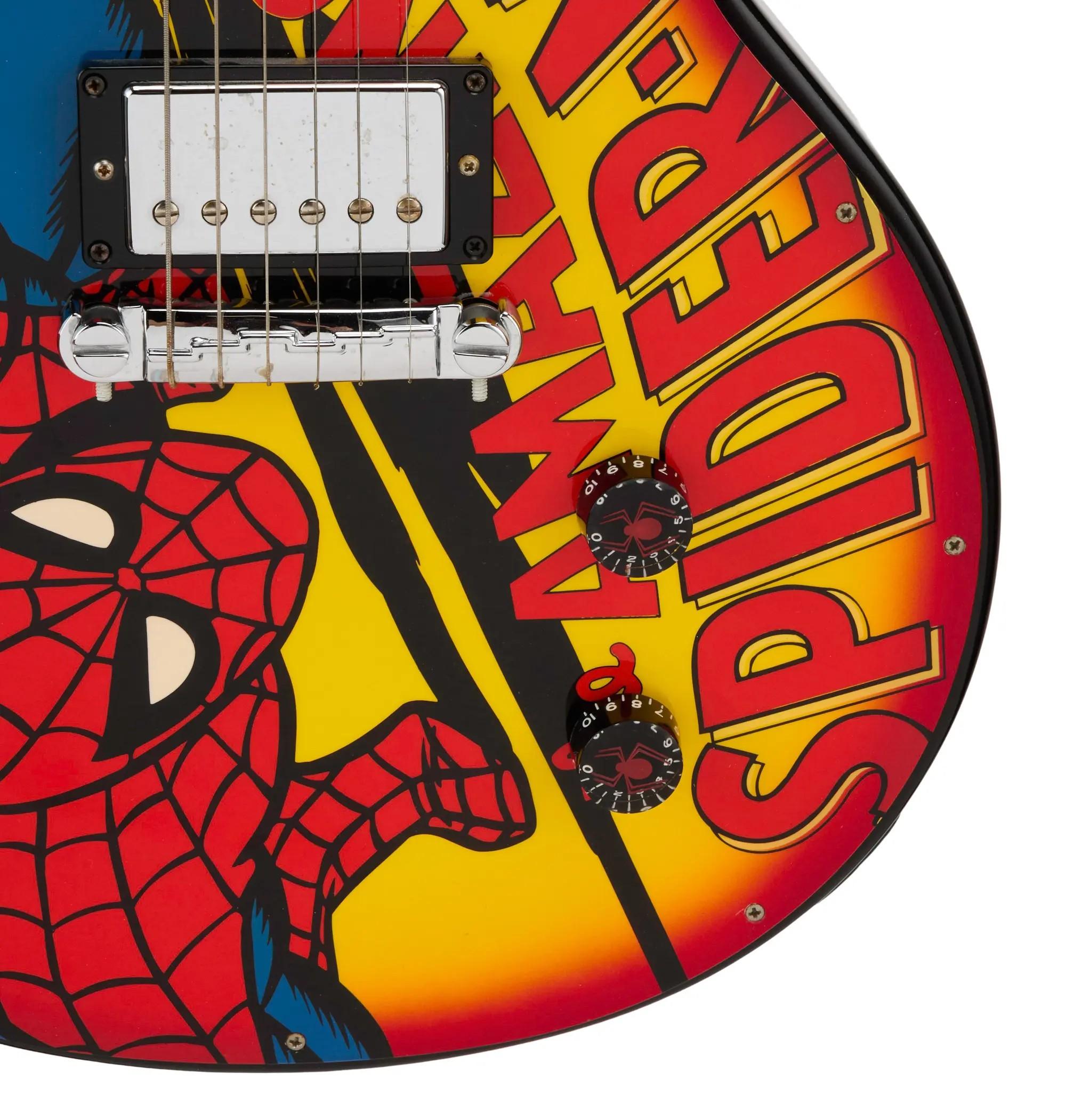
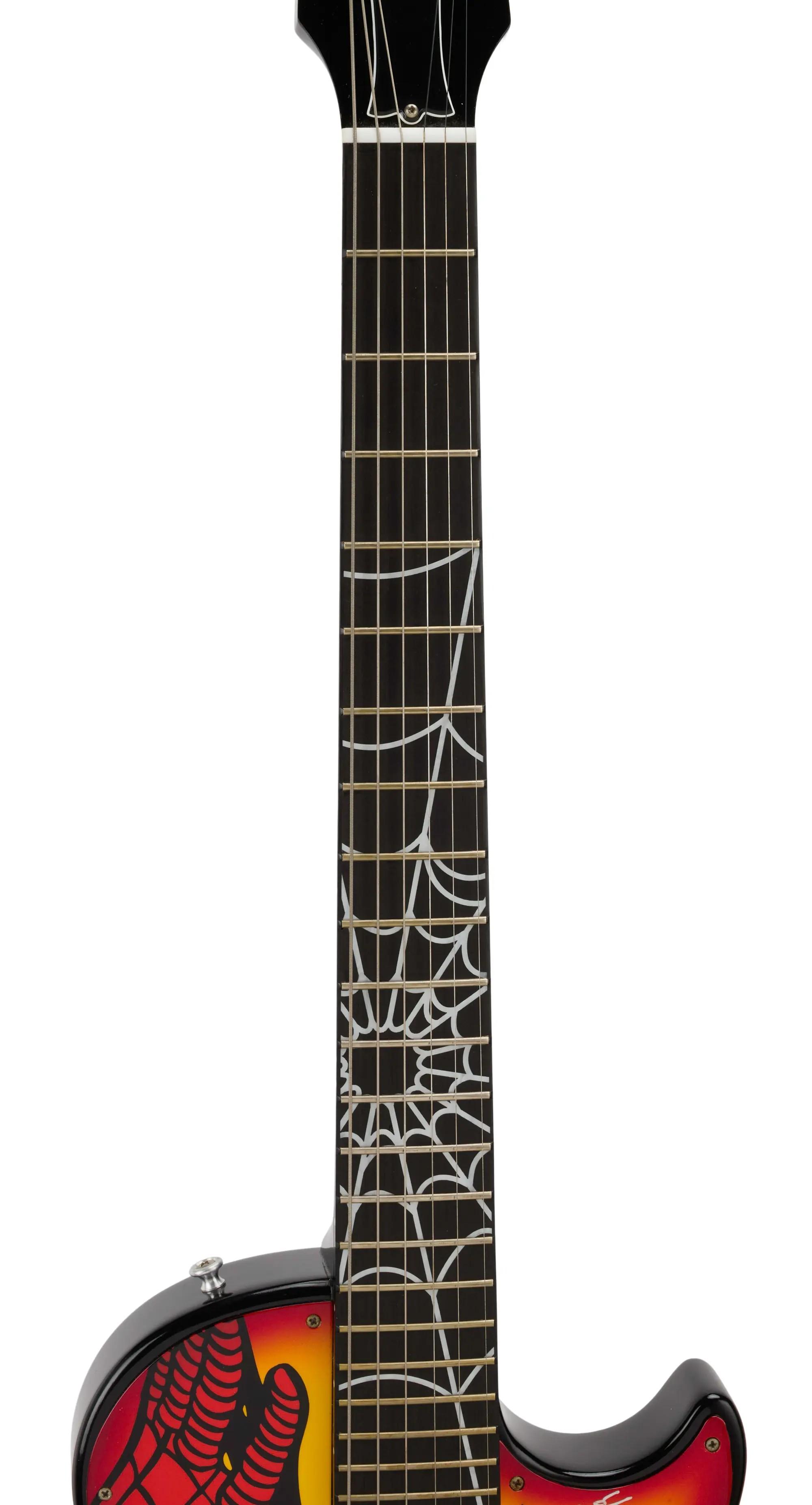
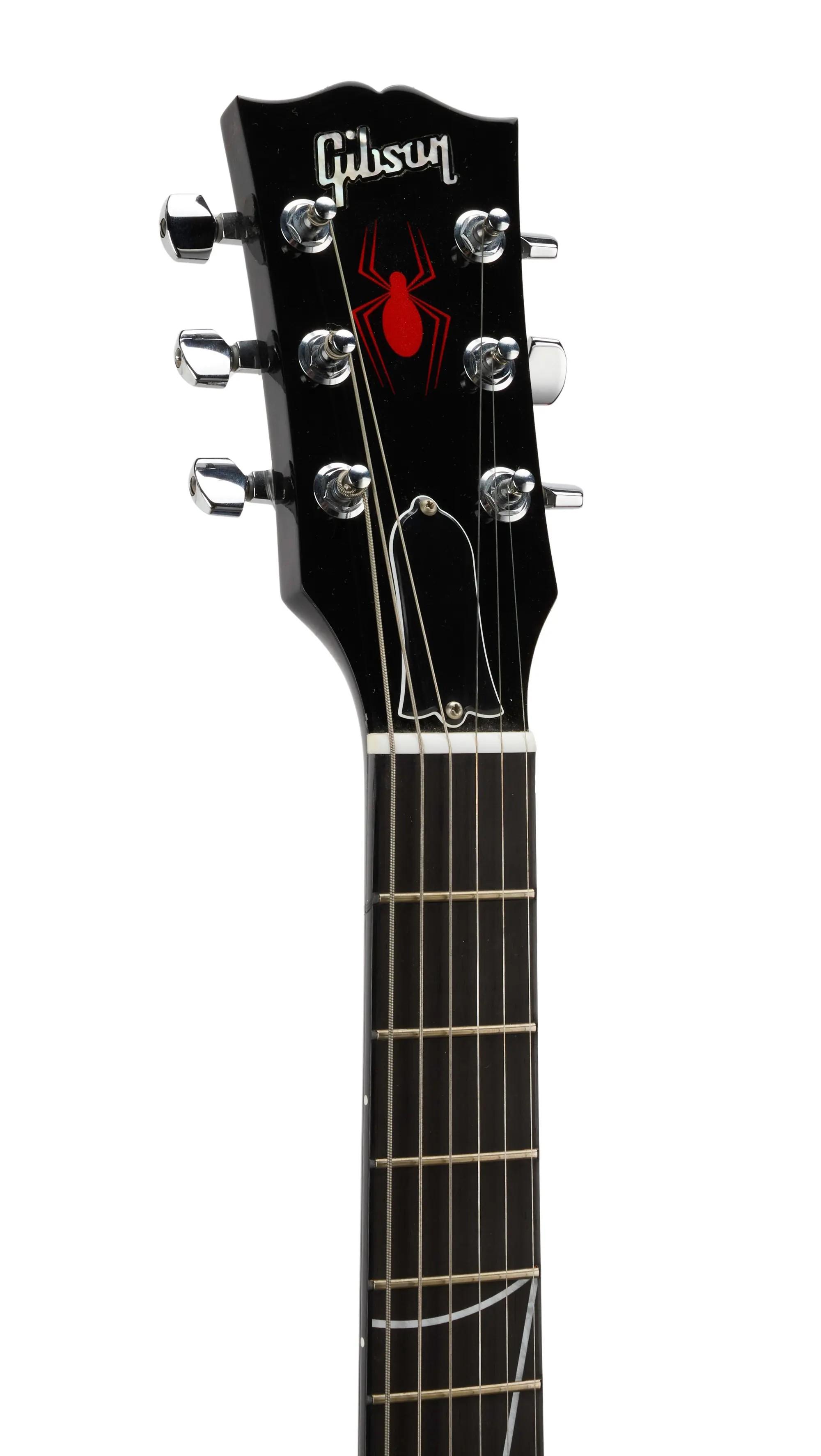
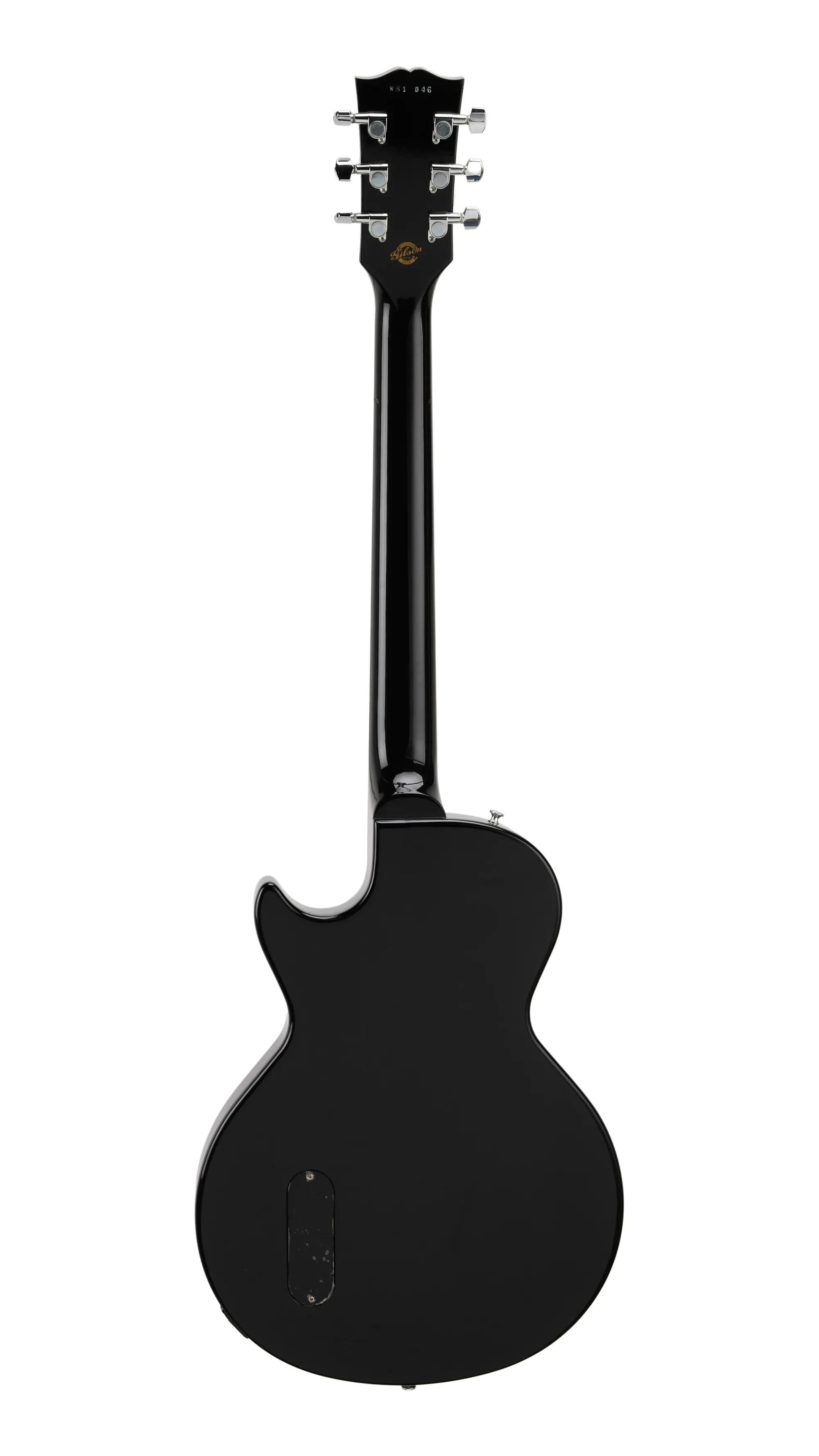
1. Stan Lee Signed Gibson Web Slinger One Les Paul Junior with Spider Man Graphic,
From the Page to the Wax Museum
That infrastructure eventually extended to Madame Tussauds, whose Hollywood, Las Vegas, and Sydney locations each developed life-size display figures for their Marvel exhibitions. At Julien's in 2024, a hollow cast resin Spider-Man in painted blue and red realized $7,800. The figure's provenance was the exhibition floor itself, which gives the piece a particular texture. Thousands of visitors posed for photographs with this Spider-Man. It was a presence, then it became an object of a legendary pop culture icon.
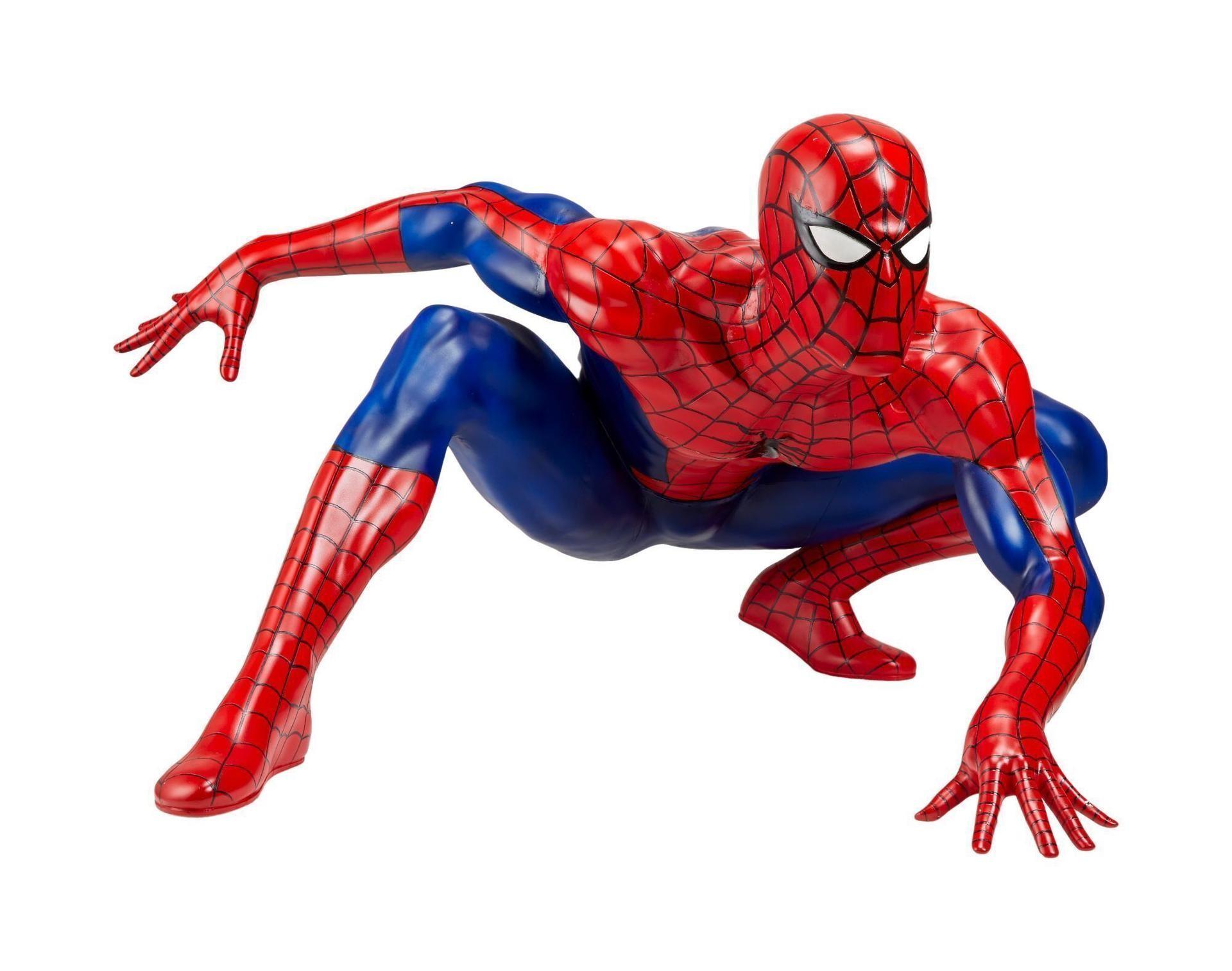
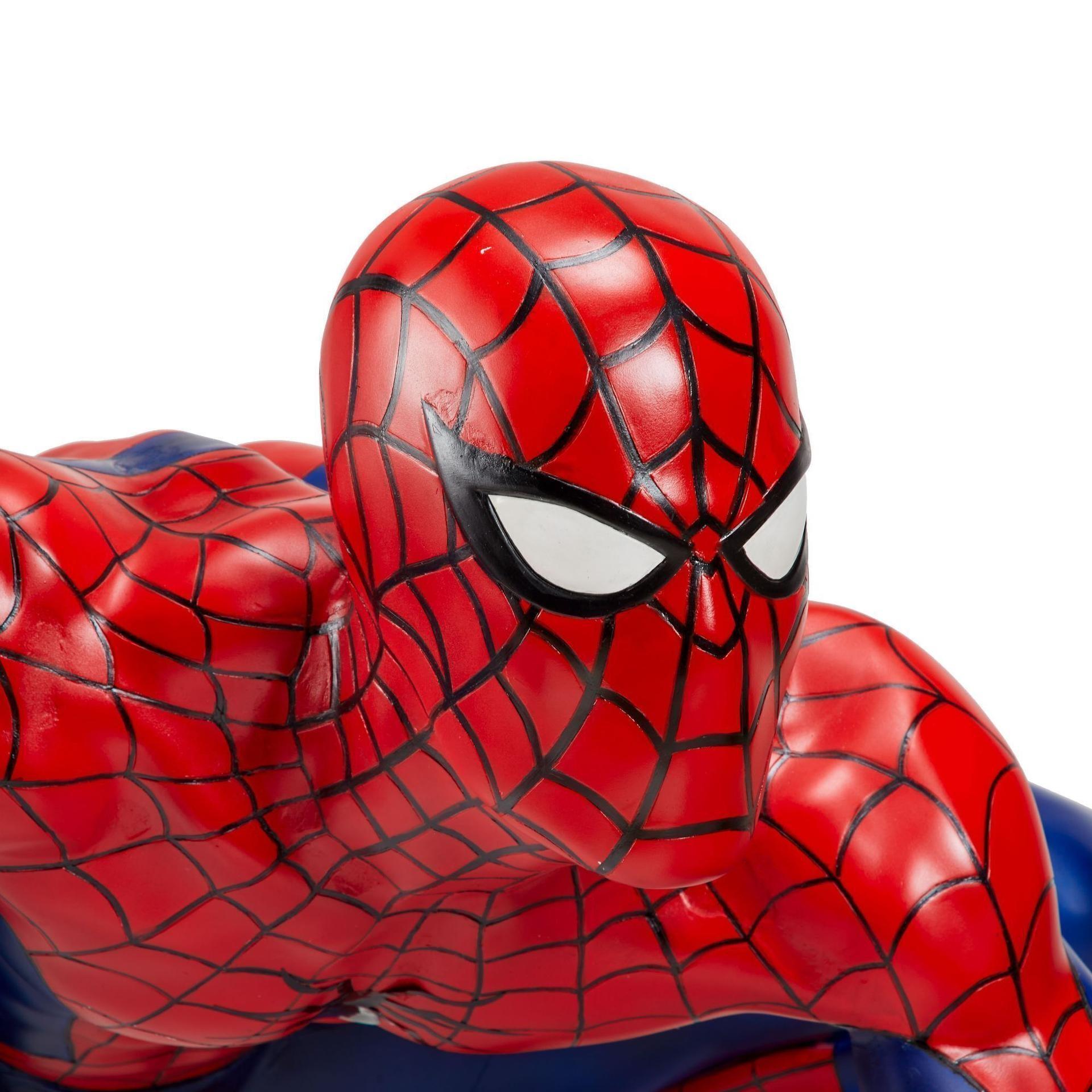
1. Spider-Man Madame Tussauds Life-Size Figure,
Brand New Day
The title Brand New Day comes directly from a Marvel Comics storyline of the same name, first published in The Amazing Spider-Man #546 in March 2008. Much more than a series refresh, the storyline reset Peter Parker's circumstances entirely, stripped back his support system, and asked what the character looked like when returned to first principles. Tom Holland's Peter Parker is now an adult living entirely alone, having erased himself from the memories of those he loves, a full-time Spider-Man in a New York that no longer knows his name. It is, in its own way, a return to the core of what Stan Lee built in 1962: a hero defined by loss, obligation, and the question of what it costs to keep showing up.
The artifacts at Julien's have always understood that. A signed first appearance. A presentation piece gifted between two entertainment dynasties. A guitar that turned a superhero into a musical instrument. A wax figure that held a room. Each one marks a moment when Spider-Man moved from the page into the wider culture and left a physical traces as objects many thought to keep.