History
Film & TV
The Many Faces of Marilyn Monroe
A century after her birth, Marilyn Monroe is still revealing herself through more than 70 rare and never-before-seen photograph lots each showcasing what the cameras caught.
Share



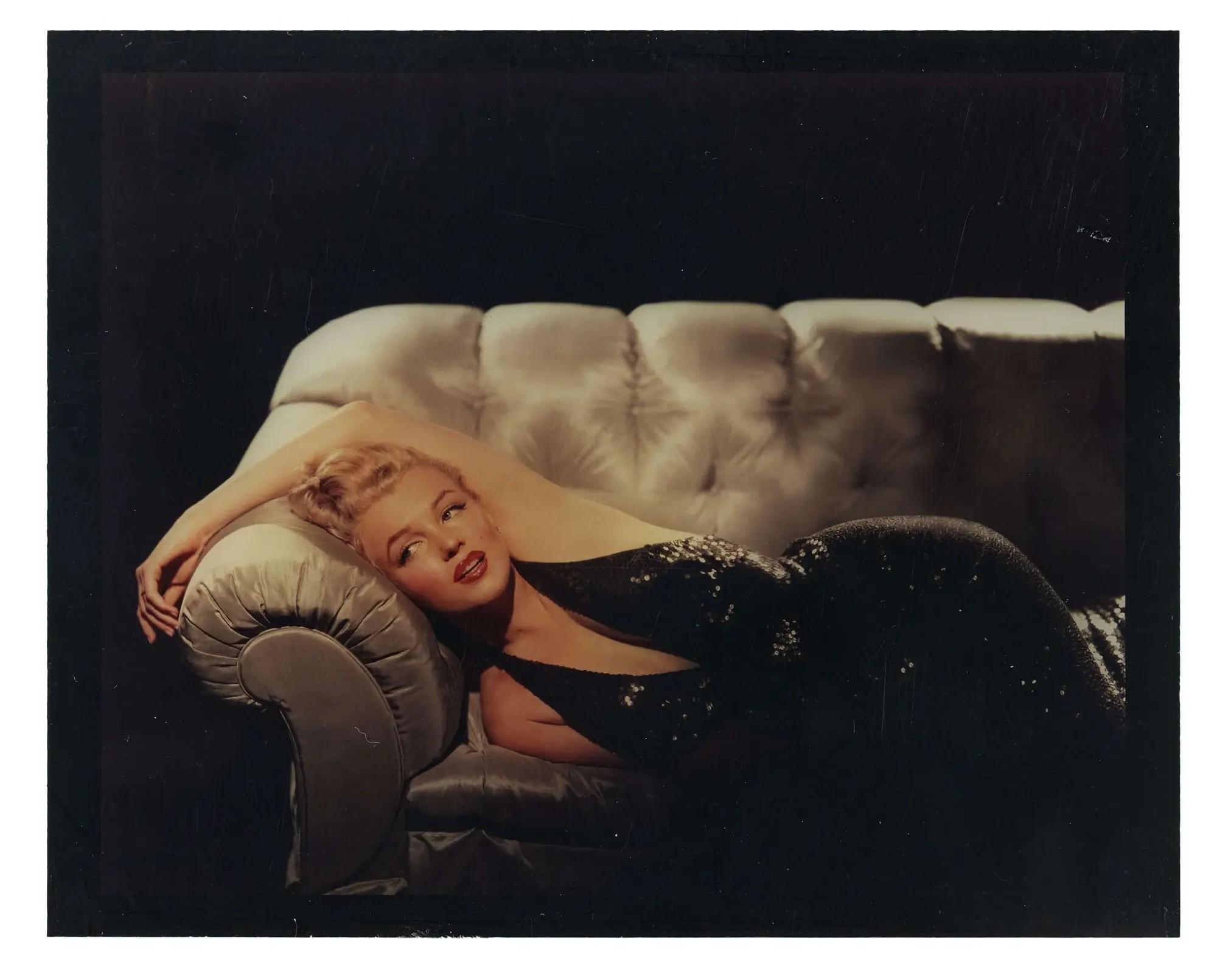
Lot #92. Marilyn Monroe | 1957/1960s Color Transparency by Richard Avedon
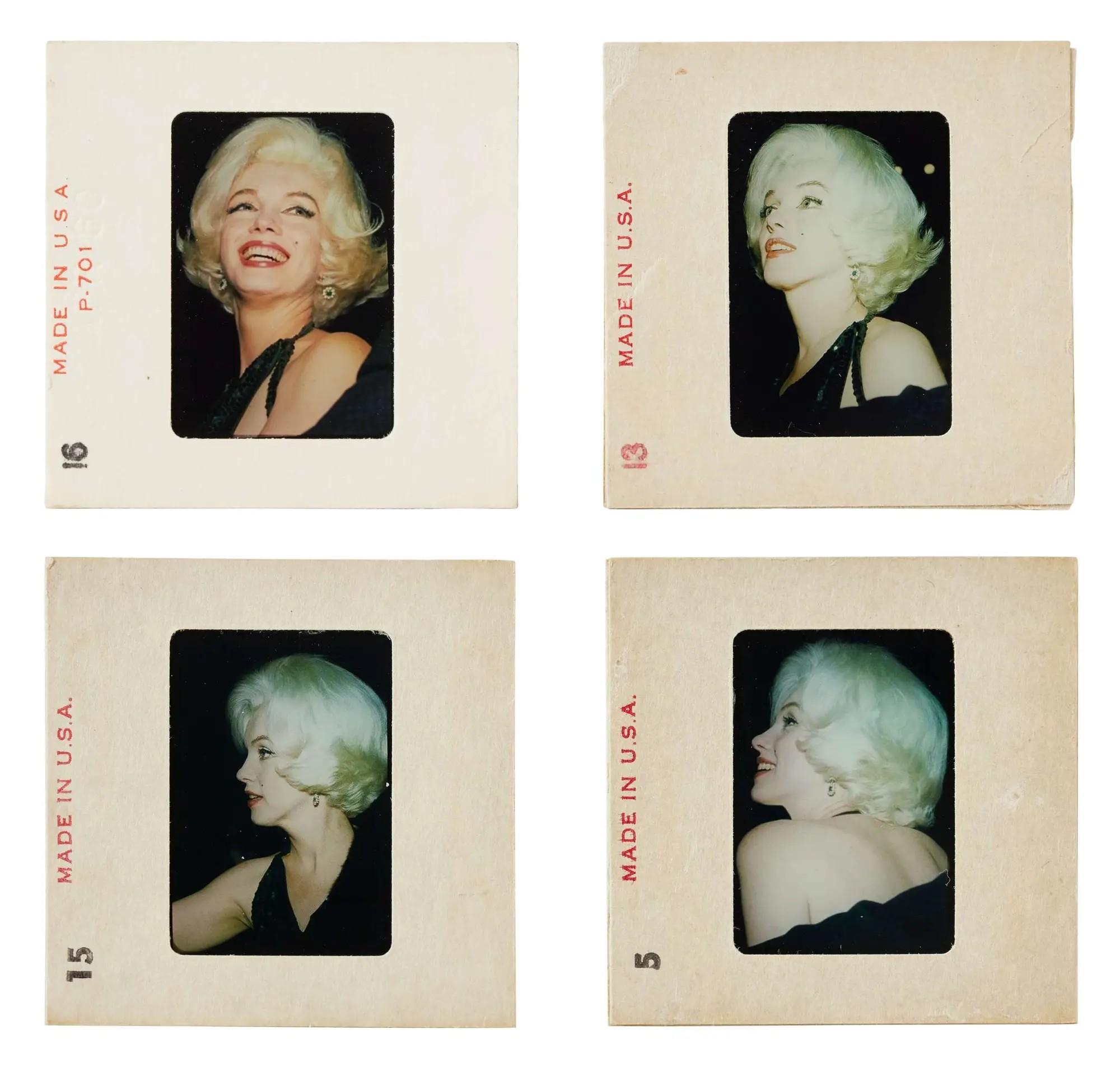
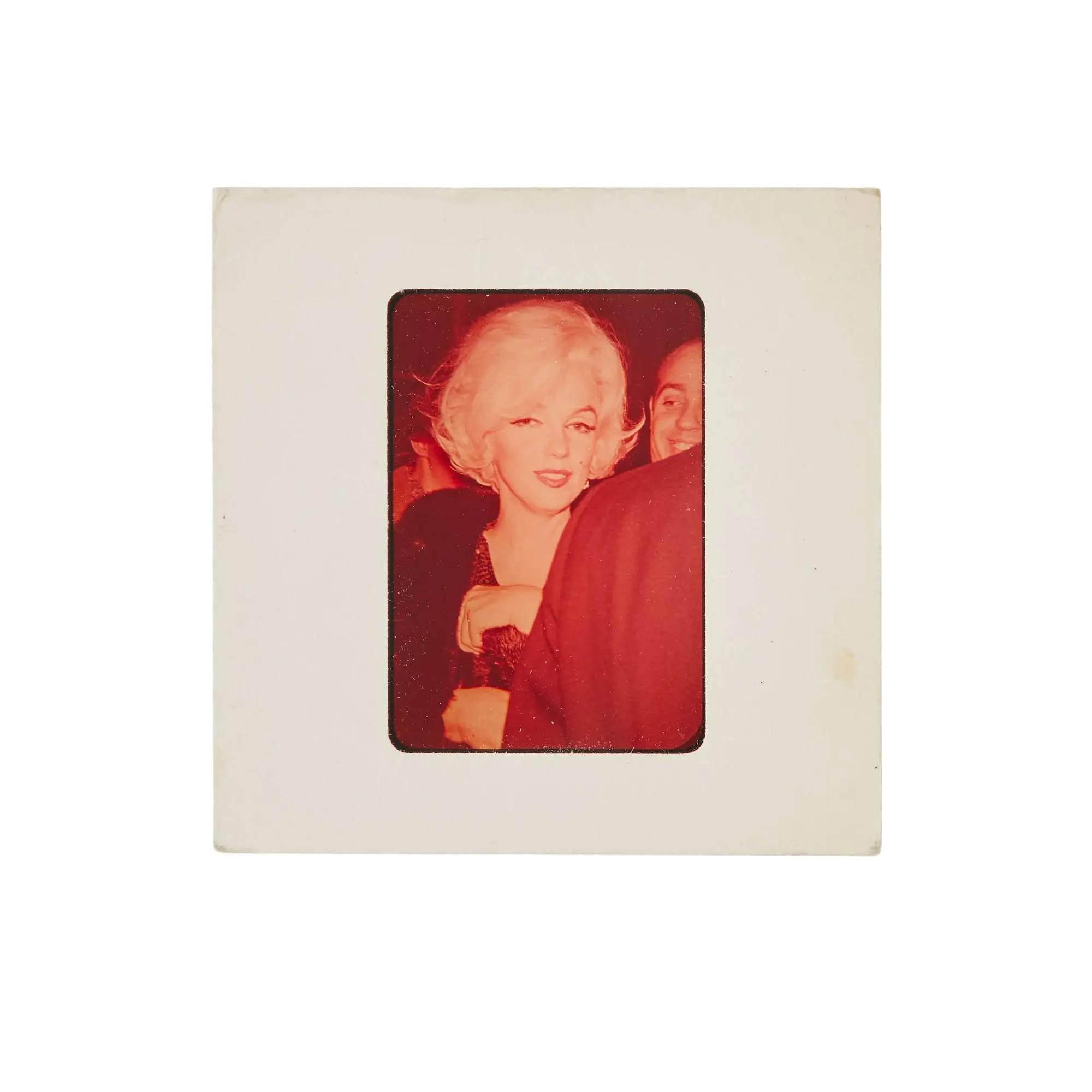
There is a photograph — lot 44 in the 100 Years of Marilyn auction — that carries its own title right on the back of its cardboard frame. Printed in plain type on the verso of a circa 1970s color slide is the phrase: The Many Faces of Marilyn Monroe. It shows her walking into the Golden Globes on March 5, 1962, alone in the frame for a single suspended moment before the crowd swallowed her again. Whoever sleeved that slide and stamped those words understood something important. Marilyn Monroe was not one woman. She was a theater of women, each one authentic, each one performing, and the camera — if it was lucky, if it was fast enough — occasionally caught the one she hadn't prepared.
100 Years of Marilyn bridges the gap between imagery and truth — and the startling discovery that, a hundred years after Norma Jeane Mortenson entered the world, we are still closing that distance one photograph at a time.
I. The Last Session
Thirty-Six Days Before the End
On July 7, 1962 — a warm Saturday – Allan Grant arrived in Brentwood with his cameras and twelve rolls of black-and-white film. He was shooting for LIFE Magazine. Marilyn was 36 years old. She had 29 days left to live.
Grant shot all twelve rolls. LIFE published eight images. The rest went into envelopes — some in Grant's distinctive handwriting, some stamped with his address in Los Angeles — and stayed there. Decades passed. Grant died. His family inherited the archive and, with it, a question: what do you do with photographs of the most photographed woman in the world that no one has ever seen?
In 2025, Grant's family partnered with Chris Flannery and Jason Greene of 1962 MM LLC to answer that question. The resulting collection, "Marilyn's Lost Photos," surfaces here for the first time in public — five lots, each a different face from that final afternoon.
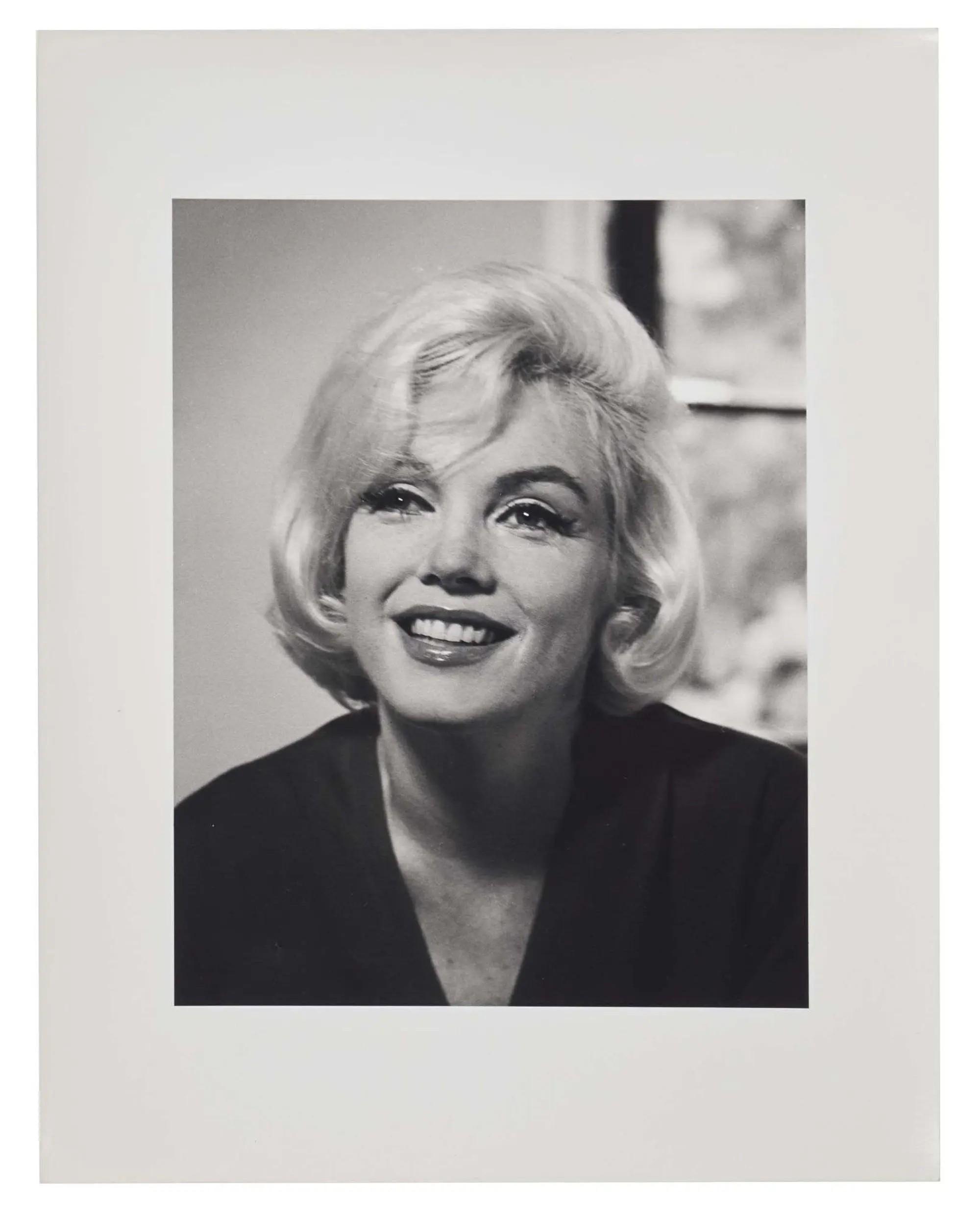
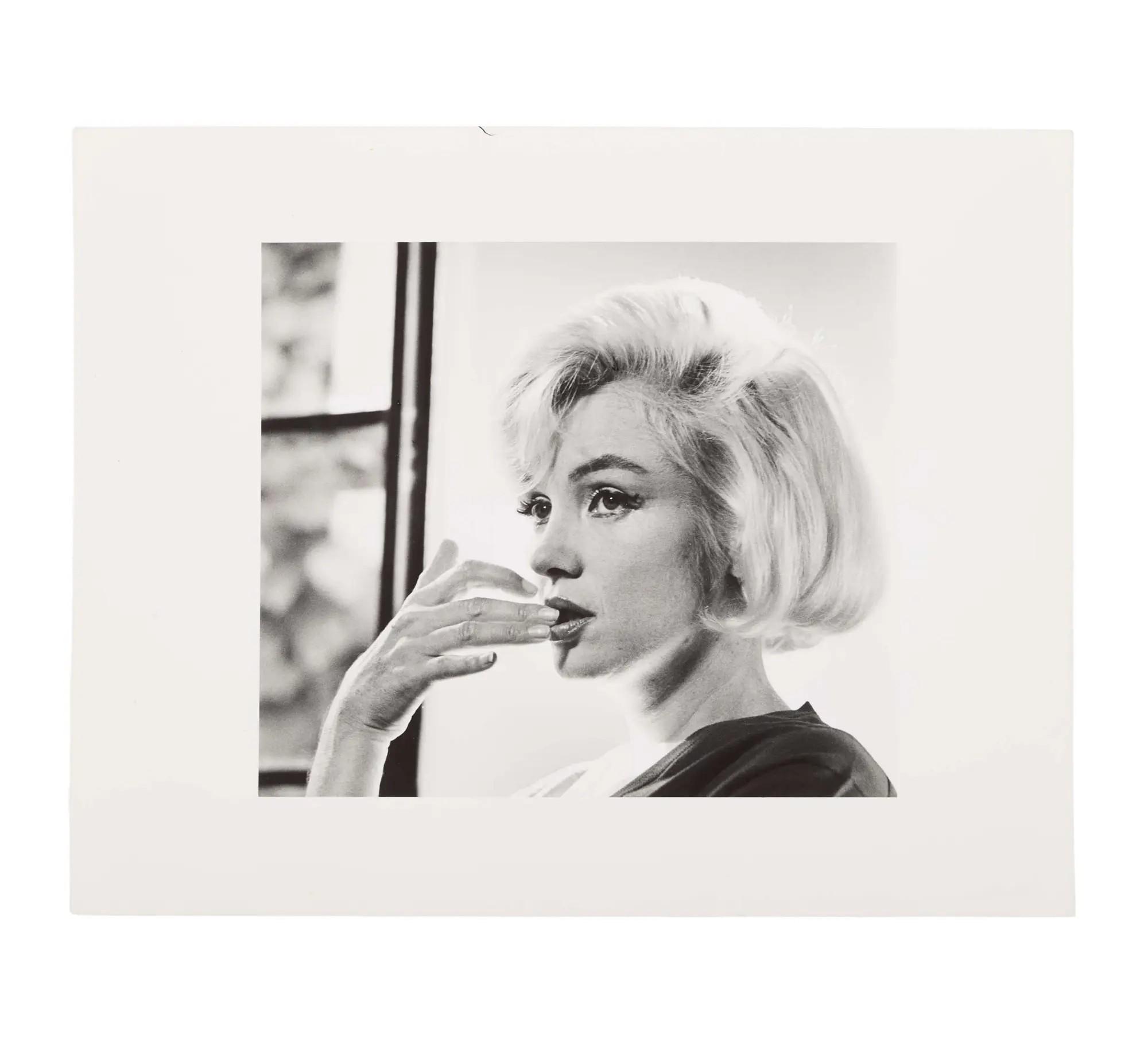
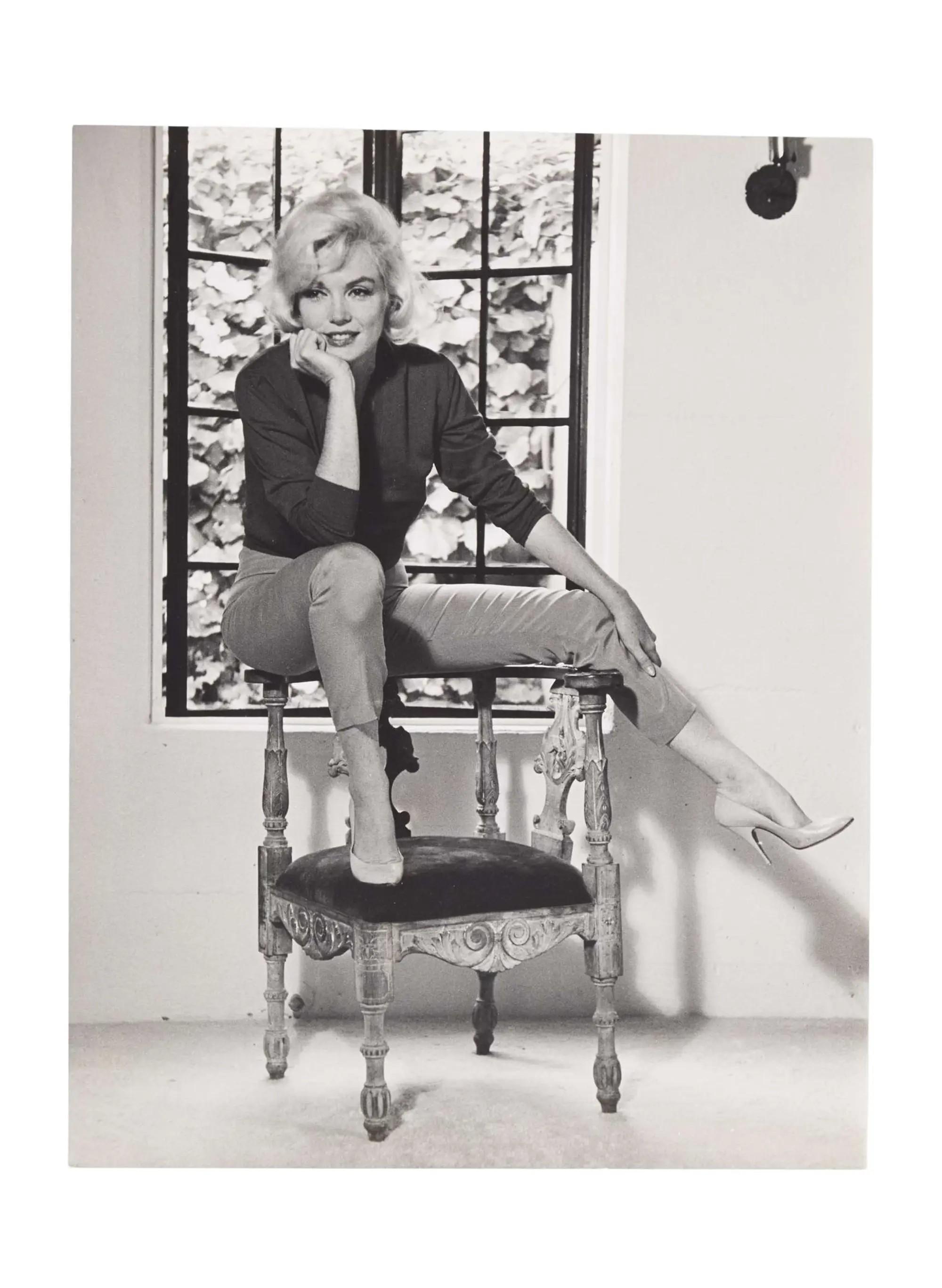
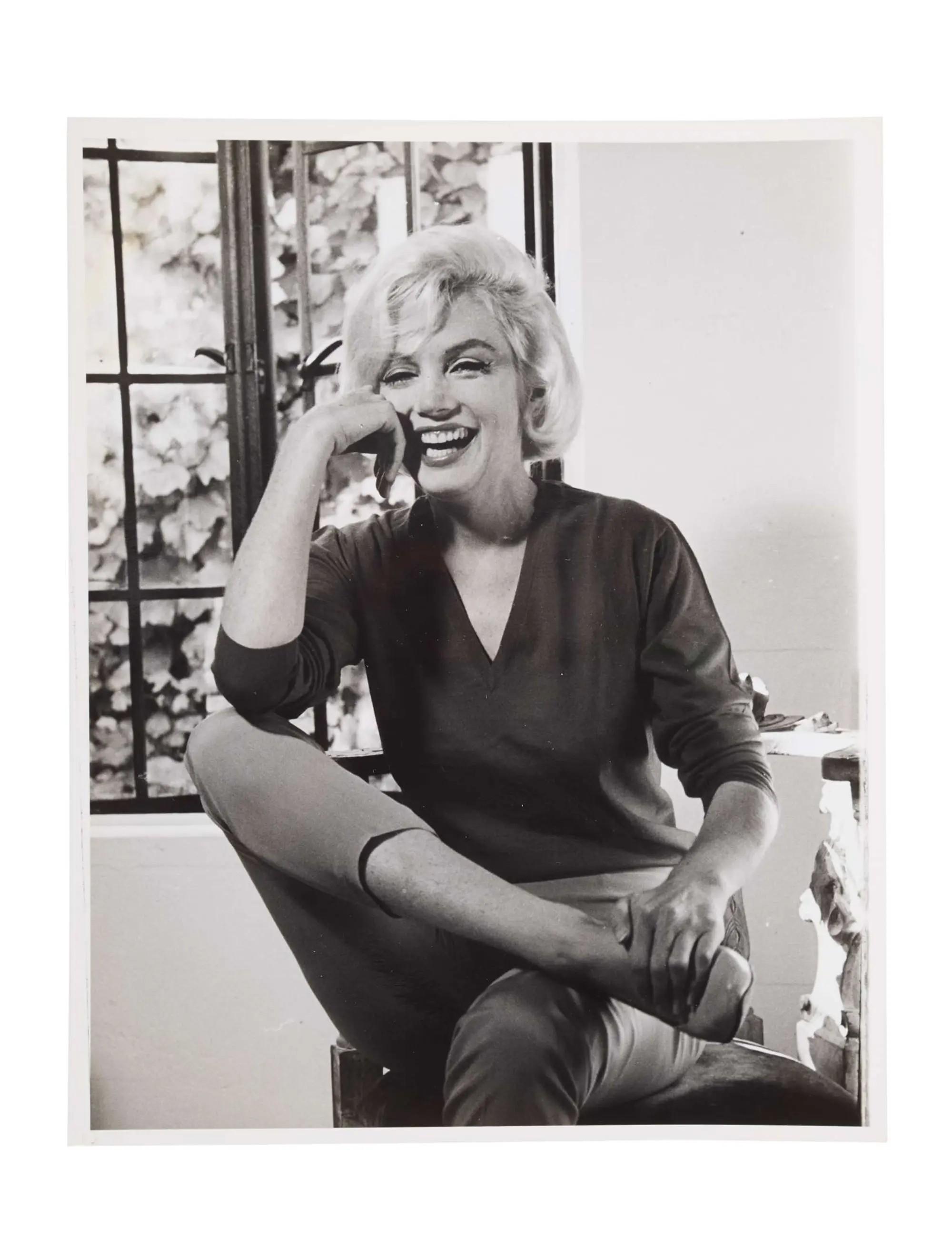
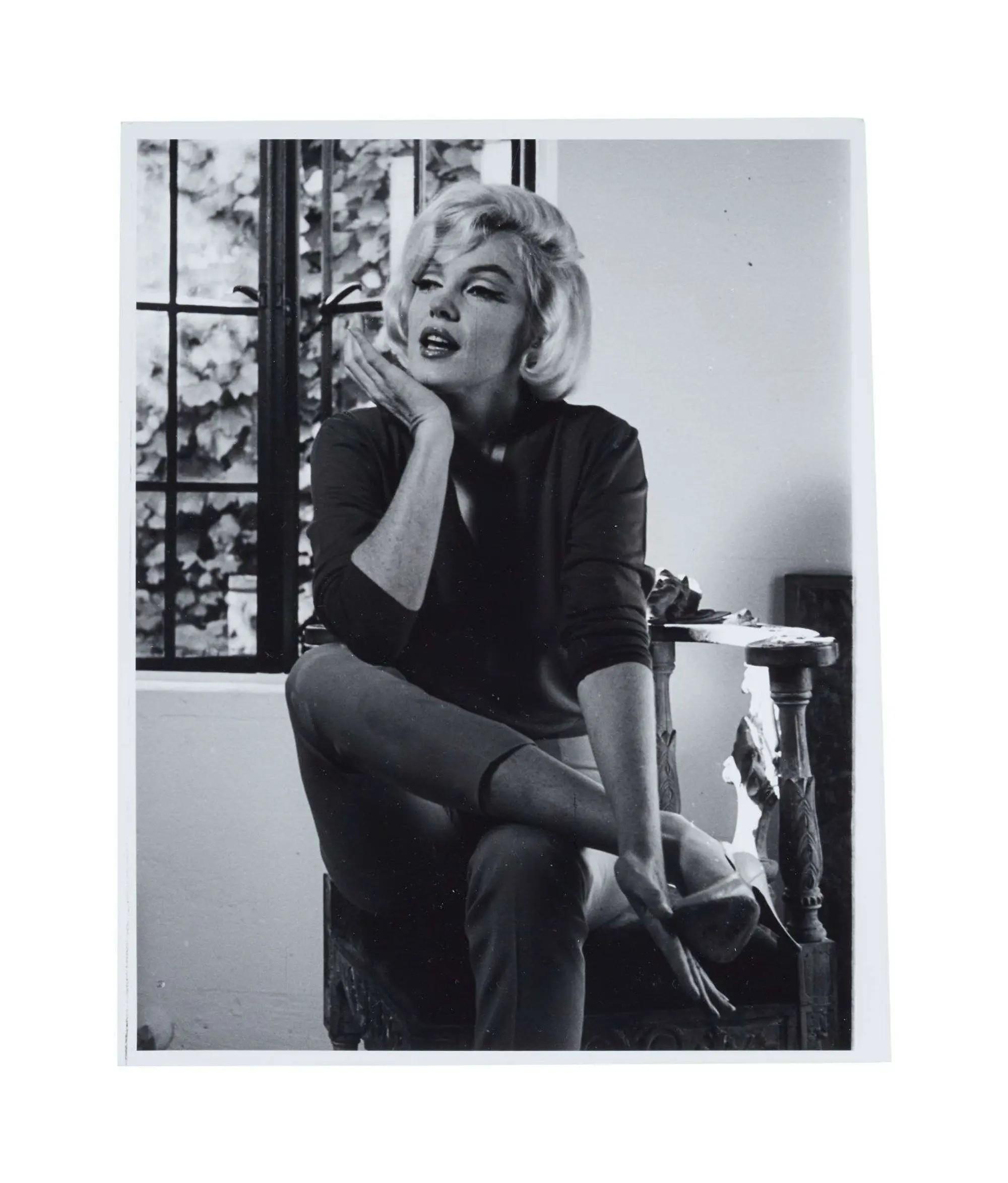
1. Lot #37. Marilyn Monroe | 1962/1980s Never-Published Black and White Photograph by Allan Grant, 2. Lot #39. Marilyn Monroe | 1962/1982 Black and White Photograph Signed by Allan Grant, 3. Lot #40. Marilyn Monroe | 1962 Black and White Photograph Signed by Allan Grant, 4. Lot #41. Marilyn Monroe | 1962/1990 Never-Published Black and White Photograph by Allan Grant, 5. Lot #42. Marilyn Monroe | 1962/1990 Never-Published Black and White Photograph by Allan Grant, 6. Lot #43. Marilyn Monroe | 1962 Color Slides, 7. Lot #44. Marilyn Monroe | 1962/1970s Color Slide, 8. Lot #59. Marilyn Monroe | 1960/1970s Rare Color Slide by Erich Hartmann from “The Misfits”, 9. Lot #61. Marilyn Monroe | 1961/1970s Black and White Photograph and Negative, 10. Lot #62. Marilyn Monroe | 1961 Rare Color Transparencies, 11. Lot #136. Marilyn Monroe | 1953 Rare Color Transparency, 12. Lot #135. Marilyn Monroe | 1953 Rare Small Color Transparency,
The LIFE issue carrying Grant's photographs hit newsstands on August 3, 1962. Marilyn Monroe died two days later. The magazine instantly became an artifact of a different kind — not a celebrity spread but a document of the last known session. These five lots are what came before the magazine existed. They are the surplus of history.
II. The Golden Globes, March 1962
World Film Favorite.
She Won That Night.
Four months before Grant's session, Marilyn walked into the Beverly Hilton for the Golden Globe Awards. She won in the category of World Film Favorite. The slides in Lots 43 and 44 document that evening: close-ups of her face, a rarer shot of her arriving, and on the back of that second sleeve, the line that names this entire editorial.
She was four months from death. She was winning awards. She was, by every external measure, at the apex of a legend that had taken fifteen years to build — from the early modeling years documented in Lots 161 through 172, to the Fox contract roles, to LIFE, to the Globe stage at the Beverly Hilton. The arc from Norma Jeane to "World Film Favorite" was not a straight line. It was a performance of survival so sustained and so complete that the world mistook it for effortlessness.
III. The Honeymoon That Wasn't Quite
Japan, February 1954.
Joe DiMaggio and Marilyn Monroe married on January 14, 1954. By February they were in Japan on what the press called their honeymoon, and what became, in practice, something considerably more complicated.
DiMaggio brought his old friend Lefty O'Doul and Lefty's wife Jean. This detail, which might read as eccentric hospitality, mattered more than it seems: Marilyn and Joe were already, in the chemistry of their personalities, not quite matched. The honeymoon was a preview. She performed for 100,000 troops in Korea — a spontaneous, electric series of shows she later called one of the greatest experiences of her life. He managed the itinerary. They divorced nine months after the wedding.
Lots 116 through 121 present something genuinely rare: never-before-seen color slides from Japan, consigned by the families of the people who took them. Kodachrome duplicates, housed in cardboard sleeves, depicting Marilyn alone by a body of water; leaning against an obelisk in a Japanese garden; sitting at an outdoor table along the sea; stepping off an airplane with Jean O'Doul; arriving on the tarmac with Joe and the O'Douls.
Specialist Note
“These are all never before seen and offer a rare glimpse of Marilyn on her honeymoon... people tend to forget she was in Japan first because she later went to Korea, where she famously sang for the troops.”
— Julien’s lead specialist, Margaret Barrett
Also in this group: Lots 113, 114, and 115, all signed, all consigned by the niece of Kiyoko Miwa — a woman who worked for the Central League of Japan Professional Baseball Association and who obtained each autograph in person. Lot 113 shows Marilyn surrounded by flowers, smiling, signed in black fountain pen. Lot 114 shows her and DiMaggio walking off an airplane, signed by both. Lot 115 adds Lefty O'Doul to the frame: three signatures, one hotel room, one moment of something like normalcy before the century caught up with all of them.
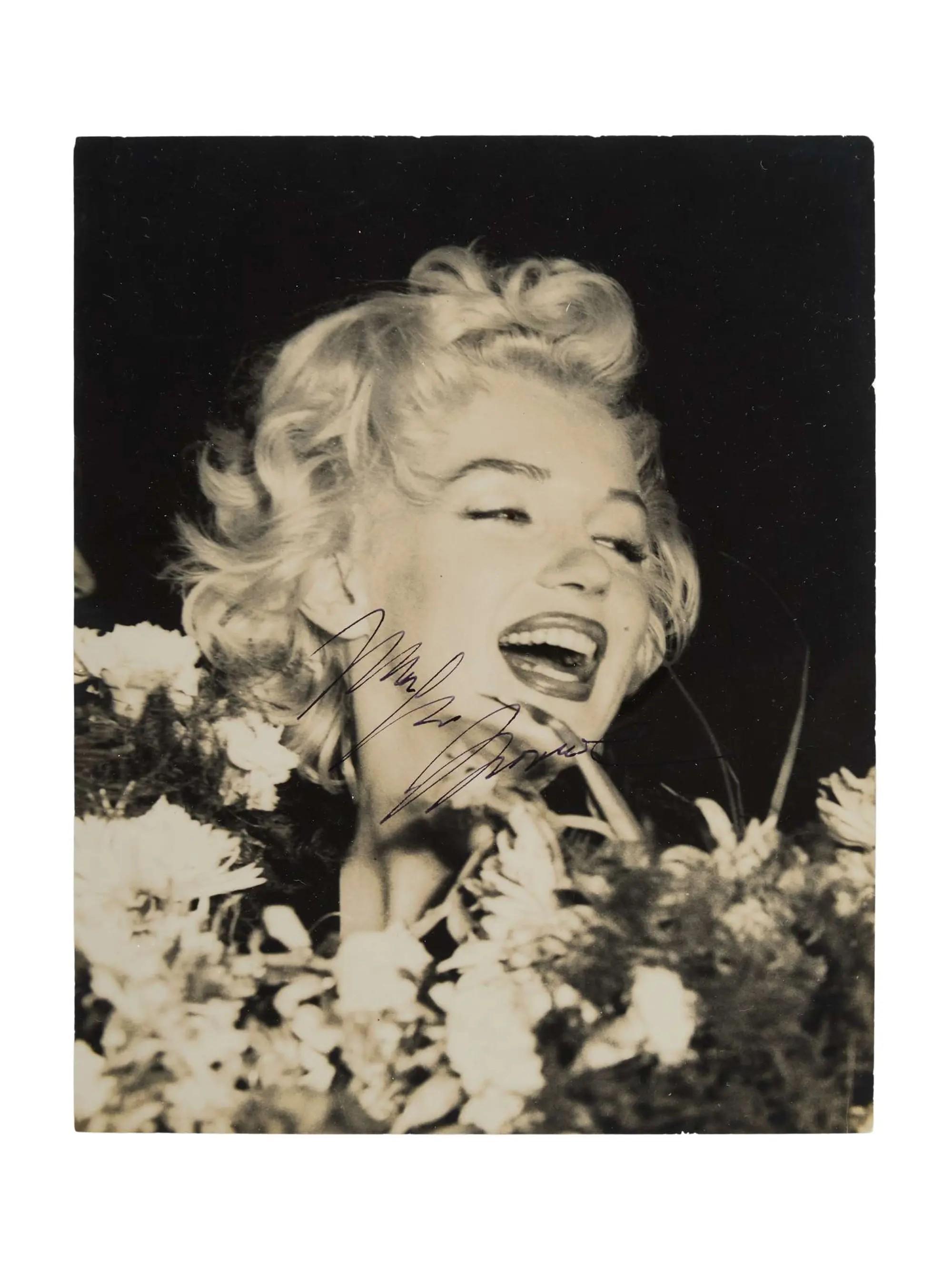
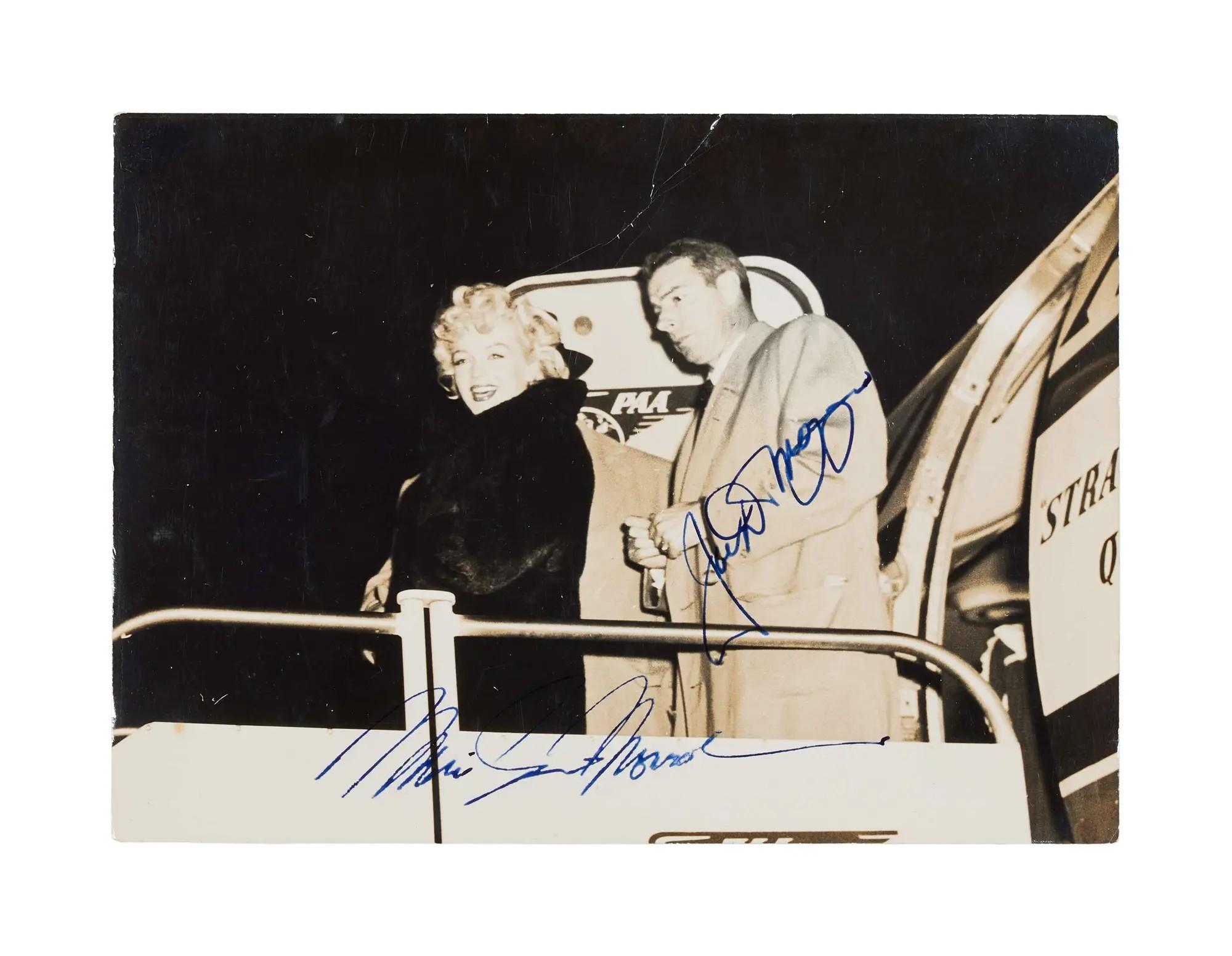
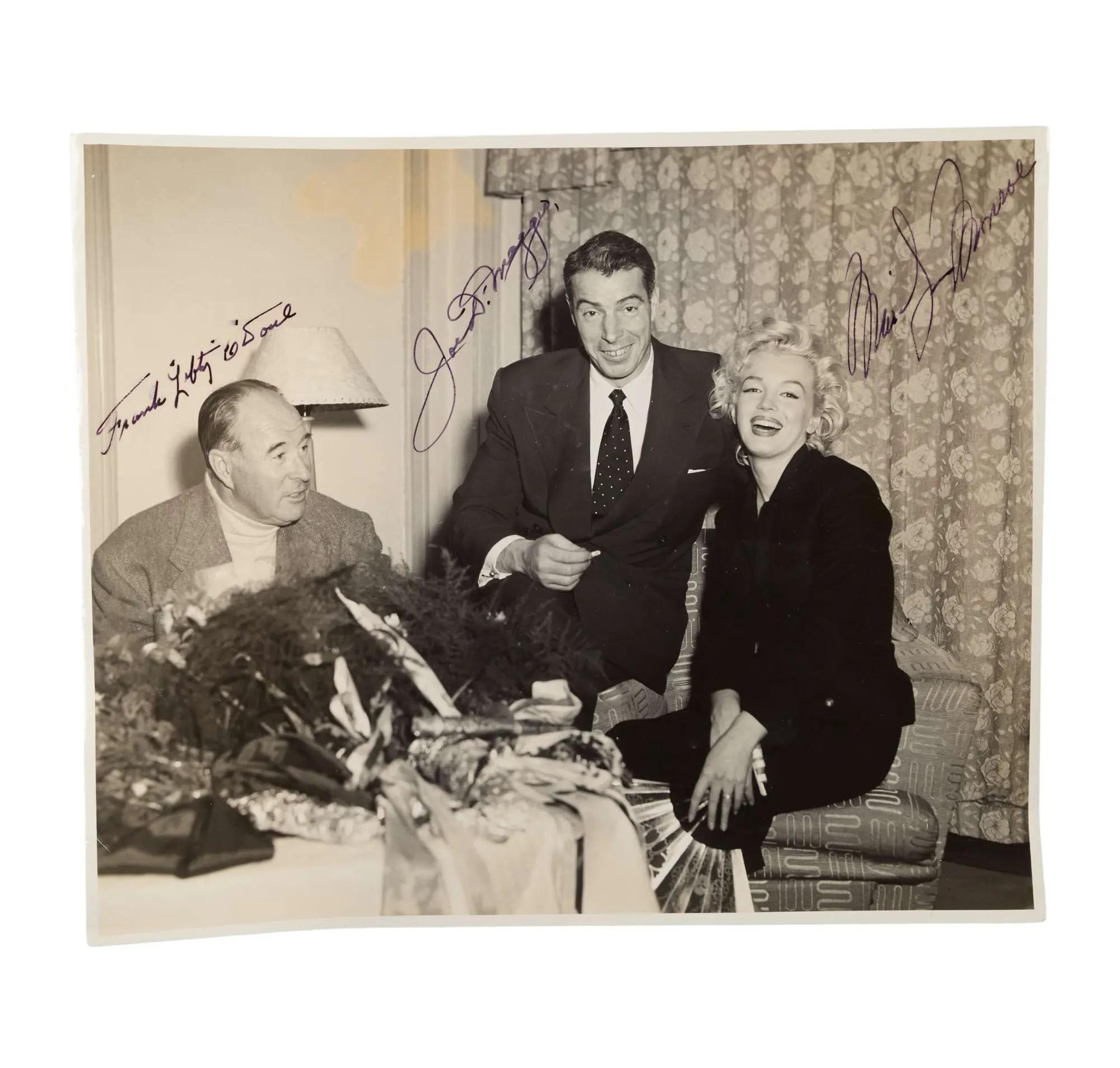
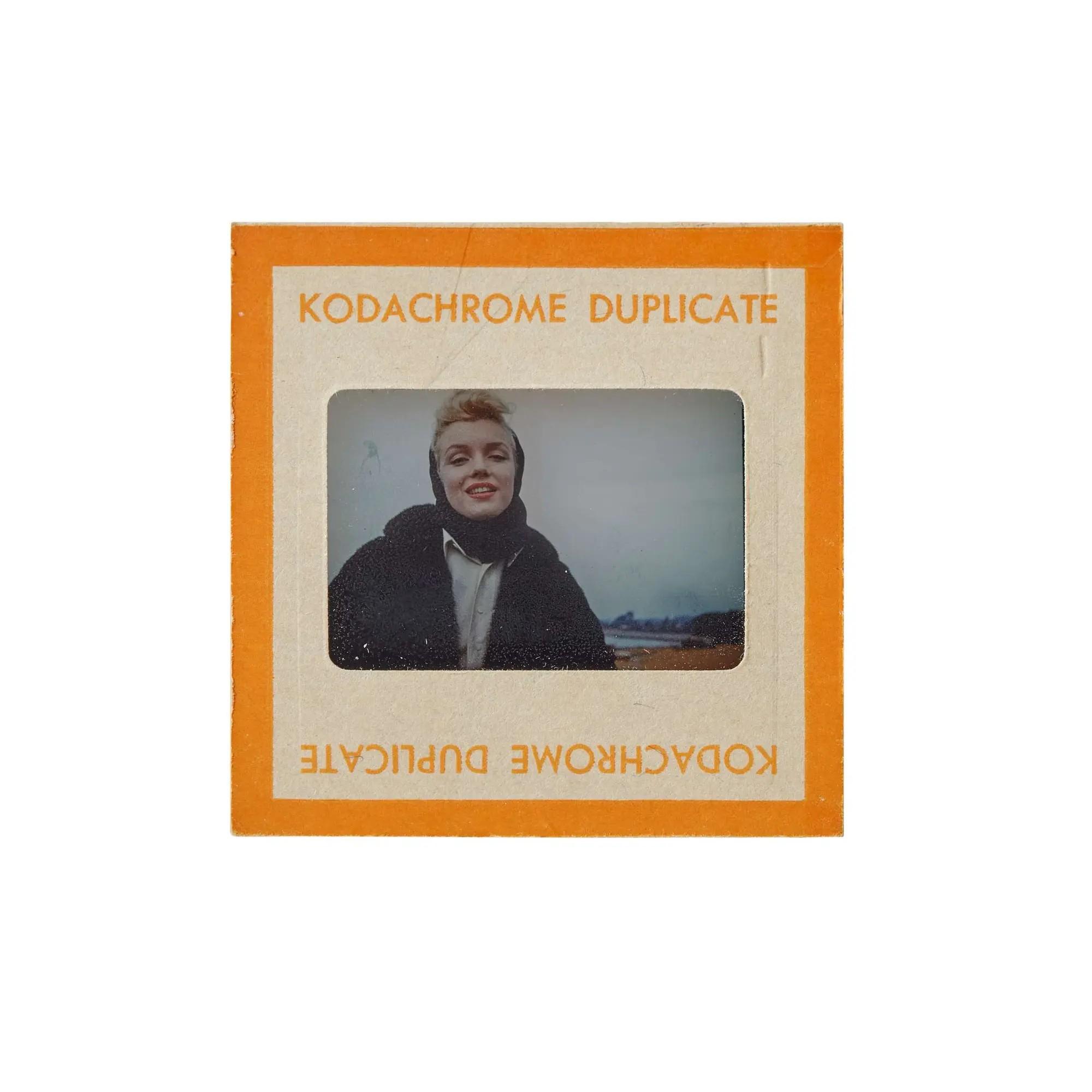
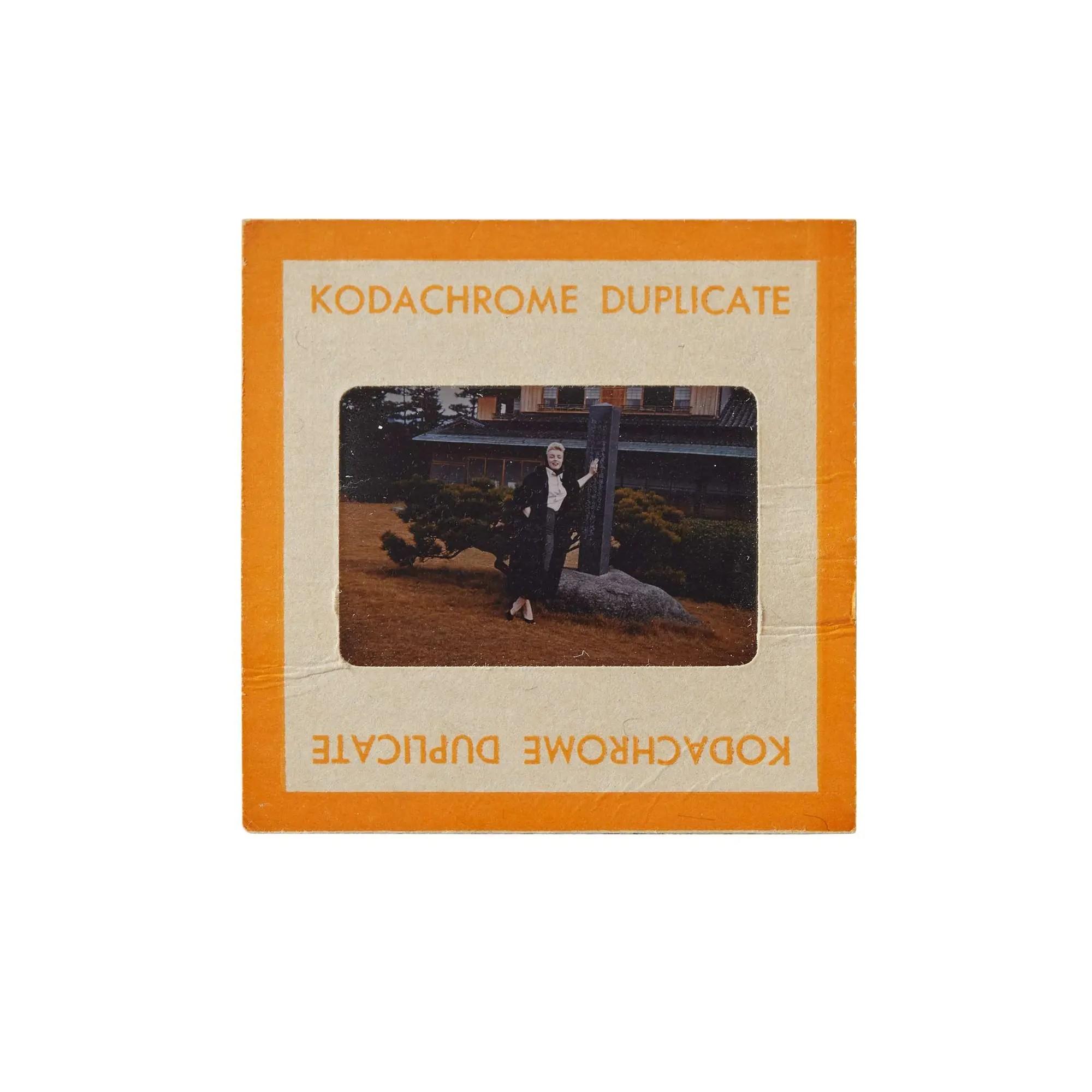
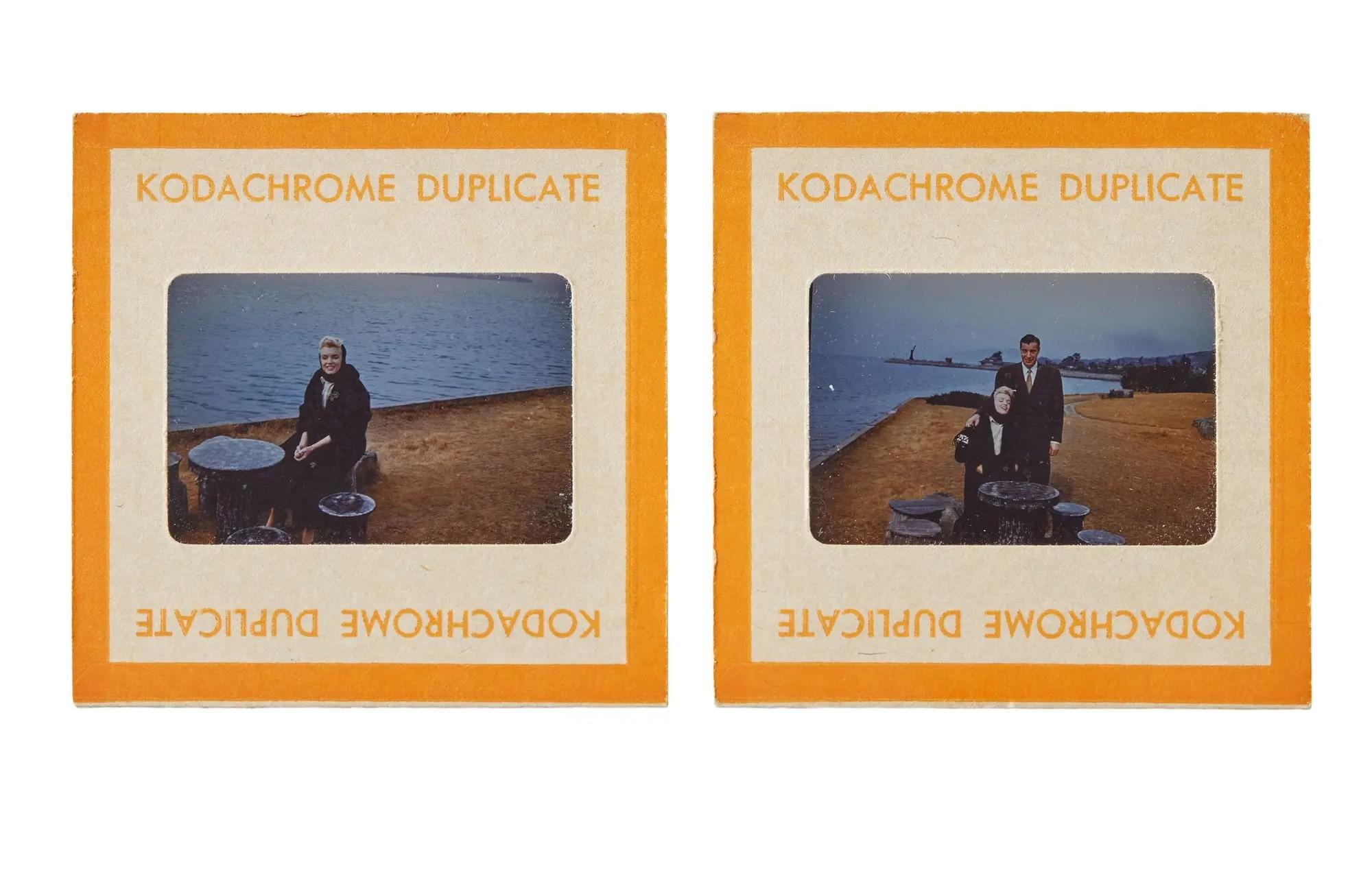
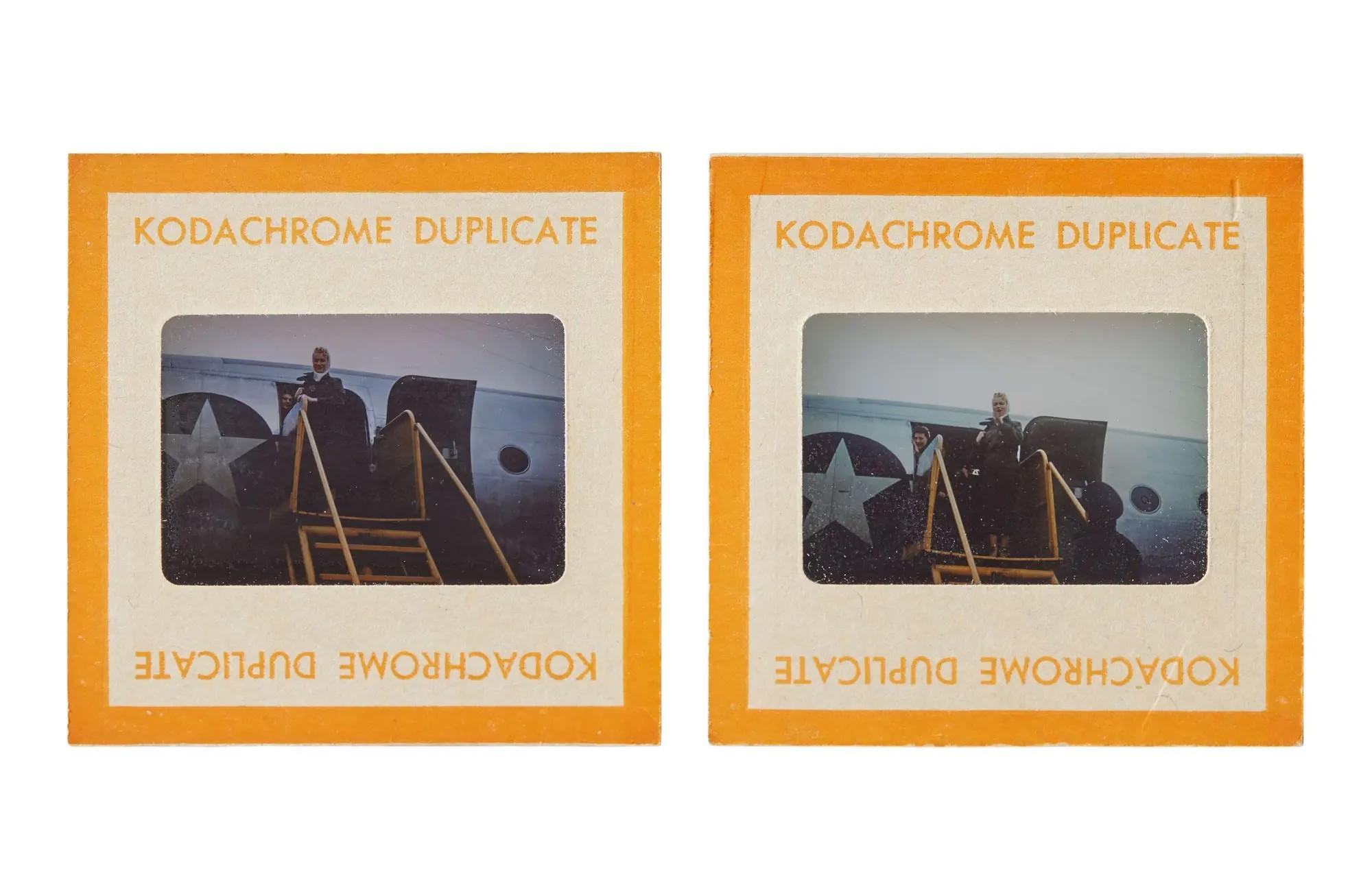
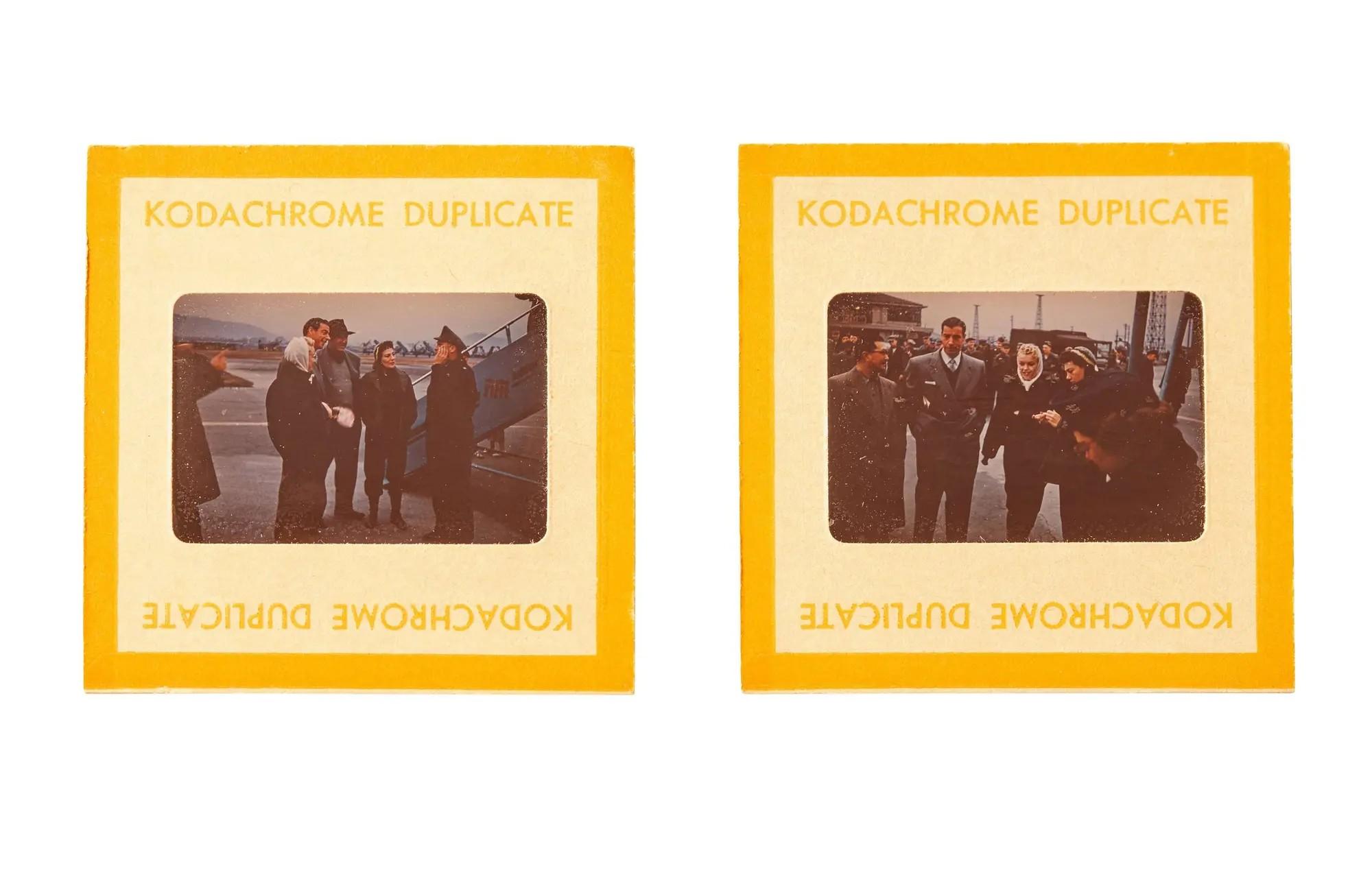
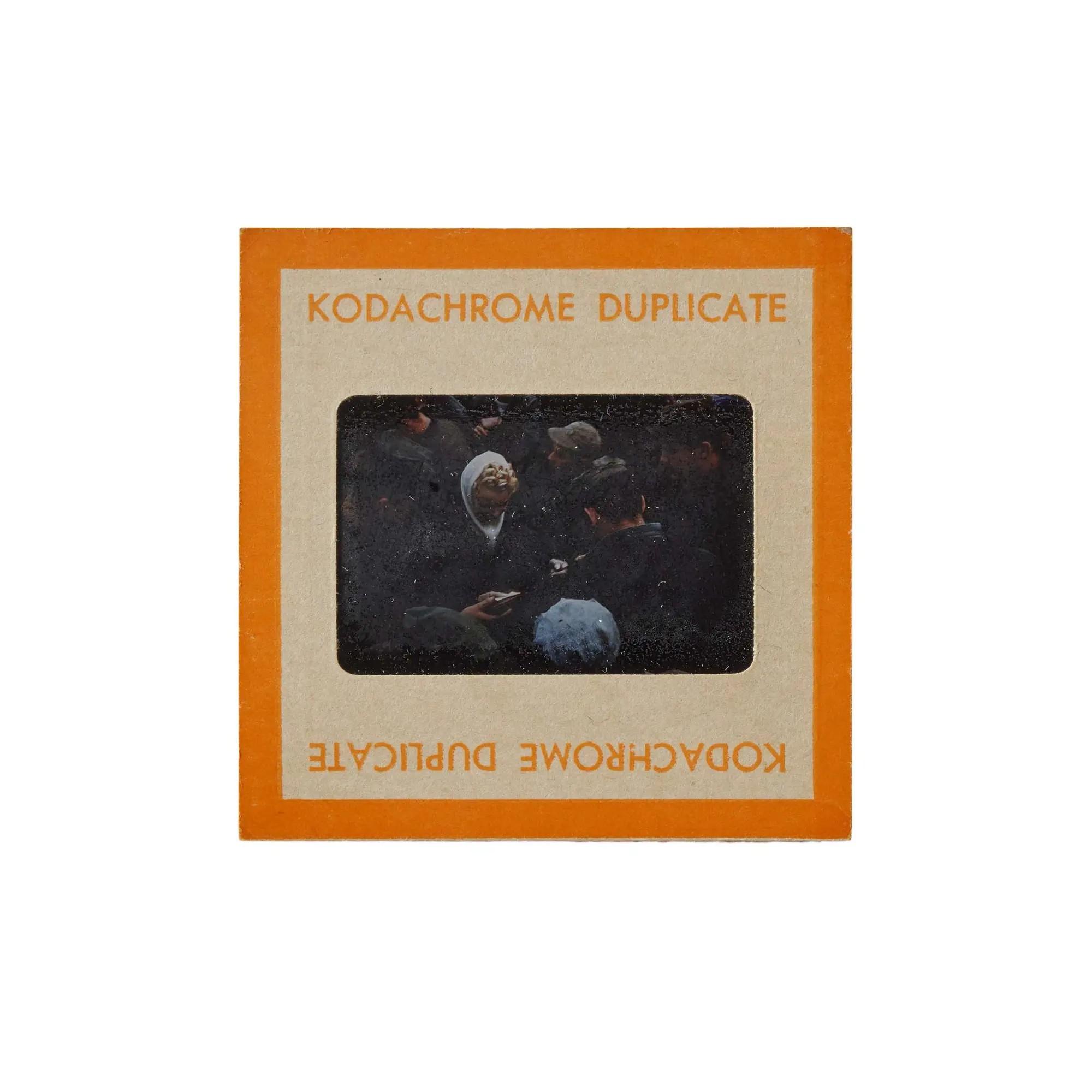
1. Lot #113. Marilyn Monroe | 1954 Signed Black and White Photograph, 2. Lot #114. Marilyn Monroe and Joe DiMaggio | 1954 Signed Small Black and White Photograph, 3. Lot #115. Marilyn Monroe and Joe DiMaggio, Et Al. | 1954 Signed Black and White Photograph, 4. Lot #116. Marilyn Monroe | 1954 Never-Before-Seen Stunning Color Slide from Japan, 5. Lot #117. Marilyn Monroe | 1954 Never-Before-Seen Color Slide from Japan, 6. Lot #118. Marilyn Monroe | 1954 Never-Before-Seen Color Slides from Japan, 7. Lot #119. Marilyn Monroe | 1954 Never-Before-Seen Color Slides from Japan, 8. Lot #120. Marilyn Monroe | 1954 Never-Before-Seen Color Slides from Japan, 9. Lot #121. Marilyn Monroe | 1954 Never-Before-Seen Color Slide from Japan,
IV. The Mystery Slides, 1958
Two Views of the Same Moment
Taking a look at lots 80 through 84, and you’ll find that among everything in this auction, these are the strangest and most quietly beautiful objects. They are stereoscopic slides — each cardboard sleeve containing two identical images mounted side by side, designed to be placed in a stereoscope so that the brain resolves them into a single three-dimensional picture.
The technology was popular in the 1950s. The content is Marilyn Monroe in an outdoor setting in 1958, surrounded by people, with Arthur Miller occasionally visible behind her or to her left. The probable occasion is May 21, 1958 — a ceremony hosted by the American Academy of Arts and Letters, where Miller received an award. But the slides were not developed until 1961, per a postmark on the original Kodak Rochester box, back when people waited years to see what they'd caught.
Specialist Note
"These are all never before seen and they're somewhat of a mystery because we don't know exactly where she is." — Margaret Barrett
What survives, then, is not just a photograph but a question: who made these, why did they wait three years to develop them, and what did they see when the image finally materialized? In the stereoscope, Marilyn Monroe would have floated in dimensional space — not flat, not iconic, but present. That presence is now available for the first time in sixty-five years.
V. The Photographers
The Men and Women Who Knew Her Face
A photograph is always a negotiation between the subject and the person holding the camera. To understand Marilyn Monroe's image is to understand who she trusted, who she tolerated, who she used, and who used her — and what each of those relationships produced.
Cecil Beaton photographed her in 1956 and produced what Marilyn declared her favorite photograph of herself — a sepia print in which she holds a flower against an Asian-print backdrop. She had many copies made to sign for special people in her life. Lot 93 is one of those copies, in its original oversized folder, inherited through Lee and Paula Strasberg's estate. Fifteen by fourteen inches. Matte finish. The face she chose for herself.
Richard Avedon shot her in 1957 in a black sequined evening gown on a gray tufted couch. The color transparency in Lot 92 is described as "beautifully sharp and clear" — and it sold at auction for $800 against an estimate of $100–$200, which tells you something about what the market knows that the estimate-setters sometimes forget. Avedon's Marilyn is composed, nearly architectural, a woman who has learned to occupy a frame.
Sam Shaw caught a different woman entirely: the smiling star with a pink carnation in her mouth, wearing a light blue polka-dot dress, the image now so familiar it has become shorthand for a particular kind of Marilyn joy. Lot 91 is a 1993 print signed by Shaw in gold metallic ink, with a letter from his son Larry confirming his father made it from the original negative. It came from the collection of Greg Schreiner, founder of Marilyn Remembered — the longest-running Monroe fan club in existence.
Philippe Halsman photographed her across more than a decade, starting in the late 1940s. Lot 130 holds two of his slides: one from 1954, close-up and serious; one from 1959, Marilyn jumping in a black beaded gown. The jump photographs were Halsman's signature — he believed that in the act of jumping, subjects lost their composure and revealed themselves. Whether Marilyn lost her composure or simply performed a more elevated version of it is a question the image leaves open.
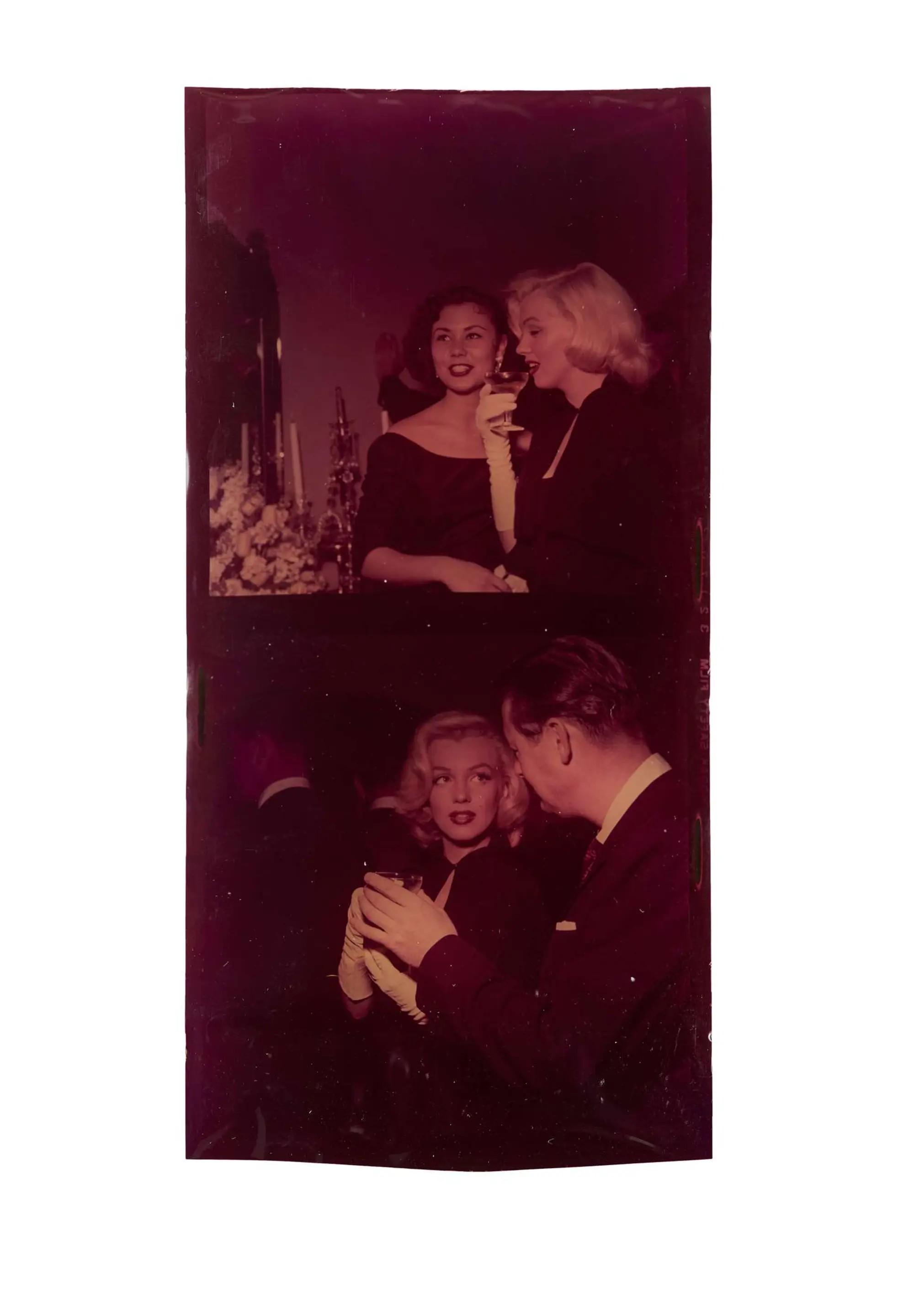
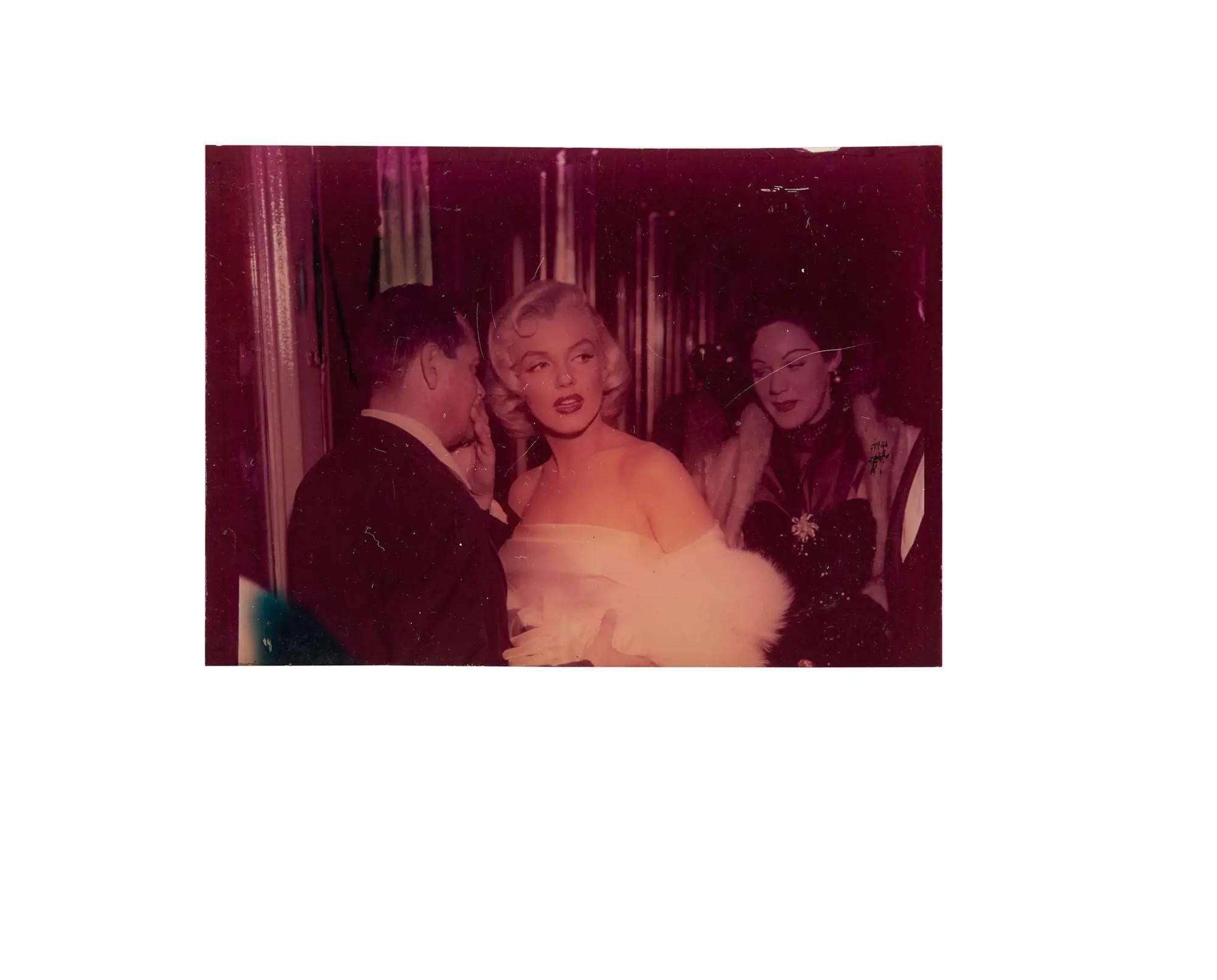
Milton H. Greene, her business partner and most sustained photographic collaborator, is represented across Lots 101 through 108 in ways that complicate the usual narrative. The contact sheets from Lot 105 — 17 unpublished images from his Lexington Avenue studio, January 28, 1955 — were consigned directly from his estate. Lot 108's five contact sheets document a Friars Club party at the Waldorf Astoria, March 11, 1955, where Dean Martin, Jerry Lewis, Sammy Davis Jr., and Milton Berle were also present. These are the raw material of legend: not the chosen image but all the images, the ones where she's slightly off, where the light isn't right, where she's turning away.
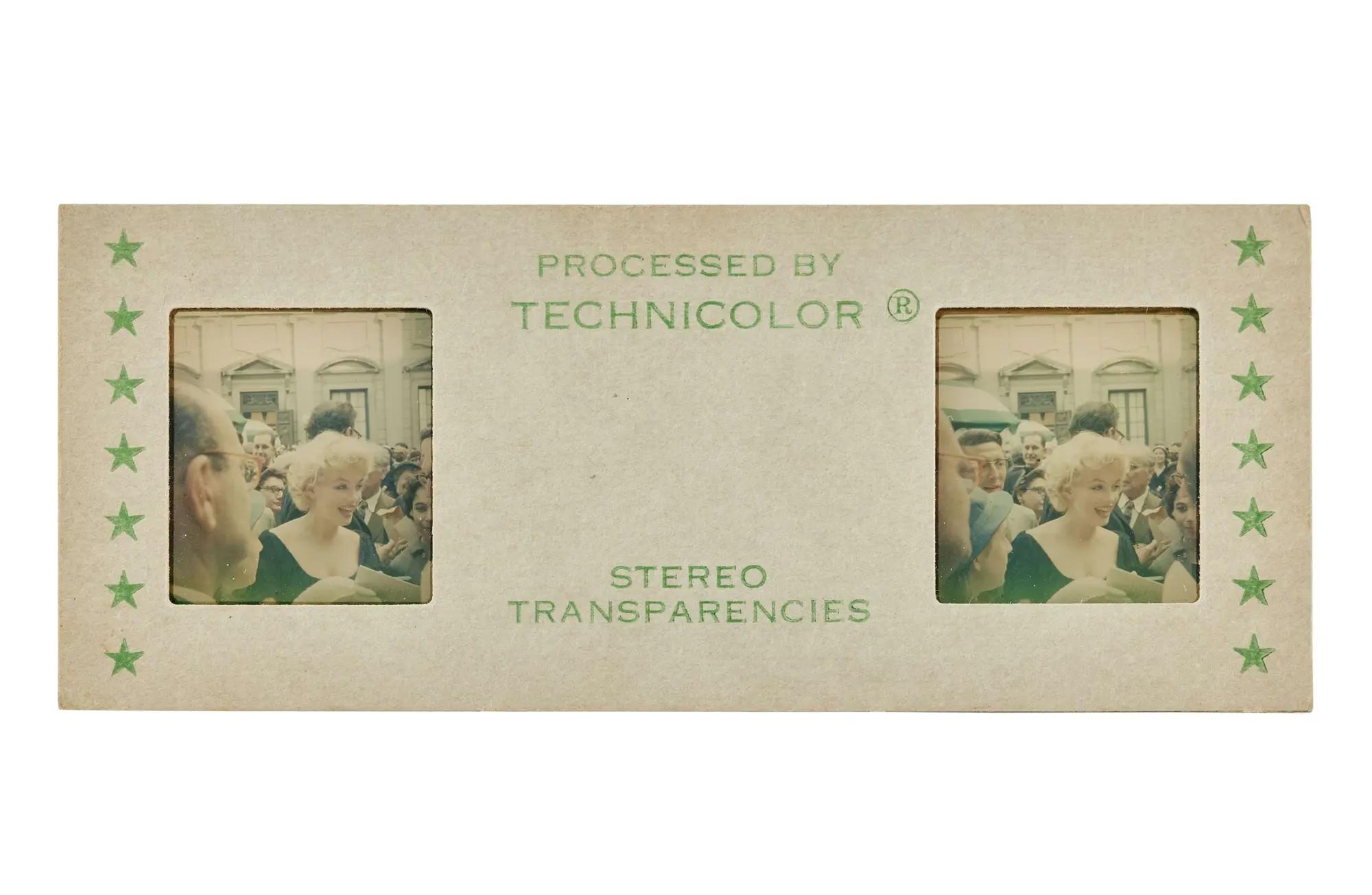
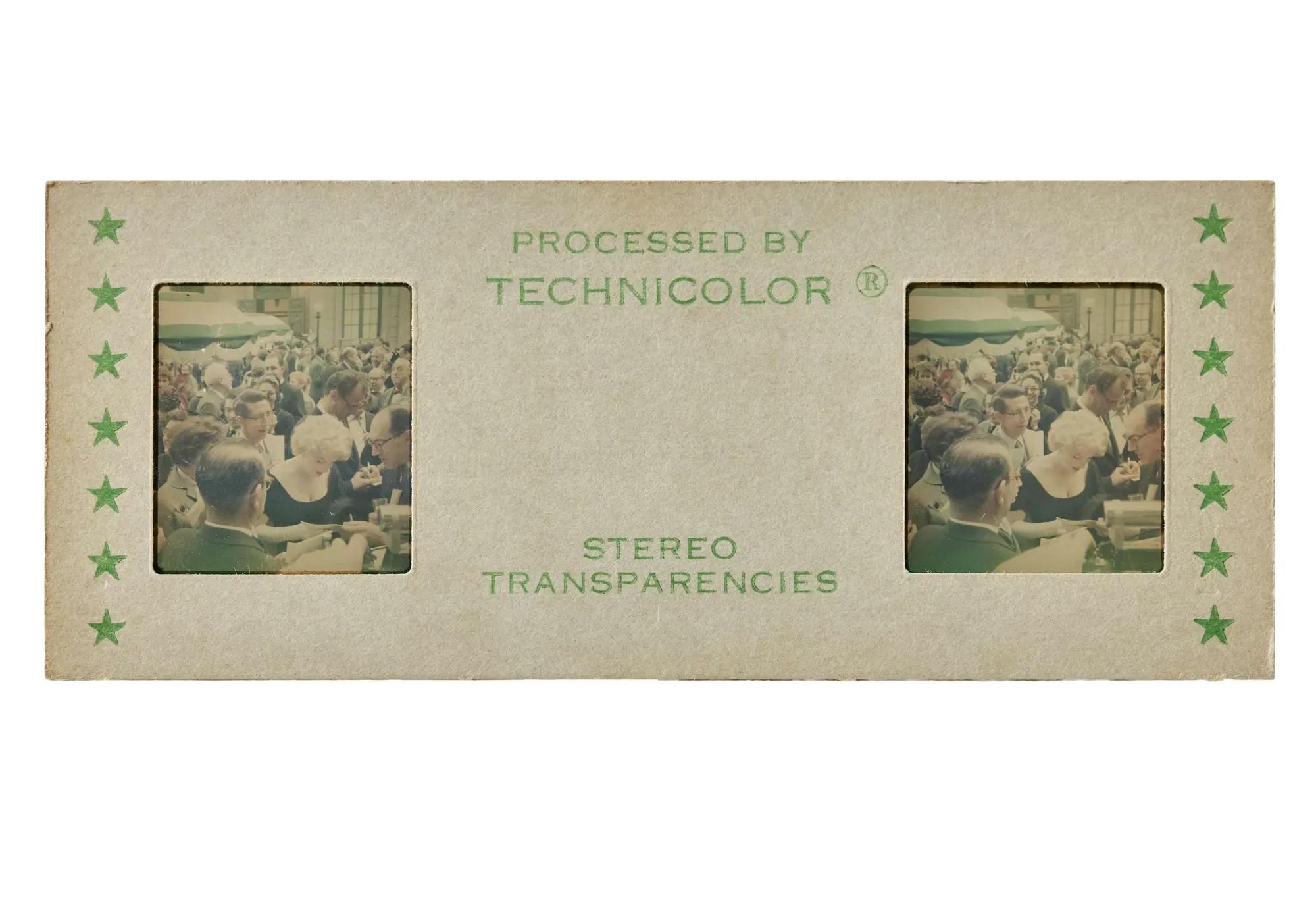
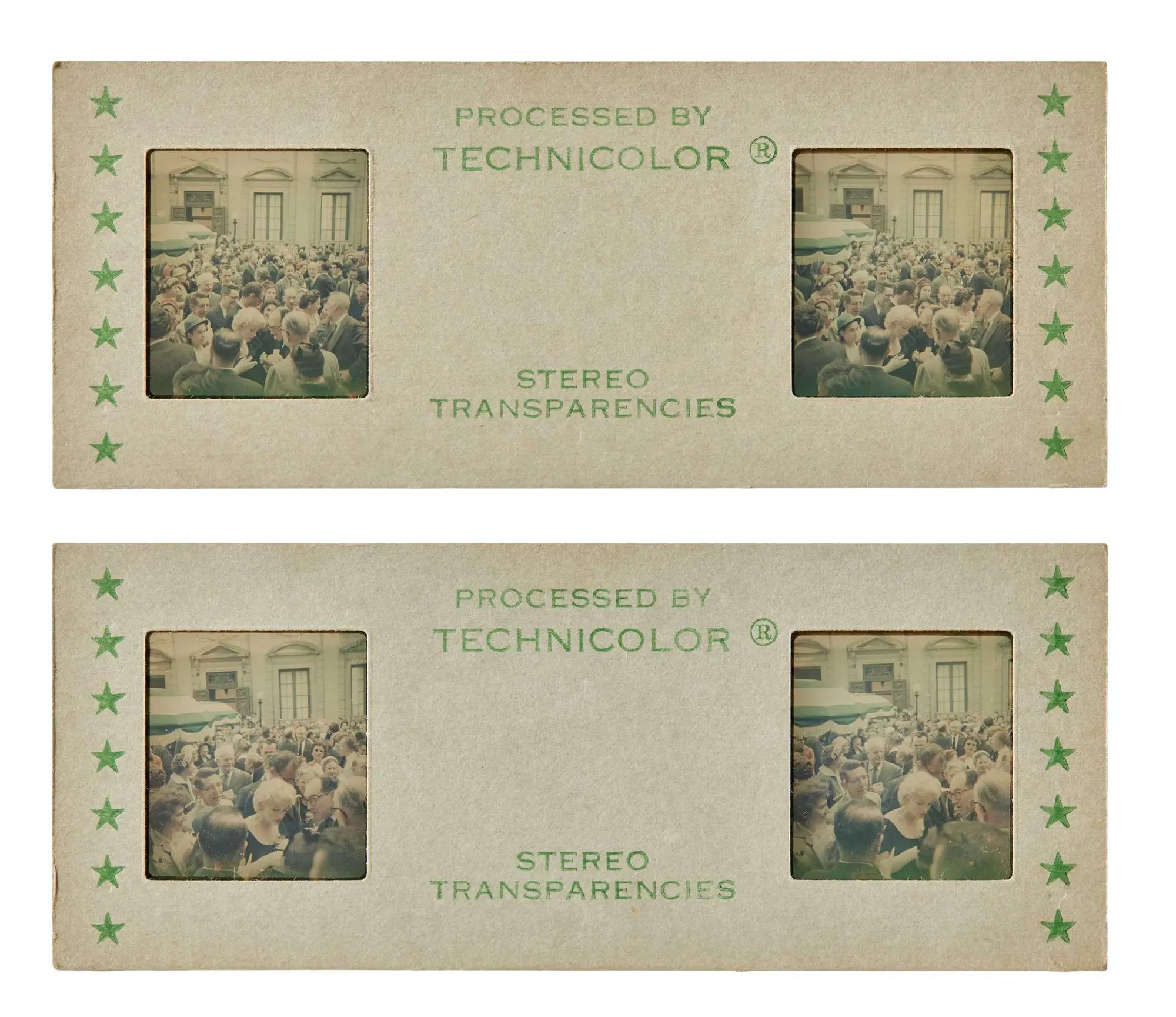
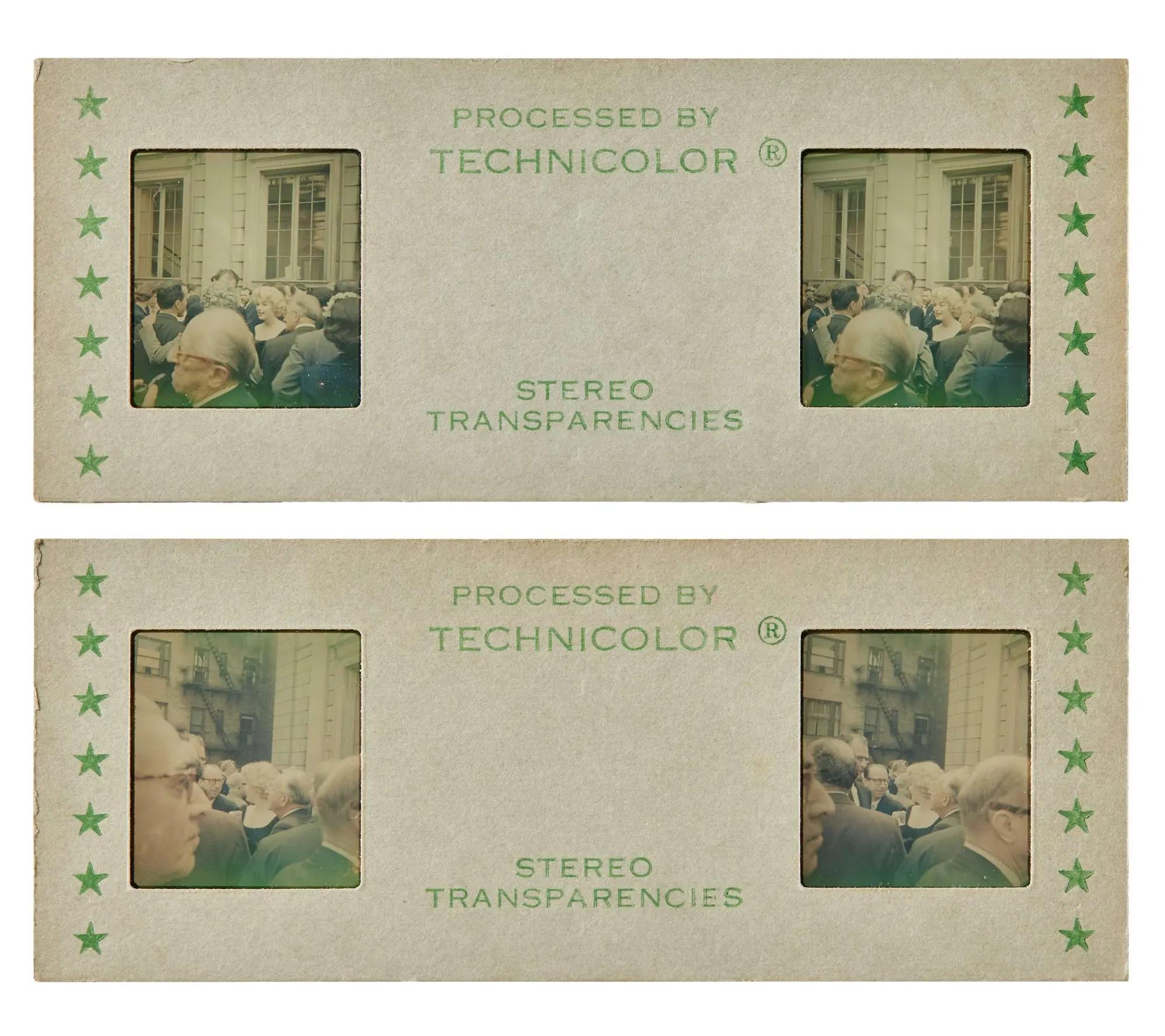
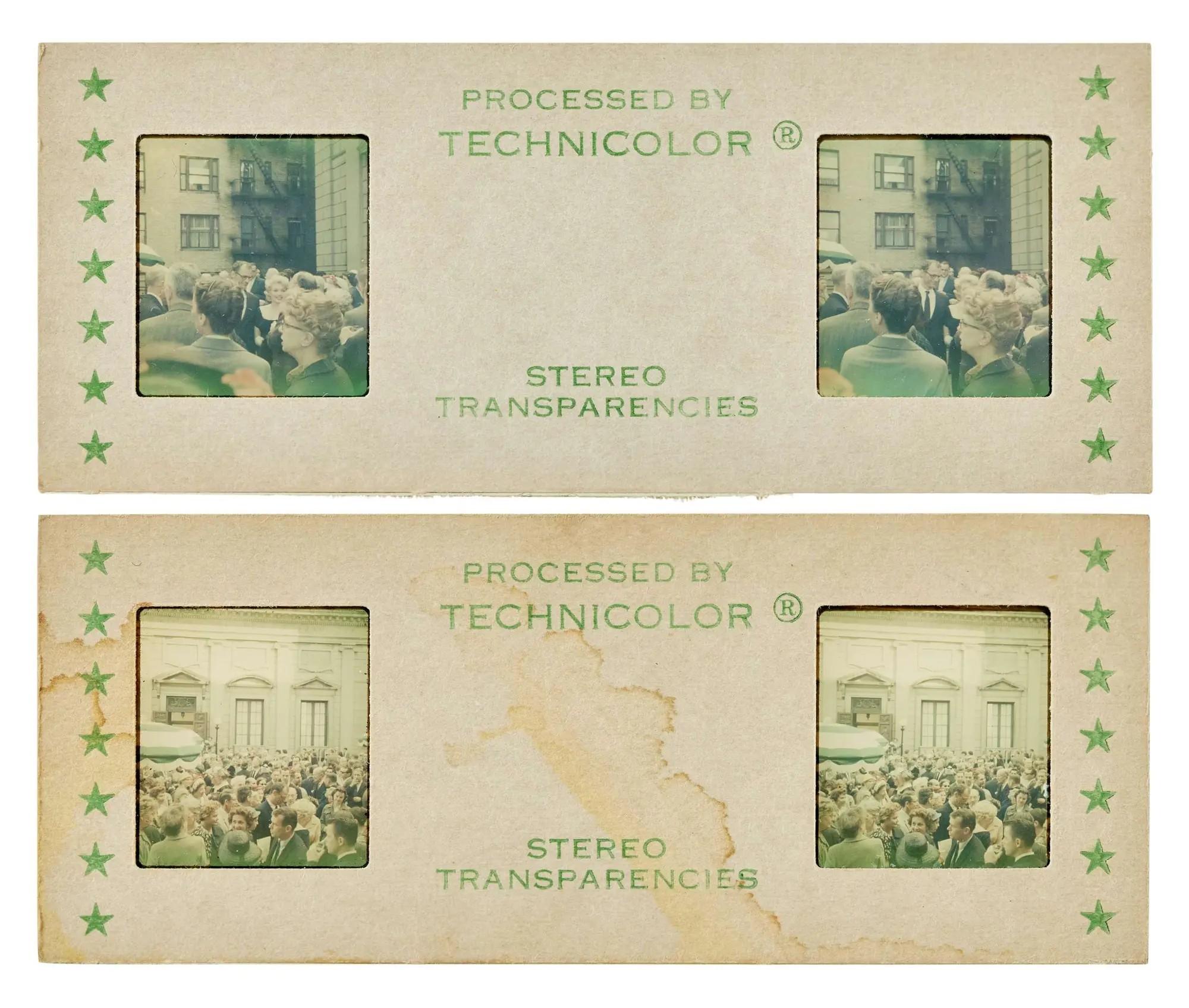
1. Lot #80. Marilyn Monroe | 1958 Never-Before-Seen Color “Stereo Transparency”, 2. Lot #81. Marilyn Monroe | 1958 Never-Before-Seen Color “Stereo Transparency”, 3. Lot #82. Marilyn Monroe | 1958 Never-Before-Seen Color “Stereo Transparencies”, 4. Lot #83. Marilyn Monroe | 1958 Never-Before-Seen Color “Stereo Transparencies”, 5. Lot #84. Marilyn Monroe | 1958 Never-Before-Seen Color “Stereo Transparencies”,
What the Set Photographs Never Were Supposed to Show
The rarest film-set photographs are not the publicity stills. Publicity stills are constructed — costume correct, lighting approved, expression manufactured for the purpose of selling a picture to a public that hasn't seen it yet. The rare photographs are the ones taken between takes, during blocking, when someone on a crane or crouched by a dolly caught Marilyn Monroe simply existing in a role.
Lot 109 from "Bus Stop" (20th Century Fox, 1956) is one of those: a color transparency showing her on location in Arizona, holding a glass of water, eyes closed, crew visible behind her, wearing the rodeo costume. Margaret Barrett's note on this lot is precise: "these are very rare behind-the-scenes outtakes that were never published at the time — they show the non-posed Marilyn for the most part."
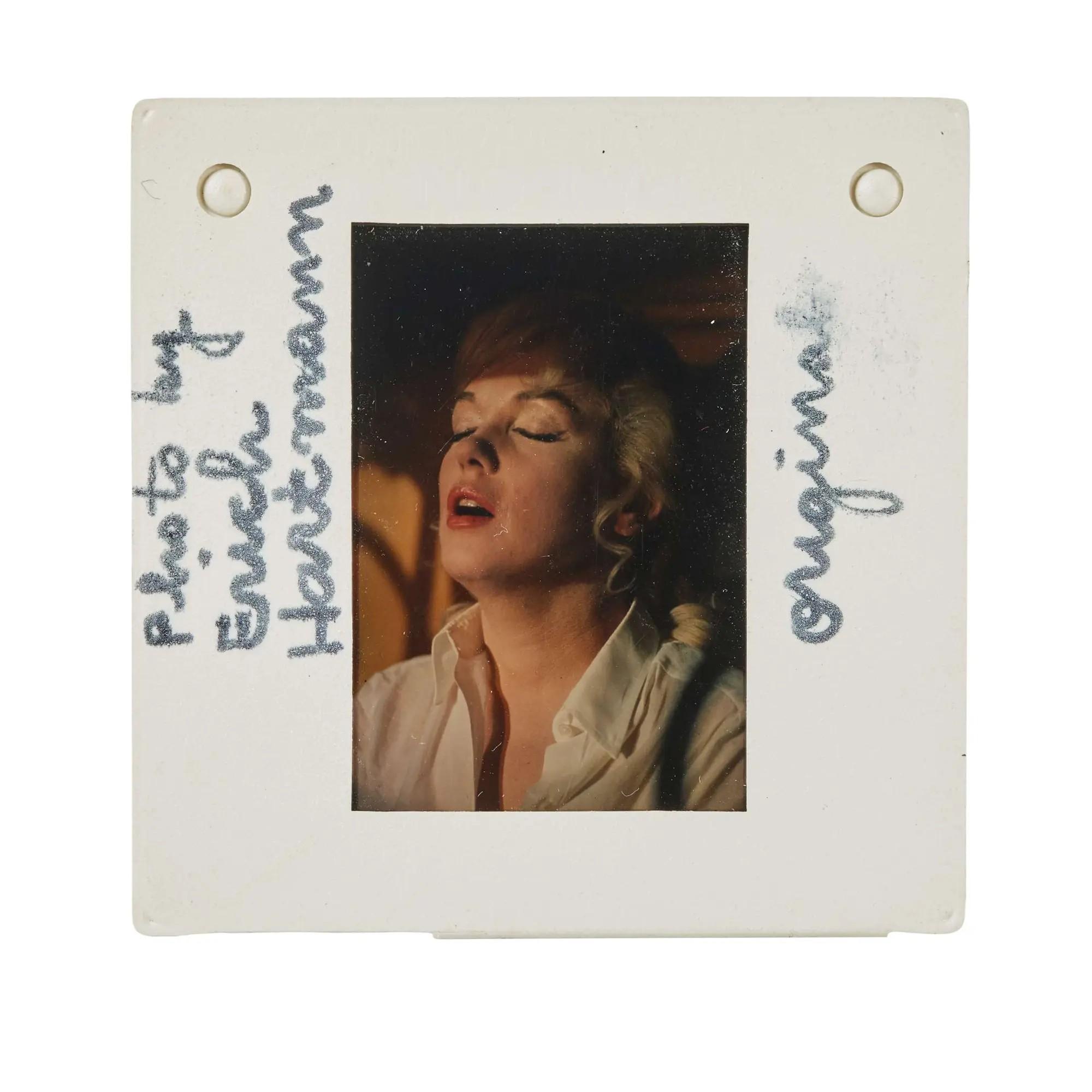
From "The Misfits" (United Artists, 1961), Lot 59 offers an Erich Hartmann slide — Hartmann being a Magnum photographer, which means a photographer with an instinct for the unguarded moment. His image shows Marilyn with her eyes closed and mouth open. It is an unusual choice. Most photographers, shooting for licensing or publication, would have moved on. Hartmann kept it. He annotated it himself: "Photo by / Erich / Hartmann / Original."
And from "River of No Return" (20th Century Fox, 1954), Lot 123 presents six never-before-seen color slides of Marilyn on crutches — walking on location in Banff National Park, Canada, in August 1953, wearing a white turtleneck and black skirt, surrounded by crew. She had injured her leg during filming. The slides were consigned directly by the family that took them 73 years ago, and they show something no studio would have chosen to release: a movie star, temporarily hobbled, continuing to work.
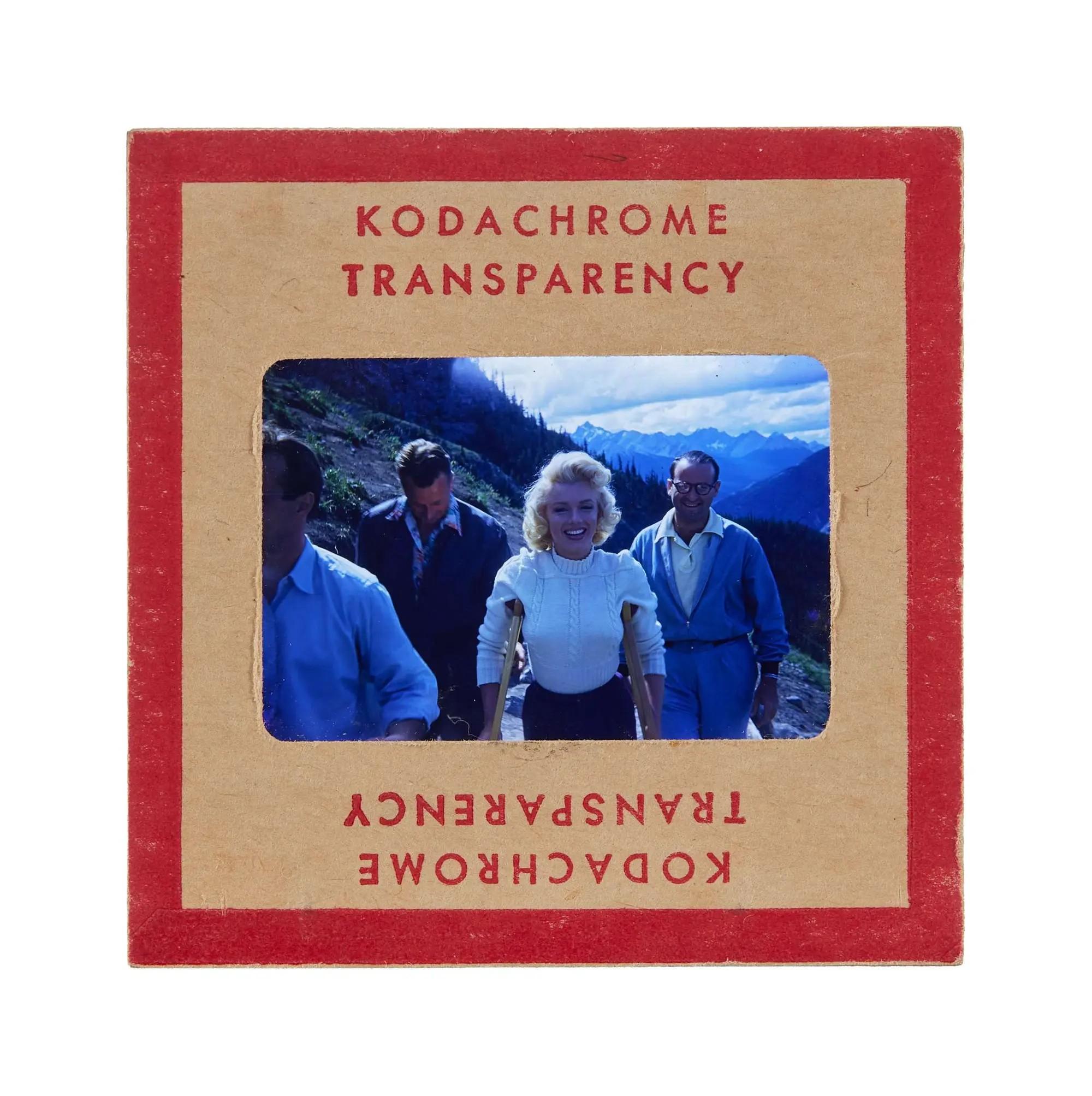
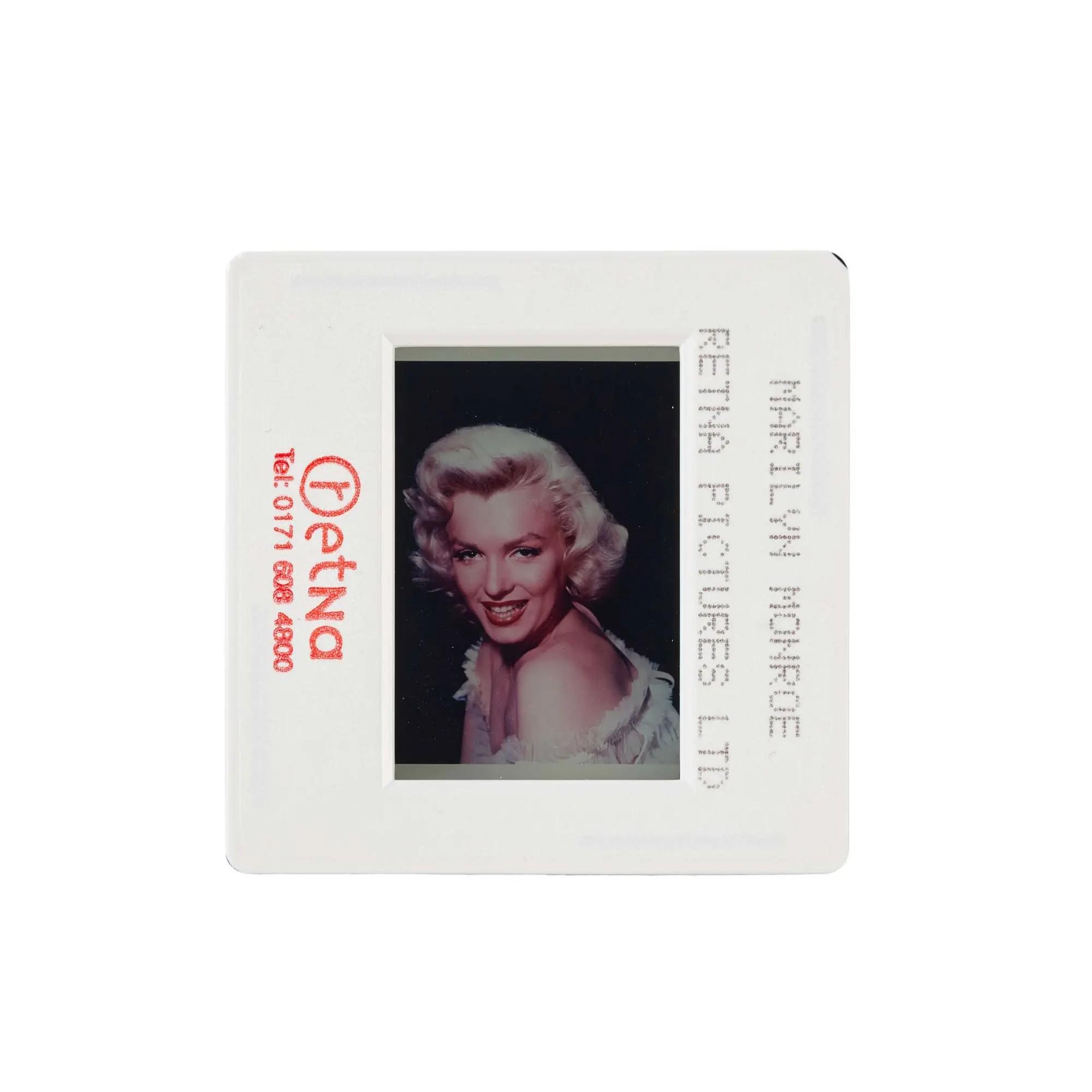
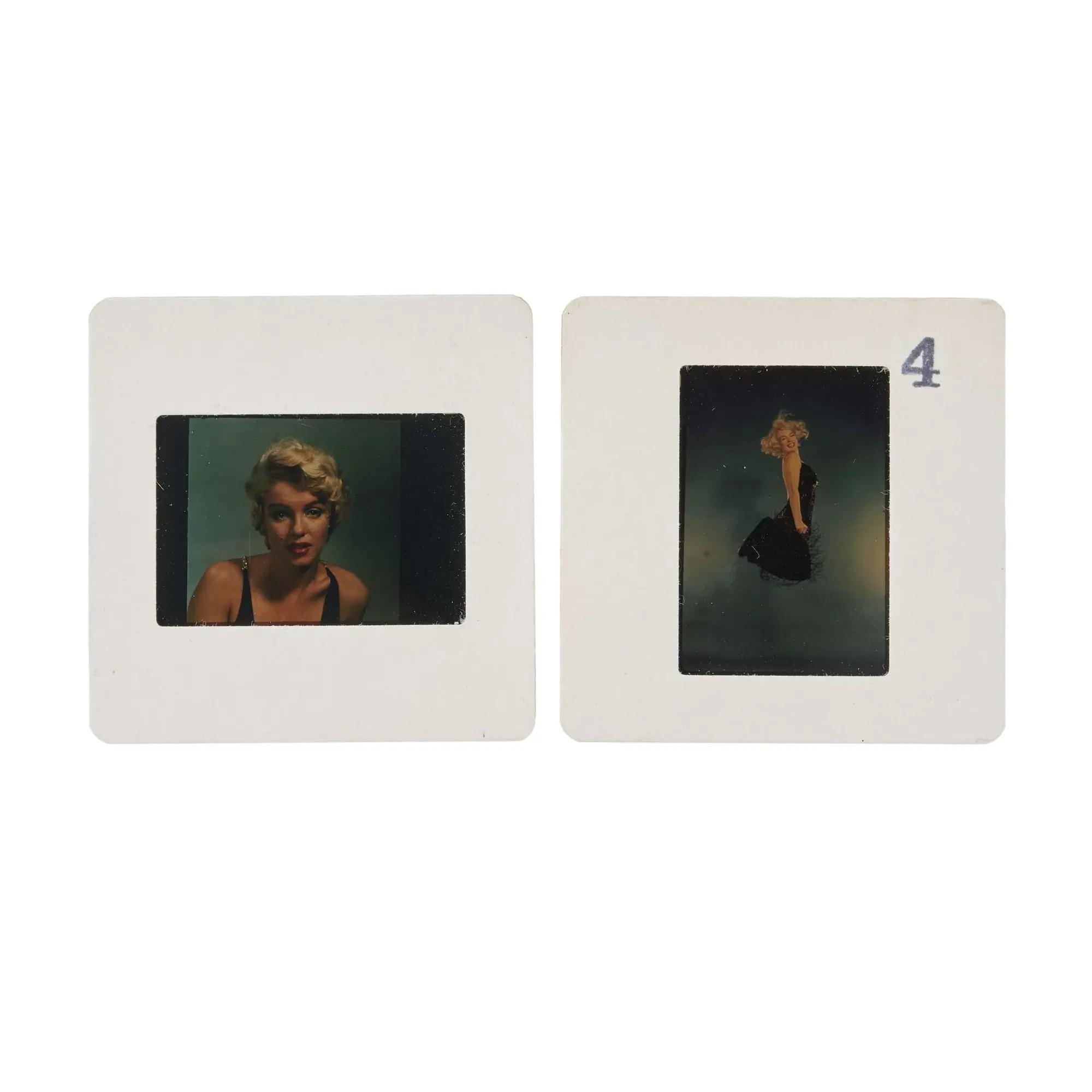
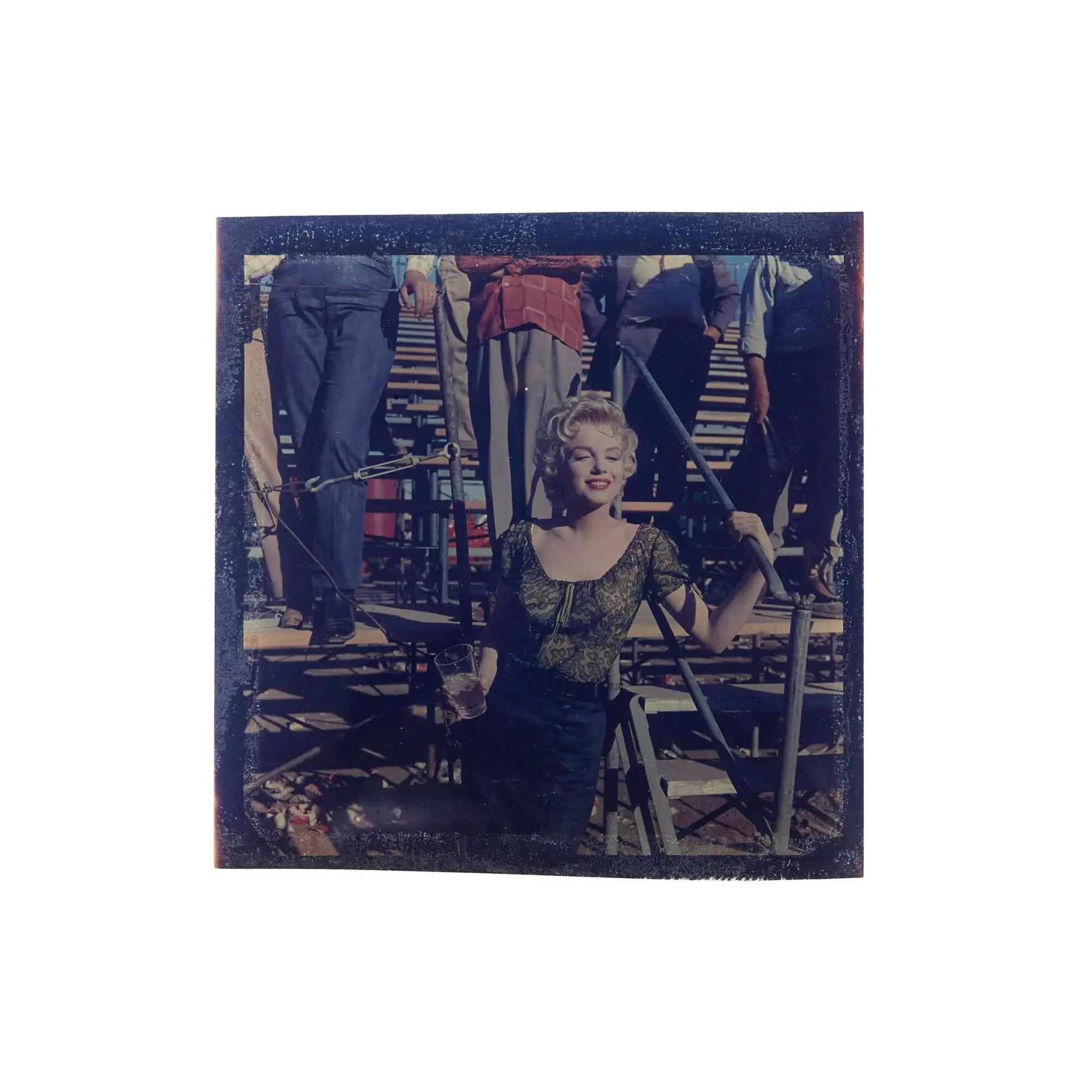
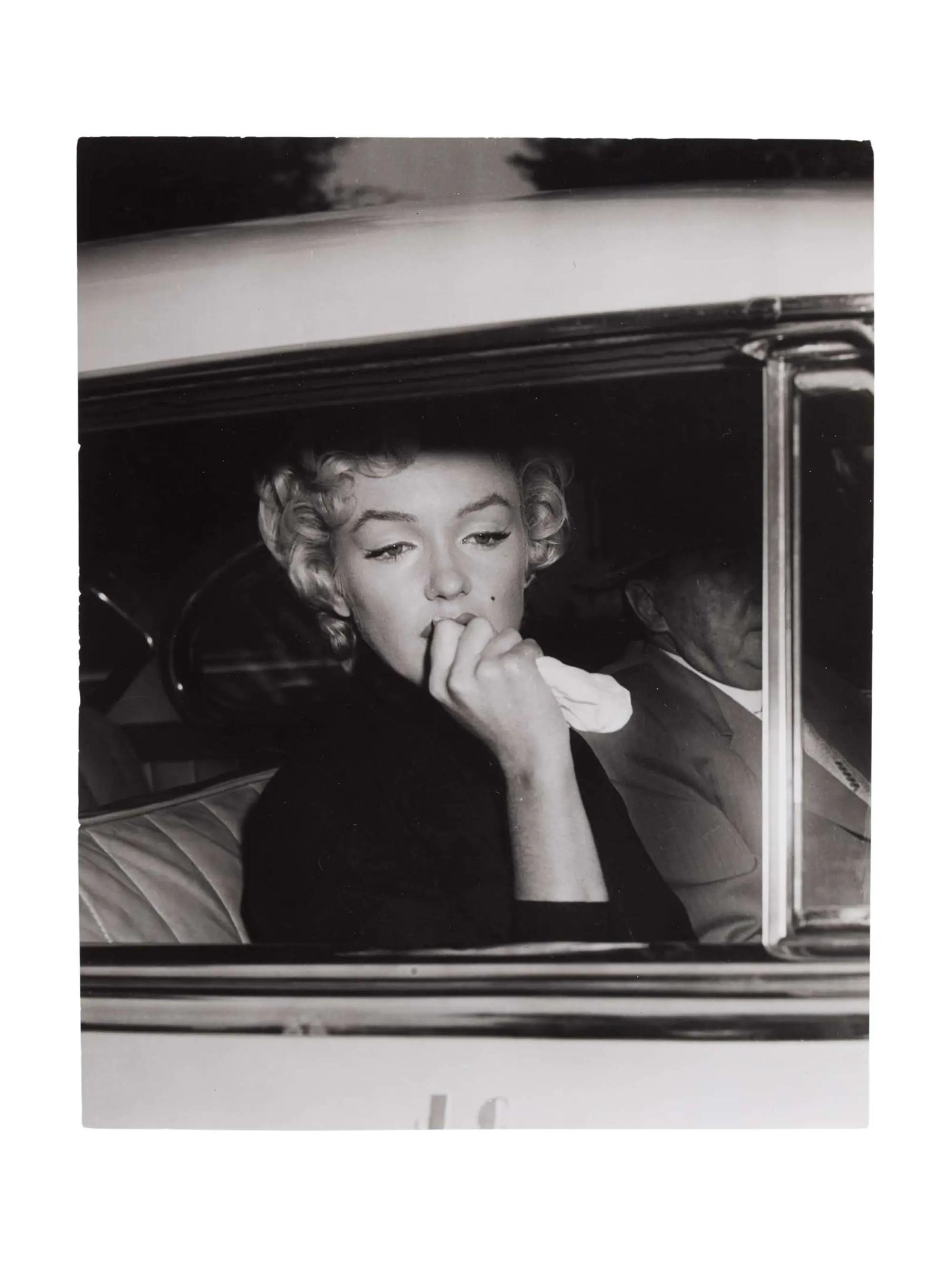
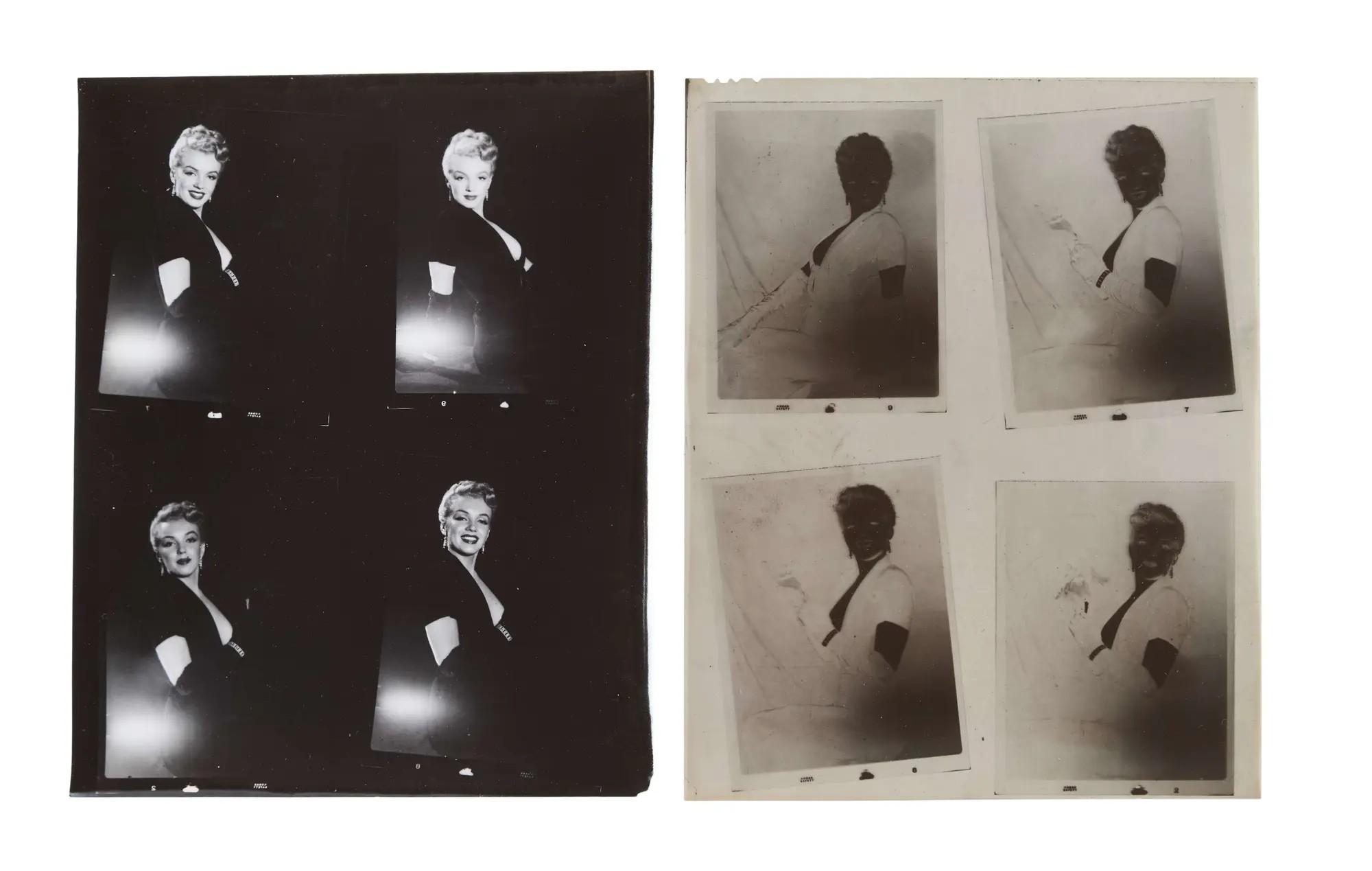
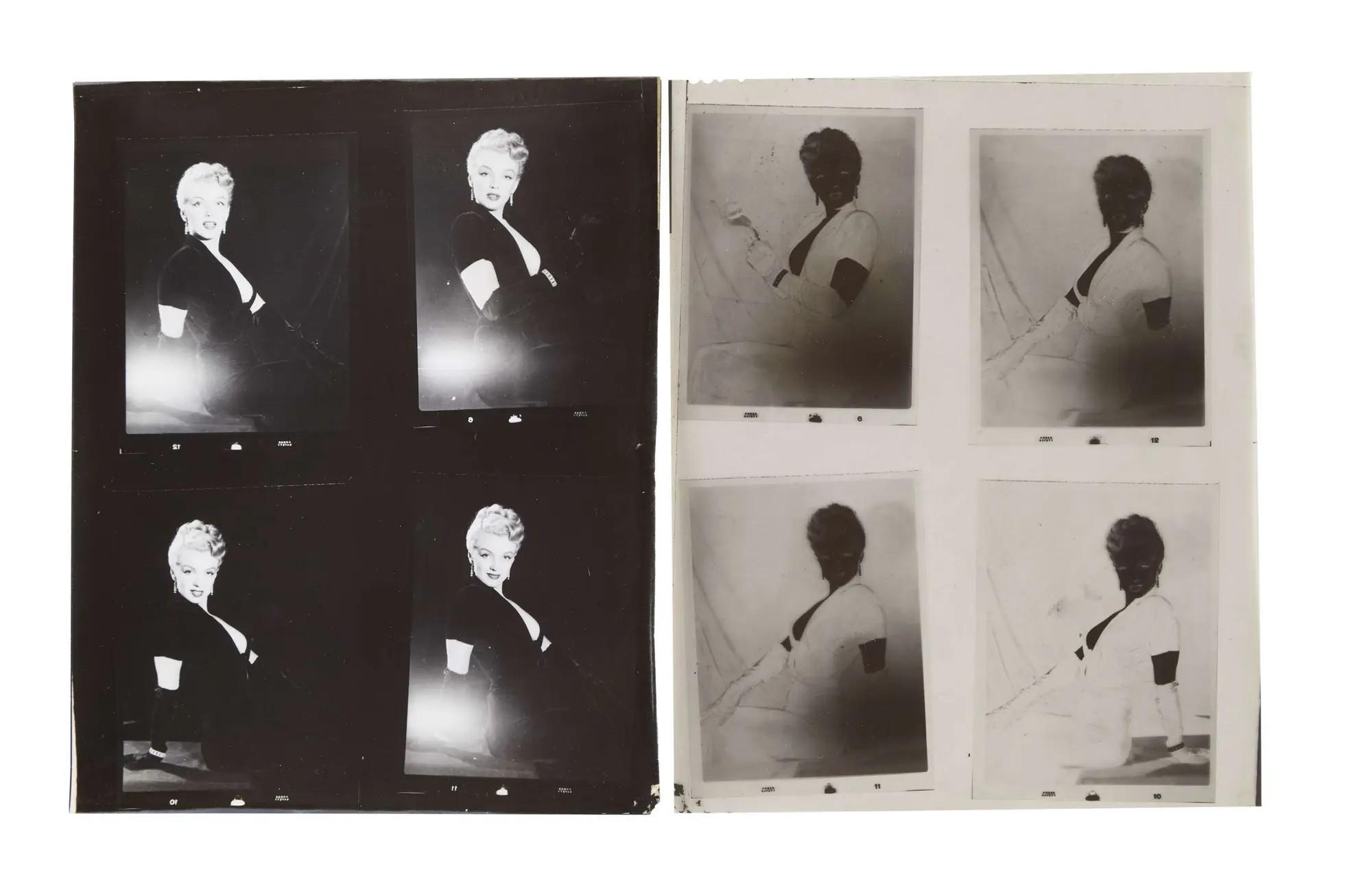
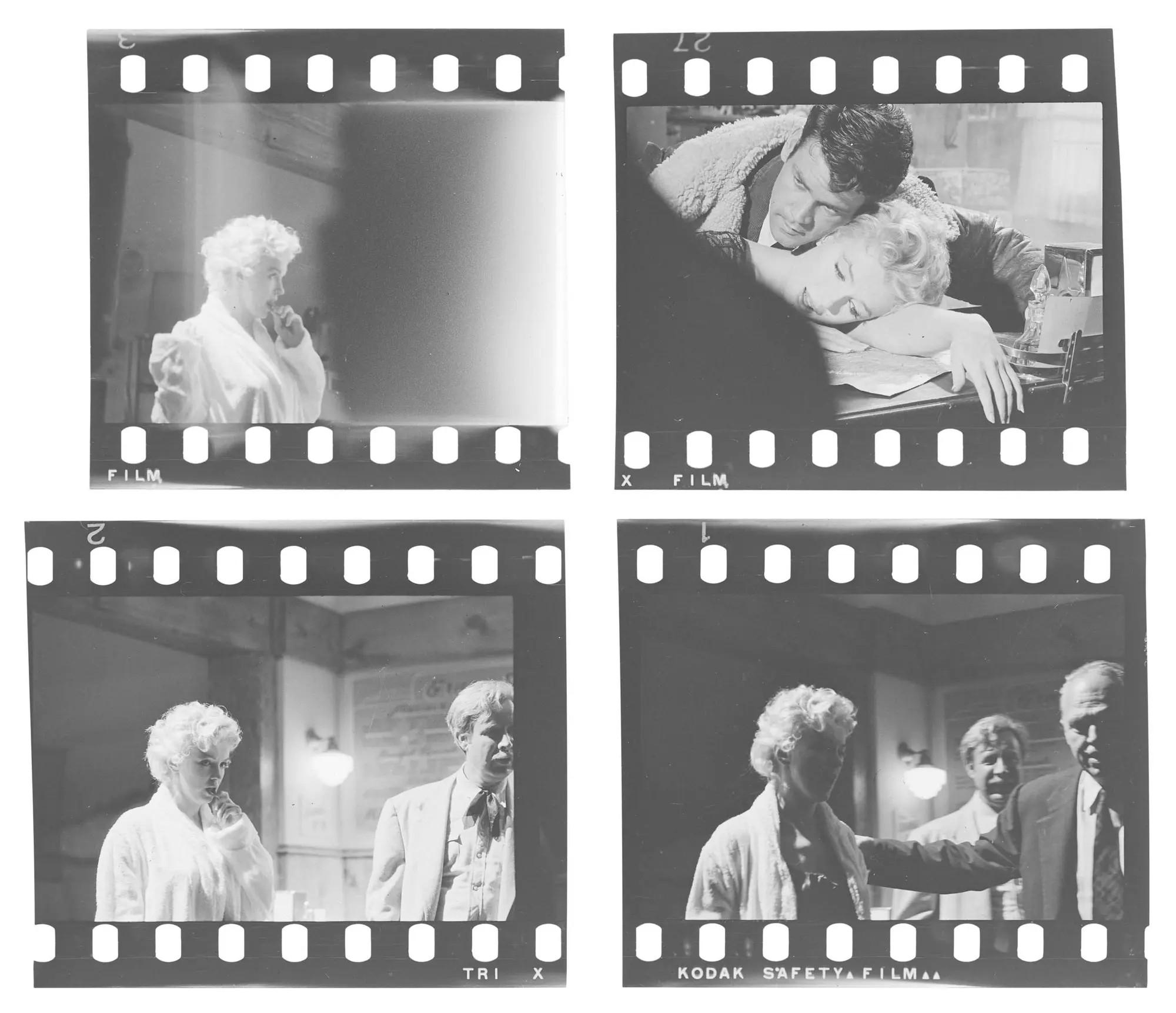
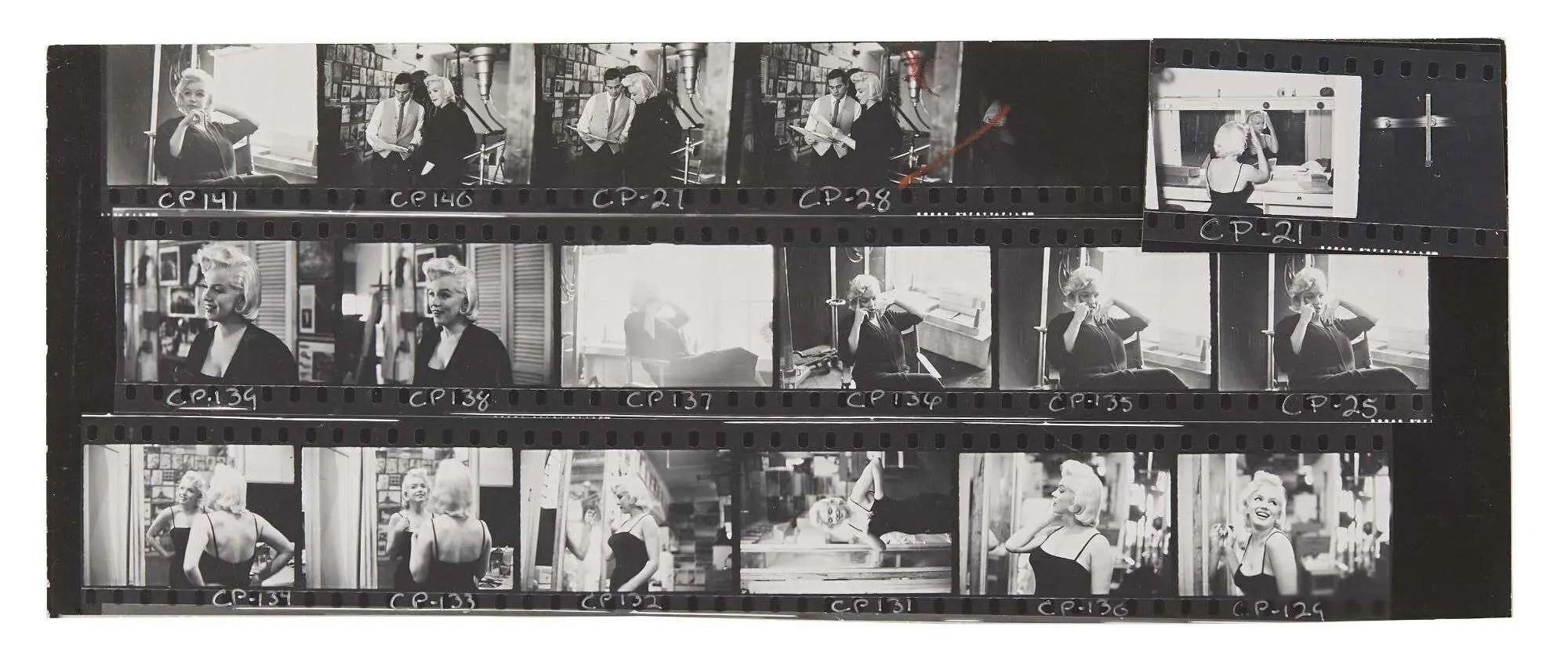
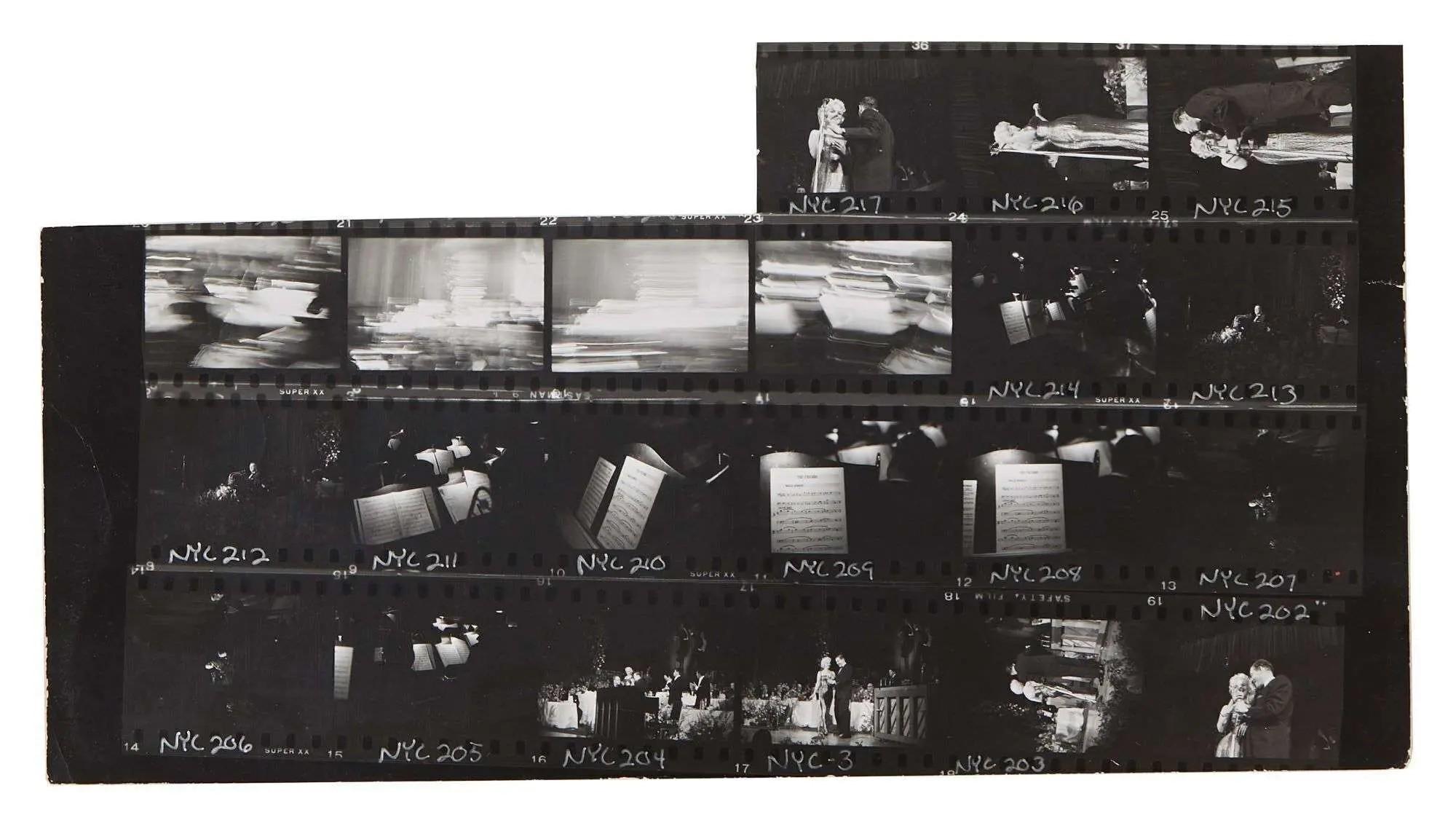
1. Lot #123. Marilyn Monroe | 1953 Never-Before-Seen Color Slides Related to “River of No Return”, 2. Lot #124. Marilyn Monroe | 1954/1980s Color Slide by Bob Beerman from “River of No Return”, 3. Lot #130. Marilyn Monroe | 1954/1959/1960s Color Slides by Philippe Halsman, 4. Lot #109. Marilyn Monroe | 1956 Rare Color Transparency from “Bus Stop”, 5. Lot #131. Marilyn Monroe | 1954/1970s Black and White Photograph, 6. Lot #152. Marilyn Monroe | 1950/1960s Black and White Contact Sheet and Negative by Ed Clark, 7. Lot #153. Marilyn Monroe | 1950/1960s Black and White Contact Sheet and Negative by Ed Clark, 8. Lot #101. Marilyn Monroe | 1956 Black and White Negatives and Copyright by Milton H. Greene from “Bus Stop”, 9. Lot #105. Marilyn Monroe | 1955 Rare Black and White Contact Sheet by Milton H. Greene, 10. Lot #108. Marilyn Monroe | 1955 Black and White Contact Sheets by Milton H. Greene,
VII. The Early Years
Before the Name. Before the Dress.
The lots numbered in the 160s document a woman the world did not yet know existed. Joseph Jasgur's photographs from 1946 — Lots 164 through 170 — show Norma Jeane in the first year of her modeling career, before the Fox contract, before the bleach, before the name. Jasgur shot her on a beach. The photographs exist in a strange temporal limbo: they were taken before Marilyn Monroe existed, but they have spent the last eighty years being catalogued as Marilyn Monroe photographs, because there was no other category for her.
László Willinger's 1947 color transparency (Lot 171) is from the same early period. André de Dienes, who had a complex personal and professional relationship with the young Monroe, is represented in Lot 161 with a 1945 print — the earliest image in the entire sale. Nat Dallinger's 1947 photograph (Lot 163) rounds out a group of images that constitute a before. Before the name took. Before the studio understood what it had. Before the century began its long, complicated argument with her face.
VIII. The Fan, The Collector, The Witness
The Monroe Six and the Birthday Snapshot
Lot 112 is a signed black-and-white snapshot from February 26, 1955, showing Marilyn on her way to Jackie Gleason's birthday party in New York City, signed in blue fountain pen ink. Its provenance is Frieda Hull — one of the Monroe Six, the group of young fans who followed Marilyn so persistently around Manhattan that she came to know them by name and eventually counted them as genuine friends for the rest of her life.
The Monroe Six are not a footnote. They are a corrective. The dominant narrative of Marilyn Monroe's private life centers on her famous relationships, her famous collaborators, her famous therapists and lawyers and studio executives. The Monroe Six are ordinary people who simply showed up, year after year, and whom she chose not to turn away. The snapshot Frieda Hull kept — matte finish, double-weight paper, Marilyn mid-stride toward a party — was not a souvenir. It was evidence of a friendship the history books almost forgot.
What a Hundred Years Actually Means
Marilyn Monroe was born June 1, 1926. The centennial of her birth arrives this month. The photography in this auction spans from 1945 to the week before her death in August 1962 — seventeen years, across which she invented and reinvented and refused and performed and occasionally, when the photographer was fast enough and she was caught between one version of herself and the next, simply was.
The stereo slides in Lots 80 through 84 were not developed for three years after they were taken. The contact sheets in Lots 105, 107, and 108 show all the images, not just the chosen ones. The "lost photos" from Grant's July 7 session survived in cardboard envelopes with handwritten annotations while the world built an entire mythology around eight images from the same twelve rolls.
What a hundred years means is this: we are still developing the film. The woman in these photographs — pensive, smiling, laughing, mid-speech, hobbled on crutches in Banff, standing by Japanese water, eyes closed on a movie set in Nevada, walking into the Beverly Hilton to collect an award for being the world's favorite — has not finished telling us who she was.
She let them look. She never let them see. And yet, frame by frame, in each sleeve and contact sheet, she is still here.