Art
Film & TV
Hugh M. Hefner: Free Speech Warrior
How Hefner and Playboy became defenders of the First Amendment...
Share



How does one effectively protect and promote the fundamental rights guaranteed to every U.S. citizen in their nation’s founding document, the United States Constitution?
While “founding a nudie magazine and engaging in a very public libertine lifestyle” would not be most people’s first stab at an answer to that question, it essentially describes the route taken by the 20th century’s most successful and effective free speech proponent, Hugh M. Hefner.
In 1953, Hefner launched Playboy Magazine, which eventually became a a global media and entertainment empire whose success shifted Western culture, propelling it forward, instigating social change that is being felt to this day. Upon his passing at age 91 in 2017, The New York Times declared in its obituary that he had essentially won, and that all of America’s prevailing values mirrored the Playboy philosophy, which Hefner espoused in installments in the magazine’s pages
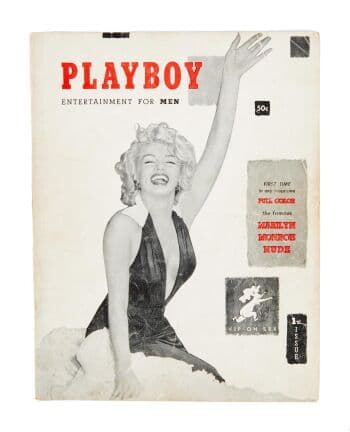
While Hugh Hefner was by most accounts a principled man, he hardly envisioned becoming a first amendment champion or instigating any kind of societal change when he raised the funds (including $1,000 from his mother!) to publish Playboy’s first issue — even though that’s how things turned out. Indeed, his first publisher’s message proclaimed: “We don’t expect to solve any world problems or prove any great moral truths.”
SMASH HIT
The idea was simple: to have a bit of fun, promote some quality writing and marvel at beautiful women in various states of undress while making a modest profit.
That first issue was a smash hit, not least for its inclusion of cover star Marilyn Monroe’s nudes (a relic from her early pin-up days, for which Hefner payed $500). Coming in at exactly the right time, Playboy rode the wave of success all the way to the top of the publishing world, setting itself apart from its competitors in the field by offering an ambitious scope of written materials, along with a slightly more tasteful style of eroticism.
Hefner himself was inseparable from Playboy, a living embodiment of the debonair swinging intellectual philosophy espoused in the magazine. He appeared on talk shows and TV specials, charming audiences with his wit and style. Parties at the Playboy Mansion (which of course featured a zoo and a grotto in both its Chicago and Los Angeles locations) were a who’s who of the entertainment industry, where Playboy bunnies mingled with actors, musicians, sports stars, scholars and public intellectuals. As the magazine’s circulation grew (reaching one million by 1960 and peaking at seven million in the 1970s), the Playboy brand was expanded into merchandising, movie production and a line of clubs, resorts and casinos.
TABOO
Although the magazine’s editorial style was in constant evolution from its inception, Playboy’s focus was always on printing in-depth interviews and provocative articles along with comics, jokes and Playmates. It consistently provided a platform for writers and artists to express themselves freely, often on topics that were considered taboo or risqué for the time, bringing to light a lot of subjects that had been mired in shadows and silence.
In the 1960s, Hefner attempted to outline his vision more clearly by publishing “The Playboy Philosophy” in 25 installments. Addressing topics such as the First Amendment, censorship, obscenity laws, gay rights, contraception and abortion rights, “The Playboy Philosophy” can be summed up as a libertarian, laissez-faire worldview, firmly in support of progressive social causes and the free exchange of ideas. Hefner was furthermore a vocal and staunch proponent of racial equality, further drawing the ire of social conservatives by inviting black guests to his clubs and televised parties while Jim Crow laws were still widely in effect.
AN ENDURING LEGACY
In 1964 Hefner founded the Playboy Foundation (currently operating as the Hugh M. Hefner Foundation), dedicated to promoting civil liberties, supporting progressive social causes and advancing the principles of free speech and expression. The foundation was an early supporter of the US civil rights movement, backing organizations such as the NAACP Legal Defense Fund. It furthermore backed various legal efforts to combat censorship laws, defend free speech and battle restrictions on intellectual freedoms, financing a number of legal battles aimed at protecting First Amendment rights, most notably the landmark case “Miller v. California,” which established the "Miller test" for determining what constitutes obscenity.
Established in 1979, The Hugh M. Hefner First Amendment Awards have been granted annually ever since to honor those who have made significant contributions to protect Americans’ First Amendment rights. They have been received by more than 100 individuals since their inception, everyone from lawyers and librarians to high school students and educators.
While some aspects of Hugh M. Hefner’s playboy lifestyle have come under scrutiny in later years, his commitment to progressive social causes, free speech and free press values remains unquestioned. His legacy as a champion and defender of the First Amendment is both vast and unparalleled, his contributions to a freer, more open society significant and enduring.