Art
Film & TV
Hugh Hefner: Military Service to Playboy
Discover how the skills developed during WWII helped Hefner's postwar career...
Share



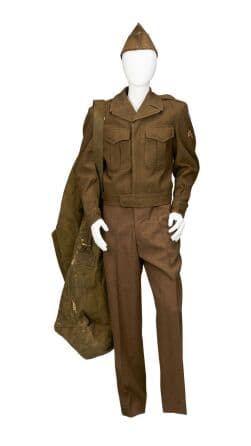
Hugh Hefner's military service began in 1944, during World War II, when he enlisted in the U.S. Army as an infantry clerk after graduating from high school. Although Hefner did not see combat, his responsibilities included contributing cartoons for Army newspapers, a role that utilized his artistic talents and foreshadowed his future career in publishing. His time in the military was marked by a relatively mundane routine, but it provided him with organizational skills and exposed him to a wide variety of people and perspectives, enriching his understanding of American culture.
Post-Military Life and Education
After being discharged in 1946, Hefner took advantage of the G.I. Bill, which provided educational benefits to returning veterans, to further his education. He first attended the Art Institute of Chicago for a semester, demonstrating his ongoing interest in the visual arts. Subsequently, he earned a bachelor's degree in psychology with a double minor in creative writing and art at the University of Illinois at Urbana-Champaign, finishing in less than three years. His education, particularly in psychology, would later influence his approach to Playboy, blending intellectual content with visual appeal.
Early Career
Hefner held various jobs in the publishing industry, including a position at Esquire as a copywriter. However, when Esquire moved its offices from Chicago to New York and refused Hefner's request for a $5 raise, he decided to strike out on his own. This decision set the stage for what would become Playboy Magazine.
Founding Playboy
In 1953, with a loan of $600 from a bank and $8,000 from friends and family, Hugh Hefner published the first issue of Playboy Magazine. The magazine's first issue featured Marilyn Monroe on the cover and as the centerfold, which was a significant risk at the time but paid off as it sold over 50,000 copies. Playboy quickly became known for its blend of high-quality writing, interviews, and fiction with photographs of nude women, setting it apart from other magazines of the time. Hefner's vision for Playboy was not just as a men's magazine but as a sophisticated lifestyle publication that championed personal freedom, civil rights, and sexual liberation, themes that were influenced by his experiences and observations of American society during his military service and subsequent education.
Hugh Hefner's military service, while a brief interlude in a long and storied life, contributed to the discipline, organizational skills, and exposure to diverse perspectives that he later applied to his groundbreaking work with Playboy Magazine. Through Playboy, Hefner left an indelible mark on American culture, championing freedoms and pushing the boundaries of sexual expression in the post-war era.