Art
David Hockney: Art of Life in Color, California, & Tony Bennett Friendship
An ode to David Hockney and the world he left behind. A look at the life of the Bradford-born painter who made Los Angeles his muse and joy his medium. Plus, his unlikely, art-defining friendship with Tony Bennett — as told through works sold at Julien's Auctions.
Share



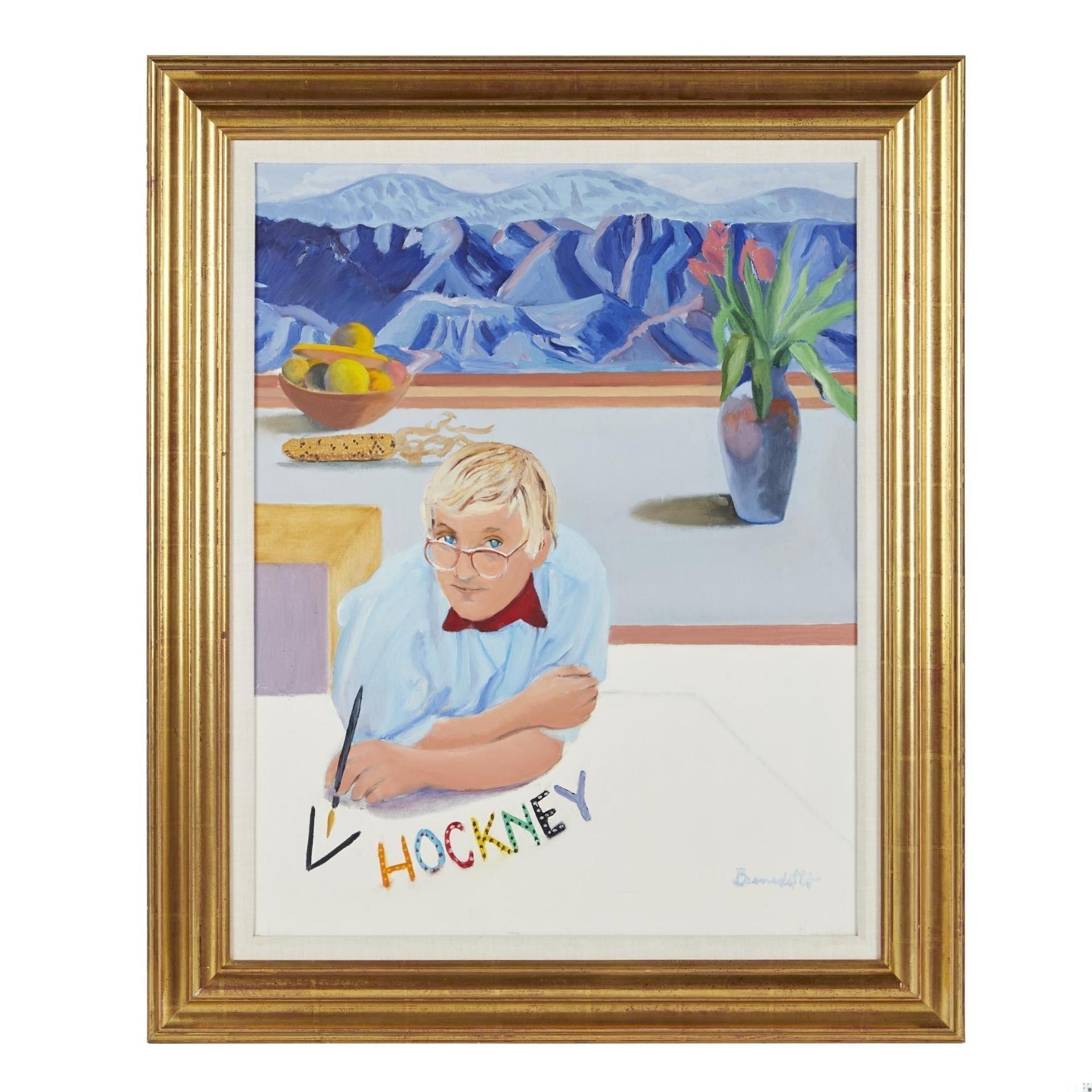
Tony Bennett Original "Hockney" Oil On Canvas Painting
David Hockney, who long made Southern California his muse and his home and the fleeting beauty of life's smallest moments the grand theme of his shape-shifting art, died June 11 at his home in London. He was 88 — one month short of his 89th birthday, passing away "peacefully at home," according to a statement from his longtime publicist Erica Bolton. The art world had seen his death coming the way you see the end of a great season: slowly, then all at once, with the kind of grief that doesn't feel like grief until the light changes.
Depending on who you ask, he may have been the most joyful serious artist of the 20th century.
Born in Bradford, England, on July 9, 1937, Hockney first visited Los Angeles in 1963, drawn to its light and heat, and officially moved there in 1966. The city did something to him that no city had done before. Under the cloudy skies of West Yorkshire, he could not have anticipated what the region's persistent sunshine, bright color palette, and relaxing lifestyle would do to his eye. As he later put it, when he saw a freeway ramp arching into the L.A. sky, his first thought was: This place needs its Piranesi. So here I am.
The swimming pools of Los Angeles became one of his most enduring obsessions — a motif that by the time of his 2018 auction record had achieved something close to mythology. His Portrait of an Artist (Pool with Two Figures) sold for $90.3 million with fees, briefly making him the most expensive living artist in the world. But the pools were never really about money or prestige. They were about surface and depth, what light does when it hits water, and about the strange democracy of pleasure in a city that invented the postcard of the good life.
Alongside those California canvases, Hockney's prolific and innovative theater designs and his frank depictions of homosexual life and domesticity made him one of the most complete artists of his generation. In the truest sense, Hockney was a public artist who made private feelings visible.
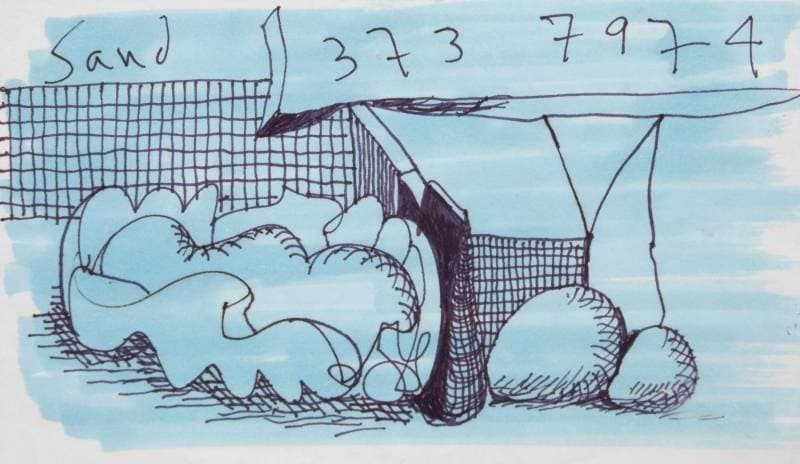
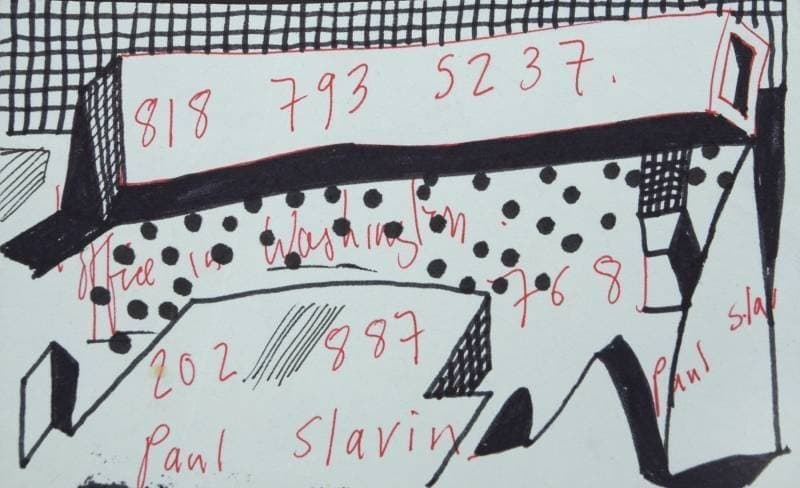
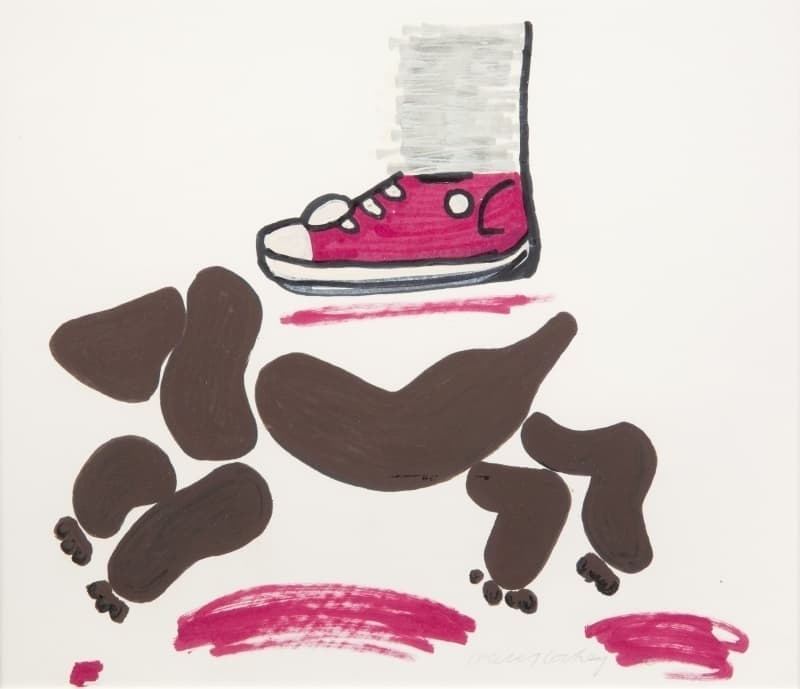
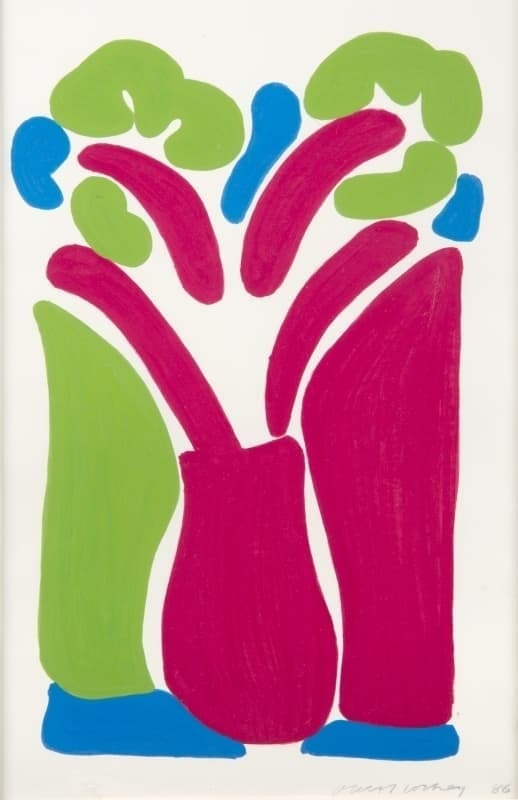

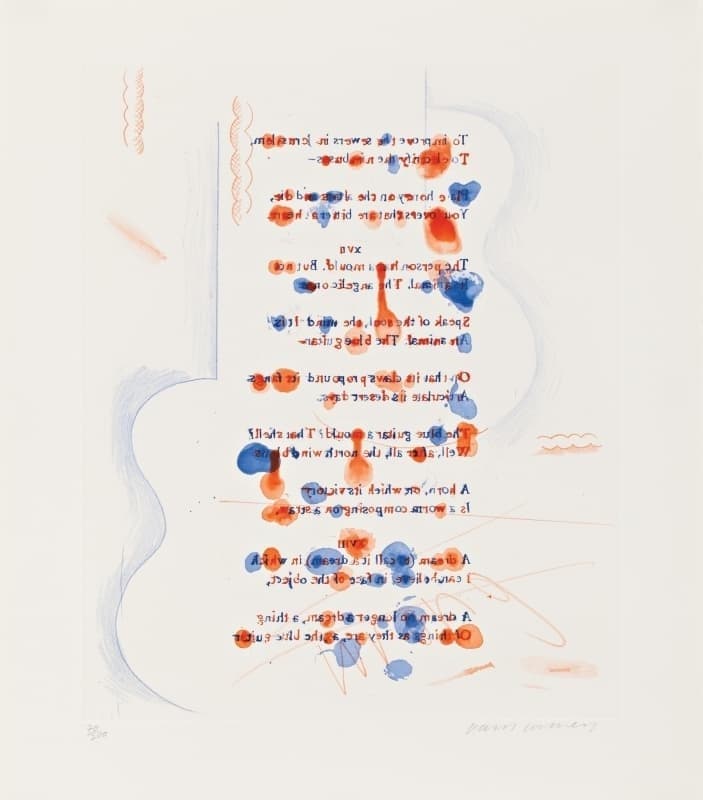
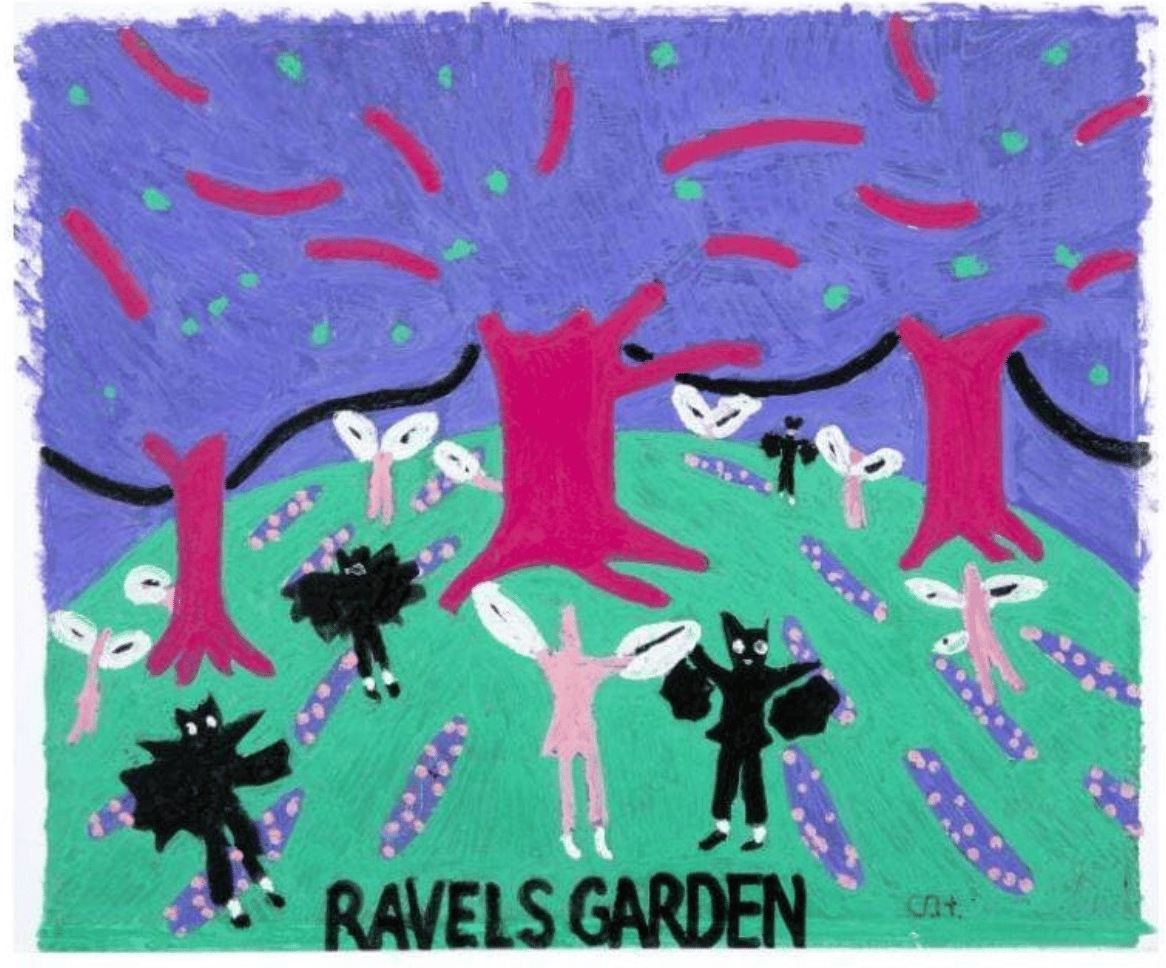
1. DAVID HOCKNEY - PHONE NUMBERS, 4. DAVID HOCKNEY - BREAKFAST WITH STANLEY AND BOODGIE IN MALIBU, 5. DAVID HOCKNEY - Ian & Heinz, 6. DAVID HOCKNEY - The Red Pot, 8. DAVID HOCKNEY - TRISTAN KISSING ISOLDE, 9. DAVID HOCKNEY (British, 1937), MADE IN APRIL FROM THE BLUE GUITAR (MCA TOKYO 188), 10. DAVID HOCKNEY - RAVEL'S GARDEN WITH NIGHT GLOW (v.II),
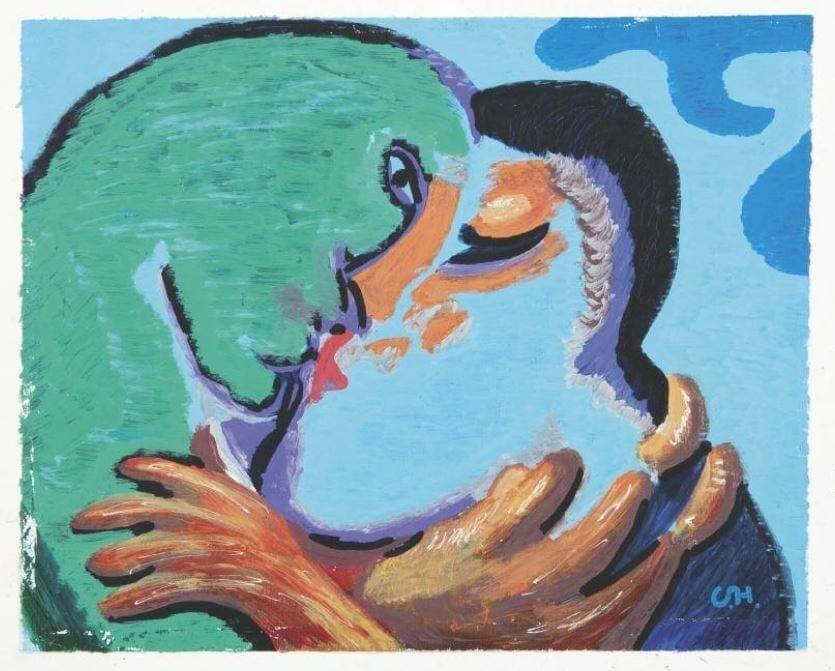
His theater work told this story as clearly as anything. Among the lots Julien's Auctions has offered over the years, Tristan Kissing Isolde stands as a document of Hockney's deep engagement with Wagner's catastrophic romance — a painted study executed in association with the Los Angeles Opera's production, small in scale at 10 by 8 inches but enormous in emotional commitment. The doomed lovers are rendered in oil on canvas with the kind of frank tenderness that defined Hockney's figuration throughout his career. It sold well above estimate, as Hockney works reliably do, but what matters more is the object itself: a painter, deeply invested enough in opera to make a study of it, signed quietly in the lower right.
Ravel's Garden with Night Glow tells a different story, or the same story in a different key. The acrylic on paper, executed for the Metropolitan Opera's production of Ravel and Colette's L'Enfant et les Sortileges, depicts a child transported into a nightmare populated by vengeful creatures. It is Hockney at his most theatrical and his most literary simultaneously, the stage designer and the painter fully merged. A nearly identical version appeared in the landmark 1983 exhibition Hockney Paints the Stage at the Walker Art Center — a show that remains one of the most complete arguments ever made that contemporary painting and theater are not separate disciplines but a single imaginative enterprise.
Two Dancers (v.II), the small acrylic on paper depicting performers mid-movement, circles the same territory from a different angle. Executed in Hockney's signature saturated color, it was connected to both a Wayne Sleep production poster and the same Walker Center exhibition. Hockney's relationship with the stage was not decorative — it was constitutive. He understood that performance is just another form of looking, and that looking was the central act of his entire life.
*****
That life intersected with Tony Bennett's in a way that the auction record illuminates better than most biographical accounts do.
When his friend David Hockney famously drew Bennett, the singer returned the favor with a painted Homage to Hockney that now hangs permanently in the Butler Institute of American Art. According to the Butler's longtime director, it is considered the finest painting Bennett ever made — a vase of vibrant yellow flowers, painted in the spirit of friendship rather than tribute. But the friendship worked in both directions, as friendships between serious artists always do.
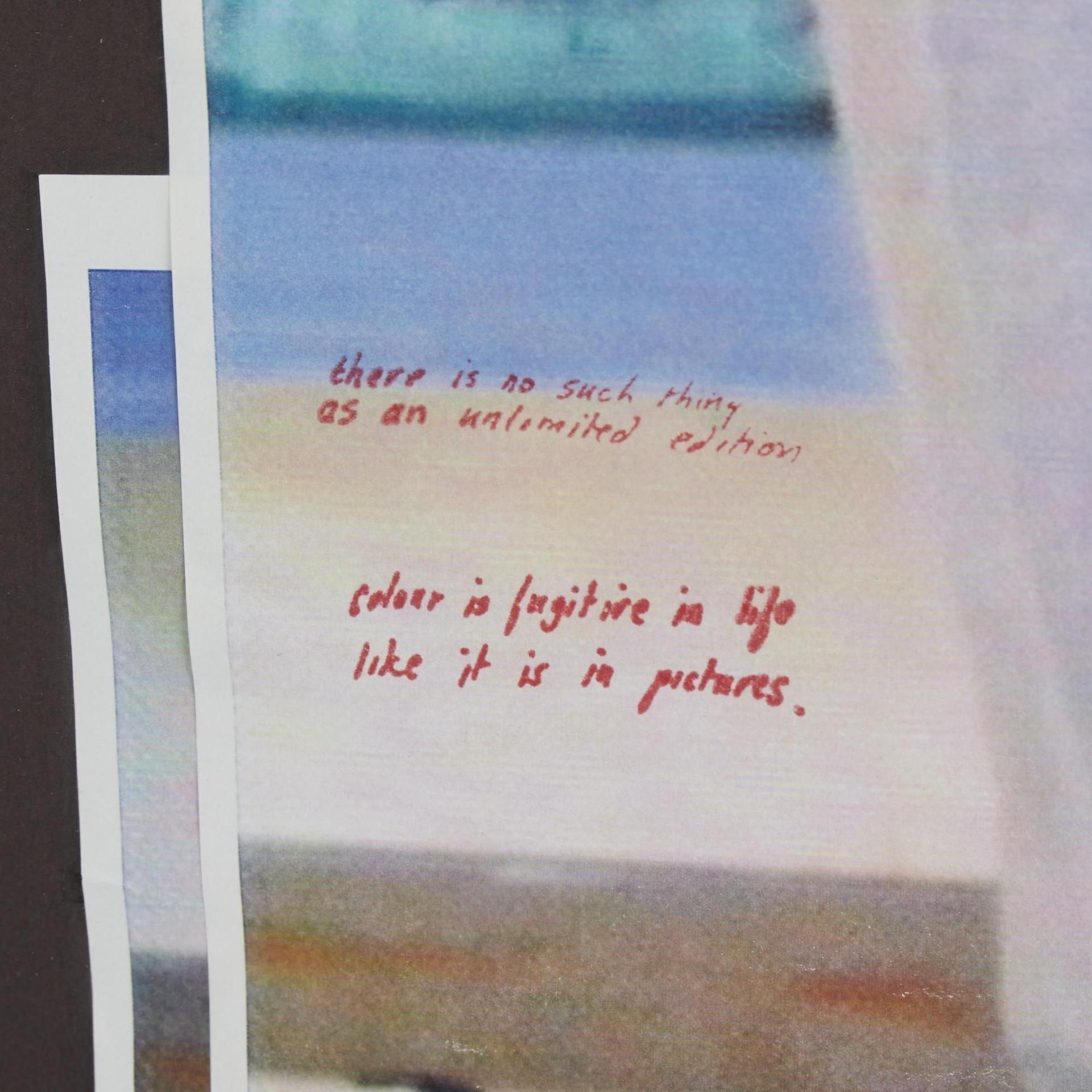
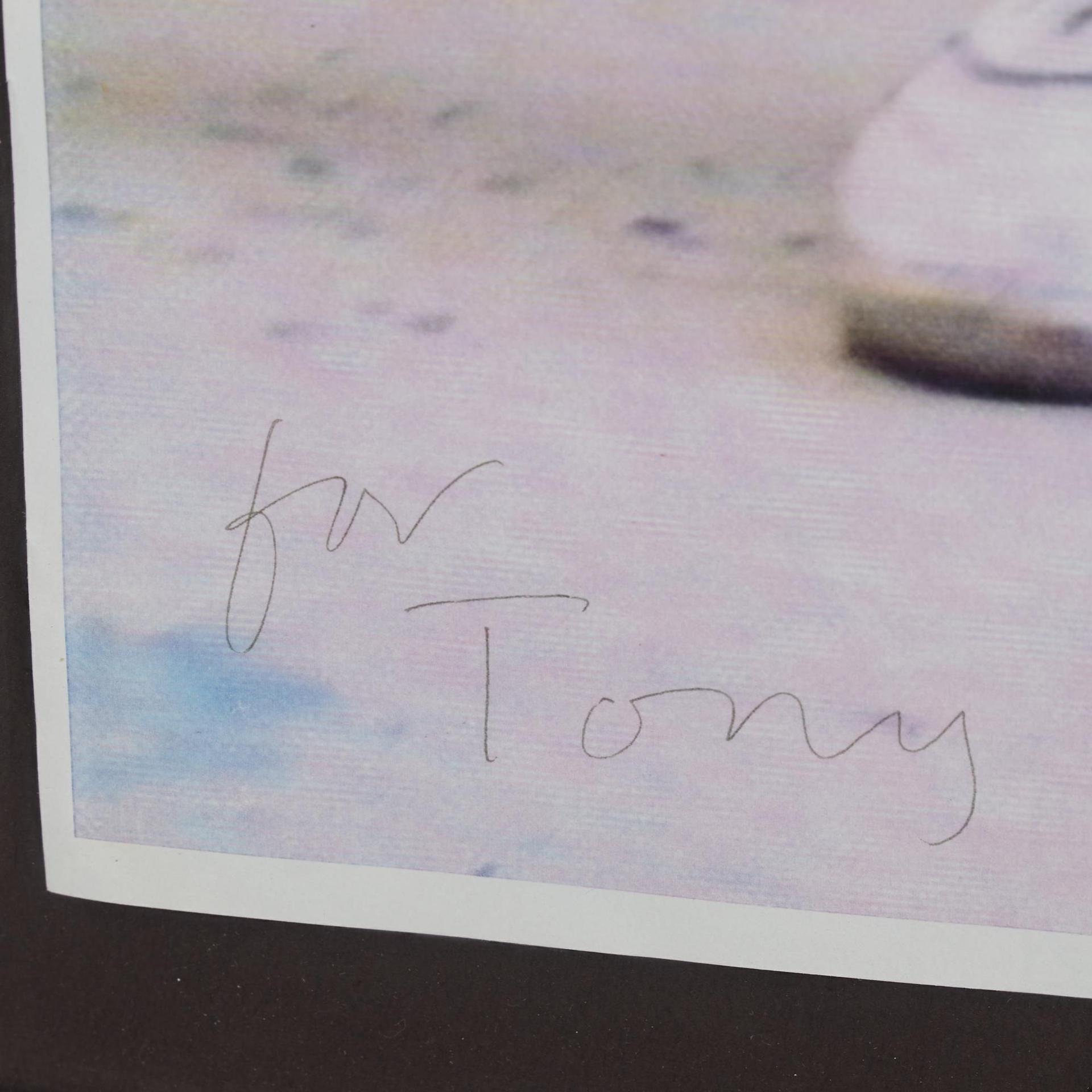
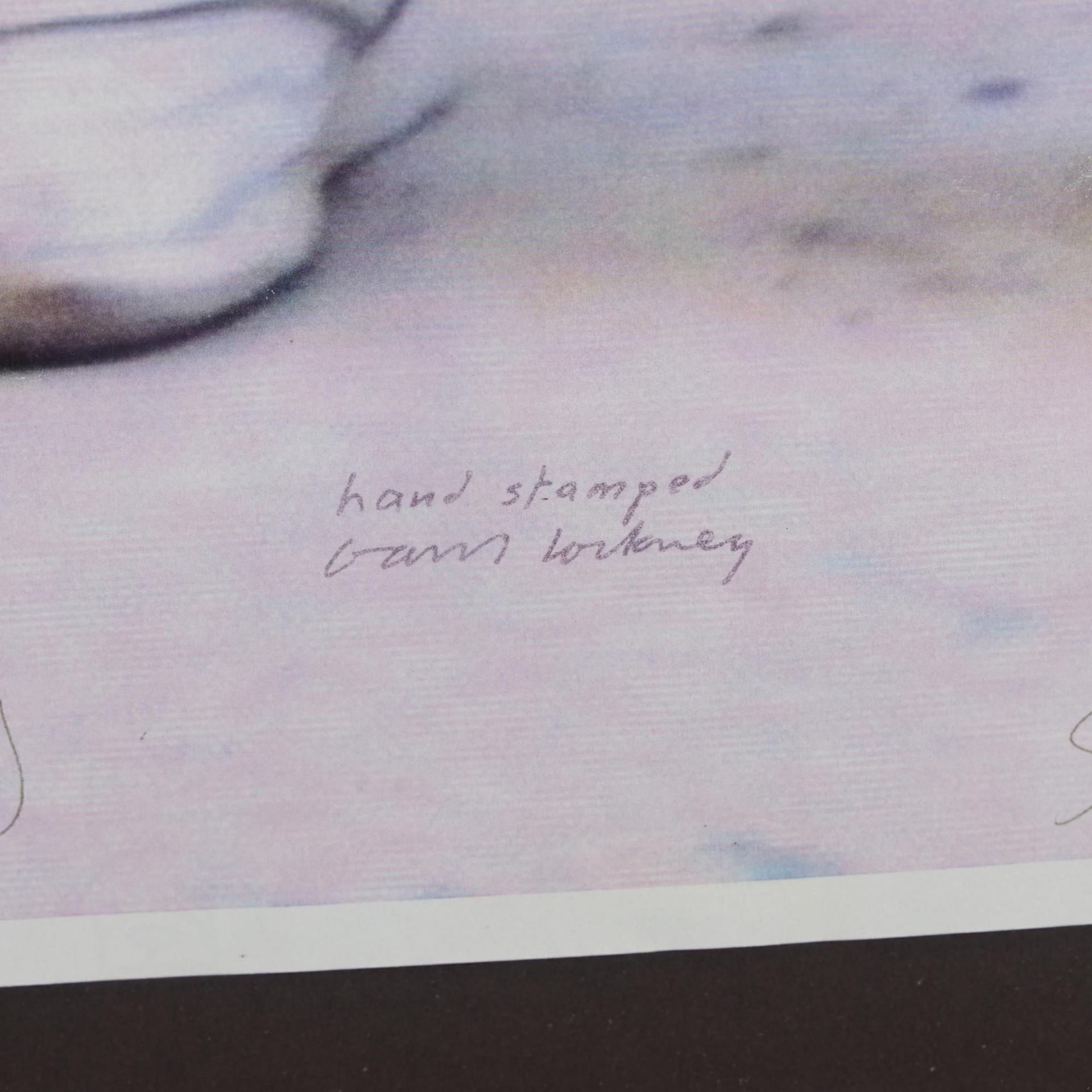
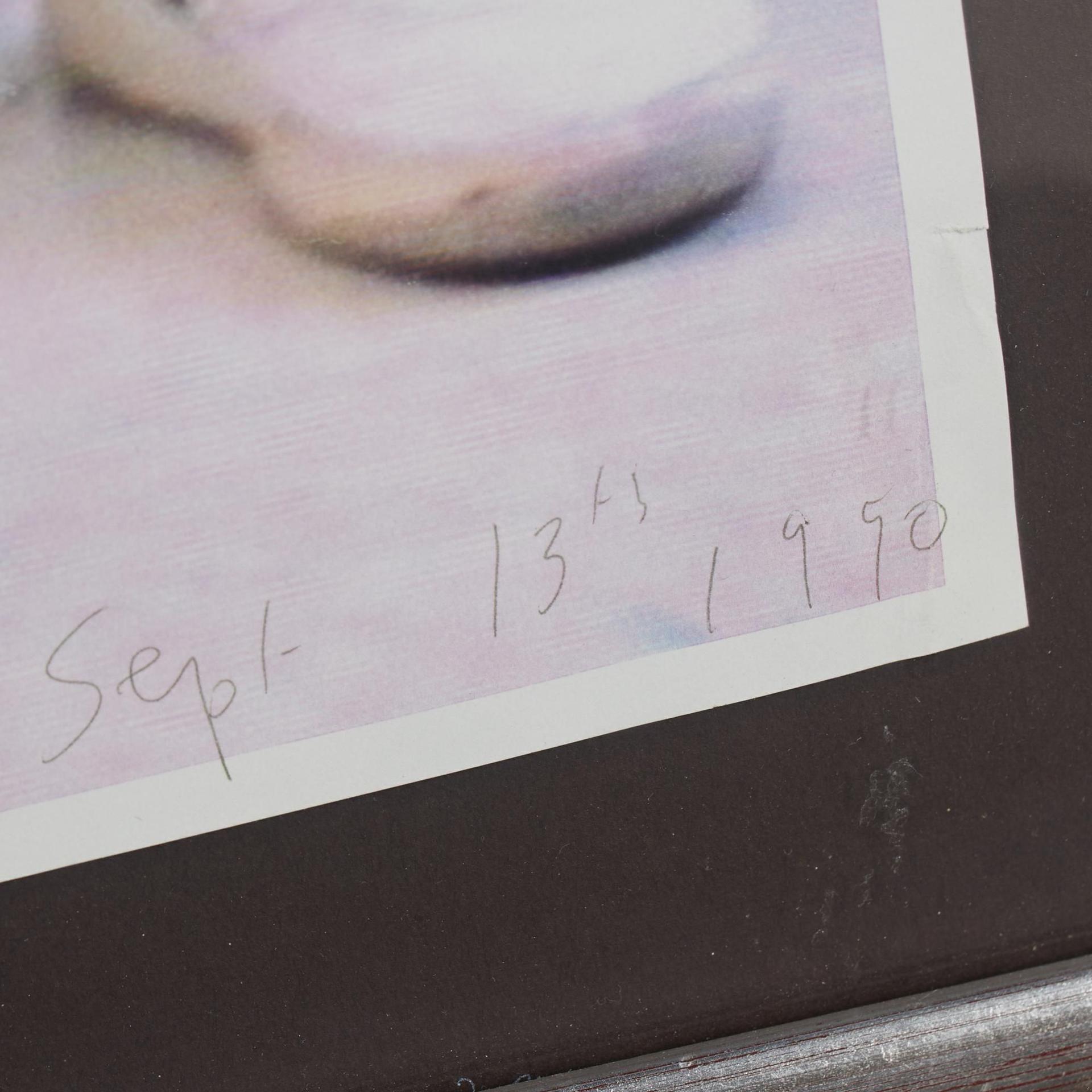
What Julien's has offered over the years makes this reciprocity visible. Hockney's assemblage portrait of Bennett — five color photocopies constituting a full-length image, inscribed in Hockney's own hand with the lines "there is no such thing / as an unlimited edition" and "Color is fugitive in life / like it is in pictures" — is not a secondary object. It is a primary one. Inscribed "for Tony Sept 13th 1990" and hand-stamped by the artist, it appeared in the album artwork for Fifty Years: The Artistry of Tony Bennett. Hockney was not decorating Bennett's life. He was participating in it.
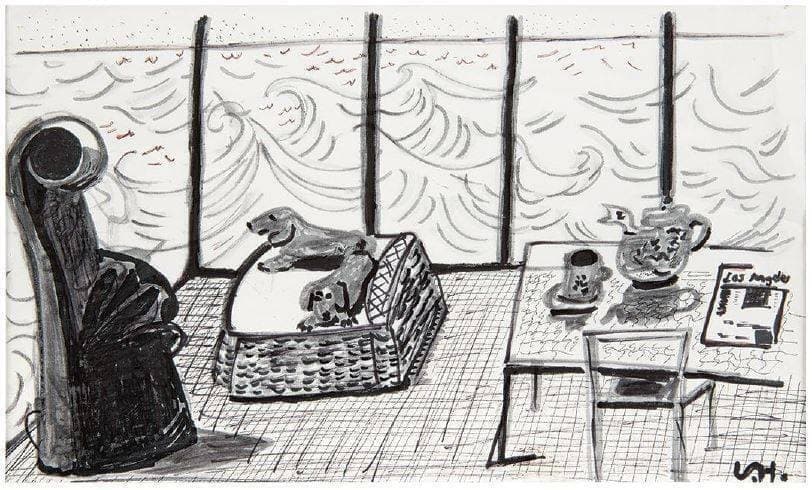
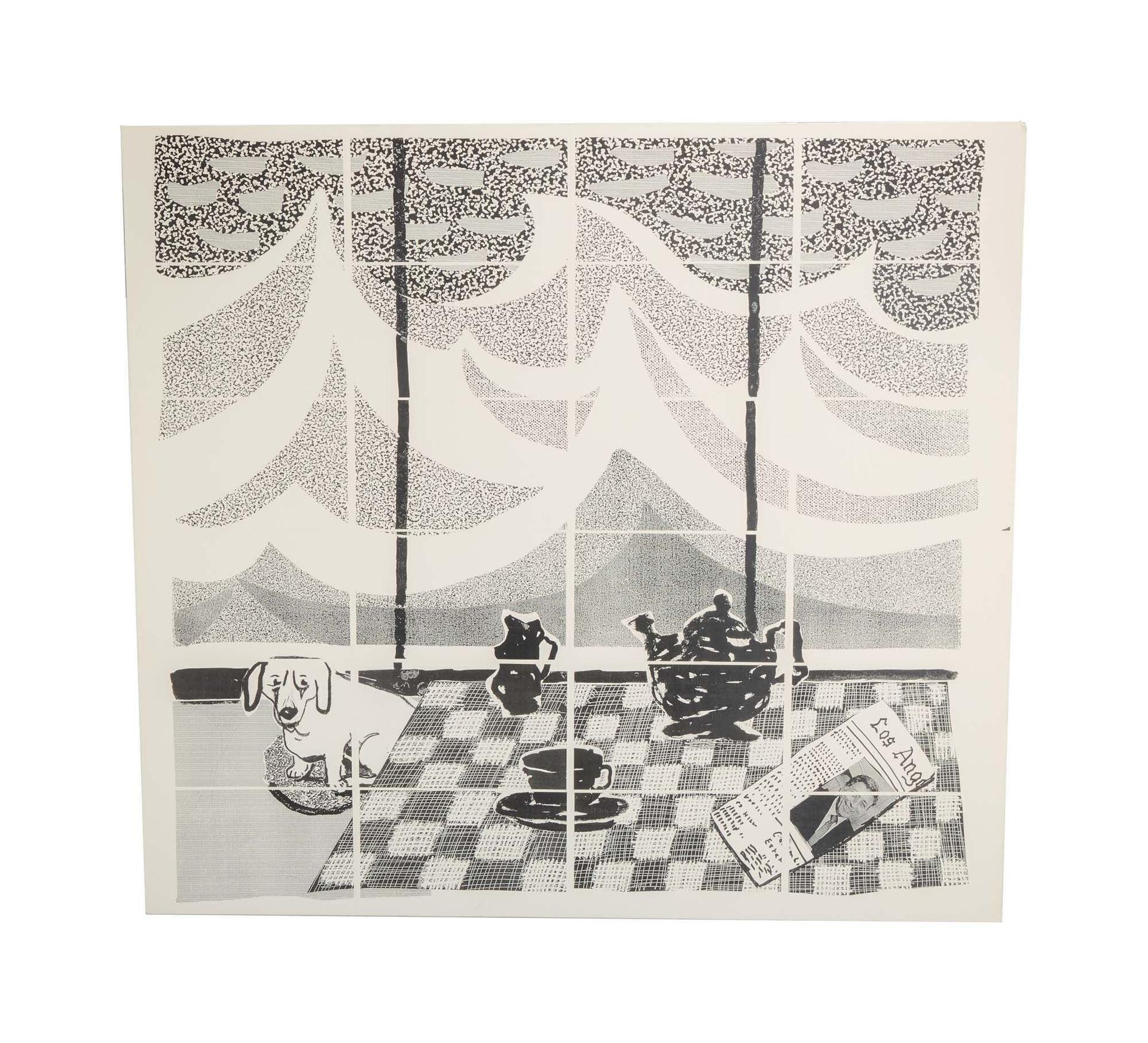
The still life printed on 24 panels of poster board — black and white, depicting a tabletop with a teapot, a copy of the Los Angeles Times, and Hockney's signature dachshunds in the background — that Bennett displayed prominently in his living room, and which appeared in the 2012 film The Zen of Tony Bennett, is almost unbearably intimate for what it is. It is a picture of a morning. It is Hockney's morning, his house in Malibu, the Pacific churning behind the glass. And he gave it to his friend, on 24 panels, so his friend could hang it on the wall and wake up to it.
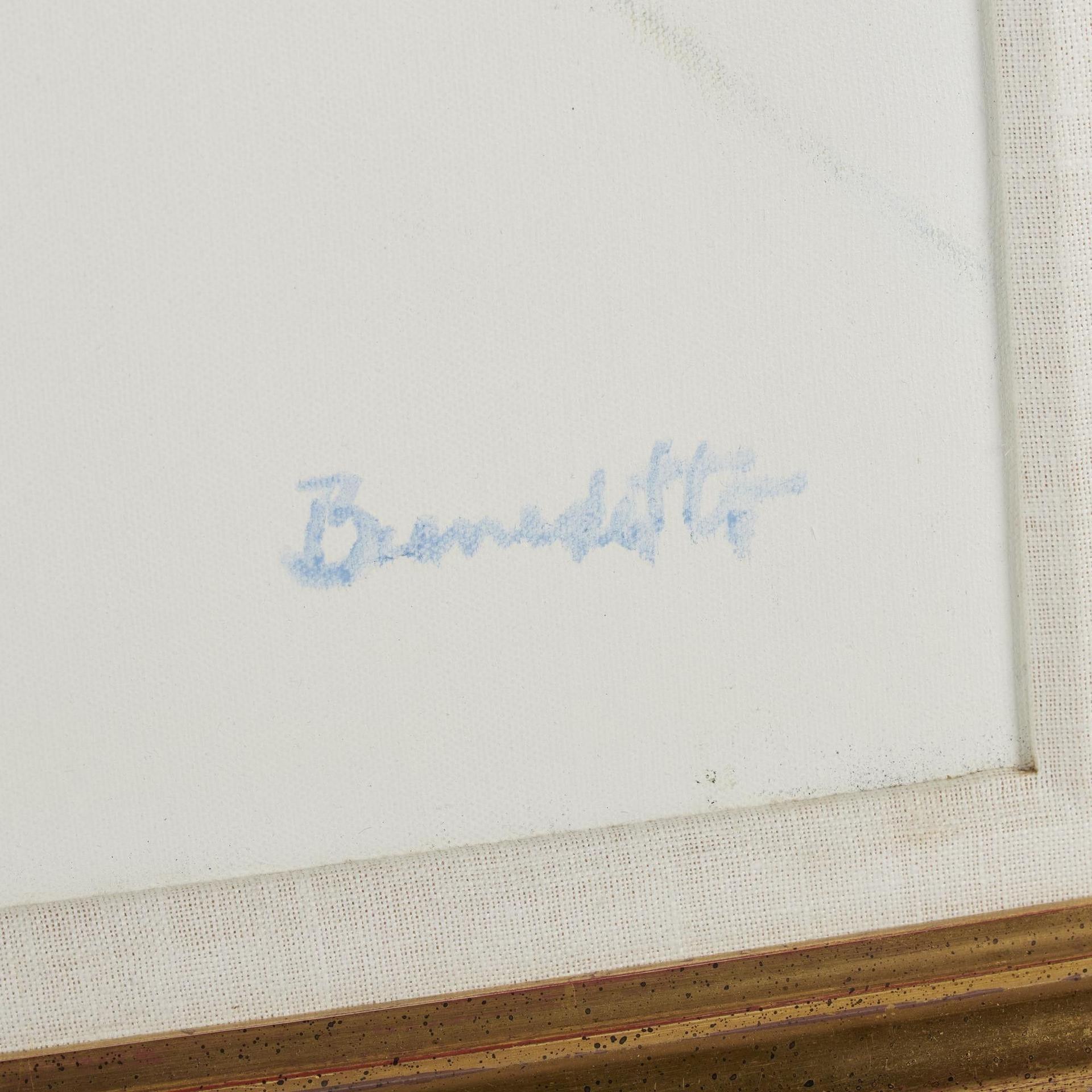
Against that, the lot at Julien's of a Tony Bennett oil on canvas portrait of David Hockney — signed "Benedetto" in the lower right, titled "Hockney" at the lower center, the painter set against a mountainous background — completes the circuit. Bennett's painting honoring Hockney is on permanent display at the Butler Institute of American Art in Youngstown, Ohio. But this one, the oil on canvas sold at auction, is something more informal. It is the record of one artist looking at another and deciding to render what he sees — not as a critic, not as a fan, but as a friend who happens to also carry a brush.
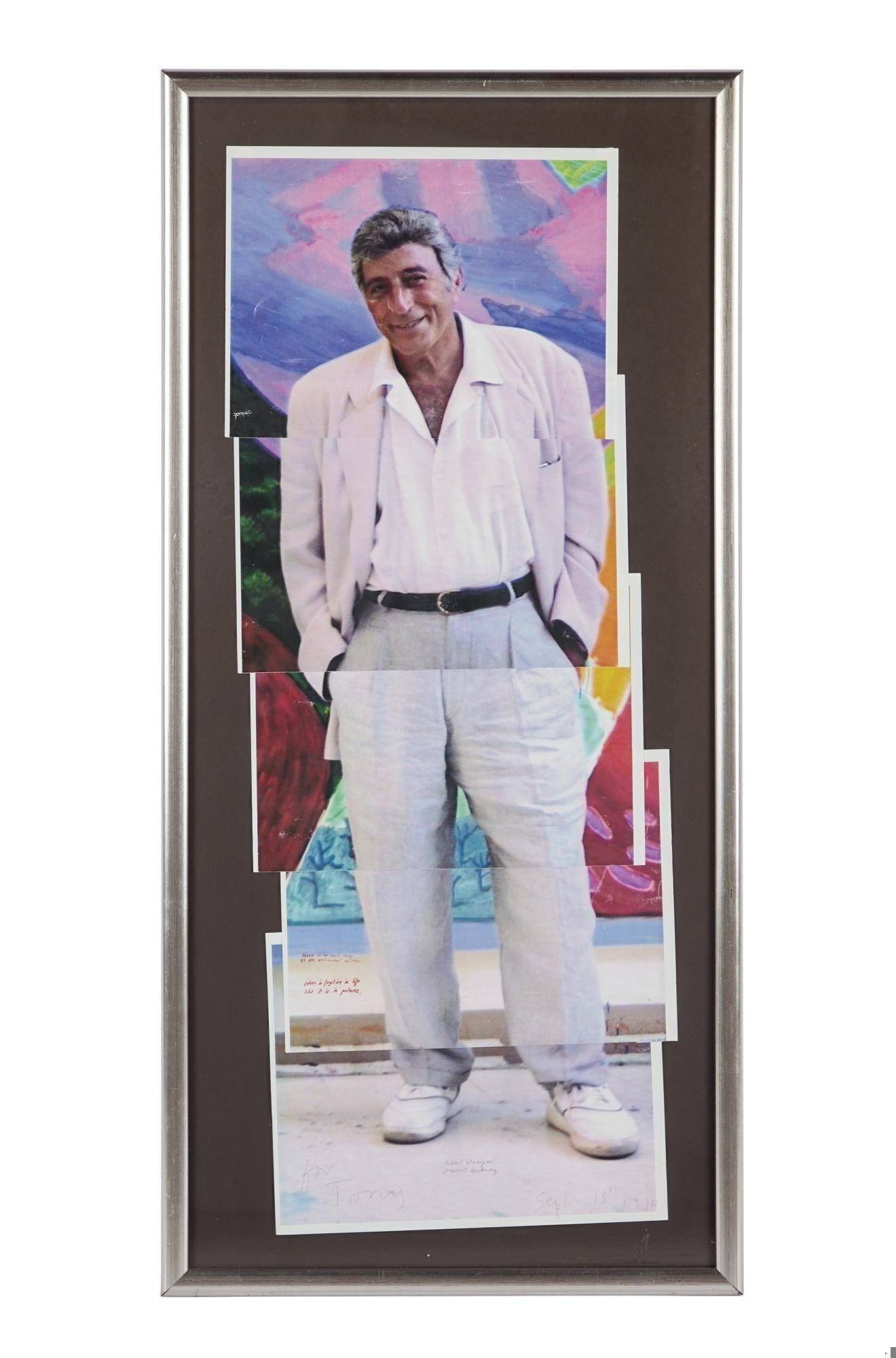
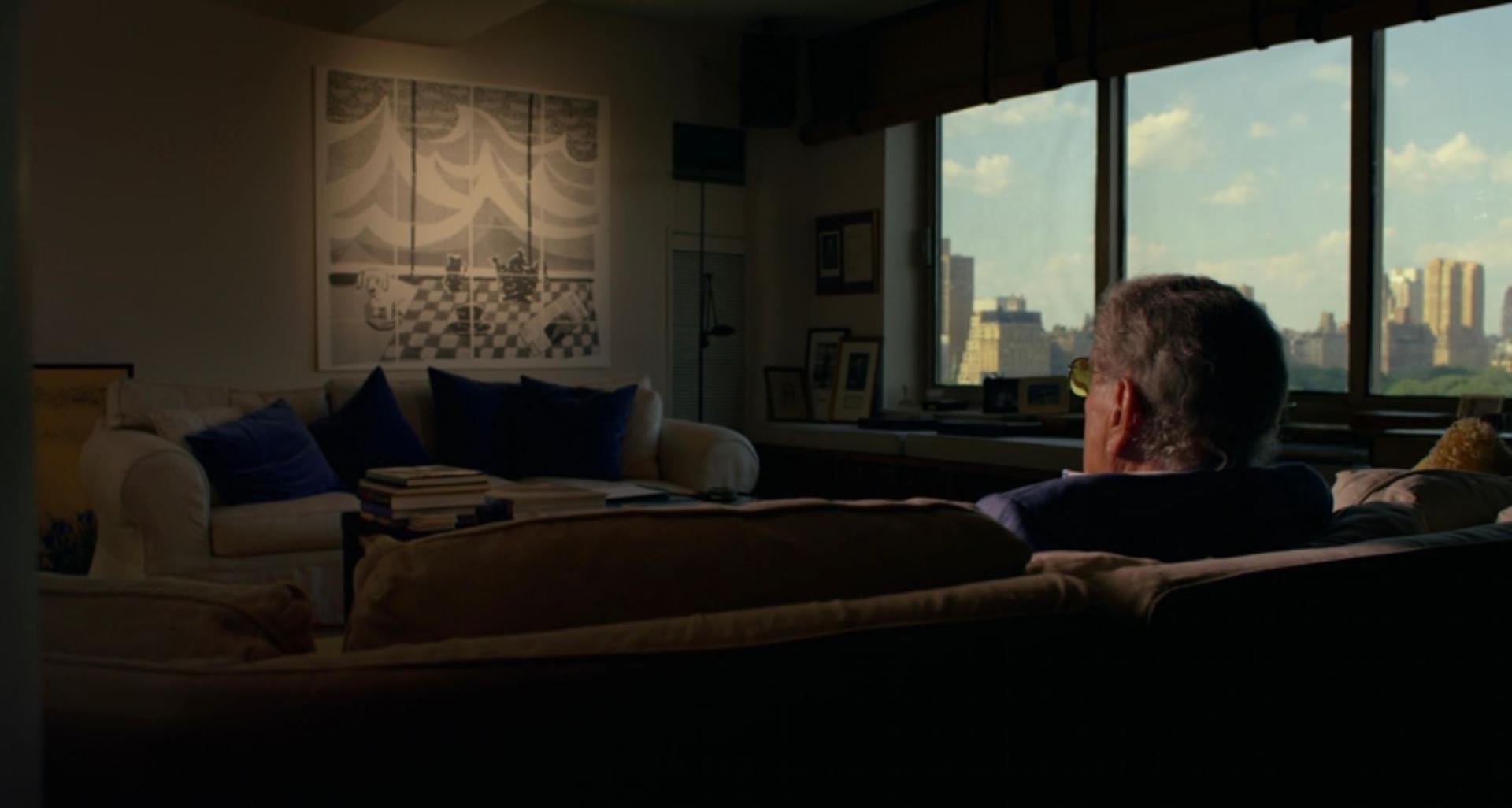
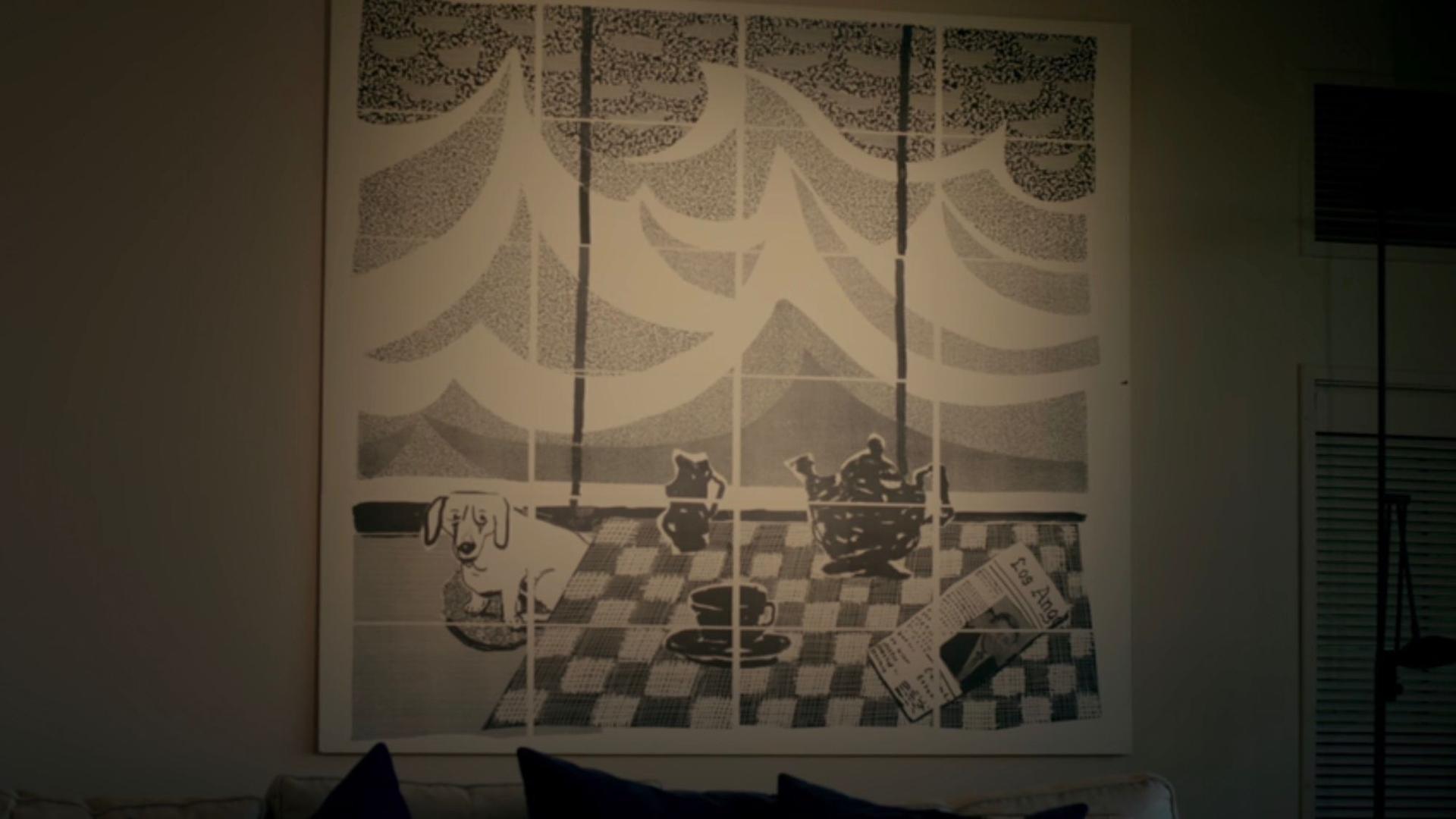
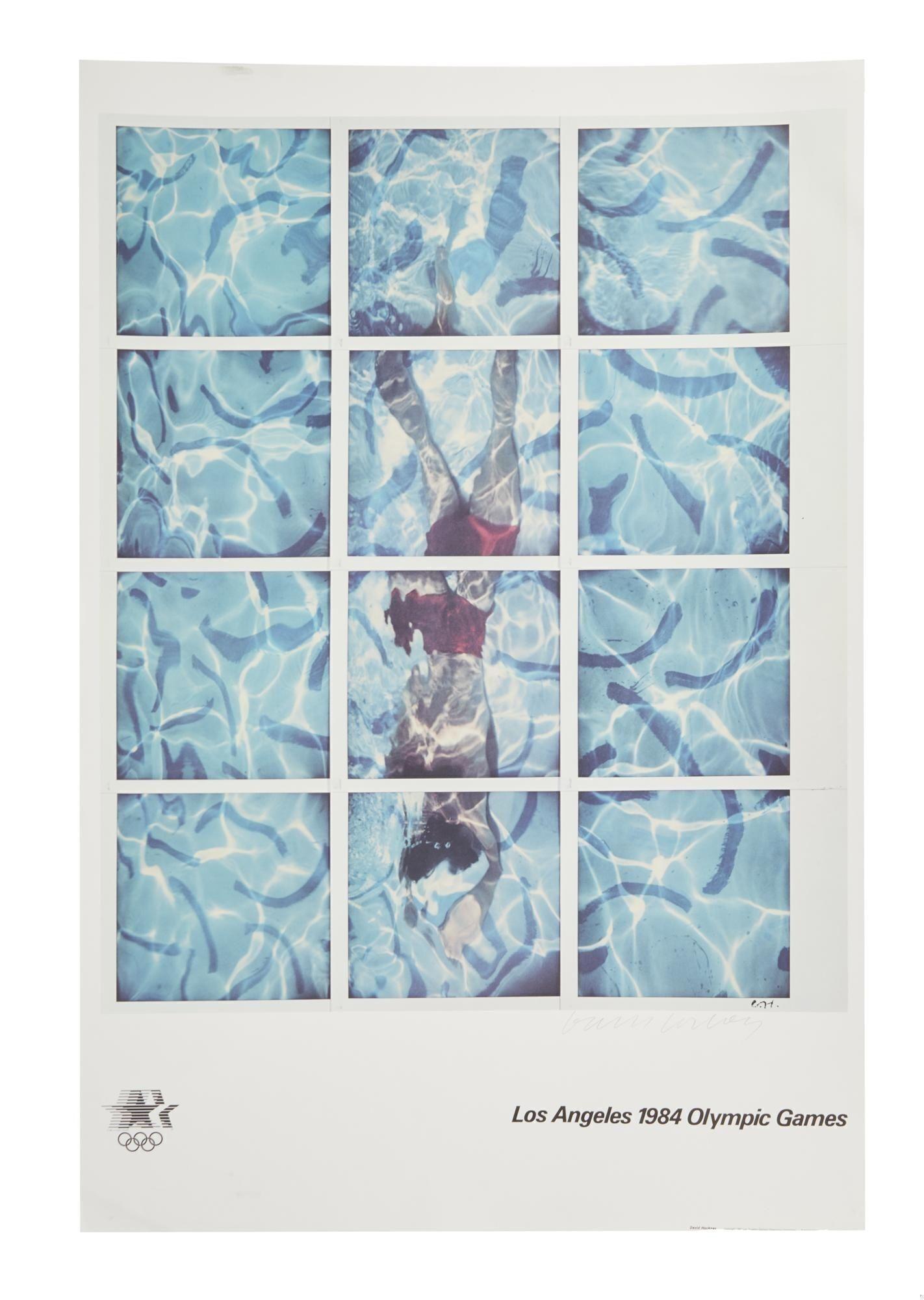
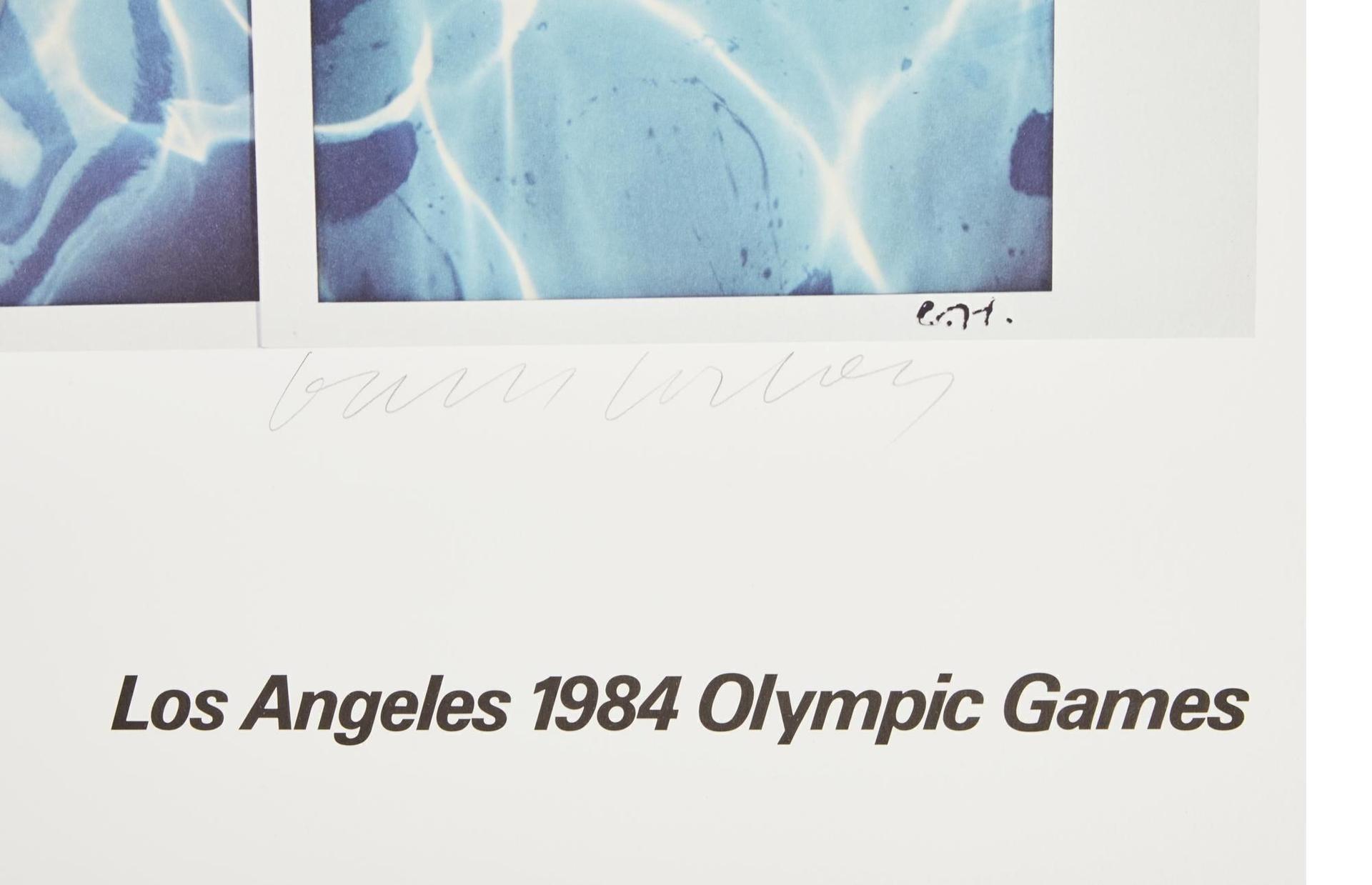
1. Tony Bennett David Hockney Gifted and Inscribed Assemblage Portrait, 6. Tony Bennett David Hockney Original Still Life, 9. Tony Bennett Original "Hockney" Oil On Canvas Painting, 10. Tony Bennett David Hockney Signed 1984 Olympics Print,
*****
Breakfast with Stanley and Boodgie in Malibu — ink on xerographed paper, hand-embellished, depicting two dachshunds near a table with a teapot and a copy of the Los Angeles Times, the Pacific visible through the window — might be the most Hockney object of all. It is not a masterpiece in the conventional sense. It is something rarer: it is a record of what the man loved. Dogs. Tea. The newspaper. The view.
Hockney first realized he was going deaf in 1978, a progressive loss that gradually inhibited his ability to hear conversations in groups. He suspected it induced a compensatory sharpening of his vision, clarifying his sense of space. Perhaps that explains something about the morning scenes, the patient attention to teapots, and newspapers and the light coming off the Pacific. When you cannot hear the world well, you learn to look at it harder.
In the spring of 2025, the Fondation Louis Vuitton in Paris invited Hockney to take over the entire building for a survey that brought together more than 400 works spanning 1955 to 2025. It was the valedictory exhibition, though no one said so. Just months later, a free show at the Serpentine in London presented A Year in Normandie, a 90-meter-long iPad painting made up of 220 panels depicting the changing seasons around his French garden, inspired by the Bayeux Tapestry and Chinese scrolls. He was still working. He was always working.
And then on June 11, a month short of his 89th birthday, he stopped.
What he left behind is not the price records or the retrospectives, though those will outlast most of us. What he left behind is closer to what you find in an auction catalog: a study of doomed lovers, small enough to hold in two hands. A dancer caught mid-step on a sheet of paper. A garden in the dark. A teapot, on a tabletop, in Malibu, beside a window full of ocean.
Color is fugitive in life, like it is in pictures. He wrote that to Tony Bennett, who kept it on his wall. It turns out it was also his autobiography.