Music
Art
Dalí. Ruscha. Crichlow. Prince. Roberta Flack's Art Collection Is Not What Anyone Expected.
She spent 42 years at The Dakota curating one of the most quietly extraordinary private art collections in New York. Now, more than 140 works from her personal archive are being offered to the public, each one a window into the mind behind the music.
Share



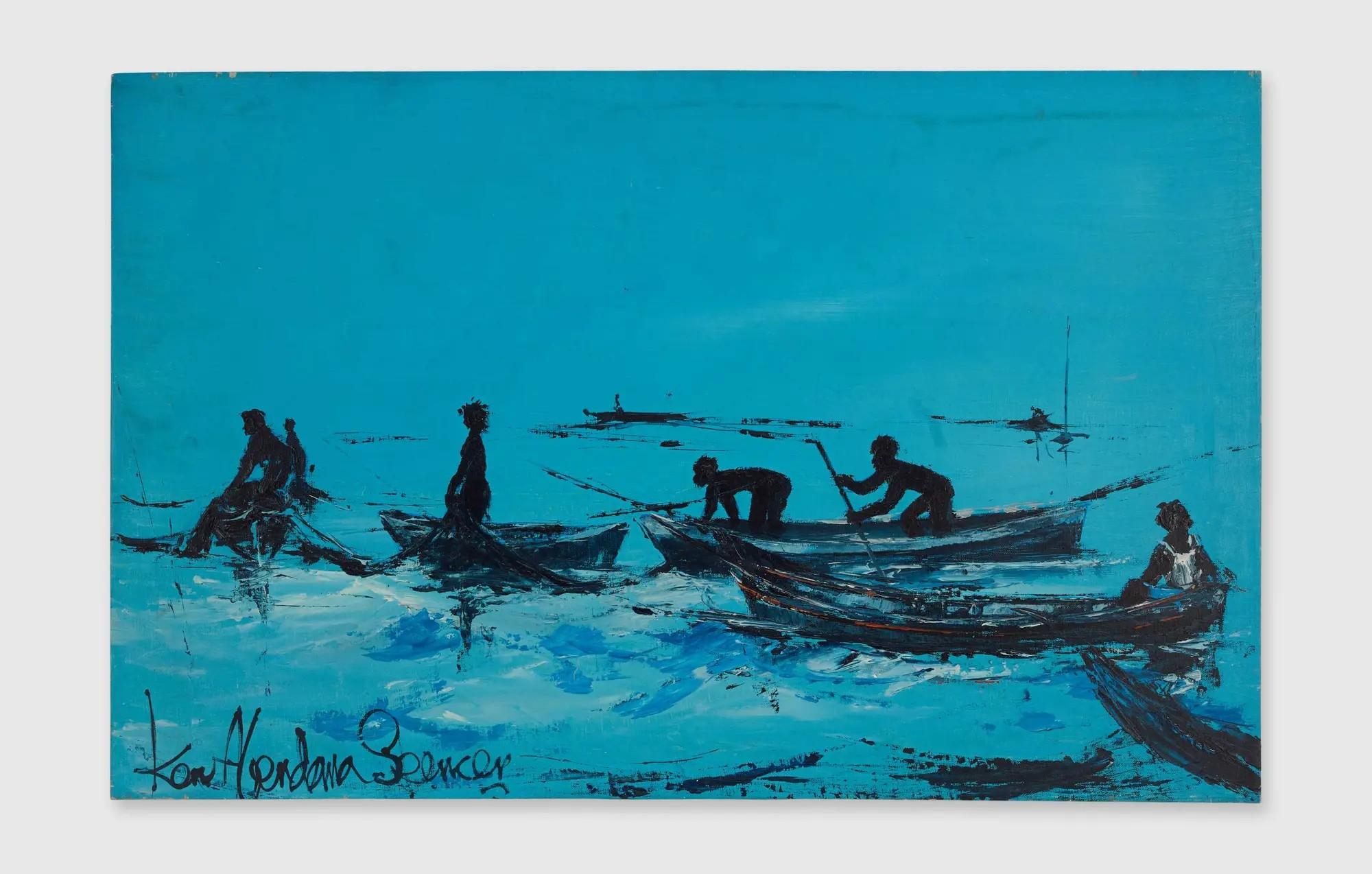
Lot #218. Roberta Flack | Kenneth Abendana Spencer Tropical Paintings (3)
Most people who came to visit Roberta Flack at The Dakota came for the conversation, the dinner table, the music. Politicians, poets, fellow musicians — she was a consummate hostess for four decades, and the apartment on the seventh floor was a place where extraordinary things happened with apparent ease. But there was something else going on in those rooms, something that revealed itself quietly, on the walls, in the corners, in the works she had chosen to live among. Roberta Flack was a collector. And the collection — more than 140 artworks now being made available for the first time — is as articulate as anything she ever recorded.
It takes a particular kind of intelligence to collect well. Taste is one thing; anyone can develop a preference. But genuine collecting requires something harder to name — a willingness to be moved by things that don't ask to be explained, a confidence in one's own response that doesn't require external validation, a curiosity that can hold Surrealism and social realism and Caribbean color and jazz portraiture in the same field of vision without needing them to resolve into a single point of view. Flack had all of it. The works she chose range from one of the rarest prints in Salvador Dalí's entire body of work to an unsigned velvet portrait of herself, kept not as vanity but as document. The distance between those two objects — in medium, in pedigree, in intention — is exactly the distance of a fully inhabited life.
She was a serious listener. It turns out she was an equally serious looker.
What makes the collection so striking is not any single work but the coherence of sensibility beneath the apparent range. Dalí and Crichlow have almost nothing in common as artists. Ed Ruscha and Bruni Sablan share no aesthetic language. Kenneth Abendana Spencer's Jamaican oils and a large-scale mixed media portrait of Prince from 1984 exist in entirely different registers of urgency and tone. And yet, seen together as things Roberta Flack chose — things she looked at every morning, walked past every night, kept around her through four decades of an extraordinary life — they form a single coherent argument about what art is for. Not decoration. Not status. Not investment. Meaning. Company. The kind of presence that asks something of you every time you look.
Over 140 works. Every one of them chosen. Not one of them accidental.
Salvador Dalí — Our Lady of Annunciation
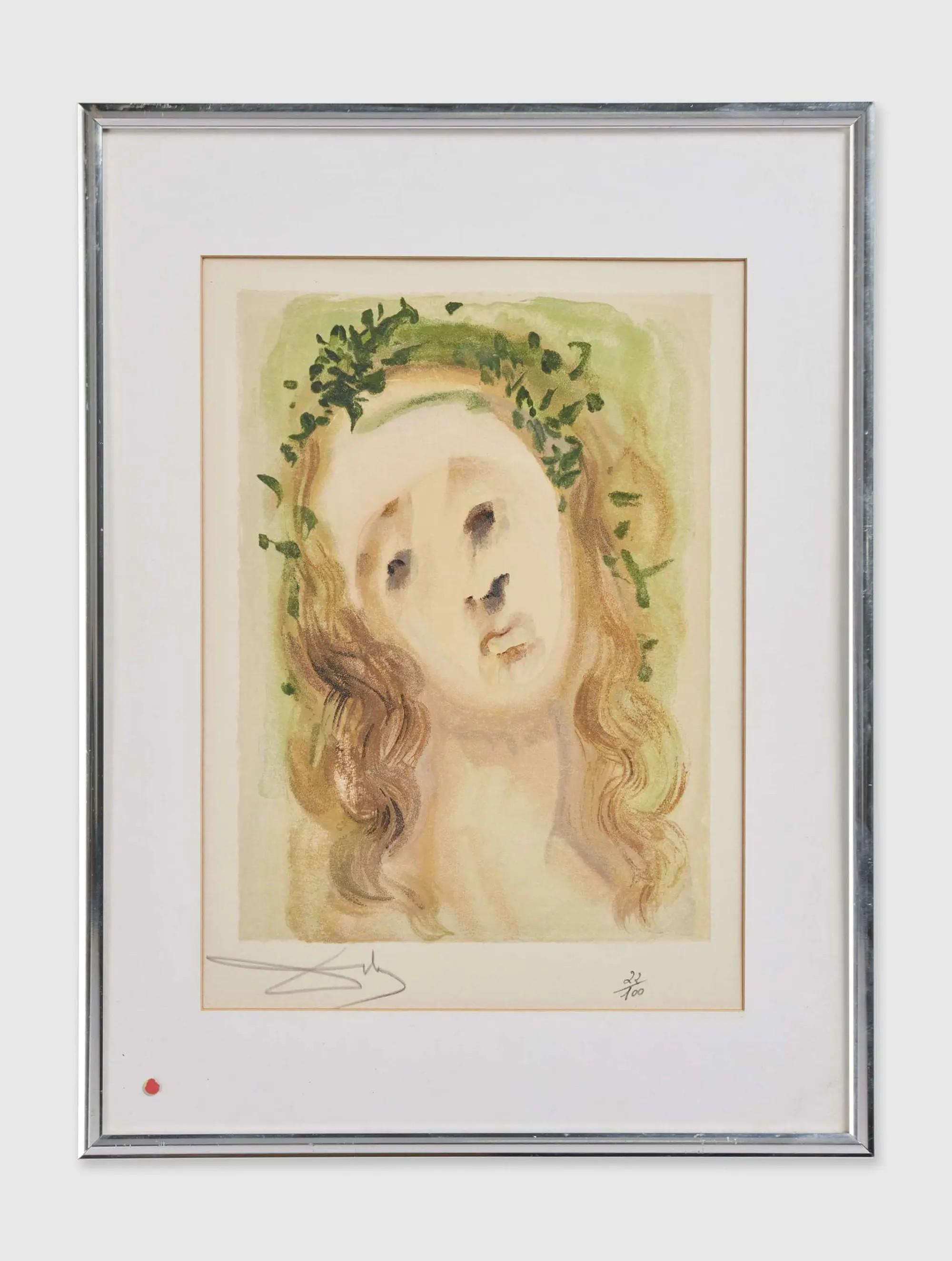
Lot #12. Roberta Flack | Salvador Dali Numbered and Signed “Our Lady of Annunciation” Print
The most historically significant single artwork in the collection is a limited edition print — numbered 22 of 100 — of Salvador Dalí's Our Lady of Annunciation (Purgatory 10), signed and numbered by Dalí himself in pencil. It is part of the most ambitious graphic project of his career, and by many accounts the finest thing he ever made.
The story of the Dalí Divine Comedy series begins with a commission and a scandal. In the early 1950s, in celebration of the 700th birthday of Dante Alighieri, the Italian government commissioned Dalí to create 100 illustrations for a commemorative edition of The Divine Comedy. Public outcry against the commissioning of a Spanish artist to accompany the work of an Italian cultural hero forced the government to revoke its support. Dalí, characteristically undeterred, continued anyway. With the help of French publisher Joseph Forêt, he produced 100 sumptuous watercolors evoking Heaven, Hell, and Purgatory in response to Dante's text. These watercolors were then interpreted under Dalí's supervision as wood engravings via 3,500 separate blocks — an achievement that took just under five years to complete.
The Divine Comedy suite consists of 100 color block engravings created between 1960 and 1964. Once the project was complete, all the blocks were destroyed — the printing process itself consumed them, each progressively cut away to receive the next color, making what remains impossible to reproduce. It is widely considered Dalí's finest graphic achievement. Flack's print — from the Purgatory section, hand-signed and numbered — is among the rarest objects in the entire sale.
Ed Ruscha — Hollywood in the Rain
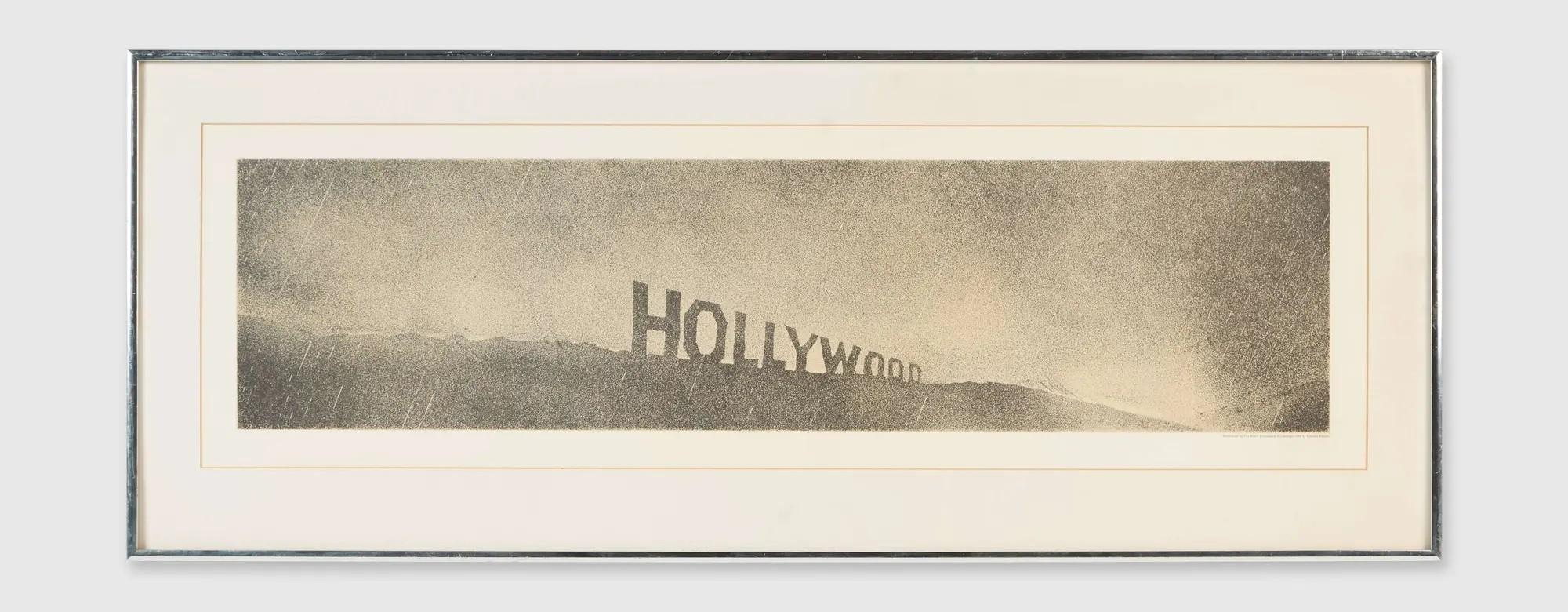
Lot #14. Roberta Flack | Ed Ruscha “Hollywood in the Rain” Print
If the Dalí represents the European classical tradition Flack absorbed through her formal musical training, the Ed Ruscha Hollywood in the Rain (1969) speaks to something else entirely — the cool, ironic, distinctly American eye of a Los Angeles artist who had turned words into landscape and landscape into art. The work is held in the permanent collections of MoMA in New York and LACMA in Los Angeles. It was produced at the Tamarind Lithography Workshop in an edition of eight — among the smallest edition sizes of any significant Ruscha print — making Flack's framed and matted example a genuinely rare object.
That Roberta Flack, who built her career in Washington D.C. and New York, owned a work whose entire emotional content is the mythology and melancholy of Hollywood, is one of the quiet surprises of this collection. Ruscha's text-based works operate like songs — a few words, precisely chosen, doing the work of entire paragraphs. Flack would have understood that instinctively.
Ernest Crichlow — Young Lady in a Yellow Dress
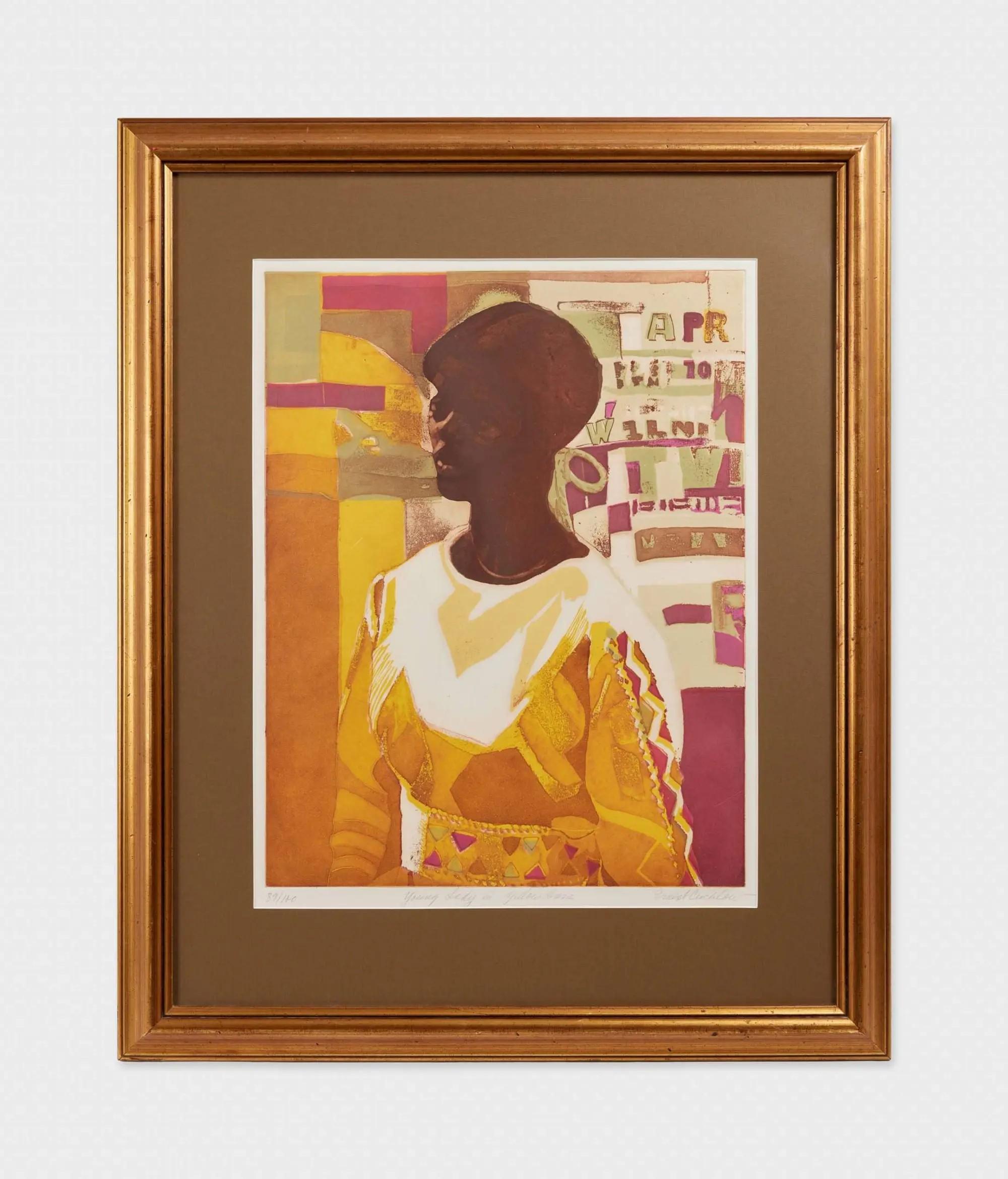
Lot #124. Roberta Flack | Signed Ernest Crichlow Young Lady in a Yellow Dress Print
Of all the artists represented in Flack's collection, Ernest Crichlow may be the one whose presence feels most personally chosen — the one that says the most about who she understood herself to be in relation to Black American cultural history.
Crichlow (1914–2005) was an accomplished American narrative painter and illustrator known for his Depression-era work commenting on social injustice and the realities of the African American experience. He was a founding member of Spiral, the African American artist collective formed in 1963 whose mission was to contribute to the civil rights movement while maintaining individual artistic identity. In 1969, alongside Romare Bearden and Norman Lewis, he co-founded the Cinque Gallery — named after Joseph Cinqué, leader of the 1839 Amistad rebellion — to exhibit Black artists and provide community educational programs. In 1980, he was one of ten Black artists honored by President Jimmy Carter.
Young Lady in a Yellow Dress — a 1979 limited edition print, titled, numbered, and signed by the artist in pencil — represents the quieter, more lyrical dimension of his practice. Crichlow once said that good music influenced his art. That Roberta Flack owned his work feels less like coincidence and more like recognition — one artist who carried the weight of the Black American experience acknowledging another who had carried it differently, and just as faithfully.
Bruni Sablan — Miles Davis Portraits
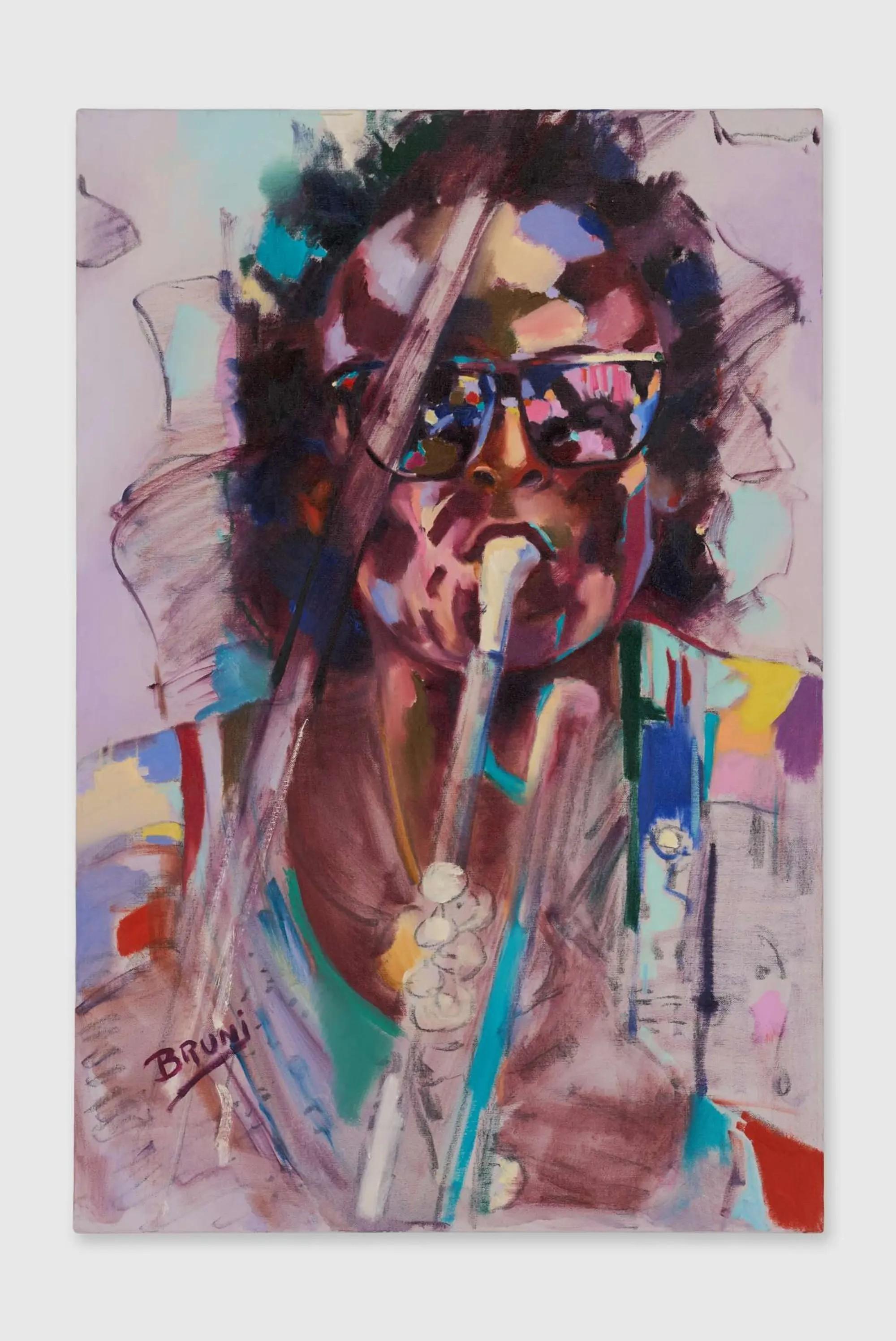
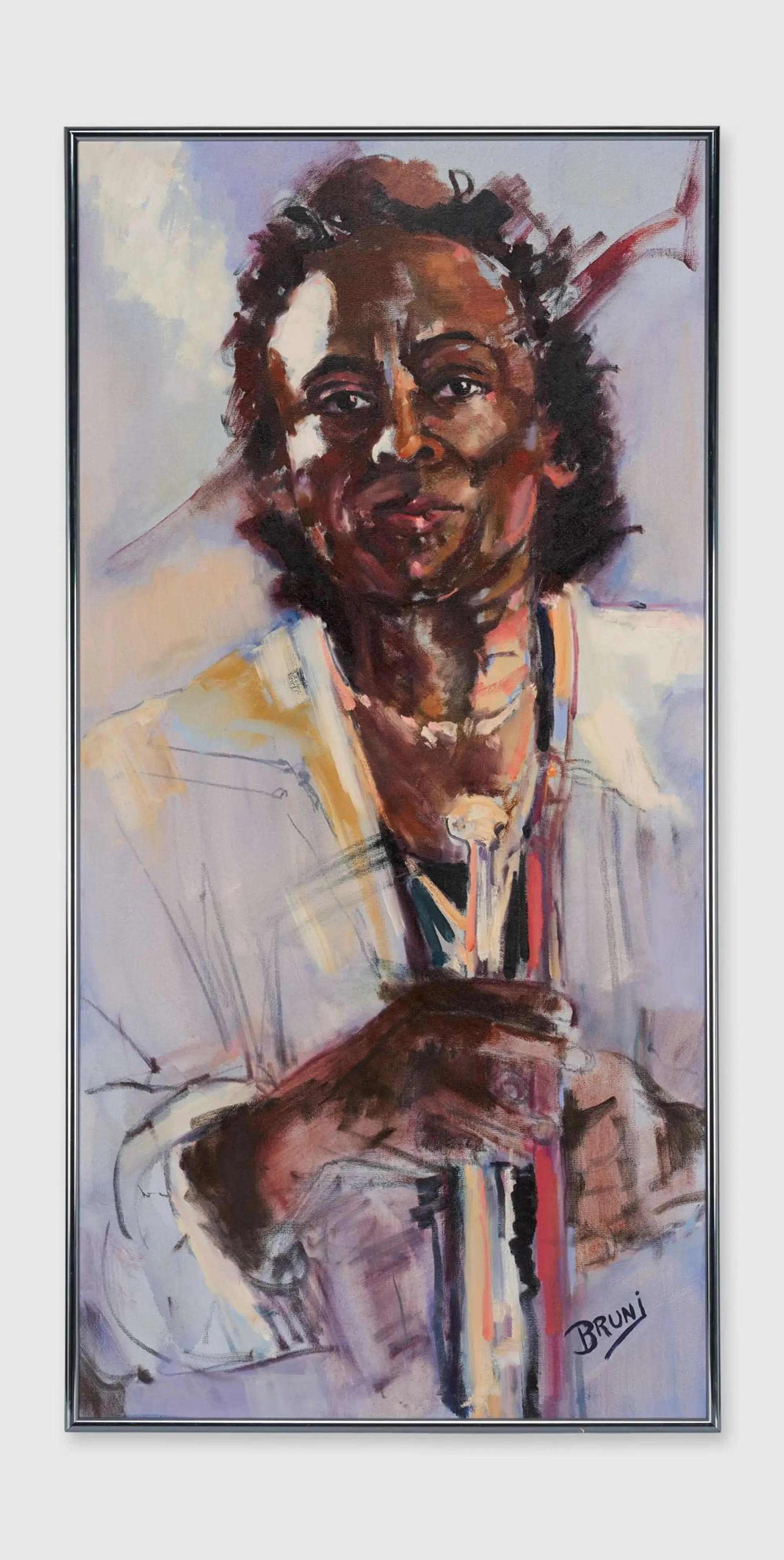
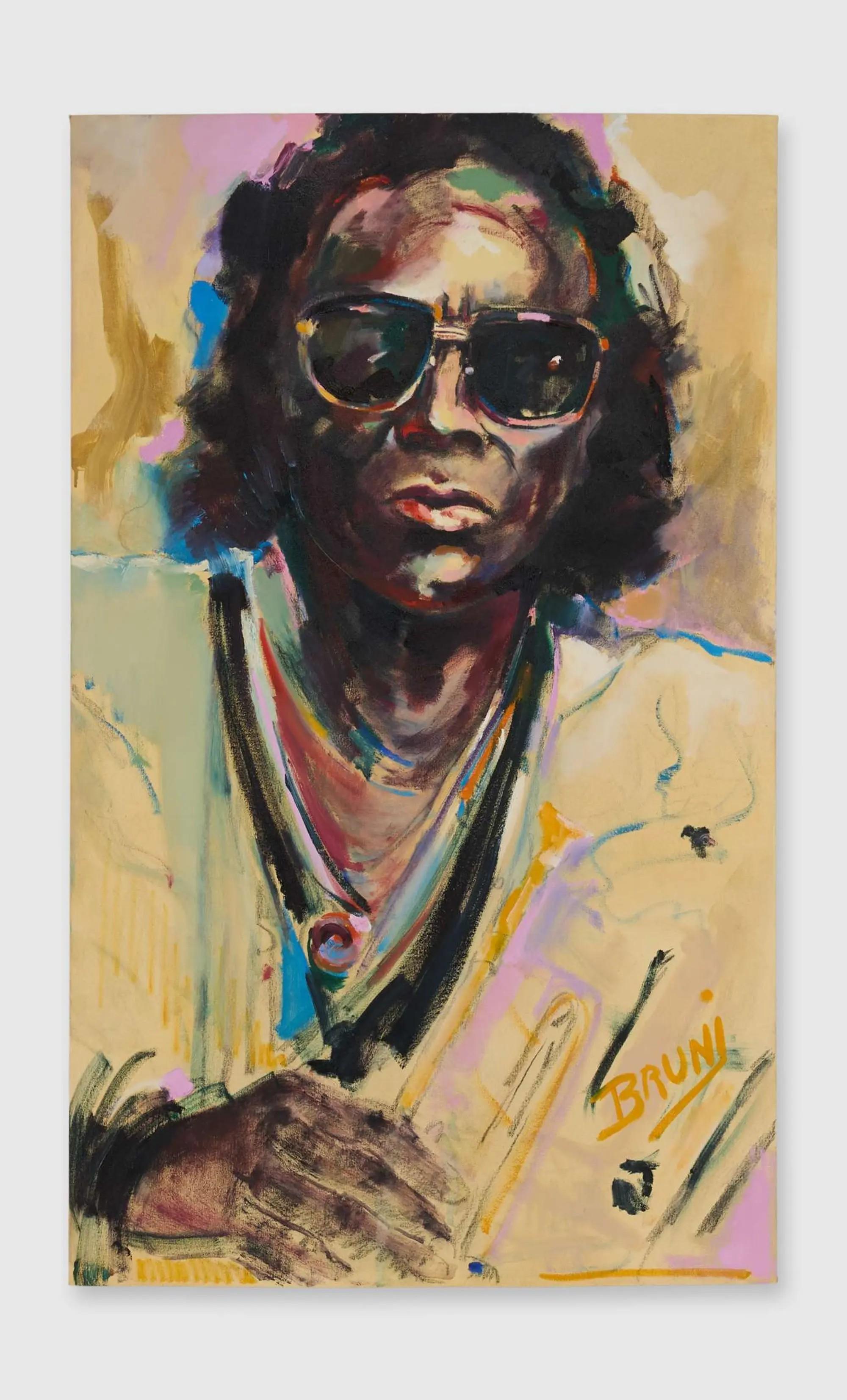
1. Lot #335. Roberta Flack | Bruni Sablan Jazz Trumpet Paintings (2), 2. Lot #336. Roberta Flack | Bruni Sablan Miles Davis Portrait (A), 3. Lot #337. Roberta Flack | Bruni Sablan Miles Davis Portrait (B),
For Flack to own not one, not two, but three Bruni Sablan portraits of Miles Davis tells you something about both the depth of her jazz reverence and the specificity of her eye. The Brazilian artist has made Davis her life's obsession — more than 200 portraits across decades — and her vibrant, expressionistic approach captures something about Davis that photography rarely managed: the restlessness, the transformation, the almost uncomfortable intensity.
Flack, who had grown up in the world of jazz before crossing into soul and pop, understood Miles Davis not as a legend to be displayed but as a presence to be lived with. Two portraits. Both large-scale. Both oil on canvas. She kept them both, along with a number of other photos and artifacts dedicated to Davis.
Kenneth Abendana Spencer — Ten Jamaican Paintings
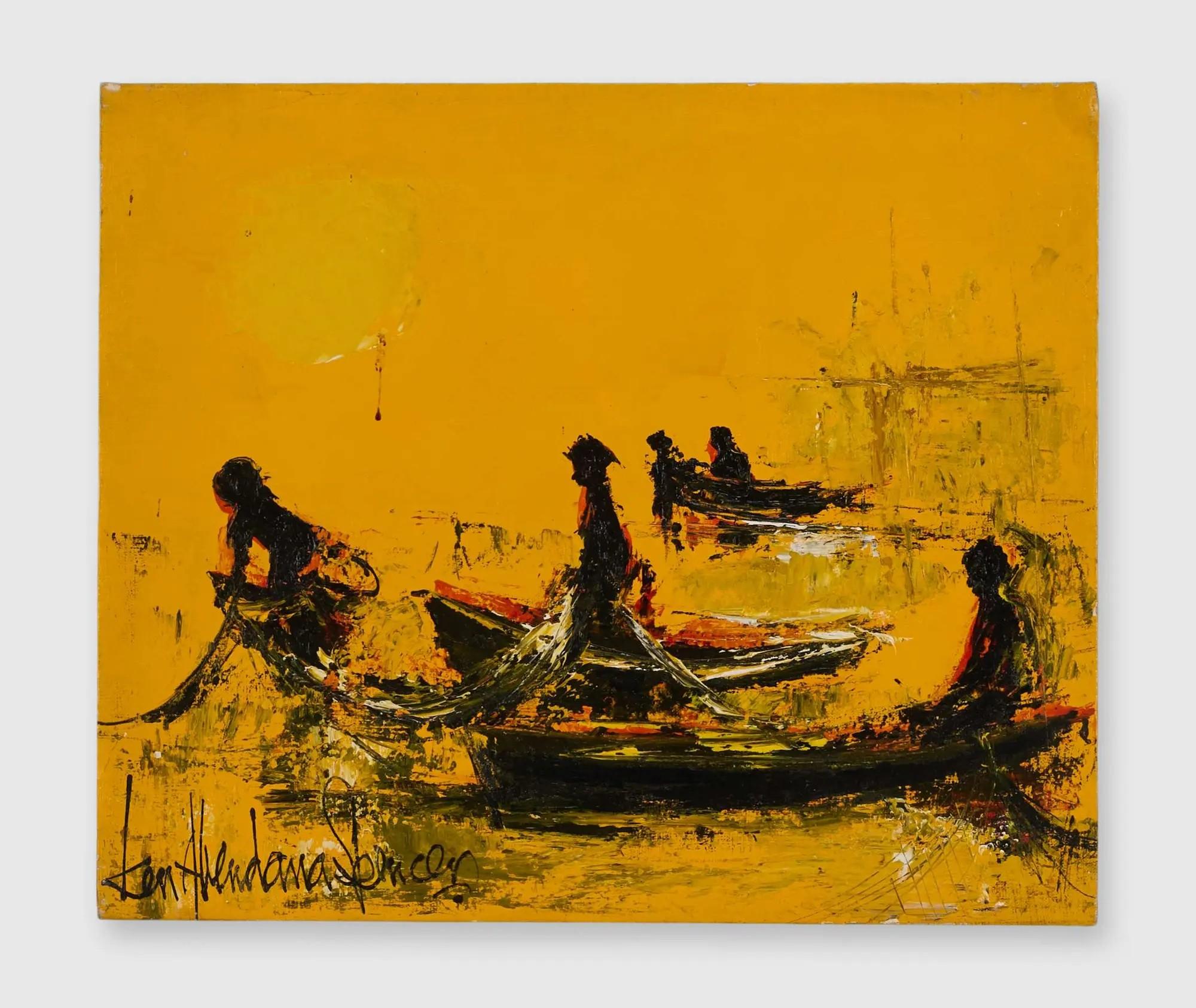
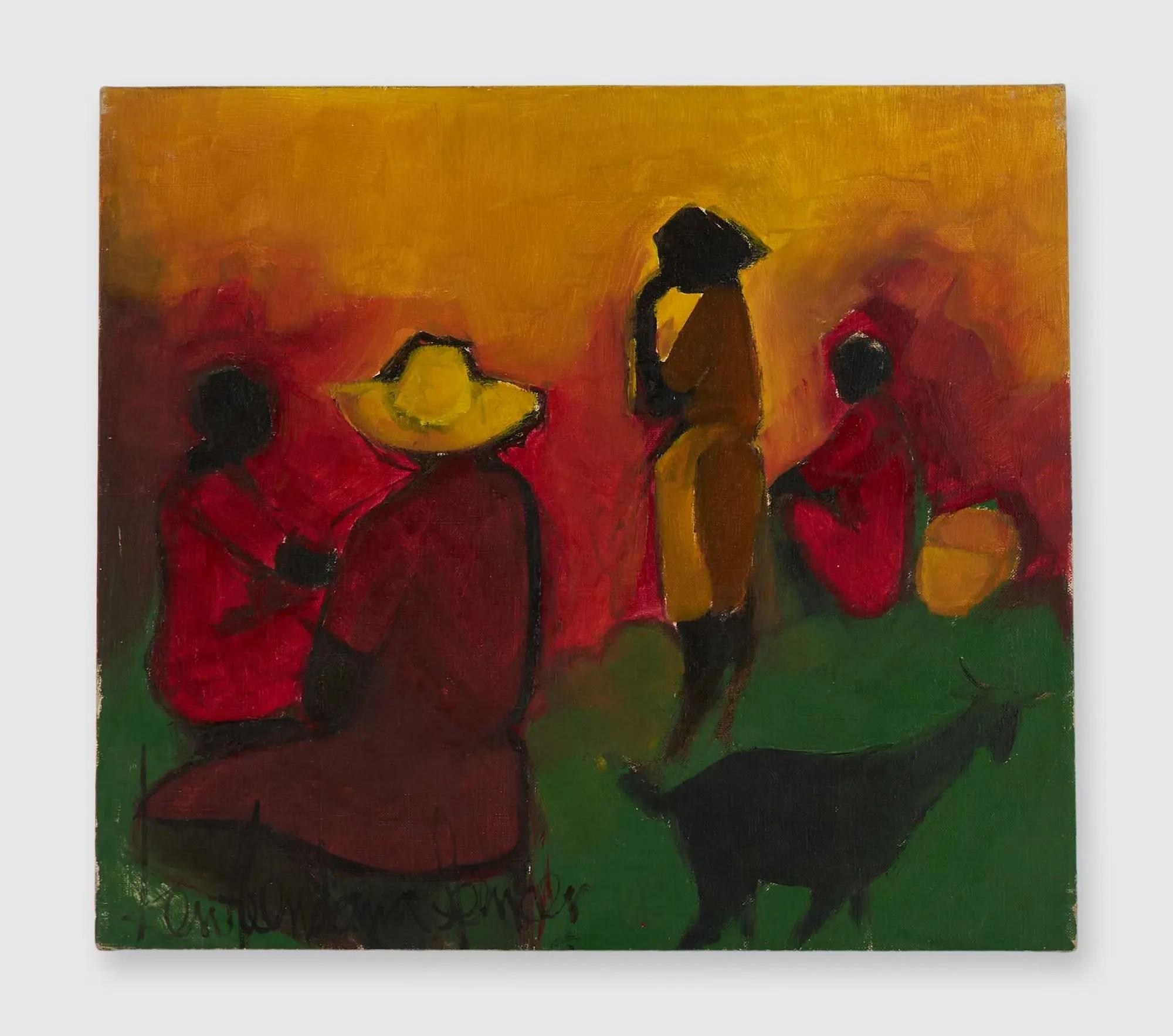
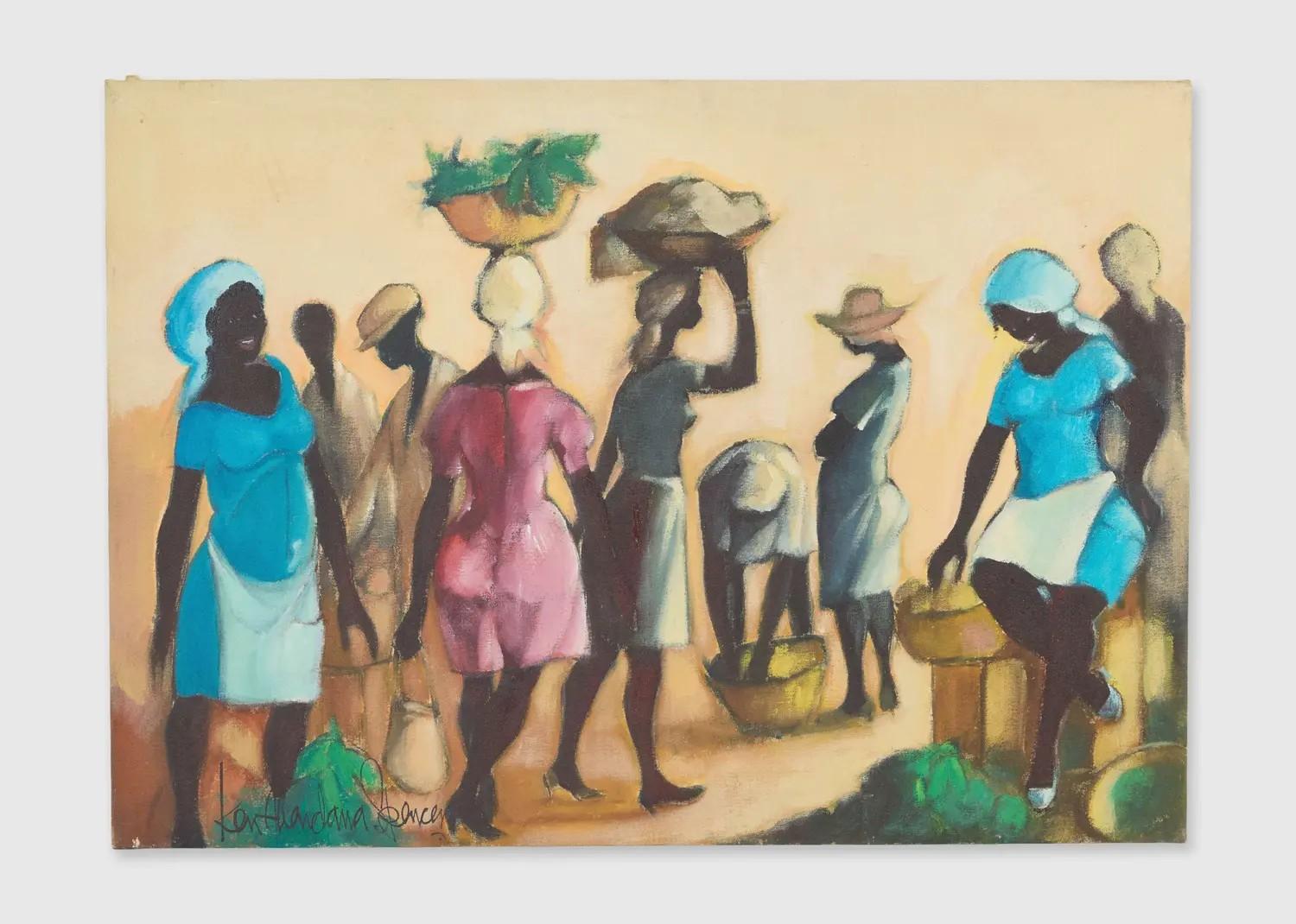
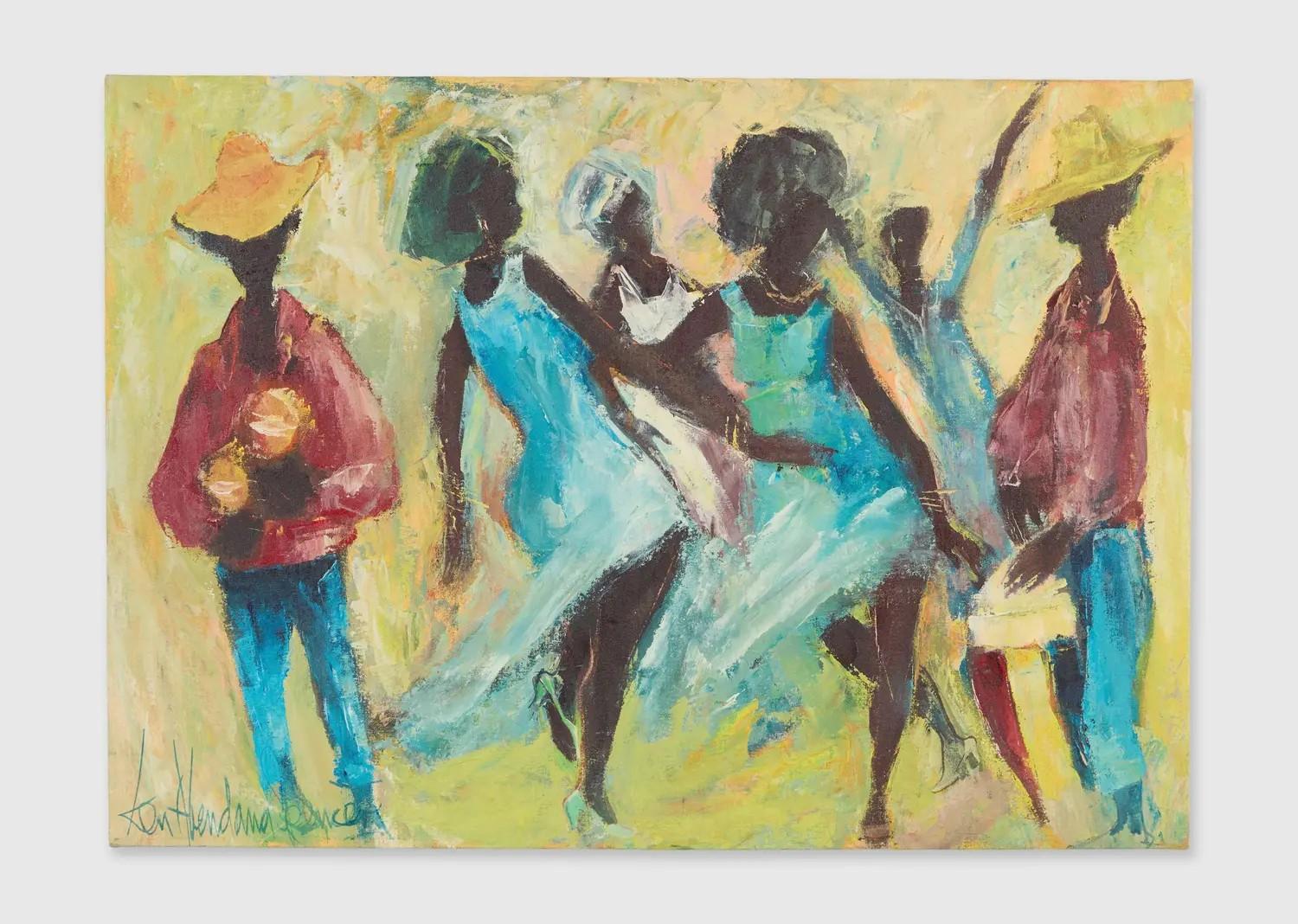
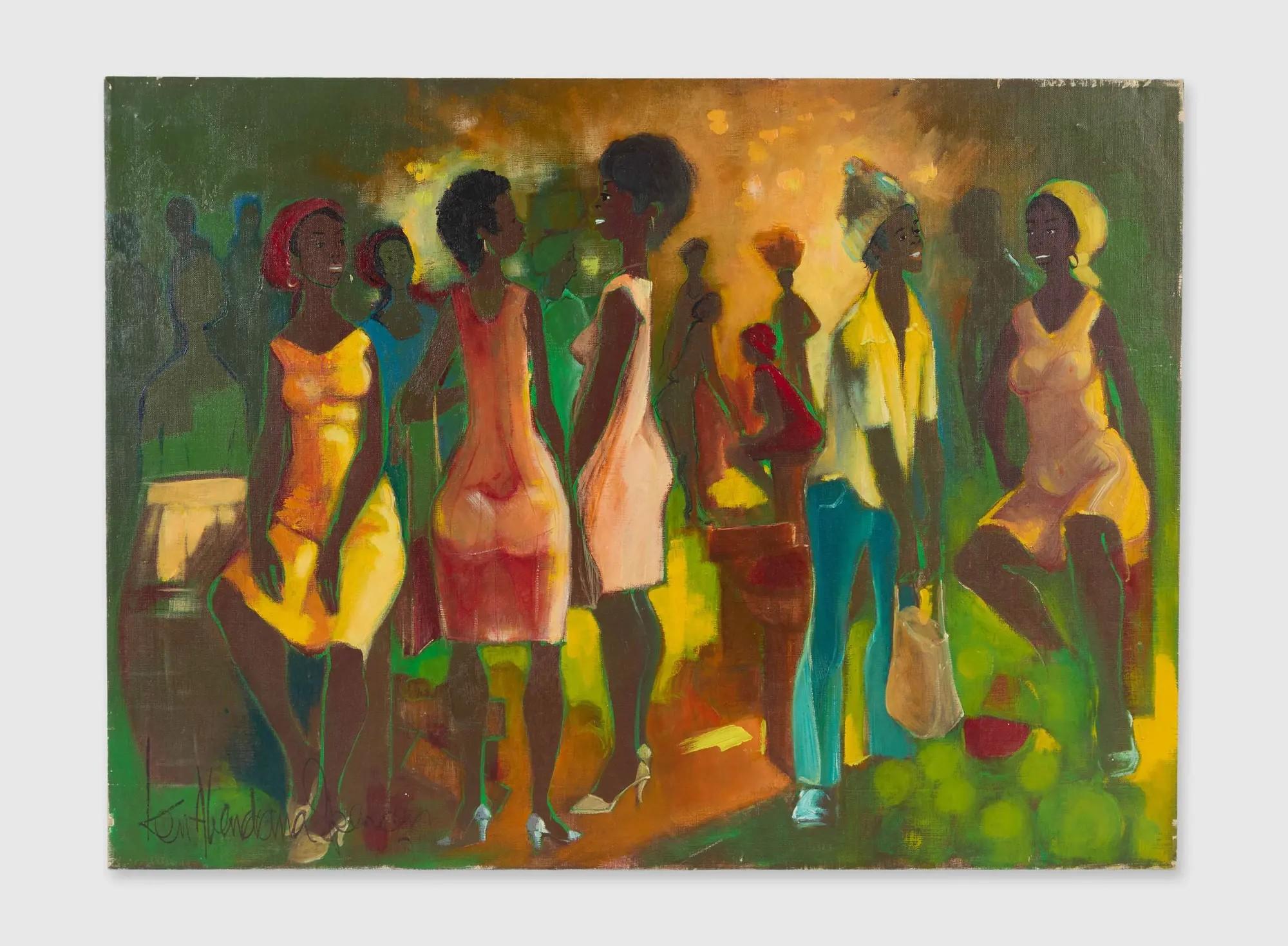
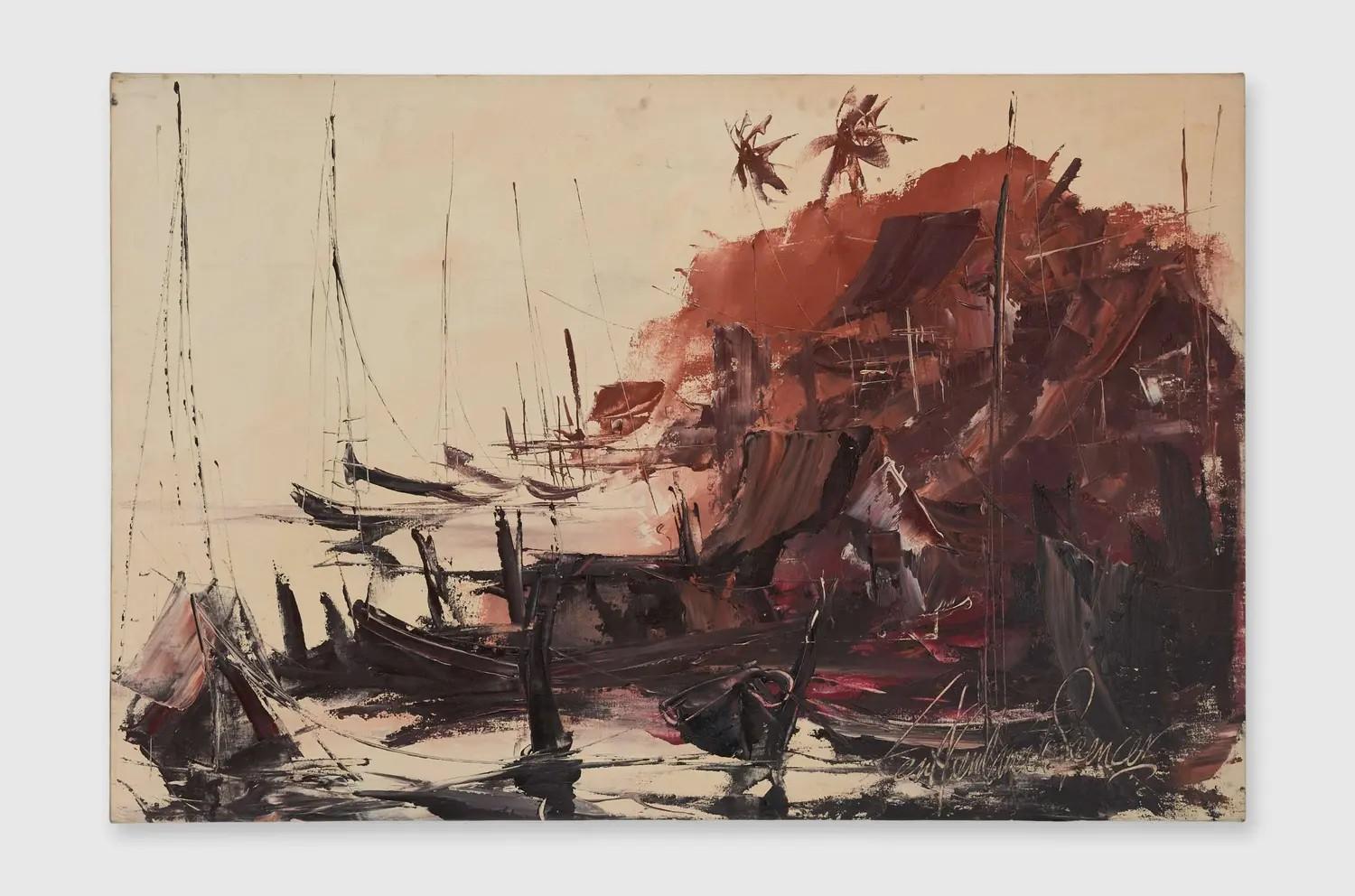
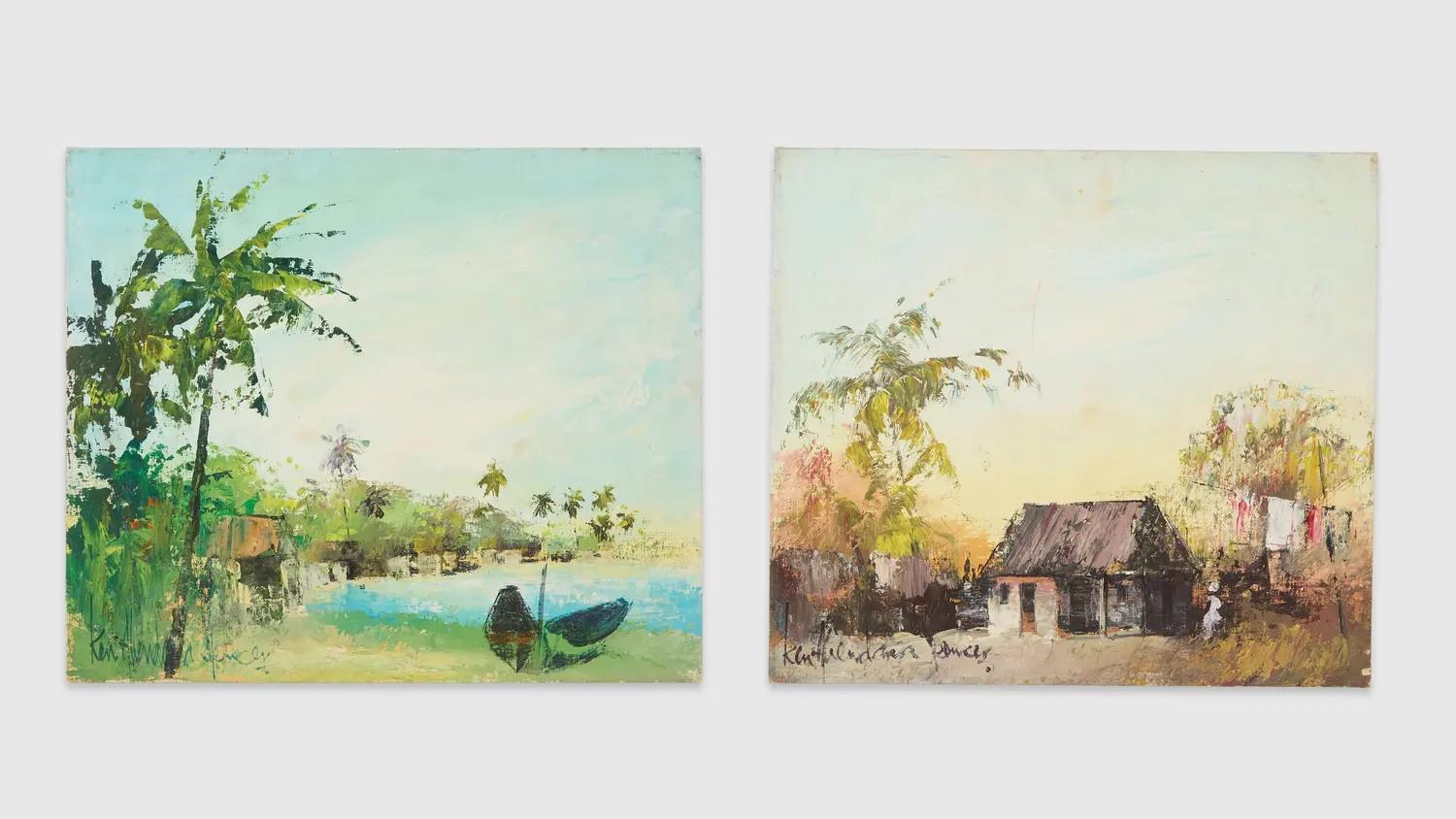
The Kenneth Abendana Spencer paintings in the collection — tropical scenes, paintings of groups of women — represent one of the most unexpected and revealing aspects of Flack's collecting life. Spencer (1929–2005) was a Jamaican artist known for his vibrant depictions of daily life in his home country: women in rural scenes, figures at work on boats, the warmth and color and physical fact of Caribbean life rendered in oil on canvas with an immediacy that makes the works feel inhabited rather than observed. Flack collected ten of them, which suggests an affinity that goes beyond decoration. She was drawn to artists who painted the lives of Black people with dignity, specificity, and color. Spencer did exactly that, for Jamaica, for fifty years.
The 1984 Prince Collage & Other Works
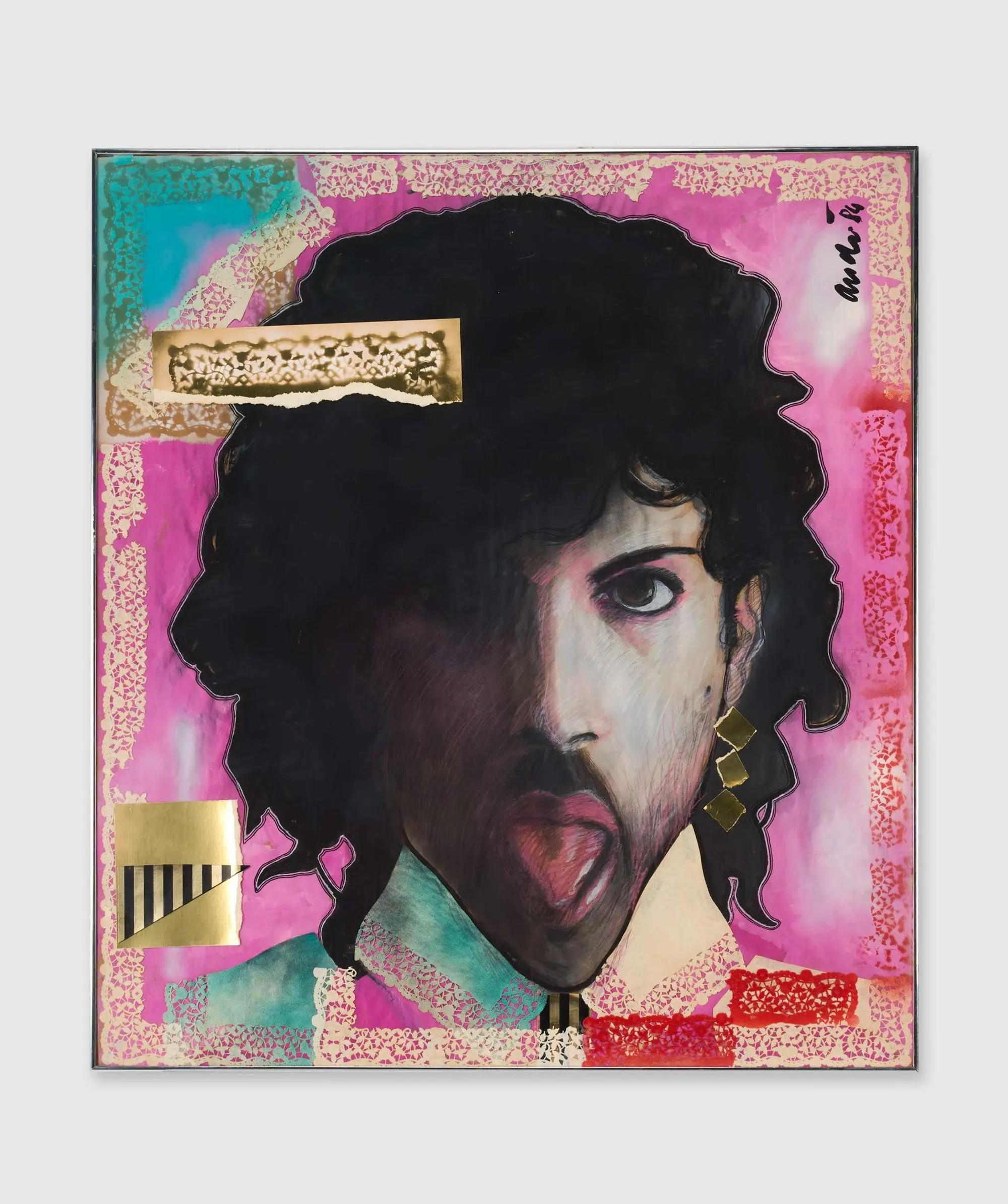
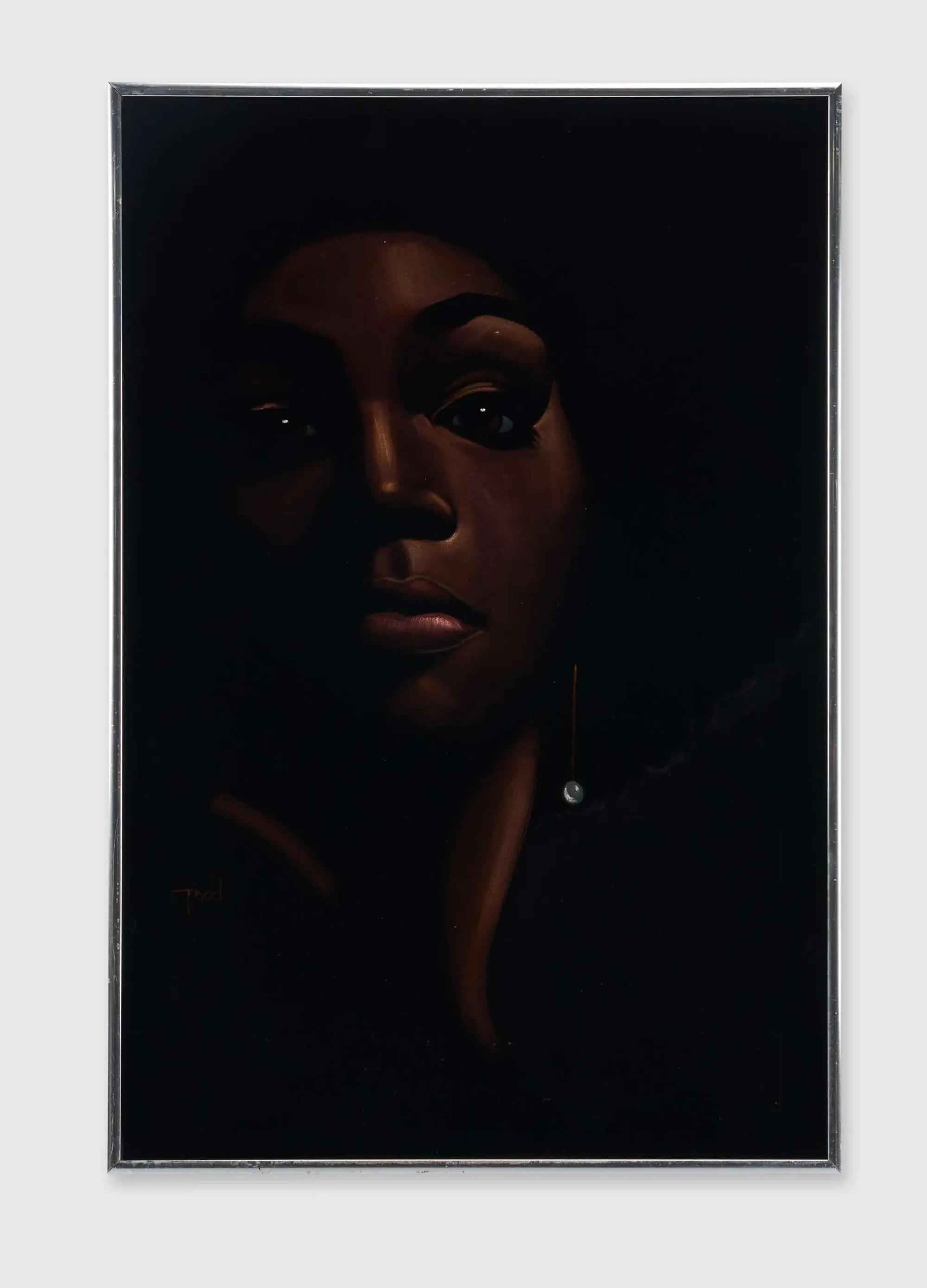
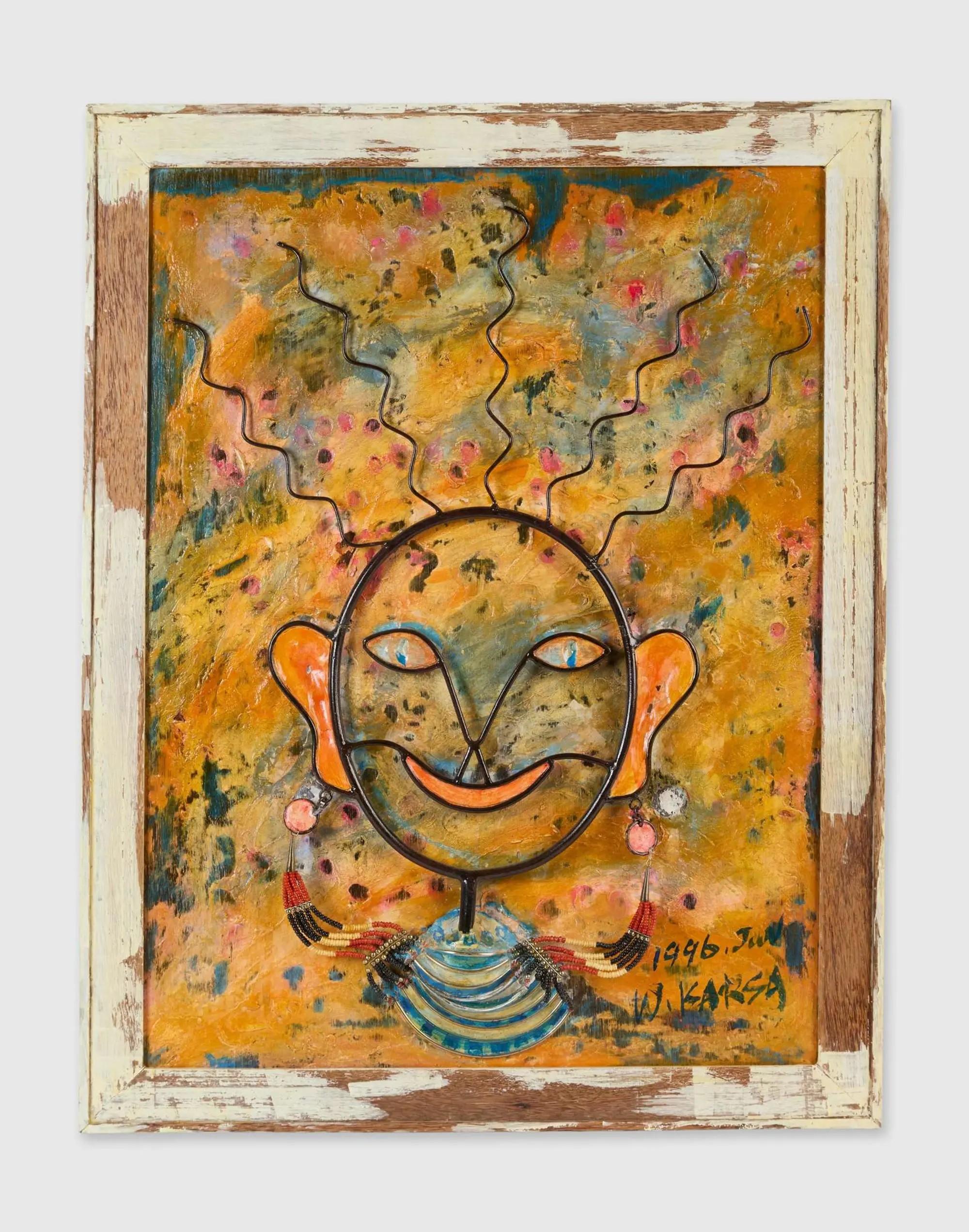
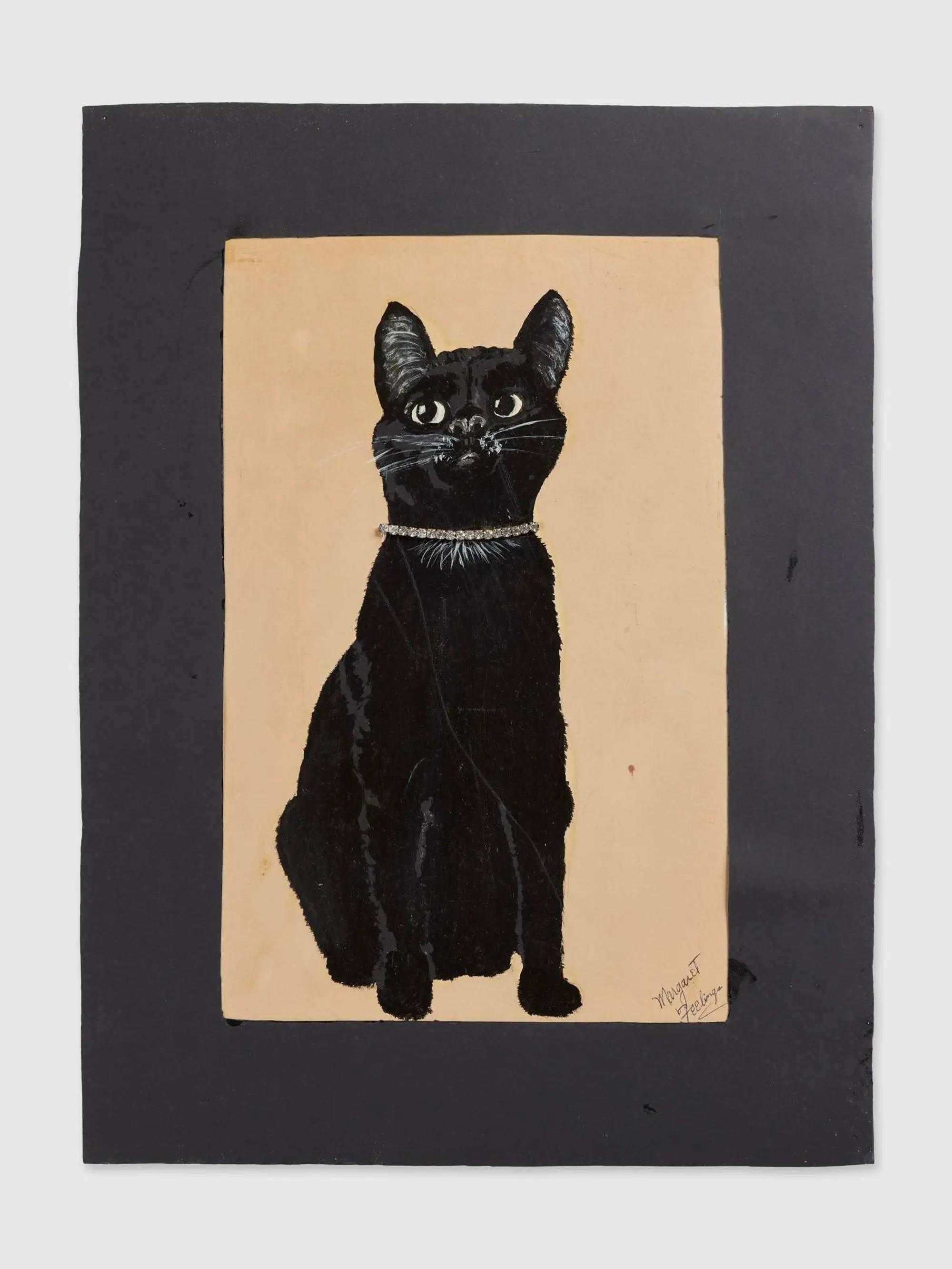
1. Lot #338. Roberta Flack | 1984 Large Prince Artwork, 2. Lot #10. Roberta Flack | Artist Signed Portrait on Velvet, 3. Lot #402. Roberta Flack | 1996 W. Karsa Three-Dimensional Painting, 4. Lot #456. Roberta Flack | Margaret Feelings Cat Artwork,
And then there is the 1984 large mixed media collage portrait of Prince — signed illegibly and dated in pencil, nearly four feet square — which manages to be simultaneously the most surprising lot in the collection and the most inevitable. Two artists at the absolute height of their respective powers in 1984, both of whom understood that genius and persona were inseparable, both of whom inhabited their public presence with total conviction. The work's scale, its date, and its provenance from Flack's personal estate give it a biographical weight that transcends attribution.
Alongside it: a Margaret Feelings mixed media artwork depicting a black cat — intimate, personal, the kind of object you keep because it makes you feel something specific every time you walk past it. A velvet portrait of Flack herself, signed by the artist Todd — a woman keeping a portrait of herself not out of vanity but as document, a record of how she appeared to someone who looked carefully. And a 1996 three-dimensional painting with metal details by W. Karsa — textured, material, insistently physical in a collection that otherwise tends toward the flat and the considered.
The walls of her apartment were not decorated. They were curated. The difference, when you see the works together, is immediately apparent.
What the collection makes clear, taken whole, is that Roberta Flack approached art the way she approached music — with deep historical knowledge, genuine emotional investment, and a refusal to be limited by any single tradition or school. She moved between the canonical and the personal, between the internationally celebrated and the culturally specific, between Surrealist masterworks and jazz portraits painted by a Brazilian artist in love with Miles Davis. She bought what moved her. She kept what sustained her. For 42 years at The Dakota, these were the works she woke up to and came home to.
More than 140 of them are now being offered as part of a landmark collection of over 500 artifacts drawn directly from her personal estate — each one original or signed by the artist who created it, each one carrying the provenance of a life spent in the company of great things. All proceeds go to the Roberta Flack Foundation.
The collection of a serious listener. The walls of an extraordinary mind. Now available to anyone serious enough to look.