Film & TV
An Offer the World Couldn't Refuse
How "The Godfather" became American mythology — and why its artifacts still command reverence more than half a century on.
Share



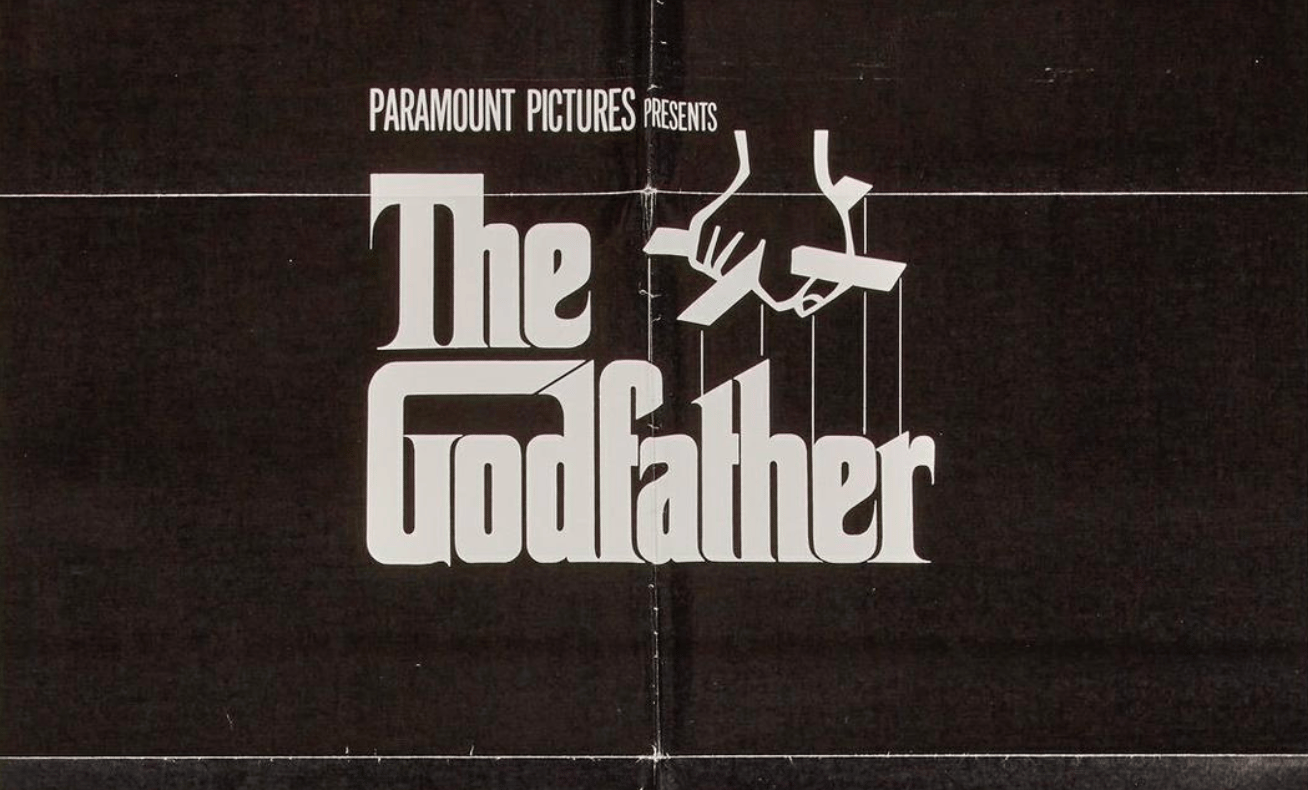
The Godfather | Robert Duvall Signed Film Poster. Sold in 2023.
There are films, and then there are monuments. Francis Ford Coppola's The Godfather, released by Paramount Pictures in 1972, belongs to the second category — a work so thoroughly woven into the fabric of American culture that its images, its language, and its moral architecture have outlasted nearly every other film of its era. To hold an artifact from that world is to hold a piece of history that transcends cinema itself.
This season, Julien's Auctions’ Hollywood Legends Classic and Contemporary auctions in partnership with Turner Classic Movies, features an extraordinary collection of Godfather memorabilia sourced in large part from the personal archive of journalist Lawrence Grobel — a man who knew Al Pacino, Marlon Brando, and Diane Keaton not as distant stars, but as friends. The result is a rare opportunity: provenance that is not merely documented but lived.
"The story behind each signature is as compelling as the film itself — an intimate record of friendship, trust, and a shared legacy that belongs to cinema history."
Mario Puzo's source novel arrived in 1969 and was an immediate sensation, spending 67 weeks on the New York Times Best Seller list and selling more than nine million copies within two years. Coppola's adaptation focused on a single, devastating transformation: Michael Corleone, returning war hero, becoming the Mafia don his family needed him to be. Al Pacino's performance made that transformation unforgettable, earning him an Academy Award nomination for Best Supporting Actor — a nomination he shared, almost absurdly, with co-stars James Caan and Robert Duvall, the three men likely canceling each other out.
The Godfather won three Oscars that year — Best Picture, Best Actor for Brando, and Best Adapted Screenplay for Puzo and Coppola. Its sequel, released two years later, became the first sequel in history to win Best Picture, adding five further Academy Awards including Best Director and Best Supporting Actor for Robert De Niro. Together, the first two films have generated nearly $400 million in worldwide box office receipts and were selected by the Library of Congress for preservation in the National Film Registry in 1990 and 1993, respectively.
Connected Legacies
Julien's connection to this world runs deep. In 2020, Julien's held the landmark Property From The Estate of Robert Evans auction — nearly 600 lots representing the life and extraordinary career of the producer who shepherded The Godfather into existence at Paramount. That sale drew international attention and underscored what Julien's has long understood: the objects that surround great art carry their own irreducible gravity. Evans's personal effects told a story that no biography could fully capture. The Godfather lots in each of this year's Hollywood Legends auctions extend that tradition.
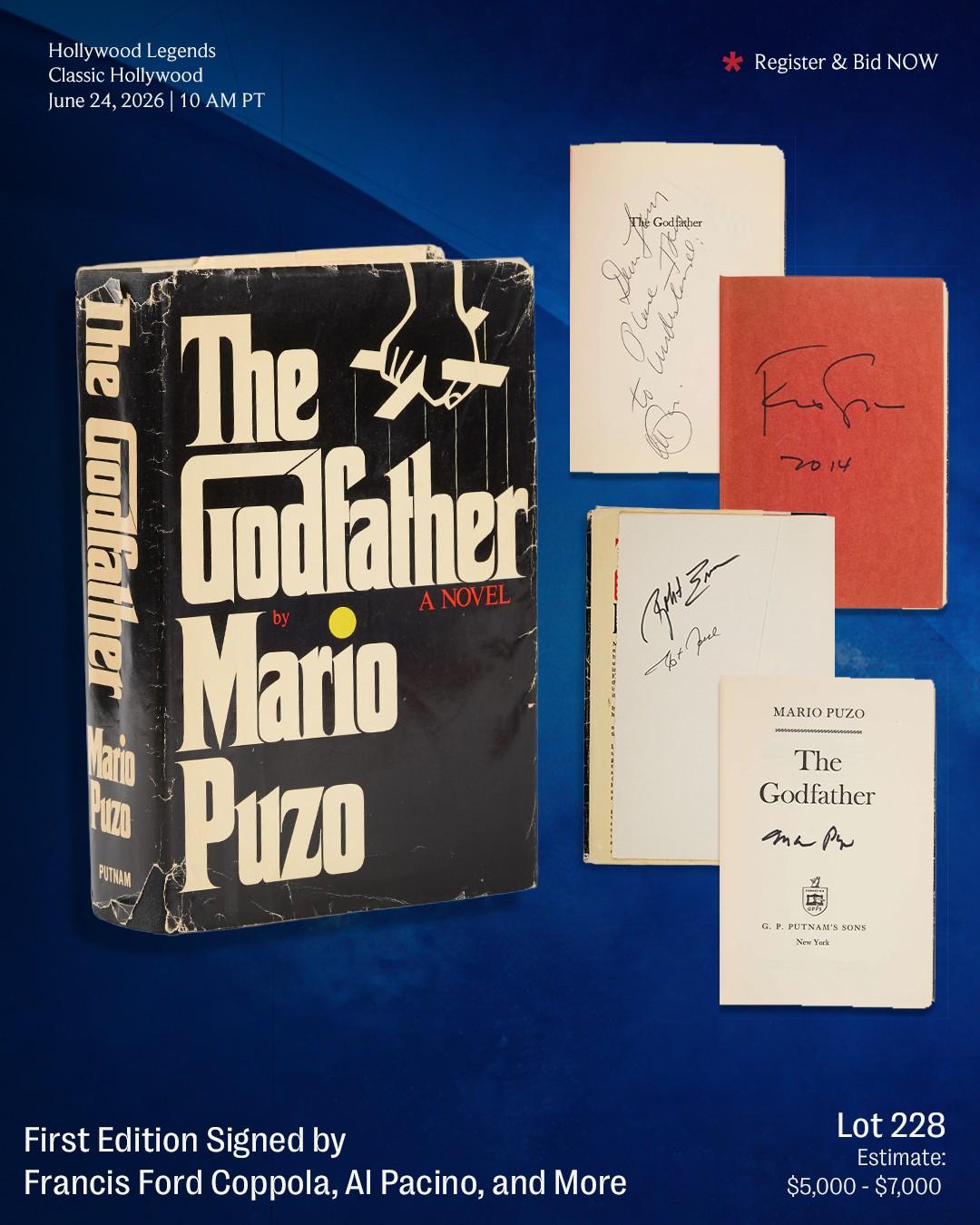
Among the most remarkable items on offer is Lot 228 — a first edition of Puzo's novel, signed across its pages by Coppola, Evans, uncredited script doctor Robert Towne, Pacino, Puzo himself, and Diane Keaton, who — with characteristic wit — inscribed her character Kay's line: "They all lied!" Grobel assembled these signatures over years, the final one requiring his daughter to hand-deliver the book to Coppola's Napa Valley home. The result is a singular object: a literary monument transformed, through friendship and patience, into a complete artistic relic.
Featured Lots
An embossed one-sheet (27 × 40 in.) from the trilogy's final chapter, signed by Pacino in gold-tone pen as Michael Corleone. The film — later reissued as The Godfather Coda: The Death of Michael Corleone — brought Coppola and Puzo back together for a definitive conclusion to the saga.
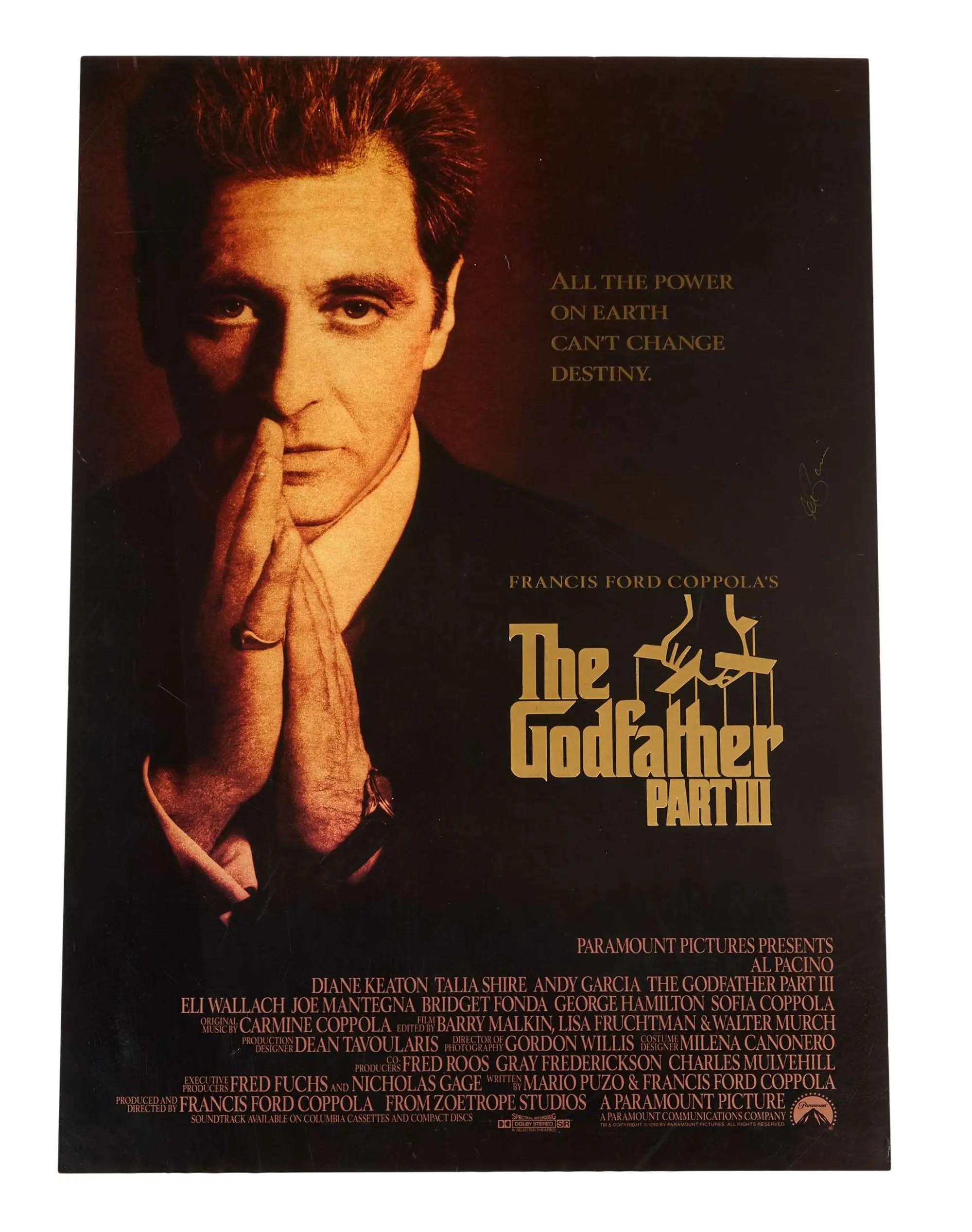
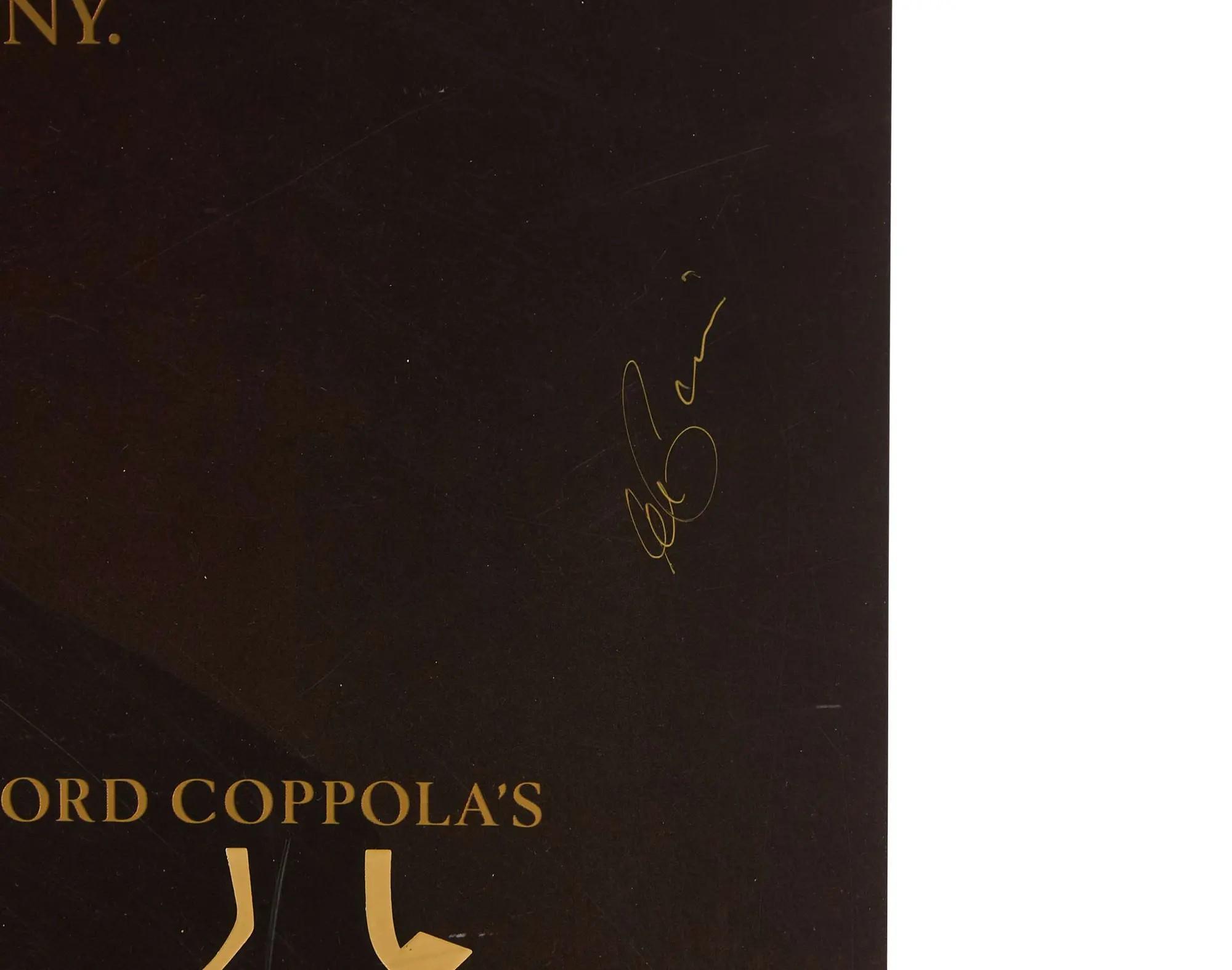
1. Lot #164. The Godfather Part III | Al Pacino Signed Movie Poster,
An 8 × 10 glossy still credited to photographer Emilio Lari, signed by Pacino in black marker. From the collection of Lawrence Grobel — journalist, author of a book on Pacino, and a man who shared Sunday lunches with the actor at his Beverly Hills home for years.
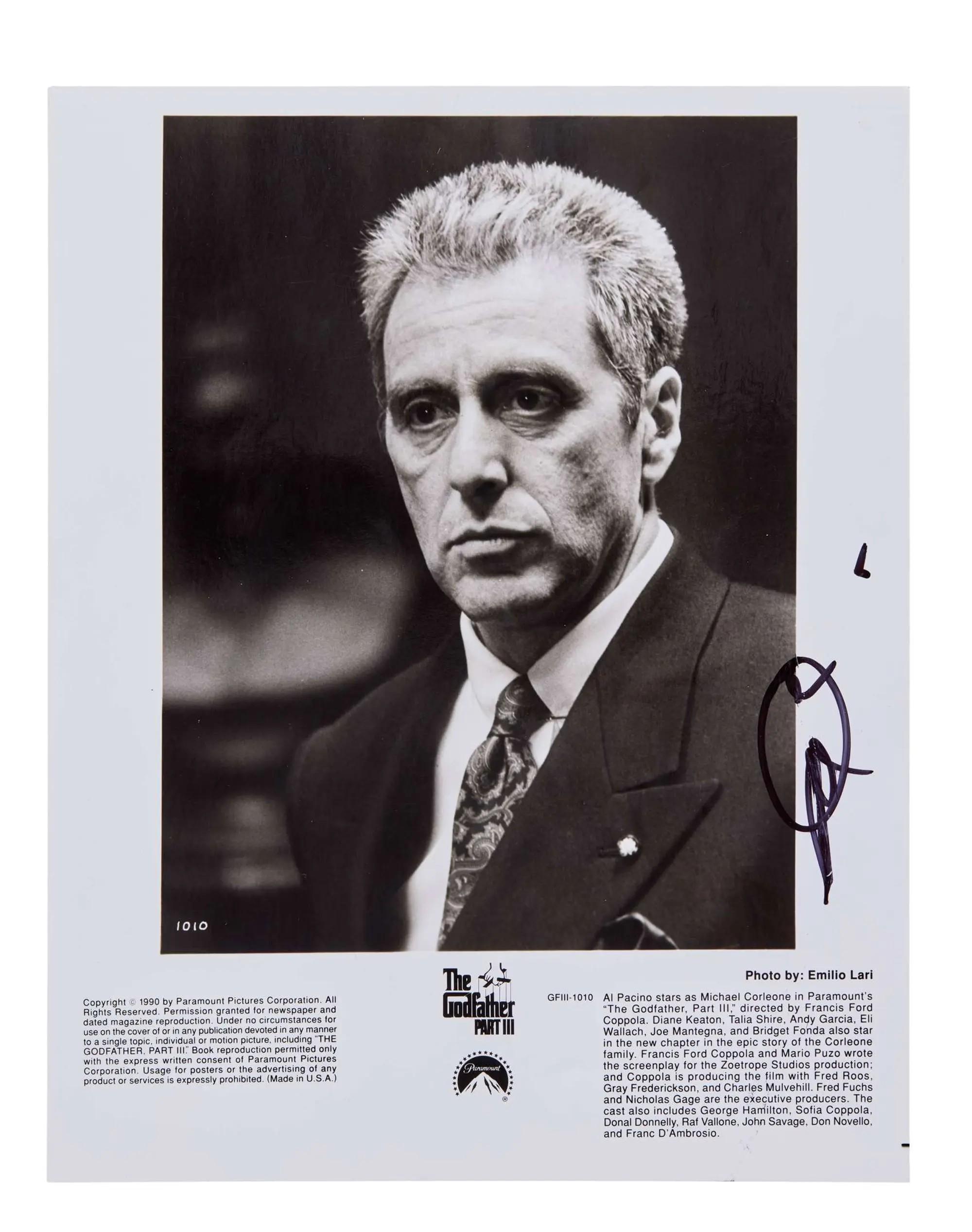
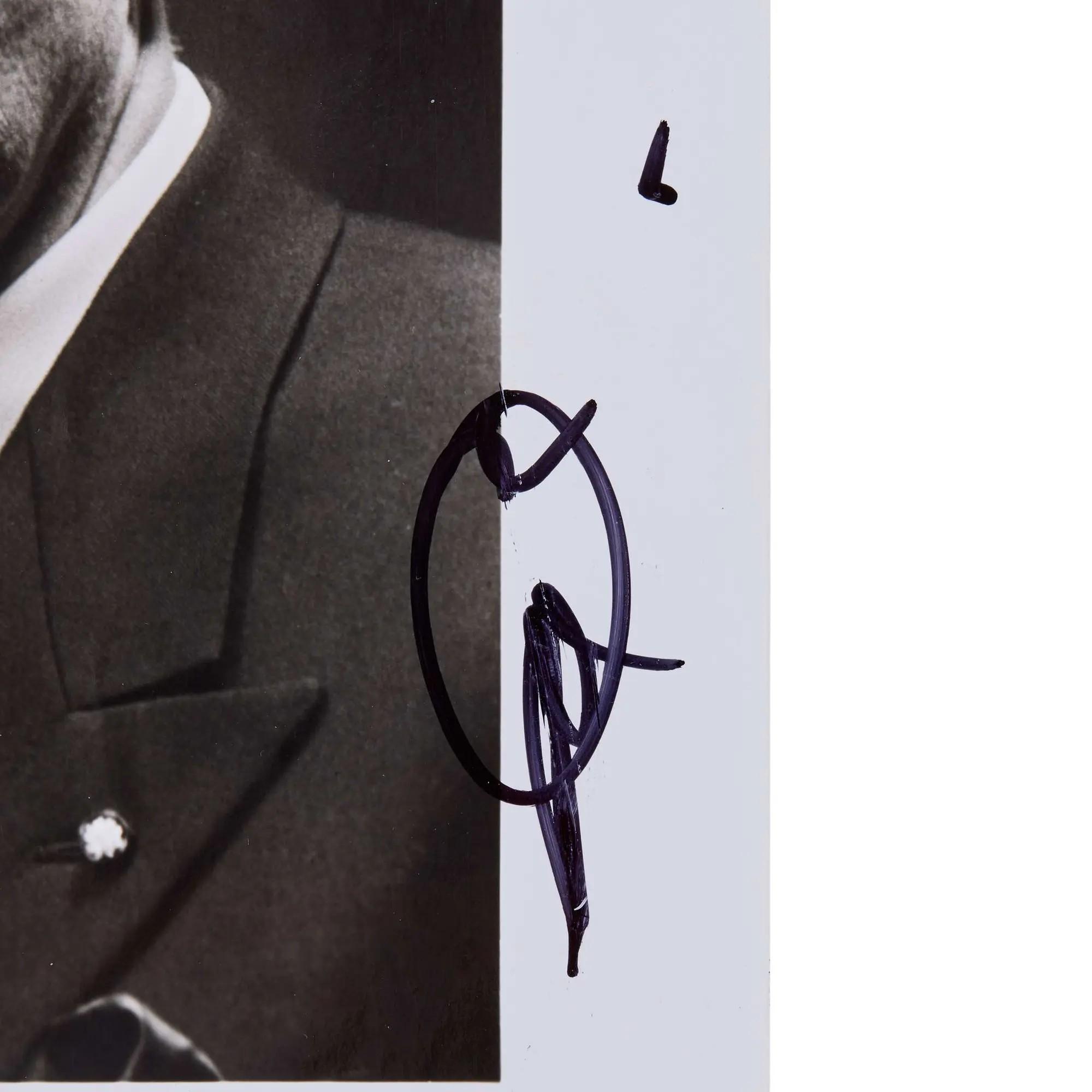
1. Lot #165. Al Pacino | Signed “The Godfather Part III” Publicity Still,
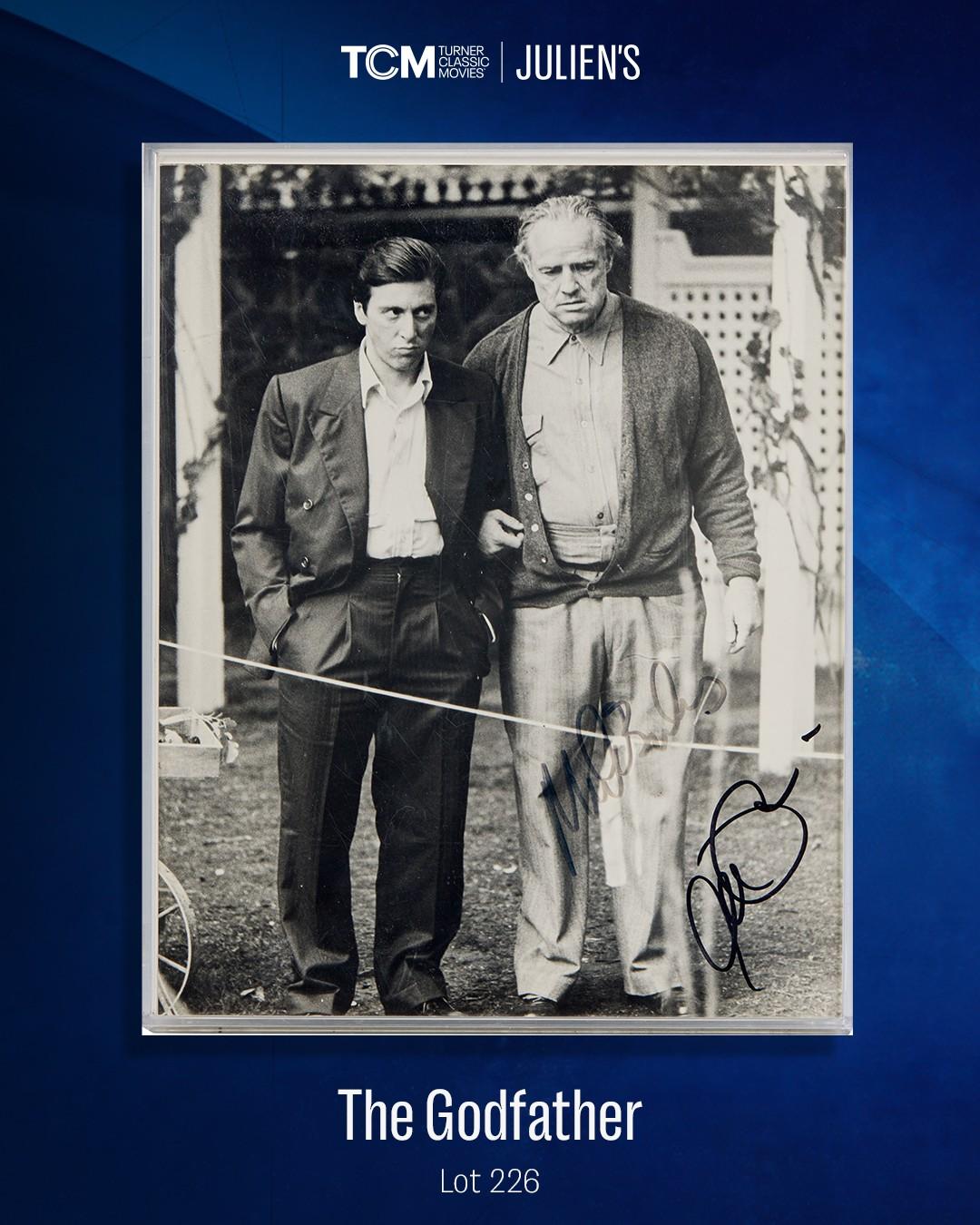
A black-and-white Kodak print depicting Michael and Vito Corleone arm in arm in the garden — signed by both Marlon Brando (gray marker) and Al Pacino (black marker). Grobel secured Pacino's signature by making, as he writes, "an offer he couldn't refuse" during one of their weekly Sunday lunches. Housed in a plastic box frame.
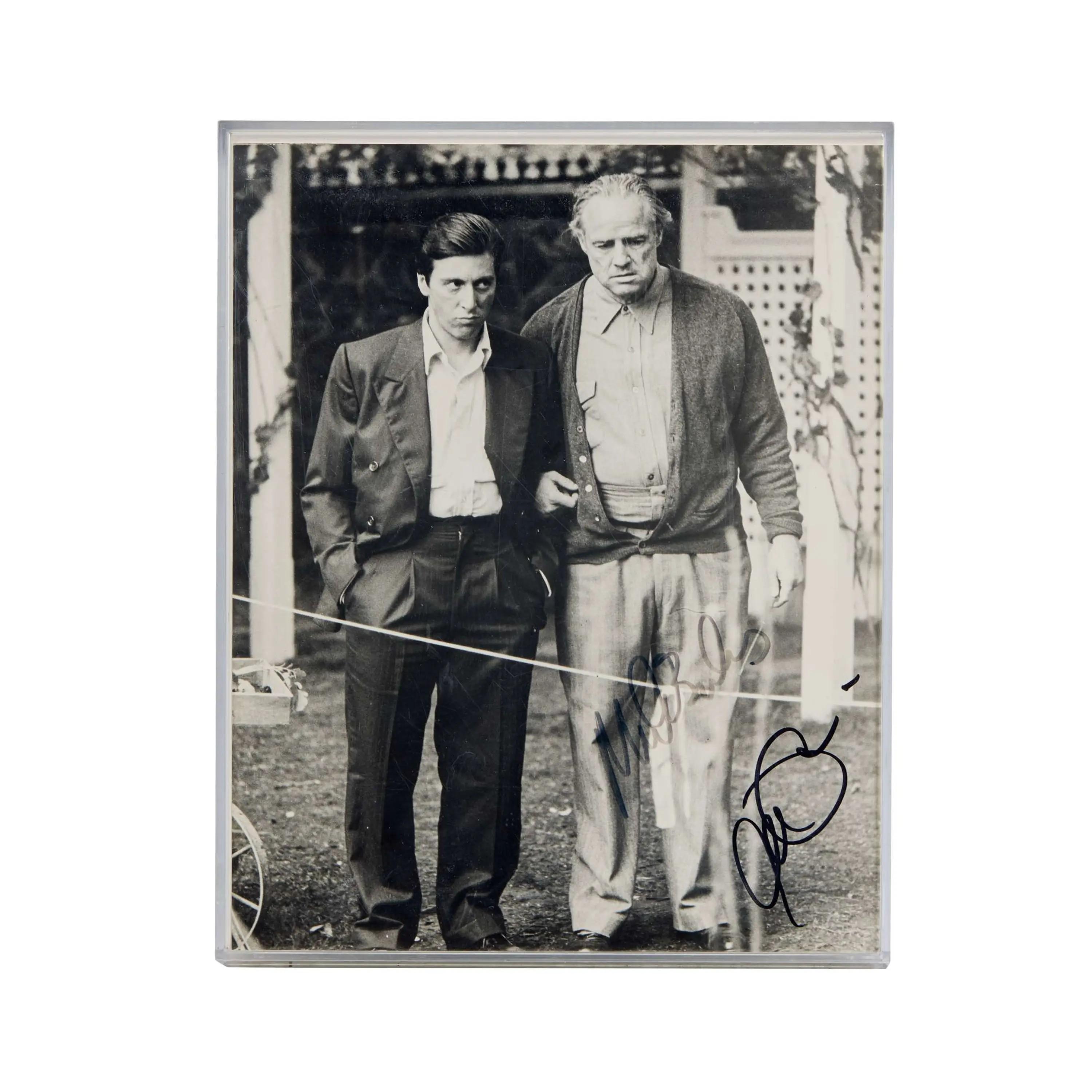
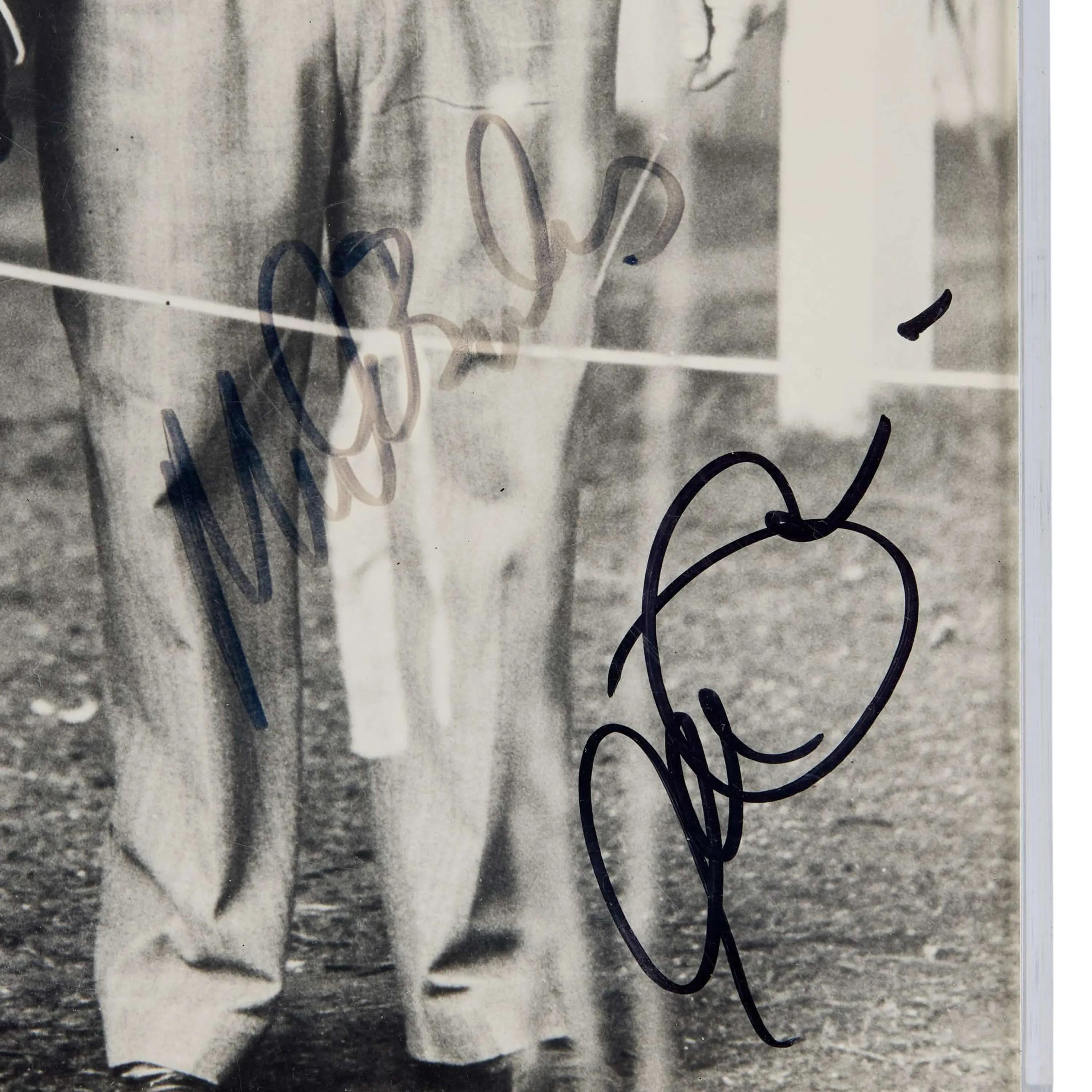
1. Lot #226. The Godfather | Photo Print Signed by Marlon Brando and Al Pacino,
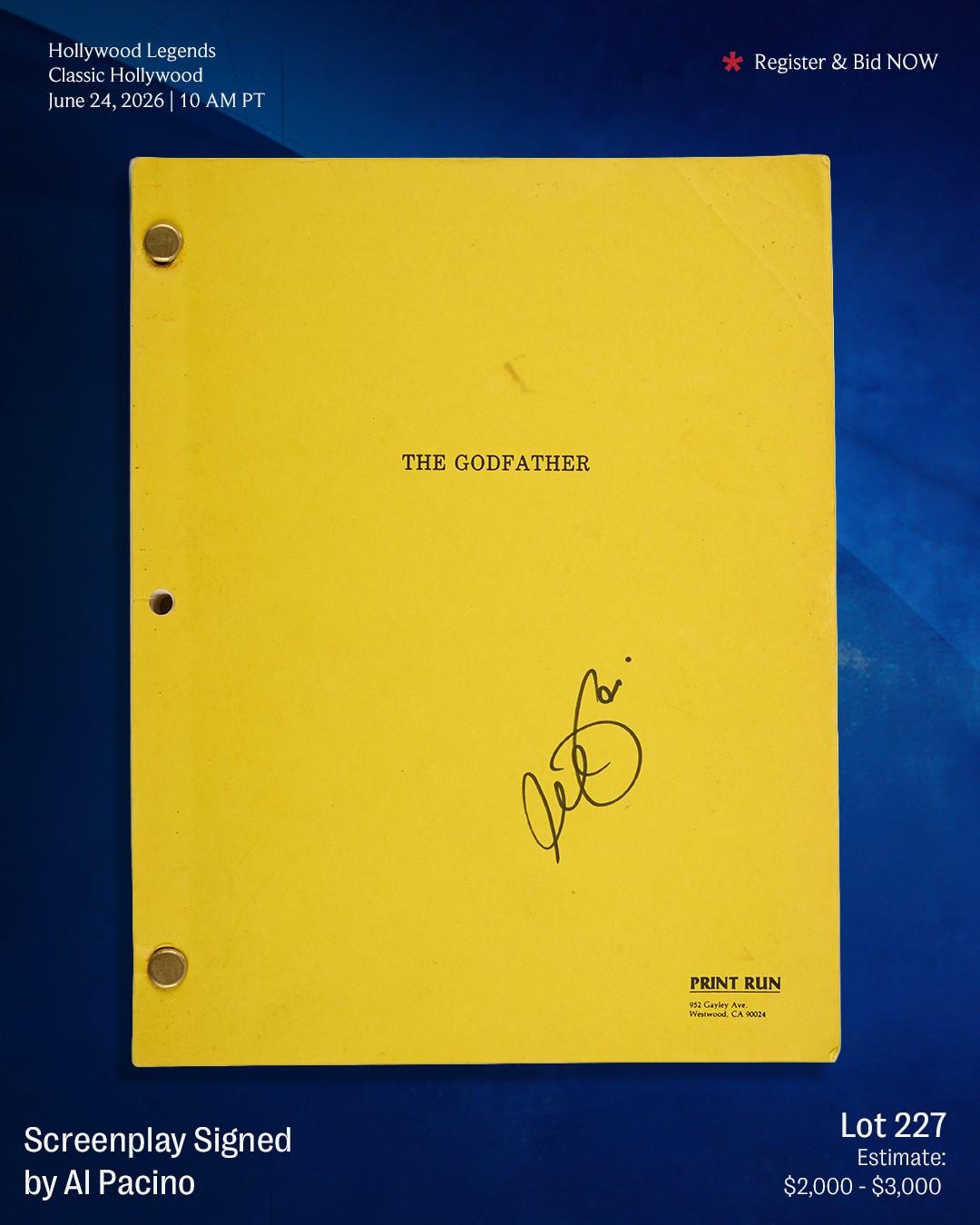
An original screenplay for Coppola's masterwork, with yellow cover pages attributing printing to Print Run of Westwood, CA, fastened with brass brads. Signed by Pacino and drawn from the Grobel collection.
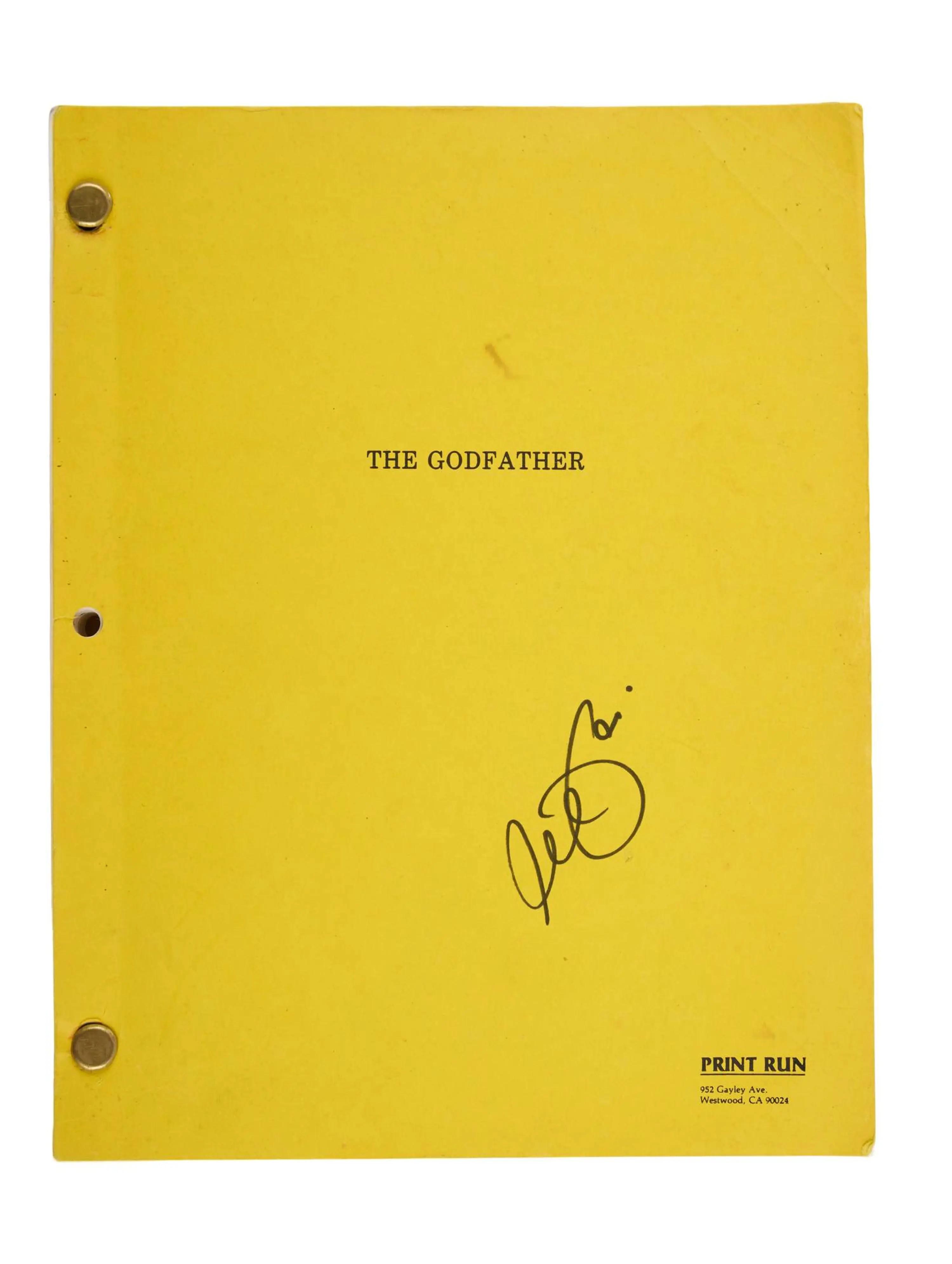
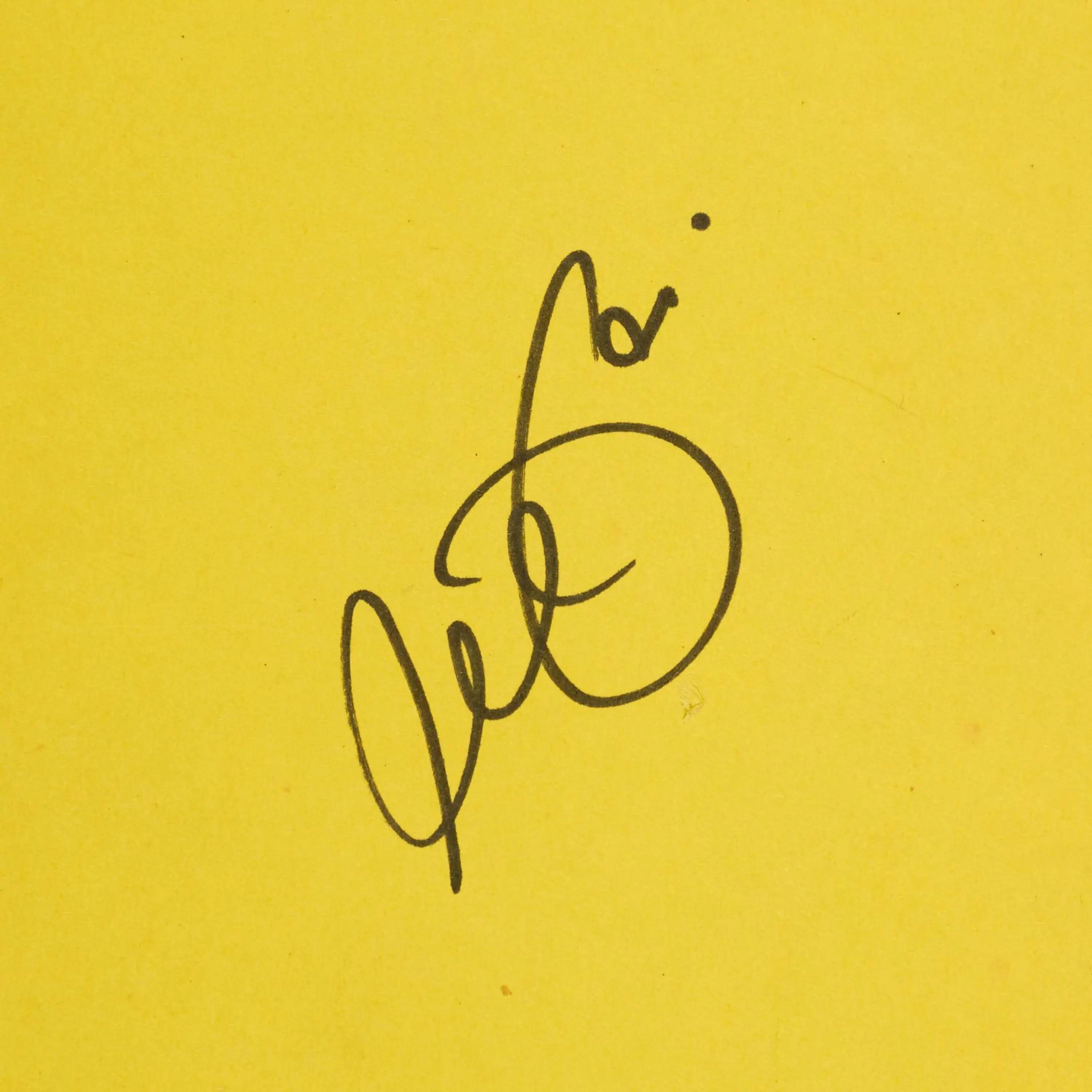
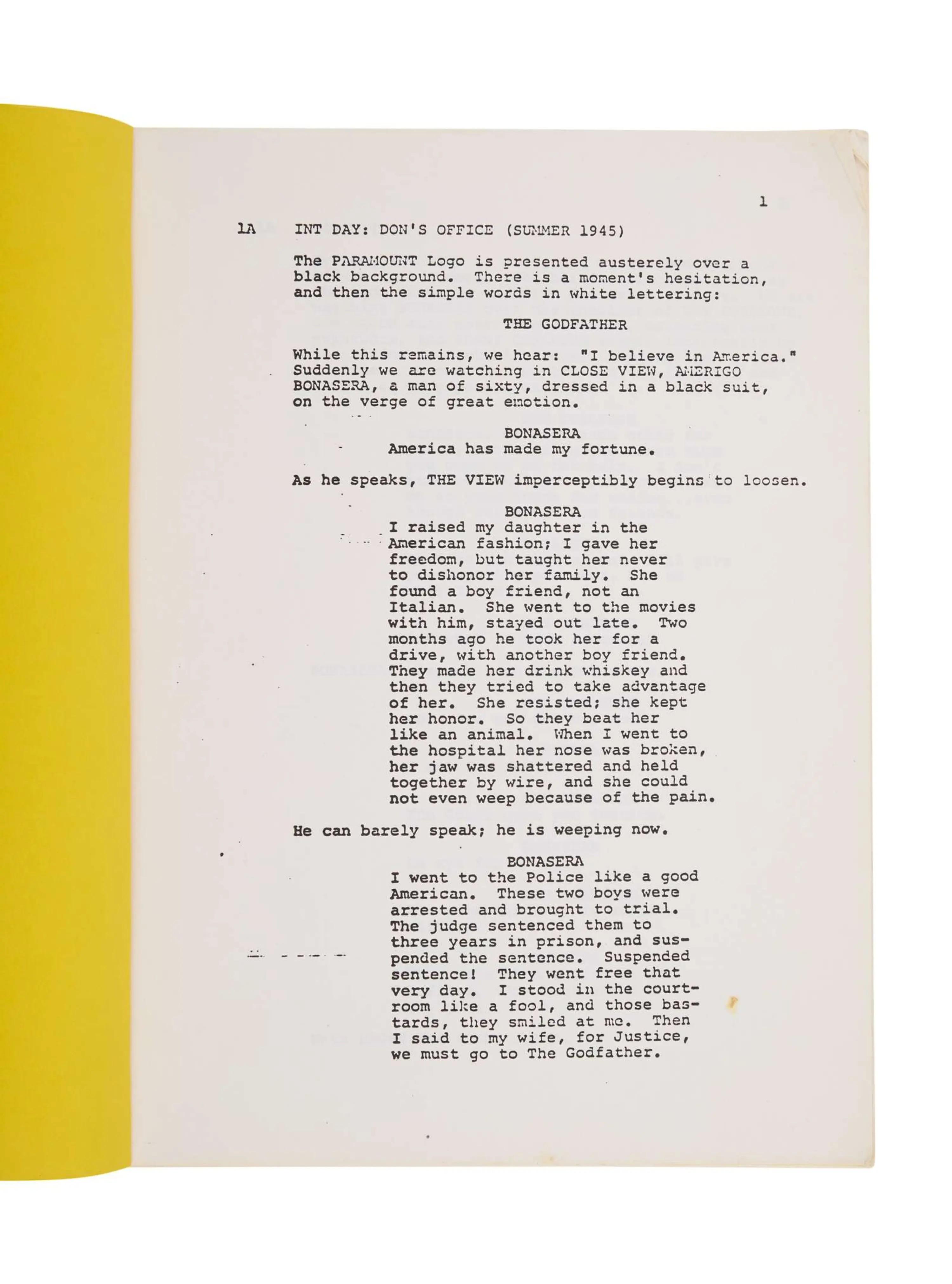
1. Lot #227. The Godfather | Screenplay Signed by Al Pacino,
The crown jewel of this collection: Puzo's first edition (G. P. Putnam's Sons, 1969) bearing signatures from every major creative voice behind the films. Pacino's inscription — "Dear Larry, Please try to understand!" — echoes a line from the third film. Keaton's irreverent addendum on the rear endpaper completes a document of remarkable intimacy and cultural weight.
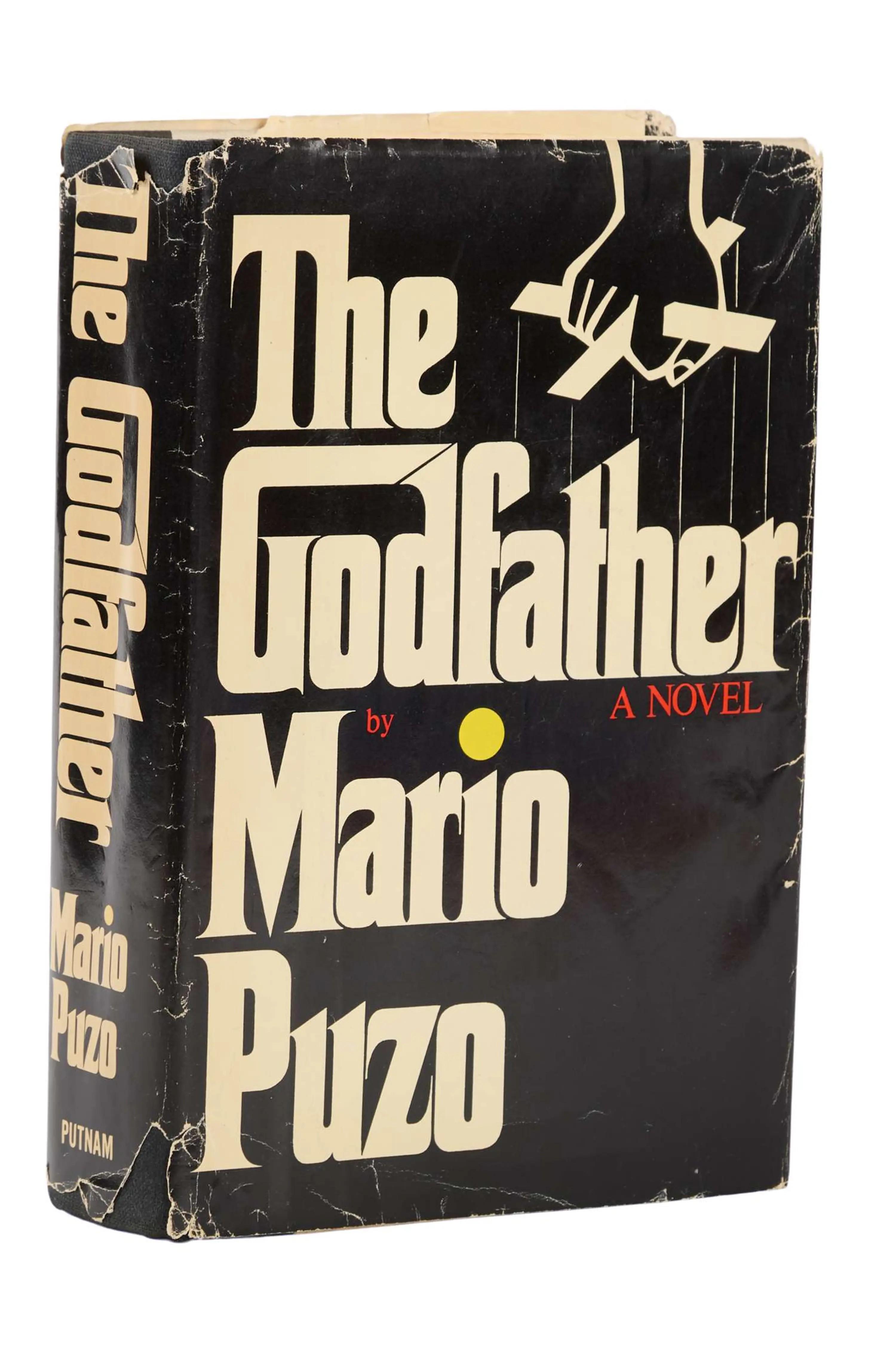
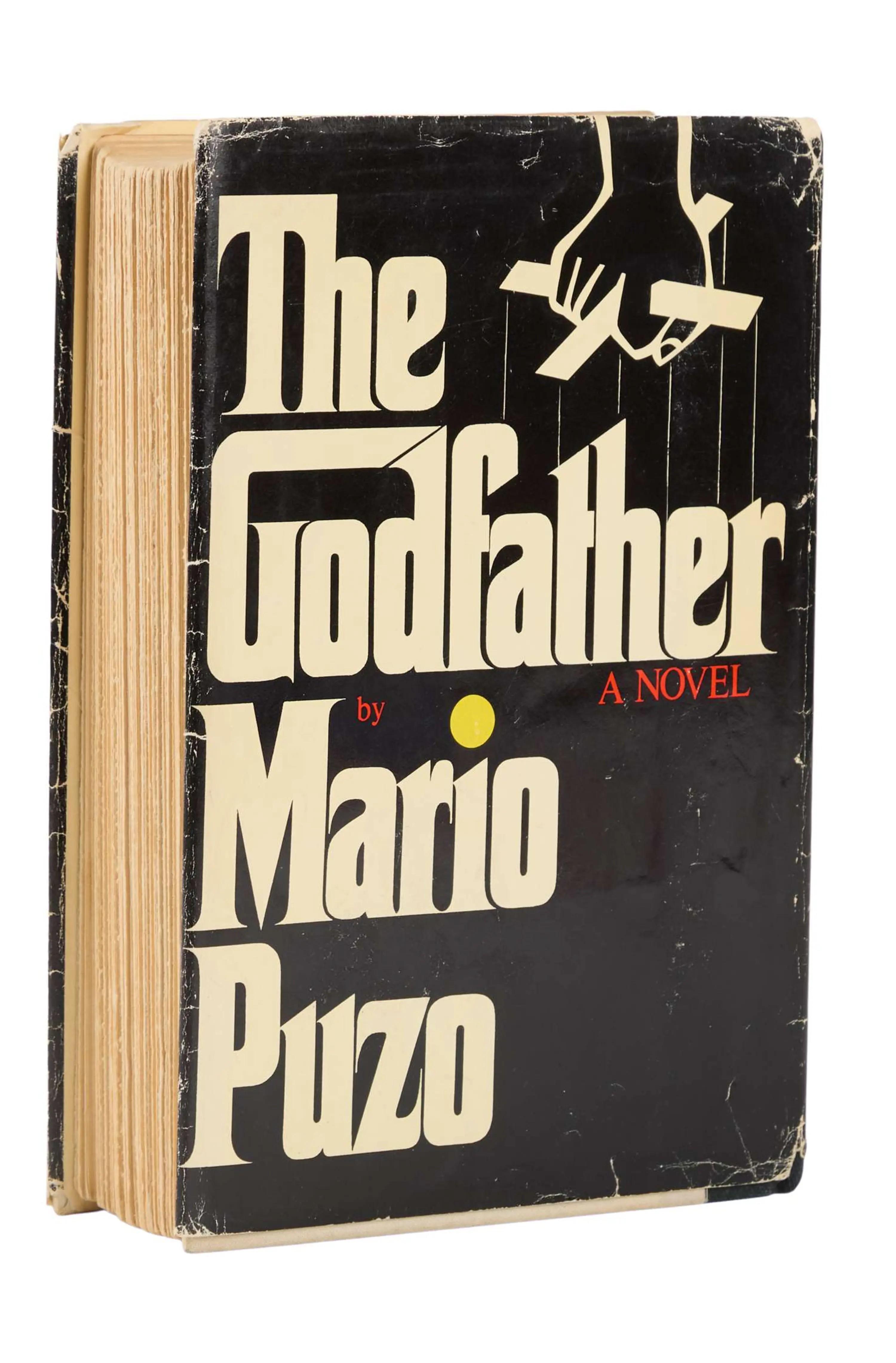
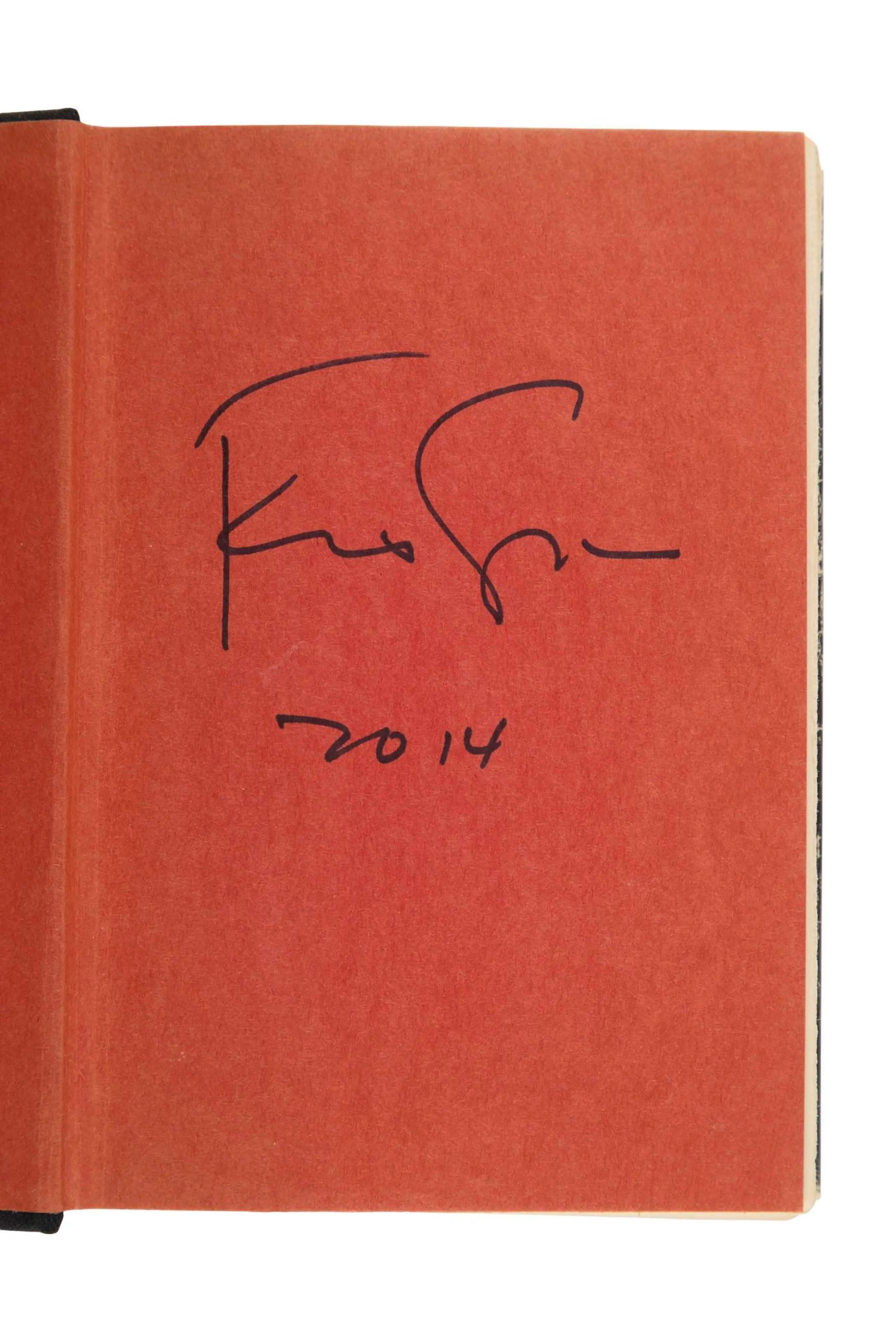
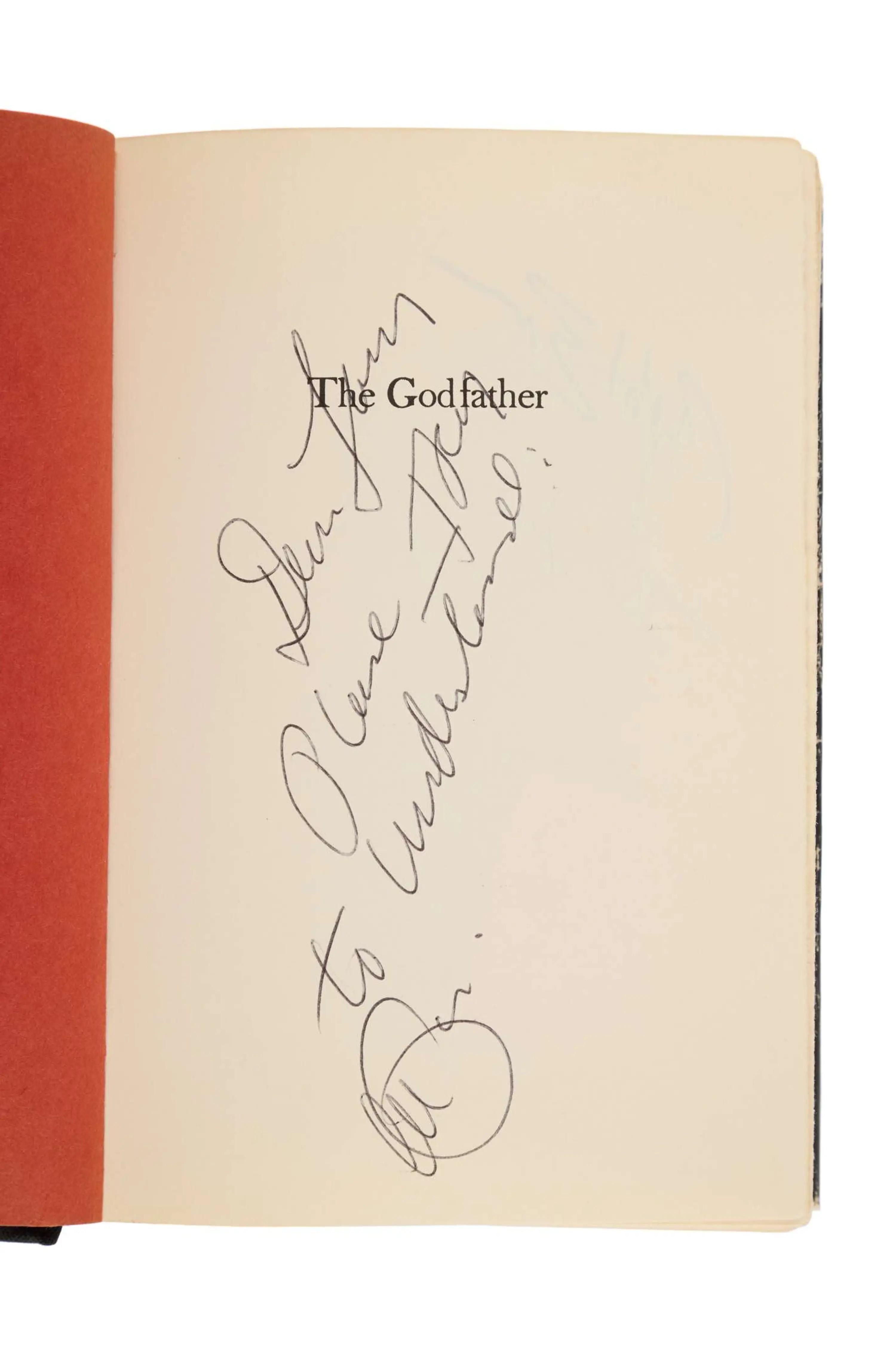
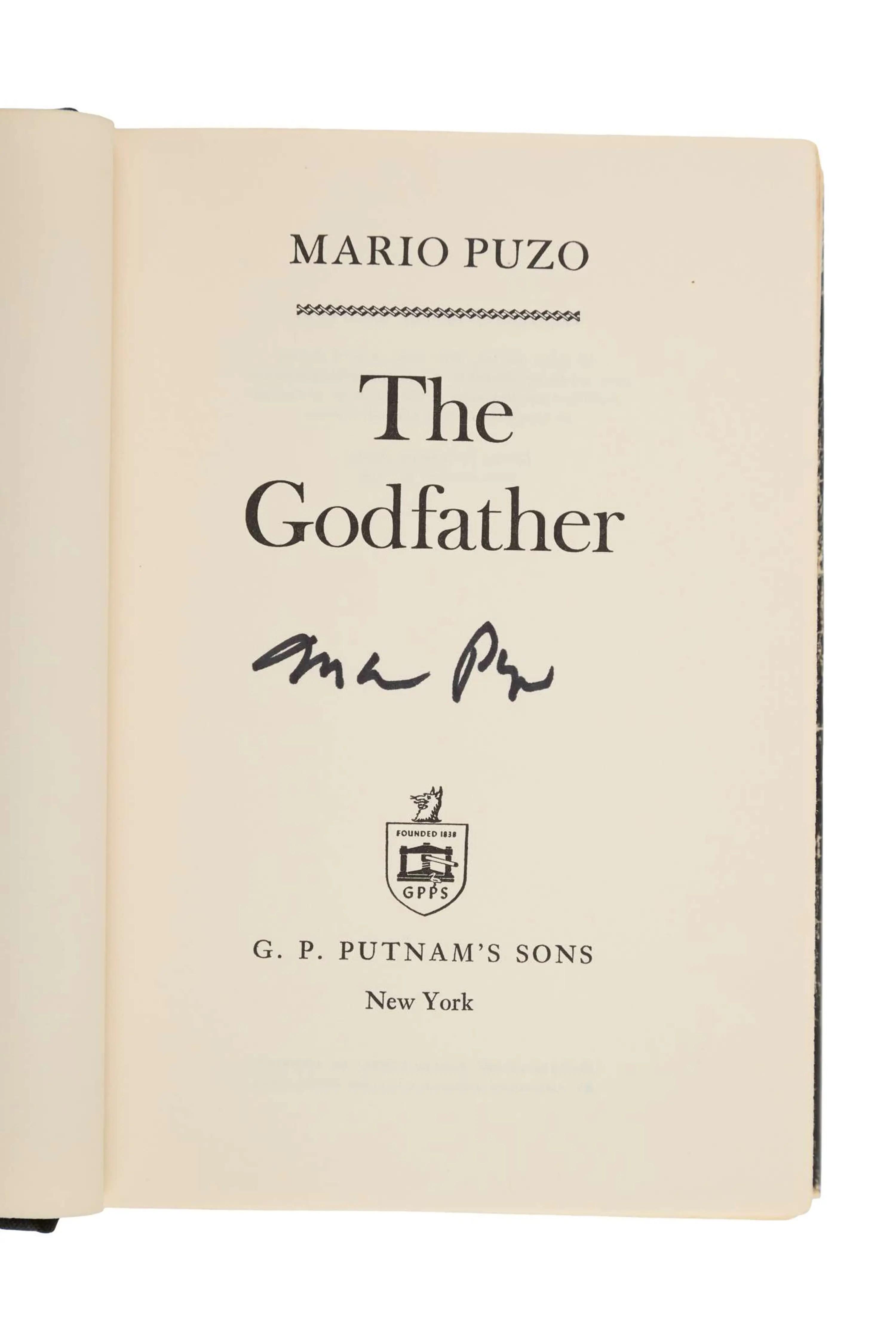
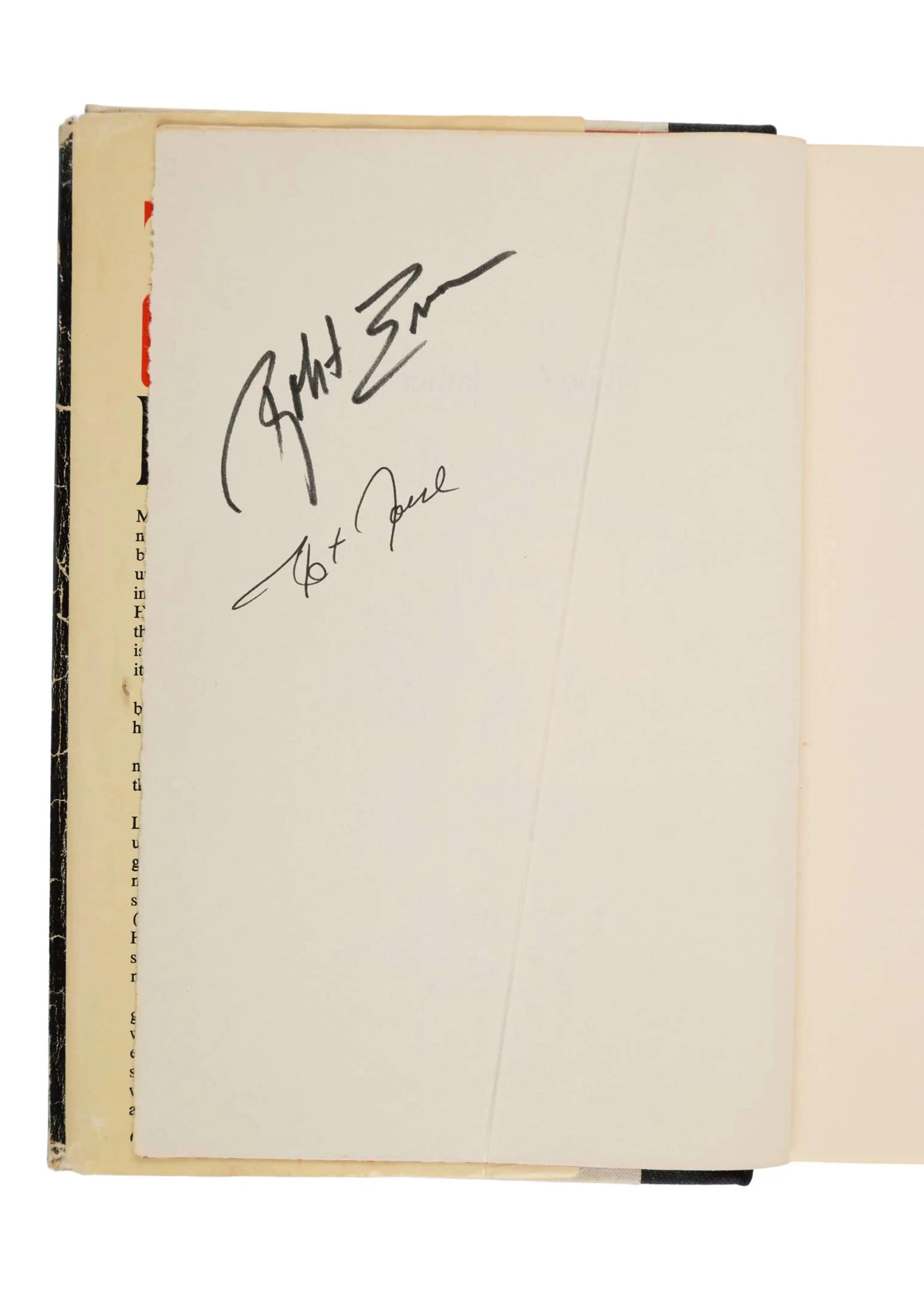
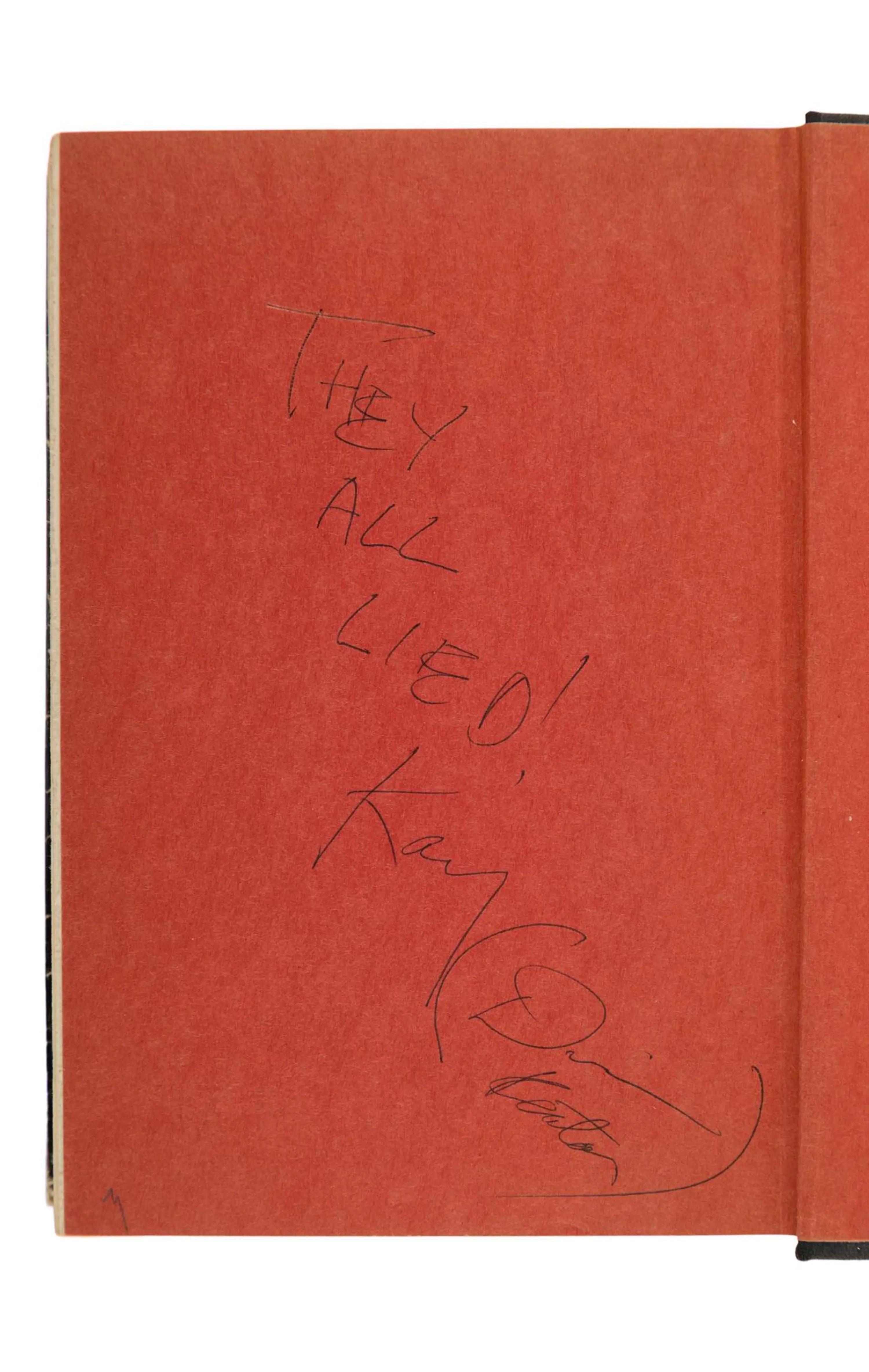
1. Lot #228. The Godfather | First Edition Signed by Francis Ford Coppola, Al Pacino, and More,
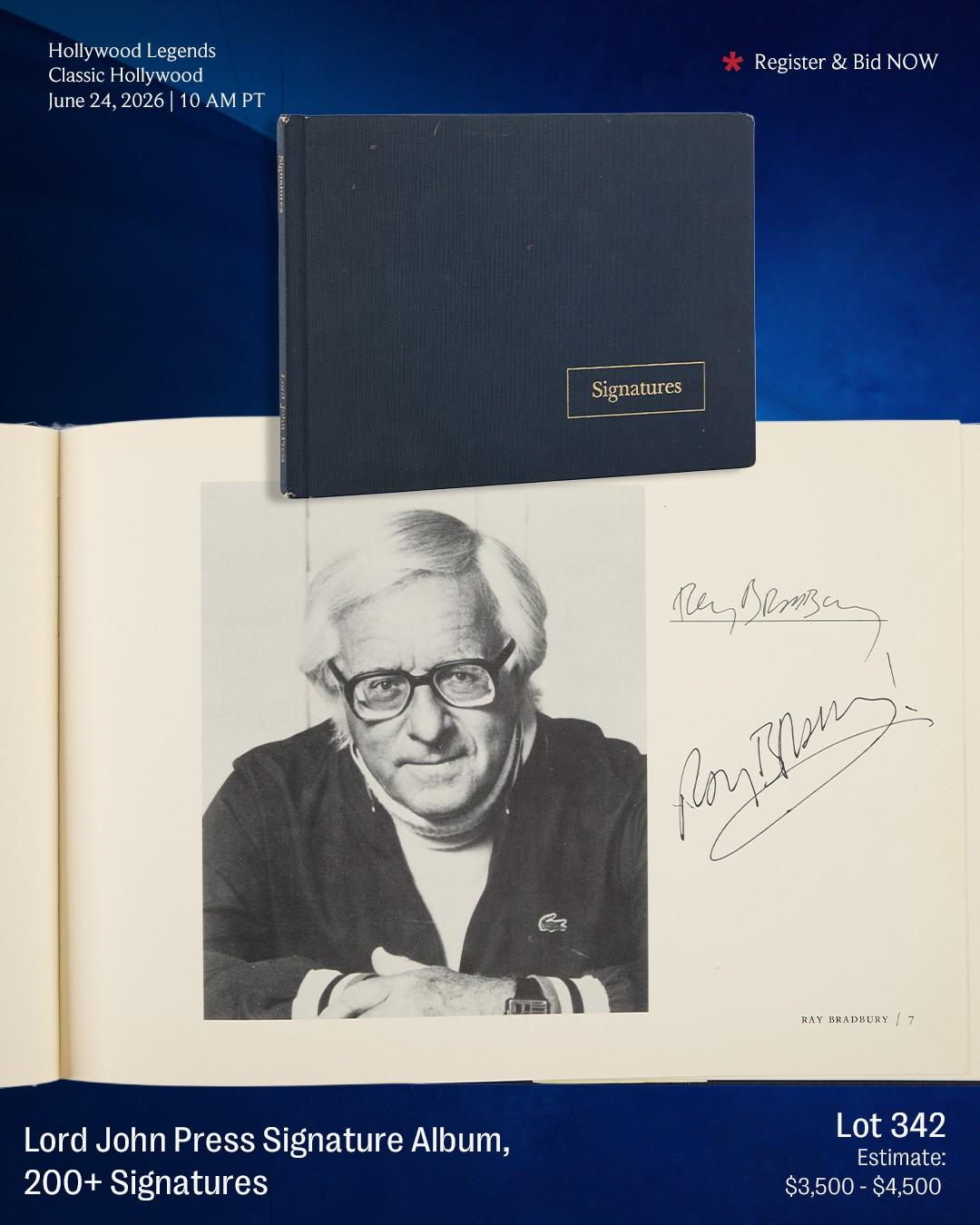
No. 123 of 174 numbered copies of Herb Yellin's Lord John Film Festival, quarter brown leather over black cloth with a facsimile Godfather poster onlay. Signed by John Updike, Billy Wilder, Ray Bradbury, Louise Fletcher, Gerald R. Ford, Eva Marie Saint, Brian Cox, and 34 others. From the Grobel collection.
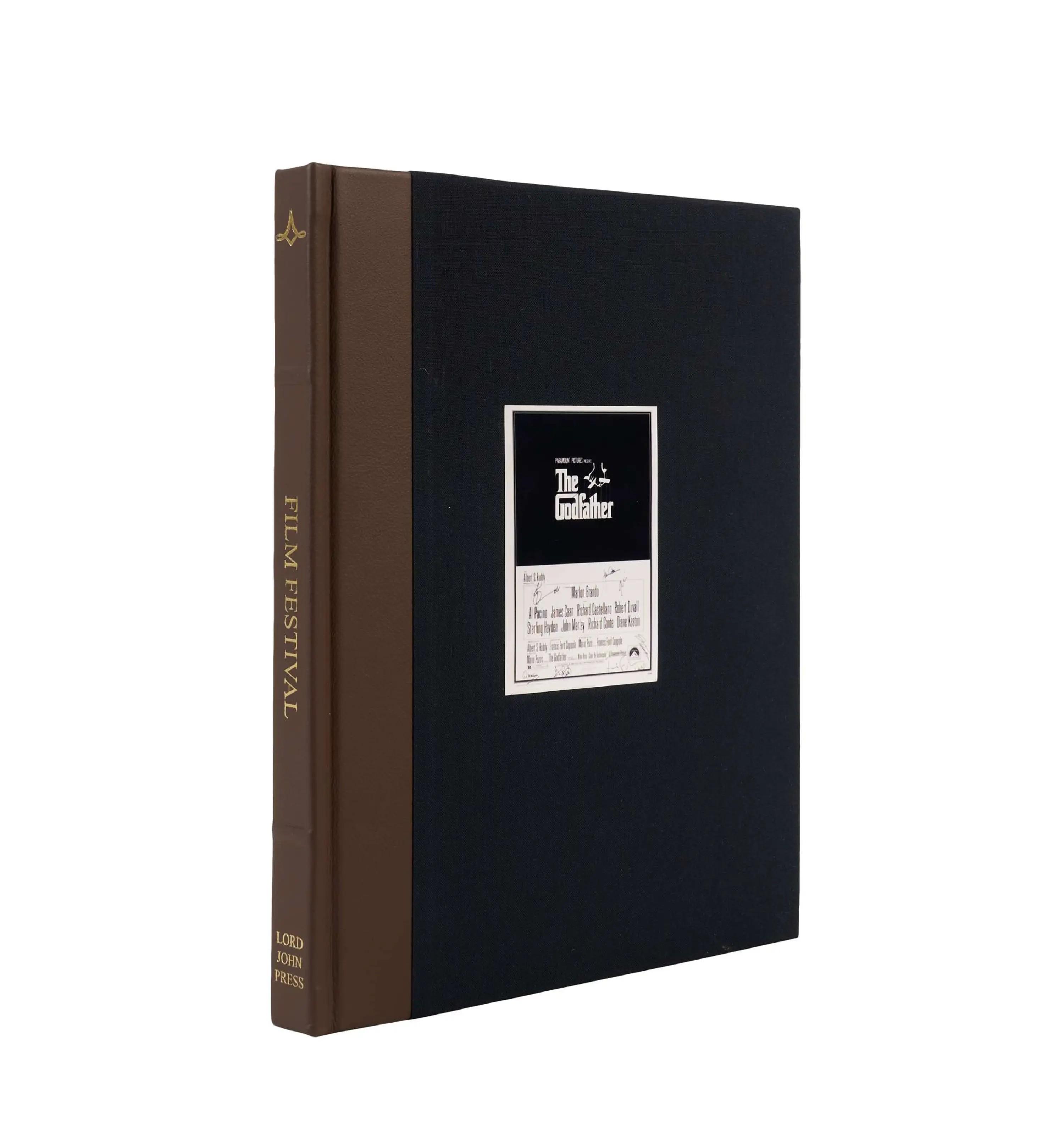
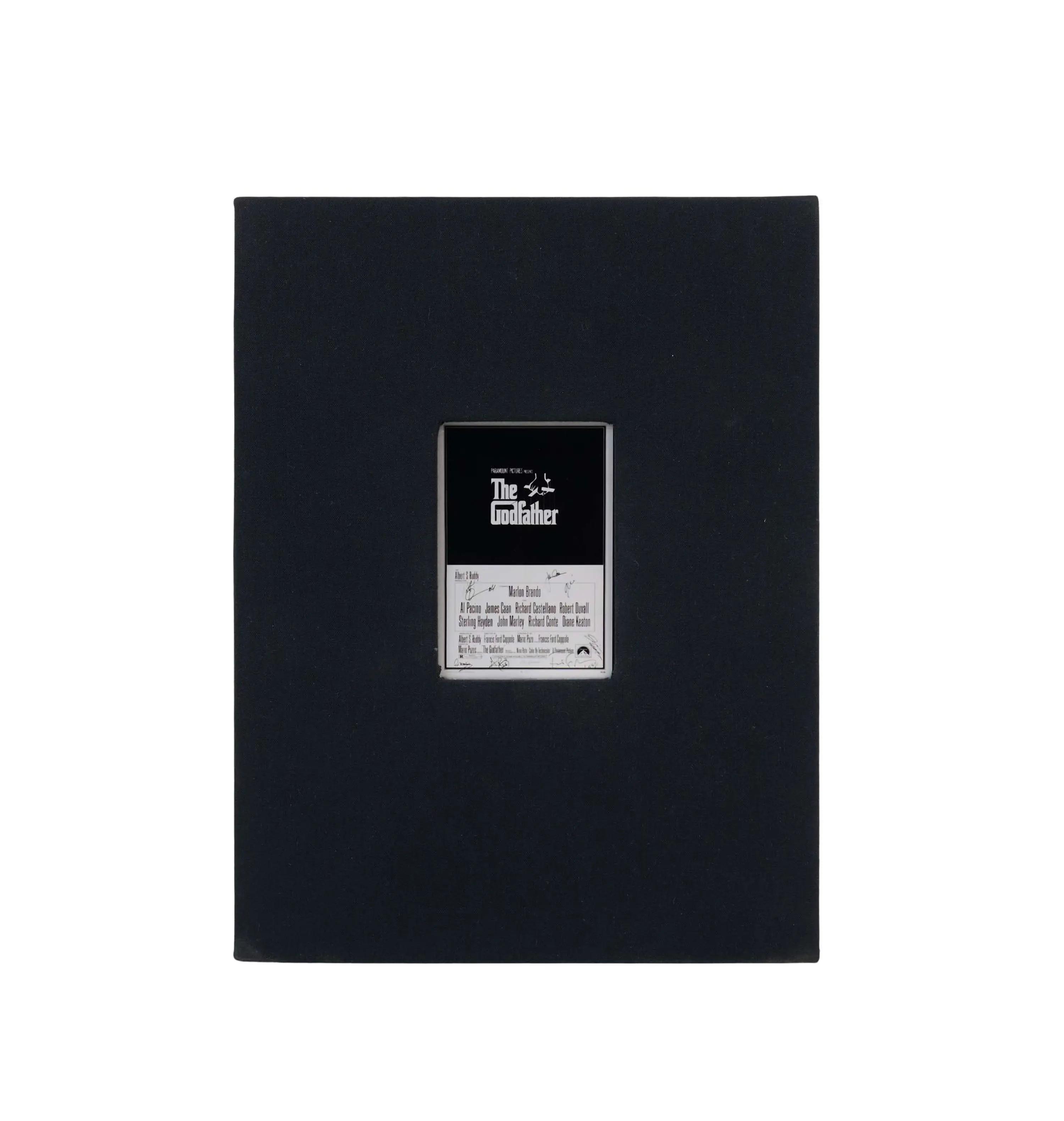
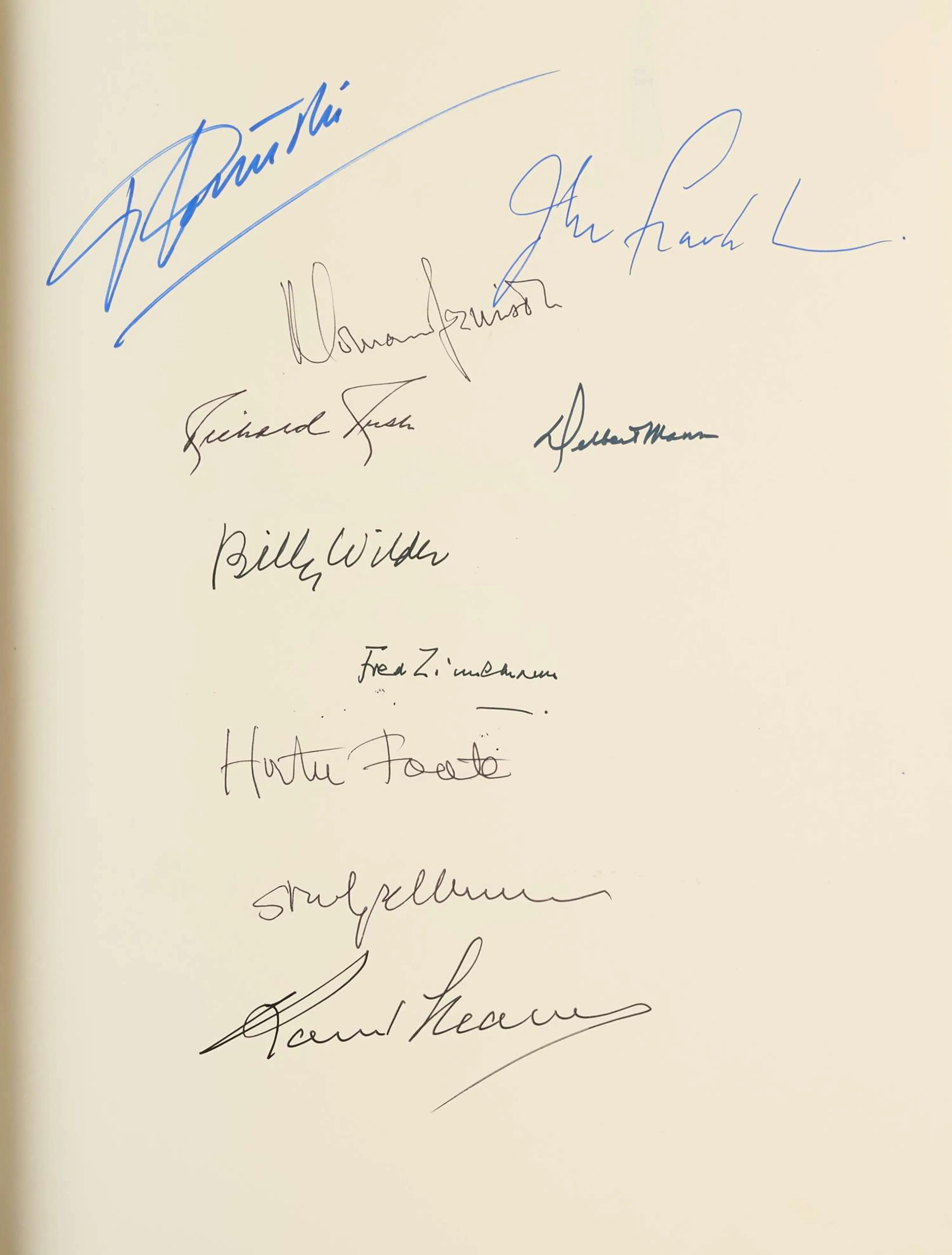
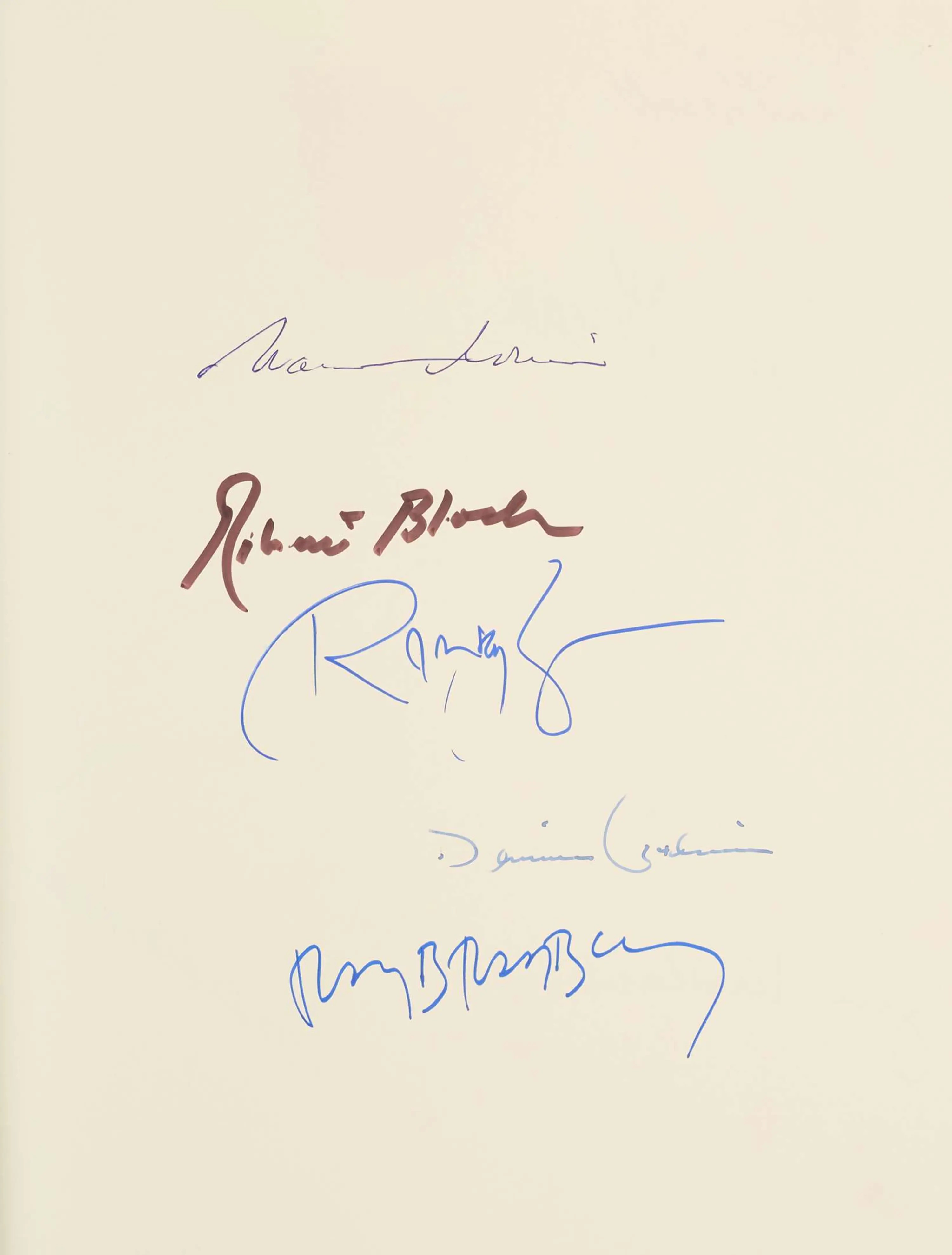
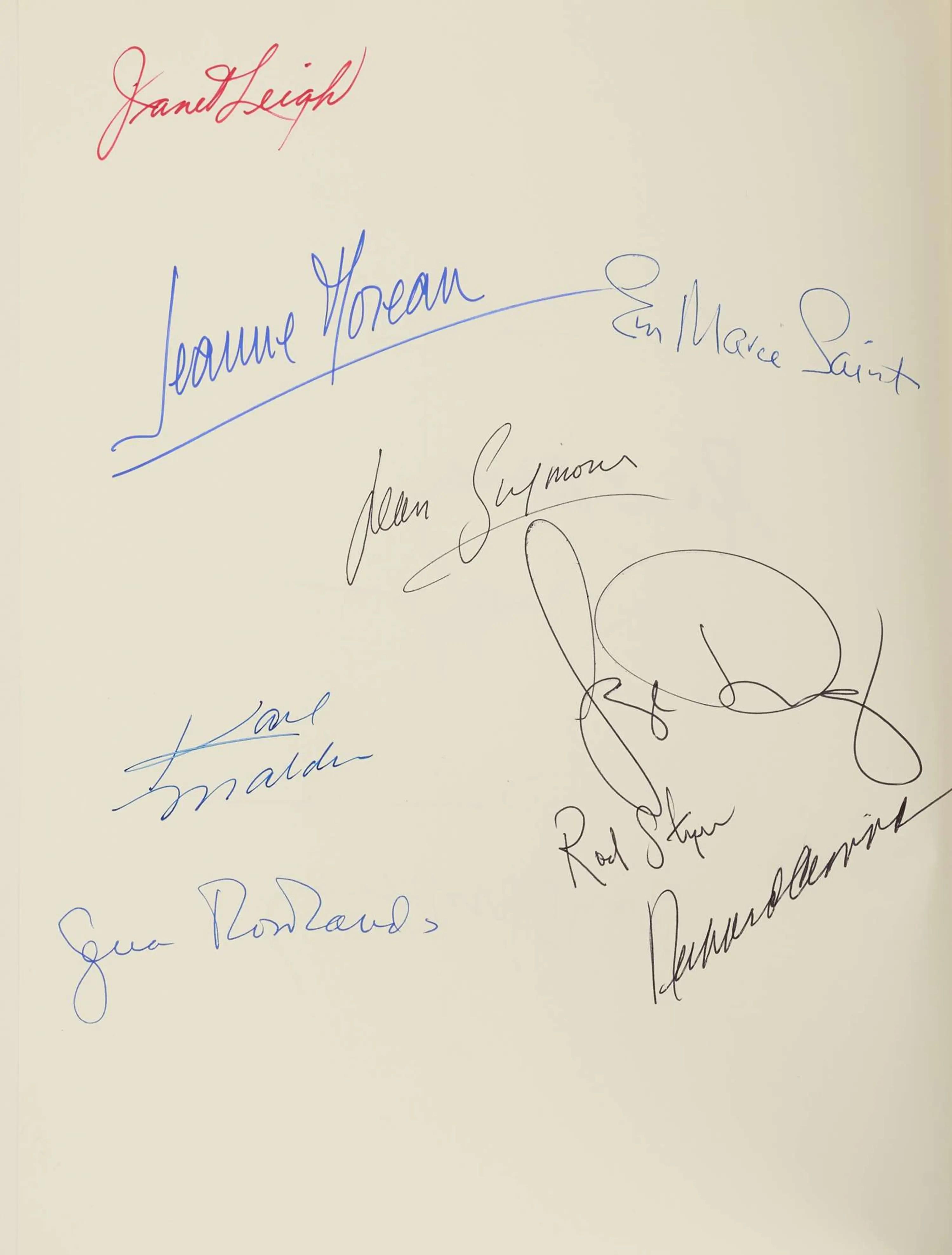
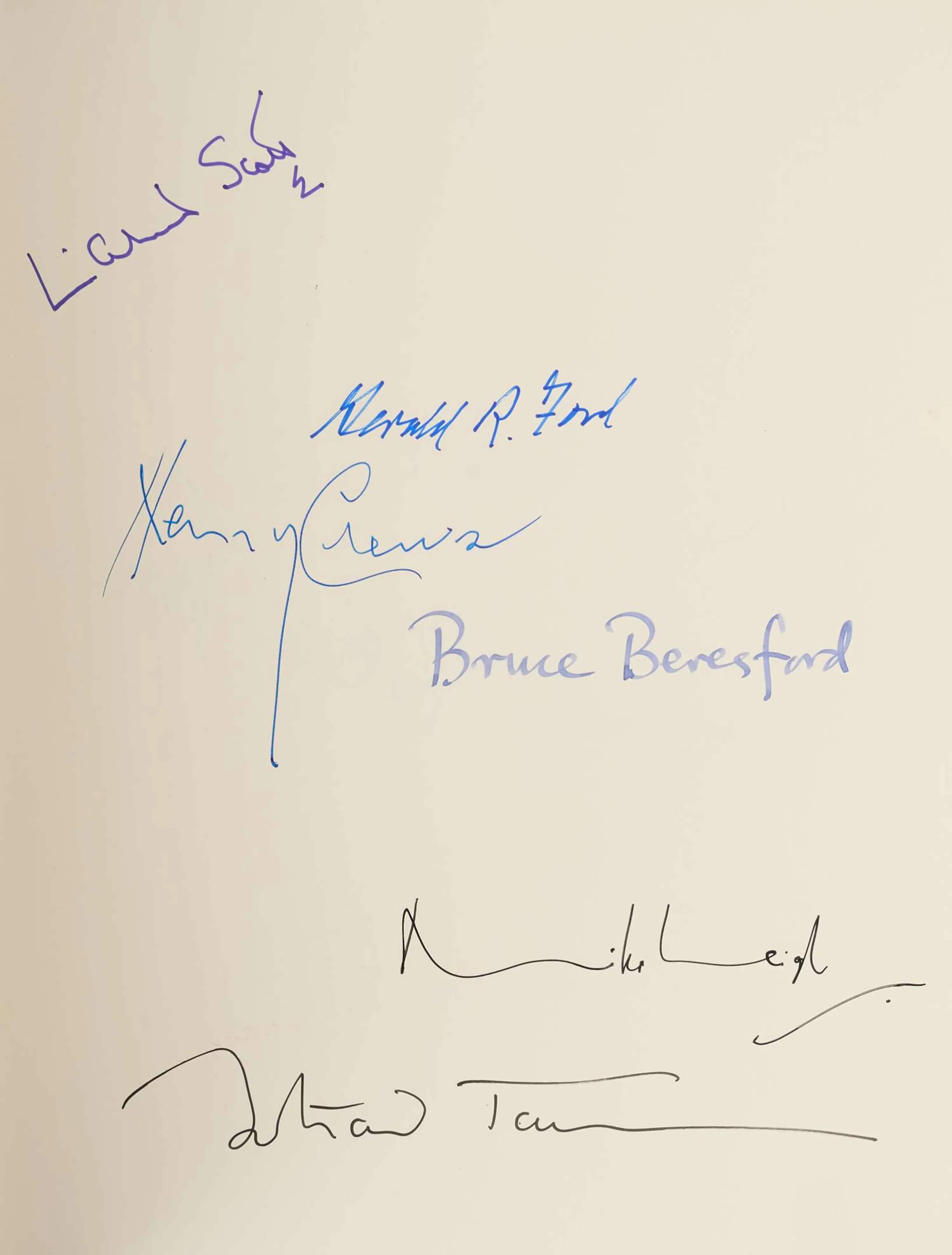
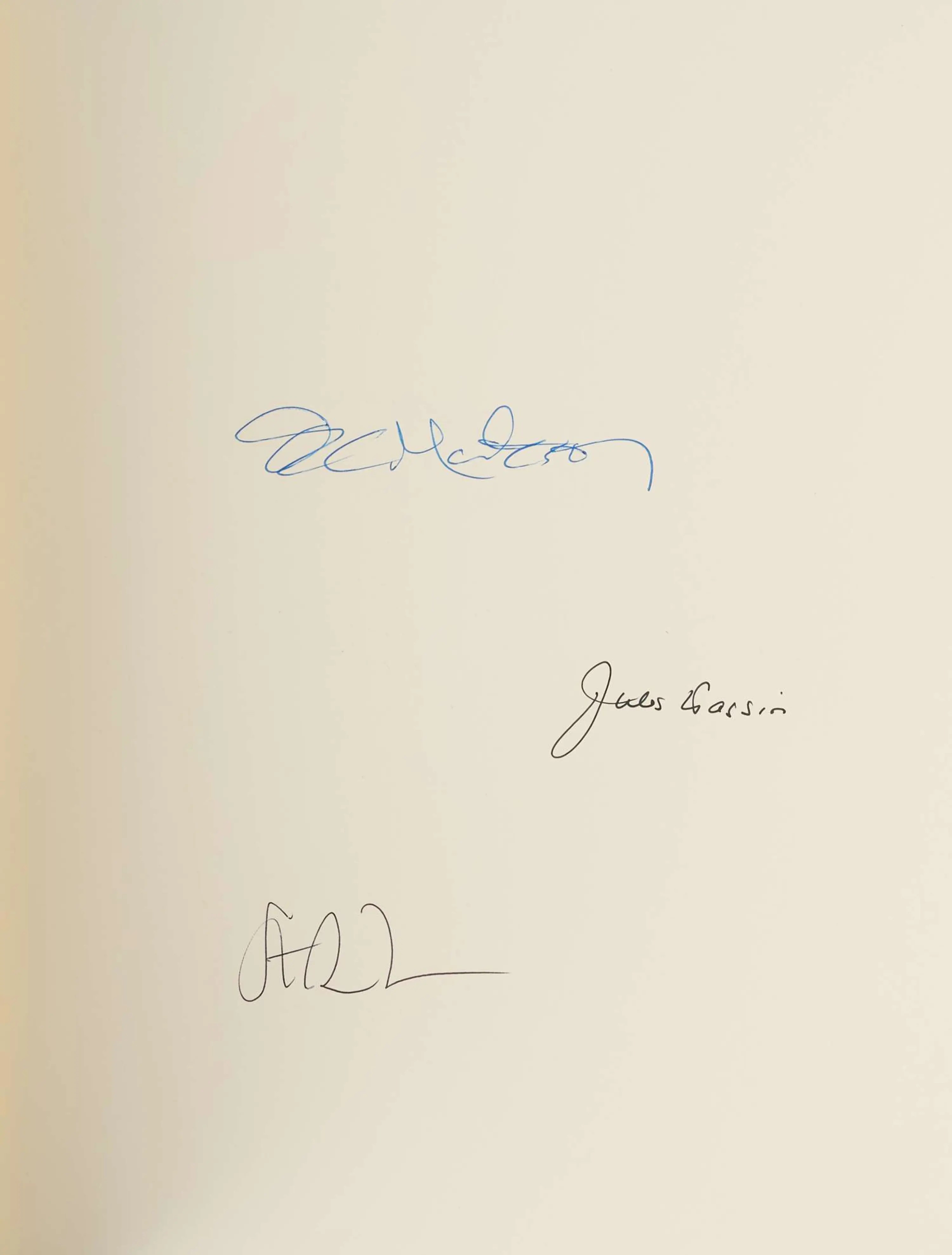
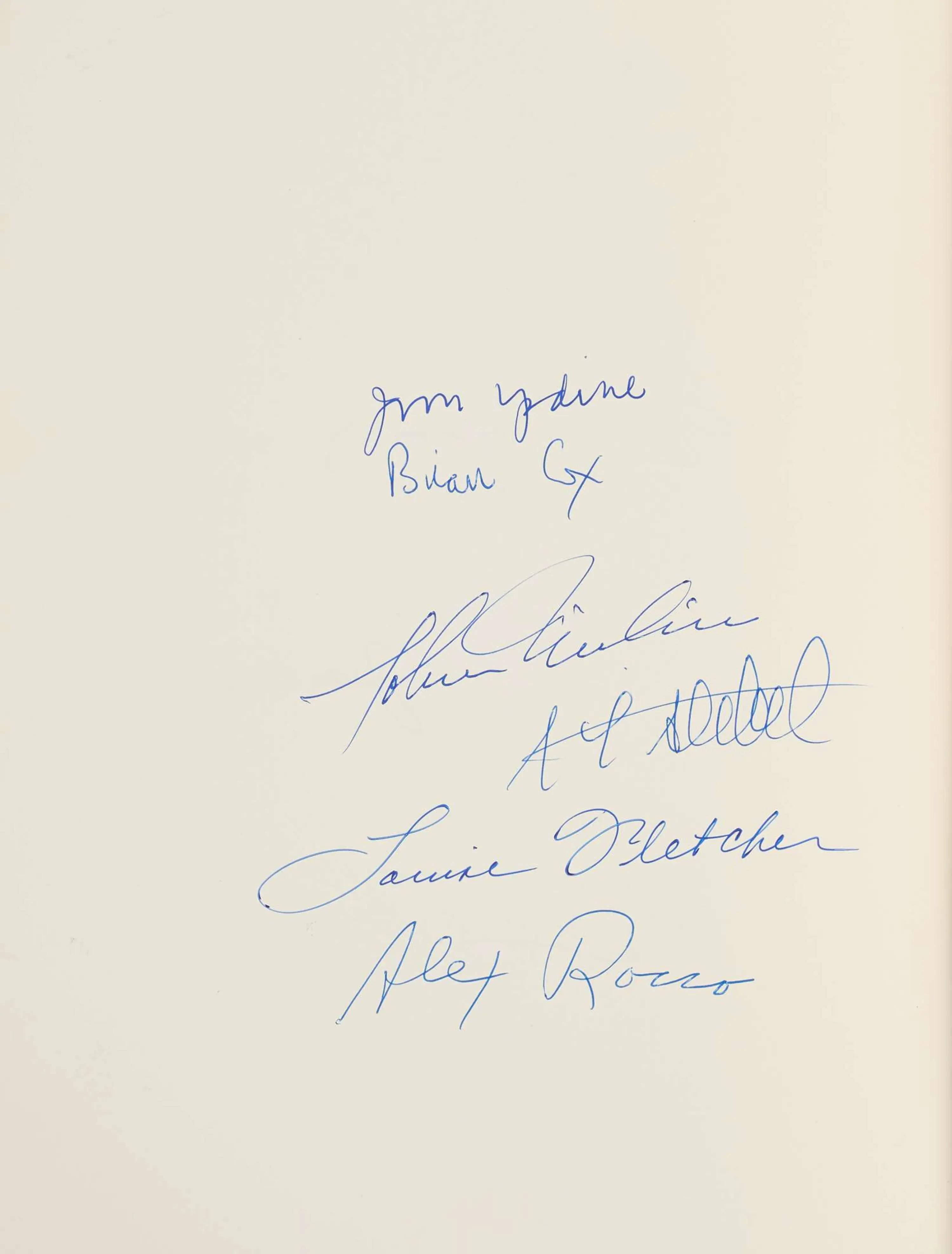
1. Lot #343. Lawrence Grobel | Lord John Film Festival Limited Edition Volume,
A Loyal Trilogy
What distinguishes this collection from ordinary Hollywood memorabilia is exactly what distinguished The Godfather from ordinary Hollywood filmmaking: the presence of genuine human feeling beneath every surface. These are not items acquired at arms' length from a studio archive or a prop house clearinghouse. They are objects that passed through the hands of people who cared about one another — signed not for commerce but for friendship, assembled not for investment but for love of the work. Lawrence Grobel did not collect these things. He was given them, over decades, by people who trusted him. That trust is now, quietly, part of what each bidder acquires.
The Godfather endures because it understood something about power and loyalty and loss that most films are too timid to confront. The artifacts in this auction endure for the same reason — they are honest. The ink is real. The stories are true. And the family, as it was in the beginning, remains unbroken.